
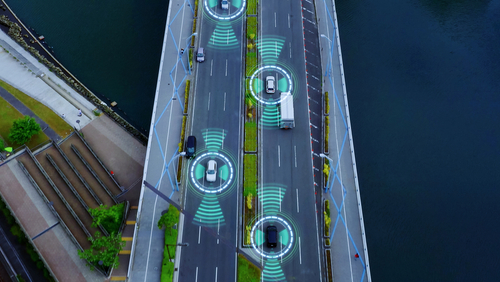
Autonomous driving systems do not navigate purely based on what their sensors see in the moment. Sensors have a finite range, limited by physics, weather, and occlusion. A camera cannot see around a blind corner. A LiDAR cannot reliably detect a lane boundary that is worn away or covered in snow. Maps fill those gaps by providing a pre-computed, verified representation of the environment that the system can query faster than it can build one from raw sensor data.
The choice of which type of map to use is therefore not only an engineering decision about data structures and localization algorithms. It is a decision about what data needs to be collected, how it needs to be annotated, at what frequency it needs to be updated, and how coverage can be scaled across new geographies. Those are data operations decisions as much as they are software architecture decisions, and the two cannot be separated.
This blog examines HD Map annotation vs. sparse maps for physical AI, and how programs are increasingly moving toward hybrid strategies, and what engineers and product leads need to understand before committing to a mapping architecture.
What HD Maps Actually Contain
Geometry, semantics, and layers
A high-definition map, at its core, is a multi-layer digital representation of the road environment at centimeter-level accuracy. Where a conventional navigation map tells a driver to turn left at the next junction, an HD map tells an autonomous system exactly where each lane boundary is in three-dimensional space, what the road surface gradient is, where traffic signs and signals are positioned to the nearest centimeter, and what the legal lane connectivity is at a complex interchange.
HD maps are typically organized into distinct data layers. The geometric layer encodes the precise three-dimensional shape of the road network, including lane boundaries, road edges, and surface elevation. The semantic layer adds meaning to those geometries, distinguishing between solid lane markings and dashed ones, identifying crosswalks and stop lines, and annotating the functional class of each lane. The dynamic layer carries information that changes over time, such as speed limits, active lane closures, and temporary road works. Some implementations add a localization layer that stores the distinctive environmental features a vehicle can match against its real-time sensor output to determine its exact position within the map.
The production cost that defines HD map economics
Producing an HD map requires survey-grade data collection. Specialized vehicles equipped with high-precision LiDAR, calibrated cameras, and centimeter-accurate GNSS systems traverse the road network and capture raw point clouds and imagery. That raw data then requires extensive processing and annotation before it becomes a usable map layer. Lane boundaries must be extracted and verified. Traffic signs must be detected, classified, and georeferenced. Semantic attributes must be assigned consistently across the entire coverage area.
The annotation work involved in HD map production is substantial. HD map annotation at the precision and semantic depth required for production-grade autonomous driving is not the same as general-purpose image labeling. Annotators must work with point clouds, imagery, and vector geometry simultaneously, and the accuracy requirements are strict enough that systematic errors in any one element can compromise localization reliability across the affected road segments.
Cost estimates for HD map production have historically ranged from several hundred to over a thousand dollars per kilometer, depending on the density of the road network and the semantic richness required. Maintenance compounds that cost. A road network changes continuously: construction zones appear and disappear, lane configurations are modified, and new signage is installed. An HD map that is not kept current becomes a source of localization error rather than a source of localization confidence. Keeping a large-scale HD map current across a production deployment area requires ongoing annotation effort that many teams underestimate when they commit to the approach.
Understanding Sparse Maps
Landmark-based localization
Sparse maps take a fundamentally different approach. Rather than encoding the full geometric and semantic richness of the road environment, a sparse map stores only the features a localization system needs to determine where it is. These features are typically stable, visually distinctive landmarks that appear reliably in sensor data across different lighting and weather conditions: traffic sign positions, road marking patterns, pole locations, bridge abutments, and overhead structures.
Mobileye’s Road Experience Management system, which underpins much of the industry conversation about sparse mapping, collects landmark data from production vehicles’ cameras and builds a crowdsourced sparse map that can be updated continuously as more vehicles traverse the same routes. The localization accuracy achievable with a well-maintained sparse map is sufficient for many ADAS applications and for certain Level 3 scenarios on structured road environments.
What sparse maps trade away
A sparse map does not contain lane-level geometry in the way an HD map does. It does not encode the semantic richness of road marking types, the precise positions of traffic signals, or the surface elevation data that HD maps use for predictive control. A system relying solely on a sparse map for its environmental representation depends more heavily on real-time perception to fill those gaps. In clear conditions with functioning sensors, that dependency may be manageable. In adverse weather, at night, or when a sensor is partially obscured, the system has less map-derived information to fall back on.
Annotation demands for sparse map production
Sparse map annotation is less labor-intensive per kilometer than HD map annotation, but it is not trivial. Landmark detection and verification requires that annotators identify and validate the landmarks extracted from sensor data, checking their geometric accuracy and ensuring that the landmark database does not accumulate errors that would degrade localization over time. ADAS sparse map services require a different annotation skill set than HD map production, one more focused on landmark geometry verification and localization accuracy testing than on semantic lane-level labeling.
The crowdsourced update model that makes sparse maps scalable also introduces quality control challenges. When landmark data is contributed by production vehicles rather than dedicated survey vehicles, the signal quality varies. A vehicle with a partially obscured camera, a vehicle traveling at high speed, or a vehicle whose sensor calibration has drifted will contribute landmark observations that are less reliable than those from a calibrated survey run. Managing that variability requires systematic quality filtering, which is itself a data annotation and validation task.
Localization Accuracy: Where the Performance Gap Appears
What centimeter-level accuracy actually means in practice
HD maps deliver localization accuracy in the range of 5 to 10 centimeters in typical deployment conditions. For Level 4 autonomous driving, where the system is making all control decisions without a human backup, that level of accuracy is generally considered necessary. A vehicle that is uncertain of its lateral position by more than a few centimeters cannot reliably maintain lane position in narrow urban lanes or manage complex merges with confidence.
Sparse map localization typically achieves accuracy in the range of 10 to 30 centimeters, depending on landmark density and sensor quality. For Level 2 and Level 3 ADAS applications, particularly on structured highway environments where lane widths are generous, and the primary localization use case is predictive path planning rather than precise lane-centering, that accuracy range is often sufficient.
Where the gap closes and where it widens
The performance gap between HD and sparse map localization is not static. It narrows in environments with high landmark density and good sensor conditions, and it widens in environments where landmarks are sparse, where weather degrades sensor performance, or where road geometry is complex. Urban environments with dense signage and road markings tend to support better sparse map localization than rural highways with minimal infrastructure. Geospatial intelligence analysis, such as DDD’s GeoIntel Analysis service, can help teams assess localization accuracy expectations for specific deployment environments before committing to a map architecture.
It is also worth noting that localization accuracy is not the only performance dimension on which the two approaches differ. HD maps support predictive control, allowing a system to adjust speed before a curve rather than only after it detects the curve with onboard sensors. They provide contextual information about lane restrictions, signal states, and intersection topology that sparse maps do not carry. For systems that rely on map data to support higher-level planning decisions, those additional information layers have value that pure localization accuracy metrics do not capture.
Scalability in HD Map Annotation and Sparse Maps
The scalability problem with HD maps
HD maps do not scale easily. Covering a new city requires dedicated survey runs, substantial annotation effort, and quality validation before the coverage is usable. Extending HD map coverage internationally multiplies that effort by the number of markets, each with its own road network complexity, regulatory requirements for map data collection, and update cadence demands.
The update problem is equally significant. A road network that has been comprehensively mapped in HD detail today will have changed in ways that matter within weeks. Construction zones appear. Temporary speed limits are imposed. New lane configurations are introduced. Keeping the map current requires a continuous flow of survey runs and annotation updates, or a sophisticated system for automated change detection that can flag affected areas for human review.
How sparse maps handle scale
Sparse maps scale better because the crowdsourcing model distributes the data collection cost across the vehicle fleet. Every production vehicle that drives a route contributes landmark observations that can be aggregated into the map. Coverage expands as the fleet expands, and updates happen at a frequency determined by fleet density rather than by dedicated survey scheduling.
The scalability advantage of sparse maps is real, but it comes with the quality control challenges described earlier. Teams operating autonomous driving programs that plan to scale across multiple geographies should factor the annotation and validation infrastructure for crowdsourced map data into their resource planning from the start. The cost does not disappear; it shifts from survey and annotation to filtering and quality assurance.
The regulatory dimension of map freshness
A system that depends on map data that may be significantly out of date in certain coverage areas has a harder time demonstrating that its safety performance is consistent across the operational design domain. Map freshness is becoming a regulatory consideration, not just an engineering one, and the annotation infrastructure for maintaining map currency is part of what development teams need to budget for.
The Hybrid Approach
Why pure HD or pure sparse is rarely the answer
The framing of HD map versus sparse map as a binary choice has become less useful as the industry has matured. Most production programs at a meaningful scale are building hybrid architectures that use different map types for different parts of the system and for different operational contexts. HD maps provide the dense, semantically rich foundation for high-automation scenarios and complex urban environments. Sparse maps provide scalable, continuously updated localization coverage for the broader operational area where HD coverage does not yet exist or where the cost of full HD coverage is not justified by the automation level required.
What hybrid mean for annotation teams
A hybrid mapping program is, in annotation terms, two programs running in parallel with a shared quality standard. HD map segments require the full annotation stack: point cloud processing, lane geometry extraction, semantic attribute labeling, and localization layer validation. Sparse map segments require landmark verification and crowdsourced data filtering. Map issue triage becomes a continuous operational function rather than a periodic quality audit, because errors in either layer can propagate to the localization system in ways that are not always immediately obvious from a model performance perspective.
The boundary between HD-covered and sparse-covered operational areas is itself a data engineering challenge. Transitions between map types need to be handled gracefully by the localization system, which means the annotation of boundary zones requires particular care. A vehicle transitioning from an HD-covered urban core to a sparse-covered suburban area needs map data that supports a smooth handoff, not an abrupt change in localization confidence.
Annotation Workflows: What Each Approach Demands from Data Teams
HD map annotation in practice
HD map annotation is one of the more demanding annotation tasks in Physical AI. Annotators work with multi-modal data, typically combining 3D LiDAR point clouds with camera imagery and GPS-referenced coordinate systems, to produce lane-level vector geometry and semantic attributes that meet centimeter-level accuracy requirements.
Lane boundary extraction from point clouds requires annotators to identify the precise lateral edges of each lane across the full road width, including in areas where markings are faded, partially occluded by vehicles, or ambiguous due to complex intersection geometry. The accuracy requirement is strict: a lane boundary that is annotated 15 centimeters from its true position in an HD map will produce 15 centimeters of systematic localization error in every vehicle that uses that map segment.
Traffic sign and signal annotation in HD maps requires not only detection and classification but precise georeferencing. A stop sign that is annotated one meter from its true position will not correctly align with the camera image when the vehicle approaches from a different angle than the survey run. Cross-modality consistency between the point cloud annotation and the camera-referenced position is essential.
Sparse map annotation in practice
Sparse map annotation focuses on landmark geometry verification rather than full scene labeling. The multisensor fusion involved in aggregating landmark observations from multiple vehicle passes requires that annotators validate the consistency of landmark positions across passes, flag observations that appear to come from sensor calibration drift or temporary occlusions, and verify that the landmark database correctly represents the stable environment features rather than transient ones.
One challenge specific to sparse map annotation is that the correct ground truth is sometimes ambiguous in ways that HD map annotation is not. A lane boundary has a well-defined correct position. A landmark cluster derived from crowdsourced observations has a statistical distribution of positions, and deciding which position to annotate as the ground truth requires judgment about the reliability of the contributing observations.
Quality assurance across both types
Quality assurance for both HD and sparse map annotation benefits from systematic consistency checking, where automated tools flag annotated features that appear geometrically inconsistent with neighboring features or with the sensor data they were derived from. DDD’s ML model development and annotation teams apply this kind of consistency checking as a standard part of geospatial annotation workflows, reducing the rate of systematic errors that would otherwise propagate into localization performance.
Choosing the Right Approach for Your Physical AI
Questions that should drive the decision
The HD versus sparse map question cannot be answered in the abstract. It depends on the automation level the system is designed to achieve, the operational design domain it will be deployed in, the geographic scale of the initial deployment, the update cadence the program can sustain, and the annotation infrastructure available to support whichever approach is chosen.
Level 4 programs targeting complex urban environments and needing to demonstrate centimeter-level localization reliability for regulatory approval will almost certainly need HD map coverage for their core operational areas. The annotation investment is significant but largely unavoidable given the performance and validation requirements. Level 2 and Level 3 programs targeting highway and structured road environments, where localization demands are less stringent, and geographic scale is a priority, may find that a sparse or hybrid approach better matches their operational profile.
The annotation capacity question
One factor that does not get enough weight in the map architecture decision is annotation capacity. A program that chooses HD mapping without access to annotation teams with the right skills and quality standards will end up with HD map data that does not actually deliver HD map accuracy. An HD map with systematic annotation errors is not a better localization resource than a well-maintained sparse map.
HD map costs are front-loaded in survey and annotation, with ongoing maintenance costs that scale with the coverage area and the rate of road network change. Sparse map costs are more distributed, with ongoing filtering and quality assurance costs that scale with fleet size and data volume. Programs with access to large vehicle fleets may find sparse map economics more favorable over the long run, even if HD map annotation would be technically preferable.
How DDD Can Help
Digital Divide Data (DDD) provides comprehensive geospatial data services for Physical AI programs at every stage of the mapping lifecycle. Whether a program is building its first HD map coverage area, scaling a sparse map to a new geography, or developing the annotation infrastructure for a hybrid approach, DDD’s geospatial team brings the domain expertise and operational capacity to support that work.
On the HD map side, DDD’s HD map annotation services cover the full annotation stack required for production-grade HD map production: lane geometry extraction, semantic attribute labeling, traffic sign and signal georeferencing, and localization layer validation. Annotation workflows are designed to meet the strict accuracy requirements of centimeter-level HD mapping, with systematic consistency checking and multi-annotator review for high-complexity road segments.
On the sparse map side, DDD’s ADAS sparse map services support landmark verification, crowdsourced data quality filtering, and localization accuracy validation for sparse map production. For programs building hybrid mapping architectures, DDD can support both annotation streams in parallel, ensuring consistent quality standards across the HD and sparse components of the map.
For engineering leaders and C-level decision-makers who need a data partner that understands both the technical demands of geospatial annotation and the operational realities of scaling a Physical AI program, DDD offers the depth of expertise and the global delivery capacity to support that work at scale.
Connect with DDD to build the geospatial data foundation for your physical AI program
Conclusion
The mapping architecture decision in Physical AI is, at its core, a decision about what kind of data your program can produce and maintain reliably. HD maps offer localization precision and semantic richness that no sparse approach can match. Still, they come with annotation demands, maintenance costs, and geographic scaling challenges that are real constraints for any program. Sparse maps offer scalability and update economics that HD maps cannot easily achieve, at the cost of the richer environmental representation that higher automation levels increasingly require. Neither approach is universally correct, and the industry’s movement toward hybrid architectures reflects an honest reckoning with the trade-offs on both sides. What matters most is that the map architecture decision is made with a clear understanding of the annotation workflows each approach demands, not just the engineering properties it offers.
As Physical AI programs mature from proof-of-concept to production deployment, the data infrastructure behind their mapping strategy becomes a competitive differentiator. Programs that invest early in the right annotation capabilities, quality assurance frameworks, and map maintenance workflows will find that their systems localize more reliably, validate more easily against regulatory requirements, and scale more predictably to new geographies.
The map is only as good as the data behind it, and the data is only as good as the annotation workflow that produced it. Getting that right from the start is worth the investment.
References
University of Central Florida, CAVREL. (2022). High-definition map representation techniques for automated vehicles. Electronics, 11(20), 3374. https://doi.org/10.3390/electronics11203374
European Parliament and Council of the European Union. (2019). Regulation (EU) 2019/2144 on type-approval requirements for motor vehicles. Official Journal of the European Union. https://eur-lex.europa.eu/legal-content/EN/TXT/?uri=CELEX%3A32019R2144
Frequently Asked Questions
Q1. Can an autonomous vehicle operate safely without any map at all?
Mapless driving using only real-time sensor perception is technically possible for structured environments at low automation levels, but for Level 3 and above, the absence of a map removes critical predictive context and localization confidence that sensors alone cannot reliably replace.
Q2. How often does an HD map need to be updated to remain reliable?
In active urban environments, meaningful road changes occur weekly. Most production HD map programs target update cycles of days to weeks for dynamic layers and continuous monitoring for permanent infrastructure changes.
Q3. What is the difference between a sparse map and a standard SD navigation map?
Standard SD maps encode road topology and names for human navigation. Sparse maps encode precise landmark positions for machine localization, offering meaningfully higher geometric accuracy even though both are far less detailed than HD maps.
Q4. Does using a sparse map increase the perception burden on onboard sensors?
Yes. A system without HD map context relies more heavily on real-time perception to classify lane types, read signs, and understand intersection topology, which increases computational load and amplifies the impact of sensor degradation.

Umang architects and drives full-funnel content marketing strategies for AI training data solutions, spanning computer vision, data annotation, data labelling, and Physical and Generative AI services. He works closely with senior leadership to shape DDD’s market positioning, translating complex technical capabilities into compelling narratives that resonate with global AI innovators.