How Object Tracking Brings Context to Computer Vision
Computer vision has traditionally excelled at interpreting images as individual, static snapshots. A frame is analyzed, objects are detected, classified, and localized, and the system moves on to the next frame. This approach has driven major progress in visual AI, but it also exposes a fundamental limitation: a lack of temporal understanding. When every frame is treated in isolation, an algorithm can recognize what is present but not what is happening. The subtle story that unfolds over time, motion, interaction, and intent, remains invisible.
Without this temporal dimension, even advanced models can miss critical context. A car slowing near a pedestrian crossing, a person turning after a brief pause, or a drone adjusting its trajectory; each of these actions only makes sense when seen as part of a continuous sequence rather than a frozen moment. Static perception falls short in capturing these evolving relationships, leading to misinterpretations and missed insights.
This gap becomes particularly significant in dynamic environments where context significantly influences decision-making. In surveillance, tracking helps differentiate ordinary movement from suspicious behavior. In robotics, it enables machines to anticipate collisions or respond to human gestures. In autonomous vehicles, it supports trajectory forecasting and safety predictions.
In this blog, we will explore how object tracking provides the missing layer of temporal and relational context that transforms computer vision from static perception into continuous understanding.
Object Tracking in Computer Vision
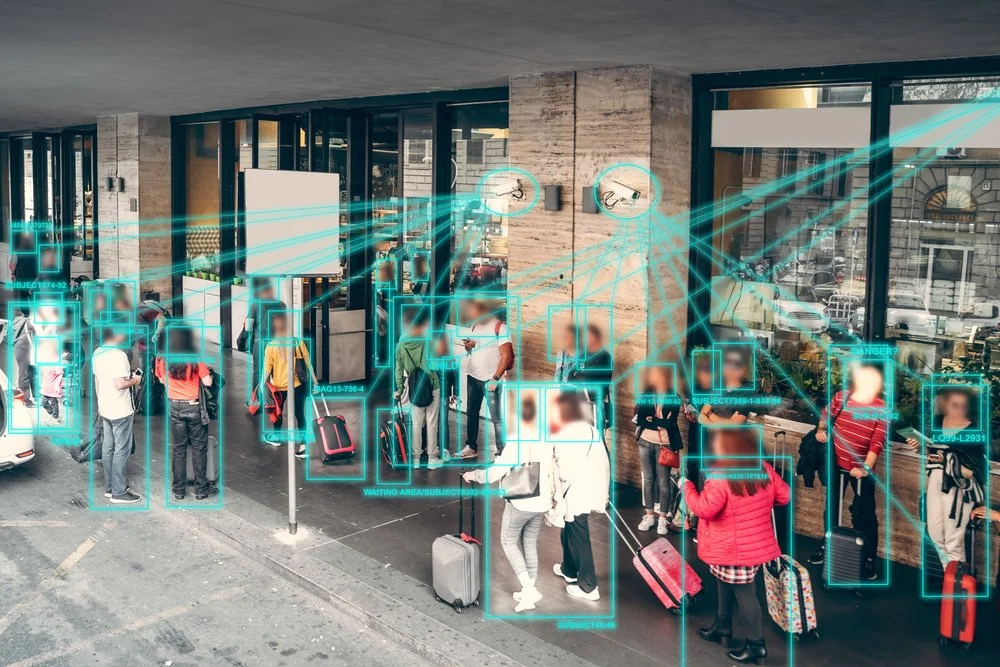
Object tracking is the process of identifying and following specific objects as they move through a sequence of video frames. While object detection focuses on recognizing and localizing items in individual images, tracking extends this capability by maintaining an object’s identity over time. It connects detections across frames, building a coherent narrative of how each object moves, interacts, and changes within a scene.
At its core, object tracking answers questions that static detection cannot: Where did the object come from? Where is it going? Has it interacted with other objects? This continuity transforms raw visual data into a structured timeline of events. A tracker might observe a person entering a building, walking to a counter, and exiting moments later, all while maintaining the same identity across frames.
From Detection to Understanding
The evolution from object detection to object tracking marks a fundamental shift in how visual systems interpret the world. Object detection operates on individual frames, identifying and labeling items such as cars, people, or bicycles without any connection to previous or future observations. This works well for static images or short analyses but fails to capture the continuity of motion and interaction that defines real-world activity.
Object tracking bridges this gap by linking detections across time. Instead of treating each detection as an isolated event, a tracker maintains a consistent identity for every object throughout a video sequence. This allows the system to understand not only what is in the scene but also how it moves, where it came from, and what it might do next. Through motion trajectories, the model records direction, speed, and persistence. When combined with spatial awareness, it can even infer relationships between objects, such as vehicles yielding to pedestrians or groups moving together through a crowd.
Modern tracking algorithms take this further by incorporating temporal reasoning and predictive modeling. They can anticipate an object’s next position, recover it after occlusion, and recognize changes in behavior over time. This continuous interpretation transforms computer vision from a reactive tool into a predictive system, one capable of drawing insights from motion patterns and context.
Tracking provides the foundation for higher-order understanding, such as intent recognition, anomaly detection, and behavioral analytics. In traffic systems, it enables the prediction of potential collisions. In surveillance, it highlights unusual movement patterns. In industrial automation, it supports workflow optimization by analyzing how machines or people interact over time.
Why Context Matters in Computer Vision
In computer vision, context refers to the surrounding information that gives meaning to what a system sees. It includes three key dimensions: spatial, temporal, and semantic. Spatial context involves how objects relate to each other and to their environment. Temporal context captures how these relationships evolve. Semantic context interprets the purpose or intent behind movements and interactions. Without these layers, visual systems operate in isolation, able to detect objects but unable to understand their roles or relationships within a scene.
Object tracking introduces this missing context by preserving continuity and motion across frames. Through consistent identity assignment, it allows a model to follow how objects behave, anticipate how they might move next, and interpret intent behind those actions. For instance, a tracker can distinguish between a pedestrian walking along the sidewalk and one who steps onto the street. It can recognize that a car slowing near an intersection is preparing to turn or stop. These distinctions are impossible without temporal reasoning.
Context also transforms the capabilities of computer vision systems. With tracking, they move from reactive to predictive intelligence. Instead of simply identifying what exists in a frame, they learn to infer what is happening and what might happen next. This transition enables richer decision-making in real time. In safety-critical domains like autonomous driving or surveillance, predictive awareness can be the difference between passive observation and proactive response.
By embedding spatial, temporal, and semantic context, object tracking gives computer vision the depth it has long lacked. It connects perception to understanding and transforms visual AI into a system capable of reasoning about the dynamic nature of the world it observes.
Object Tracking Techniques in Computer Vision
Modern object tracking has evolved into a sophisticated field that combines geometry, motion modeling, and deep learning. Contemporary systems are not limited to following an object’s position but instead seek to model how objects behave, interact, and evolve within a scene. Several core techniques underpin this transformation, each contributing to more robust and context-aware performance.
Temporal Continuity
At the heart of tracking lies frame-to-frame association, the process of linking an object’s detections across consecutive frames. Traditional methods relied on motion models such as the Kalman Filter or optical flow to estimate where an object would appear next. Modern deep learning trackers enhance this by learning temporal embeddings that encode both visual similarity and predicted motion patterns. Temporal continuity ensures that each tracked entity maintains a stable identity, even as it moves rapidly, changes appearance, or momentarily leaves the camera’s view.
Multi-Cue Integration
Accurate tracking depends on fusing multiple sources of information. Appearance features extracted from deep convolutional or transformer networks describe how an object looks, while motion cues capture its speed and direction. Geometry and depth provide structural context, and semantic cues embed object category or intent. Integrating these diverse signals allows trackers to remain reliable even when one cue, such as appearance under poor lighting, fails. The best modern systems treat tracking as a multi-sensory perception problem rather than a single-signal task.
Scene-Level Reasoning
Real-world environments rarely contain isolated objects. Scene-level reasoning helps trackers interpret interactions between multiple entities. By modeling how objects influence each other’s motion, such as vehicles avoiding collisions or groups of pedestrians moving together, trackers achieve a higher level of understanding. Some approaches use social behavior modeling or motion graphs to capture these dependencies, enabling the system to predict how the scene will evolve as a whole rather than simply following individual objects.
Unified Architectures
Recent advances have produced end-to-end architectures that jointly perform detection, association, and prediction. Transformer-based models and spatio-temporal graph neural networks represent the leading edge of this trend. These architectures process video as a sequence of interrelated frames, learning long-range dependencies and global motion coherence. By reasoning about objects collectively instead of in isolation, unified trackers achieve higher accuracy, fewer identity switches, and improved robustness in dynamic or crowded environments.
Key Applications of Object Tracking
Object tracking provides the temporal intelligence that turns perception into understanding. Its ability to maintain consistent identities and interpret motion across time has made it foundational to several industries that depend on dynamic visual data.
Autonomous Mobility
In autonomous vehicles, tracking enables the perception stack to move from detection to prediction. By following pedestrians, cyclists, and vehicles over time, the system can recognize intent and anticipate movement. A pedestrian slowing before a crosswalk or a vehicle drifting within a lane conveys important behavioral cues that help a self-driving system make safe, proactive decisions. Multi-object tracking also contributes to path planning, collision avoidance, and traffic flow analysis, creating a more complete situational picture of the driving environment.
Retail and Smart Environments
In retail analytics and smart spaces, object tracking helps transform passive video feeds into actionable insights. Tracking enables behavioral analysis, such as identifying dwell times, heatmap generation, and customer journey mapping. It supports queue management by measuring waiting times and crowd flow, and enhances store layout optimization by showing how people move through different sections. When combined with re-identification and privacy-preserving techniques, tracking provides business intelligence without compromising security or compliance.
Security and Defense
In security, defense, and public safety applications, tracking provides the continuity needed to monitor behavior and detect anomalies. Multi-camera systems rely on tracking to maintain identity across viewpoints, helping detect suspicious or coordinated movements that single-frame analysis would miss. In defense contexts, tracking supports target recognition, drone surveillance, and threat prediction by correlating object motion and patterns over extended periods.
Robotics and Augmented Reality
For robots and AR systems, object tracking delivers spatial awareness essential for real-world interaction. Robots depend on accurate motion tracking to manipulate objects, navigate cluttered environments, and avoid collisions. In augmented and mixed reality, tracking stabilizes virtual overlays and allows digital content to interact meaningfully with real-world motion. Both domains require low-latency, high-accuracy tracking to maintain contextual awareness in constantly changing environments.
Major Challenges in Object Tracking
Despite rapid progress, object tracking remains one of the most complex areas in computer vision. Real-world conditions introduce variability, uncertainty, and constraints that challenge even the most advanced algorithms.
Occlusion and Visual Variability
Occlusion, when one object blocks another, is a fundamental challenge. In crowded or cluttered environments, tracked objects may disappear for several frames and reappear later in different positions or poses. Changes in lighting, motion blur, or camera angles further distort appearance cues, making consistent identity maintenance difficult. Robust tracking systems must predict object trajectories and rely on temporal continuity or motion models to recover from such interruptions.
Maintaining Identity over Long Sequences
Long-term tracking requires maintaining consistent identities over extended time periods, sometimes across multiple cameras. Re-identification techniques attempt to match the same object after it re-enters the scene, but appearance changes and camera inconsistencies can cause identity switches. Building reliable re-identification embeddings that remain stable across contexts is a continuing research focus.
Balancing Speed and Accuracy
Many use cases, such as autonomous driving or robotics, require real-time performance. High-accuracy deep learning models are often computationally heavy, leading to latency and high energy costs. Conversely, lightweight models may struggle with precision under complex conditions. Achieving this balance involves model optimization, quantization, and efficient feature extraction to sustain accuracy without sacrificing speed.
Scalability in Dense Environments
Tracking hundreds of objects simultaneously, as in crowded intersections or retail spaces, introduces scalability issues. Systems must manage memory efficiently, handle overlapping trajectories, and minimize false associations. Multi-target tracking under such load demands architectures that can reason globally rather than process each object independently.
Data Diversity and Annotation
High-quality tracking datasets are labor-intensive to create, as they require frame-by-frame labeling of object identities and trajectories. The lack of annotated data for diverse environments and object types limits the generalizability of many models. Synthetic data generation and self-supervised learning are emerging as partial solutions, but large-scale, domain-specific annotation remains critical for advancing real-world performance.
Recommendations in Object Tracking
The following recommendations reflect best practices emerging from recent research and industry applications.
Fuse Multiple Cues for Robustness
No single signal, appearance, motion, geometry, or semantics is reliable across all conditions. Combining them improves resilience. Appearance features provide visual consistency, motion cues preserve temporal continuity, geometry constrains trajectories within realistic bounds, and semantic information adds behavioral context. Multi-cue fusion ensures that when one input degrades, others sustain reliable tracking.
Use Re-Identification and Memory Modules
In long-term or multi-camera settings, integrating re-identification (ReID) embeddings allows a system to recover object identities even after temporary loss or occlusion. Memory modules that store recent embeddings or motion states enable re-association, reducing ID switches and fragmentation. This capability is vital in surveillance, retail analytics, and traffic management, where continuity defines accuracy.
Integrate Scene Knowledge and Spatial Priors
Embedding scene-specific knowledge, such as maps, lanes, or walkable zones, constrains object trajectories to realistic paths. This not only improves accuracy but also reduces false positives. For instance, in autonomous driving, limiting motion predictions to road boundaries ensures physically plausible tracking and reduces computational load.
Balance Speed and Efficiency
Deployable tracking systems must meet real-time performance requirements. Use model optimization techniques such as pruning, quantization, and lightweight backbones to accelerate inference. For large-scale deployments, consider distributed processing pipelines that offload compute-intensive steps to edge or cloud servers.
Embrace Adaptive and Online Learning
Static models degrade over time as environmental conditions change. Online adaptation, updating model weights or parameters in response to new data, helps maintain accuracy. Techniques such as self-supervised fine-tuning, domain adaptation, and continual learning can extend model lifespan without full retraining.
Build and Curate Diverse Datasets
Tracking performance depends heavily on the diversity and representativeness of training data. Invest in datasets that capture a range of motion patterns, object types, and environmental conditions. Synthetic data, when paired with real-world footage, can help fill annotation gaps and improve generalization.
Read more: How Object Detection is Revolutionizing the AgTech Industry
How We Can Help
At Digital Divide Data (DDD), we understand that successful object tracking depends on more than algorithms; it depends on data quality, annotation precision, and scalable integration. Our teams combine domain expertise with deep technical capability to help organizations build end-to-end computer vision pipelines that are both context-aware and deployment-ready.
We design workflows that ensure consistent object identity labeling across frames, handle complex occlusions, and preserve spatial-temporal relationships. For projects involving multi-camera or long-duration sequences, DDD implements advanced re-identification annotation protocols to maintain accuracy and continuity.
Read more: Video Annotation for Generative AI: Challenges, Use Cases, and Recommendations
Conclusion
From autonomous vehicles to intelligent surveillance and robotics, the ability to maintain continuity and context has become essential. Modern object tracking architectures, powered by transformers, graph neural networks, and multi-cue fusion, are redefining what it means for machines to “see.” They enable systems to interpret not just what is in a scene, but how and why things move, interact, and evolve.
Yet, even as algorithms advance, success in object tracking continues to depend heavily on high-quality data, precise annotations, and scalable training workflows. The best technology cannot perform well without accurate temporal labeling and real-world variability captured in its data.
Partner with DDD to build object tracking solutions that see and understand the world in motion.
References
-
De Plaen, R., Zhu, H., & Van Gool, L. (2024). Contrastive Learning for Multi-Object Tracking with Transformers. In Proceedings of the IEEE/CVF Winter Conference on Applications of Computer Vision (WACV 2024).
-
Tokmakov, P., et al. (2024). CoTracker: Joint Point Tracking with Transformers. In Proceedings of the European Conference on Computer Vision (ECCV 2024).
-
NVIDIA Developer Blog. (2024, May). Mitigating Occlusions with Single-View 3D Tracking. Retrieved from https://developer.nvidia.com/blog
FAQs
What is the difference between online and offline tracking?
Online tracking processes each frame sequentially in real time, updating tracks as new frames arrive. Offline tracking, by contrast, uses the entire video sequence at once, enabling global optimization of trajectories but making it unsuitable for live applications such as robotics or surveillance.
How do object trackers handle partial or full occlusion?
Most modern object trackers use motion prediction combined with re-identification embeddings to infer where an object is likely to reappear. Some deep models also learn occlusion patterns, allowing them to maintain identity even when visual evidence is temporarily missing.
What is multi-object tracking, and how is it different from single-object tracking?
Single-object tracking focuses on one target at a time, often using initialization in the first frame. Multi-object tracking (MOT) simultaneously detects and associates multiple instances across frames, requiring robust ID management, data association, and re-identification mechanisms.
Can synthetic data improve tracking performance?
Yes. Synthetic datasets can fill gaps in rare scenarios, like extreme weather, night-time scenes, or unusual motion, by generating annotated sequences at scale. When properly mixed with real footage, synthetic data enhances model robustness and generalization.

Umang architects and drives full-funnel content marketing strategies for AI training data solutions, spanning computer vision, data annotation, data labelling, and Physical and Generative AI services. He works closely with senior leadership to shape DDD’s market positioning, translating complex technical capabilities into compelling narratives that resonate with global AI innovators.
How Object Tracking Brings Context to Computer Vision Read Post »