
Celebrating 25 years of DDD's Excellence and Social Impact.

Sparse Maps Services

Sparse Map layers that help systems localize, anticipate, and act at scale.

Sparse Mapping Solutions

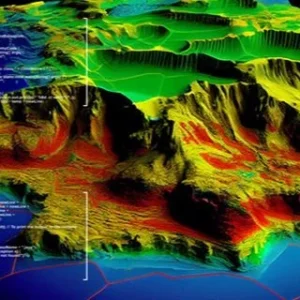
Sparse maps capture only the most stable, high-signal road features (lane geometry, markings, poles/signs/guardrails, and other “road furniture”) so ADAS and autonomy stacks can localize precisely and extend perception beyond line-of-sight—without the overhead of dense 3D mapping.

What you get with DDD

Lane and road geometry layers (centerlines, boundaries, topology)

Landmark/road-furniture layers for localization (signs, poles, barriers, etc.)

QA + consistency checks across tiles/regions

Continuous updates and change management for evolving roads

ISO-27001 1
AICPA-SOC
GDPR
HIPAA Compliant
Tisax-Certificate

Sparse Maps Use Cases

Perception & Localization
Sparse maps improve a vehicle’s ability to localize itself quickly and accurately, especially in GPS-challenged environments.
Read More
  • Lane geometry, curvature, and centerlines
  • Road boundaries and intersection structure
  • Stop signs, traffic lights, and regulatory features

Simulation & Scenario Generation

High-quality, sparse maps feed simulation engines with real-world spatial structure, enabling safer and faster validation cycles.
Read More
  • Scenario reconstruction and edge-case modeling
  • Regional environment mapping for virtual testing
  • Variation generation for stress-testing ADAS models
Autonomous Navigation

Provide vehicles and robots with minimal yet critical map layers for planning, routing, and safe maneuvering.

Read More
  • Traversability indicators
  • Static obstacle mapping
  • Road topology and connectivity graphs

Change Detection & Infrastructure Monitoring

Sparse maps facilitate the detection of network-level changes in roads, assets, and environmental features.
Read More
  • Construction updates
  • Traffic sign changes
  • Road surface condition mapping
Sparse Maps Use Cases 1

Industries We Support

DDD’s data collection services support a wide range of AI initiatives, including:

Autonomous Driving

Provide ADAS and AV systems with high-precision spatial intelligence for safer navigation.

Agriculture

Map farm roads, boundaries, and machinery zones to enhance autonomous equipment guidance.

Defensetech

Deliver situational geospatial awareness for mission planning and unmanned system mobility.

Urban Planning & Smart Cities

Enable planners to assess road networks and mobility patterns with accurate, sparse map layers.

Disaster Management

Support rapid-response teams with updated road accessibility and hazard-aware mapping.

What Our Clients Say

DDD’s mapping workflow helped our AV team reduce sparse-map production time by 40%.

– Lead Autonomy Engineer, Autonomous Vehicle Company

The geospatial curation from DDD enabled our urban-mapping startup to validate dozens of edge cases quickly.

– Head of Data Science, Intelligence Firm

Their sensor-fusion data pipelines strengthened our robotics navigation stack, improving route stability significantly.

– CTO, Robotics Solutions Provider

DDD’s field data collection accelerated our agricultural guidance algorithms, improving path-planning accuracy by 18%.

– Chief Product Officer, Agritech Analytics Firm

Blogs

Read expert articles, insights, and industry benchmarks across key AI industries.

Upgrade Your ADAS Models with Better Spatial Data

Frequently Asked Questions

Are sparse maps the same as HD maps?

Sparse maps are often part of an HD mapping strategy—typically the localization-ready layer(s) and essential lane geometry—kept lightweight for runtime efficiency.

What types of ADAS mapping data can DDD produce?

We create sparse maps including lanes, boundaries, intersections, traffic assets, drivable space, elevation, connectivity, and static objects, tailored to your region and vehicle platform.

Which regions and environments do you support?

We operate globally, enabling data capture in varied terrains, weather conditions, and road types. We co-design the region list with you during scoping.

How do you ensure mapping accuracy?

Through calibration checks, contributor training, automated QA, human validation, and topology audits aligned with ADAS map standards.

Is my data secure?

Yes. We maintain strict access controls, environment isolation, encrypted transfers, and alignment with your enterprise security requirements.

Can you annotate or enrich the mapping data?

Absolutely. We add attributes, classify features, validate topology, and produce model-ready geospatial layers.

How long does a typical mapping project take?

Timelines vary by region size, data complexity, and update frequency. After discovery, we provide a detailed plan with phased deliveries.

Scroll to Top