Celebrating 25 years of DDD's Excellence and Social Impact.

Computer Vision

Use Cases 1 1 scaled e1770977330117

Human-in-the-Loop Computer Vision for Safety-Critical Systems

The promise of automation has always been efficiency. Fewer delays, faster decisions, reduced human error. And yet, as these systems become more autonomous, something interesting happens: risk does not disappear; it migrates.

Instead of a distracted operator missing a signal, we may now face a model that misinterprets glare on a wet road. Instead of a fatigued technician overlooking a defect, we might have a neural network misclassifying an unusual pattern it never encountered in training data for AV.

There’s also a persistent illusion in the market: the idea of “fully autonomous” systems. The marketing language often suggests a clean break from human dependency. But in practice, what emerges is layered oversight, remote support teams, escalation protocols, human review panels, and more. 

Enterprises must document who intervenes, how decisions are recorded, and what safeguards are in place when models behave unpredictably. Boards ask uncomfortable questions about liability. Insurers scrutinize safety architecture. All of these points toward a conclusion that might feel less glamorous but far more grounded:

In safety-critical environments, Human-in-the-Loop (HITL) computer vision is not a fallback mechanism; it is a structural requirement for resilience, accountability, and trust. In this detailed guide, we will explore Human-in-the-Loop (HITL) computer vision for safety-critical systems, develop effective architectures, and establish robust workflows.

What Is Human-in-the-Loop in Computer Vision?

“Human-in-the-Loop” can mean different things depending on who you ask. For some, it’s about annotation, humans labeling bounding boxes and segmentation masks. For others, it’s about a remote operator taking control of a vehicle during edge cases. In reality, HITL spans the entire lifecycle of a vision system.

Human involvement can be embedded within:

Data labeling and validation – Annotators refining datasets, resolving ambiguous cases, and identifying mislabeled samples.

Model training and retraining – Subject matter experts reviewing outputs, flagging systematic errors, guiding retraining cycles.

Real-time inference oversight – Operators reviewing low-confidence predictions or intervening when anomalies occur.

Post-deployment monitoring – Analysts auditing performance logs, reviewing incidents, and adjusting thresholds.

Why Vision Systems Require Special Attention

Vision systems operate in messy environments. Unlike structured databases, the visual world is unpredictable. Perception errors are often high-dimensional. A small shadow may alter classification confidence. A slightly altered angle can change bounding box accuracy. A sticker on a stop sign might confuse detection.

Edge cases are not theoretical; they’re daily occurrences. Consider:

  • A construction worker wearing reflective gear that obscures their silhouette.
  • A pedestrian pushing a bicycle across a road at dusk.
  • Medical imagery containing artifacts from older equipment models.

Visual ambiguity complicates matters further. Is that a fallen branch on the highway or just a dark patch? Is a cluster of pixels noise or an early-stage anomaly in a scan?

Human judgment, imperfect as it is, excels at contextual interpretation. Vision models excel at pattern recognition at scale. In safety-critical systems, one without the other appears incomplete.

Why Safety-Critical Systems Cannot Rely on Full Autonomy

The Nature of Safety-Critical Environments

In a content moderation system, a false positive may frustrate a user. In a surgical assistance system, a false positive could mislead a clinician. The difference is not incremental; it’s structural. When failure consequences are severe, explainability becomes essential. Stakeholders will ask: What happened? Why did the system decide this? Could it have been prevented?

Without a human oversight layer, answers may be limited to probability distributions and confidence scores, insufficient for legal or operational review.

The Automation Paradox

There’s an uncomfortable phenomenon sometimes described as the automation paradox. As systems become more automated, human operators intervene less frequently. Then, when something goes wrong, often something rare and unusual, the human is suddenly required to take control under pressure.

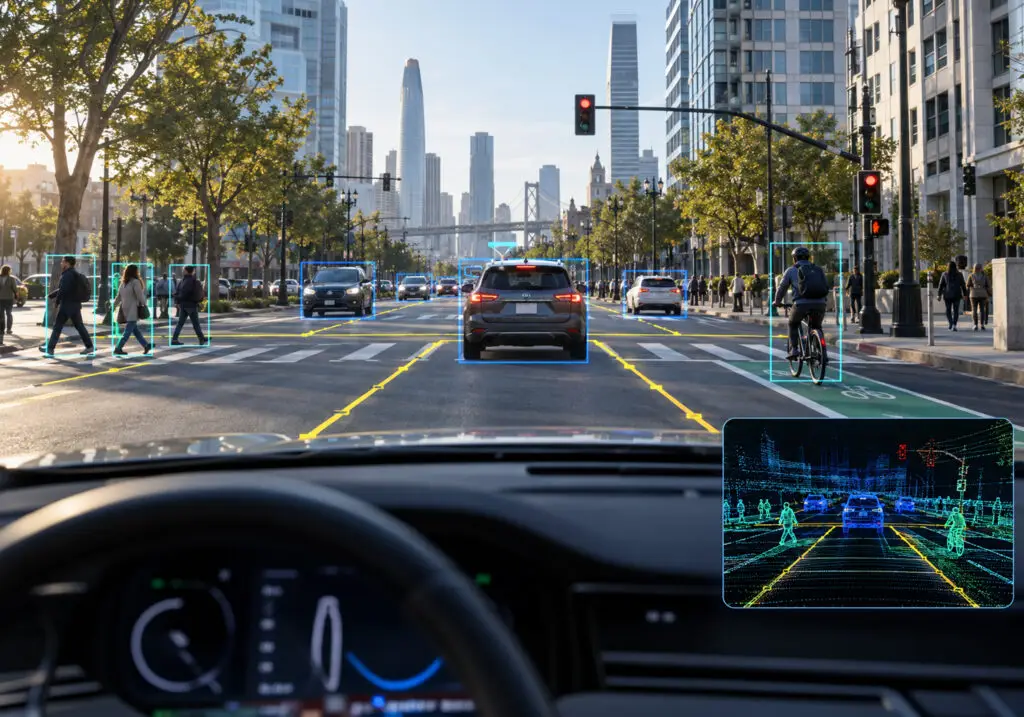
Imagine a remote vehicle support operator overseeing dozens of vehicles. Most of the time, the dashboard remains calm. Suddenly, a complex intersection scenario triggers an escalation. The operator has seconds to assess camera feeds, sensor overlays, and context.

The irony? The more reliable the system appears, the less prepared the human may be for intervention. That tension suggests full autonomy may not simply be a technical challenge; it’s a human systems design challenge.

Trust, Liability, and Accountability

Who is responsible when perception fails?

In regulated markets, accountability frameworks increasingly require verifiable oversight layers. Enterprises must demonstrate not just that a system performs well in benchmarks, but that safeguards exist when it does not. Human oversight becomes both a technical mechanism and a legal one. It provides a checkpoint. A record. A place where responsibility can be meaningfully assigned. Without it, organizations may find themselves exposed, not only technically, but also reputationally and legally.

Where Humans Fit in the Vision Pipeline

Data-Centric HITL

Data is where many safety issues originate. A vision model trained predominantly on sunny weather may struggle in fog. A dataset lacking diversity may introduce bias in detection.

Human-in-the-loop at the data stage includes:

  • Annotation quality control
  • Edge-case identification
  • Active learning loops
  • Bias detection and correction
  • Continuous dataset refinement

For example, annotators might notice that nighttime pedestrian images are underrepresented. Or that certain industrial defect types appear inconsistently labeled. Those observations feed directly into model improvement. Active learning systems can flag uncertain predictions and route them to expert reviewers. Over time, the dataset evolves, ideally reducing blind spots. Data-centric HITL may not feel dramatic, but it’s foundational.

Model Development HITL

An engineering team might notice that a system confuses scaffolding structures with human silhouettes. Instead of treating all errors equally, they categorize them. Confidence thresholds are particularly interesting. Set them too low, and the system rarely escalates, risking missed edge cases. Set them too high, and operators drown in alerts. Finding that balance often requires iterative human evaluation, not just statistical optimization.

Real-Time Operational HITL

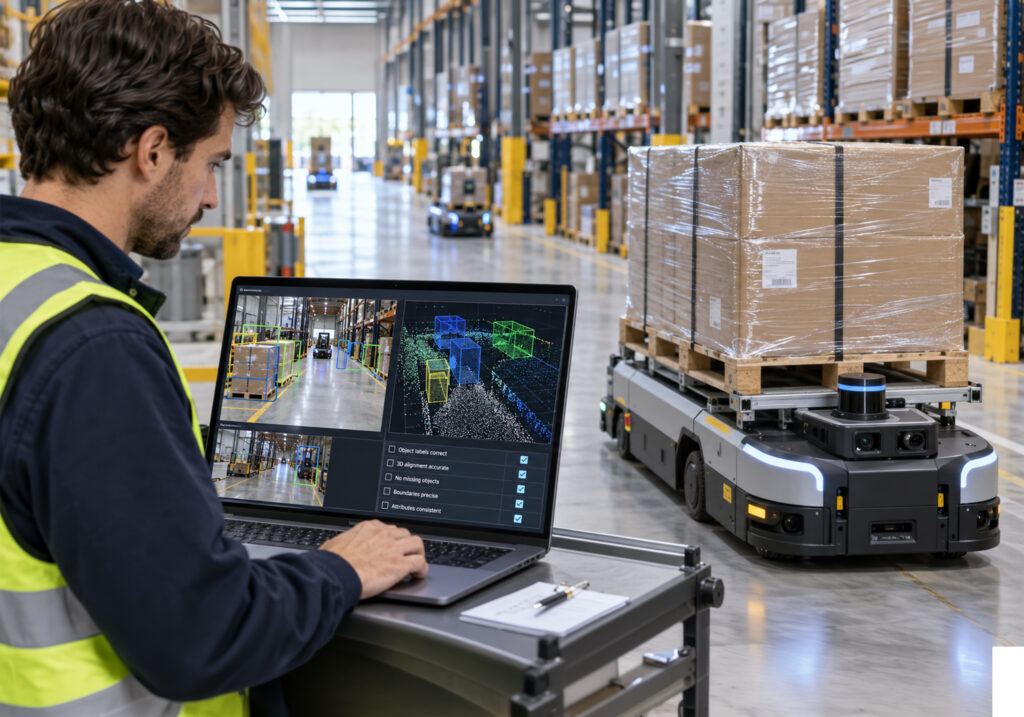
In live environments, human escalation mechanisms become visible. Confidence-based routing may direct low-certainty detections to a monitoring center. An operator reviews video snippets and confirms or overrides decisions. Override mechanisms must be clear and accessible. If an industrial robot’s vision system detects a human in proximity, a supervisor should have immediate authority to pause operations. Designing these workflows requires clarity about response times, accountability, and documentation.

Post-Deployment HITL

No system remains static after deployment. Incident review boards analyze edge cases. Drift detection workflows flag performance degradation as environments change. Retraining cycles incorporate newly observed patterns. Safety audits and compliance documentation often rely on human interpretation of logs and events. In this sense, HITL extends far beyond the moment of decision; it becomes an ongoing governance process.

HITL Architectures for Safety-Critical Computer Vision

Confidence-Gated Architectures

In confidence-gated systems, the model outputs a probability score. Predictions below a defined threshold are escalated to human review. Dynamic thresholding may adjust based on context. For instance, in a low-risk warehouse zone, a slightly lower confidence threshold might be acceptable. Near hazardous materials, stricter thresholds apply. This approach appears straightforward but requires careful calibration. Over-escalation can overwhelm operators, and under-escalation can introduce risk.

Dual-Channel Systems

Dual-channel systems combine automated decision-making with parallel human validation streams. For example, an automated rail inspection system flags potential track anomalies. A human analyst reviews flagged images before maintenance crews are dispatched. Redundancy increases reliability, though it also increases operational cost. Enterprises must weigh efficiency against safety margins.

Supervisory Control Models

Here, humans monitor dashboards and intervene only under specific triggers. Visualization tools become critical. Operators need clear summaries, not dense technical overlays. Risk scoring, anomaly heatmaps, and simplified indicators help maintain situational awareness. A poorly designed interface may undermine even the most accurate model.

Designing Effective Human-in-the-Loop Workflows

Avoiding Cognitive Overload

Operators in control rooms already face information saturation. Introducing AI-generated alerts can amplify that burden. Interface clarity matters. Alerts should be prioritized. Context, timestamp, camera angle, and environmental conditions should be visible at a glance. Alarm fatigue is real. If too many low-risk alerts trigger, operators may begin ignoring them. Ironically, the system designed to enhance safety could erode it.

Operator Training & Skill Retention

Skill retention may require deliberate effort. Continuous simulation environments can expose operators to rare scenarios, black ice on roads, unexpected pedestrian behavior, and unusual equipment failures. Scenario-based drills keep intervention skills sharp. Otherwise, human oversight becomes nominal rather than functional.

Latency vs. Safety Tradeoffs

How fast must a human respond?  Designing for controlled degradation, where a system transitions safely into a low-risk mode while awaiting human input, can mitigate time pressure. Full automation may still be justified in tightly constrained environments. The key is recognizing where that boundary lies.

How Digital Divide Data (DDD) Can Help

Building and maintaining Human-in-the-Loop computer vision systems isn’t just a technical challenge; it’s an operational one. It demands disciplined data workflows, rigorous quality control, and scalable human oversight. Digital Divide Data (DDD) helps enterprises structure this foundation. From high-precision, domain-specific annotation with multi-layer QA to edge-case identification and bias detection, DDD designs processes that surface ambiguity early and reduce downstream risk.

As systems evolve, DDD supports active learning loops, retraining workflows, and compliance-ready documentation that meets regulatory expectations. For real-time escalation models, DDD can also manage trained review teams aligned to defined intervention protocols. In effect, DDD doesn’t just supply labeled data; it builds the structured human oversight that safety-critical AI systems depend on.

Conclusion

The real question isn’t whether AI can operate autonomously. In many environments, it already does. The better question is where autonomy should pause, and how humans are positioned when it does. Human-in-the-Loop systems acknowledge something simple but important: uncertainty is inevitable. Rather than pretending it can be eliminated, they design for it. They create checkpoints, escalation paths, audit trails, and shared responsibility between machines and people.

For enterprises operating in regulated, high-risk industries, this approach is increasingly non-negotiable. Compliance expectations are tightening. Liability frameworks are evolving. Stakeholders want proof that safeguards exist, not just performance metrics.

The future of safety-critical AI will not be defined by removing humans from the loop. It will be defined by placing them intelligently within it, where judgment, context, and responsibility still matter most.

Talk to our experts to build safer vision systems with structured human oversight.

References

European Parliament & Council of the European Union. (2024). Regulation laying down harmonised rules on artificial intelligence (Artificial Intelligence Act). Official Journal of the European Union.

Waymo Research. (2024). Advancements in end-to-end multimodal models for autonomous driving systems. Waymo LLC.

NVIDIA Corporation. (2024). Designing human-in-the-loop AI systems for real-time decision environments. NVIDIA Developer Blog.

European Commission. (2024). High-risk AI systems and human oversight requirements under the EU digital strategy. Publications Office of the European Union.

FAQs

Is Human-in-the-Loop always required for safety-critical computer vision systems?
In most regulated or high-risk environments, some form of human oversight is typically expected, though its depth varies by use case.

Does adding humans to the loop significantly reduce efficiency?
When properly calibrated, HITL usually targets only high-uncertainty cases, limiting impact on overall efficiency.

How do organizations decide which decisions should be escalated to humans?
Escalation thresholds are generally defined based on risk severity, confidence scores, and regulatory exposure.

What are the highest hidden costs of Human-in-the-Loop systems?
Ongoing training, interface optimization, quality control management, and compliance documentation often represent the highest hidden costs.

Human-in-the-Loop Computer Vision for Safety-Critical Systems Read Post »

Mapping Localization for SLAM

Why High-Quality Data Annotation Still Defines Computer Vision Model Performance

Teams often invest months comparing backbones, tuning hyperparameters, and experimenting with fine-tuning strategies. Meanwhile, labeling guidelines sit in a shared document that has not been updated in six months. Bounding box standards vary slightly between annotators. Edge cases are discussed informally but never codified. The model trains anyway. Metrics look decent. Then deployment begins, and subtle inconsistencies surface as performance gaps.

Despite progress in noise handling and model regularization, high-quality annotation still fundamentally determines model accuracy, generalization, fairness, and safety. Models can tolerate some noise. They cannot transcend the limits of flawed ground truth.

In this article, we will explore how data annotation shapes model behavior at a foundational level, what practical systems teams can put in place to ensure their computer vision models are built on data they can genuinely trust.

What “High-Quality Annotation” Actually Means

Technical Dimensions of Annotation Quality

Label accuracy is the most visible dimension. For classification, that means the correct class. Object detection, it includes both the correct class and precise bounding box placement. For segmentation, it extends to pixel-level masks. For keypoint detection, it means spatially correct joint or landmark positioning. But accuracy alone does not guarantee reliability.

Consistency matters just as much. If one annotator labels partially occluded bicycles as bicycles and another labels them as “unknown object,” the model receives conflicting signals. Even if both decisions are defensible, inconsistency introduces ambiguity that the model must resolve without context.

Granularity defines how detailed annotations should be. A bounding box around a pedestrian might suffice for a traffic density model. The same box is inadequate for training a pose estimation model. Polygon masks may be required. If granularity is misaligned with downstream objectives, performance plateaus quickly.

Completeness is frequently overlooked. Missing objects, unlabeled background elements, or untagged attributes silently bias the dataset. Consider retail shelf detection. If smaller items are systematically ignored during annotation, the model will underperform on precisely those objects in production.

Context sensitivity requires annotators to interpret ambiguous scenarios correctly. A construction worker holding a stop sign in a roadside setup should not be labeled as a traffic sign. Context changes meaning, and guidelines must account for it.

Then there is bias control. Balanced representation across demographics, lighting conditions, geographies, weather patterns, and device types is not simply a fairness issue. It affects generalization. A vehicle detection model trained primarily on clear daytime imagery will struggle at dusk. Annotation coverage defines exposure.

Task-Specific Quality Requirements

Different computer vision tasks demand different annotation standards.

In image classification, the precision of class labels and class boundary definitions is paramount. Misclassifying “husky” as “wolf” might not matter in a casual photo app, but it matters in wildlife monitoring.

In object detection, bounding box tightness significantly impacts performance. Boxes that consistently include excessive background introduce noise into feature learning. Loose boxes teach the model to associate irrelevant pixels with the object.

In semantic segmentation, pixel-level precision becomes critical. A few misaligned pixels along object boundaries may seem negligible. In aggregate, they distort edge representations and degrade fine-grained predictions.

In keypoint detection, spatial alignment errors can cascade. A misplaced elbow joint shifts the entire pose representation. For applications like ergonomic assessment or sports analytics, such deviations are not trivial.

In autonomous systems, annotation requirements intensify. Edge-case labeling, temporal coherence across frames, occlusion handling, and rare event representation are central. A mislabeled traffic cone in one frame can alter trajectory planning.

Annotation quality is not binary. It is a spectrum shaped by task demands, downstream objectives, and risk tolerance.

The Direct Link Between Annotation Quality and Model Performance

Annotation quality affects learning in ways that are both subtle and structural. It influences gradients, representations, decision boundaries, and generalization behavior.

Label Noise as a Performance Ceiling

Noisy labels introduce incorrect gradients during training. When a cat is labeled as a dog, the model updates its parameters in the wrong direction. With sufficient data, random noise may average out. Systematic noise does not.

Systematic noise shifts learned decision boundaries. If a subset of small SUVs is consistently labeled as sedans due to annotation ambiguity, the model learns distorted class boundaries. It becomes less sensitive to shape differences that matter. Random noise slows convergence. The model must navigate conflicting signals. Training requires more epochs. Validation curves fluctuate. Performance may stabilize below potential.

Structured noise creates class confusion. Consider a dataset where pedestrians are partially occluded and inconsistently labeled. The model may struggle specifically with occlusion scenarios, even if overall accuracy appears acceptable. It may seem that a small percentage of mislabeled data would not matter. Yet even a few percentage points of systematic mislabeling can measurably degrade object detection precision. In detection tasks, bounding box misalignment compounds this effect. Slightly mispositioned boxes reduce Intersection over Union scores, skew training signals, and impact localization accuracy.

Segmentation tasks are even more sensitive. Boundary errors introduce pixel-level inaccuracies that propagate through convolutional layers. Edge representations become blurred. Fine-grained distinctions suffer. At some point, annotation noise establishes a performance ceiling. Architectural improvements yield diminishing returns because the model is constrained by flawed supervision.

Representation Contamination

Poor annotations do more than reduce metrics. They distort learned representations. Models internalize semantic associations based on labeled examples. If background context frequently co-occurs with a class label due to loose bounding boxes, the model learns to associate irrelevant background features with the object. It may appear accurate in controlled environments, but it fails when the context changes.

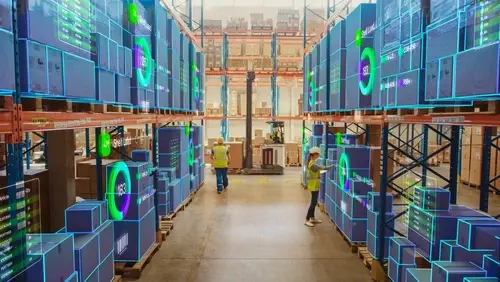
This is representation contamination. The model encodes incorrect or incomplete features. Downstream tasks inherit these weaknesses. Fine-tuning cannot fully undo foundational distortions if the base representations are misaligned. Imagine training a warehouse detection model where forklifts are often partially labeled, excluding forks. The model learns an incomplete representation of forklifts. In production, when a forklift is seen from a new angle, detection may fail.

What Drives Annotation Quality at Scale

Annotation quality is not an individual annotator problem. It is a system design problem.

Annotation Design Before Annotation Begins

Quality starts before the first image is labeled. A clear taxonomy definition prevents overlapping categories. If “van” and “minibus” are ambiguously separated, confusion is inevitable. Detailed edge-case documentation clarifies scenarios such as partial occlusion, reflections, or atypical camera angles.

Hierarchical labeling schemas provide structure. Instead of flat categories, parent-child relationships allow controlled granularity. For example, “vehicle” may branch into “car,” “truck,” and “motorcycle,” each with subtypes.

Version-controlled guidelines matter. Annotation instructions evolve as edge cases emerge. Without versioning, teams cannot trace performance shifts to guideline changes. I have seen projects where annotation guides existed only in chat threads.

Multi-Annotator Frameworks

Single-pass annotation invites inconsistency. Consensus labeling approaches reduce variance. Multiple annotators label the same subset of data. Disagreements are analyzed. Inter-annotator agreement is quantified.

Disagreement audits are particularly revealing. When annotators diverge systematically, it often signals unclear definitions rather than individual error. Tiered review systems add another layer. Junior annotators label data. Senior reviewers validate complex or ambiguous samples. This mirrors peer review in research environments. The goal is not perfection. It is a controlled, measurable agreement.

QA Mechanisms

Quality assurance mechanisms formalize oversight. Gold-standard test sets contain carefully validated samples. Annotator performance is periodically evaluated against these references. Random audits detect drift. If annotators become fatigued or interpret guidelines loosely, audits reveal deviations.

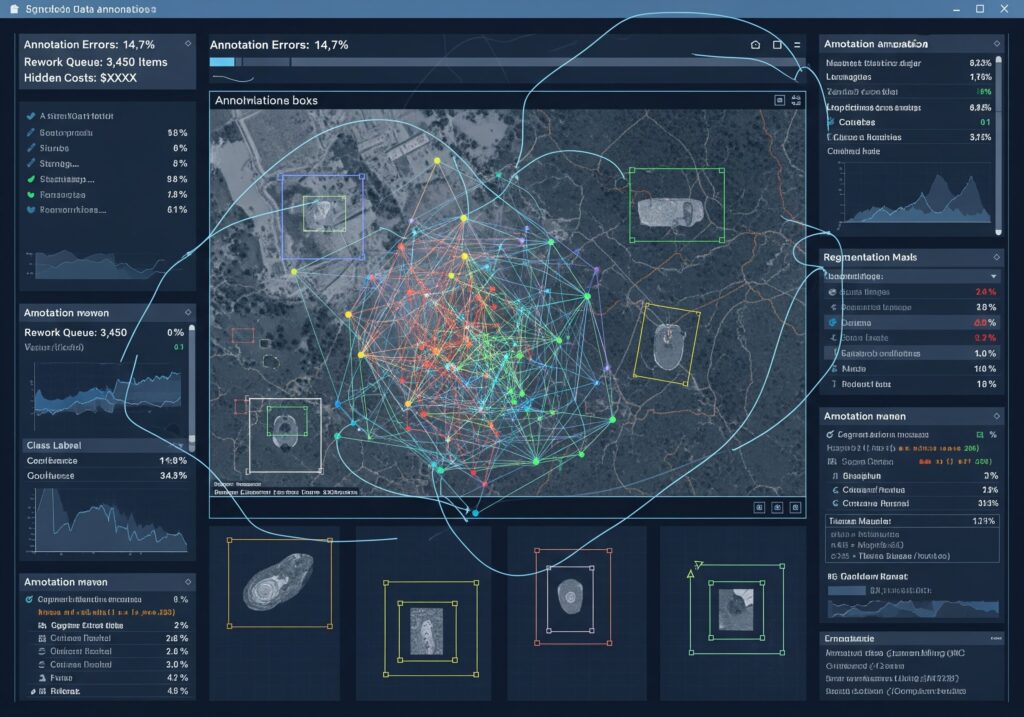
Automated anomaly detection can flag unusual patterns. For example, if bounding boxes suddenly shrink in size across a batch, the system alerts reviewers. Boundary quality metrics help in segmentation and detection tasks. Monitoring mask overlap consistency or bounding box IoU variance across annotators provides quantitative signals.

Human and AI Collaboration

Automation plays a role. Pre-labeling with models accelerates workflows. Annotators refine predictions rather than starting from scratch. Human correction loops are critical. Blindly accepting pre-labels risks reinforcing model biases. Active learning can prioritize ambiguous or high-uncertainty samples for human review.

When designed carefully, human and AI collaboration increases efficiency without sacrificing oversight. Annotation quality at scale emerges from structured processes, not from isolated individuals working in isolation.

Measuring Data Annotation Quality

If you cannot measure it, you cannot improve it.

Core Metrics

Inter-Annotator Agreement quantifies consistency. Cohen’s Kappa and Fleiss’ Kappa adjust for chance agreement. These metrics reveal whether consensus reflects shared understanding or random coincidence. Bounding box IoU variance measures localization consistency. High variance signals unclear guidelines. Pixel-level mask overlap quantifies segmentation precision across annotators. Class confusion audits examine where disagreements cluster. Are certain classes repeatedly confused? That insight informs taxonomy refinement.

Dataset Health Metrics

Class imbalance ratios affect learning stability. Severe imbalance may require targeted enrichment. Edge-case coverage tracks representation of rare but critical scenarios. Geographic and environmental diversity metrics ensure balanced exposure across lighting conditions, device types, and contexts. Error distribution clustering identifies systematic labeling weaknesses.

Linking Dataset Metrics to Model Metrics

Annotation disagreement often correlates with model uncertainty. Samples with low inter-annotator agreement frequently yield lower confidence predictions. High-variance labels predict failure clusters. If segmentation masks vary widely for a class, expect lower IoU during validation. Curated subsets with high annotation agreement often improve generalization when used for fine-tuning. Connecting dataset metrics with model performance closes the loop. It transforms annotation from a cost center into a measurable performance driver.

How Digital Divide Data Can Help

Sustaining high annotation quality at scale requires structured workflows, experienced annotators, and measurable quality governance. Digital Divide Data supports organizations by designing end-to-end annotation pipelines that integrate clear taxonomy development, multi-layer review systems, and continuous quality monitoring.

DDD combines domain-trained annotation teams with structured QA frameworks. Projects benefit from consensus-based labeling approaches, targeted edge-case enrichment, and detailed performance reporting tied directly to model metrics. Rather than treating annotation as a transactional service, DDD positions it as a strategic component of AI development.

From object detection and segmentation to complex multimodal annotation, DDD helps enterprises operationalize quality while maintaining scalability and cost discipline.

Conclusion

High-quality annotation defines the ceiling of model performance. It shapes learned representations. It influences how well systems generalize beyond controlled test sets. It affects fairness across demographic groups and reliability in edge conditions. When annotation is inconsistent or incomplete, the model inherits those weaknesses. When annotation is precise and thoughtfully governed, the model stands on stable ground.

For organizations building computer vision systems in production environments, the implication is straightforward. Treat annotation as part of core engineering, not as an afterthought. Invest in clear schemas, reviewer frameworks, and dataset metrics that connect directly to model outcomes. Revisit your data with the same rigor you apply to code.

In the end, architecture determines potential. Annotation determines reality.

Talk to our expert to build computer vision systems on data you can trust with Digital Divide Data’s quality-driven data annotation solutions.

References

Ganguly, D., Kumar, S., Balappanawar, I., Chen, W., Kambhatla, S., Iyengar, S., Kalyanaraman, S., Kumaraguru, P., & Chaudhary, V. (2025). LABELING COPILOT: A deep research agent for automated data curation in computer vision (arXiv:2509.22631). arXiv. https://arxiv.org/abs/2509.22631

Rädsch, T., Reinke, A., Weru, V., Tizabi, M. D., Heller, N., Isensee, F., Kopp-Schneider, A., & Maier-Hein, L. (2024). Quality assured: Rethinking annotation strategies in imaging AI. In Proceedings of the European Conference on Computer Vision (ECCV 2024). https://www.ecva.net/papers/eccv_2024/papers_ECCV/papers/09997.pdf

Bhardwaj, E., Gujral, H., Wu, S., Zogheib, C., Maharaj, T., & Becker, C. (2024). The state of data curation at NeurIPS: An assessment of dataset development practices in the Datasets and Benchmarks Track. In Proceedings of the 38th Conference on Neural Information Processing Systems (NeurIPS 2024), Datasets and Benchmarks Track. https://papers.neurips.cc/paper_files/paper/2024/file/605bbd006beee7e0589a51d6a50dcae1-Paper-Datasets_and_Benchmarks_Track.pdf

Freire, A., de S. Silva, L. H., de Andrade, J. V. R., Azevedo, G. O. A., & Fernandes, B. J. T. (2024). Beyond clean data: Exploring the effects of label noise on object detection performance. Knowledge-Based Systems, 304, 112544. https://doi.org/10.1016/j.knosys.2024.112544

FAQs

How much annotation noise is acceptable in a production dataset?
There is no universal threshold. Acceptable noise depends on task sensitivity and risk tolerance. Safety-critical applications demand far lower tolerance than consumer photo tagging systems.

Is synthetic data a replacement for manual annotation?
Synthetic data can reduce manual effort, but it still requires careful labeling, validation, and scenario design. Poorly controlled synthetic labels propagate systematic bias.

Should startups invest heavily in annotation quality early on?
Yes, within reason. Early investment in clear taxonomies and QA processes prevents expensive rework as datasets scale.

Can active learning eliminate the need for large annotation teams?
Active learning improves efficiency but does not eliminate the need for human judgment. It reallocates effort rather than removing it.

How often should annotation guidelines be updated?
Guidelines should evolve whenever new edge cases emerge or when model errors reveal ambiguity. Regular quarterly reviews are common in mature teams.

Why High-Quality Data Annotation Still Defines Computer Vision Model Performance Read Post »

Computer Vision Services

Computer Vision Services: Major Challenges and Solutions

Not long ago, progress in computer vision felt tightly coupled to model architecture. Each year brought a new backbone, a clever loss function, or a training trick that nudged benchmarks forward. That phase has not disappeared, but it has clearly slowed. Today, many teams are working with similar model families, similar pretraining strategies, and similar tooling. The real difference in outcomes often shows up elsewhere.

What appears to matter more now is the data. Not just how much of it exists, but how it is collected, curated, labeled, monitored, and refreshed over time. In practice, computer vision systems that perform well outside controlled test environments tend to share a common trait: they are built on data pipelines that receive as much attention as the models themselves.

This shift has exposed a new bottleneck. Teams are discovering that scaling a computer vision system into production is less about training another version of the model and more about managing the entire lifecycle of visual data. This is where computer vision data services have started to play a critical role.

This blog explores the most common data challenges across computer vision services and the practical solutions that organizations should adopt.

What Are Computer Vision Data Services?

Computer vision data services refer to end-to-end support functions that manage visual data throughout its lifecycle. They extend well beyond basic labeling tasks and typically cover several interconnected areas. Data collection is often the first step. This includes sourcing images or video from diverse environments, devices, and scenarios that reflect real-world conditions. In many cases, this also involves filtering, organizing, and validating raw inputs before they ever reach a model.

Data curation follows closely. Rather than treating data as a flat repository, curation focuses on structure and intent. It asks whether the dataset represents the full range of conditions the system will encounter and whether certain patterns or gaps are already emerging. Data annotation and quality assurance form the most visible layer of data services. This includes defining labeling guidelines, training annotators, managing workflows, and validating outputs. The goal is not just labeled data, but labels that are consistent, interpretable, and aligned with the task definition.

Dataset optimization and enrichment come into play once initial models are trained. Teams may refine labels, rebalance classes, add metadata, or remove redundant samples. Over time, datasets evolve to better reflect the operational environment. Finally, continuous dataset maintenance ensures that data pipelines remain active after deployment. This includes monitoring incoming data, identifying drift, refreshing labels, and feeding new insights back into the training loop.

Where CV Data Services Fit in the ML Lifecycle

Computer vision data services are not confined to a single phase of development. They appear at nearly every stage of the machine learning lifecycle.

During pre-training, data services help define what should be collected and why. Decisions made here influence everything downstream, from model capacity to evaluation strategy. Poor dataset design at this stage often leads to expensive corrections later. In training and validation, annotation quality and dataset balance become central concerns. Data services ensure that labels reflect consistent definitions and that validation sets actually test meaningful scenarios.

Once models are deployed, the role of data services expands rather than shrinks. Monitoring pipeline tracks changes in incoming data and surfaces early signs of degradation. Refresh cycles are planned instead of reactive. Iterative improvement closes the loop. Insights from production inform new data collection, targeted annotation, and selective retraining. Over time, the system improves not because the model changed dramatically, but because the data became more representative.

Core Challenges in Computer Vision

Data Collection at Scale

Collecting visual data at scale sounds straightforward until teams attempt it in practice. Real-world environments are diverse in ways that are easy to underestimate. Lighting conditions vary by time of day and geography. Camera hardware introduces subtle distortions. User behavior adds another layer of unpredictability.

Rare events pose an even greater challenge. In autonomous systems, for example, edge cases often matter more than common scenarios. These events are difficult to capture deliberately and may appear only after long periods of deployment. Legal and privacy constraints further complicate collection efforts. Regulations around personal data, surveillance, and consent limit what can be captured and how it can be stored. In some regions, entire classes of imagery are restricted or require anonymization.

The result is a familiar pattern. Models trained on carefully collected datasets perform well in lab settings but struggle once exposed to real-world variability. The gap between test performance and production behavior becomes difficult to ignore.

Dataset Imbalance and Poor Coverage

Even when data volume is high, coverage is often uneven. Common classes dominate because they are easier to collect. Rare but critical scenarios remain underrepresented.

Convenience sampling tends to reinforce these imbalances. Data is collected where it is easiest, not where it is most informative. Over time, datasets reflect operational bias rather than operational reality. Hidden biases add another layer of complexity. Geographic differences, weather patterns, and camera placement can subtly shape model behavior. A system trained primarily on daytime imagery may struggle at dusk. One trained in urban settings may fail in rural environments.

These issues reduce generalization. Models appear accurate during evaluation but behave unpredictably in new contexts. Debugging such failures can be frustrating because the root cause lies in data rather than code.

Annotation Complexity and Cost

As computer vision tasks grow more sophisticated, annotation becomes more demanding. Simple bounding boxes are no longer sufficient for many applications.

Semantic and instance segmentation require pixel-level precision. Multi-label classification introduces ambiguity when objects overlap or categories are loosely defined. Video object tracking demands temporal consistency. Three-dimensional perception adds spatial reasoning into the mix. Expert-level labeling is expensive and slow. 

Training annotators takes time, and retaining them requires ongoing investment. Even with clear guidelines, interpretation varies. Two annotators may label the same scene differently without either being objectively wrong. These factors drive up costs and timelines. They also increase the risk of noisy labels, which can quietly degrade model performance.

Quality Assurance and Label Consistency

Quality assurance is often treated as a final checkpoint rather than an integrated process. This approach tends to miss subtle errors that accumulate over time. Annotation standards may drift between batches or teams. Guidelines evolve, but older labels remain unchanged. Without measurable benchmarks, it becomes difficult to assess consistency across large datasets.

Detecting errors at scale is particularly challenging. Visual inspection does not scale, and automated checks can only catch certain types of mistakes. The impact shows up during training. Models fail to converge cleanly or exhibit unstable behavior. Debugging efforts focus on hyperparameters when the underlying issue lies in label inconsistency.

Data Drift and Model Degradation in Production

Once deployed, computer vision systems encounter change. Environments evolve. Sensors age or are replaced. User behavior shifts in subtle ways. New scenarios emerge that were not present during training. Construction changes traffic patterns. Seasonal effects alter visual appearance. Software updates affect image preprocessing.

Without visibility into these changes, performance degradation goes unnoticed until failures become obvious. By then, tracing the cause is difficult. Silent failures are particularly risky in safety-critical applications. Models appear to function normally but make increasingly unreliable predictions.

Data Scarcity, Privacy, and Security Constraints

Some domains face chronic data scarcity. Healthcare imaging, defense, and surveillance systems often operate under strict access controls. Data cannot be freely shared or centralized. Privacy concerns limit the use of real-world imagery. Sensitive attributes must be protected, and anonymization techniques are not always sufficient.

Security risks add another layer. Visual data may reveal operational details that cannot be exposed. Managing access and storage becomes as important as model accuracy. These constraints slow development and limit experimentation. Teams may hesitate to expand datasets, even when they know gaps exist.

How CV Data Services Address These Challenges

Intelligent Data Collection and Curation

Effective data services begin before the first image is collected. Clear data strategies define what scenarios matter most and why. Redundant or low-value images are filtered early. Instead of maximizing volume, teams focus on diversity. Metadata becomes a powerful tool, enabling sampling across conditions like time, location, or sensor type. Curation ensures that datasets remain purposeful. Rather than growing indefinitely, they evolve in response to observed gaps and failures.

Structured Annotation Frameworks

Annotation improves when structure replaces ad hoc decisions. Task-specific guidelines define not only what to label, but how to handle ambiguity. Clear edge case definitions reduce inconsistency. Annotators know when to escalate uncertain cases rather than guessing.

Tiered workflows combine generalist annotators with domain experts. Complex labels receive additional review, while simpler tasks scale efficiently. Human-in-the-loop validation balances automation with judgment. Models assist annotators, but humans retain control over final decisions.

Built-In Quality Assurance Mechanisms

Quality assurance works best when it is continuous. Multi-pass reviews catch errors that single checks miss. Consensus labeling highlights disagreement and reveals unclear guidelines. Statistical measures track consistency across annotators and batches.

Golden datasets serve as reference points. Annotator performance is measured against known outcomes, providing objective feedback. Over time, these mechanisms create a feedback loop that improves both data quality and team performance.

Cost Reduction Through Label Efficiency

Not all data points contribute equally. Data services increasingly focus on prioritization. High-impact samples are identified based on model uncertainty or error patterns. Annotation efforts concentrate where they matter most. Re-labeling replaces wholesale annotation. Existing datasets are refined rather than discarded. Pruning removes redundancy. Large datasets shrink without sacrificing coverage, reducing storage and processing costs. This incremental approach aligns better with real-world development cycles.

Synthetic Data and Data Augmentation

Synthetic data offers a partial solution to scarcity and risk. Rare or dangerous scenarios can be simulated without exposure. Underrepresented classes are balanced. Sensitive attributes are protected through abstraction. The most effective strategies combine synthetic and real-world data. Synthetic samples expand coverage, while real data anchors the model in reality. Controlled validation ensures that synthetic inputs improve performance rather than distort it.

Continuous Monitoring and Dataset Refresh

Monitoring does not stop at model metrics. Incoming data is analyzed for shifts in distribution and content. Failure patterns are traced to specific conditions. Insights feed back into data collection and annotation strategies. Dataset refresh cycles become routine. Labels are updated, new scenarios added, and outdated samples removed. Over time, this creates a living data system that adapts alongside the environment.

Designing an End-to-End CV Data Service Strategy

From One-Off Projects to Data Pipelines

Static datasets are associated with an earlier phase of machine learning. Modern systems require continuous care. Data pipelines treat datasets as evolving assets. Refresh cycles align with product milestones rather than crises. This mindset reduces surprises and spreads effort more evenly over time.

Metrics That Matter for CV Data

Meaningful metrics extend beyond model accuracy. Coverage and diversity indicators reveal gaps. Label consistency measures highlight drift. Dataset freshness tracks relevance. Cost-to-performance analysis enables teams to make informed trade-offs.

Collaboration Between Teams

Data services succeed when teams align. Engineers, data specialists, and product owners share definitions of success. Feedback flows across roles. Data insights inform modeling decisions, and model behavior guides data priorities. This collaboration reduces friction and accelerates improvement.

How Digital Divide Data Can Help

Digital Divide Data supports computer vision teams across the full data lifecycle. Our approach emphasizes structure, quality, and continuity rather than one-off delivery. We help organizations design data strategies before collection begins, ensuring that datasets reflect real operational needs. Our annotation workflows are built around clear guidelines, tiered expertise, and measurable quality controls.

Beyond labeling, we support dataset optimization, enrichment, and refresh cycles. Our teams work closely with clients to identify failure patterns, prioritize high-impact samples, and maintain data relevance over time. By combining technical rigor with human oversight, we help teams scale computer vision systems that perform reliably in the real world.

Conclusion

Visual data is messy, contextual, and constantly changing. It reflects the environments, people, and devices that produce it. Treating that data as a static input may feel efficient in the short term, but it tends to break down once systems move beyond controlled settings. Performance gaps, unexplained failures, and slow iteration often trace back to decisions made early in the data pipeline.

Computer vision services exist to address this reality. They bring structure to collection, discipline to annotation, and continuity to dataset maintenance. More importantly, they create feedback loops that allow systems to improve as conditions change rather than drift quietly into irrelevance.

Organizations that invest in these capabilities are not just improving model accuracy. They are building resilience into their computer vision systems. Over time, that resilience becomes a competitive advantage. Teams iterate faster, respond to failures with clarity, and deploy models with greater confidence.

As computer vision continues to move into high-stakes, real-world applications, the question is no longer whether data matters. It is whether organizations are prepared to manage it with the same care they give to models, infrastructure, and product design.

Build computer vision systems designed for scale, quality, and long-term impact. Talk to our expert.

References

Rädsch, T., Reinke, A., Weru, V., Tizabi, M. D., Heller, N., Isensee, F., Kopp-Schneider, A., & Maier-Hein, L. (2024). Quality assured: Rethinking annotation strategies in imaging AI (pp. x–x). In Proceedings of the 18th European Conference on Computer Vision (ECCV 2024). Springer. https://doi.org/10.1007/978-3-031-73229-4_4

Bhardwaj, E., Gujral, H., Wu, S., Zogheib, C., Maharaj, T., & Becker, C. (2024). The state of data curation at NeurIPS: An assessment of dataset development practices in the Datasets and Benchmarks track. In NeurIPS 2024 Datasets & Benchmarks Track. https://papers.neurips.cc/paper_files/paper/2024/file/605bbd006beee7e0589a51d6a50dcae1-Paper-Datasets_and_Benchmarks_Track.pdf

Mumuni, A., Mumuni, F., & Gerrar, N. K. (2024). A survey of synthetic data augmentation methods in computer vision. arXiv. https://arxiv.org/abs/2403.10075

Jiu, M., Song, X., Sahbi, H., Li, S., Chen, Y., Guo, W., Guo, L., & Xu, M. (2024). Image classification with deep reinforcement active learning. arXiv. https://doi.org/10.48550/arXiv.2412.19877

FAQs

How long does it typically take to stand up a production-ready CV data pipeline?
Timelines vary widely, but most teams underestimate the setup phase. Beyond tooling, time is spent defining data standards, annotation rules, QA processes, and review loops. A basic pipeline may come together in a few weeks, while mature, production-ready pipelines often take several months to stabilize.

Should data services be handled internally or outsourced?
There is no single right answer. Internal teams offer deeper product context, while external data service providers bring scale, specialized expertise, and established quality controls. Many organizations settle on a hybrid approach, keeping strategic decisions in-house while outsourcing execution-heavy tasks.

How do you evaluate the quality of a data service provider before committing?
Early pilot projects are often more revealing than sales materials. Clear annotation guidelines, transparent QA processes, measurable quality metrics, and the ability to explain tradeoffs are usually stronger signals than raw throughput claims.

How do computer vision data services scale across multiple use cases or products?
Scalability comes from shared standards rather than shared datasets. Common ontologies, QA frameworks, and tooling allow teams to support multiple models and applications without duplicating effort, even when the visual tasks differ.

How do data services support regulatory audits or compliance reviews?
Well-designed data services maintain documentation, versioning, and traceability. This makes it easier to explain how data was collected, labeled, and updated over time, which is often a requirement in regulated industries.

Is it possible to measure return on investment for CV data services?
ROI is rarely captured by a single metric. It often appears indirectly through reduced retraining cycles, fewer production failures, faster iteration, and lower long-term labeling costs. Over time, these gains tend to outweigh the upfront investment.

How do CV data services adapt as models improve?
As models become more capable, data services shift focus. Routine annotation may decrease, while targeted data collection, edge case analysis, and monitoring become more important. The service evolves alongside the model rather than becoming obsolete.

Computer Vision Services: Major Challenges and Solutions Read Post »

Datacollection

How to Design a Data Collection Strategy for AI Training

Umang Dayal

23 October, 2025

Every artificial intelligence system begins with data. The quality, variety, and structure of that data quietly determine how well a model learns, how fairly it behaves, and how reliably it adapts to new situations. You can train an algorithm on millions of examples. Still, if those examples are incomplete, redundant, or biased, the model will inherit those flaws in ways that are difficult to detect later. Data is not just the input; it is the invisible architecture holding every prediction together.

What’s surprising is that many AI projects falter not because of algorithmic complexity or hardware limitations but because the foundation itself was weak. Teams often rush to collect whatever data is most readily available or the most cost-effective to obtain. They might assume volume compensates for inconsistency, or that more samples will naturally yield better models. Yet, this approach often results in duplicated work, opaque data lineage, and costly re-annotation cycles that delay deployment. Poorly planned data collection can silently erode trust and scalability before the model even reaches production.

Designing a data collection strategy may sound procedural, but it is closer to systems design than it appears. It requires thinking about intent, context, and long-term maintenance as much as quantity or diversity. What kinds of data will reflect real-world conditions? How should that data evolve as the environment or user behavior changes? These are not technical questions alone; they touch on ethics, governance, and organizational alignment.

In this blog, we will explore how to design and execute a thoughtful data collection strategy for AI training, maintaining data quality from the start, ensuring fairness and compliance, and adapting continuously as the system learns and scales.

Defining a Data Collection Strategy for AI

A data collection strategy is more than a technical checklist; it’s the blueprint for how information flows into an AI system. It sets out what data should be collected, where it comes from, how often it’s updated, and how it’s governed throughout its lifecycle. Without this structure, data management becomes reactive, and teams fix errors only after models misbehave or stakeholders raise questions about reliability.

A good strategy begins with intention. It asks not only what data we need right now but also what data we will wish we had six months from now. This mindset creates space for scalability, reuse, and traceability. It turns scattered datasets into a living ecosystem where every piece has a defined purpose.

The difference between ad-hoc and strategic collection is stark. Ad-hoc efforts often start fast but age poorly. Teams gather whatever’s easy to access, label it quickly, and move to training. It feels efficient until inconsistencies emerge across projects, documentation falls behind, and no one remembers which source version the model actually learned from. In contrast, strategic collection enforces discipline early: documentation of sources, standardized validation steps, and explicit consent or licensing. It may feel slower at first, but it pays off with cleaner data, lower rework, and stronger compliance later.

At its core, a sound data collection strategy rests on a few key pillars:

  • Purpose definition: understanding why each dataset exists and how it supports the model’s end goal.

  • Source identification: deciding where data will come from, including internal repositories, external partners, or synthetic generation.

  • Quality control: building clear checks for completeness, accuracy, and labeling consistency.

  • Ethical and legal guardrails: embedding consent, privacy, and fairness standards from the start rather than as an afterthought.

  • Pipeline integration: connecting collection to downstream processes like preprocessing, labeling, and validation, ensuring the entire flow remains transparent.

A well-designed strategy makes data an intentional asset instead of an accidental byproduct. It connects technical rigor with ethical responsibility and gives every model a reliable foundation to grow on.

Aligning Data Collection with Model Objectives

Before gathering any data, it helps to pause and ask what the model is actually meant to achieve. This sounds obvious, but in practice, many teams start collecting data before they’ve fully articulated the problem they’re solving. When the purpose is vague, the data often ends up being too general, too narrow, or simply irrelevant. Aligning collection efforts with model objectives keeps both the technical and business sides grounded in the same direction.

A clear goal brings precision to what “good data” means. A conversational model, for instance, demands a very different type of input than a fraud detection system or an autonomous vehicle. In one case, you might need natural dialogue that reflects tone and intent. In another, you may require rare, high-stakes edge cases that occur only once in thousands of transactions. Each use case defines its own notion of quality, diversity, and balance.

Translating those goals into concrete data requirements often involves trade-offs. Teams may have to balance coverage with depth or precision with cost. It’s rarely possible to collect everything, so understanding what drives performance most effectively helps decide where to focus effort. Estimating data needs becomes an iterative process, part technical analysis, part informed judgment. Early prototypes can expose gaps in representation, signaling where more examples are needed or where bias may be creeping in.

Performance targets can guide collection as well. Establishing measurable indicators, such as label consistency, domain coverage, and demographic representation, helps track progress and justify additional rounds of data acquisition. Over time, these metrics become a quiet but powerful feedback loop: they reveal whether new data is actually improving model behavior or simply adding noise.

Ultimately, aligning data collection with model objectives is an act of foresight. It prevents over-collection, focuses resources on what truly matters, and lays the groundwork for models that perform reliably under real-world conditions. The next step is figuring out where this data should come from and how to evaluate its suitability before it ever enters the pipeline.

Identifying and Evaluating Data Sources

Once the purpose is clear, the next question is where to find the right data. This step tends to be more nuanced than it first appears. Not all data is created equal, and not all of it is worth collecting. Selecting sources isn’t just a technical exercise; it’s also about judgment, priorities, and context.

There are generally two broad categories to consider.

Primary sources are data you collect directly: sensors, user interactions, field studies, or internal operations. They offer the most control over quality and structure but are often expensive and time-consuming to build.

 Secondary sources, on the other hand, are preexisting datasets, open repositories, or licensed corpora. They can accelerate development, though they bring hidden challenges, unclear provenance, inconsistent labeling, or licensing restrictions.

Relying on a mix of both often makes sense. Real-world data can anchor the model in authentic scenarios, while synthetic or augmented data fills in gaps where examples are scarce or sensitive. For example, in healthcare or finance, privacy laws may limit access to raw records, making it safer to generate synthetic representations that preserve patterns without exposing identities.

When evaluating potential sources, it helps to go beyond the usual technical checks. Relevance, completeness, and accessibility are essential, but so is context. How current is the data? Does it represent the environment your model will actually operate in? Is it balanced across demographic or geographic lines? A dataset that’s statistically rich but socially narrow can distort outcomes in subtle ways.

Acquisition strategy also shapes long-term sustainability. Some organizations build data partnerships with trusted suppliers or public institutions; others crowdsource labeled examples through controlled platforms. Automated web scraping is another route, but it must be handled carefully; policy compliance, data ownership, and consent are complex and evolving issues.

The goal is to curate sources that not only meet immediate training needs but can evolve as the model and its environment change. A thoughtful mix of origin, type, and format makes the dataset more resilient to drift, more adaptable to new objectives, and ultimately more valuable over time.

Designing the Data Pipeline and Infrastructure

Collecting data is one thing; turning it into something usable is another. A well-designed data pipeline transforms raw, messy input into structured, traceable information that can reliably feed model training. This is where strategy meets engineering. The pipeline determines how data is ingested, cleaned, versioned, and distributed, and how easily it can adapt as needs evolve.

At the start, it helps to think in terms of flow rather than storage. Data rarely sits still; it moves between stages of processing, labeling, validation, and monitoring. An ingestion architecture should reflect that dynamism. Whether it’s sensor feeds from vehicles, transaction logs, or scraped text corpora, the goal is to create a predictable path that minimizes manual handling and data loss. Streamlined routing reduces both latency and the risk of errors creeping in unnoticed.

Automation plays a major role in keeping this manageable. Scalable deduplication, metadata tagging, and lineage tracking prevent confusion over dataset versions, a common headache once multiple teams begin training different model variants. Automated checks for corrupted files, incomplete records, or schema drift can save weeks of troubleshooting later.

Data balancing is another critical layer. Models tend to overfit dominant patterns in the data; a pipeline that tracks representation metrics helps avoid that trap. For example, in a multilingual chatbot, ensuring balanced coverage across languages and dialects matters as much as overall dataset size. In computer vision, balancing object classes or lighting conditions can be the difference between consistent and brittle performance.

Feedback loops give the system longevity. Once a model is deployed, performance monitoring can reveal blind spots, underrepresented cases, geographic biases, or outdated patterns. Feeding these insights back into the collection and preprocessing stages closes the loop. The pipeline becomes not just a one-way system but a self-correcting cycle that keeps data fresh and relevant.

The best pipelines are rarely the most complex ones. They are transparent, repeatable, and easy to audit. Their strength lies in predictability, knowing that each new round of data will meet the same standards and integrate seamlessly with the existing ecosystem. When that foundation is in place, attention can shift from movement to meaning: ensuring the data itself is accurate, consistent, and trustworthy.

Ensuring Data Quality and Consistency

Even the most sophisticated models will falter if the underlying data is unreliable. Ensuring quality isn’t just a final checkpoint before training; it’s an ongoing discipline that should shape every stage of the data lifecycle. Clean, consistent, and well-structured data helps the model learn meaningful patterns rather than noise, while inconsistencies can quietly distort outcomes in ways that are difficult to trace later.

Data quality starts with measurable attributes. Accuracy, completeness, timeliness, and uniqueness are the cornerstones, yet they can mean different things depending on the context. A medical imaging dataset may prioritize pixel fidelity and labeling precision; a conversational dataset may value diversity in phrasing and tone. The point is to define what “quality” actually means for the problem at hand and to evaluate it continuously, not just once during collection.

Validation frameworks help formalize this process. Random sampling, anomaly detection, and basic statistical audits can catch issues before they compound. More advanced techniques, such as automated cross-checks between data sources or embedding-based similarity scoring, can detect duplication and outliers at scale. The key is to treat validation as a recurring activity rather than an afterthought.

Noise control deserves its own attention. Every dataset contains inconsistencies, mislabeled examples, missing metadata, or ambiguous entries. Over-zealous filtering can remove valuable edge cases, while too little cleaning leaves harmful artifacts. The balance lies in understanding which irregularities matter for the model’s intended behavior and which can safely remain.

Human-in-the-loop validation often bridges this gap. Subject-matter experts or trained annotators can flag subtle errors that automated systems overlook, especially in subjective or contextual data. Their input also creates a feedback channel for refining labeling guidelines and annotation tools, helping maintain consistency as datasets grow.

Ultimately, data quality management isn’t a one-time sprint but a slow, methodical commitment. The best teams bake it into their daily workflow, tracking quality metrics, revisiting validation rules, and letting model feedback inform the next round of data improvements. When data quality becomes habitual rather than procedural, everything built on top of it becomes more stable and predictable.

Ethical, Legal, and Compliance Considerations

No data collection strategy is complete without a strong ethical and legal backbone. Technical quality alone can’t guarantee that the data is fit for use. The way data is gathered, processed, and stored carries consequences that ripple beyond the lab or deployment environment. Ethical oversight and compliance frameworks are not bureaucratic hurdles; they’re the guardrails that keep AI development aligned with human and societal expectations.

At the heart of responsible collection lies transparency, understanding and documenting where data comes from, how it was obtained, and under what terms it can be used. Traceability helps not only with audits or certification but also with accountability when unexpected outcomes occur. A transparent data trail makes it possible to diagnose problems rather than hide them under layers of technical abstraction.

Privacy and consent sit right beside transparency. Whether data originates from users, public sources, or sensors, there’s always a human footprint somewhere in the chain. Anonymization and minimization are useful techniques, but they’re not foolproof. Even seemingly harmless datasets can be re-identified when combined with other sources. The goal isn’t just legal compliance but respect collecting only what’s necessary and ensuring contributors understand how their data may be used.

Bias and fairness introduce another dimension of responsibility. Every dataset reflects the conditions and values of the environment it was collected from. If that environment is skewed, demographically, culturally, or economically, the resulting model may inherit those distortions. Actively auditing datasets for representational gaps and diversifying data sources can mitigate this, though bias rarely disappears completely. Recognizing its presence is the first step toward managing it.

Finally, regulatory readiness has become an operational requirement. Global frameworks are evolving quickly, and compliance now extends far beyond privacy. Emerging AI governance laws expect clear documentation of dataset composition, consent mechanisms, and data retention practices. Preparing for these expectations early avoids last-minute scrambles and fosters trust among clients and regulators alike.

Ethics and compliance aren’t side projects; they’re part of data architecture itself. When handled proactively, they create a culture of accountability and resilience, one that allows innovation to move faster without crossing invisible lines.

Leveraging Synthetic and Augmented Data

There are moments when real-world data simply isn’t enough. Sometimes it’s too costly to collect, too sensitive to share, or too limited to represent the full range of scenarios an AI model might face. This is where synthetic and augmented data step in, not as replacements, but as powerful extensions of real-world datasets.

Synthetic data is intentionally generated to mimic real patterns while removing privacy or scarcity constraints. It can be created through simulations, rule-based algorithms, or generative models that learn from existing data and produce new, statistically consistent examples. In computer vision, for example, synthetic images can simulate rare lighting or weather conditions that might take months to capture in the field. In text or speech modeling, synthetic examples can balance underrepresented dialects or intents.

The benefits are clear, but they come with subtle trade-offs. Synthetic data can expand coverage and protect privacy, yet it may also reinforce the same structural biases if the source data it’s modeled on is unbalanced. This paradox means that generating synthetic data responsibly requires thoughtful design, understanding not only what to create but what not to replicate.

Augmented data takes a slightly different approach. Instead of fabricating entirely new examples, it modifies existing ones to add variation, flipping an image, rephrasing a sentence, changing tone or texture. These small perturbations make datasets more resilient, helping models generalize instead of memorizing. It’s a technique that appears simple but has a measurable impact on performance, especially in limited-data settings.

Integration is where synthetic and real data truly converge. The best outcomes emerge when artificial data supplements, rather than replaces, natural samples. A balanced dataset might use synthetic data to fill coverage gaps, rare classes, edge cases, or sensitive categories, while relying on real-world examples to anchor authenticity. Careful validation closes the loop: statistical checks, human review, and downstream testing can confirm whether synthetic additions genuinely improve performance or simply inflate volume.

Used thoughtfully, synthetic and augmented data turn constraint into flexibility. They help teams experiment faster, protect privacy, and explore what-if scenarios that would otherwise be impossible to capture. But their real value lies in discipline, in how carefully they’re introduced, monitored, and refined as part of a continuous data ecosystem.

Monitoring, Iteration, and Continuous Improvement

Designing a data strategy is never a one-off accomplishment. Even the best-planned datasets grow stale as the world, users, and environments change. Monitoring and iteration turn static data pipelines into adaptive systems, ones that evolve as models encounter new patterns or drift away from earlier assumptions.

Thinking of data as a living asset helps shift perspective. Once a model is deployed, it starts generating signals about what’s missing or outdated. For example, if an image recognition model begins misclassifying new product designs or a chatbot struggles with emerging slang, these aren’t just model failures, they’re indicators that the training data no longer mirrors reality. Capturing these moments through structured monitoring can guide the next collection cycle far more efficiently than guessing where the gaps might be.

Feedback loops are central here. Evaluation metrics, error reports, and user interactions can all feed back into the collection process. Rather than collecting more data blindly, teams can prioritize the most valuable updates, filling underrepresented categories, re-annotating ambiguous cases, or trimming redundant samples. This approach saves both compute and annotation effort while keeping the dataset relevant.

Quality dashboards make the process tangible. Instead of spreadsheets or ad-hoc reports, interactive dashboards can track lineage, versioning, and dataset health indicators in real time. When something changes, a schema update, a new labeling guideline, or an ingestion failure, everyone sees it. Transparency prevents silent drift and allows faster course correction.

Finally, periodic audits act as a reset point. Over time, even the cleanest pipelines accumulate inconsistencies. Scheduled reviews, quarterly or tied to major model releases, help verify data freshness, labeling accuracy, and compliance documentation. These audits also serve as an opportunity to reassess whether the data strategy still aligns with organizational goals and regulations.

Iteration doesn’t mean endless tweaking. It’s about creating predictable rhythms that keep the data ecosystem healthy without overwhelming teams. When monitoring and improvement become habitual, data collection stops being a reactive scramble and starts functioning like a living, self-maintaining organism, one that learns and matures alongside the AI it supports.

Best Practices and Common Pitfalls in Data Collection

By this stage, the components of a data collection strategy may appear straightforward: define goals, build pipelines, ensure quality, monitor, and repeat. Yet the difference between projects that thrive and those that stumble usually lies in how these steps are practiced day-to-day. A few consistent habits separate sustainable data operations from short-lived ones.

Start small, scale deliberately

It’s tempting to collect massive datasets early on, assuming volume will compensate for noise. In practice, smaller, cleaner datasets are easier to validate and yield quicker feedback. Teams that start small often discover problems early, ambiguous labels, missing metadata, or misaligned formats, before they balloon across terabytes of data. Once the pipeline is stable, scaling becomes much less painful.

Document obsessively

Documentation sounds dull until you try to retrace how a dataset was built six months later. Recording data sources, preprocessing steps, labeling criteria, and quality metrics saves enormous time and prevents inconsistencies across teams. Even brief, human-readable notes are often more useful than perfect formal schemas no one updates.

Keep data and model teams aligned

Miscommunication between the two is a quiet killer. Data engineers might optimize for pipeline efficiency while modelers need diversity or edge cases. Regular reviews help both sides stay synchronized, what’s being collected, what’s proving useful, and what’s missing. When data teams understand the model’s weaknesses, their collection work becomes far more targeted.

Apply a “quality-first” labeling mindset

Rushed annotation often creates subtle inconsistencies that no amount of later cleaning can fix. Clear instructions, periodic calibration among annotators, and ongoing audits make labels more trustworthy and reusable.

On the other hand, several pitfalls appear again and again:

  • Unverified scraping: Pulling data without explicit rights or proper filtering can lead to ethical and legal trouble later.

  • Excessive filtering: Over-cleaning removes valuable diversity, producing models that perform well in controlled tests but fail in the wild.

  • Neglected consent: Data collected years ago under broad permissions may not satisfy current regulations or user expectations.

Many of these lessons sound simple but are surprisingly hard to sustain under deadlines. Successful teams treat best practices not as policies to enforce but as habits to reinforce, through culture, automation, and shared accountability.

Read more: Building Reliable GenAI Datasets with HITL

How We Can Help

Digital Divide Data has spent years refining the intersection between human expertise and data-driven automation. The organization supports enterprises and research teams in building end-to-end data pipelines that combine scalability with ethical rigor. Whether it’s large-scale data annotation, multilingual data collection, or dataset auditing for fairness and compliance, DDD helps clients turn raw information into training-ready assets without compromising on accuracy or privacy.

What sets DDD apart is its hybrid model, experienced human annotators work alongside AI-assisted tooling to maintain context sensitivity and consistency at scale. The result is a transparent, traceable data process that adapts as models evolve.

Read more: Data Annotation Techniques for Voice, Text, Image, and Video

Conclusion

Every AI model tells a story about its data. If the story is inconsistent, incomplete, or carelessly written, the model’s behavior will echo those flaws in every decision it makes. Designing a data collection strategy isn’t a glamorous task; it’s patient, detailed work, but it quietly determines whether an AI system will stand the test of scale, scrutiny, and time.

A thoughtful approach begins long before the first line of code. It starts with purpose: understanding what the model is meant to learn and what kinds of data truly reflect that reality. It continues with disciplined sourcing, structured pipelines, validation checks, and ethical boundaries that give both teams and stakeholders confidence in what the system produces. When done well, this strategy doesn’t just improve model accuracy; it fosters trust, accountability, and a culture that values the integrity of information itself.

The path forward likely won’t get simpler. As AI expands into more sensitive and dynamic domains, data will only become harder to manage and more crucial to get right. Organizations that treat data collection as a living process, monitored, refined, and ethically grounded, will be better equipped to navigate those shifts.

The smartest systems are built not just on advanced algorithms but on data strategies that understand, respect, and evolve with the world they aim to model.

Partner with Digital Divide Data to design, collect, and manage high-quality datasets built for performance and integrity.


Reference

NVIDIA. (2024, July). Curating custom datasets for LLM training with NeMo Curator. NVIDIA Developer Blog. https://developer.nvidia.com/blog

European Commission. (2025, July). Template for GPAI providers to summarise training data. Publications Office of the European Union. https://digital-strategy.ec.europa.eu

OECD. (2024). Mapping relevant data collection mechanisms for AI training. OECD Policy Paper. https://oecd.org

Google DeepMind. (2024, December). Data selection strategies for efficient AI training. DeepMind Blog. https://deepmind.google


FAQs

1. What’s the difference between data collection and data preparation?
Data collection is about acquiring information from defined sources, while data preparation focuses on cleaning, structuring, and transforming that data for model training. The two often overlap but serve distinct purposes within the pipeline.

2. How often should datasets be refreshed?
That depends on how dynamic the environment is. For static domains like historical archives, annual reviews might suffice. For fast-changing domains like e-commerce or social media, monthly or even real-time updates may be necessary.

3. Are there risks in using open datasets for training?
Yes. While open datasets are convenient, they may contain mislabeled, biased, or copyrighted material. Always review licensing terms, provenance, and data balance before integrating them.

4. Can synthetic data fully replace real-world data?
Not effectively. Synthetic data is best used to supplement gaps, rare cases, sensitive information, or limited diversity. Real-world examples remain essential for grounding models in authentic patterns.

5. What tools help automate data validation?
Modern data orchestration platforms, cloud-based pipelines, and open-source libraries can handle validation, deduplication, and metadata tracking. The best approach is often hybrid: automation for scale, human review for nuance.

How to Design a Data Collection Strategy for AI Training Read Post »

Object2Bdetection2Buse2Bcases

Real-World Use Cases of Object Detection

Umang Dayal

1 Sep, 2025

Object detection combines classification and localization to identify objects of interest within images or video streams. Unlike simple image classification, which only assigns a label to an entire picture, object detection pinpoints specific items, tracks their movement, and recognizes multiple entities simultaneously. This capability makes it foundational for many real-world AI applications where precision, speed, and contextual awareness are critical.

Retailers use it to reduce shrinkage and automate checkout. Cities deploy it to improve traffic safety and optimize urban planning. Healthcare providers integrate it into diagnostic tools that assist clinicians during complex procedures. Manufacturers rely on it for quality inspection and worker safety. These applications highlight the technology’s versatility, from reducing operational costs to enabling entirely new business models. They also shed light on the challenges that remain, such as scalability, reliability in uncontrolled environments, and the ethical considerations of monitoring public and private spaces.

In this blog, we will explore how object detection use cases across industries such as retail, transportation, healthcare, manufacturing, agriculture, and public safety, highlighting the practical benefits, key challenges, and the role that high-quality data plays in successful deployment.

Object Detection in Retail & E-Commerce

Retail has been one of the earliest and most visible adopters of computer vision, with object detection playing a central role in transforming both customer experiences and operational efficiency. Traditional retail environments rely heavily on human oversight for monitoring inventory, preventing theft, and ensuring smooth transactions. These processes are labor-intensive, error-prone, and difficult to scale. Object detection offers automation that is not only faster but also more consistent, enabling retailers to address long-standing challenges with measurable results.

Vision systems equipped with object detection can recognize unusual behaviors or interactions with products that may indicate theft. Unlike conventional security cameras that require constant human monitoring, AI-powered systems analyze video feeds in real time and flag suspicious activity for review. This shift reduces the workload of security staff and increases accuracy, allowing retailers to focus resources on verified incidents rather than sifting through hours of footage.

Checkout-free shopping

By combining sensors and vision models, retailers can automatically detect when a customer picks up or returns an item. This enables a seamless “grab and go” experience where transactions are completed without traditional checkouts. For businesses, this model reduces friction in the purchasing process, shortens wait times, and unlocks new formats of small, unmanned convenience stores. For customers, it delivers the convenience of speed and ease that is increasingly expected in modern shopping.

Inventory management

Retailers can deploy vision-enabled systems to monitor shelves, track stock levels, and detect misplaced items. Automated shelf-scanning not only ensures products are available when customers want them but also supports planogram compliance, where items are displayed in accordance with agreed layouts. This real-time visibility helps reduce stockouts, optimize restocking cycles, and maintain brand consistency across multiple store locations.

Read more: Real-World Use Cases of Computer Vision in Retail and E-Commerce

Object Detection in Transportation & Smart Cities

Transportation systems and urban infrastructure generate vast amounts of visual data every day, from roadside cameras to public transit surveillance. Object detection provides a powerful way to turn this raw visual input into actionable insights that improve safety, efficiency, and city planning. As populations grow and urban spaces become more complex, the ability to automatically identify vehicles, pedestrians, cyclists, and infrastructure conditions has become essential for managing mobility at scale.

Traffic monitoring

Traditional systems rely on inductive loops or radar sensors, which provide limited information. Object detection extends this by using video feeds to classify and count vehicles, monitor pedestrian crossings, and detect near-miss situations that may indicate unsafe intersections. City authorities can use this data to adjust signal timings, improve road designs, and implement targeted safety measures. For drivers and pedestrians, these improvements translate into smoother traffic flow and reduced accident risk.

Road safety enforcement 

Automated vision systems equipped with object detection can identify traffic violations such as vehicles running stop signs, making illegal turns, or exceeding lane boundaries. Unlike static enforcement methods that only capture snapshots, object detection can continuously track vehicles across multiple frames, ensuring more accurate evidence of violations. This not only improves compliance with traffic laws but also provides municipalities with tools to manage high-risk intersections without requiring constant human supervision.

Public transit and infrastructure maintenance

Rail networks, for example, can use AI to identify defects on tracks or overhead lines that might compromise safety if left unattended. Similarly, urban infrastructure monitoring can detect cracks, wear, or obstructions in real time, enabling quicker interventions before issues escalate into costly repairs or service interruptions. By integrating these systems into regular inspection workflows, cities and transit authorities can reduce downtime and extend the lifespan of critical assets.

Object Detection in Healthcare

Healthcare has emerged as one of the most impactful areas for applying object detection, with applications ranging from clinical diagnostics to operational support. Medical environments are uniquely suited for this technology because they generate large volumes of structured and unstructured visual data, and the stakes of accuracy are exceptionally high. By automating aspects of detection and analysis, healthcare providers can extend the capabilities of clinicians, reduce human error, and improve patient outcomes.

Medical imaging

Object detection models are increasingly used to identify anomalies such as tumors, polyps, or lesions in scans and endoscopic procedures. These systems assist radiologists and specialists by highlighting areas of concern, ensuring that subtle findings are less likely to be overlooked. The technology does not replace clinical judgment but acts as a second layer of review that increases sensitivity and reduces the likelihood of missed diagnoses.

Assisted diagnostics

In fast-paced environments such as emergency departments, object detection can automatically analyze images or real-time video feeds to flag conditions that need immediate attention. For example, it can help triage cases by identifying fractures in X-rays or detecting internal bleeding in CT scans. This support enables physicians to prioritize urgent cases more effectively, especially when resources are constrained.

Operational efficiency and compliance

Hospitals and clinics are increasingly using vision-based systems to monitor adherence to safety protocols, such as the correct use of personal protective equipment. In operating rooms or sterile environments, these systems can ensure compliance without intrusive manual checks, reducing infection risks and maintaining consistent standards of care.

The integration of object detection into healthcare workflows reflects a broader trend toward augmenting rather than replacing human expertise. By combining computational precision with clinical skill, healthcare systems are improving accuracy, efficiency, and patient safety. These applications demonstrate how computer vision can make a measurable difference in environments where every decision carries significant consequences.

Read more: The Emerging Role of Computer Vision in Healthcare Diagnostics

Object Detection in Manufacturing & Logistics

Manufacturing and logistics are industries where efficiency, precision, and safety directly impact profitability. Object detection technologies have become integral to automating processes that once depended on extensive manual oversight. By enabling machines to “see” and interpret their surroundings, factories and warehouses are improving quality control, accelerating workflows, and creating safer environments for workers.

Quality control 

High-speed production lines generate thousands of units per hour, leaving little room for human inspection to catch defects. Object detection systems can continuously monitor output, identifying flaws such as cracks, missing components, or surface imperfections in real time. This automation not only reduces waste but also ensures that defective products do not reach consumers, protecting both brand reputation and customer trust.

Warehouse automation

Object detection allows robots to locate, recognize, and manipulate items with a level of accuracy that traditional barcode-based systems cannot match. From sorting parcels to picking items off shelves, these applications are reshaping supply chains by reducing dependency on manual labor, minimizing errors, and enabling 24/7 operations. For e-commerce and retail distribution, this agility translates directly into faster order fulfillment and improved customer satisfaction.

Worker safety

In environments with heavy machinery, forklifts, or robotic arms, vision-based systems can detect when a person enters a hazardous zone and trigger automatic slowdowns or shutdowns. These systems also help enforce compliance by identifying whether workers are wearing protective equipment such as helmets, gloves, or high-visibility vests. By combining safety monitoring with operational oversight, companies reduce the risk of accidents and create safer workplaces.

Object Detection in Agriculture & Environment

Agriculture and environmental monitoring are sectors where object detection is driving significant transformation. Unlike controlled environments such as factories, these domains involve open and variable conditions, which makes automation especially challenging. Despite this complexity, object detection has shown strong potential to improve productivity, sustainability, and risk management.

Precision farming

Object detection is being used to identify fruits, pests, and plant diseases directly in the field. Farmers can deploy drones or ground-based robots equipped with vision systems to monitor crops at scale. These systems can detect early signs of disease or pest infestation, allowing for targeted interventions rather than blanket pesticide use. This not only reduces costs but also promotes environmentally sustainable practices by minimizing chemical exposure.

Yield estimation

Traditionally, farmers have relied on manual sampling to predict harvest volumes, a process that is time-consuming and often inaccurate. With object detection, cameras mounted on tractors, drones, or handheld devices can automatically count fruits or other produce across large fields. Accurate yield forecasts help optimize supply chains, reduce waste, and ensure that markets are supplied more efficiently.

Environmental monitoring

Object detection can be used to identify smoke plumes in forested areas for early wildfire warnings, track wildlife movements around critical infrastructure, or monitor bird activity near wind turbines to reduce collision risks. By processing visual data in real time, these systems provide actionable insights that support conservation efforts and protect both human and ecological systems.

Cross-Sector Safety & Compliance Applications

Safety and regulatory compliance are universal priorities across industries, and object detection has proven to be a versatile tool for addressing them. By providing real-time monitoring and automated alerts, vision-based systems help organizations enforce standards consistently, reduce risks, and respond quickly when issues arise.

Construction sites

These environments are inherently hazardous, with heavy equipment, elevated workspaces, and dynamic workflows. Object detection systems can automatically verify whether workers are wearing required safety gear such as helmets, vests, and harnesses. They can also track movement patterns to detect unsafe behaviors, such as entering restricted areas or operating machinery without proper precautions. This continuous oversight supports compliance with occupational safety regulations while reducing the likelihood of accidents.

Compliance monitoring

Vision systems can detect scaffolding that does not meet safety standards, signage that is missing or improperly placed, or temporary structures that pose risks to pedestrians. By automating these checks, municipalities can maintain safer streetscapes without relying solely on manual inspections.

Emergency response

Systems designed to detect smoke, fires, or hazardous spills can provide early warnings that significantly reduce response times. In high-risk facilities such as chemical plants, oil refineries, or large event venues, these automated alerts can be lifesaving, enabling quicker evacuations and faster deployment of response teams.

Read more: How Data Labeling and Real‑World Testing Build Autonomous Vehicle Intelligence

Key Challenges in Deploying Object Detection Technology

While object detection has achieved remarkable adoption across industries, real-world deployment continues to face significant hurdles. These challenges underscore the disparity between what works in controlled research environments and what is feasible at scale in complex, unpredictable conditions.

Balancing accuracy and speed

Many industries require object detection to operate in real time, whether for traffic monitoring, warehouse automation, or medical imaging. Achieving high precision without introducing delays demands optimized models and hardware acceleration. Trade-offs often emerge between lightweight models that can run at the edge and larger models that offer higher accuracy but require more computational resources.

Environmental variability

Unlike curated datasets, real-world scenarios involve occlusions, low-light conditions, weather fluctuations, and dynamic backgrounds. Systems must be robust enough to handle these variations without significant drops in performance. In industries such as agriculture or transportation, these factors are unavoidable, making resilience a critical design consideration.

Privacy and regulatory compliance

Deployments in public spaces or healthcare settings raise concerns about how visual data is collected, stored, and used. Regulations in the United States and Europe impose strict requirements for handling sensitive data, demanding transparency and robust governance frameworks. Striking a balance between leveraging object detection for public benefit and safeguarding individual rights remains a pressing issue.

Scalability and cost management 

Large infrastructure deployments, such as citywide traffic monitoring systems or nationwide agricultural monitoring, require significant investment not only in technology but also in data management and maintenance. Organizations must ensure that solutions can scale without prohibitive costs, while also integrating seamlessly with existing systems.

These challenges do not diminish the promise of object detection but underscore the need for thoughtful implementation. Addressing them requires a combination of technological innovation, regulatory awareness, and strategic investment to ensure that deployments remain both effective and sustainable.

Read more: Multi-Label Image Classification Challenges and Techniques

How We Can Help

Implementing object detection in real-world environments requires more than powerful algorithms. It depends on the quality, diversity, and scalability of the data that trains those systems. Digital Divide Data (DDD) specializes in building the data foundations that make object detection reliable, fair, and effective across industries.

DDD provides large-scale data annotation services tailored to object detection needs. From bounding boxes and semantic segmentation to keypoints and polygons, its workforce delivers high-quality labels that enable models to learn with precision. This ensures that detection systems can identify objects accurately, even in challenging conditions such as cluttered backgrounds, unusual angles, or poor lighting.

By partnering with DDD, organizations gain the technical foundation required to deploy object detection effectively and the assurance that their data workflows are managed with precision, inclusivity, and integrity.

Conclusion

Object detection applications now span retail, healthcare, transportation, manufacturing, agriculture, and beyond, delivering measurable improvements in efficiency, safety, and decision-making. The examples across these domains highlight its versatility, demonstrating how a single underlying capability, identifying and localizing objects in visual data, can be adapted to very different operational needs.

Looking forward, the next wave of progress in object detection will be defined by scalability, interoperability, and trustworthiness. As models become more efficient and edge devices become more powerful, deployments will expand into once impractical areas. Interoperability across platforms and integration with other AI systems will enable richer insights and automation. Most importantly, trust, through fairness, transparency, and ethical implementation, will determine how widely society embraces these systems.

For businesses, governments, and communities, object detection represents an opportunity to transform operations while also setting new standards for safety and accountability. Those who invest in strong data pipelines, ethical practices, and thoughtful deployment strategies will be best positioned to capture its benefits.

Partner with Digital Divide Data to power your object detection models with scalable, ethical, and high-quality training data.


References

Laidoudi, S. E., Maidi, M., & Otmane, S. (2024, September 3). Real‑Time Indoor Object Detection based on hybrid CNN‑Transformer Approach. arXiv.

Ashqar, H. I., Jaber, A., Alhadidi, T. I., & Elhenawy, M. (2024, September 26). Advancing Object Detection in Transportation with Multimodal Large Language Models (MLLMs): A Comprehensive Review and Empirical Testing. arXiv.

Boddu, S., & Mukherjee, A. (2024, December 6). YOLOv5‑Based Object Detection for Emergency Response in Aerial Imagery. arXiv.


Frequently Asked Questions

Q1. How is object detection different from object tracking?
Object detection identifies and localizes objects within individual frames, while object tracking follows those objects across multiple frames over time to maintain continuity.

Q2. Can small and medium businesses benefit from object detection, or is it only for large enterprises?
While early deployments were resource-intensive, modern cloud services and affordable edge devices have made object detection accessible for smaller organizations, especially in retail, logistics, and safety monitoring.

Q3. How does object detection integrate with robotics?
Object detection enables robots to perceive and interact with their environment. In warehouses or agriculture, robots rely on it to locate, grasp, and manipulate objects safely and accurately.

Q4. What role does annotation quality play in object detection performance?
Annotation quality is critical. Inaccurate or inconsistent labeling reduces model reliability. High-quality, diverse annotations are essential for systems that must perform well in real-world conditions.

Q5. What are some future trends to watch in object detection?
Key trends include edge deployment for real-time processing, use of multimodal models that combine vision with other inputs, growth of synthetic data to handle rare scenarios, and stricter governance frameworks to ensure fairness and privacy.

Real-World Use Cases of Object Detection Read Post »

use2Bcases2Bof2Bcomputer2Bvision2Bin2Bretail2Band2Be commerce

Real-World Use Cases of Computer Vision in Retail and E-Commerce

By Umang Dayal

July 10, 2025

Imagine walking into a store where shelves update their stock levels automatically, checkout counters are replaced by seamless walkouts, and every product is tracked in real time. This is not a distant vision of the future, but a reality that is quickly taking shape across the retail and e-commerce landscape, powered by advances in computer vision.

Computer vision allows machines to interpret and understand visual information from the world, and in the context of retail, it enables a wide range of applications such as tracking inventory on shelves to analyzing customer movement patterns, automating checkouts, and even enabling virtual try-on experiences.

This blog takes a closer look at the most impactful and innovative use cases of computer vision in retail and e-commerce environments. Drawing from recent research and real-world deployments, it highlights how companies are leveraging computer vision AI technologies to create smarter stores, optimize operations, and build deeper connections with their customers.

Why Computer Vision is important in Retail and E-Commerce

Computer vision plays a crucial role by turning visual data into real-time, actionable intelligence. Retail environments are rich in visual signals, product placements, foot traffic patterns, customer gestures, and shelf layouts that, when processed with AI-powered vision systems, can yield deep insights and immediate interventions. For instance, understanding where customers stay, what products they touch but don’t buy, or which shelves are constantly understocked gives store managers a level of operational awareness that was previously unattainable.

Real-World Use Cases of Computer Vision in Retail and E-Commerce

Inventory Management and Shelf Monitoring

Managing inventory effectively has always been central to retail success, yet it remains one of the most resource-intensive and error-prone areas. Out-of-stock items lead to lost sales and customer dissatisfaction while overstocking results in waste and tied-up capital. Manual stock audits are laborious, infrequent, and prone to human error. For both supermarket chains and boutique retailers, these inefficiencies compound over time, hurting margins and undermining customer trust.

Computer vision offers a transformative solution to these challenges. With shelf-mounted or ceiling-mounted cameras powered by visual AI, retailers can achieve real-time shelf monitoring. These systems detect empty spaces, misplaced products, and improper stocking with high accuracy. One notable approach involves planogram compliance systems, which compare real-time shelf images to predefined layouts, flagging inconsistencies automatically.

Retailers using computer vision for inventory monitoring have reported up to a 30 percent improvement in stock accuracy. This not only improves operational efficiency but also frees up staff from repetitive auditing tasks, allowing them to focus on more customer-facing roles. In supermarkets, smart shelf technology has been deployed to monitor freshness levels in perishable goods, triggering automated restocking before spoilage occurs. These systems reduce food waste and help meet sustainability goals while improving product availability for customers.

In short, computer vision is reshaping inventory management from a reactive, manual process to a proactive, automated one. It enables precise visibility across the supply chain, ensures optimal shelf presentation, and supports a more agile response to consumer demand.

Customer Behavior Analytics

Understanding customer behavior in physical retail spaces has traditionally relied on anecdotal observation, basic sales data, or infrequent in-person studies. This approach leaves a critical knowledge gap; retailers often don’t know how customers navigate their stores, what captures their attention, or why certain products don’t convert into purchases. In contrast to e-commerce, where every click and scroll is measurable, brick-and-mortar environments have long lacked similar granularity.

With strategically placed cameras and AI models trained to interpret human movement and interactions, retailers can now generate precise behavioral analytics within the physical store. Heat maps show how customers move through aisles, where they pause, and which products draw the most attention. Dwell-time analysis reveals how long shoppers engage with specific displays, helping store managers understand what layout strategies are most effective.

By analyzing customer paths and interactions, retailers can make evidence-based decisions about product placement, promotional displays, and store layout. The result is improved conversion rates and higher basket sizes. For example, if analytics show that shoppers routinely bypass a high-margin product, the store can reposition it to a more visible or trafficked area.

In the United States, leading retailers are integrating this visual intelligence with loyalty program data to develop a 360-degree view of the customer journey. When in-store behavior is mapped to purchase history, retailers can segment customers more precisely and personalize offers accordingly. This approach brings the precision of e-commerce targeting into the physical retail world.

Computer vision empowers retailers not just to see what is happening in their stores, but to understand why. It fills the measurement gap between digital and physical commerce, helping retailers align their space and strategy with real shopper behavior.

Self-Checkout and Loss Prevention

Computer vision is enabling a new generation of self-checkout systems that significantly reduce friction while improving loss prevention. Using high-precision object recognition models, such as those based on the YOLOv10 architecture, vision-based checkout systems can accurately identify items as they are placed in a checkout area, without the need for scanning barcodes. This approach streamlines the process for customers and reduces the likelihood of intentional or accidental mis-scans.

In parallel, computer vision systems installed on ceilings or embedded within store fixtures are used for real-time anomaly detection. These systems track product movement and flag suspicious behavior, such as item concealment or cart switching. By automating surveillance and alerting staff to potential issues in real time, retailers can dramatically improve their security posture without relying solely on human oversight.

Companies such as Amazon and Carrefour are already piloting or scaling these technologies in their frictionless checkout concepts. Amazon Go stores allow customers to simply pick up items and walk out, with purchases tracked and billed automatically through a combination of computer vision and sensor fusion. These examples demonstrate that computer vision not only addresses operational pain points but also redefines what a retail experience can look like.

Virtual Try-Ons and Personalized Shopping

In fashion, beauty, and accessories retail, one of the biggest challenges is helping customers visualize how a product will look or fit before making a purchase. This challenge is especially acute in e-commerce, where the inability to physically try items contributes to high return rates and lower conversion rates. In physical stores, the experience is limited by fitting room availability and static displays. Personalization, though widely implemented online, often falls short in-store due to limited contextual data.

Computer vision is helping bridge this gap through virtual try-on technologies and dynamic personalization tools. Augmented reality mirrors equipped with visual recognition systems allow shoppers to see how clothing, eyewear, or makeup products will look on them in real time, without needing to physically try them on. These systems use facial and body detection algorithms to render products with a high degree of accuracy, creating a more immersive and convenient shopping experience.

In parallel, facial recognition and gesture analysis are being used to customize product recommendations in-store. For example, digital displays can adapt their content based on the shopper’s demographics or prior browsing behavior, presenting curated suggestions that feel tailored and relevant. These personalized touchpoints improve engagement and support buying decisions in a more nuanced and responsive way.

Sephora’s virtual makeup try-on tool, accessible both in-store and via mobile app, allows customers to test different shades and styles instantly. Zara’s smart mirrors in select European stores combine RFID tagging and computer vision to suggest outfit combinations based on items brought into the fitting room. These implementations demonstrate that computer vision is not only enhancing convenience but also redefining the nature of product discovery and personalization in retail.

Autonomous Robots for Store Maintenance

Store maintenance is a routine but critical aspect of retail operations. Ensuring that shelves are correctly stocked, products are in the right locations, and displays are neat requires constant attention. Traditionally, this work has been done manually by store staff, often during off-peak hours or overnight. However, this approach is not only labor-intensive, but it is also prone to human error and inconsistencies, especially in large-format stores with thousands of SKUs.

Computer vision is now enabling a new class of autonomous robots designed specifically for retail environments. Equipped with high-resolution cameras and powered by advanced computer vision models, often incorporating vision transformers, these robots can scan aisles, detect misplaced items, identify empty spaces, and even verify pricing and labeling compliance. They operate autonomously, navigating store layouts without human intervention, and upload visual data in real time to store management systems.

Autonomous store robots improve the accuracy of shelf audits and free up human workers for higher-value tasks such as customer service or merchandising. They also reduce the frequency of stockouts and ensure that promotional displays remain properly configured. In high-volume environments, this consistency contributes to increased sales and a better customer experience.

Read more: Deep Learning in Computer Vision: A Game Changer for Industries

Challenges in Deploying Computer Vision at Scale

While computer vision offers compelling benefits for retail and e-commerce, deploying these systems at scale presents a unique set of challenges. Many of these are not just technical but also operational, regulatory, and cultural, particularly for retailers with legacy infrastructure or operations spread across multiple regions.

Privacy and Data Protection
One of the foremost challenges is consumer privacy. In regions like the European Union, strict regulations such as the General Data Protection Regulation (GDPR) govern the collection and use of biometric and video data. Retailers must ensure that their computer vision systems are compliant, limiting the use of facial recognition, anonymizing data streams, and communicating to customers how data is being captured and used. Any missteps in this area can damage consumer trust and lead to significant legal consequences.

Infrastructure and Integration Costs
Implementing computer vision at scale often requires upgrading store infrastructure with high-definition cameras, edge computing devices, and secure data storage solutions. For retailers with older stores or those operating on tight margins, the upfront costs can be a barrier. Integrating these systems into existing IT and operational workflows, such as inventory systems, POS software, and employee task management, adds another layer of complexity.

Model Reliability and Bias
AI models used in computer vision are only as good as the data they are trained on. If the training datasets are not diverse or reflective of real-world retail conditions, the models may perform inconsistently or unfairly. This is especially important in use cases involving customer analytics or dynamic content personalization. Ensuring high accuracy across diverse lighting conditions, store layouts, and demographic variations requires continuous retraining and validation.

Mitigation Strategies
To address these issues, many retailers are turning to federated learning approaches, which allow model training across decentralized data sources without sharing raw customer data. This approach supports privacy compliance while still enabling model improvement. Edge computing is also gaining traction as a way to process data locally, reducing latency and minimizing the amount of sensitive data that needs to be transmitted or stored centrally.

Communicating to customers how visual data is being used, providing opt-out mechanisms, and maintaining strong governance over AI systems are all critical to building long-term trust.

Read more: 5 Best Practices To Speed Up Your Data Annotation Project

Conclusion

Computer vision is no longer a futuristic concept reserved for tech giants or experimental retail labs. It is a mature, scalable technology that is delivering real value in stores and online platforms today. From enhancing inventory visibility and analyzing customer behavior to enabling seamless checkout experiences and reducing product returns, the use cases covered in this blog reflect a clear trend: computer vision is becoming an integral part of modern retail operations.

Looking forward, we can expect computer vision to become even more powerful as it converges with other AI technologies. Generative AI will enhance visual search and content personalization. Natural language processing will make human-computer interactions in-store more intuitive. Real-time analytics will give decision-makers unprecedented control over every facet of retail, from the supply chain to the sales floor.

At DDD we partner with retailers to operationalize computer vision strategies that are scalable, ethical, and data-driven. Retailers that begin investing in and scaling these capabilities now will be better positioned to adapt to future disruptions and exceed customer expectations in a digital-first world. The shift is already underway. The stores that succeed tomorrow will be those that are rethinking their physical and digital environments with vision at the core.

References

Arora, M., & Gupta, R. (2024). Revolutionizing retail analytics: Advancing inventory and customer insight with AI. arXiv Preprint. https://arxiv.org/abs/2405.00023

Chakraborty, S., & Lee, K. (2023). Concept-based anomaly detection in retail stores for automatic correction using mobile robots. arXiv Preprint. https://arxiv.org/abs/2310.14063

Forbes. (2024, April 19). Artificial intelligence in retail: 6 use cases and examples. Forbes Technology Council. https://www.forbes.com/sites/sap/2024/04/19/artificial-intelligence-in-retail-6-use-cases-and-examples/

NVIDIA. (2024). State of AI in Retail and CPG Annual Report 2024. https://images.nvidia.com/aem-dam/Solutions/documents/retail-state-of-ai-report.pdf

Frequently Asked Questions (FAQs)

1. How does computer vision differ from traditional retail analytics?

Traditional retail analytics relies on structured data sources such as point-of-sale (POS) systems, inventory databases, and customer loyalty programs. Computer vision, on the other hand, analyzes unstructured visual data, images, and videos captured in-store or online, to extract insights that are often invisible to conventional systems. It can track how people move, interact with products, or respond to displays in real time, offering behavioral context that traditional data cannot provide.

2. Can small or mid-sized retailers afford to implement computer vision solutions?

Yes, while enterprise-grade solutions can be costly, the ecosystem is rapidly expanding with cloud-based, modular offerings aimed at smaller retailers. These solutions often require less upfront infrastructure investment and offer subscription-based pricing models. Additionally, many vendors now provide plug-and-play systems that integrate with existing security cameras or mobile devices, reducing hardware costs.

3. Is computer vision used in e-commerce as well, or only in physical stores?

Computer vision plays a growing role in e-commerce, too. It powers visual search tools (where customers upload an image to find similar products), automated product tagging and categorization, content moderation, and virtual try-on features. In warehouse and fulfillment operations, computer vision is also used for quality control, package verification, and robotic picking.

4. How is computer vision used in fraud detection during returns or self-checkout?

CV systems can monitor for unusual patterns, such as mismatched items during return scans, product switching at self-checkout, or attempts to obscure items during scanning. These events trigger alerts or lock checkout terminals for review. When combined with transaction data, CV-based anomaly detection becomes a powerful tool against return fraud and checkout manipulation.

Real-World Use Cases of Computer Vision in Retail and E-Commerce Read Post »

shutterstock 1968875884

Applications of Computer Vision in Defense: Securing Borders and Countering Terrorism

By Umang Dayal

July 4, 2025

Borders today are no longer just physical boundaries; they are high-stakes frontlines where technology, security, and humanitarian realities collide. From airports and seaports to remote terrain and refugee corridors, the task of maintaining secure, sovereign borders has become more complex than ever.

Traditional surveillance tools such as CCTV cameras, patrols, and physical inspections can only go so far. They’re limited by human attention, constrained by geography, and often reactive rather than preventative.

That’s why security agencies are increasingly turning to artificial intelligence, and in particular, computer vision solutions: a branch of AI that enables machines to interpret visual data with speed and precision. From identifying forged documents at immigration checkpoints to spotting unusual behavior along unmonitored border zones, it’s transforming how nations protect their perimeters.

This blog explores computer vision applications in defense, particularly how it is enhancing border security and countering terrorism across different nations.

The Evolving Landscape of Border Threats

In the current geopolitical climate, borders are more than lines on a map; they are dynamic spaces where national security, humanitarian concerns, and geopolitical tensions intersect.

The rise in global displacement due to conflict, climate change, and economic disparity has created a surge in migration flows that often overwhelm existing border control infrastructures. Smuggling syndicates and extremist groups have become adept at exploiting legal and physical blind spots, using forged documents, altered travel routes, and digital deception to bypass traditional checkpoints.

However, traditional border surveillance systems are struggling to keep pace. Reliant on static infrastructure, manual inspections, and human vigilance, these systems often operate with limited situational awareness and response time. Even when supported by basic monitoring technologies like CCTV, their effectiveness is constrained by the volume of data and the cognitive limits of human operators. This gap between the volume of threats and the capability to monitor them in real-time highlights the limitations of human-dependent systems.

To effectively respond to evolving threats, modern border security requires tools that can process vast streams of data, detect anomalies instantly, and operate continuously without fatigue. This operational need sets the stage for advanced technologies, particularly computer vision, to play a key role in building a more secure and responsive border environment.

Computer Vision in Defense & National Security

Computer vision, a rapidly evolving branch of artificial intelligence, allows machines to interpret and make decisions based on visual inputs such as images and video. In simple terms, it gives computers the ability to “see” and analyze the visual world in ways that were previously limited to human perception. When applied to border security, this technology enables the automated monitoring of people, vehicles, and objects across diverse environments such as airports, seaports, land crossings, and remote border zones.

What makes computer vision particularly effective in border operations is its real-time responsiveness, scalability, and consistency. It can process hundreds of camera feeds simultaneously, flag anomalies within seconds, and track movements with precision across large, complex terrains. Whether it is a crowded international terminal or a remote desert checkpoint, computer vision can adapt to varying conditions without compromising performance.

In modern deployments, computer vision is rarely used in isolation. It is often integrated with other data sources such as biometric sensors, drones, satellite imagery, and centralized surveillance systems. This fusion of data enhances decision-making by providing border authorities with a comprehensive, real-time operational picture. For example, a drone might capture live video of a remote area, which is then analyzed by computer vision software to detect unauthorized crossings, unusual behavior, or potential threats.

Beyond detection, these systems support intelligent responses, such as AI can prioritize alerts, reduce false positives, and even assist in forensic investigations by automatically tagging and retrieving relevant footage.

Key Applications of Computer Vision in Defense: Border Security & Counter-Terrorism

Computer vision is no longer experimental in border management; it is actively deployed in various operational contexts. The following subsections outline the most impactful applications currently being used or piloted.

Facial Recognition and Identity Verification

Biometric Matching Against Global Watchlists

One of the most established uses of computer vision at borders is facial recognition. At checkpoints and airports, systems scan travelers’ faces and automatically match them against government databases such as Eurodac in the European Union or biometric records maintained by the U.S. Department of Homeland Security. These tools can identify individuals flagged for criminal activity, prior deportations, or affiliations with terrorist organizations, significantly reducing the window of risk for unauthorized entry.

Operational Integration at Checkpoints and eGates

Facial recognition is frequently embedded into automated systems such as eGates, which speed up immigration procedures while maintaining security. These systems compare live images to biometric data stored in passports or digital ID chips. Their accuracy has improved significantly with the advent of deep learning models trained on diverse datasets, resulting in reduced error rates even in challenging conditions such as low light or partial face visibility.

Behavioral Anomaly Detection

Tracking Movement Patterns in Real Time

Beyond verifying identities, computer vision is increasingly used to monitor and assess behaviors at border zones. AI models trained on large volumes of surveillance footage can identify movement patterns that deviate from normal flow. For example, a person lingering unusually long near a restricted area, repeatedly circling a checkpoint, or moving against the typical flow of traffic may trigger automated alerts for further inspection. This continuous, context-aware monitoring supports early detection of suspicious activity that could signal trafficking, smuggling, or reconnaissance.

Detecting Subtle Signs of Risk or Evasion

Modern anomaly detection models go beyond simple motion detection. By analyzing posture, gait, pace, and trajectory, these systems can flag micro-behaviors that might be imperceptible to human observers. In high-traffic settings like ports of entry or transit hubs, where human attention is stretched thin, this capability acts as a powerful early-warning system. It also supports crowd control by alerting security teams to potential threats without disrupting the flow of legitimate travelers.

Document Fraud Detection

Automated Verification of Travel Documents

Border authorities routinely face attempts to cross borders using forged or altered documents. Computer vision systems now play a vital role in countering document fraud by automating the inspection of passports, visas, and identity cards. These systems use high-resolution image analysis to detect inconsistencies such as tampered photos, font anomalies, irregular seals, or microprint alterations, details that can often escape the notice of a human inspector, especially under time pressure.

Integration with eGates and Kiosks

This functionality is increasingly embedded within automated immigration infrastructure such as self-service kiosks and eGates. When a traveler presents a document, computer vision algorithms instantly analyze its authenticity and cross-check the information with backend databases. This not only improves security but also reduces congestion at border control points by accelerating processing for legitimate travelers.

Enhancing Trust Through Standardization

Several nations are adopting machine-readable travel documents with standardized security features to support these AI-based validation processes. In the EU, for instance, updated Schengen regulations mandate electronic document verification systems at major entry points. These systems rely heavily on computer vision to ensure that the document format, biometric photo, and embedded chip data align without requiring manual intervention.

Surveillance and Situational Awareness

Monitoring Expansive Border Zones with Computer Vision

Maintaining comprehensive situational awareness across thousands of miles of border terrain is a persistent challenge for security agencies. Computer vision addresses this gap by enabling automated, high-volume analysis of video feeds from fixed cameras, mobile units, and aerial platforms. Whether monitoring a remote desert crossing or a busy international terminal, these systems provide uninterrupted visibility and real-time analysis across vast and often inaccessible regions.

Real-Time Analysis from Drones and Satellites

Unmanned aerial vehicles (UAVs) and satellite imagery have become critical tools in border surveillance. When paired with computer vision, these platforms transform into intelligent reconnaissance systems capable of detecting human activity, vehicles, or unusual heat signatures with precision. For example, a drone equipped with infrared cameras can scan terrain at night and relay visual data to AI models that identify movement patterns inconsistent with legal crossings.

Geo-Tagged Threat Detection and Prioritization

What sets computer vision systems apart is their ability to geo-tag detections and prioritize alerts based on threat level. If a group of individuals is detected moving toward a restricted area, the system can not only flag the event but also provide coordinates, estimated numbers, and direction of movement. This enables border patrol units to respond more efficiently and with better context. Such capabilities reduce the risk of false alarms and optimize resource allocation during incident response.

Read more: Top 10 Use Cases of Gen AI in Defense Tech & National Security

Conclusion

Over the past two years, we have seen a shift from experimentation to real-world implementation. From facial recognition systems at airports to drone-based perimeter surveillance and anomaly detection tools at remote crossings, computer vision is no longer a future promise; it is a present reality. These technologies enable faster, more accurate, and more scalable responses to a range of threats, from identity fraud to human trafficking and organized terrorism.

The future of secure borders will be defined not just by how well we deploy technology, but by how wisely we govern it.

From facial recognition to object detection and geospatial analysis, DDD delivers the data precision that mission-critical applications demand, at scale, with speed, and backed by a globally trusted workforce.

Let DDD be your computer vision service partner for building intelligent and more secure applications. Talk to our experts!

References:

Bertini, A., Zoghlami, I., Messina, A., & Cascella, R. (2024). Flexible image analysis for law enforcement agencies with deep neural networks. arXiv. https://arxiv.org/abs/2405.09194

EuroMed Rights. (2023). Artificial intelligence in border control: Between automation and dehumanisation [Presentation]. https://euromedrights.org/wp-content/uploads/2023/11/230929_SlideshowXAI.pdf

IntelexVision. (2024). iSentry: Real-time video analytics for border surveillance [White paper]. https://intelexvision.com/wp-content/uploads/2024/08/AI-in-Border-Control-whitepaper.pdf

Wired. (2024, March). Inside the black box of predictive travel surveillance. https://www.wired.com/story/inside-the-black-box-of-predictive-travel-surveillance

Border Security Report. (2023). AI in border management: Implications and future challenges. https://www.border-security-report.com/ai-in-border-management-implications-and-future-challenges

Frequently Asked Questions (FAQs)

1. How do computer vision systems at borders handle poor image quality or environmental conditions?

Computer vision models used in border environments are increasingly trained on diverse datasets that include images in low light, poor weather, and obstructions such as face masks or sunglasses. Infrared and thermal imaging can also be integrated to improve detection accuracy during nighttime or in remote terrains. However, edge cases still present challenges and system performance often depends on sensor quality and environmental calibration.

2. Can computer vision help with the humanitarian aspects of border management?

Yes, there are emerging applications aimed at improving humanitarian outcomes. For example, computer vision is being tested to detect signs of distress among migrants crossing hazardous terrain, identify trafficking victims in crowded transit hubs, or monitor detention conditions. However, these use cases remain experimental and face ethical scrutiny, particularly around consent and unintended consequences.

3. How do border agencies train staff to work with AI-based surveillance systems?

Training programs are evolving to include modules on AI literacy, system interpretation, and human-in-the-loop decision-making. Border agents are trained not just to monitor alerts but to understand system limitations, verify results, and escalate cases responsibly. Some agencies also conduct scenario-based simulations to prepare staff for interpreting machine-generated intelligence in real time.

Applications of Computer Vision in Defense: Securing Borders and Countering Terrorism Read Post »

Healthcare2BDDD

The Emerging Role of Computer Vision in Healthcare Diagnostics

By Umang Dayal

April 8, 2024

Transitioning towards the 21st century, the entire healthcare sector has revolutionized its technological implementations. From the usage of robots in surgeries to AI & ML for the rendering of organs, the applications of computer vision in healthcare diagnostics are significant. Out of these multiple applications, computer vision stands apart, enabling machines and algorithms to interpret, understand, and analyze data.

Computer vision allows machines to see and react based on pre-determined parameters. When this technology is implemented in the healthcare domain, it enables precise disease detection and accurate X-ray, MRI, and CT scan assessments. Now that we have a basic understanding of computer vision, let’s delve deeper into how it is revolutionizing healthcare diagnostics.

Benefits of Using Computer Vision in Healthcare

Improving Safety 

We all know that hospitals are the hotspots for various diseases, germs, and infections. In recent scenarios, computer vision has been highly effective in detecting diseases and allowing proactive decisions for safety and hygiene. They can analyze patient rooms and surfaces for cleanliness, detecting dirt, dust, and other forms of contamination that could be harmful to patients and staff. CV can ensure that medical equipment is properly sterilized before use, reducing the risk of disease transmission. Some CV systems can monitor air quality and detect the presence of airborne pathogens in hospital environments.

Enhancing Treatment Procedure

Computer vision helps in rectifying human error when it comes to the identification of anomalies in medical imaging—in turn causing a domino effect by reducing medical costs, targeting treatment, and improving the way of life. The same has been confirmed by a study that was conducted on a deep learning algorithm which was effective in detecting conditions such as diabetic retinopathy from retinal fundus photographs.

Streamlined Resource Allocation

Hospitals need to ensure that all departments work in harmony to provide timely and appropriate treatment to each patient. However, computer vision takes it to a whole new level wherein it ensures that all assets are optimally distributed based on demand and supply. Thus, resulting in reduced wait time and optimal use of medical resources.

Automating Tasks

Automation of data entry tasks can be easily replaced by AI and ML models, computer vision expands the probability of solving challenging tasks, which include counting cells in a test tube sample, storing or processing images for better understanding, identifying and measuring tumors, and much more. Additionally, computer vision has enabled healthcare operations to enhance accuracy and reduce human errors by diminishing labor dependency.

Learn more: The Evolving Landscape of Computer Vision and Its Business Implications

Enhancing Patient Experience

Computer vision in healthcare assists in the identification of medical emergencies, by processing data faster leading to shorter wait times. In turn, this leads to better personalized medical care and an immediate call to action during underlying conditions. This results in improved patient care, higher retention rates, more referrals, and better growth opportunities for treatment centers.

Improved Patient Identification 

With advancements in facial recognition software, medical computer vision systems can seamlessly locate records and verify patient identity. While wide-scale implementation has not been achieved, a study revealed 100% success in making predictions for patient identification, paving the way for correct treatment and medication for the right patient.

Learn more: Deep Learning in Computer Vision: A Game Changer for Industries

Computer Vision Utilized in Healthcare Diagnostics

We have provided a comprehensive overview of different segments where computer vision excels in replacing traditional methodologies in treatment and healthcare diagnostics.

Radiology

Radiology has been one of the first departments in healthcare to adopt computer vision. Radiologists depend on DICOM medical imaging data which is the culmination of data & information coming from multiple sources, and the use of computer vision takes innovation to another level. The implementation of advanced algorithms to detect objects has made image analysis seamless and efficient for medical experts. With the increased adoption of technological innovations, doctors and radiologists can determine new tissue formations, identify microscopic bone fractures, and monitor long-term treatment results.

Dermatology

Through the implementation of advanced AI and ML models enhanced using computer vision technology, doctors can accurately diagnose patients for their skin conditions. By training AI models over a sequence of images and videos to accurately predict skin conditions and even detect cancer & benign formations. Furthermore, computer vision is being utilized in dermatology for the detection of skin diseases at an early stage and formulation of a personalized skincare routine based on skin types.

Cardiology

Computer vision helps doctors understand and monitor congenital heart diseases and detect any kind of heart anomalies. During surgeries, doctors can use dedicated CV models to visualize blood flow in arteries and approximate blood loss.

Orthopedics

Orthopedics utilizes computer vision technology on a wide spectrum covering preoperative, intraoperative, and postoperative areas. The application of CV models, helps surgeons to plan operations effectively, plan MRI-based arthroplasty, and even integrate robotic surgery to get the best result during treatment.

Ophthalmology 

Computer vision helps in the detection of early-stage eye abnormalities, analysis of the retina, eyesight tracking for accurate eye correction, and pre-operative planning for patients. There are plenty of CV applications that leverage computer vision using mobile phone cameras to detect early-stage eye diseases in children and adults.

Future of Computer Vision in Healthcare Diagnostics

Computer vision is still in its nascent stages and the growth potential is huge. Adjusting treatment in real-time and monitoring patient care around the clock would soon become a reality. Thus, taking personalized care to a whole new level. Computer vision will become much smarter and more efficient in its output because of cleaner and better quality data sets and ever-evolving advanced algorithms.

Conclusion 

Healthcare diagnostics is just one of the many fields that have witnessed radical developments made by computer vision. It has paved the way for exceptional capabilities in diagnostics such as abnormality detection, surgery assistance, improved eye correction, and much more. It has transformed how surgeries are conducted and medical processes are executed while improving the chance of success.

Computer vision has helped in the disruption of several traditional practices and paved the way for unparalleled automation and efficacy in healthcare. However, the success of computer vision implementation depends on the machine learning model and the data set it was trained upon.

At DDD, we specialize in delivering precise and comprehensive data preparation solutions. Our human-in-the-loop approach enhances AI and ML models, ensuring they offer robust support for healthcare diagnostics.

The Emerging Role of Computer Vision in Healthcare Diagnostics Read Post »

ComputerVisionDDD 1

Navigating the Challenges of Implementing Computer Vision in Business

By Umang Dayal

February 29, 2024

Gartner’s 2023 Impact Radar highlights emerging technologies for leaders to improve, differentiate, remain competitive, and capitalize on market opportunities. Many of these emerging technologies are based on computer vision that’s revolutionizing EdTech, healthcare, automotive, retail industries, and more.

Implementation of computer vision technology in your business can be an expensive and challenging task, that requires expert supervision and strong data annotations. This blog discusses four challenges that you can face while implementing computer vision technology. We will explore a few use cases and problems associated with implementing CV, and provide recommendations so you can create a sustainable business and maximize your ROI.

What is Computer Vision?

Computer vision is more than just an image recognition technology. It provides intelligent recommendations to make decisions based on unseen images. Machine learning or software trained using these AI models can quickly process images or videos and make intelligent decisions. Computer vision can perform various functions such as image classification, segmentation, facial recognition, feature matching, extraction, pattern recognition, and object detection.

How Computer Vision is Reshaping Businesses?

Artificial intelligence and automation systems trained using computer vision are changing business operations with minimal to no human interaction. Companies such as SpaceX are using AI and automation to dock astronauts successfully in the International Space Station. Grocery stores are using automatic checkout features to buy products.

Computer vision systems are being developed to help many industries such as healthcare, security and surveillance, transport or traffic management, and much more.

Top 4 Challenges of Implementing Computer Vision in Business

Poor Data Quality & Training 

High-quality data annotations and labeling are the foundation for any computer vision system. In the healthcare industry, it is important to use high-quality data as any repercussions due to inaccurate or incomplete data sets can significantly damage medical operations. This was witnessed during COVID-19 when a computer vision system failed due to poor quality of data sets.

If you are planning to mitigate this issue you should consider working with medical data annotation specialists who are experts in building computer vision systems.

For training data sets, you need sufficient and relevant sources which can pose challenges for many companies. For example, if you are working in the healthcare industry collecting data sources can be a challenge because of its sensitive nature and the privacy concerns of the patients or hospitals. Most of these medical data sets are strictly private and not shared by hospitals or healthcare professionals. This means developers might not have enough data sets to train computer vision systems to begin with.

Solutions For Poor Data Training

To resolve this issue and obtain adequate data for your computer vision programs you should consider outsourcing or crowdsourcing your project. This reduces the overall burden of collecting data sets and the responsibility of quality management will be transferred to a third party that specializes in computer vision data gathering and data annotation services. You can work with a trusted third party to obtain and train your visual data sets for your computer vision projects.

High Costs

Any computer vision application’s architectural design and infrastructure contribute to its total cost, which can be highly variable when considering its functionality or when software or hardware is not adequate.

A web or mobile application that only analyzes a few images is completely different from computer vision systems that are highly advanced and resource intensive and perform various tasks such as image and video processing in real time. These powerful processors, complex hardware, and software increase the costs exponentially.

Read more: Hurdles in Autonomous Driving

Solutions To Reduce High Costs

To decrease costs use cross platforms for hardware and software requirements while processing data sets. Use pre-processed models to standardize images before feeding them into machine learning algorithms, this provides better accuracy for the training models. To increase the delivery or deployment of applications reduce the use of manual coding for applications. Instead, use automation tools which does not require too much human interference. Use up-to-date data annotation frameworks to make a big leap in real-time object detection and performance.

Weak Planning

Another challenge in implementing computer vision in business can be weak planning for machine learning models used for the deployment of a project. If executives set overly ambitious targets in the planning stage the data science team might find it difficult to achieve objectives. This can lead to unnecessary costs, insufficient accuracy, inaccurate results, or unrealistic computing power.

Solutions To Avoid Weak Planning 

To overcome these overly ambitious targets businesses should create stronger planning by understanding and analyzing technology’s maturity levels. The executives should create measurable objectives with definitive targets. The ability to acquire data sets or purchase labeled data sets should be discussed beforehand. Before initiating the project, the planning team must consider the costs of training models and deployment. To avoid mistakes you should learn from existing case studies that are similar to your business domain.

Read more: High-quality training data for autonomous vehicles

Inadequate Hardware

Computer vision technology is incomplete without the right combination of hardware and software. To ensure its efficiency businesses must install sensors, bots, and high-resolution cameras. These hardware components can be costly and if installed incorrectly, it can lead to blind spots making the computer vision systems ineffective.

Solutions To Avoid Inadequate Hardware

To avoid this challenge businesses should consider installing high-resolution cameras that provide adequate frames per second for the computer vision system. The engineers must cover all surveillance areas using cameras and sensors so there are no blind spots left. For example, in the case of a retail store cameras should cover all the items on each shelf. The two most significant costs during installation are the hardware requirement and costs of cloud computing which should be considered in the planning stage. All devices should be properly configured before the computer vision system is deployed.

Final Thoughts

The computer vision implementation process is complex and requires expertise and deeper understanding from all stakeholders. To quantify your ROI, businesses should consider data quality, overall costs, hardware requirements, and stronger planning to obtain measurable results. If your project has time constraints you should consider outsourcing data collection or computer vision solutions to a third party. We at DDD can help you with computer vision services that require technical expertise and dedicated machine-learning tools.

Navigating the Challenges of Implementing Computer Vision in Business Read Post »

Scroll to Top