Celebrating 25 years of DDD's Excellence and Social Impact.

Computer Vision

ecommerce2BDDD 1

The Impact of Computer Vision In E-Commerce: Enhancing Customer Experience

By Umang Dayal

February 26, 2024

A picture is worth a thousand words and by using computer vision it can be worth millions. Computer vision is reshaping how buyers and sellers use e-commerce platforms and implementing mind-boggling technologies that have only seemed impossible before. Large e-commerce brands have recognized their customers’ behaviors and begun harnessing the full potential of computer vision and AI.

This blog will discuss how computer vision in retail is enhancing customer experience and also how it is helping store owners. We will discuss four areas where computer vision technology is reshaping the shopping experience and explore a few use cases.

Implementation of Computer Vision In Retail (Use Cases)

In 2019 Amazon used a visual search feature for its fashion products using the brand name StyleSnap. While shopping online, users can upload an image in StyleSnap that will recommend similar products. Amazon’s StyleSnap extended its features for home-based items where users can search for furniture or home-based products using the visual search feature. Customers can directly look for similar products that match the uploaded image or screenshot instead of looking through hundreds of tables or lamp options for their homes.

Amazon+shopthelook+DDD

Source: shopthelook

ASOS is a famous fashion retail brand that uses visual search for its e-commerce platform to help customers find clothes and accessories using their smartphones. The idea is simple yet brilliant where users can snap pictures of people on the street or social media with their smartphone and search for matching products on the ASOS e-commerce platform.

asos+visual+search

Source: engadget.com

How Computer Vision Is Enhancing E-commerce Customer Experience

Visual Search Capabilities

Computer vision has allowed eCommerce to unleash its visual search technology by simply uploading a picture and finding suitable products to buy. Computer Vision algorithms work ingeniously to identify related products or items and deliver accurate results for customers. This trend is gaining popularity among ecommerce websites and shoppers are acclimating to this new feature.

A survey revealed that 62% of Gen Z and Millennials in the US and UK markets want to use visual search capabilities to discover products that they are inspired to purchase quickly. Small retailers are still building architecture and training machine learning AI to adopt visual search technology for their platform but large online retailers are already doing it and expanding their sales as we speak.

Personalized Recommendations

A survey conducted by Accenture found that 91% of customers prefer brands that remember them and provide recommendations based on their preferences. Computer vision analyzes how customers interact with visual content by understanding user behavior, and preferences and displaying highly targeted and personalized results. It’s like having a personal assistant who already knows what type of clothes or products you like and only displays relevant options.

The goal of computer vision technology here is to tag visual content and display personalized product recommendations. This AI eCommerce feature has significantly improved the average value per order for online retailers and expanded sales across their platforms.

Suppose a customer simply comes across your e-commerce website to look for random items but using AI-based product recommendations as per his/her preferences can convert them into a paying customer. One of the biggest brands that are using this feature conveniently is Pinterest Style Finder, which shows cross-selling items for potential customers.

Read more: Computer Vision Trends in 2024

Virtual Try-On

Every one of us wants to try a product before actually buying it online. That’s already becoming a reality sooner than you think! Computer vision combined with augmented reality is making it possible for users to virtually try almost everything from clothing, and accessories, to cosmetics, and much more just by using your smartphone. This virtual immersive feature is leaving customers super satisfied, reducing purchase hesitation, and enhancing product engagement.

Using augmented reality you can see how a particular table or lamp will look in your living or dining room. You can rotate the product, try different colors, and decide on the correct position before even purchasing the product This is perfect for shoppers who want to be sure of what they want to buy and how it looks in real-time. IKEA brand is allowing customers to check how their products will look at their homes as more companies follow through.

IKEA+DDD

Source: IKEA.com

Inventory Management & Virtual Warehousing

Inventory management is another aspect of running a successful ecommerce store and computer vision is already bringing its technical brilliance to improve supply chain management. Computer vision can analyze videos and images, keep track of inventory, identify out-of-stock products, and help eCommerce managers with demand forecasting.

Today shoppers expect fast delivery and any e-commerce business that can deliver on the same day is disrupting the industry. However, managing and delivering products is dealt with lots of pressure from retailers who rely on a decentralized supply chain and warehousing. To reduce this pressure inventory can be housed in temporary facilities or even virtual warehouses. These virtual warehouses can track physical stock from anywhere and allow faster and more efficient distribution. Whenever an order is placed a virtual warehouse can identify the faster way to fulfill any order.

Computer vision programs regularly scan inventory in the virtual warehouse such as weight, color, volume, size, and expiration date, and raise potential flags while encountering an error. Concerned employees can be immediately notified about the situation to take appropriate action and resolve the issue. To achieve streamlined operations computer vision services can be utilized with cameras and intelligent video analytical tools. This computer vision AI-driven approach can optimize warehouse operations and inventory management.

Read more: Everything about Computer Vision

Conclusion

With shoppers demanding virtual try-ons and faster delivery, the application of computer vision is not only necessary but already gaining adoption from major e-commerce brands. Computer vision technology is helping businesses with inventory management, faster delivery, quality management, and fraud detection. For online shoppers its AI capabilities allow them to try products virtually using augmented reality, perform visual searches, get personalized product recommendations, and have a fun and interactive shopping experience.

This AI technology has already moved from an experimental to a commercially driven tool for the e-commerce industry. If you are planning to expand your eCommerce business DDD can assist you with computer vision-led solutions that can put you at the forefront of the industry and surpass your customers’ expectations.

FAQ’s

  •  

    Computer Vision technology is allowing e-commerce business owners to expand their business using inventory management, virtual warehousing, faster delivery, and quality control. It also enhances the customer experience by providing virtual try-on options using augmented reality and recommending personalized products to shoppers.

  •  

    Computer vision detects and understands the image that the customer has uploaded and then uses NLP or Natural language processing to process the request based on its trained data using machine learning programs.

  •  

    Computer vision is effectively reshaping the e-commerce industry by improving stock management, supply chain, and faster delivery, and providing customers with the option to perform visual searches and try their favorite products virtually.

The Impact of Computer Vision In E-Commerce: Enhancing Customer Experience Read Post »

computervisiontrends DigitalDivideData

Computer Vision Trends That Will Help Businesses in 2024

By Aaron Bianchi
November 22, 2023

When it comes to artificial intelligence, computer vision is fast gaining immense ground. It’s estimated to grow from $9.03 billion in 2021 to $95.08 billion in 2027!

If you run a business looking to take advantage of an AI human vision system in the coming days, there are specific trends to keep in mind. Some of which we will mention below.

1. Edge Computing and Computer Vision

Definition: Edge computing typically refers to use cases where computing and data processing happens on a local device instead of on the cloud or some other server type solution. This means that you don’t need to be connected to the cloud to complete your computation!

Advantages: Computer vision requires enormous computing time and bandwidth. Complex models and large volumes of data heavily impact the overall computational power requirements.

Also, in many cases, computer vision data must get processed almost instantaneously. For example, when logging a user into their phone using facial recognition.

This is where edge computing can help computer vision by reducing bandwidth, improving response times, and keeping personally identifying information (PIII) locally contained.

Examples: Facial recognition on smartphones is a big application of edge computing and computer vision. As is, analyzing products on the assembly line to detect defective items.

2. 3D Computer Vision

Definition: When trying to recognize objects using depth and geometry, 3D computer vision comes into play. It involves the construction of 3D objects within a machine, such as a computer.

Advantages: It provides much richer information than the typically used 2D computer vision. It also allows for manipulating said 3D object models in many ways for various purposes.

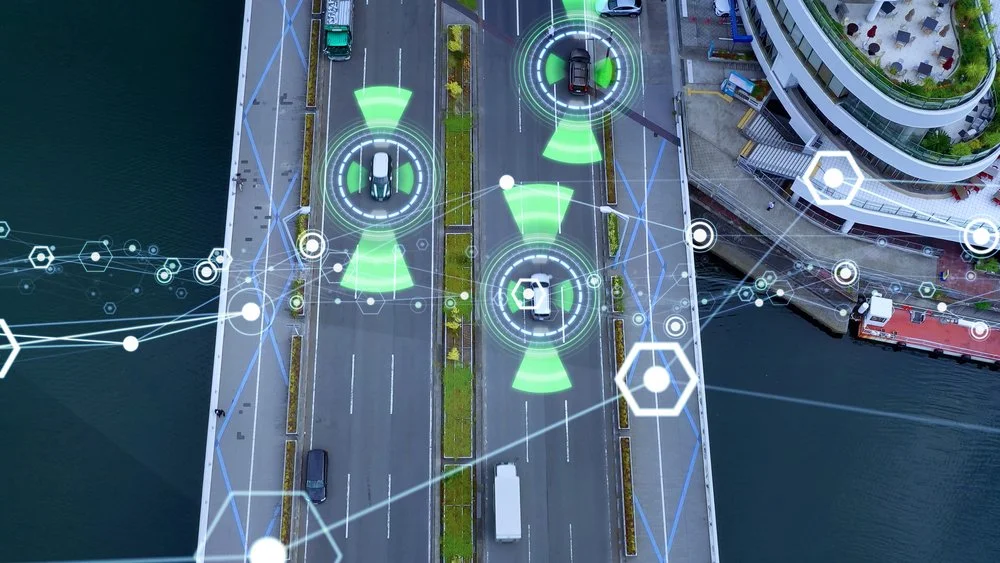
Examples: The most prominent usage of 3D computer vision is in self-driving cars or autonomous driving. Also, AR/VR headsets which are becoming very popular nowadays, use 3D computer vision.

3. Natural Language Processing and Computer Vision

Definition: Natural Language Processing (NLP) enables the understanding of spoken or written language. The software learns how to string together words to communicate a prescribed message, just like humans do every single day.

Advantages: Computers are well-suited to repeatedly detect objects, recognize patterns and communicate back what they see. They can perform these tasks flawlessly repeatedly over time. Computers can then start creating accurate descriptions of pictures.

Examples: Medical images like CT, PET, MRI, and X-ray imagery get used to diagnose patients and determine the best treatment options. With Computer vision and NLP, these images can be analyzed and an initial report of its findings can be generated.

Learn more: Applications powered by NLP

4. Image Recognition and Computer Vision

Definition: A machine can “see” images using algorithms and other techniques. They label and categorize the content of the picture. This is also known as image classification and image labeling.

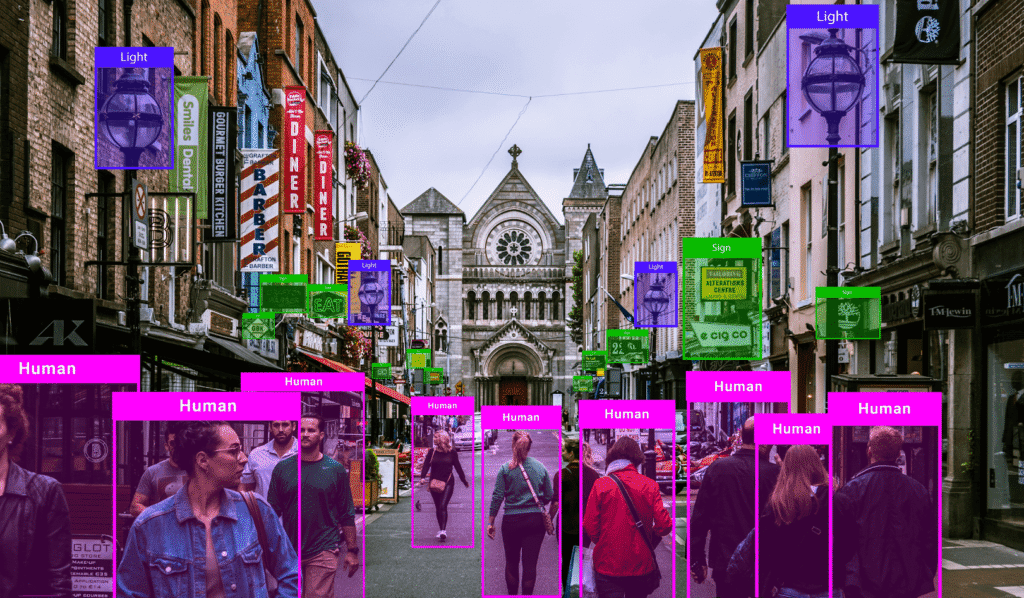
Advantages: The machine can identify objects, people, entities, and other variables in images. This data can then be used to segment the images or filter them for various purposes.

Examples: This machine learning method gets used in manufacturing to see if labels got attached properly to items or if they were packed correctly into boxes. This relieves pressure on customer service and the Quality Assurance team.

Similarly applied in the pharmaceutical industry to ensure the correct number of pills get packed and in the right color, length, and width. This way, patients don’t run out of their medication in the middle of their treatment. This reduces medical errors due to prescription medications.

5. Object Detection and Computer Vision

Definition: Object identification or detection is used to identify and count objects in a scene and then determine and track their precise locations. All while accurately labeling them. This can be done in an image or a video.

Advantages: It can extend and act as an artificial offset of human perception. Also, it can help identify, detect, and recognize our surroundings for various purposes.

Examples: You can improve security in the private sector using object detection. Businesses can monitor their territory and check for any uninvited guests at night. Object detection can also determine the personality of the person using identification technologies in the system.

Parking lots also use object detection to determine parking lot occupancy and thus inform drivers which lot has more space available for them. This way, drivers aren’t driving around looking for a space in a packed lot.

Cancer detection is another real-world application of object detection and computer vision.

6. Facial Recognition and Computer Vision

Definition: This technology is used to match images containing people’s faces with their identities by computers and machines. They do this by detecting facial features in images. Then compare them to various databases.

Advantages: Facial recognition has become a widely used computer vision application in various applications.

Examples: Google Photos and Facebook use facial recognition to determine who’s in a photo. Then label them using the person’s name with just one click.

This application is also used at country borders by customs to identify people. And then match them with their passports.

Google Maps uses facial recognition for privacy purposes by blurring out any faces in street view images.

7. Data Labeling and Computer Vision

Definition: This is when you add tags to raw data, such as images and videos. Each tag is associated with predetermined object classes in the data. Thus, unclassified data can soon have a semblance of organization and categorization using data labeling.

Remember that most of the world’s data is unlabeled. So, AI and machines would have no idea what these images contain without computer vision and data labeling.

Advantages: Using data labeling, you can segment and tag images or videos in seconds rather than hours, when done traditionally by humans. This makes the whole process cheaper and more lucrative in general.

Examples: These highlighted images with labels get used to training AI and machine learning models. They can become better at labeling and identifying objects within photos and videos. Soon they will be able to use machine learning models to recognize objects on their own without any help from humans.

8. Semi-supervised Learning and Computer Vision

Definition: This machine learning technique utilizes labeled and unlabeled data for learning, hence the term “semi-supervised learning.” A pseudo label is generated and benefits from a large amount of unlabeled data.

In many computer vision techniques (object detection is one), machines use supervised learning algorithms to learn how to identify objects in images. But in semi-supervised learning, a predictive model is created using some labeled data and lots of unlabeled data.

Advantages: This semi-supervised learning can improve the generalization and performance of the model over time. In countless scenarios, labeled data isn’t available.

In such cases, semi-supervised learning can achieve impeccable results even with only a fraction of the data labeled. Labeling is expensive. So semi-supervised learning can help save on costs for businesses when dealing with unlabeled data.

Examples: Google uses semi-supervised learning to rank and label web pages in search results. Image and video analysis is also done using semi-supervised learning, as much of this data is unlabeled.

9. Transfer Learning and Computer Vision

Definition: This is a machine learning method where you reuse a pre-trained model as the starting point for a model on a new task. A model trained on one task will be repurposed and reused for a second task. The second task has to be related to the first one, as that allows for optimization and rapid progress on the second task.

Advantages: Significant progress can get made on related tasks using only a model and a small amount of data. This can help save not only on time but also on the resources allocated to these models.

The machines don’t require training from scratch, which is computationally expensive. You don’t need large amounts of data with transfer learning, either. You can achieve better results with a small data set.

Examples: Tech companies like Microsoft, IBM, Nvidia, and AWS use transfer learning toolkits. This helps eliminate the need to build models from scratch every single time. It saves them time and money in the long run.

Noise removal from images is another application of transfer learning. It requires basic knowledge and pattern recognition of familiar images (modeling).

10. Synthetic Data in Computer Vision

Definition: In the realm of computer vision, synthetic data refers to artificially generated visual information that replicates real-world scenarios. It involves creating images or videos through algorithms and simulations to train and improve computer vision models.

Advantages: Synthetic data plays a pivotal role in enhancing the performance of computer vision systems. One key advantage lies in the augmentation of training datasets. By generating diverse synthetic images, models can be exposed to a broader range of scenarios, leading to improved generalization when applied to real-world situations.

Moreover, synthetic data helps overcome limitations associated with the availability of labeled datasets. Annotated real-world data for specific tasks may be scarce, but synthetic data allows for the creation of labeled examples, facilitating more robust model training.

The cost-effectiveness of synthetic data generation is another notable advantage. Acquiring and annotating large datasets can be resource-intensive, while synthetic data offers a more economical solution without compromising the quality of model training.

Examples: In autonomous vehicle development, synthetic data is extensively used to simulate various driving conditions. This enables training computer vision models to recognize and respond to diverse scenarios such as adverse weather, complex traffic situations, and rare events, contributing to the safety and reliability of autonomous systems.

For facial recognition technology, synthetic data aids in training models to recognize faces across different demographics and under varying lighting conditions. This ensures that the algorithm performs effectively in real-world scenarios, minimizing biases and improving overall accuracy.

In essence, synthetic data emerges as a valuable asset in the evolution of computer vision, propelling advancements in technology by broadening the scope of training datasets and addressing challenges associated with real-world data limitations.

11. Generative AI in Computer Vision: Transforming Visual Understanding

Definition: Generative AI in computer vision refers to the utilization of algorithms that can create and enhance visual content. These algorithms go beyond recognizing existing patterns and instead generate new images or modify existing ones. This dynamic approach enhances the capabilities of computer vision systems, allowing them to adapt to a broader range of scenarios.

Advantages: The integration of generative AI into computer vision brings forth several advantages. One notable benefit is the ability to generate synthetic data for training models. By creating diverse visual scenarios, generative AI aids in building robust computer vision models that can effectively handle a variety of real-world situations.

Another advantage lies in image synthesis and enhancement. Generative AI algorithms can transform low-resolution images into high-resolution counterparts, improve image quality, and even fill in missing visual information. This proves invaluable in applications such as medical imaging, where enhanced visuals contribute to more accurate diagnoses.

Examples: In autonomous vehicles, generative AI is employed to simulate and augment visual data. This includes creating realistic scenarios such as different weather conditions, diverse landscapes, and challenging road situations. This synthetic data enhances the training of computer vision models, ensuring they can navigate effectively in the complexities of the real world.

For facial recognition systems, generative AI contributes to the generation of facial images across various demographics and expressions. This broadens the scope of training datasets, leading to more inclusive and accurate algorithms capable of recognizing faces in diverse contexts.

Generative AI in computer vision exemplifies the fusion of artificial intelligence and visual understanding, pushing the boundaries of what these systems can achieve and adapt to in an ever-evolving technological landscape.

12. Detecting Deepfakes for Computer Vision: Safeguarding Businesses

Definition: Detecting deepfakes in computer vision involves the use of advanced algorithms and techniques to identify manipulated or synthetic visual content. Deepfakes are digitally altered images or videos that can deceive viewers by realistically depicting events or individuals that never occurred. Businesses utilize detection methods to ensure the authenticity of visual content in various applications.

Advantages: The ability to detect deepfakes is paramount for businesses in preserving trust, credibility, and security. In sectors like media, finance, and e-commerce, where visual content plays a crucial role, ensuring the authenticity of images and videos is essential. By implementing deepfake detection in computer vision systems, businesses can mitigate the risks associated with misinformation, fraud, and reputational damage.

Moreover, industries relying on video conferencing and online communication platforms benefit from deepfake detection to prevent malicious activities. This safeguards sensitive information, maintains the integrity of communications, and protects against potential threats to organizational security.

Examples: In the entertainment industry, where the use of celebrities in advertisements is prevalent, deepfake detection is vital. Businesses can employ computer vision algorithms to verify the authenticity of celebrity endorsements and promotional content, preventing the spread of misleading information.

Financial institutions leverage deepfake detection to secure transactions and prevent fraudulent activities. By ensuring the legitimacy of visual data in identity verification processes, businesses can enhance the overall security of their operations and protect both clients and the organization itself.

Detecting deepfakes in computer vision is an indispensable tool for businesses, offering a proactive approach to maintaining trust, security, and the reliability of visual content in an increasingly digital and interconnected world.

13. Ethical Computer Vision for Businesses: Navigating the Digital Landscape Responsibly

Definition: Ethical computer vision for businesses entails the responsible development, deployment, and use of computer vision technologies. It involves ensuring that these systems adhere to ethical principles, respect privacy, avoid biases, and contribute positively to society.

Advantages: Embracing ethical considerations in computer vision provides businesses with several advantages. Firstly, it fosters trust among users and customers. By prioritizing privacy and transparency, businesses can build stronger relationships with their clientele, assuring them that their data and interactions are handled with integrity.

Ethical computer vision also mitigates the risk of bias in algorithms, ensuring fair and unbiased decision-making processes. This is particularly crucial in sectors like hiring and finance, where biased algorithms can perpetuate societal inequalities. By prioritizing ethical practices, businesses contribute to a more inclusive and just technological landscape.

Examples: In recruitment, businesses can use ethical computer vision to ensure fairness and impartiality. By removing demographic identifiers from resumes and employing algorithms that focus solely on skills and qualifications, companies can avoid perpetuating biases and promote diversity in hiring processes.

Retail businesses can implement ethical computer vision in surveillance systems by being transparent about data collection and usage. This includes informing customers about the presence of security cameras and clearly outlining how their data is handled, fostering a sense of security without compromising privacy.

In healthcare, businesses can use ethical computer vision to ensure patient confidentiality. By implementing robust security measures and anonymizing patient data, healthcare organizations can harness the benefits of computer vision for diagnostics and treatment planning without compromising sensitive information.

Embracing ethical considerations in computer vision is not just a moral imperative but a strategic move for businesses, fostering trust, fairness, and societal well-being in an increasingly digitized world.

14. Satellite Computer Vision for Businesses: Gaining Insights from Above

Definition: Satellite computer vision for businesses involves the utilization of advanced imaging and analysis techniques applied to satellite imagery. This technology enables businesses to extract valuable insights, monitor environmental changes, and make informed decisions based on high-resolution satellite data.

Advantages: The integration of satellite computer vision offers businesses a plethora of advantages. One primary benefit is the ability to gather geospatial information on a large scale. Industries such as agriculture, urban planning, and environmental monitoring can leverage this data to optimize resource allocation, plan infrastructure development, and track changes in land use over time.

Cost-effectiveness is another key advantage. Instead of relying on ground-based surveys or physical reconnaissance, businesses can utilize satellite computer vision to obtain real-time data and insights without the need for extensive fieldwork. This streamlined approach enhances efficiency and reduces operational costs.

Examples: In agriculture, businesses leverage satellite computer vision to monitor crop health, assess soil conditions, and optimize irrigation. This data-driven approach enhances precision farming practices, leading to increased yields and sustainable agricultural practices.

Urban planning and development benefit from satellite computer vision by providing detailed information on infrastructure, population density, and land use. This data aids businesses and city planners in making informed decisions regarding zoning, transportation, and sustainable development.

The energy sector utilizes satellite computer vision for monitoring pipelines, assessing the environmental impact of energy projects, and identifying potential risks. This proactive approach enhances safety measures and contributes to responsible and sustainable energy practices.

Satellite computer vision empowers businesses with a bird’s-eye view, enabling them to make strategic decisions, enhance operational efficiency, and contribute to environmentally conscious practices in an ever-evolving global landscape.


Ready to Use Computer Vision in Your Business?

In 2024, businesses can take advantage of the latest computer vision trends to improve their operations. And also increase productivity, and gain a competitive edge. From edge computing to transfer learning, these trends have the potential to revolutionize various industries.

By staying up-to-date with the latest developments in computer vision, businesses can implement these technologies to unlock new opportunities and drive growth. Incorporate having Digital Divide Data as a data labeling/data annotation partner. Or as a go-to for computer vision-related needs.

Computer Vision Trends That Will Help Businesses in 2024 Read Post »

the future of retail featured image

The Future Of Retail: How Computer Vision Is Modernizing Retail

the future of retail featured image

By Aaron Bianchi
Updated Feb 6, 2023

Computer vision in retail has become a necessity for most companies in today’s times. To give their customers a better and enhanced experience, retailers are adopting computer vision-led solutions. Moreover, it also helps retail businesses with shelf space management and customer behavior analysis. With so many advantages, computer vision has truly modernized the way retailers sell and the way customers purchase. What all can happen with retail AI? Let’s find out.

What is Computer Vision?

Computer vision is a technology of computer science that focuses on human vision and its replication to help computers see and identify objects around them, just like human beings do. In simpler words, computer vision is like replicating the functions of the human eye in a computer.

It is as interesting as it sounds because its application in multiple industries is beneficial, not only for businesses but also for consumers. It makes every kind of process and experience faster and smoother. Whether it’s face recognition in your smart home or retail stores without cashiers, everything is so advanced with computer vision that not using it might slow down your life.

Talking specifically about retail, isn’t it interesting that everyday work like inventory management can become a lot easier? What other advantages does the application of computer vision have for the retail industry? Let’s explore.

How is Computer Vision used in Retail?

Computer vision can help upgrade a customer’s journey by improving store layouts based on real feedback and data. There’s no need to rely on “projections” anymore as you have actual customer data to help you define their experience.

With the e-commerce boom, how do you attract and retain customers for a retail store? A retail store is competing with online shops that take just a few minutes to give the customer what they want. The customer checks out in no time too. If you replicate this experience in a physical store, you keep your customers happy.

In the retail industry, computer vision is used in various ways like self-checkout, virtual mirrors and autonomous robots among others. We will discuss 12 applications of computer vision in retail to give you a clearer picture.

Top 12 Computer Vision Applications in Retail

DDD%2B %2BCOMPUTER%2BVISION%2BAPPLICATIONS%2BIN%2BRETAIL

  1. Cashierless Stores
    Customers can now enjoy “Self-checkout”. No hassle of long waiting times and reduction in human error in billing is now possible, all thanks to solutions that come from computer vision. The new age deep learning technologies can automatically detect product prices and calculate the bill.

  2. Virtual Mirrors
    Virtual mirrors provide unparalleled personalization options that boost customer experience in retail. It is a traditional mirror that has a display behind the glass. These virtual mirrors have computer vision cameras that help them display a broad range of contextual information to the consumer. For example, a fashion brand’s virtual mirror can have the technology that allows the customer to see various outfit options that will suit them without even trying them on physically!

  3. Targeted In-Store Ads
    Computer vision in retail has the ability to help the shops recognize and analyze buying patterns in returning customers. This is a powerful tool that allows businesses to send customized discounts or relevant Ads when these customers enter the store. Their purchase history metrics also allow the store to recommend products that will appeal more to the buyer increasing the likelihood of a sale.

  4. Inventory Management
    With computer vision, retailers can automate their inventory count which helps them update their inventory system in real time. Customers expect to know the availability information of products beforehand, so this feature greatly enhances the customer delight level. Think about it. Who wants to visit a shop only to find that the item they’re looking for is out of stock? You’ll do them a favor and you’ll do your business a favor too by not losing out on that sale.

  5. Customer Behavior Analysis
    Computer vision helps retail stores count the number of shoppers every day and study their overall behavior. From calculating the total time spent with each product to how much time buyers spend in the store, retailers can keep improving their sales strategy with the help of computer vision.

  6. Store Layout Improvement
    Cameras with computer vision can map customer movements and identify “hot areas” where customers spend the most of their time. This helps retailers to manage the overall layout of the store and maximize customer experience preventing early walkouts. From better product placement to focusing their discounts and deals in specific areas, retailers can now improve their store layout to meet customer needs, all thanks to computer vision.

  7. Barcode Scanning Smartphone Apps
    A lot of people trust the online shopping experience more because they have easy access to product reviews. This helps them make more informed decisions instantly. When it comes to physical stores, you walk in and you like a product, buy it and walk out. The next thing you know is that the product has horrible reviews and it turned out to be a complete waste of your money. Nobody wants to be in this situation.

    Computer vision gives physical stores the ability to showcase reviews as instantly as online stores. There are barcode scanning apps which help customers scan the barcode of products via their smartphone cameras and receive all the information and reviews about the product.

  8. Customer Mood Tracking
    Computer vision can detect the customers’ mood during their shopping journey. For example, Walmart has already introduced a facial recognition system which helps cameras detect annoyed customers via cameras at the checkout point. If such a case is detected, a store personnel can salvage the situation by talking to the customer about what’s bothering them. This helps show the customer that the store cares about how they feel and they’re ready to resolve any grievance that the customer may have.

  9. Supply Chain Management
    Just like inventory management, supply chain management can become a seamless process with the help of computer vision. With the availability of data like the sales history of products, customer demands, trends, promotions, weather, etc AI can be used for effective restocking. This leads to fewer things going unpicked while there’s enough available for those who want more of a particular type of product.

  10. Price Predictions
    Based on specific demands and trends, launch dates, and characteristics, a retail business can predict the pricing of a product. This technology can be used in retail by creating a tool or app that helps customers know the price changes and upcoming price trends for a product. This feature is easy to build with the help of artificial intelligence and can help a brand to build customer loyalty.

  11. Price Adjustments
    AI Applications for retail stores can help stores visualize and try multiple pricing strategies. Once all the information about other products and promotions, sales, etc is collected, computer vision can help businesses prepare their best offers to acquire new customers. This flexibility in changing the pricing strategy based on actual information can be a great way to scale one’s business and wouldn’t be possible without computer vision.

  12. In-Store Advancement
    There are many other things in a store that can be revolutionized with the help of computer vision. Some retailers use The Kroger Edge technology that eliminates paper price tags and replaces them with smart shelf tags. This technology also helps with video ads and promotions on display screens. Other such in-store technologies and bots use translation for different languages to help assist customers from various regions.

How Can Computer Vision Solve Retail Industry Challenges?

  • With so many amazing and helpful things that computer vision does for the retail industry, it surely does solve a lot of problems faced by both businesses and customers. Here are nine such challenges that computer vision eliminates.

  • With accurate estimation of supply chain expenses at every level there is less chance of extra expenditure and losses in the process.

  • This correct estimation of supply chain expenses also lowers freight costs for third-party associates. This helps them prevent losses and ensures long-term relationships with their business partners.

  • Analytics and prediction of trends and changing prices saves businesses from overpricing or underpricing their products. This helps them reduce their chances of losses. For the customers, this comes as a delight as they have more competitive prices and products to choose from without having to settle for something they don’t like.

  • All the important information gathered via computer vision in retail from big supply chain datasets can be used for an effective retail decision-making process. Without computer vision retail decision-making was a difficult process as there was not much verifiable information available.

  • AI could be connected with other systems and departments within the business to improve the demand and supply planning and capacity management.

  • Computer vision helps in optimizing orders to accurately meet demand. This increases customer loyalty thereby reducing the number of irate customers.

  • Automating vehicles in the supply chain such as trucks and delivery robots increases efficiency thereby making some parts of the process autonomous.

  • Artificial intelligence when linked with GPS can track and help with better routes for delivery. This can improve the employees’ and the customers’ experience as deliveries can be faster.

  • When it comes to routing, AI can also plan all delivery operations for the business making all processes smooth and efficient.

How Can Digital Divide Data Help?

If you’re a retail business that wants to be right at the top of your game and exceed your customers’ expectations, computer vision is your answer. That’s one method that lets you measure and analyze your growth while making your processes easier and faster. There’s no better way to scale your business and you’ll believe it when you use it. No idea where to start with AI implementation for your business? We’re just a click away.

The Future Of Retail: How Computer Vision Is Modernizing Retail Read Post »

Scroll to Top