

Celebrating 25 years of DDD's Excellence and Social Impact.

Facial Recognition | Object Detection

In-Cabin AI

In-Cabin AI: Why Driver Condition & Behavior Annotation Matters

As vehicles move toward higher levels of automation, monitoring the human behind the wheel becomes just as important as monitoring traffic. When control shifts between machine and driver, even briefly, the system must know whether the person in the seat is alert, distracted, fatigued, or simply not paying attention.

Driver Monitoring Systems and Cabin Monitoring Systems are no longer optional features available only on premium trims. They are becoming regulatory expectations and safety differentiators. The conversation has shifted from convenience to accountability.

Here is the uncomfortable truth: in-cabin AI is only as reliable as the quality of the data used to train it. And that makes driver condition and behavior annotation mission-critical.

In this guide, we will explore what in-cabin AI actually does, why understanding human state is far more complex, how annotation defines system performance, and what a practical labeling taxonomy looks like.

What In-Cabin AI Actually Does

At a practical level, In-Cabin AI observes, measures, and interprets what is happening inside the vehicle in real time. Most commonly, that means tracking the driver’s face, eyes, posture, and interaction with controls to determine whether they are attentive and capable of driving safely.

A typical system starts with cameras positioned on the dashboard or steering column. These cameras capture facial landmarks, eye movement, and head orientation. From there, computer vision models estimate gaze direction, blink duration, and head pose. If a driver’s eyes remain off the road for longer than a defined threshold, the system may classify that as a distraction. If eye closure persists beyond a certain duration or blink frequency increases noticeably, it may indicate drowsiness. These are not guesses in the human sense. They are statistical inferences built on labeled behavioral patterns.

What makes this especially complex is that the system is continuously evaluating capability. In partially automated vehicles, the car may handle steering and speed for extended periods. Still, it must be ready to hand control back to the human. In that moment, the AI needs to assess whether the driver is alert enough to respond. Is their gaze forward? Are their hands positioned to take control? Have they been disengaged for the past thirty seconds? The system is effectively asking, several times per second, “Can this person safely drive right now?”

Understanding Human State Is Hard

Detecting a pedestrian is difficult, but at least it is visible. A pedestrian has edges, motion, shape, and a defined spatial boundary. Human internal state is different. Monitoring a driver involves subtle behavioral signals. A slight head tilt, a prolonged blink, a gaze that drifts for a fraction too long.

Interpretation depends on context. Looking left could mean checking a mirror. It could mean looking at a roadside billboard. The model must decide. And the data is inherently privacy sensitive. Faces, eyes, expressions, interior scenes. Annotation teams must handle such data carefully and ethically.

A model does not learn fatigue directly. It learns patterns mapped from labeled behavioral signals. If the annotation defines prolonged eye closure as greater than a specific duration, the model internalizes that threshold. If distraction is labeled only when gaze is off the road for more than two seconds, that becomes the operational definition.

Annotation is the bridge between pixels and interpretation. Without clear labels, models guess. With inconsistent labels, models drift. With carefully defined labels, models can approach reliability.

Why Driver Condition and Behavior Annotation Is Foundational

In many AI domains, annotation is treated as a preprocessing step. Something to complete before the real work begins. In-cabin AI challenges that assumption.

Defining What Distraction Actually Means

Consider a simple scenario. A driver glances at the infotainment screen for one second to change a song. Is that a distraction? What about two seconds? What about three? Now, imagine the driver checks the side mirror for a lane change. Their gaze leaves the forward road scene. Is that a distraction?

Without structured annotation guidelines, annotators will make inconsistent decisions. One annotator may label any gaze off-road as a distraction. Another may exclude mirror checks. A third may factor in steering input. Annotation defines thresholds, temporal windows, class boundaries, and edge case rules.

  • How long must the gaze deviate from the road to count as a distraction?
  • Does cognitive distraction require observable physical cues?
  • How do we treat brief glances at navigation screens?

These decisions shape system behavior. Clarity creates consistency, and consistency supports defensibility. When safety ratings and regulatory scrutiny enter the picture, being able to explain how distraction was defined and measured is not optional. Annotation transforms subjective human behavior into measurable system performance.

Temporal Complexity: Behavior Is Not a Single Frame

A micro sleep may last between one and three seconds. A single frame of closed eyes does not prove drowsiness. Cognitive distraction may occur while gaze remains forward because the driver is mentally preoccupied. Yawning might signal fatigue, or it might not. If annotation is limited to frame-by-frame labeling, nuance disappears.

Instead, annotation must capture sequences. It must define start and end timestamps. It must mark transitions between states and sometimes escalation patterns. A driver who repeatedly glances at a phone may shift from momentary distraction to sustained inattention. This requires video-level annotation, event segmentation, and state continuity logic.

Annotators need guidance. When does an event begin? When does it end? What if signals overlap? A driver may be fatigued and distracted simultaneously.

The more I examine these systems, the clearer it becomes that temporal labeling is one of the hardest challenges. Static images are simpler. Human behavior unfolds over time.

Handling Edge Cases

Drivers wear sunglasses. They wear face masks. They rest a hand on their chin. The cabin lighting shifts from bright sunlight to tunnel darkness. Reflections appear on glasses. Steering wheels partially occlude faces. If these conditions are not deliberately represented and annotated, models overfit to ideal conditions. They perform well in controlled tests and degrade in real traffic.

High-quality annotation anticipates these realities. It includes occlusion flags, records environmental metadata such as lighting conditions, and captures sensor quality variations. It may even assign confidence scores when visibility is compromised. Ignoring edge cases is tempting during early development. It is also costly in deployment.

Building a Practical Annotation Taxonomy for In-Cabin AI

Taxonomy design often receives less attention than model architecture. A well-structured labeling framework determines how consistently human behavior is represented across datasets.

Core Label Categories

A practical taxonomy typically spans multiple dimensions. Some organizations prefer binary labels. Others choose graded scales. For example, distraction might be labeled as mild, moderate, or severe based on duration and context.

The choice affects model output. Binary systems are simpler but less nuanced. Graded systems provide richer information but require more training data and clearer definitions.

It is also worth acknowledging that certain states, especially emotional inference, may be contentious. Inferring stress or aggression from facial cues is not straightforward. Annotation teams must approach such labels with caution and clear criteria.

Multi-Modal Annotation Layers

Systems often integrate RGB cameras, infrared cameras for low light performance, depth sensors, steering input, and vehicle telemetry. Annotation may need to align visual signals with CAN bus signals, audio events, and sometimes biometric data if available. This introduces synchronization challenges.

Cross-stream alignment becomes essential. A blink detected in the video must correspond to a timestamp in vehicle telemetry. If steering correction occurs simultaneously with gaze deviation, that context matters. Unified timestamping and structured metadata alignment are foundational.

In practice, annotation platforms must support multimodal views. Annotators may need to inspect video, telemetry graphs, and event logs simultaneously to label behavior accurately. Without alignment, signals become isolated fragments. With alignment, they form a coherent behavioral narrative.

Evaluation and Safety: Annotation Drives Metrics

Performance measurement depends on labeled ground truth. If labels are flawed, metrics become misleading.

Key Evaluation Metrics

True positive rate measures how often the system correctly detects fatigue or distraction. False positive rate measures over-alerting. A system that identifies drowsiness five seconds too late may not prevent an incident.

Missed critical events represent the most severe failures. Robustness under occlusion tests performance when visibility is impaired. Each metric traces back to an annotation. If the ground truth for drowsiness is inconsistently defined, true positive rates lose meaning. Teams sometimes focus heavily on model tuning while overlooking annotation quality audits. That imbalance can create a false sense of progress.

The Cost of Poor Annotation

Alert fatigue occurs when drivers receive excessive warnings. They learn to ignore the system. Unnecessary disengagement of automation frustrates users and reduces adoption. Legal exposure increases if systems cannot demonstrate consistent behavior under defined conditions. Consumer trust declines quickly after visible failures.

Regulatory penalties are not hypothetical. Compliance increasingly requires clear evidence of system performance. Annotation quality directly impacts safety certification readiness, market adoption, and OEM partnerships. In many cases, annotation investment may appear expensive upfront. Yet the downstream cost of unreliable behavior is higher.

Why Annotation Is the Competitive Advantage

Competitive advantage is more likely to emerge from structured driver state definitions, comprehensive edge case coverage, temporal accuracy, bias-resilient datasets, and high-fidelity behavioral labeling. Companies that invest early in deep taxonomy design, disciplined annotation workflows, and safety-aligned validation pipelines position themselves differently.

They can explain their system decisions. They can demonstrate performance across diverse populations. They can adapt definitions as regulations evolve. In a field where accountability is rising, clarity becomes currency.

How DDD Can Help

Developing high-quality driver condition and behavior datasets requires more than labeling tools. It requires domain understanding, structured workflows, and scalable quality control.

Digital Divide Data supports automotive and AI companies with specialized in-cabin and driver monitoring data annotation solutions. This includes:

  • Detailed driver condition labeling across distraction, drowsiness, and engagement categories
  • Temporal event segmentation with precise timestamping
  • Occlusion handling and environmental condition tagging
  • Multi-modal data alignment across video and vehicle telemetry
  • Tiered quality assurance processes for consistency and compliance

Driver monitoring data is sensitive and complex. DDD applies structured protocols to ensure privacy protection, bias awareness, and high inter-annotator agreement. Instead of treating annotation as a transactional service, DDD approaches it as a long-term partnership focused on safety outcomes.

Partner with DDD to build safer in-cabin AI systems grounded in precise, scalable driver behavior annotation.

Conclusion

Autonomous driving systems have become remarkably good at interpreting the external world. They can detect lane markings in heavy rain, identify pedestrians at night, and calculate safe following distances in milliseconds. Yet the human inside the vehicle remains far less predictable. 

If in-cabin AI is meant to bridge the gap between automation and human control, it has to be grounded in something more deliberate than assumptions. It has to be trained on clearly defined, carefully labeled human behavior.

Driver condition and behavior annotation may not be the most visible part of the AI stack, but it quietly shapes everything above it. The thresholds we define, the edge cases we capture, and the temporal patterns we label ultimately determine how a system responds in critical moments. Treating annotation as a strategic investment rather than a background task is likely to separate dependable systems from unreliable ones. As vehicles continue to share responsibility with drivers, the quality of that shared intelligence will depend, first and foremost, on the quality of the data beneath it.

FAQs

How much data is typically required to train an effective driver monitoring system?
The volume varies depending on the number of behavioral states and environmental conditions covered. Systems that account for multiple lighting scenarios, demographics, and edge cases often require thousands of hours of annotated driving footage to achieve stable performance.

Can synthetic data replace real-world driver monitoring datasets?
Synthetic data can help simulate rare events or challenging lighting conditions. However, human behavior is complex and context-dependent. Real-world data remains essential to capture authentic variability.

How do companies address bias in driver monitoring systems?
Bias mitigation begins with diverse data collection and balanced annotation across demographics. Ongoing validation across population groups is critical to ensure consistent performance.

What privacy safeguards are necessary for in-cabin data annotation?
Best practices include anonymization protocols, secure data handling environments, restricted access controls, and compliance with regional data protection regulations.

How often should annotation guidelines be updated?
Guidelines should evolve alongside regulatory expectations, new sensor configurations, and insights from field deployments. Periodic audits help ensure definitions remain aligned with real-world behavior.

References

Deans, A., Guy, I., Gupta, B., Jamal, O., Seidl, M., & Hynd, D. (2025, June). Status of driver state monitoring technologies and validation methods (Report No. PPR2068). TRL Limited. https://doi.org/10.58446/laik8967
https://www.trl.co.uk/uploads/trl/documents/PPR2068-Driver-Fatigue-and-Attention-Monitoring_1.pdf

U.S. Government Accountability Office. (2024). Driver assistance technologies: NHTSA should take action to enhance consumer understanding of capabilities and limitations (GAO-24-106255). https://www.gao.gov/assets/d24106255.pdf

Cañas, P. N., Diez, A., Galvañ, D., Nieto, M., & Rodríguez, I. (2025). Occlusion-aware driver monitoring system using the driver monitoring dataset (arXiv:2504.20677). arXiv.
https://arxiv.org/abs/2504.20677

In-Cabin AI: Why Driver Condition & Behavior Annotation Matters Read Post »
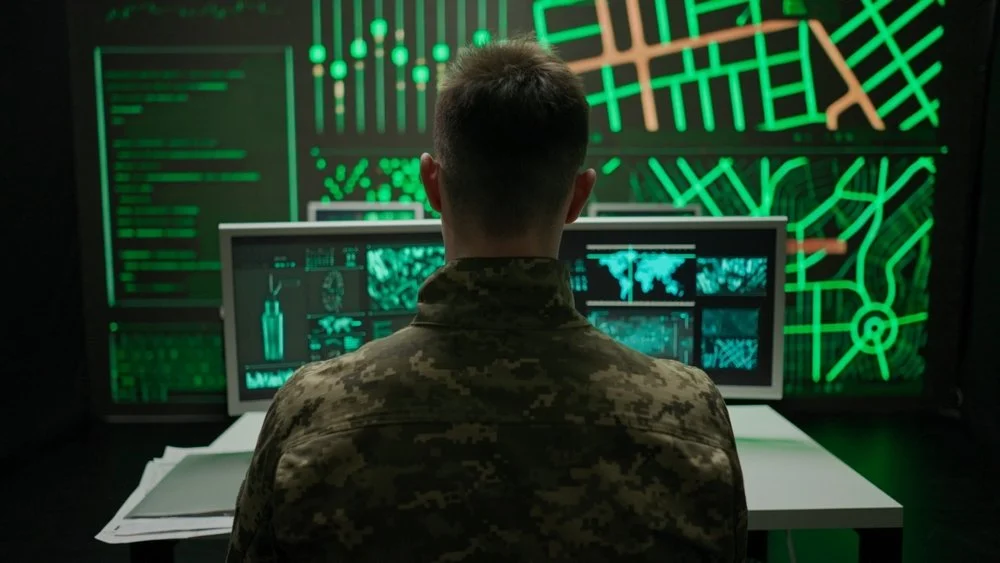
Objectdetection

Facial Recognition and Object Detection in Defense Tech

By Umang Dayal

June 18, 2025

In a high-stakes defense environment, the speed and accuracy of information can define the outcome of missions, protect national borders, and save lives. Among the most critical enablers are facial recognition and object detection technologies.

These AI-driven systems are no longer confined to experimental labs or civilian applications; they are becoming central to how the military manages surveillance, secure facilities, conduct reconnaissance, and make tactical decisions in real time.

Facial recognition allows security forces to identify persons of interest across vast datasets, video feeds, and live drone surveillance, enabling more proactive threat detection and response. Object detection, on the other hand, powers everything from automated monitoring of suspicious vehicles and unattended baggage to identifying targets in combat zones. Whether deployed in UAVs scanning for threats over hostile terrain or in fixed-location cameras guarding critical infrastructure, these technologies form the backbone of a modern defense ecosystem that depends on automation for both strategic intelligence and real-time decision-making.

This blog explores how facial recognition and object detection in defense tech are transforming surveillance, threat detection, and decision-making. While also navigating challenges and recommendations, shaping their deployment.

Facial Recognition in Defense Tech

Facial recognition systems have rapidly evolved into indispensable tools for defense and security operations. Their applications extend beyond traditional surveillance, offering critical capabilities in identity verification, border control, watchlist monitoring, and mission-specific intelligence. However, as these systems mature, so do the tactics designed to undermine them, requiring equally advanced countermeasures and ongoing attention to legal and ethical implications.

Adversarial Attacks & Defenses

One of the most significant challenges facing facial recognition in defense is the emergence of adversarial attacks designed to fool AI systems. Cloaking techniques, which involve subtly altering a person’s appearance using algorithmically generated patterns, can render facial recognition systems ineffective. These patterns, often invisible to the human eye, are crafted to manipulate the model’s feature extraction layers, preventing accurate identification or causing deliberate misclassification.

To counter such threats, new defense systems are being developed that aim to purify the training data and harden recognition models against cloaked inputs. Among the most notable advancements is a training-time purification approach that filters out adversarial noise before it can corrupt the model. This method significantly reduces the success rate of cloaking attacks by refining the representation space, allowing the AI to learn more robust and generalized features. These defenses are particularly valuable in military systems that rely on long-term deployment in dynamic environments, where attackers may exploit open-source cloaking tools to bypass surveillance.

Cross-Spectrum Recognition

In operational scenarios where lighting is poor or visibility is limited, such as night-time patrols, covert surveillance, or operations in smoke-filled or foggy environments, traditional facial recognition systems based on visible light imagery become unreliable. To address these limitations, defense organizations are investing in cross-spectrum recognition technologies.

Cross-spectrum facial recognition leverages thermal-to-visible synthesis, a process that uses AI to generate a visible-light approximation of a thermal image. This allows standard recognition algorithms, trained on visible-light data, to function effectively even in complete darkness. By bridging the gap between thermal and visual spectrums, these technologies enable round-the-clock monitoring capabilities, particularly useful in perimeter defense, reconnaissance missions, and special operations conducted under low-light conditions.

Ethical & Legal Dimensions

As the use of facial recognition expands within defense tech operations, it raises critical questions around privacy, civil liberties, and accountability. Large-scale government surveillance programs, such as those managed by intelligence and law enforcement agencies, have sparked debate over the potential for misuse, biased algorithms, and a lack of transparency.

Programs run by defense tech have incorporated facial recognition into domestic and international intelligence workflows, often without full public disclosure or regulatory oversight. At the same time, research initiatives such as those under IARPA (Intelligence Advanced Research Projects Activity) aim to advance recognition capabilities to unprecedented levels of accuracy and scale.

The growing power of these systems has led to increasing calls for legislative guardrails and oversight mechanisms. Key concerns include the disproportionate impact of facial recognition errors on minority communities, the use of facial data without consent, and the potential for these tools to be used in ways that infringe on constitutional rights. For defense, maintaining public trust means not only building technically sound systems but also ensuring they are governed by clear policies, ethical frameworks, and transparent accountability structures.

Object Detection in Defense Tech

Object detection has become a cornerstone capability in modern defense operations, enabling automated systems to interpret visual data with speed and accuracy that surpasses human capability. From identifying potential threats in surveillance footage to guiding unmanned systems in complex combat environments, object detection plays a vital role in both strategic intelligence and real-time mission execution. As defense technology increasingly converges with AI, object detection is reshaping how information is gathered, targets are tracked, and operational decisions are made.

AI-Powered ISR & Targeting

Intelligence, Surveillance, and Reconnaissance (ISR) operations have traditionally relied on human analysts to interpret visual data collected from aerial and ground sensors. Today, AI-powered object detection systems are transforming ISR by automating the analysis of vast image and video datasets. One of the most prominent initiatives in this space is Project Maven, a U.S. Department of Defense program designed to integrate AI into battlefield decision-making. At the core of Project Maven is the ability to detect, classify, and track objects of interest, such as vehicles, weapons, or individuals, in drone footage and satellite imagery.

This automation dramatically accelerates the targeting cycle, reducing the time between identification and engagement of high-value targets. Object detection algorithms allow for real-time threat assessments, flagging suspicious movements or equipment without requiring constant human oversight. Beyond surveillance, object detection is also enabling advanced capabilities in unmanned ground vehicles (UGVs) and aerial systems. These platforms use AI to autonomously navigate terrain, track moving targets, and even assist in guiding munitions with high precision. In high-risk or GPS-denied environments, such autonomy can be critical to mission success and troop safety.

Adversarial Vulnerabilities

Despite its effectiveness, object detection is not immune to deception. Adversaries have developed techniques to exploit weaknesses in AI vision systems, most notably through patch-based adversarial attacks. These involve attaching carefully designed patterns, often resembling innocuous symbols or geometric shapes, to objects or vehicles to confuse or mislead detection algorithms. The result can be a failure to recognize a weapon, a misclassification of a hostile asset, or the complete evasion of automated tracking.

To counter these threats, defense researchers are developing inpainting-based defenses. These techniques aim to detect and digitally remove the adversarial patches from the input image before the object detection system processes it. By restoring a more “natural” visual representation, these defenses help the system recover its detection accuracy. In parallel, adversaries have also turned to more traditional forms of evasion such as camouflage, thermal masking, and concealment using foliage or terrain features. These low-tech countermeasures remain surprisingly effective, especially when combined with AI-targeted adversarial designs, underscoring the need for resilient, multi-modal detection systems.

System Integration & Ethics

As object detection systems become more integrated across defense platforms, their effectiveness increasingly depends on seamless fusion with other sensors and computing systems. Multi-modal integration, combining visible-spectrum cameras with thermal, infrared, radar, and acoustic sensors, provides a more comprehensive and reliable picture of the battlefield. Edge computing architectures allow this data to be processed locally on devices such as drones or autonomous vehicles, enabling low-latency decision-making even in disconnected or hostile environments. Predictive analytics further enhances these systems by using historical data and real-time observations to anticipate threats before they materialize.

However, the integration of object detection into weapons systems, particularly autonomous ones, raises profound ethical and legal questions. As lethal autonomous weapon systems (LAWS) become more capable, concerns about accountability, proportionality, and the risk of unintended engagements intensify. International discussions continue around the regulation or outright ban of fully autonomous weapons, with debates centered on the acceptable level of human control. For defense agencies, balancing technological advancement with ethical responsibility is critical, not only for compliance with international norms but also for maintaining legitimacy in the eyes of the global community.

Read more: Fleet Operations for Defense Autonomy: Bridging Human Control and AI Decisions

Challenges & Recommendations of Facial Recognition and Object Detection

Data Quality and Bias in Military AI

One of the most pressing challenges in deploying facial recognition and object detection in defense is the issue of poor data quality and model bias. AI systems trained on limited or non-representative datasets often perform inconsistently across different environments, lighting conditions, or demographic groups. In operational terms, this means identity mismatches in facial recognition or misclassification of key objects in surveillance feeds.

The recommendation here is to build more robust and representative datasets tailored to defense use cases, incorporating variations in terrain, time of day, atmospheric conditions, and population diversity. This should be complemented with continuous data auditing and the use of domain-specific data augmentation to help models generalize more effectively and reduce inherent biases.

False Positives, False Negatives, and Decision Integrity

A closely related concern is the occurrence of false positives and false negatives. In mission-critical defense operations, a false positive could result in the misidentification of a civilian as a hostile actor, while a false negative could allow a threat to go undetected. Both scenarios carry significant consequences for safety and mission outcomes.

To mitigate this, systems should be designed to include confidence scores and uncertainty estimates, giving human operators more nuanced insights into the AI’s decision-making. Additionally, employing ensemble models and multi-sensor fusion, such as combining visual and thermal data, can enhance reliability and minimize the chances of critical errors.

Adversarial Threats to Visual Recognition

Adversarial attacks are another significant threat to AI vision systems in defense. These include facial cloaking techniques that evade recognition and patch-based attacks that confuse object detection algorithms. Such tactics can effectively render AI systems blind to genuine threats. The defense against this lies in incorporating adversarial training methods that expose models to simulated attacks during development. Preprocessing techniques, like inpainting and data purification, can help restore the integrity of manipulated inputs. Creating adversarial testing environments also allows defense organizations to proactively assess vulnerabilities and improve system robustness before live deployment.

Human-AI Collaboration in High-Stakes Operations

The lack of structured human-AI collaboration frameworks presents another operational gap. Overreliance on AI systems without sufficient human oversight can result in blind trust and potentially catastrophic decisions. Conversely, sidelining AI can reduce efficiency and slow down responses.

A balanced approach involves integrating human-in-the-loop workflows, where AI assists rather than replaces decision-makers. This setup should include interpretable outputs and user interfaces that clearly communicate system confidence and rationale. Equally important is training defense personnel to understand AI limitations, fostering an environment of informed trust rather than unquestioning dependence.

Governance, Ethics, and Regulatory Oversight

The rapid integration of facial recognition and object detection into defense workflows has outpaced the development of regulatory and ethical oversight mechanisms. This creates uncertainty around issues such as privacy, consent, accountability, and adherence to international laws of engagement.

The recommendation here is to establish transparent and enforceable governance frameworks that define permissible applications and usage boundaries. This includes creating data governance policies, ethical review boards, and ensuring auditability of AI systems through explainable models and usage logs.

Operational Resilience in Mission-Critical Scenarios

Finally, mission readiness under operational stress remains a persistent concern. Defense AI systems must function reliably even in degraded environments, where communication is limited, adversaries deploy countermeasures, or natural conditions obscure visibility.

To address this, systems should be equipped with edge-processing capabilities to operate autonomously when disconnected from central servers. They should also be subjected to rigorous testing in both simulated and real-world defense scenarios to ensure resilience, adaptability, and fail-safe performance under pressure.

How We Can Help

Digital Divide Data (DDD) is uniquely positioned to support the defense tech in building resilient, ethical, and mission-ready AI systems through high-quality data services and scalable human-in-the-loop solutions. As AI adoption accelerates in surveillance, targeting, and threat detection workflows, the success of these applications increasingly depends on the quality, diversity, and security of the underlying data. DDD’s capabilities directly address these requirements.

We provide large-scale, high-fidelity data collection and annotation services tailored to defense and security contexts. This includes labeling of facial images under varied lighting, occlusion, and environmental conditions, as well as complex object detection tasks involving aerial, thermal, and multi-sensor imagery. By drawing from global, diverse data sources and using trained, security-vetted annotators, DDD helps ensure that AI models are trained on datasets that minimize bias and maximize operational generalizability.

We integrate human-in-the-loop workflows that enhance system reliability in high-stakes environments. Whether it’s verifying edge-case detections, annotating adversarial scenarios, or maintaining the accuracy of evolving datasets, DDD’s skilled teams offer continuous validation and refinement, critical for AI systems deployed in dynamic, adversarial settings. These workflows not only improve accuracy but also build in accountability and transparency, which are increasingly required in defense AI applications.

Our defense tech solutions are 100% U.S owned, operated by a U.S. workforce, and led by veterans. All data used in defense programs remains securely housed within the United States, ensuring compliance with data sovereignty requirements and the highest standards of national data protection.

Read more: Geospatial Data & GEOINT Use Cases in Defense Tech and National Security

Conclusion

As global threats grow more sophisticated, the defense sector is turning to advanced technologies like facial recognition and object detection to maintain strategic advantage and national security. These AI-driven capabilities are no longer experimental; they are embedded in mission-critical systems such as surveillance drones, unmanned vehicles, biometric access controls, and real-time targeting platforms.

To harness the full potential of these technologies, it is essential to strike a careful balance between technical innovation and responsible implementation. Defense systems must be built on diverse, high-quality datasets, hardened against manipulation, and designed with human oversight and ethical safeguards at their core. Investing in robust AI infrastructure is not just a matter of technological superiority; it is a matter of trust, accountability, and long-term resilience.

The future will depend not just on how powerful these systems become, but on how ethically, securely, and effectively they are deployed.

Partner with DDD to build secure, mission-ready AI systems using facial recognition and object detection in defense tech. Talk to our experts

Facial Recognition and Object Detection in Defense Tech Read Post »

Scroll to Top