Celebrating 25 years of DDD's Excellence and Social Impact.

Multi-Sensor Data

multisensor fusion data

The Role of Multisensor Fusion Data in Physical AI

Physical AI succeeds not only because of larger models, but also because of richer, synchronized multisensor data streams.

There has been a quiet but decisive shift from single-modality perception, often vision-only systems, to integrated multimodal intelligence. But they are no longer enough. A robot that sees a cup may still drop it if it cannot feel the grip. A vehicle that detects a pedestrian visually may struggle in fog without radar confirmation. A drone that estimates position visually may drift without inertial stabilization.

Physical intelligence emerges at the intersection of perception channels, and multisensor fusion binds them together. In this article, we will discuss how multisensor fusion data underpins Physical AI systems, why it matters, how it works in practice, the engineering trade-offs involved, and what it means for teams building embodied intelligence in the real world.

What Is Multisensor Fusion in the Context of Physical AI?

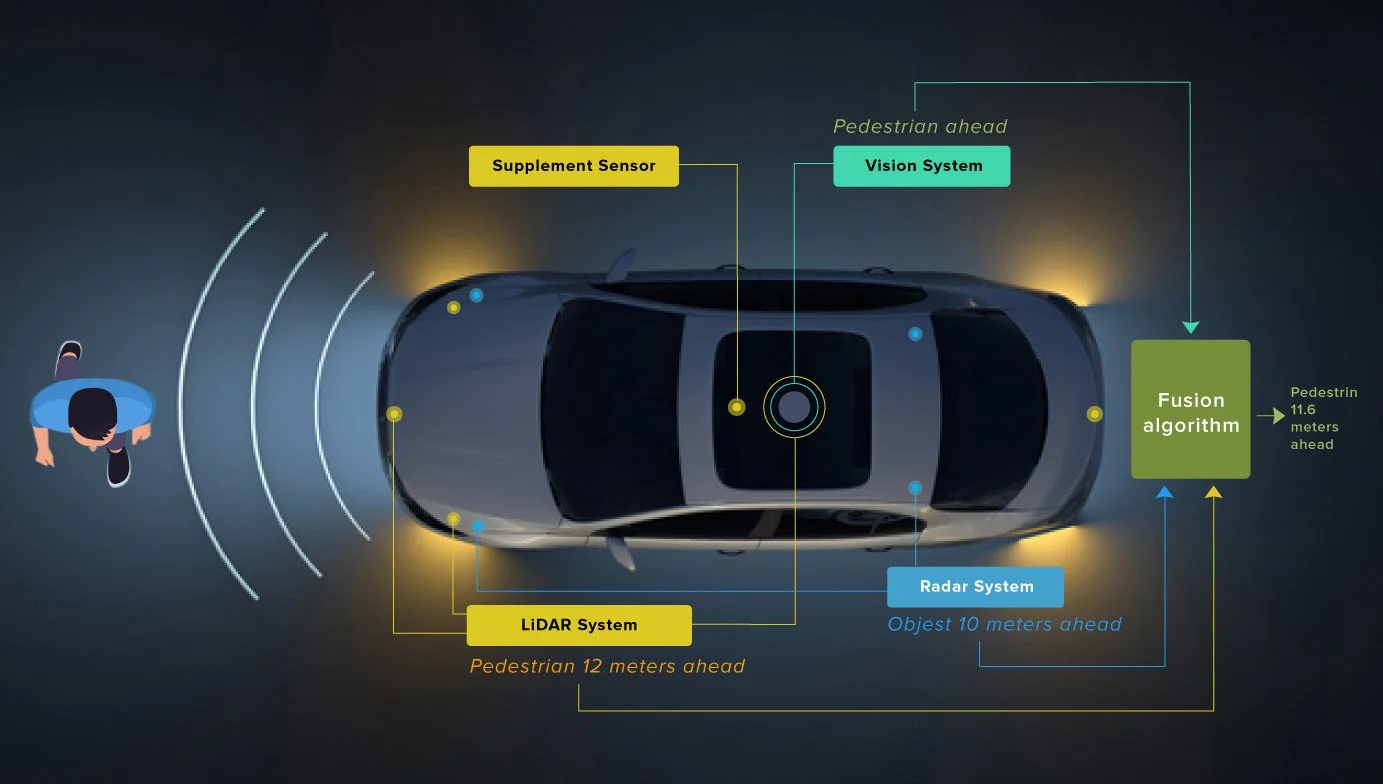
Multisensor fusion combines heterogeneous sensor streams into a unified, structured representation of the world.

Fusion is not merely the act of stacking data together. It is not dumping LiDAR point clouds next to RGB frames and hoping a neural network “figures it out.” Effective fusion involves synchronization, spatial alignment, context modeling, and uncertainty estimation. It requires decisions about when to trust one modality over another, and when to reconcile conflicts between them.

In a warehouse robot, for example, vision may indicate that a package is aligned. Force sensors might disagree, detecting uneven contact. The system has to decide: is the visual signal misleading due to glare? Or is the force reading noisy? A context-aware fusion architecture weighs these inputs, often dynamically.

So fusion, in practice, is closer to structured integration than simple aggregation. It aims to create a coherent internal state representation from fragmented sensory evidence.

Types of Sensors in Physical AI Systems

Each sensor modality contributes a partial truth. Alone, it is incomplete. Together, they begin to approximate operational completeness.

Visual Sensors
RGB cameras remain foundational. They provide semantic information, object identity, boundaries, and textures. Depth cameras and stereo rigs add geometric understanding. Event cameras capture motion at microsecond granularity, useful in high-speed environments. But vision struggles in low light, glare, fog, or heavy dust. It can misinterpret reflections and cannot directly measure force or weight.

Tactile Sensors
Force and pressure sensors embedded in robotic grippers detect contact. Slip detection sensors recognize micro-movements between surfaces. Tactile arrays can measure distributed pressure patterns. Vision might tell a robot that it is holding a ceramic mug. Tactile sensors reveal whether the grip is secure. Without that feedback, dropping fragile objects becomes almost inevitable.

Proprioceptive Sensors
Joint encoders and torque sensors measure internal state: joint angles, velocities, and motor effort. They help a robot understand its own posture and movement. Slight encoder drift can accumulate into noticeable positioning errors. Fusion between vision and proprioception often corrects such drift.

Inertial Sensors (IMUs)
Gyroscopes and accelerometers measure orientation and acceleration. They are critical for drones, humanoids, and autonomous vehicles. IMUs provide high-frequency motion signals that cameras cannot match. However, inertial sensors drift over time. They need external references, often vision or GPS, to recalibrate.

Environmental Sensors
LiDAR, radar, and ultrasonic sensors measure distance and object presence. Radar can operate in poor visibility where cameras struggle. LiDAR generates precise 3D geometry. Ultrasonic sensors assist in short-range detection. Each has strengths and blind spots. LiDAR may struggle in heavy rain. Radar offers less detailed geometry. Ultrasonic sensors have a limited range.

Audio Sensors
In advanced embodied systems, microphones detect contextual cues: machinery noise, human speech, and environmental hazards. Audio can indicate anomalies before visual signals become apparent. Individually, each modality provides a slice of reality. Fusion weaves these slices into a more stable picture. It does not eliminate uncertainty, but it reduces blind spots.

Why Physical AI Depends on Multisensor Fusion

Handling Real-World Uncertainty

The physical world is messy. Lighting changes between morning and afternoon. Warehouse floors accumulate dust. Outdoor vehicles encounter rain, fog, and snow. Sensors degrade. Vision-only systems may perform impressively in curated demos. Under fluorescent glare or heavy fog, they may falter. Sensor noise is not theoretical; it is a daily operational reality.

When vision confidence drops, radar might still detect motion. When LiDAR returns are sparse due to reflective surfaces, cameras may fill the gap. When tactile sensors detect unexpected force, the system can halt movement even if vision appears normal.

Fusion architectures that estimate uncertainty across modalities appear more resilient. They do not treat each input equally at all times. Instead, they dynamically reweight signals depending on environmental context. Physical AI without fusion is like driving with one eye closed. It may work in ideal conditions. It is unlikely to scale safely.

Grounding AI in Physical Interaction

Consider a robotic arm assembling small mechanical parts. Vision identifies the bolt. Proprioception confirms arm position. Tactile sensors detect contact pressure. IMU data ensures stability during motion. Fusion integrates these signals to determine whether to tighten further or stop.

Without tactile feedback, tightening might overshoot. Without proprioception, alignment errors accumulate. Without vision, object identification becomes guesswork. Physical intelligence emerges from grounded interaction. It is not abstract reasoning alone. It is embodied reasoning, anchored in sensory feedback.

Fusion Architectures in Physical AI Systems

Fusion is not a single algorithm. It is a design choice that influences model architecture, latency, interpretability, and safety.

Early Fusion

Early fusion combines raw sensor data at the input stage. Camera frames, depth maps, and LiDAR projections might be concatenated before entering a neural network.

But raw concatenation increases dimensionality significantly. Synchronization becomes tricky. Minor timestamp misalignment can corrupt learning. And raw fusion may dilute modality-specific nuances.

Late Fusion

Late fusion processes each modality independently, merging outputs at the decision level. A perception module might output object detections from vision. A separate module estimates distances from LiDAR. A fusion layer reconciles final predictions.

This design is modular. It allows teams to iterate on components independently. In regulated industries, modularity can be attractive. Yet, late fusion may lose cross-modal feature learning. The system might miss subtle correlations between texture and geometry that only joint representations capture.

Hybrid / Hierarchical Fusion

Hybrid approaches attempt a middle ground. They combine modalities at intermediate layers. Cross-attention mechanisms align features. Latent space representations allow modalities to influence one another without fully merging raw inputs.

This layered design appears to balance specialization and integration. Vision features inform depth interpretation. Tactile signals refine object pose estimation. However, complexity grows. Debugging becomes harder. Interpretability can suffer if alignment mechanisms are opaque.

End-to-End Multimodal Policies

An emerging approach maps sensor streams directly to actions. Unified models ingest multimodal inputs and output control commands.

The benefits are compelling. Reduced pipeline fragmentation. Potentially smoother integration between perception and control. Still, risks exist. Interpretability decreases. Overfitting to specific sensor configurations may occur. Safety validation becomes more challenging when decisions are deeply entangled across modalities.

Data Engineering Challenges in Multisensor Fusion

Behind every functioning physical AI system lies an immense data engineering effort. The glamorous part is model training. The harder part is making data usable.

Temporal Synchronization

Sensors operate at different frequencies. Cameras may run at 30 frames per second. IMUs can exceed 200 Hz. LiDAR might rotate at 10 Hz. If timestamps drift, fusion degrades. Even a millisecond misalignment can distort high-speed control.

Sensor drift and latency alignment require careful engineering. Timestamp normalization frameworks and hardware synchronization protocols become essential. Without them, training data contains hidden inconsistencies.

Spatial Calibration

Each sensor has intrinsic and extrinsic parameters. Miscalibrated coordinate frames create spatial errors. A LiDAR point cloud slightly misaligned with camera frames leads to incorrect object localization. Calibration must account for vibration, temperature changes, and mechanical wear. Cross-sensor coordinate transformation pipelines are not one-time tasks. They require periodic validation.

Data Volume and Storage

Multisensor systems generate enormous data volumes. High-resolution video combined with dense point clouds and high-frequency IMU streams quickly exceeds terabytes.

Edge processing reduces transmission load. But real-time constraints limit compression options. Teams must decide what to store, what to discard, and what to summarize. Storage strategies directly influence retraining capability.

Annotation Complexity

Labeling across modalities is demanding. Annotators may need to mark 3D bounding boxes in point clouds, align them with 2D frames, and verify consistency across timestamps.

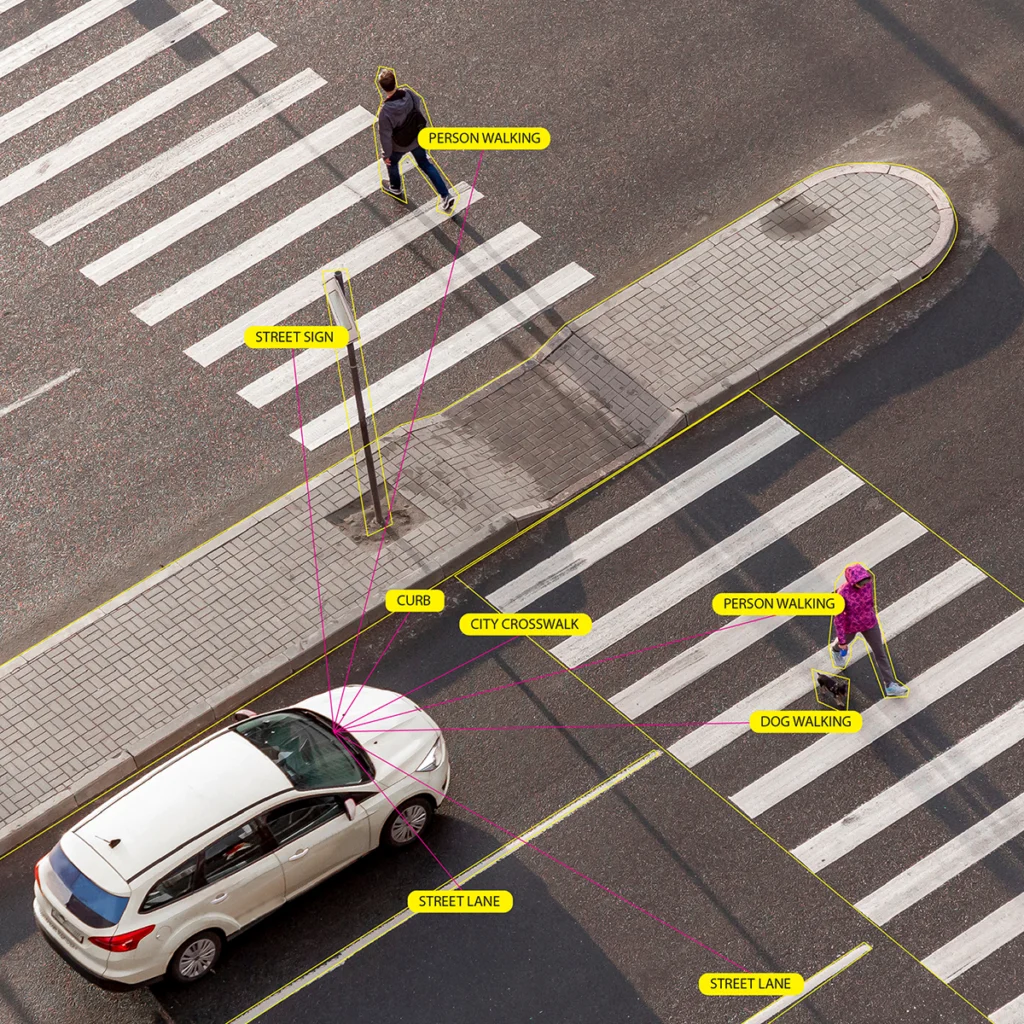
Cross-modal consistency is not trivial. A pedestrian visible in a camera frame must align with corresponding LiDAR returns. Generating ground truth in 3D space often requires specialized tooling and experienced teams. Annotation quality significantly influences model reliability.

Simulation-to-Real Gap

Simulation accelerates data generation. Synthetic data allows edge-case modeling. Yet synthetic sensors often lack realistic noise. Sensor noise modeling becomes crucial. Domain randomization helps, but cannot perfectly capture environmental unpredictability. Bridging simulation and reality remains an ongoing challenge. Fusion complicates it further because each modality introduces its own realism requirements.

Strategic Implications for AI Teams

Multisensor fusion is not just a technical problem. It is a strategic one.

Data-Centric Development Over Model-Centric Scaling

Scaling parameters alone may yield diminishing returns. Fusion-aware dataset design often delivers more tangible gains. Teams should prioritize multimodal validation protocols. Does performance degrade gracefully when one sensor fails? Is the model over-reliant on a dominant modality? Data diversity across environments, lighting, weather, and hardware configurations matters more than marginal architecture tweaks.

Infrastructure Investment Priorities

Sensor stack standardization reduces integration friction. Synchronization tooling ensures consistent training data. Real-time inference hardware supports latency constraints. Underinvesting in infrastructure can undermine model progress. High-performing models trained on poorly synchronized data may behave unpredictably in deployment.

Building Competitive Advantage

Proprietary multimodal datasets become defensible assets. Closed-loop feedback data, collected from deployed systems, enables continuous refinement. Real-world operational data pipelines are difficult to replicate. They require coordinated engineering, field testing, and annotation workflows. Competitive advantage may increasingly lie in data orchestration rather than model novelty.

Conclusion

The next generation of breakthroughs in robotics, autonomous vehicles, and embodied systems may not come from simply scaling architectures upward. They are likely to emerge from smarter integration, systems that understand not just what they see, but what they feel, how they move, and how the environment responds.

Physical AI is still evolving. Its foundations are being built now, in data pipelines, annotation workflows, sensor stacks, and fusion frameworks. The teams that treat multisensor fusion as a core capability rather than an afterthought will probably be the ones that move from impressive demos to dependable deployment.

How DDD Can Help

Digital Divide Data (DDD) delivers high-quality multisensor fusion services that combine camera, LiDAR, radar, and other sensor data into unified training datasets. By synchronizing and annotating multimodal inputs, DDD helps computer vision systems achieve reliable perception, improved accuracy, and real-world dependability.

As a global leader in computer vision data services, DDD enables AI systems to interpret the world through integrated sensor data. Its multisensor fusion services combine human expertise, structured quality frameworks, and secure infrastructure to deliver production-ready datasets for complex AI applications.

Talk to our expert and build smarter Physical AI systems with precision-engineered multisensor fusion data from DDD.

References

Salian, I. (2025, August 11). NVIDIA Research shapes physical AI. NVIDIA Blog.

Qian, H., Wang, M., Zhu, M., & Wang, H. (2025). A review of multi-sensor fusion in autonomous driving. Sensors, 25(19), 6033. https://doi.org/10.3390/s25196033

Hwang, J.-J., Xu, R., Lin, H., Hung, W.-C., Ji, J., Choi, K., Huang, D., He, T., Covington, P., Sapp, B., Zhou, Y., Guo, J., Anguelov, D., & Tan, M. (2025). EMMA: End-to-end multimodal model for autonomous driving (arXiv:2410.23262). arXiv. https://arxiv.org/abs/2410.23262

Din, M. U., Akram, W., Saad Saoud, L., Rosell, J., & Hussain, I. (2026). Multimodal fusion with vision-language-action models for robotic manipulation: A systematic review. Information Fusion, 129, 104062. https://doi.org/10.1016/j.inffus.2025.104062

FAQs

  1. How does multisensor fusion impact energy consumption in embedded robotics?
    Fusion models may increase computational load, especially when processing high-frequency streams like LiDAR and IMU data. Efficient architectures and edge accelerators are often required to balance perception accuracy with battery constraints.
  2. Can multisensor fusion work with low-cost hardware?
    Yes, but trade-offs are likely. Lower-resolution sensors or reduced calibration precision may affect performance. Intelligent weighting and redundancy strategies can partially compensate.
  3. How often should sensor calibration be updated in deployed systems?
    It depends on mechanical stress, environmental exposure, and operational intensity. Industrial robots may require periodic recalibration schedules, while autonomous vehicles may rely on continuous self-calibration algorithms.
  4. Is fusion necessary for all physical AI applications?
    Not always. Controlled environments with stable lighting and limited variability may operate effectively with fewer modalities. However, open-world deployments typically benefit from multimodal redundancy.

The Role of Multisensor Fusion Data in Physical AI Read Post »

Multisensordatalabeling

Challenges of Synchronizing and Labeling Multi-Sensor Data

DDD Solutions Engineering Team

25 Aug, 2025

By combining data from cameras, LiDAR, radar, GPS, and inertial sensors, Multi-sensor systems provide a more complete and reliable picture of the world than any single sensor can achieve. They are central to the functioning of autonomous vehicles, humanoids, and defense tech, and smart infrastructure, where safety and accuracy depend on capturing complex, real-world environments from multiple perspectives.

The power of sensor fusion lies in its ability to build redundancy and resilience into perception. If a camera struggles in low light, LiDAR can provide depth information. If LiDAR fails to capture fine details, radar can deliver robust detection under poor weather conditions. Together, these technologies make decision-making systems more trustworthy and less prone to single points of failure.

However, the benefits of multi-sensor fusion are only realized if the data from different sensors can be synchronized and labeled correctly. Aligning multiple data streams in both time and space, and then ensuring that annotations remain consistent across modalities, has become one of the most difficult and resource-intensive challenges in deploying real-world AI systems.

This blog explores the critical challenges that organizations face in synchronizing and labeling multi-sensor data, and why solving them is essential for the future of autonomous and intelligent systems.

Why Synchronization in Multi-Sensor Data Matters

At the heart of multi-sensor perception lies the challenge of aligning data streams that operate at different speeds. Cameras often capture 30 frames per second, LiDAR systems may generate scans at 10 hertz, while inertial sensors produce hundreds of measurements each second. If these data streams are not carefully aligned, the system may attempt to interpret events that never occurred in the same moment, leading to a distorted view of reality.

Each sensor has its own internal clock, and even small timing differences accumulate into significant errors over time. Transmission delays from hardware, networking, or processing pipelines add further uncertainty. A system that assumes perfect synchronization risks misjudging the position of an object by several meters simply because the data was captured at slightly different moments.

These misalignments have real-world consequences. A pedestrian detected by a camera but not yet seen by LiDAR may cause an autonomous vehicle to hesitate or make an unsafe maneuver. A drone navigating in windy conditions may miscalculate its trajectory if inertial and GPS signals are out of sync. In safety-critical systems, even millisecond errors can cascade into poor perception, faulty tracking, or incorrect predictions.

Synchronization is therefore not just a technical detail, but a foundation for trust. Without reliable alignment, sensor fusion cannot function as intended, and the entire perception pipeline becomes vulnerable to inaccuracies.

Spatial Alignment and Calibration in Multi-Sensor Data

Synchronizing sensors in time is only one part of the challenge. Equally important is ensuring that data from different devices aligns correctly in space. Each sensor operates in its own coordinate system, and without careful calibration, their outputs cannot be meaningfully combined.

Two kinds of calibration are essential. Intrinsic calibration deals with the internal properties of a sensor, such as correcting lens distortion in a camera or compensating for systematic measurement errors in a LiDAR. Extrinsic calibration focuses on the spatial relationship between sensors, defining how a camera’s view relates to the three-dimensional space captured by LiDAR or radar. Both must be accurate for multi-sensor fusion to function reliably.

The complexity grows when multiple modalities are involved. A camera provides a two-dimensional projection of the world, while LiDAR produces a sparse set of three-dimensional points. Radar adds another dimension by measuring velocity and distance with lower resolution. Mapping these diverse representations into a unified spatial frame is computationally demanding and highly sensitive to calibration errors.

In real-world deployments, calibration does not remain fixed. Vibrations from driving, temperature fluctuations, or even minor impacts can shift sensors slightly out of alignment. These small deviations may not be noticeable at first but can lead to substantial errors over time. Maintaining accurate calibration requires not only precise setup during installation but also periodic recalibration or the use of automated self-calibration techniques in the field.

Spatial alignment and calibration are therefore continuous challenges. Without them, synchronized data streams still fail to align, undermining the very foundation of multi-sensor perception.

Data Volume and Infrastructure Burden

Beyond synchronization and calibration, one of the most pressing challenges in multi-sensor systems is the sheer scale of data they generate. A single high-resolution camera can produce gigabytes of video in just a few minutes. Add multiple cameras, LiDAR scans containing hundreds of thousands of points, radar sweeps, GPS streams, and IMU data, and the result is terabytes of information being produced every day by a single platform.

This volume creates immediate infrastructure strain. Streaming large amounts of data in real time requires high-bandwidth networks, which may not always be available in the field. Storage quickly becomes a bottleneck as fleets or robotic systems scale up, forcing organizations to invest in specialized hardware and compression strategies to keep data manageable. Even after data is collected, replaying and analyzing synchronized streams can overwhelm conventional computing resources.

While handling the output of a single prototype system may be feasible, expanding to dozens or hundreds of units multiplies both the data volume and the engineering effort required to process it. Fleets of autonomous vehicles or large-scale robotic deployments demand infrastructure capable of handling synchronized multi-sensor data at an industrial scale.

Without a robust infrastructure for managing this data, synchronization and labeling efforts can stall before they begin. Effective solutions require not only technical methods for aligning and annotating data, but also scalable systems for moving, storing, and processing the information in the first place.

Labeling Across Modalities for Multi-Sensor

Once data streams are synchronized and calibrated, the next challenge is creating consistent labels across different sensor modalities. This task is far more complex than labeling a single dataset from one sensor type. A bounding box drawn around a vehicle in a two-dimensional camera image must accurately correspond to the same vehicle represented in a LiDAR point cloud or detected by radar. Any misalignment results in inconsistencies that weaken the training data and undermine model performance.

The inherent differences between modalities add to the difficulty. Cameras capture dense, detailed images of every pixel in a scene, while LiDAR provides a sparse but geometrically precise map of points. Radar contributes distance and velocity information, but with far less spatial resolution. Translating annotations across these diverse data types requires specialized tools and workflows to ensure that one object is labeled correctly everywhere it appears.

Human annotators face a significant cognitive load in this process. Interpreting and labeling fused data demands constant switching between modalities, perspectives, and representations. Unlike labeling a single image, multi-sensor annotation requires reasoning about depth, perspective, and cross-modality consistency simultaneously. Over time, this complexity can lead to fatigue, higher error rates, and inconsistencies across the dataset.

Accurate cross-modal labeling is essential for developing reliable perception systems. Without it, even perfectly synchronized and calibrated data cannot fulfill its potential, as the downstream models will struggle to learn meaningful representations of the real world.

Noise, Dropouts, and Edge Cases

Even when sensors are carefully synchronized and calibrated, their outputs are never perfectly clean. Each modality carries its own vulnerabilities. Cameras are affected by changes in lighting, glare, and shadows. LiDAR struggles with highly reflective or absorptive surfaces, producing gaps or spurious points. Radar can be confused by multipath reflections or interference in complex environments. These imperfections introduce uncertainty that complicates both synchronization and labeling.

Temporary sensor failures, or dropouts, create additional challenges. In real-world deployments, a camera may briefly lose exposure control, a LiDAR might skip a frame, or a radar might fail to return usable signals. When one sensor drops out, the task of aligning and labeling across modalities becomes inconsistent, and downstream models must compensate for incomplete inputs. Reconstructing reliable data streams under these conditions is difficult and often requires fallback strategies.

Edge cases amplify these issues. Rare scenarios such as unusual weather conditions, fast-moving objects, or crowded environments test the limits of both the sensors and the synchronization pipelines. These cases often expose weaknesses that remain hidden in controlled testing, yet they are precisely the scenarios that autonomous and robotic systems must handle reliably.

Addressing noise, dropouts, and edge cases is therefore not optional but central to building trust in multi-sensor systems. Without robust strategies to manage imperfections, synchronized and labeled data will fail to represent the realities of deployment environments.

Generating Reliable Ground Truth

Reliable ground truth is the benchmark against which perception systems are trained and evaluated. In the context of multi-sensor data, producing this ground truth is particularly demanding because it requires consistency across time, space, and modalities. Unlike single-sensor datasets, where annotations can be applied directly to a single stream, multi-sensor setups demand multi-stage pipelines that ensure alignment between different forms of representation.

Creating such pipelines involves carefully cross-checking annotations across modalities. A pedestrian labeled in a camera image must be accurately linked to the corresponding points in LiDAR and any detections from radar. These checks are not simply clerical but essential to prevent systematic labeling errors from cascading through entire datasets. Each stage adds cost, complexity, and the need for rigorous quality assurance.

Dynamic scenes make this process even more complex. Fast-moving objects, occlusions, and overlapping trajectories can cause labels to become inconsistent across frames and modalities. Ensuring temporal continuity while maintaining spatial precision requires sophisticated workflows that combine automated assistance with human oversight.

Uncertainty is another factor that cannot be ignored. Some scenarios do not allow for precise labeling, such as partially visible objects or sensor measurements degraded by noise. Forcing deterministic labels in such cases risks introducing artificial precision that misleads the model. Representing uncertainty, whether through probabilistic annotations or confidence scores, provides a more realistic foundation for training and evaluation.

Reliable ground truth is therefore not just a product of annotation but a process of validation, consistency checking, and uncertainty management. Without this level of rigor, synchronized and calibrated multi-sensor data cannot be fully trusted to support safe and scalable AI systems.

Tooling and Standardization Challenges of Multi Sensor Data

Even with synchronization, calibration, and careful labeling in place, the practical work of managing multi-sensor data is often slowed by limitations in tooling and a lack of standardization. Most annotation and processing tools were designed for single modalities, such as 2D image labeling or 3D point cloud analysis, and are not well-suited to handling both simultaneously. This forces teams to work with fragmented toolchains, exporting data from one platform and re-importing it into another, which increases complexity and the risk of errors.

The absence of widely accepted standards compounds this issue. Different organizations and industries frequently adopt proprietary data formats, labeling schemas, and metadata conventions. As a result, datasets cannot be easily shared or reused across projects, and tooling built for one environment often cannot be applied in another without significant adaptation. This lack of interoperability slows research, inflates costs, and reduces opportunities for collaboration.

Operational scaling brings another layer of difficulty. Managing multi-sensor synchronization and labeling across a small pilot project is one challenge, but doing so across hundreds of vehicles, drones, or industrial robots requires infrastructure that is both robust and flexible. Automated validation pipelines, scalable data storage, and consistent quality control processes must be in place to handle the growth, yet many existing toolsets are not designed to support such scale.

Without better tools and stronger standards, the gap between research prototypes and deployable systems will remain wide. Closing this gap is essential to make multi-sensor synchronization and labeling both efficient and repeatable in real-world applications.

Read more: How Data Labeling and Real‑World Testing Build Autonomous Vehicle Intelligence

Emerging Solutions for Multi Sensor Data

Despite the challenges, promising solutions are beginning to reshape how organizations approach multi-sensor synchronization and labeling.

Using automation and self-supervised methods

Algorithms can now align data streams by detecting common features across modalities, reducing reliance on manual calibration and lowering the risk of drift in long-term deployments. These approaches are particularly valuable for large-scale systems where manual recalibration is impractical.

Integrated annotation environments

Instead of forcing annotators to switch between 2D image tools and 3D point cloud platforms, object-centric systems allow a single label to propagate across modalities automatically. This not only improves consistency but also reduces cognitive load, making large annotation projects more efficient and less error-prone.

Synthetic and simulation-based data

Digital twins enable testing of synchronization and labeling workflows under controlled conditions, where variables such as sensor noise, lighting, and weather can be manipulated without risk. While synthetic data cannot fully replace real-world examples, it plays an important role in filling gaps and stress-testing systems before deployment.

Finally, there is momentum toward standardization. Industry and research communities are working to define common data formats, labeling conventions, and interoperability protocols. Such efforts are essential to break down silos, enable collaboration, and accelerate progress across sectors.

Looking forward, these innovations point to a future where synchronization and labeling become less of a bottleneck and more of a streamlined, repeatable process. As methods mature, multi-sensor AI systems will gain the reliability and scalability needed to support autonomy, robotics, and other mission-critical applications at scale.

How We Can Help

Digital Divide Data (DDD) supports organizations in overcoming the practical hurdles of synchronizing and labeling multi-sensor data. Our expertise lies in managing the complexity of multi-modal annotation at scale, ensuring that datasets are both consistent and production-ready.

Our teams are trained to handle cross-modality challenges, linking objects seamlessly across camera images, LiDAR point clouds, and radar data. By combining skilled human annotators with workflow automation and quality control systems, DDD reduces errors and accelerates turnaround times. This approach allows clients to focus on advancing their models rather than struggling with fragmented or inconsistent datasets.

Conclusion

Synchronizing and labeling multi-sensor data is one of the most critical challenges in building trustworthy perception systems. The technical hurdles span temporal alignment, spatial calibration, data volume management, cross-modal labeling, and resilience against noise and dropouts. Each layer introduces complexity, yet each is essential for ensuring that downstream models receive accurate, consistent, and reliable information.

Success in this space requires balancing technical innovation with operational discipline. Advances in automation, integrated annotation platforms, and synthetic data are helping to reduce manual effort and error rates. At the same time, organizations must adopt rigorous pipelines, scalable infrastructure, and clear quality standards to handle the realities of deployment at scale.

As these solutions mature, the industry is steadily moving away from treating synchronization and labeling as fragile bottlenecks. Instead, they are becoming core enablers of multi-sensor AI systems that can be trusted to operate in safety-critical domains such as autonomous vehicles, robotics, and defense. With robust foundations in place, multi-sensor perception will shift from a research challenge to a reliable backbone for intelligent systems in the real world.

Partner with Digital Divide Data to build the reliable data foundation your autonomous, robotic, and defense applications need.


References

Brödermann, T., Bruggemann, D., Sakaridis, C., Ta, K., Liagouris, O., Corkill, J., & Van Gool, L. (2024). MUSES: The multi-sensor semantic perception dataset for driving under uncertainty. In European Conference on Computer Vision (ECCV 2024). Springer. https://muses.vision.ee.ethz.ch/pub_files/muses/MUSES.pdf

Basawapatna, G., White, J., & Van Hooser, P. (2024, September). Wireless precision time synchronization alternatives and performance. Riverside Research Institute. Proceedings of the ION GNSS+ Conference. Retrieved from https://www.riversideresearch.org/uploads/Academic-Paper/ION_2024_RRI.pdf

Wiesmann, L., Labe, T., Nunes, L., Behley, J., & Stachniss, C. (2024). Joint intrinsic and extrinsic calibration of perception systems utilizing a calibration environment. IEEE Robotics and Automation Letters, 9(4), 3102–3109. https://www.ipb.uni-bonn.de/wp-content/papercite-data/pdf/wiesmann2024ral.pdf


FAQs

How do organizations typically validate synchronization quality in multi-sensor systems?
Validation often involves using calibration targets, reference environments, or benchmarking against high-precision ground truth systems. Some organizations also employ automated scripts that check for time or spatial inconsistencies across modalities.

What role does edge computing play in managing multi-sensor data?
Edge computing enables preprocessing and synchronization closer to where data is collected. This reduces bandwidth requirements, lowers latency, and ensures that only refined or partially fused data is transmitted to central systems for further analysis.

Are there cost considerations unique to multi-sensor labeling projects?
Yes. Multi-sensor labeling is more resource-intensive than single-modality annotation due to the added complexity of ensuring cross-modal consistency. Costs are influenced by the number of modalities, annotation complexity, and the need for specialized tooling.

Can machine learning models assist in reducing human effort for cross-modal labeling?
They can. Automated pre-labeling and self-supervised methods can generate initial annotations that are then refined by human annotators. This hybrid approach reduces time and improves efficiency, although quality control remains essential.

What industries outside of autonomous driving benefit most from multi-sensor synchronization and labeling?
Defense systems, industrial robotics, logistics, smart infrastructure, and even healthcare imaging applications benefit from synchronized and consistently labeled multi-sensor data, as they all rely on robust perception under varied conditions.

How often should multi-sensor systems be recalibrated in real-world deployments?
The frequency depends on the environment and use case. Mobile platforms exposed to vibration or temperature changes may require frequent recalibration, while static installations can operate with less frequent adjustments. Automated recalibration methods are increasingly being used to reduce downtime.

Challenges of Synchronizing and Labeling Multi-Sensor Data Read Post »

DDD2Bmulti2Bsensor2Bfusion

Multi-Sensor Data Fusion in Autonomous Vehicles — Challenges and Solutions

By Umang Dayal

November 5, 2024

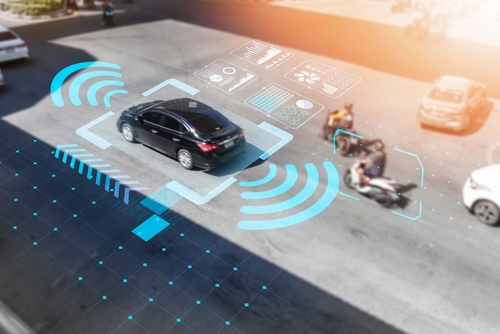
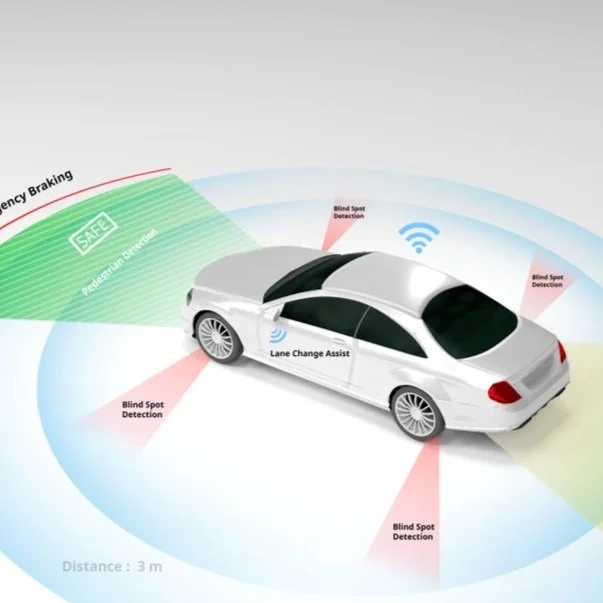
Autonomous driving remains a rapidly evolving field and automotive multi-sensor systems are needed to navigate or comprehend the field of vision. With the trend focusing on advanced technologies from manufacturers and policymakers, the use of multi-sensor data fusion has become critical. These techniques fuse information from multiple sensors to create a 360° view of a vehicle’s environment, which is necessary for safe and reliable autonomous vehicles.

Nevertheless, the combination of the various data streams poses a significant challenge due to the complexity and the variability of the sensor outputs. In this blog, we will discuss some of the challenges in fusing data from different sensors. At the same time, explore scalable recommendations on how to combine these technologies, and explain why fusing multiple sensors is important for autonomous driving.

Importance of Multi-Sensor Data Fusion in Autonomous Driving

 Multi-Sensor Data Fusion

Multi-sensor data fusion is a key element to improve safety and reliability for autonomous vehicles offering driverless cars a multitude of sensors to safely navigate their environment. LIDAR excels at producing precise 3D maps of the environment, while radar is ideal at measuring the distance and speed of nearby objects. Cameras on the other hand do not have the resolution of LIDAR or radar, but they are critical in producing a rich amount of visual information.

These sensors complement each other helping the vehicle understand much more than any single sensor ever could. As an example, cameras deliver rich information regarding the visual environment where the car is driving. However, radar provides reliable measurements of targets and speeds, which is important for making dynamic driving decisions.

Synthesizing this data from sensors helps the ADAS to make better decisions and improves situational awareness and reliability. This multi-sensor fusion is an important aspect to overcome the limitation of depending on one type of sensor that may not have the necessary data for autonomous vehicles.

But sensor fusion is more than just data collection; the data must be computed, interpreted, and acted upon constantly due to the fact that driving situations change in real-time. The ability to compute data in real-time is critical for self-driving cars to understand their environment and react accordingly.

With the increasing automation of vehicles, the requirement for more advanced and dependable sensor systems becomes even more critical. To gain the household assurance of the general public on self-sufficient vehicles and perform properly in varied weather conditions, high-performing multi-sensor model systems are inevitable. Therefore, multi-sensor data fusion is necessary for the evolution of autonomous driving systems that can consistently provide safer, and reliable transportation solutions.

Challenges in Interlinking Multi-Sensor Data Fusion

The primary challenge in autonomous vehicles is fusing data from multiple sensors, mainly due to the diffidence in the sensor technologies. Lidars, radars, cameras, and other sensors all have different principles of operation and yield data at different times, formats, and dimensions. In turn, this combination requires an accurate per-sensor type real-world analysis to provide reliable asynchronous detections, which are then needed as input to implement the reliable behavior for autonomous systems.

Let’s discuss more challenges in multi-sensor data fusion in autonomous vehicles:

Overcoming Sensor Diversity

To ensure a safe and efficient functioning, autonomous vehicles make use of a host of sensors. These sensors include lidars, radars, vision sensors, and many more which have different accuracy, resolution, and noise characteristics, making data fusion a very difficult task. As an example, a radar system that is great at distance detection in bad weather and a vision sensor is adequate at providing information in normal conditions to return great imagery. Merging these different streams of data together requires a strong method capable of managing the inconsistencies between sensor outputs.

Response to these challenges requires the development of algorithms that would provide general functions to accommodate the heterogeneous properties of sensor outputs. This software layer is an intermediary step that essentially transforms diverse data into a common format that can be leveraged by the decision-making algorithms running on the car. Moreover, modeling each sensor to make reliable models is also essential. Such autonomous models assist in classifying and processing data from these sensors efficiently and make the integration process more convenient.

Simplifying Data Integration & Alignment

Performing effective multi-sensor data fusion demands greater attention to detail while syncing and aligning data. Even when all sensors are synchronized to a central clock, timing discrepancies can occur because of the different speeds in data collection for different sensors. For some, data from camera and RF classifiers are usually processed sooner than lidar data, and there is potential for temporal mismatch.

It is an essential requirement to correct these discrepancies to ensure the credibility of the data fusion process. This means preprocessing all the temporal and spatial data from the sensors to make sure everything is correct and updated in real-time. Keeping this data in sync is important for the vehicle navigation system that makes safe and efficient decisions when executing maneuvers. Proper alignment contributes to error reduction and system efficiency and consequently leads to safer autonomous driving.

If these technical issues are tackled with the right solution and software tools, it’s possible to make multi-sensor data integration significantly better. This enhances both the operational dependability of autonomous vehicles and their effectiveness and safety, thus enabling the proliferation of this transformative technology.

Techniques and Strategies for Resolving Interlinking Challenges

Data from multiple sensors and input delivery technology systems that process streams of diverse information face significant challenges in integrating sensor data. That means addressing these issues is key to enabling the effectiveness and efficiency of operations. Below are a few of the methods to address these issues.

Sensor Calibration for Data Synergy

Sensor calibration is one of the most important things that helps align and merge the data from different sensors accurately. This process calibrates the sensors to give accurate measurements for physical quantities, making it essential that devices give similar outputs when they are identical. However, two types of calibration help with this process. They are as follows.

Static Calibration: This includes fixating static parameters of sensors such as internal bias values, and others to calibrate inherent inaccuracies. For example, calibrating inertial sensors, for instance, so that they do not have a bias that impacts readings.

Dynamic Calibration: This includes calibrating factors that are time-varying to establish methods for real-time processing of the sensor outputs using dynamic calibration, this allows data to remain accurate even with the impact of external parameters.

By fine-tuning not only the static characteristic of a sensor but also its dynamic behavior, the data quality can be improved, and proper data fusion is achieved from independent sources.

Read more: Utilizing Multi-sensor Data Annotation To Improve Autonomous Driving Efficiency

Improving data fusion with the help of Deep Learning

Deep learning has changed the way the systems analyze and study huge data sets. Ever since the early 20’s, this method has been beneficial for the fusion of data from multiple sensors because it can autonomously learn features from large datasets and manipulate them. Some of the benefits of deep learning multi-sensor fusion techniques include:

Feature Hierarchies: Deep learning algorithms automatically develop layered terms of data features. These captured levels comprise abstraction, which can be fundamental in integrating and interpreting sensor data.

High-Dimensional: Deep learning handles high-dimensional data naturally from regular sensors, making it a suitable candidate for fusion tasks. This allows the system to identify intricate patterns and connections that may not be captured by conventional approaches.

Use in Sensor Fusion: Deep learning frameworks have successfully been applied to a combination of sensors that include radar, LiDAR, ultrasonics, and others. Thus, resulting in an enhanced understanding of the environment and more informed decision-making in sensor-dependent systems.

Fusing the data of multiple sensors helps improve the functionality and accuracy of a technology system to a great extent. It offers a systematic approach to managing the complexities associated with the various data types involved, ensuring that systems can manage complexity in a seamless and efficient manner.

Read more: Data Annotation Techniques in Training Autonomous Vehicles and Their Impact on AV Development

Conclusion

Multi-sensor data fusion is essential to improve the quality of sensor outputs, making them more accurate and reliable in delivering information allowing innovations in autonomous systems. While substantial strides have been achieved in tackling the complexities of multi-sensor data integration, some challenges still exist. Over the past decade, many of the problems have been resolved by automotive engineers, but some remain and continue to be the focus of continuous research and development.

At Digital Divide Data, we focus on calibrating different sensors with data training and multi-sensor data fusion techniques. To learn more about how we can help you calibrate multiple sensors you can talk to our experts.

Multi-Sensor Data Fusion in Autonomous Vehicles — Challenges and Solutions Read Post »

Digital2BDivide2BData2BMulti2BSensor2BFusion

Utilizing Multi-sensor Data Annotation To Improve Autonomous Driving Efficiency

DDD Solutions Engineering Team

October 8, 2024

Autonomous vehicle sensors such as LiDAR, radar, and cameras detect objects in highly dynamic scenarios. These objects can be cars, motorbikes, pedestrians, traffic signs, roadblocks, etc. To improve the reliability of these autonomous driving systems it’s critical to improve the accuracy of the final result when performing multi-sensor data annotation.

In this blog, we will briefly discuss the implementation of LiDAR, radar, and cameras in autonomous driving and how to improve AD efficiency using multi-sensor data annotation.

What is LiDAR?

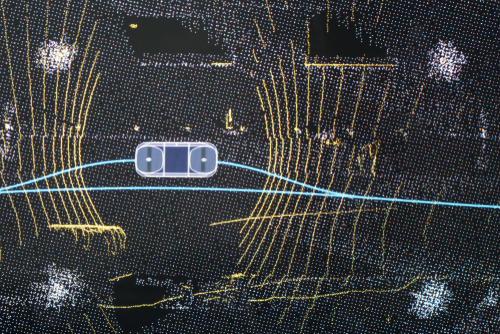
LiDAR or Light Detection and Ranging, is a remote sensing technology that uses advanced laser beams to quickly scan surrounding environments and calculate distance by measuring the time it takes for the light to reach back. Each laser pulse in LiDAR reflects off different wavelengths and surfaces, measuring precise location mapping. These collected data points create a point cloud that forms an accurate 3D depiction of the scanned objects.

How is LiDAR used in Autonomous Driving?

LiDAR sensors receive real-time data from thousands of laser pulses every second, it uses an onboarding system to analyze these ‘point clouds’ to animate a 3D representation of the surrounding terrain or environment. To ensure that LiDAR technology can create accurate 3D representations training is required to onboard AI models with annotated point cloud datasets. This annotated data allows ADAS to identify, detect, and classify different objects in the environment. For example; image and video annotations help autonomous vehicles to accurately identify road signs, moving lanes, objects, traffic flow, etc.

What is LiDAR Annotation?

LiDAR annotation is also known as point cloud annotation, this process classifies the point cloud data generated through LiDAR sensors. During this annotation process, each point is assigned a unique label, such as “pedestrian”, “roadblock”, “building”, “vehicle”, etc. These labeled data points are important to train machine learning models, giving them necessary information about the location and nature of the object present in the real world. In autonomous vehicles, accurate LiDAR annotations allow systems to identify road signs, pedestrians, and moving vehicles, therefore allowing safe navigation. To achieve an accurate understanding of the scene and to recognize objects a high quality of LiDAR annotation is required.

Use of Camera in Autonomous Driving

Cameras can be termed as the most adopted technology for perceiving surroundings for an autonomous vehicle. A camera detects lights emitted from the environment on a photosensitive surface through a camera lens to produce clear images of the surroundings. Cameras are relatively cost-effective and allows the system to identify traffic lights, road lanes, traffic signals. In some autonomous applications, more advanced monocular cameras are used for dual-pixel autofocus hardware, collecting depth information and calculating complex algorithms. For most effective utilization two cameras are installed in autonomous vehicles to form a binocular camera system.

Cameras are ubiquitous technology that delivers high-resolution images and videos, including the texture and color of the perceived surroundings. The most common use of cameras in autonomous vehicles is detecting traffic signs and recognizing road markings.

Using Radar in Autonomous Driving

Radar uses the Doppler property of EM waves to specify the relative position and relative speed of the detected objects. Doppler shift or Doppler effect refers to the deviations or shifts in wave frequencies due to relative motion between a moving target and wave source. For example; the frequency of the signal received shows shorter waves as the signal increases and moves toward the direction of the radar system. The Radar sensors in autonomous vehicles are integrated into several locations such as, near the windshield and behind the vehicle bumper. These radar sensors detect any moving objects that come closer to the sensors integrated with the autonomous system.

What is Sensor Fusion?

Sensor fusion is the process of collecting inputs from Radar, LiDAR, Camera, and Ultrasonic sensors collectively, to interpret surroundings accurately. As it’s difficult for each sensor to deliver all the information individually these sensors need to fuse together to provide the highest degree of safety in autonomous vehicles.

Sensor calibration is the foundation block of all autonomous systems and is a requisite step before implementing sensor fusion algorithms or techniques for autonomous driving systems. This informs the AD system about the sensor’s orientation and position in the real-world coordinates by comparing the relative position of known features as detected by the sensors. Precise sensor calibration is critical for sensor fusion and implementation of ML algorithms for localization and mapping, object detection, parking assistance, and vehicle control.

How is Sensor Fusion Executed?

There are three major approaches for combining multi-sensor data from different sensors.

High-Level Fusion: In the HLF approach, each sensor performs object detection, and subsequently fusion is achieved. HLF approach is most suitable for a lower relative complexity. When there are several overlapping obstacles, HLF delivers inadequate information.

Low-Level Sensor Fusion: In the LLF approach, data from each sensor are fused at the lowest level of raw data or abstraction. This allows all information to be retained and can potentially improve the accuracy of detecting obstacles. LLF requires precise extrinsic calibration of sensors to fuse accurately with their perception of the surrounding environment. The sensors are also required to counterbalance ego motion and are calibrated temporarily.

Mid-Level Fusion: Also known as feature-level sensor fusion is an abstraction level between LLF and HLF. This method fuses features extracted from interconnected raw measurements or sensor data, such as color inputs from images or locations using radar and LiDAR, and subsequently recognizes and classifies fused multi-sensor features. MLF is still insufficient to achieve an SAE Level 4 or Level 5 in autonomous driving due to its limited sense of the surroundings and missing contextual information.

Read More: Annotation Techniques for Diverse Autonomous Driving Sensor Streams

How to improve operational efficiency for Autonomous vehicles using Multi-Sensor Data Annotation?

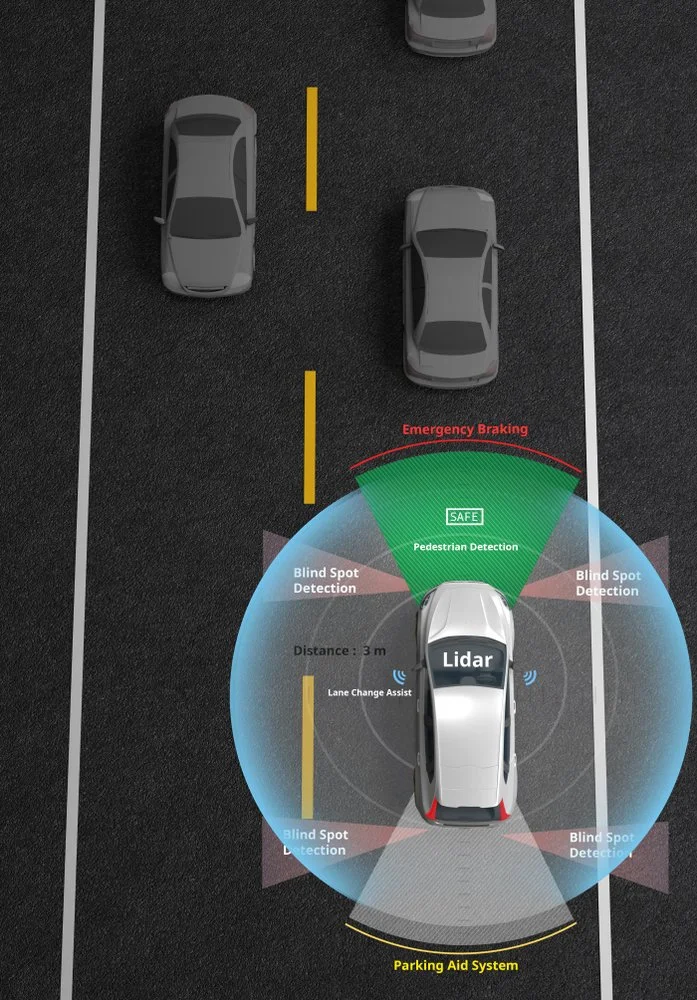
Utilizing multi-sensor data fusion from numerous detectors such as cameras, radar, Lidara, and ultrasonic sensors improves the accuracy of perceptions of the environment. Sensor fusion allows a comprehensive understanding and information of the surroundings, from all individual sensors combined. When integrating data from multiple sensors AD systems can better detect road signals, assist automated parking, read road markings, and offer enhanced safety such as emergency braking systems, collision warnings, and cross-traffic alerts.

3D Mapping and Localization allow self-driving cars to navigate the environment with high accuracy using point cloud data and map annotations. This high level of accuracy in localization allows autonomous vehicles to detect if lanes are forking or merging, subsequently, it can plan lane changes or determine lane paths. Localization provides the 3D position of the autonomous car inside a high-definition map, 3D orientation, and any uncertainties.

Accurately Annotated Sensor Data allows ML models to detect and classify objects such as vehicles, obstacles, pedestrians, and more with better accuracy. Labeling 3D point clouds using LiDAR and combining its data with other sensors ensures that the car can identify objects not just its shape and position but their identities and intentions. This is highly essential in real-world situations when a pedestrian is about to cross a street or when there is any obstruction on the road.

Preprocessing Data to remove irrelevant information and noise from point clouds improves the overall performance and safety of the autonomous vehicle. Techniques like downsampling, filtering, and noise removal, make the annotation process much more efficient. This step is critical to ensure that only relevant data and features are highlighted for the annotators to enhance the accuracy of the final AD models.

Conclusion

Autonomous vehicles rely on the accuracy of the multi-sensor annotated data to recognize objects, pedestrians, and road signs when perceiving real-world surroundings. The safety and reliability of AD systems rely on multi-sensor fusion, 3d mapping and location, accurately annotated sensor data, and preprocessing data. The safety of autonomous driving is uncertain without accurately annotated multi-sensor data annotation. At Digital Divide Data we offer ML data operation solutions specializing in computer vision, Gen-AI, & NLP for ADAS and autonomous driving.

Utilizing Multi-sensor Data Annotation To Improve Autonomous Driving Efficiency Read Post »

DDD ADAS Sensors

Enhancing Safety Through Perception: The Role of Sensor Fusion in Autonomous Driving Training

By Aaron Bianchi
Sep 6, 2023

Introduction

In the quest to achieve fully autonomous driving, one of the critical challenges lies in creating a reliable perception system. Autonomous vehicles need to interpret their surroundings accurately and make informed decisions in real time. Sensor fusion, a cutting-edge technology, holds the key to improving perception and safety in autonomous driving. This blog post will delve into the concept of sensor fusion and its pivotal role in shaping the future of autonomous vehicles.

The Power of Sensor Fusion

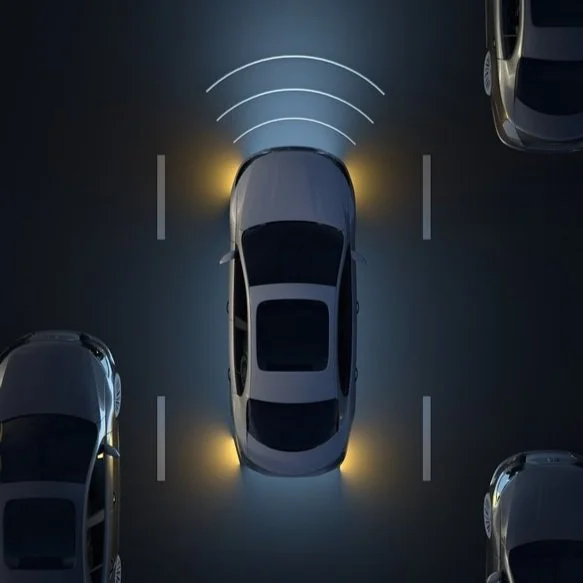
Sensor fusion involves integrating data from various sensors, such as cameras, radars, and lidar, to form a singular and detailed view of the vehicle’s environment. Each sensor provides unique information, and by combining them, autonomous vehicles can achieve a holistic perception of the world around them. For instance, cameras are excellent at recognizing objects, while radars can accurately measure distance and speed. Lidar, on the other hand, creates precise 3D maps of the surroundings. The strengths and weaknesses of these sensors can also change based on lighting conditions, weather, and environment. Integrating these data streams before performing any modeling or analysis enables vehicles to overcome the limitations of individual sensors and enhances their perception capabilities significantly.

Training Algorithms for Fused Data

To interpret and exploit the fused sensor data effectively, autonomous driving algorithms must undergo rigorous training. Training involves exposing the algorithms to vast amounts of labeled data, allowing them to learn and adapt to different scenarios. In 2017, Waymo became the first company to deploy fully self-driving cars in the US. Their history-making success can be attributed to perception systems that include a custom suite of sensors and software, allowing their vehicles to more accurately understand what is happening around them.

Challenges arise in calibrating, synchronizing, and aligning the data from diverse sensors, ensuring consistent data quality, and managing computational complexity. Advanced machine learning techniques, like deep neural networks, play a crucial role in training these algorithms to make sense of the fused data accurately. Some challenges to training algorithms for fused data include:

  1. Syncing and Aligning Data: Integrating sensor data with varying rates must be precise to avoid errors.

  2. Ensuring Calibration across sensors: Accurate calibration is crucial; variations impact performance for a model that relies on fused data inputs.

  3. Handling Large Data: Real-time sensor fusion requires efficient algorithms due to computational complexity and a need for edge deployment in dynamic vehicles.

  4. Managing Sensor Failures: Redundancy is essential to maintain safety during sensor malfunctions.

  5. Addressing Edge Cases: Fused algorithms must handle rare and challenging scenarios effectively, which is heavily determined by training data – both real and synthetic.

  6. Costly Training Data: Acquiring labeled data from multiple sensors is time-consuming and expensive.

  7. Interpretability Concerns: Deep learning’s “black-box” nature hinders decision understanding.

  8. Ensuring Generalization: Algorithms should work well in various environments to ensure broad adoption.

Real-World Applications and Case Studies

Sensor fusion has already made a significant impact on real-world autonomous driving applications. From simple applications with RGB and IR cameras that provide more robust sensing in light and dark conditions, to the fusion of camera and lidar data that enable vehicles to detect pedestrians and cyclists more reliably. Moreover, radar-lidar fusion improves object detection in adverse weather conditions, such as heavy rain or fog, where cameras might struggle. These case studies demonstrate how sensor fusion contributes to creating a safer and more efficient autonomous driving experience.

Future Prospects of Sensor Fusion Technologies

As technology continues to advance, sensor fusion will continue to be critical for AV deployments at scale.. Research and development efforts are focused on refining algorithms to handle complex edge cases and improve real-time decision-making capabilities. Advancements in hardware, such as more compact and affordable sensors, will further drive the adoption of sensor fusion in the industry. Additionally, the ongoing development of 5G networks will enable vehicles to communicate and share perception data, enhancing the overall safety of autonomous driving systems.

Conclusion

In conclusion, sensor fusion is a critical enabler of enhanced safety in autonomous driving. By combining data from multiple sensors, autonomous vehicles can achieve a comprehensive understanding of their surroundings, improving perception capabilities and decision-making. Although challenges exist in training algorithms for fused data, real-world applications and case studies demonstrate the tangible benefits of this technology. Looking ahead, continuous research and development will further refine sensor fusion technologies, making autonomous driving safer and more reliable than ever before. As we move towards a future with autonomous vehicles, sensor fusion stands as a beacon of hope, steering us closer to a world of safer and smarter transportation.

Enhancing Safety Through Perception: The Role of Sensor Fusion in Autonomous Driving Training Read Post »

Scroll to Top