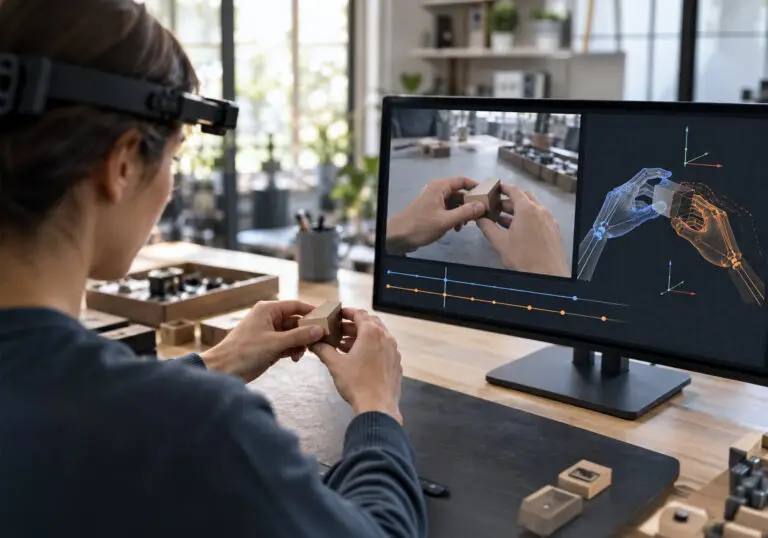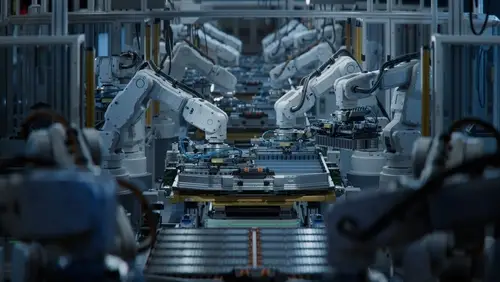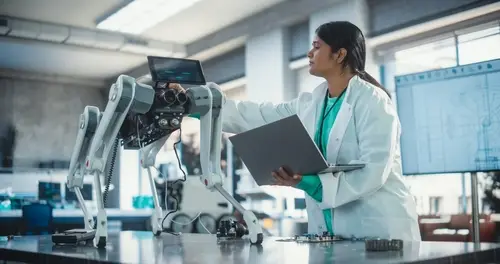
Robot training data has a perspective problem. Most demonstration datasets are collected from fixed external cameras, ceiling rigs, or third-person views that watch the robot execute a task from outside. These perspectives are convenient to set up, but they produce a fundamental mismatch at deployment: the robot’s onboard camera is not mounted on the ceiling. It sees the world from the agent’s own position.
A policy trained primarily on external perspectives must close a viewpoint gap at inference time that the training data did not address. Research on manipulation tasks has shown that adding an egocentric wrist-mounted view improves task success by more than 50 percent over third-person baselines on tasks requiring fine-grained spatial alignment. The field has absorbed this finding and is now moving fast.
Egocentric datasets, data collected from the point of view of the acting agent, are no longer a niche research track. A wave of large-scale releases in 2025 and 2026 has pushed egocentric human demonstration data into the mainstream of robot learning. The reason is both practical and principled: human egocentric video is far cheaper to collect than robot teleoperation data, covers a vastly larger range of tasks and environments, and when aligned correctly, transfers meaningfully to robot policy performance.
This blog covers the current state of egocentric datasets for robotics, what makes them effective, what alignment and annotation work they require, and what the data programs behind them actually look like in practice. Physical AI data services and video annotation services are the two capabilities most directly involved in building egocentric data programs that produce robot policies capable of generalizing beyond controlled collection environments.
Key Takeaways
- Egocentric data captures the world from the perspective of the acting agent. This preserves the spatial, contact, and gaze signals that external cameras lose, and it matches the inference-time viewpoint of the deployed robot.
- The performance evidence is now substantial. EgoMimic demonstrated 34 to 228 percent relative improvement in task score over state-of-the-art imitation learning baselines. EgoVerse showed up to 30 percent relative gains from co-training across multiple robots and tasks. EgoScale achieved a 54 percent improvement in average success rate over a no-pretraining baseline using over 20,854 hours of egocentric video.
- Human egocentric demonstrations are cheaper to collect and faster to scale than robot teleoperation. A person wearing smart glasses can capture diverse manipulation tasks across real environments at a fraction of the cost and setup time required for a teleoperation rig.
- Raw egocentric footage is not training-ready. Hand-object contact labels, gaze target annotation, task phase segmentation, and cross-embodiment action alignment are what convert first-person video into a usable supervision signal for a robot policy.
- Dataset diversity drives generalization more than volume alone. The best-performing egocentric programs sample across environments, objects, lighting conditions, and demonstrators systematically rather than collecting large volumes in a narrow setting.
What Egocentric Data Is and Why It Matters for Robotics
The Viewpoint Mismatch Problem
A robot policy trained on external camera footage must solve two problems simultaneously at deployment: it must execute the task, and it must compensate for the viewpoint difference between the training data it learned from and the sensor stream it is actually receiving. This compensation is rarely explicit. It shows up as brittleness when the camera angle changes, when object positions shift relative to the robot’s own position, or when the spatial precision required by the task exceeds what the external viewpoint could reliably convey.
Egocentric data eliminates this mismatch by design. When the training data is collected from the same perspective the robot’s camera occupies at deployment, the policy learns spatial relationships, distances, and contact geometries in the coordinate frame it will actually use. This is not a marginal improvement in the conditions that matter most for contact-rich manipulation, precise insertion, delicate placement, and dexterous grasping. It is often the difference between a policy that generalizes and one that does not.
What Egocentric Data Captures That External Cameras Cannot
The information advantage of egocentric data goes beyond viewpoint alignment. Hand-object contact is clearer from the agent’s perspective because the hands are closer to the camera and less likely to be occluded by the robot’s own body. Gaze direction, where the demonstrator is looking at each moment, is only accessible from a head-mounted or wrist-mounted camera. Relative depth and proximity between the end-effector and a target object are more accurately represented from the robot’s own viewpoint than from a ceiling camera that may be meters away from the action.
These signals matter because they are what contact-rich manipulation tasks depend on. A policy that cannot accurately represent the spatial relationship between its gripper and a target during the approach phase will fail at grasp. A policy that cannot detect contact state from its own viewpoint will fail at placement. Video annotation services that are built specifically for egocentric footage, extracting hand-object contact, gaze, and proximity labels frame by frame, produce the supervision signals that make these capabilities learnable from human demonstration data.
The Current Landscape of Egocentric Datasets for Robotics
The Scale That Has Emerged in the Past 18 Months
The quantity and quality of publicly available egocentric datasets for robotics has changed dramatically since late 2024. EgoScale (Grauman et al., 2026) trained a VLA model on over 20,854 hours of action-labeled egocentric human video and demonstrated a log-linear scaling law between human data scale and validation loss, with that loss strongly correlating to downstream robot performance. This is the first published evidence of a scaling law connecting egocentric human data volume directly to robot policy quality.
EgoVerse, released in April 2026 by a consortium spanning Georgia Tech, Stanford, UC San Diego, ETH Zurich, MIT, and Meta Reality Labs, provides 1,362 hours of egocentric demonstrations across 1,965 tasks, 240 scenes, and 2,087 demonstrators from multiple countries. The dataset was designed explicitly for robot learning and validated through a multi-robot co-training study across multiple labs, with consistent gains of up to 30 percent relative improvement across different robot embodiments.
Apple’s EgoDex (Hoque et al., 2025) adds a precision layer that most large-scale datasets lack: 829 hours of egocentric video paired with 3D tracking of every joint of each finger at 30 Hz, captured via Apple Vision Pro across 194 tabletop manipulation tasks. The fine-grained hand pose annotation in EgoDex addresses the finger-level precision gap that earlier large-scale datasets did not cover.
What Makes Egocentric Data Work: Alignment and Annotation
The Embodiment Gap and How Data Programs Address It
Human hands and robot grippers do not move the same way. A human grasps an egg with compliant fingers that distribute force naturally. A robot gripper applies force through two rigid surfaces at fixed positions. An egocentric dataset that records human hand demonstrations without addressing this kinematic difference will produce a training signal that teaches the robot to imitate human hand shapes it cannot replicate.
Alignment techniques address this by mapping human hand trajectories to robot-executable action representations. This can be done through retargeting, which converts human hand poses to robot joint configurations, or through observation-space alignment, which finds shared representations between human and robot visual inputs. The specific approach depends on the robot hardware and task structure, but all of them require the annotation infrastructure to capture precise 3D hand pose data at the frame level before any alignment can be performed.
What Annotation Egocentric Data Requires
Frame-level annotation for egocentric robotics data is more demanding than for standard video datasets. At minimum, a training-ready egocentric episode requires: contact state labels identifying when and where the hand is making contact with an object; hand pose annotations capturing 3D joint positions across all fingers; task phase segmentation dividing the episode into approach, grasp, transport, place, and release phases; object state labels tracking what each manipulated object is doing at each timestep; and natural language task descriptions that connect the visual demonstration to instruction-conditioned policy architectures.
Physical AI data services that are designed for egocentric collection rather than adapted from standard annotation pipelines produce this full annotation stack as a coordinated output rather than requiring separate annotation passes for each label type.
Sensor Synchronization Across Modalities
Modern egocentric capture rigs produce multiple simultaneous data streams: RGB video, IMU data, eye gaze tracking, depth, and, in precision setups like Apple Vision Pro, millimeter-accurate hand joint tracking. These streams run at different sampling rates and accumulate timing offsets that must be resolved before annotation begins. A contact label applied to a gaze sample that is 50 milliseconds offset from the corresponding visual frame produces a training signal that is systematically wrong about what the policy was attending to at the moment of contact. Sensor data annotation programs that include synchronization verification as a pre-annotation step, not a post-annotation correction, prevent this class of systematic error from propagating through the full dataset.
Collection Protocol Design for Egocentric Robotics Data
Why Diversity Planning Matters More Than Volume
The EgoScale finding of a log-linear scaling law between data volume and validation loss might suggest that collecting more data is always the right investment. What the same paper also demonstrates is that the diversity of the collection, across environments, objects, and demonstrators, determines how much of that scaling benefit transfers to robot deployment. A dataset of 20,000 hours collected in three environments by ten demonstrators will produce a policy with a much narrower generalization range than a dataset of the same size collected across hundreds of environments by thousands of demonstrators.
EgoVerse’s design reflects this. Its 1,362 hours span 240 distinct scenes and 2,087 demonstrators from multiple countries, not because those numbers were an arbitrary target but because the researchers found that domain-aligned data is crucial for effective scaling. A smaller, more diverse dataset consistently outperforms a larger, narrower one when the evaluation includes out-of-distribution tasks and environments. Data collection and curation services that build scene diversity, object diversity, and demonstrator diversity into the collection protocol from the start, rather than treating coverage as something to assess after the collection is complete, produce egocentric datasets with the generalization properties that deployment requires.
Hardware Selection and Its Impact on Data Quality
The hardware used for egocentric capture directly determines what information is available for annotation and what alignment techniques are applicable. Head-mounted cameras like Meta Project Aria provide eye gaze tracking alongside RGB video, making gaze-based annotation possible. Apple Vision Pro provides the most precise finger-joint tracking currently available in a consumer device, making fine-grained dexterous manipulation annotation feasible at scale. Wrist-mounted cameras provide a closer view of hand-object contact but lose head-level gaze information.
The choice is not purely a quality decision. It is also a scalability decision. Devices that require professional setup and controlled environments limit how many demonstrators can be recruited and how varied the collection environments can be. Consumer devices that a trained demonstrator can set up independently scale to orders of magnitude more collection capacity. The EgoVerse framework explicitly addressed this by supporting multiple hardware options so that the diversity of demonstrators and environments would not be constrained by hardware availability.
Privacy and Consent Built Into the Collection Process
Egocentric data, by definition, captures bystanders, workspaces, and environmental details that were not the intended focus of the collection. Programs that treat privacy review as a post-collection step consistently discover that a portion of their data is unusable because identifiable individuals or sensitive locations appear in footage that cannot be retroactively anonymized without destroying the annotation value. Consent protocols and bystander redaction need to be designed into the collection workflow before a single recording is made.
How Digital Divide Data Can Help
Digital Divide Data supports robotics teams building egocentric data programs at production scale, from collection protocol design through the full annotation stack. For programs designing egocentric collection protocols, physical AI data services cover hardware selection, diversity planning across scenes and demonstrators, consent and privacy workflow design, and the structured collection protocols that produce annotatable footage rather than raw video that requires substantial rework.
For programs annotating collected egocentric episodes with the frame-level labels that robot policy training requires, video annotation services provide annotation teams trained specifically on egocentric manipulation footage, producing hand-object contact, gaze target, task phase, and object state labels at the quality and consistency that policy training demands. For programs handling the IMU, depth, and joint-tracking streams that modern egocentric rigs produce alongside video, sensor data annotation covers the multi-modal synchronization and labeling that makes the full sensor stack usable.
If your robotics data program is collecting third-person demonstrations and wondering why generalization to deployment environments is limited, the viewpoint gap is a likely contributor. Talk to an expert.
Conclusion
Egocentric datasets are becoming the standard input for serious robotics training programs because the evidence for their effectiveness has become too strong to ignore. A 54 percent improvement in success rate from large-scale egocentric pretraining, up to 30 percent relative gains from co-training with human demonstrations, and viewpoint alignment that closes the gap between training and deployment all point in the same direction: the agent’s own perspective is the right perspective to train from.
The data programs behind these results share a common structure. They plan for scene and demonstrator diversity before collection begins, build annotation pipelines specifically for egocentric footage rather than adapting general-purpose ones, and treat sensor synchronization as a prerequisite rather than an afterthought. If your team is collecting robot training data today, the question worth asking is whether your collection viewpoint matches the viewpoint your deployed policy will actually operate from.
References
Kareer, S., Patel, D., Punamiya, R., Mathur, P., Cheng, S., Wang, C., Hoffman, J., & Xu, D. (2024). EgoMimic: Scaling imitation learning via egocentric video. In Conference on Robot Learning (CoRL). https://arxiv.org/abs/2410.24221
Punamiya, R., Kareer, S., Liu, Z., Citron, J., Qiu, R., Cai, X., Gavryushin, A., Chen, J., Liconti, D., Zhu, L. Y., et al. (2026). EgoVerse: An egocentric human dataset for robot learning from around the world. arXiv. https://arxiv.org/abs/2604.07607
Hoque, R., Huang, P., Yoon, D. J., Sivapurapu, M., & Zhang, J. (2025). EgoDex: Learning dexterous manipulation from large-scale egocentric video. arXiv. https://arxiv.org/abs/2505.11709
Grauman, K., Westbury, A., Byrne, E., Chavis, Z., Furnari, A., Girdhar, R., Hamburger, J., Jiang, H., Liu, M., Liu, X., et al. (2022). Ego4D: Around the world in 3,000 hours of egocentric video. In Proceedings of the IEEE/CVF Conference on Computer Vision and Pattern Recognition (CVPR). https://arxiv.org/abs/2110.07058
Frequently Asked Questions
Q1. We already collect data from robot-mounted wrist cameras. Is that the same as egocentric data?
In viewpoint terms, yes: a wrist-mounted camera is egocentric because it captures the scene from the robot’s own perspective. Whether it functions as egocentric data in the sense that benefits policy training depends entirely on the annotation pipeline. Most wrist-camera programs apply standard object detection and success labeling without extracting hand-object contact state, gaze, or task phase labels specific to the egocentric perspective. Having first-person footage and having a pipeline that extracts what first-person footage uniquely provides are two different things. The question is not what camera you have. It is what your annotation pipeline does with it.
Q2. What is the embodiment gap and how do egocentric human datasets address it?
The embodiment gap is the kinematic and morphological difference between a human hand and a robot gripper. A human demonstration recorded from an egocentric perspective shows hand movements that a rigid-fingered robot cannot directly replicate. Egocentric datasets address this through alignment techniques that either retarget human hand poses to robot joint configurations or learn shared observation-space representations between human and robot visual inputs. The EgoMimic framework, for instance, uses cross-domain data alignment to co-train on human and robot data simultaneously so the policy learns to use the information in the human demonstrations without being constrained to replicate the exact hand shape.
Q3. How does a team decide between collecting egocentric human data and more robot teleoperation data?
The decision depends on what the data program needs. Robot teleoperation data is collected from the actual robot hardware, which means the action representation is directly usable and the embodiment gap is zero. It is also expensive, slow to scale, and limited to environments where the robot can be deployed for data collection. Egocentric human data is cheaper, faster to collect, and can cover environments and tasks that teleoperation cannot reach at reasonable cost. EgoScale’s finding that one additional hour of egocentric human data improves policy quality more than one additional hour of robot data, at scale, suggests the two are complementary rather than substitutable. The practical answer for most programs is to use egocentric human data to bootstrap new tasks and cover environmental diversity, and teleoperation to calibrate the final policy to the specific robot hardware.
Q4. What hardware is needed to collect egocentric robotics training data?
The options range from consumer devices to research-grade rigs, and the choice involves tradeoffs between data quality, scalability, and annotation capability. Meta Project Aria glasses provide eye gaze tracking alongside RGB video and were used in EgoMimic. Apple Vision Pro provides millimeter-accurate finger-joint tracking across 25 joints per hand, used in EgoDex and the Qwen-RobotManip training pipeline. Custom head-mounted rigs with action-labeled video, used in EgoScale, offer the most flexibility but the highest setup cost per demonstrator. Consumer wrist cameras and modified action cameras are the lowest barrier to entry and scale most easily to large numbers of demonstrators and environments. The EgoVerse framework supports multiple hardware types simultaneously specifically to avoid letting hardware availability constrain collection diversity.
Q5. What annotation is specifically required for egocentric data that standard video annotation does not provide?
Standard video annotation typically produces object detection boxes, action labels, and scene classification at the clip or episode level. Egocentric robotics annotation requires substantially more: frame-level hand-object contact state identifying when and where contact occurs; 3D hand poses tracking at the joint level, not just bounding box detection; task phase segmentation dividing the episode into manipulation-relevant stages; object state tracking recording what each manipulated object is doing at each frame; and natural language task descriptions tied to the specific episode content rather than generic action labels. Additionally, synchronization verification across multiple sensor streams, RGB video, IMU, depth, and gaze, must be confirmed before annotation begins to prevent systematic label offset errors.

Udit Khanna leads the delivery of scalable AI and data solutions at Digital Divide Data, with a deep specialization in Physical AI. With a background in presales, solutioning, and customer success, he brings a mix of technical depth and business fluency, helping global enterprises move their AI projects from prototype to real-world deployment without losing momentum.