
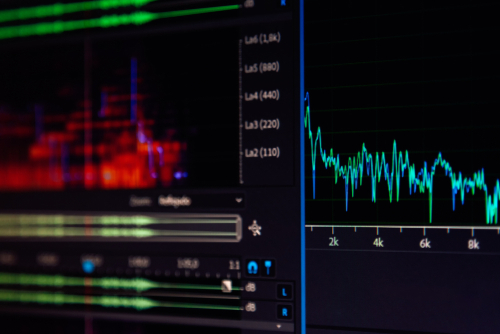
Audio annotation for speech AI covers a wider territory than most programs initially plan for. Transcription is the obvious starting point, but production speech systems increasingly need annotation that goes well beyond faithful word-for-word text.
Speaker diarization, emotion and sentiment labeling, phonetic and prosodic marking, intent and entity annotation, and quality metadata such as background noise levels and speaker characteristics are all annotation types that determine what a speech AI system can and cannot do in deployment. Programs that treat audio annotation as a transcription task and add the other dimensions later, under pressure from production failures, pay a higher cost than those that design the full annotation requirement from the start.
This blog examines what production speech AI models actually need from audio annotation, covering the full range of annotation types, the quality standards each requires, the specific challenges of accent and language diversity, and how annotation design connects to model performance at deployment. Audio annotation and low-resource language services are the two capabilities where speech model quality is most directly shaped by annotation investment.
Key Takeaways
- Transcription alone is insufficient for most production speech AI use cases; speaker diarization, emotion labeling, intent annotation, and quality metadata are each distinct annotation types with their own precision requirements.
- Annotation team demographic and linguistic diversity directly determines whether speech models perform equitably across the full user population; models trained predominantly on data from narrow speaker demographics systematically underperform for others.
- Paralinguistic annotation, covering emotion, stress, prosody, and speaking style, requires human annotators with specific expertise and structured inter-annotator agreement measurement, as these dimensions involve genuine subjectivity.
- Low-resource languages face an acute annotation data gap that compounds at every level of the speech AI pipeline, from transcription through diarization to emotion recognition.
The Gap Between Benchmark Accuracy and Production Performance
Domain-Specific Vocabulary and Model Failure Modes
Domain-specific terminology is one of the most consistent sources of ASR failure in production deployments. A general-purpose speech model that handles everyday conversation well may produce high error rates on medical terms, legal language, financial product names, technical abbreviations, or industry-specific acronyms that appear infrequently in general-purpose training data.
Each of these failure modes requires targeted annotation investment: transcription data drawn from or simulating the target domain, with domain vocabulary represented at the density at which it will appear in production. Data collection and curation services designed for domain-specific speech applications source and annotate audio from the relevant domain context rather than relying on general-purpose corpora that systematically under-represent the vocabulary the deployed model needs to handle.
Transcription Annotation: The Foundation and Its Constraints
What High-Quality Transcription Actually Requires
Transcription annotation converts spoken audio into written text, providing the core training signal for automatic speech recognition. The quality requirements for production-grade transcription go well beyond phonetic accuracy. Transcripts need to capture disfluencies, self-corrections, filled pauses, and overlapping speech in a way that is consistent across annotators.
They need to handle domain-specific vocabulary and proper nouns correctly. They need to apply a consistent normalization convention for numbers, dates, abbreviations, and punctuation. And they need to distinguish between what was actually said and what the annotator assumes was meant, a distinction that becomes consequential when speakers produce grammatically non-standard or heavily accented speech.
Verbatim transcription, which captures what was actually said, including disfluencies, and clean transcription, which normalizes speech to standard written form, produce different training signals and are appropriate for different applications. Speech recognition systems trained on verbatim transcripts are better equipped to handle naturalistic speech. Systems trained on clean transcripts may perform better on formal speech contexts but underperform on conversational audio. The choice is a design decision with downstream model behavior implications, not an annotation default.
Timestamps and Alignment
Word-level and segment-level timestamps, which record when each word or phrase begins and ends in the audio, are required for applications including meeting transcription, subtitle generation, speaker diarization training, and any downstream task that needs to align text with audio at fine time resolution. Forced alignment, which uses an ASR model to assign timestamps to a given transcript, can automate this process for clean audio.
For noisy audio, overlapping speech, or audio where the automatic alignment is unreliable, human annotators must produce or verify timestamps manually. Building generative AI datasets with human-in-the-loop workflows is directly applicable here: the combination of automated pre-annotation with targeted human review and correction of alignment errors is the most efficient approach for timestamp annotation at scale.
Speaker Diarization: Who Said What and When
Why Diarization Is a Distinct Annotation Task
Speaker diarization assigns segments of an audio recording to specific speakers, answering the question of who is speaking at each moment. It is a prerequisite for any speech AI application that needs to attribute statements to individuals: meeting summarization, customer service call analysis, clinical conversation annotation, legal transcription, and multi-party dialogue systems all depend on accurate diarization. The annotation task requires annotators to identify speaker change points, handle overlapping speech where multiple speakers talk simultaneously, and maintain consistent speaker identities across a recording, even when a speaker is silent for extended periods and then resumes.
Diarization annotation difficulty scales with the number of speakers, the frequency of turn-taking, the amount of overlapping speech, and the acoustic similarity of speaker voices. In a two-speaker interview with clean audio and infrequent interruption, automated diarization performs well, and human annotation mainly serves as a quality check. In a multi-party meeting with frequent interruptions, background noise, and acoustically similar speakers, human annotation remains the only reliable method for producing accurate speaker attribution.
Diarization Annotation Quality Standards
Diarization error rate, which measures the proportion of audio incorrectly attributed to the wrong speaker, is the standard quality metric for diarization annotation. The acceptable threshold depends on the application: a meeting summarization tool may tolerate higher diarization error than a legal transcription service where speaker attribution has evidentiary consequences.
Annotation guidelines for diarization need to specify how to handle overlapping speech, what to do when speaker identity is ambiguous, and how to manage the consistent speaker label assignment across long recordings with interruptions and re-entries. Healthcare AI solutions that depend on accurate clinical conversation annotation, including distinguishing clinician speech from patient speech, require diarization annotation standards calibrated to the clinical documentation context rather than general meeting transcription.
Emotion and Sentiment Annotation: The Subjectivity Challenge
Why Emotional Annotation Requires Structured Human Judgment
Emotion recognition from speech requires training data where audio segments are labeled with the emotional state of the speaker: anger, frustration, satisfaction, sadness, excitement, or more fine-grained states, depending on the application. The annotation challenge is that emotion is inherently subjective and that different annotators will categorize the same audio segment differently, not because one is wrong but because the perception of emotional expression carries genuine ambiguity. A speaker who sounds mildly frustrated to one annotator may sound neutral or slightly impatient to another. This inter-annotator disagreement is not noise to be eliminated through adjudication; it is information about the inherent uncertainty of the annotation task.
Annotation guidelines for emotion recognition need to define the emotion taxonomy clearly, provide worked examples for each category, including boundary cases, and specify how disagreement should be handled. Some programs use majority-vote labels where the most common annotation across a panel becomes the ground truth. Others preserve the full distribution of annotator labels and use soft labels in training. Each approach encodes a different assumption about how emotional perception works, and the choice has implications for how the trained model handles ambiguous audio at inference time.
Dimensional vs. Categorical Emotion Annotation
Emotion annotation can be categorical, assigning audio segments to discrete emotion classes, or dimensional, rating audio on continuous scales such as valence from negative to positive and arousal from low to high energy. Categorical annotation is more intuitive for annotators and more straightforwardly usable in classification training, but it forces a discrete boundary where the underlying phenomenon is continuous. Dimensional annotation captures the continuous nature of emotional expression more accurately, but is harder to produce reliably and harder to use directly in classification tasks. The choice between approaches should be made based on the downstream model requirements, not on which is easier to annotate.
Sentiment vs. Emotion: Different Tasks, Different Signals
Sentiment annotation, which labels speech as positive, negative, or neutral in overall orientation, is related to but distinct from emotion annotation. Sentiment is easier to annotate consistently because the three-way distinction is less ambiguous than multi-class emotion categories. For applications like customer service quality monitoring, where the business question is whether a customer is satisfied or dissatisfied, sentiment annotation is the appropriate task.
For applications that need to distinguish between specific emotional states, such as detecting customer frustration versus customer confusion to route to different intervention types, emotion annotation is required. Human preference optimization data collection for speech-capable AI systems needs to capture sentiment dimensions alongside response quality dimensions, as the emotional valence of a model’s response is as important as its factual accuracy in conversational contexts.
Paralinguistic Annotation: Beyond the Words
What Paralinguistic Features Are and Why They Matter
Paralinguistic features are properties of speech that carry meaning independently of the words spoken: speaking rate, pitch variation, voice quality, stress patterns, pausing behavior, and non-verbal vocalizations such as laughter, sighs, and hesitation sounds. These features convey emphasis, uncertainty, emotional state, and pragmatic intent in ways that transcription cannot capture. A speech AI system trained only on transcription data will be blind to these dimensions, producing models that cannot reliably identify when a speaker is being sarcastic, emphasizing a particular point, or signaling uncertainty through vocal hesitation.
Paralinguistic annotation is technically demanding because the features it captures are not visible in the audio waveform without domain expertise. Annotators need either acoustic training or sufficient familiarity with the target language and speaker population to reliably identify paralinguistic cues. Inter-annotator agreement on paralinguistic labels is typically lower than for transcription or sentiment, which means that the quality assurance process needs to specifically measure agreement on paralinguistic dimensions and investigate disagreements rather than treating them as simple annotation errors.
Non-Verbal Vocalizations
Non-verbal vocalizations, including laughter, crying, coughing, breathing artifacts, and filled pauses such as hesitation sounds, are annotation categories that matter for building conversational AI systems that can respond appropriately to human speech in its full natural form. Standard transcription conventions either ignore these vocalizations or represent them inconsistently. Speech models trained on data where non-verbal vocalizations are absent or inconsistently labeled will produce models that mishandle the segments of audio they appear in. The low-resource languages in the AI context compound this problem: the non-verbal vocalization conventions that are common in one language or culture may differ significantly from another, and annotation guidelines developed for one language community do not transfer without adaptation.
Intent and Entity Annotation for Conversational AI
From Transcription to Understanding
Spoken language understanding, the task of extracting meaning from transcribed speech, requires annotation beyond transcription. Intent annotation identifies the goal of an utterance: is the speaker requesting information, issuing a command, expressing a complaint, or performing some other speech act?
Entity annotation identifies the specific items the utterance refers to: the dates, names, products, locations, and domain-specific terms that carry the semantic content of the request. Together, intent and entity annotation provide the training signal for the dialogue systems, voice assistants, and customer service automation tools that form the large commercial segment of speech AI.
Intent and entity annotation is a natural language understanding task applied to transcribed speech, with the additional complication that the transcription may contain errors, disfluencies, and incomplete sentences that make the annotation task harder than it would be for clean written text. Annotation guidelines need to specify how to handle transcription errors when they affect intent or entity identification, and whether to annotate based on what was said or what was clearly meant.
Custom Taxonomies for Domain-Specific Applications
Domain-specific conversational AI systems require intent and entity taxonomies tailored to the application context. A healthcare voice assistant needs intent categories and entity types specific to clinical workflows. A financial services voice system needs entity types that capture financial products, account actions, and regulatory classifications.
Applying a generic intent taxonomy to a domain-specific application produces models that classify correctly within the generic categories while missing the distinctions that matter for the specific deployment context. Text annotation expertise in domain-specific semantic labeling transfers directly to spoken language understanding annotation, as the linguistic analysis required is equivalent once the transcription layer has been handled.
Speaker Diversity and the Representation Problem
How Annotation Demographics Shape Model Performance
Speech AI models learn from the audio they are trained on, and their performance reflects the speaker population that population represents. A model trained predominantly on audio from native English speakers in North American accents will perform well for that population and systematically worse for speakers with different accents, different dialects, or different native language backgrounds. This is not a modelling limitation that can be overcome with a better architecture. It is a training data problem that can only be addressed by ensuring that the annotation corpus represents the speaker population the model will serve.
The bias compounds across annotation stages. If the transcription annotators predominantly speak one dialect, their transcription conventions will encode that dialect’s phonological expectations. If the emotion annotators come from a narrow demographic background, their emotion labels will reflect that background’s emotional expression norms. Annotation team composition is a data quality variable with direct model performance implications, not a separate diversity consideration.
Accent and Dialect Coverage
Accent and dialect coverage in audio annotation corpora requires intentional design rather than emergent diversity from large-scale data collection. A large corpus of English audio collected from widely available sources will over-represent certain regional varieties and under-represent others, producing models that perform inequitably across the English-speaking world.
Designing accent coverage into the data collection protocol, recruiting speakers from targeted geographic and demographic backgrounds, and annotating accent and dialect metadata explicitly are all practices that produce more equitable model performance. Low-resource language services address the most acute version of this problem, where entire language communities are absent from or severely underrepresented in standard speech AI training corpora.
Children’s Speech and Elderly Speech
Speech models trained predominantly on adult speech from a narrow age range perform systematically worse on children’s speech and elderly speech, both of which have acoustic characteristics that differ from typical adult speech in ways that standard training corpora do not cover adequately.
Children speak with higher fundamental frequencies, less consistent articulation, and age-specific vocabulary. Elderly speakers may exhibit slower speaking rates, increased disfluency, and voice quality changes associated with aging. Applications targeting these populations, including educational technology for children and assistive technology for older adults, require annotation corpora that specifically cover the acoustic characteristics of the target age group.
Audio Quality Metadata: The Often Overlooked Annotation Layer
Why Quality Metadata Improves Model Robustness
Audio annotation programs that capture metadata about recording conditions alongside the primary annotation labels produce training datasets with information that enables more sophisticated model training strategies. Signal-to-noise ratio estimates, background noise type labels, recording environment classifications, and microphone quality indicators allow training pipelines to weight examples differently, sample more heavily from underrepresented acoustic conditions, and train models that are more explicitly robust to the acoustic degradation patterns they will encounter in production.
Trust and safety evaluation for speech AI applications also benefits from quality metadata annotation. Models deployed in conditions where audio quality is consistently poor may produce transcriptions with higher error rates in ways that interact with content safety filtering, producing either false positives or false negatives in safety classification that a quality-aware model could avoid. Recording quality metadata provides the context that allows safety-aware speech models to calibrate their confidence appropriately to the audio conditions they are operating in.
Recording Environment and Background Noise Classification
Background noise classification, which labels audio segments by the type and level of environmental interference, produces a training signal that helps models learn to be robust to specific noise categories. A customer service speech model that is trained on audio labeled by noise type, including telephone channel noise, call center background chatter, and mobile network artifacts, learns representations that are more specific to the noise conditions it will encounter than a model trained on undifferentiated noisy audio. This specificity pays dividends in production, where the model is more likely to encounter the specific noise patterns it was trained to be robust to.
How Digital Divide Data Can Help
Digital Divide Data provides audio annotation services across the full range of annotation types that production speech AI programs require, from transcription through diarization, emotion and sentiment labeling, paralinguistic annotation, intent and entity extraction, and audio quality metadata.
The audio annotation capability covers verbatim and clean transcription with domain-specific vocabulary handling, word-level and segment-level timestamp alignment, speaker diarization including overlapping speech annotation, and non-verbal vocalization labeling. Annotation guidelines are developed for each project context, not applied from a generic template, ensuring that the annotation reflects the specific acoustic conditions and vocabulary distribution of the target deployment.
For speaker diversity requirements, data collection and curation services source audio from speaker populations that match the intended deployment demographics, with explicit accent, dialect, age, and gender coverage targets built into the collection protocol. Annotation team composition is managed to match the speaker diversity requirements of the corpus, ensuring that transcription conventions and emotion labels reflect the linguistic and cultural norms of the target population.
For programs requiring paralinguistic annotation, emotion labeling, or sentiment classification, structured annotation workflows include inter-annotator agreement measurement on subjective dimensions, disagreement analysis, and guideline refinement cycles that converge on the annotation consistency that model training requires. Model evaluation services provide independent evaluation of trained speech models against production-representative audio, linking annotation quality investment to deployed model performance.
Build speech AI training data that closes the gap between benchmark performance and production reliability. Talk to an expert!
Conclusion
The gap between speech AI benchmark performance and production reliability is primarily an annotation problem. Models that excel on clean, curated test sets fail in production when the training data did not cover the acoustic conditions, speaker demographics, vocabulary distributions, and non-transcription annotation dimensions that the deployed system actually encounters. Closing that gap requires audio annotation programs that go well beyond transcription to cover the full range of signal dimensions that speech AI systems need to interpret: speaker identity, emotional state, paralinguistic cues, intent, entity content, and the acoustic quality metadata that allows models to calibrate their behavior to the conditions they are operating in.
The investment in comprehensive audio annotation is front-loaded, but the returns compound throughout the model lifecycle. A speech model trained on annotations that cover the full production distribution requires fewer retraining cycles, performs more equitably across the user population, and handles production edge cases without the systematic failure modes that narrow annotation programs produce. Audio annotation designed around the specific requirements of the deployment context, rather than the convenience of the annotation process, is the foundation of reliable production speech AI.
References
Kuhn, K., Kersken, V., Reuter, B., Egger, N., & Zimmermann, G. (2024). Measuring the accuracy of automatic speech recognition solutions. ACM Transactions on Accessible Computing, 17(1), 25. https://doi.org/10.1145/3636513
Park, T. J., Kanda, N., Dimitriadis, D., Han, K. J., Watanabe, S., & Narayanan, S. (2022). A review of speaker diarization: Recent advances with deep learning. Computer Speech and Language, 72, 101317. https://doi.org/10.1016/j.csl.2021.101317
Frequently Asked Questions
Q1. Why does speech AI performance drop significantly between benchmarks and production?
Standard benchmarks use clean, professionally recorded audio from narrow speaker demographics, while production audio includes background noise, diverse accents, domain-specific vocabulary, and naturalistic speech conditions that models have not been trained to handle if the annotation corpus did not cover them.
Q2. What annotation types are needed beyond transcription for production speech AI?
Production speech AI typically requires speaker diarization for multi-speaker attribution, emotion and sentiment labeling for conversational context, paralinguistic annotation for prosody and non-verbal cues, intent and entity annotation for spoken language understanding, and audio quality metadata for noise robustness training.
Q3. How does annotation team diversity affect speech model performance?
Annotation team demographics influence transcription conventions, emotion label distributions, and implicit quality standards in ways that encode the team’s linguistic and cultural norms into the training data, producing models that perform more reliably for speaker populations that resemble the annotation team.
Q4. What is the difference between verbatim and clean transcription, and when should each be used?
Verbatim transcription captures speech exactly as produced, including disfluencies, self-corrections, and filled pauses, producing models better suited to naturalistic conversation. Clean transcription normalizes speech to standard written form, producing models better suited to formal speech contexts but less robust to conversational input.

Umang architects and drives full-funnel content marketing strategies for AI training data solutions, spanning computer vision, data annotation, data labelling, and Physical and Generative AI services. He works closely with senior leadership to shape DDD’s market positioning, translating complex technical capabilities into compelling narratives that resonate with global AI innovators.