Celebrating 25 years of DDD's Excellence and Social Impact. ✖

Physical AI

Data2Blabeling2BAutonomy

How Data Labeling and Real‑World Testing Build Autonomous Vehicle Intelligence

While breakthroughs in deep learning architectures and simulation environments often capture the spotlight, the practical intelligence of Autonomous Vehicles stems from more foundational elements: the quality of data they are trained on and the scenarios they are tested in.

High-quality data labeling and thorough real-world testing are not just supporting functions; they are essential building blocks that determine whether an AV can make safe, informed decisions in dynamic environments.

This blog outlines how data labeling and real-world testing complement each other in the AV development lifecycle.

The Role of Data Labeling in Autonomous Vehicle Development

Why Data Labeling Matters

At the core of every autonomous vehicle is a perception system trained to interpret its surroundings through sensor data. For that system to make accurate decisions, such as identifying pedestrians, navigating intersections, or merging in traffic, it must be trained on massive volumes of precisely labeled data. These annotations are far more than a technical formality; they form the ground truth that neural networks learn from. Without them, the vehicle’s ability to distinguish a cyclist from a signpost, or a curb from a shadow, becomes unreliable.

Data labeling in the AV domain typically involves multimodal inputs: high-resolution images, LiDAR point clouds, radar streams, and even audio signals in some edge cases. Each modality requires a different labeling strategy, but all share a common goal: to reflect reality with high fidelity and semantic richness. This labeled data powers key perception tasks such as object detection, semantic segmentation, lane detection, and Simultaneous Localization and Mapping (SLAM). The accuracy of these models in real-world deployments directly correlates with the quality and diversity of the labels they are trained on.

Types of Labeling

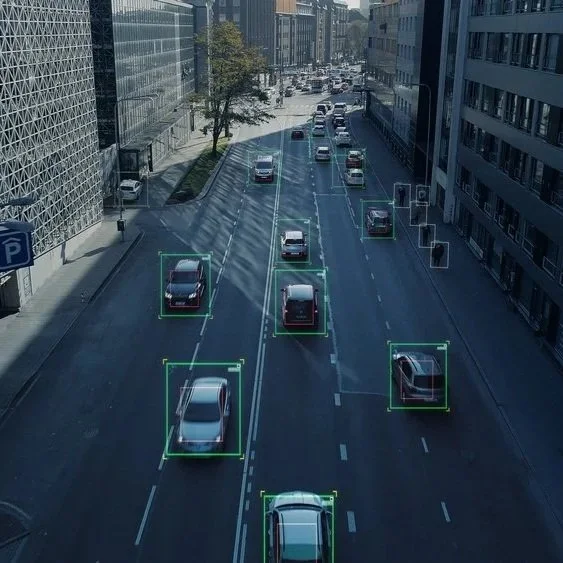
Different machine learning tasks require different annotation formats. For object detection, 2D bounding boxes are commonly used to enclose vehicles, pedestrians, traffic signs, and other roadway actors. For a more detailed understanding, 3D cuboids provide spatial awareness, enabling the vehicle to estimate depth, orientation, and velocity. Semantic and instance segmentation break down every pixel or point in an image or LiDAR scan, giving a precise class label, crucial for understanding drivable space, road markings, or occlusions.

Point cloud annotation is particularly critical for AVs, as it adds a third spatial dimension to perception. These annotations help train models that operate on LiDAR data, allowing the vehicle to perceive its environment in 3D and adapt to complex traffic geometries. Lane and path markings are another category, often manually annotated due to their variability across regions and road types. Each annotation type plays a distinct role in making perception systems more accurate, robust, and adaptable to real-world variability.

Real-World Testing for Autonomous Vehicles

What Real-World Testing Entails

No matter how well-trained an autonomous vehicle is in simulation or with labeled datasets, it must ultimately perform safely and reliably in the real world. Real-world testing provides the operational grounding that simulations and synthetic datasets cannot fully replicate. It involves deploying AVs on public roads or closed test tracks, collecting sensor logs during actual driving, and exposing the vehicle to unpredictable conditions, human behavior, and edge-case scenarios that occur organically.

During these deployments, the vehicle captures massive volumes of multimodal data, camera footage, LiDAR sweeps, radar signals, GPS and IMU readings, as well as system logs and actuator commands. These recordings are not just used for performance benchmarking; they form the raw inputs for future data labeling, scenario mining, and model refinement. Human interventions, driver overrides, and unexpected behaviors encountered on the road help identify system weaknesses and reveal where additional training or re-annotation is required.

Real-world testing also involves behavioral observations. AV systems must learn how to interpret ambiguous situations like pedestrians hesitating at crosswalks, cyclists merging unexpectedly, or aggressive drivers deviating from norms. Infrastructure factors, poor signage, lane closures, and weather conditions further test the robustness of perception and control. Unlike controlled simulation environments, real-world testing surfaces the nuances and exceptions that no pre-scripted scenario can fully anticipate.

Goals and Metrics

The primary goal of real-world testing is to validate the AV system’s ability to operate safely and reliably under a wide range of conditions. This includes compliance with industry safety standards such as ISO 26262 for functional safety and emerging frameworks from the United Nations Economic Commission for Europe (UNECE). Engineers use real-world tests to measure system robustness across varying lighting conditions, weather events, road surfaces, and traffic densities.

Key metrics tracked during real-world testing include disengagement frequency (driver takeovers), intervention triggers, perception accuracy, and system latency. More sophisticated evaluations assess performance in specific risk domains, such as obstacle avoidance in urban intersections or lane-keeping under degraded visibility. Failures and anomalies are logged, triaged, and often transformed into re-test scenarios in simulation or labeled datasets to close the learning loop.

Functional validation also includes testing of fallback strategies, what the vehicle does when a subsystem fails, when the road becomes undrivable, or when the AV cannot confidently interpret its surroundings. These behaviors must not only be safe but also align with regulatory expectations and public trust.

Labeling and Testing Feedback Cycle for AV

The Training-Testing Feedback Loop

The development of autonomous vehicles is not a linear process; it operates as a feedback loop. Real-world testing generates data that reveals how the vehicle performs under actual conditions, including failure points, unexpected behaviors, and edge-case encounters. These instances often highlight gaps in the training data or expose situations that were underrepresented or poorly annotated. That feedback is then routed back into the data labeling pipeline, where new annotations are created, and models are retrained to better handle those scenarios.

This cyclical workflow is central to improving model robustness and generalization. For example, if a vehicle struggles to detect pedestrians partially occluded by parked vehicles, engineers can isolate that failure, extract relevant sequences from the real-world logs, and annotate them with fine-grained labels. Once retrained on this enriched dataset, the model is redeployed for further testing. If performance improves, the cycle continues. If not, it signals deeper model or sensor limitations. Over time, this iterative loop tightens the alignment between what the AV system sees and how it acts.

Modern AV pipelines automate portions of this loop. Tools ingest driving logs, flag anomalies, and even pre-label data based on model predictions. This semi-automated system accelerates the identification of edge cases and reduces the time between observing a failure and addressing it in training. The result is not just a more intelligent vehicle, but one that is continuously learning from its own deployment history.

Recommendations for Data Labeling in Autonomous Driving

Building intelligence in autonomous vehicles is not simply a matter of applying the latest deep learning techniques; it requires designing processes that tightly couple data quality, real-world validation, and continuous improvement.

Invest in Hybrid Labeling Pipelines with Quality Assurance Feedback

Manual annotation remains essential for complex and ambiguous scenes, but it cannot scale alone. Practitioners should implement hybrid pipelines that combine human-in-the-loop labeling with automated model-assisted annotation.

Equally important is the incorporation of feedback loops in the annotation workflow. Labels should not be treated as static ground truth; they should evolve based on downstream model performance. Establishing QA mechanisms that flag and correct inconsistent or low-confidence annotations will directly improve model outcomes and reduce the risk of silent failures during deployment.

Prioritize Edge-Case Collection from Real-World Tests

Real-world driving data contains a wealth of rare but high-impact scenarios that simulations alone cannot generate. Instead of focusing solely on high-volume logging, AV teams should develop tools that automatically identify and extract unusual or unsafe situations. These edge cases are the most valuable training assets, often revealing systemic weaknesses in perception or control.

Practitioners should also categorize edge cases systematically, by behavior type, location, and environmental condition, to ensure targeted model refinement and validation.

Use Domain Adaptation Techniques to Bridge Simulation and Reality

While simulation environments offer control and scalability, they often fail to capture the visual and behavioral diversity of the real world. Bridging this gap requires applying domain adaptation techniques such as style transfer, distribution alignment, or mixed-modality training. These methods allow models trained in simulation to generalize more effectively to real-world deployments.

Teams should also consider mixing synthetic and real data within training batches, especially for rare classes or sensor occlusions. The key is to ensure that models not only learn from clean and idealized conditions but also from the messy, ambiguous, and imperfect inputs found on real roads.

Track Metrics Across the Data–Model–Validation Lifecycle

Developing an AV system is a lifecycle process, not a series of discrete tasks. Practitioners must track performance across the full development chain, from data acquisition and labeling to model training and real-world deployment. Metrics should include annotation accuracy, label diversity, edge-case recall, simulation coverage, deployment disengagements, and regulatory compliance.

Establishing these metrics enables informed decision-making and accountability. It also supports more efficient iteration, as teams can pinpoint whether performance regressions are due to data issues, model limitations, or environmental mismatches. Ultimately, mature metric tracking is what separates experimental AV programs from production-ready platforms.

How DDD can help

Digital Divide Data (DDD) supports autonomous vehicle developers by delivering high-quality, scalable data labeling services essential for training and validating perception systems. With deep expertise in annotating complex sensor data, including 2D/3D imagery, LiDAR point clouds, and semantic scenes.

DDD enables AV teams to improve model accuracy and accelerate feedback cycles between real-world testing and retraining. Its hybrid labeling approach, combining expert human annotators with model-assisted workflows and rigorous QA, ensures consistency and precision even in edge-case scenarios.

By integrating seamlessly into testing-informed annotation pipelines and operating with global SMEs, DDD helps AV innovators build safer, smarter systems with high-integrity data at the core.

Conclusion

While advanced algorithms and simulation environments receive much of the attention, they can only function effectively when grounded in accurate, diverse, and well-structured data. Labeled inputs teach the vehicle what to see, and real-world exposure teaches it how to respond. Acknowledge that autonomy is not simply a function of model complexity, but of how well the system can learn from both curated data and lived experience. In the race toward autonomy, data and road miles aren’t just fuel; they’re the map and compass. Mastering both is what will distinguish truly intelligent vehicles from those that are merely functional.

Partner with Digital Divide Data to power your autonomous vehicle systems with precise, scalable, and ethically sourced data labeling solutions.


References:

NVIDIA. (2023, March 21). Developing an end-to-end auto labeling pipeline for autonomous vehicle perception. NVIDIA Developer Blog. https://developer.nvidia.com/blog/developing-an-end-to-end-auto-labeling-pipeline-for-autonomous-vehicle-perception/

Connected Automated Driving. (2024, September). Recommendations for a European framework for testing on public roads: Regulatory roadmap for automated driving (FAME project). https://www.connectedautomateddriving.eu/blog/recommendations-for-a-european-framework-for-testing-on-public-roads-regulatory-roadmap-for-automated-driving/

Frequently Asked Questions (FAQs)

1. How is data privacy handled in AV data collection and labeling?

Autonomous vehicles capture vast amounts of sensor data, which can include identifiable information such as faces, license plates, or locations. To comply with privacy regulations like GDPR in Europe and CCPA in the U.S., AV companies typically anonymize data before storing or labeling it. Techniques include blurring faces or plates, removing GPS metadata, and encrypting raw data during transmission. Labeling vendors are also required to follow strict access controls and audit policies to ensure data security.

2. What is the role of simulation in complementing real-world testing?

Simulations play a critical role in AV development by enabling the testing of thousands of scenarios quickly and safely. They are particularly useful for rare or dangerous events, like a child running into the road or a vehicle making an illegal turn, that may never occur during physical testing. While real-world testing validates real behavior, simulation helps stress-test systems across edge cases, sensor failures, and adversarial conditions without putting people or property at risk.

3. How do AV companies determine when a model is “good enough” for deployment?

There is no single threshold for model readiness. Companies use a combination of quantitative metrics (e.g., precision/recall, intervention rates, disengagement frequency) and qualitative reviews (e.g., behavior in edge cases, robustness under sensor occlusion). Before deployment, models are typically validated against a suite of simulation scenarios, benchmark datasets, and real-world replay testing.

4. Can crowdsourcing be used for AV data labeling?

While crowdsourcing is widely used in general computer vision tasks, its role in AV labeling is limited due to the complexity and safety-critical nature of the domain. Annotators must understand 3D space, temporal dynamics, and detailed labeling schemas that require expert training. However, some platforms use curated and trained crowdsourcing teams to handle simpler tasks or validate automated labels under strict QA protocols.

How Data Labeling and Real‑World Testing Build Autonomous Vehicle Intelligence Read Post »

DigitalTwin

Building Digital Twins for Autonomous Vehicles: Architecture, Workflows, and Challenges

The development and deployment of Autonomy, particularly in the transportation sector, demand unprecedented levels of precision, safety, and reliability. As the complexity of autonomous vehicles (AVs) and advanced driver-assistance systems (ADAS) increases, so does the need for robust testing environments.

Digital Twin encapsulates the dynamic interaction between a vehicle’s mechanical components, its software stack, and its surrounding environment. By replicating the physical and behavioral characteristics of vehicles, sensors, and infrastructure, digital twins allow engineers to evaluate system performance under a wide spectrum of operational design domains (ODDs). This includes urban traffic, off-road conditions, extreme weather, and high-speed highways, all without exposing hardware or human lives to risk.

In this blog, we will explore how digital twins are transforming the testing and validation of autonomous systems, examine their core architectures and workflows, and highlight the key challenges.

The Need for Digital Twins in Autonomous Vehicles

Validating autonomous systems using only real-world testing presents several critical limitations.

Cost

The cost of deploying physical prototypes, outfitting them with sensors, and conducting field tests across diverse environments is prohibitively high. Even well-funded companies struggle to expose autonomous vehicles to a sufficient variety of edge cases, those rare but potentially catastrophic scenarios such as sudden pedestrian crossings, complex traffic maneuvers, or sensor failures during inclement weather. Real-world testing alone cannot guarantee consistent, repeatable exposure to such conditions, making it inadequate for comprehensive validation.

Safety

Testing AV systems in real environments carries inherent risks to human life and infrastructure. Even with remote monitoring and safety drivers, the unpredictable nature of real-world dynamics introduces variables that are not always controllable. Regulatory bodies are increasingly cautious about allowing large-scale real-world trials without prior validation in safer, simulated environments.

Scalability

Autonomous systems must be validated across a wide range of operational design domains, urban intersections, rural roads, roundabouts, tunnels, construction zones, and more. Achieving sufficient testing coverage across all these contexts in the physical world is impractical. It requires immense logistical coordination and introduces variability that can confound system performance evaluation.

Architecture of a Digital Twin for Autonomy

Designing an effective digital twin for autonomous testing requires a modular, high-fidelity architecture that replicates the physical system, the virtual environment, and the decision-making logic of the autonomous agent. At its core, this architecture must support real-time interactions between simulated components and physical hardware or software, enabling seamless transitions between development, testing, and deployment phases.

Physical System Model
The foundation of any digital twin lies in its accurate representation of the physical system. For autonomous vehicles, this includes detailed models of the vehicle’s chassis, drivetrain, suspension, and sensor layout. Each component must reflect the real-world dynamics and constraints the vehicle would encounter, including acceleration limits, turning radii, and braking behavior.

Virtual Environment
Equally important is the digital replication of the vehicle’s operating environment. This includes road networks, lane markings, signage, other vehicles, pedestrians, cyclists, and weather conditions. High-resolution mapping formats enable precise modeling of both static and dynamic elements in the environment.

Sensor Emulation
A critical component of the digital twin is its ability to simulate sensor outputs with high realism. This involves emulating data from cameras, radar, LiDAR, ultrasonic sensors, and GNSS, incorporating latency, noise, distortion, and occlusions. Sensor fidelity is essential for testing perception algorithms under varying conditions, such as nighttime glare or partial obstructions.

Simulation Engine
Digital twins rely on high-performance simulation engines to render and orchestrate complex interactions between the vehicle and its surroundings. Tools like CARLA, Unreal Engine, and Vissim are widely used to support photorealistic rendering, traffic behavior simulation, and infrastructure integration. These engines provide the visual and physical realism necessary for validating control and planning systems.

Control and Decision Stack Integration
For the digital twin to serve as a testing ground, it must interface with the vehicle’s autonomy stack. This includes modules for perception, localization, path planning, and control. Integration enables engineers to evaluate how decisions made by the autonomy stack respond to stimuli from the virtual environment.

Workflows for Digital Twin in Autonomous Driving

Software-in-the-Loop (SIL) and Hardware-in-the-Loop (HIL)
Digital twin architectures typically support both SIL and HIL configurations. SIL enables full-stack testing within a purely virtual environment, ideal for early development and rapid iteration. HIL extends this by incorporating physical hardware components, such as ECUs or sensors, into the loop, allowing engineers to validate real-time performance and hardware compatibility.

Real-World Data Ingestion and Calibration
To ensure fidelity, digital twins often ingest real-world sensor and telemetry data for calibration. This data helps refine physics models, adjust sensor emulators, and recreate specific driving scenarios for regression testing. Calibration ensures that the digital twin behaves consistently with its physical counterpart.

Fault Injection and Edge-Case Replay
One of the most powerful capabilities of a digital twin is controlled fault injection. Engineers can simulate GPS dropout, sensor failure, or algorithmic bugs to evaluate system resilience. Similarly, edge-case scenarios, recorded from real-world incidents or synthetically generated, can be replayed repeatedly to identify and fix vulnerabilities in the autonomy stack.

Validation for Digital Twin Across Scales and Domains

Autonomous systems must operate reliably across a diverse set of environments, tasks, and constraints. This variability presents one of the most formidable challenges in testing: ensuring performance consistency across operational design domains (ODDs) such as urban centers, highways, rural roads, and off-road terrain. Digital twins, when designed with scale and adaptability in mind, offer a unique solution to this challenge.

The flexibility of digital twins also supports scenario transfer between domains. For instance, a behavior tested in a dense urban model, such as reacting to jaywalking pedestrians, can be adapted and validated in a suburban context with minimal reconfiguration. This adaptability accelerates the development lifecycle by reducing the need to manually rebuild or recalibrate entire simulation environments.

A hybrid digital twin combines real-world data feeds, such as live traffic inputs or weather reports, with simulation environments to test autonomous behavior in dynamic, context-rich settings. For example, a virtual twin of a European city center may integrate actual pedestrian density patterns from recent data to evaluate crowd-aware planning algorithms. This type of testing blends the safety and control of simulation with the unpredictability of live environments.

Ultimately, the ability to test across scales and domains ensures that autonomous systems are not only technically sound but also operationally robust. It allows for testing under both ideal and degraded conditions, for simulating rare edge cases, and for validating performance in new markets without the logistical burden of deploying fleets prematurely. As autonomous systems move closer to commercial viability, scalable validation through digital twins will be a cornerstone of their success.

Read more: Multi-Modal Data Annotation for Autonomous Perception: Synchronizing LiDAR, RADAR, and Camera Inputs

Challenges and Limitations of Digital Twin

While digital twins offer powerful advantages for testing autonomous systems, their implementation is not without significant challenges. Developing and deploying high-fidelity digital twins at scale requires careful consideration of computational, technical, and organizational limitations that can affect performance, cost, and reliability.

Computational Costs and Real-Time Performance
One of the most immediate constraints is the heavy computational load required to run complex digital twin simulations. Photorealistic rendering, physics-based modeling, and real-time sensor emulation demand powerful hardware, particularly when simulations must operate at high frame rates to support hardware-in-the-loop (HIL) or real-time feedback loops. Running large-scale tests, such as simulating a full city environment or a fleet of autonomous vehicles, often requires distributed computing infrastructure and access to GPU clusters or cloud platforms, which can be prohibitively expensive for many organizations.

Sensor Fidelity and Noise Modeling
Accurate simulation of sensor behavior is critical to evaluating how an autonomous system perceives its environment. However, achieving sensor fidelity that mirrors real-world conditions is a non-trivial task. Emulating camera exposure, LiDAR reflectivity, radar interference, and occlusion patterns involves complex signal modeling and calibration. Even small deviations in simulated sensor outputs can lead to misleading performance assessments, particularly in edge-case detection, where a few pixels or milliseconds of delay may cause system failure.

Calibration Between Physical and Virtual Domains
Creating a digital twin that truly mirrors its physical counterpart requires precise calibration. This means aligning vehicle dynamics, sensor placements, environmental variables, and software behavior between the real and simulated systems. Any mismatch in this calibration introduces a disconnect that reduces trust in test results. Maintaining this alignment over time, especially as hardware and software evolve, is an ongoing engineering challenge.

Skill and Resource Barriers
Deploying a robust digital twin environment requires interdisciplinary expertise spanning robotics, systems engineering, 3D modeling, real-time computing, and AI. Many teams lack the cross-functional capacity to develop and maintain such systems in-house. This skills gap often forces organizations to rely on commercial toolkits or academic partnerships, which may not offer the flexibility or responsiveness needed for fast-paced product cycles.

Read more: Autonomous Fleet Management for Autonomy: Challenges, Strategies, and Use Cases

How We Can Help

At Digital Divide Data, we specialize in building high-quality data pipelines, simulation assets, and validation workflows that power the next generation of autonomous systems. Whether you’re testing autonomous vehicles, drones, or humanoids, our expert teams can help you design, deploy, and scale digital twin environments that meet the highest standards of realism, safety, and performance.

Conclusion

Digital twins provide a comprehensive alternative: a controlled, repeatable, and scalable testing infrastructure that allows developers to evaluate performance under a vast range of real and hypothetical conditions.

What distinguishes digital twins in the autonomous domain is their ability to simulate not just the vehicle and its software, but the full context in which that vehicle operates. From photorealistic urban landscapes and off-road terrains to dynamic sensor emulation and real-time communications, today’s digital twin platforms offer the fidelity and flexibility required to develop safe, adaptive, and resilient autonomous systems.

Looking ahead, continued innovation will likely focus on improving simulation realism, reducing computational costs, and enhancing interoperability between tools and standards. As real-world deployments increase, the feedback loop between physical and digital domains will become tighter, enabling more accurate models and faster validation cycles. For organizations developing autonomous technologies, investing in digital twin infrastructure is a strategic imperative that will shape the safety, scalability, and competitiveness of their systems in the years to come.

Ready to Accelerate Your Autonomous Testing with Scalable Digital Twin Solutions? Talk to our experts


References:

Samak, T., Smith, L., Leung, K., & Huang, Q. (2024). Towards validation across scales using an integrated digital twin framework. arXiv. https://arxiv.org/abs/2402.12670

Gürses, S., Scott-Hayward, S., Hafeez, I., & Dixit, A. (2024). Digital twins and testbeds for supporting AI research with autonomous vehicle networks. arXiv. https://arxiv.org/abs/2404.00954

Sharma, S., Moni, M., Thomas, B., & Das, M. (2024). An advanced framework for ultra-realistic simulation and digital twinning for autonomous vehicles (BlueICE). arXiv. https://arxiv.org/abs/2405.01328

Bergin, D., Carden, W. L., Huynh, K., Parikh, P., Bounker, P., Gates, B., & Whitt, J. (2023). Tailoring the digital twin for autonomous systems development and testing. The ITEA Journal of Test and Evaluation, 44(4). International Test and Evaluation Association. https://itea.org/journals/volume-44-4/tailoring-the-digital-twin-for-autonomous-systems-development-and-testing/

Volvo Autonomous Solutions. (2025, June). Digital twins: The ultimate virtual proving ground. Volvo Group. https://www.volvoautonomoussolutions.com/en-en/news-and-insights/insights/articles/2025/jun/digital-twins–the-ultimate-virtual-proving-ground.html

Frequently Asked Questions (FAQs)

1. How is a digital twin different from a traditional simulation model?

While traditional simulation models replicate system behavior under predefined conditions, a digital twin is a dynamic, continuously updated virtual replica of a real-world system. Digital twins are connected to their physical counterparts through data streams (e.g., telemetry, sensor data) and evolve in real time based on feedback. This continuous synchronization allows for predictive insights, scenario testing, and operational control that go far beyond static simulations.

2. Can digital twins be used for real-time monitoring and control of autonomous systems?

Yes, advanced digital twins can operate in real time to monitor and, in some cases, control autonomous systems. For instance, a digital twin of an AV fleet can track real-time operational data, predict maintenance needs, and identify performance deviations. In edge computing scenarios, lightweight digital twin models can also support on-board diagnostics or assist with dynamic mission planning.

3. Are digital twins used only for ground vehicles in autonomy?

No, while ground vehicles are currently the most common focus, digital twins are also used in aerial (e.g., drones), maritime (e.g., autonomous ships), and space (e.g., satellites and landers) applications. Each domain requires tailored modeling of dynamics, environments, and sensor modalities, but the underlying principles of simulating and validating autonomous behavior remain consistent.

4. How do digital twins support compliance with safety standards?

Digital twins can significantly enhance safety validation by enabling structured testing against defined safety requirements. They allow exhaustive scenario-based testing, including edge cases that are difficult or unsafe to test in physical environments. Logs and test outputs from digital twin platforms can be used to support traceability, safety cases, and certification documentation under safety-critical standards.

5. What role do synthetic data and generative AI play in digital twins for autonomy?

Synthetic data, generated via simulation or AI-driven content creation, is increasingly used to train and validate perception models in digital twins. Generative AI can create diverse and realistic scenarios, including rare edge cases, without relying on manually collected data. This expands the test coverage and helps reduce dataset bias, particularly in perception and behavior prediction modules.

6. How are human-in-the-loop simulations integrated into digital twins?

Human-in-the-loop (HITL) testing involves integrating human operators or evaluators into digital twin environments. This is especially useful for evaluating interactions between autonomous systems and human agents (e.g., handovers, overrides, teleoperation). Digital twins can simulate real-world complexity while allowing humans to interact with or assess the system in real time, supporting UX, safety, and policy validation.

Building Digital Twins for Autonomous Vehicles: Architecture, Workflows, and Challenges Read Post »

Data2BCentric2BAI

Guide to Data-Centric AI Development for Defense

Artificial intelligence systems in defense are entering a critical inflection point. For years, the dominant approach to building AI models has focused on refining algorithms, adjusting neural network architectures, optimizing hyperparameters, and deploying increasingly larger models with greater computational resources.

This model-centric paradigm has yielded impressive benchmarks in controlled settings. Yet, in the real-world complexity of defense operations, characterized by dynamic battlefields, sensor noise, and rapidly evolving adversarial tactics, this approach often breaks down. Models that perform well in lab environments may fail catastrophically in live scenarios due to blind spots in the data they were trained on.

In high-risk defense applications such as surveillance, autonomous targeting, battlefield analytics, and decision support systems, the stakes could not be higher. Models must function under uncertain conditions, reason with partial information, and maintain performance across edge cases.

In this blog, we discuss why a data-centric approach is critical for defense AI, how it contrasts with traditional model-centric development, and explore recommendations for shaping the future of mission-ready intelligence systems.

Why Defense Needs a Data-Centric Approach

Defense applications of AI differ from commercial ones in one crucial respect: failure is not just a business risk; it is a national security liability. In this context, continuing to iterate on models without critically examining the underlying data introduces systemic vulnerabilities.

Defense AI systems are expected to perform in extreme and unpredictable environments, such as war zones with degraded sensors, contested electromagnetic spectrums, and adversarial interference. A model trained on curated, noise-free data may perform flawlessly in simulation but collapse under the ambiguity and uncertainty of live operations.

The traditional model-centric approach often overlooks the quality, completeness, and diversity of the data itself. This creates what might be termed a data-blind development loop, one where developers attempt to compensate for poor data coverage by tuning models further, leading to overfitting, brittleness, and hallucinated outputs. For example, a visual detection model that performs well on clear, daylight images may fail to detect camouflaged threats in low-light conditions or misidentify non-combatants due to contextual ambiguity. These are not just technical failures; they are operational liabilities.

Military AI systems demand a far higher bar for robustness, explainability, and assurance than typical commercial systems. These requirements are not optional; they are essential for compliance with military ethics, international laws of armed conflict, and public accountability. Robustness means the system must generalize across unseen terrains and scenarios. Explainability requires that decisions, especially lethal ones, are traceable and interpretable by human operators. Assurance means that AI behavior under stress, uncertainty, and edge conditions can be rigorously validated before deployment.

In this context, data becomes a strategic asset, on par with weapons systems and supply chains. Programs are shifting from viewing data as a byproduct of operations to treating it as an enabler of next-generation capabilities. Whether it is building autonomous platforms that navigate in cluttered terrain or decision support tools for real-time battlefield analytics, the quality and stewardship of the underlying data is what ultimately determine trust and effectiveness in AI systems.

Defense organizations that embrace a data-centric paradigm are not simply changing their engineering process; they are evolving their strategic doctrine.

Data Challenges in Defense AI

Building reliable AI systems in defense is not just a matter of model architecture; the complexity, sensitivity, and inconsistency of the data fundamentally constrain it. Unlike commercial datasets that can be openly scraped, labeled, and standardized at scale, defense data is fragmented, classified, and operationally diverse. These conditions introduce a unique set of challenges that traditional machine learning workflows cannot solve.

Data Availability and Fragmentation

One of the most persistent issues is the limited availability and fragmented nature of defense data. Critical information is often distributed across siloed systems, each governed by distinct security protocols, formats, and access restrictions. Many defense organizations still operate legacy platforms where data collection was not designed for AI use. Systems may generate low-fidelity logs, lack metadata, or be stored in incompatible formats. Moreover, classified datasets are typically confined to secure enclaves, limiting collaborative development and cross-validation. The result is a fractured data ecosystem that impedes the creation of coherent, AI-ready training sets.

Data Quality and Bias

Even when data is accessible, quality and representativeness remain a significant concern. Data Annotation errors, missing context, or low-resolution inputs can severely impact model performance. More critically, biased datasets, whether due to overrepresentation of specific terrains, lighting conditions, or adversary types, can lead to dangerous generalization failures. For instance, a surveillance model trained predominantly on arid environments may underperform in jungle or urban settings. In adversarial contexts, data that lacks exposure to deceptive techniques such as camouflage or decoys risks enabling manipulation at deployment. The consequences are not theoretical; they can manifest in false positives, misidentification of friendlies, or critical situational awareness gaps.

Data Labeling in High-Risk Environments

Labeling defense data is uniquely difficult as operational footage may be sensitive, encrypted, or captured in chaotic conditions where even human interpretation is uncertain. Annotators often require specialized military knowledge to identify relevant objects, behaviors, or threats, making generic outsourcing infeasible. Furthermore, indiscriminately labeling large volumes of data is neither cost-effective nor strategically sound. The defense community is beginning to adopt smart-sizing approaches, prioritizing annotation of rare, ambiguous, or high-risk scenarios over routine ones. This aligns with recent research insights, such as those highlighted in the “Achilles Heel of AI” paper, which underscore the value of targeted labeling for performance gains in edge cases.

Multi-Modal and Real-Time Data Fusion

Modern military operations generate data from a wide range of sources: radar, electro-optical/infrared (EO/IR) sensors, satellite imagery, cyber intelligence, and battlefield telemetry. These modalities differ in resolution, frequency, reliability, and interpretation frameworks. Training AI systems that can reason across such disparate streams is a major challenge. Fusion models must handle asynchronous inputs, conflicting signals, and incomplete information, all while operating under real-time constraints. Achieving this demands not only sophisticated modeling but also high-quality, temporally-aligned multi-modal datasets, a resource that remains scarce and difficult to construct under operational constraints.

Emerging Innovations in Data-Centric Defense AI

To meet the demanding requirements of military AI, the defense sector is investing in a range of innovations that rethink how data is curated, annotated, and used for model training. These approaches aim to overcome the limitations of traditional workflows by targeting data quantity, quality, and strategic value. Rather than relying solely on brute-force data collection or generic annotation pipelines, these innovations focus on adaptive, secure, and context-aware data practices that are better suited to high-risk environments.

Smart-Sizing and Adaptive Annotation

One of the most impactful shifts is the move toward smart-sizing datasets, actively curating smaller but more meaningful subsets of data rather than collecting and labeling everything indiscriminately. Adaptive data annotation techniques focus human labeling efforts on the most informative samples, such as rare mission scenarios, ambiguous imagery, or areas with high model uncertainty. This approach helps reduce annotation cost while significantly improving model performance on operational edge cases. Defense organizations are integrating uncertainty sampling, active learning, and counterfactual analysis to ensure that annotated data maximally contributes to model robustness and generalizability.

Neuro-Symbolic Defense Models

To address the limitations of purely statistical models in complex decision-making environments, defense researchers are exploring neuro-symbolic systems that combine data-driven learning with human-defined logic. These models leverage symbolic rules, such as engagement criteria, no-fire zones, or identification thresholds, in conjunction with neural networks that process high-dimensional sensor data. The result is a hybrid model architecture that can both learn from data and reason with constraints, improving explainability and policy compliance. In domains like autonomous targeting or mission planning, neuro-symbolic AI offers a path toward greater control and transparency without sacrificing performance.

Synthetic Data for Combat Simulation

Real-world combat data is often scarce, classified, or unsafe to collect. Synthetic data generation, powered by techniques such as generative adversarial networks (GANs), procedural rendering, and simulation engines, is emerging as a key tool for augmenting training datasets. These synthetic environments can replicate rare or dangerous battlefield conditions, such as urban combat under smoke cover, enemy deception tactics, or night-time infrared scenarios, enabling more thorough training and validation. When combined with real-world sensor signatures and physics-based models, synthetic data can help close coverage gaps in ways that would otherwise be impractical or impossible.

Federated AI Training

Defense organizations frequently face data-sharing restrictions across national, organizational, or classification boundaries. Federated learning addresses this by enabling decentralized model training across multiple secure nodes, without ever transferring raw data. Each participant trains locally on its own encrypted data, and only model updates are aggregated centrally. This approach preserves data sovereignty while enabling collaborative development, an essential feature for coalition operations. Federated learning also supports compliance with regulatory constraints and information assurance policies, making it a compelling option for future multi-domain AI systems.

Together, these innovations represent a fundamental shift from static, siloed data practices toward dynamic, secure, and operationally aware data ecosystems. They pave the way for defense AI systems that are not only more accurate but also more aligned with real-world complexity, ethical norms, and strategic imperatives.

Read more: Applications of Computer Vision in Defense: Securing Borders and Countering Terrorism

Recommendations for Data-Centric AI Development

As defense organizations transition toward a data-centric AI development paradigm, they must realign both technical workflows and strategic planning. This shift demands more than adopting new tools; it requires a foundational change in how data is treated across the lifecycle of AI systems, from acquisition and labeling to deployment and auditing. The following recommendations are intended for practitioners, data scientists, program leads, and acquisition officers tasked with operationalizing AI in sensitive, high-stakes defense environments.

Invest in Data-Centric Metrics

Traditional model evaluation metrics, such as accuracy or precision, are insufficient for defense applications where failure modes can be mission-critical. Practitioners should adopt data-centric evaluation frameworks that assess:

  • Completeness: Does the dataset sufficiently cover all operational environments, adversary tactics, and sensor conditions?

  • Edge-Case Density: Are rare or ambiguous scenarios adequately represented and labeled?

  • Adversarial Robustness: How well do models trained on this dataset perform against manipulated or deceptive inputs?

Incorporating these metrics into both procurement and model assessment pipelines ensures that data quality is not an afterthought but a formalized requirement.

Design Domain-Specific Assurance Protocols

Defense AI systems cannot rely on generic validation procedures. Assurance protocols must be tailored to the mission context. For example, a surveillance drone should meet minimum confidence thresholds before flagging an object for escalation, while an autonomous vehicle may need to demonstrate behavior predictability under degraded GPS conditions. These protocols should integrate:

  • Scenario-specific test datasets.

  • Stress-testing for edge conditions.

  • Human-in-the-loop override and auditability mechanisms.

By embedding assurance into the AI development lifecycle, defense teams can reduce risk and increase confidence in real-world deployment.

Create Shared Annotation Schemas for Interoperability

In coalition or joint-force settings, the lack of consistent annotation standards often hampers data fusion and model integration. Practitioners should push for shared taxonomies and labeling protocols across services and partner nations. A standardized schema allows for:

  • Cross-validation of models across theaters.

  • Aggregation of training data without semantic misalignment.

  • Faster deployment of AI systems in multinational operations.

Developing these schemas in tandem with doctrine and operational policy also ensures they remain relevant and actionable in live missions.

Leverage Synthetic Data Pipelines to Fill Gaps

When operational data is unavailable or insufficient, synthetic data should be used strategically to fill high-risk blind spots. This includes:

  • Simulating rare events such as chemical exposure or infrastructure sabotage.

  • Generating low-visibility EO/IR conditions using physics-informed rendering.

  • Modeling multi-force engagements to train decision-support tools on coalition dynamics.

Synthetic data is not a replacement for real data, but when calibrated carefully, it serves as a powerful force multiplier, especially in training models to anticipate the unexpected.

Align Dual-Use Datasets for Civil-Military Synergy

Many datasets collected for defense purposes have applications in civilian domains such as disaster response, infrastructure monitoring, or border management. By designing datasets and labeling workflows with dual-use alignment, agencies can reduce duplication, increase scale, and improve public trust. This also facilitates smoother transitions of AI systems from military innovation pipelines to civilian applications, creating broader societal benefits.

Taken together, these recommendations reflect a proactive, mission-aligned approach to data-centric development. Rather than treating data curation as a one-off task, practitioners must embed data governance, representational integrity, and real-world relevance into every stage of the AI lifecycle. In doing so, they lay the groundwork for systems that are not only technically sound but operationally trusted.

Read more: Integrating AI with Geospatial Data for Autonomous Defense Systems: Trends, Applications, and Global Perspectives

Conclusion

As AI becomes embedded across the modern defense enterprise, the assumptions that once guided model development must evolve. It is no longer sufficient to build high-performing models in isolation and hope they generalize in the field. In the unforgiving context of defense operations, where a misclassification can mean mission failure, collateral damage, or escalation, data quality, completeness, and context-awareness are non-negotiable.

A data-centric approach reorients the focus from chasing incremental model gains to systematically improving the foundation on which all AI performance rests: the data. It compels practitioners to ask not just how well the model performs, but why it performs the way it does, on what data, and under what assumptions. This shift in perspective is especially critical in defense, where trust, traceability, and tactical alignment are core operational requirements.

The future of defense AI is not about bigger models or faster training cycles. It is about building the right data pipelines, validation protocols, and human-in-the-loop systems to ensure that artificial intelligence can serve as a reliable partner in mission execution. Those who invest in data strategically, structurally, and continuously will not just lead in AI capability. They will lead in operational advantage.

Partner with DDD to operationalize data-centric intelligence at scale. Talk to our experts


References:

Kapusta, A. S., Jin, D., Teague, P. M., Houston, R. A., Elliott, J. B., Park, G. Y., & Holdren, S. S. (2025, April 3). A framework for the assurance of AI‑enabled systems [Preprint]. arXiv.
Proposes a DoD‑aligned claims-based assurance framework critical for guaranteeing trustworthiness in defense AI arXiv.

National Defense Magazine. (2023, July 25). AI in defense: Navigating concerns, seizing opportunities.
Highlights the importance of data bias mitigation in ISR and command‑control AI systems U.S. Department of Defense+3National Defense Magazine+3arXiv+3.

U.S. Cybersecurity and Infrastructure Security Agency. (2023, December). Roadmap for artificial intelligence.
Outlines federal efforts to secure AI systems by design and manage data‑centric vulnerabilities, WIRED.

Frequently Asked Questions (FAQs)

1. Is a data-centric approach only relevant for defense applications?

No. While the blog emphasizes its importance in defense, the data-centric paradigm is highly relevant across industries, especially in domains where data is messy, scarce, or high-stakes (e.g., healthcare, finance, law enforcement, and autonomous driving). The lessons from defense can be adapted to commercial and civilian sectors, particularly in ensuring robustness and fairness in AI systems.

2. How does data-centric AI influence the role of data engineers and ML ops teams?

In a data-centric AI workflow, the role of data engineers and MLOps expands significantly. They are no longer just responsible for data pipelines but also for:

  • Ensuring dataset versioning and lineage

  • Enabling reproducibility through data tracking tools

  • Facilitating dynamic data validation and augmentation pipelines

This blurs the traditional boundary between data infrastructure and model development, encouraging deeper collaboration across roles.

3. How can teams assess whether their current pipeline is model-centric or data-centric?

Key indicators of a model-centric workflow include:

  • Frequent model re-training without modifying the dataset

  • Little analysis of labeling errors or distribution gaps

  • Success measured solely by model metrics (e.g., accuracy, F1)

In contrast, a data-centric pipeline will:

  • Actively curate and monitor dataset quality

  • Log and prioritize edge case failure modes

  • Use tools to automate and analyze dataset’s impact on performance

4. Can pre-trained foundation models eliminate the need for data-centric approaches?

No. Pre-trained models still rely on their training data, which may be:

  • Biased or misaligned with the defense context

  • Lacking in classified or high-risk operational scenarios

Fine-tuning or aligning foundation models with defense-specific data is essential. Thus, even when using large models, data-centric techniques remain critical to ensure operational fitness.

5. How does a data-centric approach help with adversarial robustness?

Adversarial robustness depends significantly on how well the training data represents real-world threats. A data-centric approach allows:

  • Curating examples of adversarial tactics (e.g., camouflage, spoofing)

  • Augmenting datasets with synthetic adversarial scenarios

  • Incorporating uncertainty-aware sampling and labeling

  • This strengthens model resilience by making it harder to exploit blind spots.

6. What are the risks of overly relying on synthetic data?

While synthetic data is powerful, over-reliance can:

  • Introduce simulation bias if not calibrated to real-world sensor characteristics

  • Fail to capture unanticipated human behaviors or environmental edge cases

  • Lead to overconfidence if synthetic scenarios are too “clean” or predictable

The key is to blend synthetic with real, noisy, and annotated data to maintain realism and robustness.

Guide to Data-Centric AI Development for Defense Read Post »

Autonomous2BFleet2BManagement2Bfor2BAutonomy

Autonomous Fleet Management for Autonomy: Challenges, Strategies, and Use Cases

Autonomous fleet management sits at the intersection of artificial intelligence, mobility innovation, and logistics transformation. As self-driving technologies mature and move beyond pilot programs, the need for reliable and scalable fleet management has become increasingly urgent.

Behind every successful deployment is a sophisticated management layer that determines which vehicle goes where, how it operates, and how it responds to unpredictable conditions on the road.

What makes this challenge particularly complex is that autonomous fleets are not merely a collection of driverless vehicles. They are dynamic, data-driven systems that must adapt to traffic patterns, customer demand, charging constraints, regulatory limits, and environmental concerns in real time. Managing them effectively requires far more than just route optimization.

It involves learning-based control, decentralized decision-making, integration with smart infrastructure, and coordination with human-driven services where necessary. Each of these capabilities must be robust, secure, and compliant with national and regional policies, many of which are still evolving.

This blog explores the current landscape of autonomous fleet management, highlighting the core challenges, strategic approaches, and real-world implementations shaping the future of mobility.

Key Challenges in Autonomous Fleet Management

Deploying autonomous vehicles at scale is far more complex than enabling a single vehicle to navigate safely. Once autonomy is introduced into a fleet context, the operational environment becomes significantly more intricate, involving coordination across diverse systems, geographies, and regulations. Below are the primary challenges that define this evolving field.

Operational and Infrastructure Complexity

Autonomous fleets must operate in dynamic, often unpredictable environments. Managing hundreds of vehicles in real time requires robust scheduling, dispatch, and routing capabilities that adapt to traffic conditions, road closures, and fluctuating demand. Unlike traditional fleet management, autonomous systems cannot rely on human intuition, making them heavily dependent on software-driven decisions that must be accurate and timely. For instance, failure to rebalance an autonomous mobility-on-demand (AMoD) fleet can result in service deserts in high-demand areas and excess idle vehicles in others. This level of orchestration requires a tightly integrated mix of sensor data, predictive analytics, and spatial modeling.

Data, System Integration, and Software Scalability

Autonomous fleet management platforms must process vast streams of data from sensors, cameras, lidar systems, traffic feeds, and customer interfaces. This data needs to be aggregated, filtered, and interpreted in real time to support vehicle decision-making and fleet-wide optimization. The complexity is magnified by the need to integrate disparate systems such as navigation software, vehicle control platforms, energy monitoring tools, and customer service portals.

Ensuring reliability at larger fleet sizes involves rigorous testing, modular software design, and infrastructure capable of supporting high availability and low-latency operations. As autonomous fleets grow, their digital backbone must scale proportionally without introducing delays, failures, or bottlenecks.

Regulatory Compliance and Safety Assurance

Regulatory frameworks around autonomous vehicle operations remain fragmented and uncertain. In the US, state-level policies can differ drastically in terms of testing, reporting, and commercial deployment requirements. In Europe, regulations are influenced by the European Union’s overarching safety standards, along with country-specific transportation codes and labor laws. This patchwork of rules complicates deployment strategies and slows down expansion.

Safety is a non-negotiable requirement, and proving that autonomous fleets are safer than their human-driven counterparts remains an ongoing challenge. Operators must demonstrate not only that individual vehicles can handle complex traffic scenarios, but that entire fleets can respond cohesively during emergencies, avoid systemic failures, and meet compliance thresholds for fault tolerance and redundancy.

Energy Management and Sustainability Pressures

As fleets transition to electric vehicles to align with sustainability goals, energy management becomes a critical operational factor. Autonomous electric vehicles must be routed and scheduled with charging needs in mind, particularly in urban environments with limited charging infrastructure. Strategies such as battery swapping, distributed charging, and grid-aware routing are being explored to overcome these limitations.

Where environmental regulation is more stringent, fleet operators are also under pressure to meet emissions targets, manage energy loads, and even integrate with renewable sources like solar. Researchers are developing cost-optimal strategies that consider vehicle design and fleet scheduling simultaneously to maximize energy efficiency while minimizing operational cost.

Equity, Accessibility, and Public Acceptance

Deploying fleets without addressing equity concerns can lead to uneven access across urban and rural regions. Academic work, such as that from TU Delft, has highlighted how subsidy models and fleet rebalancing strategies can be designed to ensure that underserved populations are not excluded from autonomous mobility services.

Trust in autonomous systems is still limited in many areas, and fleet operators must invest in transparent communication, safety demonstrations, and inclusive design to ensure that new services are both adopted and embraced.

Strategies for Scalable and Efficient Fleet Operations

Addressing the complexities of autonomous fleet management requires more than just technical capability. It demands the integration of intelligent algorithms, adaptive planning frameworks, hardware-software co-design, and sustainability-oriented thinking.

Learning-Based Optimization and Real-Time Control

One of the most promising approaches for managing autonomous fleets is the use of learning-based optimization techniques. These systems combine real-time data streams with machine learning models to make dynamic routing and dispatching decisions.

Recent research has demonstrated how reinforcement learning can be paired with online combinatorial optimization to adaptively assign vehicles to customer requests in mobility-on-demand systems. These methods can significantly outperform traditional static models, especially in high-density urban settings where traffic and demand patterns shift rapidly.

Such models are being actively explored by ride-hailing services and logistics platforms, where the ability to reduce idle time, improve vehicle utilization, and minimize passenger wait times translates directly into operational gains.

Decentralized and Collaborative Coordination

Traditional fleet management often relies on centralized control, where a central server or dispatcher determines the movements of all vehicles. However, this model does not scale well when fleets grow beyond a certain size or when they operate in distributed environments with varying connectivity. Decentralized coordination strategies are now gaining traction, where vehicles communicate locally and make joint decisions without relying on a central system.

The research community has explored multi-agent coordination frameworks that allow vehicles to negotiate task allocation, handle local congestion, and reassign deliveries on the fly. A study compared centralized, distributed, and fully decentralized methods, showing that under certain conditions, decentralized approaches can yield comparable or better results in terms of scalability and resilience.

Hardware-Software Co-Design for Operational Efficiency

Another emerging strategy is to optimize the physical design of the vehicles alongside the fleet management logic. Instead of assuming fixed vehicle capabilities, researchers are investigating how choices around battery size, cargo capacity, and energy consumption can be integrated into the fleet’s scheduling and dispatch algorithms.

For example, in dense urban areas like Manhattan, smaller and more energy-efficient vehicles were shown to outperform larger, generic ones when properly managed. This co-design approach allows fleet operators to tailor their assets to specific deployment environments, leading to lower costs, improved sustainability, and better customer experience.

Predictive Maintenance and Health Monitoring

Efficient fleet operation is not only about where the vehicles go, but also about how well they perform over time. Predictive maintenance strategies use sensor data, usage patterns, and machine learning to detect early signs of mechanical or software failure. By anticipating issues before they result in vehicle downtime, operators can maintain high service availability and reduce unexpected costs.

This becomes particularly important in autonomous contexts, where vehicle failure without a driver on board introduces significant safety and liability risks. Advanced monitoring systems are now being integrated into fleet platforms, providing continuous diagnostics, alerting, and automated maintenance scheduling.

Energy-Aware Routing and Sustainability Integration

As fleets become increasingly electrified, energy constraints need to be incorporated into fleet operations. Routing algorithms now take into account the state of charge, charging station availability, grid pricing, and even solar charging potential. Cost-optimal strategies can explore how vehicle design and energy consumption profiles can be managed together to optimize overall fleet performance in electric AMoD systems.

In practice, this involves building energy-aware dispatch systems that know not just where to send a vehicle, but whether it can complete a trip and recharge efficiently afterward. Integrating vehicle-to-grid (V2G) capabilities adds another layer of flexibility, allowing fleets to act as distributed energy resources when not in active use.

Real-World Use Cases of Fleet Management

The practical deployment of autonomous fleet management systems is no longer theoretical. In recent years, several real-world pilots and commercial operations have provided valuable insights into how autonomy at scale performs across different contexts.

Autonomous Trucking and Long-Haul Logistics

In the United States, autonomous trucking has become one of the most mature use cases for fleet-scale autonomy. Companies like Aurora, Kodiak Robotics, and Waymo Via have launched extensive pilot programs focusing on depot-to-depot freight movement across states such as Texas, Arizona, and California. These vehicles operate primarily on highways, where conditions are more structured and predictable than in urban environments.

Fleet management platforms in these use cases are designed to coordinate vehicle dispatching, ensure compliance with state-level regulations, and optimize delivery schedules based on road conditions and load requirements. Because these trucks often operate in mixed environments with human-driven vehicles, the systems must also maintain high situational awareness and support remote supervision when needed.

What makes this use case particularly impactful is its alignment with economic imperatives. Long-haul freight is a high-cost, high-volume industry facing driver shortages and tight delivery windows. Autonomous fleet solutions in this domain offer clear cost savings and performance improvements, provided that management systems can handle the scale and safety requirements involved.

Urban Ride-Hailing and Mobility-on-Demand Services

In European cities such as Hamburg, Paris, and Amsterdam, autonomous mobility-on-demand (AMoD) systems have been tested as alternatives to traditional ride-hailing. These trials often involve small, electric shuttles or compact autonomous cars operating within geofenced areas. The challenge lies in routing vehicles dynamically to meet passenger demand while also navigating complex urban traffic, pedestrian zones, and evolving road conditions.

Projects led by research institutions and municipalities often integrate learning-based fleet control models that adjust vehicle allocation in real time. In some cases, these systems are paired with equity-aware dispatch strategies to ensure that underserved neighborhoods receive adequate service coverage.

The Amsterdam pilot, for instance, tested the viability of real-time fleet rebalancing using predictive models trained on urban mobility patterns. These systems demonstrated measurable reductions in passenger wait times and idle vehicle clustering, even in high-density urban settings.

Last-Mile Delivery in Dense Urban Environments

Last-mile logistics has become a proving ground for lightweight, autonomous delivery vehicles. A study modeled the use of small electric autonomous vehicles for food and parcel delivery, examining variables such as fleet size, delivery timing, and energy usage. Results indicated that these vehicles could reduce traffic congestion and environmental impact when optimally managed.

Fleet management in these scenarios involves intricate coordination between order ingestion, vehicle routing, and customer notification systems. Because delivery tasks are high-frequency and time-sensitive, the underlying platform must operate with low latency and high reliability. Charging logistics and route constraints must be integrated into planning algorithms, particularly in cities where curb space is limited and infrastructure access is tightly regulated.

Autonomous Operations in Ports and Industrial Logistics

Outside of road-based transport, autonomous fleets are also being deployed in semi-structured environments such as ports and terminals. A recent study explored how autonomous vehicles can be managed in container terminals to improve throughput and reduce congestion. These systems rely on centralized fleet orchestration paired with localized vehicle autonomy to manage container movement between ships, storage yards, and loading zones.

Port-based autonomous fleet management systems face unique challenges such as variable container weights, safety compliance, and limited GPS availability. However, their semi-structured nature also provides a controlled environment for testing high-frequency autonomous coordination at scale.

These industrial use cases often serve as test beds for emerging software and coordination models that can later be adapted to more dynamic public road environments.

Read more: Major Challenges in Scaling Autonomous Fleet Operations

How We Can Help

At DDD, we provide end-to-end Fleet Operations Solutions for Autonomy, improving safety, efficiency, and scalability across core functions.

  • RVA UXR Studies: We assess cognitive load, response times, and multi-vehicle control to optimize remote operator performance and accelerate RVA development.

  • DMS/CMS UXR: Our validation and testing expertise enhances driver and cabin monitoring systems for improved accuracy and safety compliance.

  • Remote Assistance: We build and operate secure US-based RVA centers to support AVs in real time using live video, telemetry, and metadata.

  • Remote Annotations: Our teams deliver high-quality event tagging for pedestrian interactions, edge cases, and model training, reducing engineering overhead.

  • Operating Conditions Classification: We classify AV exposure to weather, traffic, and road types, helping teams improve model robustness and deployment strategies.

  • Video Snippet Tagging: We enable fast retrieval and analysis of AV footage for compliance and ML training by tagging critical events at scale.

  • Operational Exposure Analysis: We generate detailed reports on fleet exposure to diverse driving scenarios to optimize real-world test coverage and system readiness.

Read more: Multi-Modal Data Annotation for Autonomous Perception: Synchronizing LiDAR, RADAR, and Camera Inputs

Conclusion

Autonomous fleet management is rapidly evolving from a niche technical challenge into a foundational capability for next-generation mobility and logistics systems.

The success of autonomous fleet management will not hinge on any single technology or platform, but on the ability to orchestrate complex systems in service of real-world goals. The progress made in the past two years suggests that while the journey is still underway, the foundations for a scalable, sustainable, and equitable autonomous mobility future are already taking shape.

Build safer, smarter, and more scalable Autonomous Vehicle systems with DDD. Talk to our experts!


References: 

Jungel, K., Amelkin, V., Ozdaglar, A., & Simchi-Levi, D. (2023). Learning-based online optimization for autonomous mobility-on-demand fleet control. arXiv. https://arxiv.org/abs/2302.03963

Lujak, M., Morbidi, F., & Pistore, M. (2024). Decentralizing coordination in open vehicle fleets: Comparing centralized, distributed, and decentralized strategies. arXiv. https://arxiv.org/abs/2401.10965

Paparella, M., Elbanhawy, E., & Martens, J. (2023). Electric autonomous mobility-on-demand: Jointly optimal vehicle design and fleet operation. arXiv. https://arxiv.org/abs/2309.13012

Tegmark, M., & Blanchard, A. (2024). Operational exposure analysis for AV fleets: Methods and metrics for balanced testing. TU Delft Research Portal. https://research.tudelft.nl

Frequently Asked Questions (FAQs)

1. How do autonomous fleet operations differ from traditional fleet management?

Autonomous fleet operations require managing vehicles without human drivers, which introduces challenges such as remote monitoring, real-time software updates, and incident response coordination. Unlike traditional fleets, AVs depend on high-precision mapping, sensor fusion, and AI-driven decision-making, requiring close integration between fleet management systems and the vehicle’s autonomy stack.

2. What skills are needed to operate and maintain autonomous fleets?

Operating autonomous fleets requires a multidisciplinary team, including fleet technicians with robotics knowledge, software engineers, remote vehicle operators, data annotators, and safety compliance officers. Skills in systems integration, telemetry monitoring, cybersecurity, and user experience design are also critical.

3. How do companies ensure the security of remote operations in AV fleets?

Security in remote operations involves encrypted communication channels, strict access control, continuous monitoring for anomalies, and hardware authentication. Many organizations deploy zero-trust architectures and conduct regular penetration testing to secure remote assistance platforms.

4. What role does simulation play in autonomous fleet management?

Simulation is essential for testing edge cases, training perception models, and validating fleet strategies in controlled environments. It enables teams to replicate rare events and stress-test coordination algorithms before real-world deployment, reducing risk and accelerating development cycles.

Autonomous Fleet Management for Autonomy: Challenges, Strategies, and Use Cases Read Post »

geospacial2Bdata

Integrating AI with Geospatial Data for Autonomous Defense Systems: Trends, Applications, and Global Perspectives

In modern warfare and defense operations, information superiority has become just as critical as firepower. At the heart of this transformation lies geospatial data, an expansive category encompassing satellite imagery, LiDAR scans, terrain models, sensor telemetry, and location-based metadata. These spatial datasets provide the contextual backbone for understanding and acting upon physical environments, whether for troop movement, surveillance, or targeting operations.

Artificial intelligence (AI) has emerged as a force multiplier within this domain; its capabilities in pattern recognition, predictive modeling, and autonomous decision-making are redefining how militaries leverage geospatial intelligence (GEOINT).

This blog explores how AI and geospatial data are being used for autonomous defense systems. It examines the core technologies involved, the types of autonomous platforms in use, and the practical applications on the ground. It also addresses the ethical, technical, and strategic challenges that must be navigated as this powerful integration reshapes military operations worldwide.

Geospatial Data for Autonomous Defense Systems

Geospatial AI (GeoAI) Foundations

Geospatial Artificial Intelligence, or GeoAI, refers to the application of AI techniques to spatial data to extract insights, recognize patterns, and support decision-making in geographic contexts. In defense systems, GeoAI functions as a critical enabler of automation and situational awareness. It allows machines to interpret complex geospatial datasets and derive actionable intelligence at a scale and speed that human analysts cannot match.

Object Detection on Satellite Imagery

AI models, particularly convolutional neural networks (CNNs), are trained to detect and classify military infrastructure, vehicles, troop formations, and changes in terrain. These models are being increasingly enhanced by transformer-based architectures that offer better context-awareness and scalability across various image types and resolutions.

Terrain Mapping for Autonomous Navigation

Defense platforms operating in unstructured environments, such as mountainous regions, forests, or deserts, rely on geospatial data to create digital terrain models (DTMs) and identify navigable paths. AI augments this process by interpreting elevation data, estimating traversability, and dynamically rerouting based on detected obstacles or threats.

AI models can analyze multi-temporal satellite or aerial imagery to identify new constructions, troop movements, or altered landscapes. These changes can be automatically flagged and prioritized based on strategic relevance, enabling faster intelligence cycles and proactive decision-making.

Enabling Technologies

Several enabling technologies support the integration of AI and geospatial intelligence. At the foundation are deep learning architectures, including CNNs for image data and transformers for both spatial and textual fusion. These models can handle high-dimensional data and identify spatial relationships that traditional algorithms often overlook.

Edge computing is particularly important for autonomous systems deployed in the field. By processing data locally, onboard drones or vehicles, edge AI reduces latency, ensures mission continuity in GPS- or comms-denied environments, and allows real-time response without constant uplink to a centralized server. With the advent of 6G and low-latency mesh networks, edge devices can also share data, enabling collaborative autonomy across fleets of platforms.

Digital Twins and Simulation Environments

These virtual replicas of real-world terrains and battlefield scenarios are powered by geospatial data and AI algorithms. They allow defense planners to simulate mission outcomes, test autonomous behavior in dynamic environments, and optimize tactics with reduced risk and cost. Importantly, they also serve as high-quality training grounds for reinforcement learning models used in mission planning and maneuvering.

Together, these technologies form a layered and adaptive tech stack that enables autonomous systems not only to perceive and navigate the physical world but also to interpret, learn, and act intelligently within it. This foundational layer is what transforms geospatial data from a static resource into a living operational capability.

Autonomous Defense Systems using Geospatial Data 

Categories of Autonomous Platforms

Autonomous defense platforms are no longer limited to experimental prototypes; they are increasingly integrated into operational workflows across ground, aerial, and maritime domains. These platforms rely on AI and geospatial data to operate independently or semi-independently in high-risk or data-dense environments.

Unmanned Ground Vehicles (UGVs) operate in complex terrain, executing logistics support, surveillance, or combat missions. By leveraging terrain models, obstacle maps, and AI-based navigation, UGVs can traverse unstructured environments, identify threats, and make route decisions with minimal human input.

Unmanned Aerial Vehicles (UAVs) are widely used for reconnaissance, target acquisition, and precision strikes. Equipped with real-time image processing capabilities, UAVs can autonomously identify and track objects of interest, adjust flight paths based on dynamic geospatial inputs, and share insights with command centers or other drones in a swarm configuration.

Unmanned Surface and Underwater Vehicles (USVs and UUVs) bring similar capabilities to naval operations. These systems use sonar-based spatial data, ocean current models, and underwater mapping AI to patrol coastal zones, detect mines, or deliver payloads. They play an essential role in both conventional deterrence and hybrid maritime threats.

Hybrid systems are now emerging that integrate ground, aerial, and maritime elements into cohesive autonomous operations. These multi-domain systems share geospatial intelligence and use collaborative AI to coordinate actions, extending situational awareness and increasing mission effectiveness across varied terrains.

In each of these categories, geospatial AI enables real-time adaptation to environmental and tactical variables. Whether it is a UAV adjusting altitude to avoid radar detection or a UGV rerouting due to terrain instability, the ability to perceive and interpret spatial data autonomously is a defining capability of modern defense systems.

The Autonomy Stack for Integrating AI with Geospatial Data

The autonomy of these platforms is made possible by a layered stack of AI capabilities, each responsible for a critical aspect of perception and decision-making.

  • Sensor fusion integrates data from multiple sources, visual, infrared, LiDAR, radar, and GPS, to form a coherent view of the operating environment. This redundancy increases resilience and reliability, particularly in degraded or adversarial conditions.

  • Perception modules use computer vision and deep learning to detect, classify, and track objects. These systems can distinguish between friend and foe, identify terrain types, and detect anomalies in real time.

  • Localization and mapping involve technologies like SLAM (Simultaneous Localization and Mapping), which allow platforms to construct or update maps while keeping track of their position within them. AI enhances SLAM by improving accuracy in GPS-denied or visually ambiguous environments.

  • Path planning algorithms determine optimal routes for reaching a destination while avoiding obstacles, threats, and difficult terrain. These planners incorporate real-time inputs and predictive modeling to adjust routes dynamically as conditions change.

  • Mission execution and control modules translate strategic objectives into tactical actions. These include payload deployment, surveillance behavior, or coordination with other units. AI ensures that these actions are context-aware, adaptive, and aligned with broader operational goals.

  • Human-in-the-loop or loop-out paradigms define the level of autonomy. In critical operations, human oversight remains essential for ethical, strategic, or legal reasons. However, increasingly, defense systems are transitioning to “human-on-the-loop” roles, where operators monitor and intervene only when necessary, relying on AI to handle routine or time-sensitive decisions.

This autonomy stack is not a rigid hierarchy but a flexible framework that can be customized based on the mission type, platform capabilities, and operational environment. It reflects a shift from remote-controlled systems to intelligent agents that perceive, decide, and act in real time, often faster and more accurately than humans.

Challenges Integrating AI with Geospatial Data

Despite the rapid progress and compelling use cases, integrating AI with geospatial data in autonomous defense systems introduces a set of complex challenges. These span technical limitations, operational constraints, and broader ethical and legal considerations that must be addressed for successful and responsible deployment.

Technical Challenges

Real-time processing of high-dimensional geospatial data

Satellite imagery, LiDAR point clouds, and sensor telemetry are massive in volume and demand significant computational resources. Processing this data at the edge within the autonomous platform itself is particularly difficult given limitations in size, weight, and power (SWaP) of onboard hardware.

Precision and robustness in unstructured environments

Unlike urban or mapped areas, battlefield environments often include unpredictable terrain, dynamic obstacles, and varying weather conditions. AI models trained in controlled conditions can underperform or fail altogether when exposed to real-world complexity, leading to mission risks or operational failures.

Sensor reliability and spoofing risks

GPS jamming, signal interference, and adversarial attacks targeting sensor inputs can degrade or manipulate the data on which AI models rely. Without effective countermeasures or redundancy mechanisms, this makes autonomous platforms vulnerable to misinformation or operational paralysis.

Strategic and Operational Constraints

Interoperability remains a persistent barrier

In multinational coalitions or joint force operations, platforms often come from different manufacturers and adhere to different data formats, communication protocols, and autonomy levels. This lack of standardization hinders seamless collaboration and increases the risk of miscoordination.

Bandwidth and edge limitations

While edge AI enables local decision-making, many autonomous systems still rely on intermittent connectivity with command centers. In communication-degraded or GPS-denied environments common in contested zones, autonomous decision-making becomes more difficult and error-prone if the system is not sufficiently self-reliant.

Adversarial AI and cybersecurity threats 

AI models can be manipulated through poisoned training data, adversarial inputs, or system-level hacks. In a military context, this not only compromises system performance but can also lead to catastrophic outcomes if exploited by an adversary during active missions.

Ethical and Legal Considerations

Meaningful human control

The question of when and how humans should intervene in decisions made by autonomous systems, especially lethal ones, remains unresolved in both military doctrine and international law. Ensuring accountability in cases of misidentification or unintended harm is a major ethical hurdle.

Cross-border data privacy

Satellite imagery and spatial data often include civilian infrastructure, raising questions about how such data is collected, stored, and used. Moreover, military applications of geospatial data sourced from commercial providers may violate privacy norms or sovereign boundaries, especially in coalition operations.

Bias in AI models

If training data is geographically skewed, culturally biased, or lacks representation of adversarial tactics, the resulting models may exhibit poor generalization and flawed decision-making. This is especially problematic in diverse, rapidly changing combat environments where assumptions made in training do not always hold.

Conclusion

The fusion of artificial intelligence and geospatial data is reshaping the landscape of modern defense systems. What was once the domain of passive intelligence gathering is now evolving into a dynamic ecosystem where machines perceive, interpret, and act on spatial data with minimal human intervention. This transformation is not just technological; it is strategic. In contested environments where speed, accuracy, and adaptability define success, AI-powered geospatial systems provide a decisive edge.

This convergence reflects a growing recognition that the next generation of defense advantage will come not only from superior weaponry but from superior information processing and decision-making systems.

To harness this potential, defense stakeholders must invest not just in algorithms and platforms but in the ecosystems that support them: data infrastructure, ethical frameworks, international collaboration, and human-machine integration protocols. Only then can we ensure that the integration of AI and geospatial data advances not only operational effectiveness but also security, accountability, and global stability.

This is not a future scenario. It is a present imperative. And its implications will shape the trajectory of autonomous defense for decades to come.

From training high-quality labeled datasets for autonomous navigation to deploying scalable human-in-the-loop systems for government and defense. DDD delivers the infrastructure and intelligence you need to operationalize innovation.

Contact us to learn how we can help accelerate your AI-geospatial programs with precision, scalability, and purpose.


References:

Bengfort, B., Canavan, D., & Perkins, B. (2023). The AI-enabled analyst: The future of geospatial intelligence [White paper]. United States Geospatial Intelligence Foundation (USGIF). https://usgif.org/wp-content/uploads/2023/10/USGIF-AI_ML_May_2023-whitepaper.pdf

Monzon Baeza, V., Parada, R., Concha Salor, L., & Monzo, C. (2025). AI-driven tactical communications and networking for defense: A survey and emerging trends. arXiv. https://doi.org/10.48550/arXiv.2504.05071

Onsu, M. A., Lohan, P., & Kantarci, B. (2024). Leveraging edge intelligence and LLMs to advance 6G-enabled Internet of automated defense vehicles. arXiv. https://doi.org/10.48550/arXiv.2501.06205

Frequently Asked Questions (FAQs)

1. How is AI used in space-based defense systems beyond satellite image analysis?

AI is increasingly applied in space situational awareness, collision prediction, and autonomous satellite navigation. For example, AI enables satellites to detect and respond to anomalies, optimize orbital adjustments, and coordinate in satellite constellations for resilient communications and Earth observation. In defense, this also includes real-time threat detection from anti-satellite (ASAT) weapons or adversarial satellite behavior.

2. Can commercial geospatial AI platforms be repurposed for defense applications?

Yes, many commercial GeoAI platforms offer foundational capabilities such as object recognition, land cover classification, and change detection. These can be adapted or extended for defense-specific needs, often with added layers of encryption, real-time analytics, and integration into secure military networks.

3. What is the role of synthetic geospatial data in training AI models for defense?

Synthetic geospatial data, including procedurally generated satellite imagery, 3D terrain models, and simulated sensor outputs, is used to augment limited or sensitive real-world data. It helps train AI models on edge cases, adversarial scenarios, or environments where real data is unavailable (e.g., contested zones, classified regions). This improves generalization and robustness while reducing dependence on expensive or classified datasets.

4. What is the difference between autonomous and automated systems in defense?

  • Automated systems follow pre-defined rules or scripts (e.g., a missile following a programmed trajectory).

  • Autonomous systems perceive their environment and make real-time decisions without predefined instructions (e.g., a drone that dynamically adjusts its route based on terrain and threats). Autonomy involves adaptive behavior, situational awareness, and in many cases, learning, which are powered by AI.

Integrating AI with Geospatial Data for Autonomous Defense Systems: Trends, Applications, and Global Perspectives Read Post »

Panel discussion on Physical AI, robotics, and autonomous systems at a Pittsburgh industry event

Physical AI: Accelerating Concept to Commercialization – Post Event Briefings

Digital Divide Data (DDD) in collaboration with the Pittsburgh Robotics Network (PRN) hosted an evening full of robotics and physical AI conversations in Pittsburgh last month. The event was structured around a panel of experts from different Autonomous Systems’ areas and moderated by Sahil Potnis, VP of Product and Partnerships at DDD. The panel consisted of Al Biglan, Head of Robotics at Gecko Robotics; Barry Rabkin, Director of Marketing at Near Earth Autonomy; Jake Panikulam, CEO at Mainstreet Autonomy and Jeff Johnson, CTO at Mapless AI.

This event was all about how smart machines, like self-driving cars and robots, are starting to show up in everyday life. The term Physical AI just means using artificial intelligence in things that move or do physical work, not just computer programs. These machines are becoming more common in places like factories, warehouses, roads, and homes. As this technology grows, it is important to understand not just how it works, but how it fits into real life and helps people in meaningful ways.

The opening keynote was a message from Sameer Raina, DDD CEO and President, about making sure more people have access to specialized jobs in tech. DDD helps people from underrepresented communities get experience in technology by doing important work, like organizing and labeling data that AI systems use to learn. DDD’s mission is to make sure that the rise of AI creates opportunity for everyone, not just a few. This includes veterans, people from low-income backgrounds, and others who may not normally have a way into the tech world. The panel then talked about what it really takes to go from an idea or a concept to a working commercial product. One of the big takeaways was that trying to build everything yourself can slow you down. It is better to team up with others, focus on what you are best at, and get to the finish line faster and more efficiently. Collaboration is not a weakness, it is a smart strategy to build the right ecosystem.

Another big topic was data. A lot of companies collect more information than they know what to do with. Sometimes they stop tracking things too early, or they toss out data that turns out to be really useful later. When handled the right way, that data can help fix problems, improve safety, and make smarter decisions. In some cases, it can even point to issues that engineers didn’t realize were happening. The panel encourages everyone to think of data as a powerful tool that can make or break a project. The panel also talked about how important it is to think beyond the tech. Just building something cool is not enough. You have to understand who will use it, explain it clearly, and make sure it actually solves a problem. Good planning, strong partnerships, and real communication are just as important as the machine itself.

Looking to the future, everyone agreed that we will see more smart machines all around us. Not to replace people, but to work with them making things easier, safer, and more helpful in daily life. The big message was that for physical AI to succeed, it needs to be useful, trusted, and built with people in mind. With the right mindset, teamwork, and purpose, physical AI can help improve everyday life for all kinds of communities.

The diversity of the panel was very much visible and appreciated by the audience. We ended the evening with a common sentiment of organizing more of such panel talks! Onward to more of such exciting events.

Physical AI: Accelerating Concept to Commercialization – Post Event Briefings Read Post »

autonomousfleetoperations

Major Challenges in Scaling Autonomous Fleet Operations

The rapid emergence of autonomous fleet operations marks a transformative moment in the evolution of logistics and mobility.

From self-driving trucks navigating interstate highways to autonomous delivery robots operating in dense urban cores, the application of Autonomy in fleet operations is shifting from experimental pilots to real-world commercial deployments.

Yet, while technical demonstrations have proven the feasibility of autonomy in controlled environments, scaling these systems across regions, cities, and industries presents far more complex challenges.

This blog explores the systemic, operational, and technological challenges in scaling autonomous fleet operations from limited pilots to full-scale deployment, and outlines the best practices and emerging solutions that can enable scalable, reliable, and safe autonomy in real-world environments.

Current State of Autonomous Fleet Deployment

The landscape of autonomous fleet deployment has shifted dramatically in the past few years. What were once isolated pilot programs limited to test tracks or short, well-mapped urban loops are now evolving into broader, more ambitious initiatives aimed at commercial viability.

In the United States, companies such as Aurora, Waymo, and Kodiak Robotics are conducting regular autonomous freight runs across major highways, often with minimal human intervention. These pilots are not merely technological experiments; they are live operational tests of how autonomy performs in the unpredictable conditions of real-world logistics.

Automation offers potential reductions in operating costs, improved asset utilization, and mitigation of persistent driver shortages. Particularly in logistics and delivery sectors, where margins are tight and demand for on-time performance is high, autonomy can unlock efficiencies that traditional fleets struggle to achieve.

As promising as these developments are, the path to scalable deployment is fraught with challenges: technical, regulatory, operational, and social, that must be addressed with equal urgency and depth.

Major Challenges in Scaling Autonomous Fleet Operations

AI System Robustness and Testing

Despite the impressive progress in autonomous vehicle (AV) technology, ensuring consistent AI performance in unpredictable, real-world conditions remains a major barrier. AI models trained under constrained scenarios often struggle when exposed to novel edge cases, such as rare weather phenomena, complex pedestrian behavior, or unusual road geometry. The variability and complexity of mixed traffic environments, where human drivers, cyclists, and pedestrians coexist, further compound this issue.

Autonomous Driving Systems (ADS) and Advanced Driver Assistance Systems (ADAS) need to handle long-tail events without fail. This demands not just more training data, but smarter and more rigorous testing methodologies. Europe’s regulatory approach, including the AI Act, is pushing for transparent, auditable, and safety-verified AI systems. These legislative pressures are forcing developers to adopt explainability tools, synthetic data augmentation, and safety-case-based validation frameworks that go far beyond traditional software testing norms.

Data Management and Federated Learning

Autonomous fleets are only as smart as the data they consume, but scaling data collection and learning across regions introduces critical constraints. Instead of transmitting vast amounts of raw sensor data to central servers, federated learning enables vehicles to collaboratively train AI models while keeping data on the device, thus preserving privacy and reducing bandwidth consumption.

However, federated learning introduces new challenges of its own: maintaining consistency across heterogeneous data sources, handling asynchronous updates, and ensuring resilience to model drift. Privacy regulations like GDPR in Europe and data localization laws in parts of the U.S. complicate centralized approaches, making federated or hybrid solutions increasingly attractive but operationally complex.

Decentralized Coordination and Fleet Optimization

Scaling fleet operations across wide geographies and diverse environments demands more than centralized command-and-control systems. Decentralized coordination using multi-agent systems, where each vehicle or node operates semi-independently while collaborating toward a common fleet objective. This approach supports dynamic task allocation, adaptive routing, and more flexible responses to real-time conditions such as traffic congestion, weather, or shifting customer demands.

Yet implementing decentralized architectures introduces integration and reliability challenges. Ensuring coordination without creating conflicting behaviors across autonomous agents is difficult, especially when fleet members vary in capability or software versioning. Additionally, dynamic rebalancing of resources in open fleet systems, where vehicles might join or leave at will, requires robust protocols and fault-tolerant planning algorithms that are still in active development.

Infrastructure Readiness

For autonomous fleets to function reliably at scale, they must operate within a digitally responsive physical environment. Unfortunately, infrastructure readiness remains uneven, particularly across Europe’s urban and rural divides. Many regions still lack consistent roadside units, HD maps, and real-time connectivity such as V2X (Vehicle-to-Everything) networks.

This infrastructural gap limits operational design domains (ODDs) and forces fleet operators to restrict deployments to well-mapped, high-coverage areas. Moreover, discrepancies in infrastructure standards across countries and cities complicate fleet expansion. Without harmonization and public investment in smart infrastructure, the burden of compensating for environmental gaps falls entirely on the AV technology stack, raising costs and complexity.

Regulatory Fragmentation

While regulation is crucial for safety and accountability, inconsistent legal frameworks across jurisdictions create friction for scaling efforts. The European Union is moving toward cohesive AV legislation through the AI Act and mobility frameworks, but local interpretations and enforcement still vary. In the United States, autonomy laws are largely state-driven, leading to a patchwork of rules around testing, deployment, and liability.

This regulatory fragmentation is especially problematic for cross-border freight and intercity passenger services. Operators must customize their technology stacks and compliance protocols for each region, undermining economies of scale. Inconsistent liability regimes also leave uncertainty around insurance, legal responsibility in the event of a crash, and standards for remote or teleoperated oversight.

Cybersecurity and Safety Assurance

Connected fleets introduce new attack surfaces. From spoofed GPS signals to remote hijacking of control systems, cyber threats can undermine public trust and endanger lives. As fleet sizes grow, so do the risks of systemic vulnerabilities and cascading failures across shared software dependencies.

Safety assurance mechanisms must therefore go beyond redundancy. They must include real-time threat detection, hardened communication protocols, and robust incident response strategies. The absence of universally accepted safety-case frameworks makes it difficult for regulators and insurers to evaluate risk consistently. Industry consensus around standardized safety validation and transparent reporting mechanisms remains an urgent need.

Read more: How to Conduct Robust ODD Analysis for Autonomous Systems

Best Practices and Emerging Solutions

While the challenges in scaling autonomous fleet operations are significant, the industry is rapidly converging on a set of best practices and solution pathways that can enable progress.

Simulation and Real-World Hybrid Testing

A core principle in developing scalable autonomous systems is the integration of simulation and real-world testing. Simulation environments allow for accelerated training and validation across a wide range of scenarios, including edge cases that are rare or unsafe to reproduce in physical trials. Companies are increasingly building high-fidelity digital twins of roads, vehicles, and traffic behaviors to conduct continuous testing and model refinement.

However, real-world validation remains indispensable. The most successful teams use a hybrid approach, where insights from on-road deployments are used to enrich simulation models, and simulation outputs inform updates to perception, prediction, and control algorithms. This iterative loop improves model robustness and accelerates the safe expansion of operational design domains.

Hybrid Coordination Models for Fleet Management

In response to the limitations of both centralized and fully decentralized fleet management, many organizations are adopting hybrid coordination models. These architectures combine centralized oversight, critical for compliance, safety monitoring, and strategic planning, with local autonomy at the vehicle or node level.

For example, in dynamic environments like last-mile delivery or urban mobility, vehicles may make routing or navigation decisions independently within a set of rules or constraints defined by a central system. This balance allows for responsiveness and scalability while preserving fleet-wide coherence and reliability.

Modular and Standards-Based Software Architecture

To avoid vendor lock-in and ensure long-term flexibility, forward-looking operators are pushing for modular autonomy stacks and standards-based software integration. This includes open APIs for key services such as route planning, fleet diagnostics, and data exchange. It also involves participation in industry-wide efforts to standardize safety cases, logging formats, and cybersecurity protocols.

Modularity not only simplifies integration with existing IT systems but also facilitates component upgrades without requiring full system overhauls. It enables operators to adapt to technological innovation and evolving regulatory expectations without disrupting ongoing operations.

Collaborative Ecosystem Development

Scaling autonomy is not a task any single company can tackle alone. Partnerships between AV developers, fleet operators, infrastructure providers, city planners, and regulators are becoming central to successful deployment. These collaborations allow for coordinated rollout strategies, shared investment in infrastructure, and mutual learning across stakeholders.

In Europe, consortia such as those under the Horizon program are setting an example by bringing together cross-border players to test and refine interoperability standards. In the U.S., public-private partnerships are enabling autonomous freight corridors and pilot zones with shared data and governance models.

Read more: Semantic vs. Instance Segmentation for Autonomous Vehicles

How We Can Help

Digital Divide Data (DDD) enables autonomous fleet operation solutions to run smoother, safer, and more efficiently with real-time support, expert monitoring, and actionable insights. Our AV expertise allows us to deliver secure, scalable, and high-quality operational services that adapt to the needs of autonomy at scale. A brief overview of our use cases in fleet operations.

RVA UXR Studies: Enhance remote AV-human interactions by analyzing cognitive load, response times, and multi-vehicle control.

DMS / CMS UXR Studies: Improve driver and cabin safety systems with insights into attentiveness and in-cabin behavior for compliance and safety.

Remote Assistance: Provide real-time support via secure telemetry to help AVs navigate dynamic or unforeseen scenarios.

Remote Annotations: Deliver precise event tagging to support faster model training and reduce engineering workload.

Operating Conditions Classification: Track and label AV exposure to road, traffic, and weather conditions to improve model performance and readiness.

Video Snippet Tagging & Classification: Classify critical AV footage at scale to support training, compliance reviews, and incident analysis.

Operational Exposure Analysis: Analyze where and how AVs operate to inform better test strategies and ensure balanced real-world coverage.

Conclusion

Autonomous fleet operations are entering a critical phase; it has evolved far beyond early proofs of concept, and real-world deployments are now demonstrating the tangible potential of autonomy to transform logistics, public transportation, and mobility services. However, scaling these systems is not a matter of simply deploying more vehicles or writing better code. It requires aligning an entire ecosystem, technical infrastructure, regulatory frameworks, business models, and public trust.

Autonomous fleets are not just vehicles; they are complex, intelligent agents operating within dynamic human systems. Scaling them responsibly is not a sprint, but a long-term endeavor that will reshape the way societies move, work, and connect. The time to solve these challenges is now, while the industry still has the opportunity to build the right systems with intention, foresight, and shared accountability.

Let’s talk about how we can support your fleet operations.


References:

Fernández Llorca, D., Talavera, E., Salinas, R. F., Garcia, F. G., Herguedas, A. L., & Arroyo, R. (2024). Testing autonomous vehicles and AI: Perspectives and challenges. arXiv. https://arxiv.org/abs/2403.14641

Lujak, M., Herrera, J. M., Amorim, P., Lima, F. C., Carrascosa, C., & Julián, V. (2024). Decentralizing coordination in open vehicle fleets for scalable and dynamic task allocation. arXiv. https://arxiv.org/abs/2401.10965

McKinsey & Company. (2024). Will autonomy usher in the future of truck freight transportation? https://www.mckinsey.com/industries/automotive-and-assembly/our-insights/will-autonomy-usher-in-the-future-of-truck-freight-transportation

Edge AI Vision. (2024, October). The global race for autonomous trucks: How the US, EU, and China transform transport. https://www.edge-ai-vision.com/2024/10/the-global-race-for-autonomous-trucks-how-the-us-eu-and-china-transform-transport


Frequently Asked Questions (FAQs)

1. What is an Operational Design Domain (ODD), and why does it matter for scaling fleets?

An Operational Design Domain defines the specific conditions under which an autonomous vehicle is allowed to operate, such as weather, road types, speed limits, and geographic areas. As fleets scale, expanding and validating ODDs across new cities, climates, and terrains becomes critical to ensure safety and performance consistency.

2. How do autonomous fleets handle edge cases like emergency vehicles or construction zones?

Handling edge cases remains one of the hardest challenges in autonomy. AVs use perception models trained on vast datasets and real-time sensor input to detect and respond to unusual scenarios. However, most systems still rely on remote assistance or cautious fallback maneuvers when encountering unfamiliar or ambiguous situations.

3. What role does teleoperation play in autonomous fleet deployments?

Teleoperation allows human operators to remotely intervene when an AV encounters a situation it cannot handle autonomously. This is especially useful in early deployments and mixed-traffic environments. As fleets scale, teleoperation support must be robust, low-latency, and integrated with real-time fleet monitoring systems.

4. How do companies assess ROI when deploying autonomous fleets?

Return on investment is evaluated based on several factors: reduction in labor costs, increased uptime, improved fuel efficiency or energy use, safety improvements, and operational scale. However, ROI must also account for the significant up-front investment in technology, infrastructure, and compliance.

Major Challenges in Scaling Autonomous Fleet Operations Read Post »

shutterstock 1968875884

Applications of Computer Vision in Defense: Securing Borders and Countering Terrorism

Borders today are no longer just physical boundaries; they are high-stakes frontlines where technology, security, and humanitarian realities collide. From airports and seaports to remote terrain and refugee corridors, the task of maintaining secure, sovereign borders has become more complex than ever.

Traditional surveillance tools such as CCTV cameras, patrols, and physical inspections can only go so far. They’re limited by human attention, constrained by geography, and often reactive rather than preventative.

That’s why security agencies are increasingly turning to artificial intelligence, and in particular, computer vision solutions: a branch of AI that enables machines to interpret visual data with speed and precision. From identifying forged documents at immigration checkpoints to spotting unusual behavior along unmonitored border zones, it’s transforming how nations protect their perimeters.

This blog explores computer vision applications in defense, particularly how it is enhancing border security and countering terrorism across different nations.

The Evolving Landscape of Border Threats

In the current geopolitical climate, borders are more than lines on a map; they are dynamic spaces where national security, humanitarian concerns, and geopolitical tensions intersect.

The rise in global displacement due to conflict, climate change, and economic disparity has created a surge in migration flows that often overwhelm existing border control infrastructures. Smuggling syndicates and extremist groups have become adept at exploiting legal and physical blind spots, using forged documents, altered travel routes, and digital deception to bypass traditional checkpoints.

However, traditional border surveillance systems are struggling to keep pace. Reliant on static infrastructure, manual inspections, and human vigilance, these systems often operate with limited situational awareness and response time. Even when supported by basic monitoring technologies like CCTV, their effectiveness is constrained by the volume of data and the cognitive limits of human operators. This gap between the volume of threats and the capability to monitor them in real-time highlights the limitations of human-dependent systems.

To effectively respond to evolving threats, modern border security requires tools that can process vast streams of data, detect anomalies instantly, and operate continuously without fatigue. This operational need sets the stage for advanced technologies, particularly computer vision, to play a key role in building a more secure and responsive border environment.

Computer Vision in Defense & National Security

Computer vision, a rapidly evolving branch of artificial intelligence, allows machines to interpret and make decisions based on visual inputs such as images and video. In simple terms, it gives computers the ability to “see” and analyze the visual world in ways that were previously limited to human perception. When applied to border security, this technology enables the automated monitoring of people, vehicles, and objects across diverse environments such as airports, seaports, land crossings, and remote border zones.

What makes computer vision particularly effective in border operations is its real-time responsiveness, scalability, and consistency. It can process hundreds of camera feeds simultaneously, flag anomalies within seconds, and track movements with precision across large, complex terrains. Whether it is a crowded international terminal or a remote desert checkpoint, computer vision can adapt to varying conditions without compromising performance.

In modern deployments, computer vision is rarely used in isolation. It is often integrated with other data sources such as biometric sensors, drones, satellite imagery, and centralized surveillance systems. This fusion of data enhances decision-making by providing border authorities with a comprehensive, real-time operational picture. For example, a drone might capture live video of a remote area, which is then analyzed by computer vision software to detect unauthorized crossings, unusual behavior, or potential threats.

Beyond detection, these systems support intelligent responses, such as AI can prioritize alerts, reduce false positives, and even assist in forensic investigations by automatically tagging and retrieving relevant footage.

Key Applications of Computer Vision in Defense: Border Security & Counter-Terrorism

Computer vision is no longer experimental in border management; it is actively deployed in various operational contexts. The following subsections outline the most impactful applications currently being used or piloted.

Facial Recognition and Identity Verification

Biometric Matching Against Global Watchlists

One of the most established uses of computer vision at borders is facial recognition. At checkpoints and airports, systems scan travelers’ faces and automatically match them against government databases such as Eurodac in the European Union or biometric records maintained by the U.S. Department of Homeland Security. These tools can identify individuals flagged for criminal activity, prior deportations, or affiliations with terrorist organizations, significantly reducing the window of risk for unauthorized entry.

Operational Integration at Checkpoints and eGates

Facial recognition is frequently embedded into automated systems such as eGates, which speed up immigration procedures while maintaining security. These systems compare live images to biometric data stored in passports or digital ID chips. Their accuracy has improved significantly with the advent of deep learning models trained on diverse datasets, resulting in reduced error rates even in challenging conditions such as low light or partial face visibility.

Behavioral Anomaly Detection

Tracking Movement Patterns in Real Time

Beyond verifying identities, computer vision is increasingly used to monitor and assess behaviors at border zones. AI models trained on large volumes of surveillance footage can identify movement patterns that deviate from normal flow. For example, a person lingering unusually long near a restricted area, repeatedly circling a checkpoint, or moving against the typical flow of traffic may trigger automated alerts for further inspection. This continuous, context-aware monitoring supports early detection of suspicious activity that could signal trafficking, smuggling, or reconnaissance.

Detecting Subtle Signs of Risk or Evasion

Modern anomaly detection models go beyond simple motion detection. By analyzing posture, gait, pace, and trajectory, these systems can flag micro-behaviors that might be imperceptible to human observers. In high-traffic settings like ports of entry or transit hubs, where human attention is stretched thin, this capability acts as a powerful early-warning system. It also supports crowd control by alerting security teams to potential threats without disrupting the flow of legitimate travelers.

Document Fraud Detection

Automated Verification of Travel Documents

Border authorities routinely face attempts to cross borders using forged or altered documents. Computer vision systems now play a vital role in countering document fraud by automating the inspection of passports, visas, and identity cards. These systems use high-resolution image analysis to detect inconsistencies such as tampered photos, font anomalies, irregular seals, or microprint alterations, details that can often escape the notice of a human inspector, especially under time pressure.

Integration with eGates and Kiosks

This functionality is increasingly embedded within automated immigration infrastructure such as self-service kiosks and eGates. When a traveler presents a document, computer vision algorithms instantly analyze its authenticity and cross-check the information with backend databases. This not only improves security but also reduces congestion at border control points by accelerating processing for legitimate travelers.

Enhancing Trust Through Standardization

Several nations are adopting machine-readable travel documents with standardized security features to support these AI-based validation processes. In the EU, for instance, updated Schengen regulations mandate electronic document verification systems at major entry points. These systems rely heavily on computer vision to ensure that the document format, biometric photo, and embedded chip data align without requiring manual intervention.

Surveillance and Situational Awareness

Monitoring Expansive Border Zones with Computer Vision

Maintaining comprehensive situational awareness across thousands of miles of border terrain is a persistent challenge for security agencies. Computer vision addresses this gap by enabling automated, high-volume analysis of video feeds from fixed cameras, mobile units, and aerial platforms. Whether monitoring a remote desert crossing or a busy international terminal, these systems provide uninterrupted visibility and real-time analysis across vast and often inaccessible regions.

Real-Time Analysis from Drones and Satellites

Unmanned aerial vehicles (UAVs) and satellite imagery have become critical tools in border surveillance. When paired with computer vision, these platforms transform into intelligent reconnaissance systems capable of detecting human activity, vehicles, or unusual heat signatures with precision. For example, a drone equipped with infrared cameras can scan terrain at night and relay visual data to AI models that identify movement patterns inconsistent with legal crossings.

Geo-Tagged Threat Detection and Prioritization

What sets computer vision systems apart is their ability to geo-tag detections and prioritize alerts based on threat level. If a group of individuals is detected moving toward a restricted area, the system can not only flag the event but also provide coordinates, estimated numbers, and direction of movement. This enables border patrol units to respond more efficiently and with better context. Such capabilities reduce the risk of false alarms and optimize resource allocation during incident response.

Read more: Top 10 Use Cases of Gen AI in Defense Tech & National Security

Conclusion

Over the past two years, we have seen a shift from experimentation to real-world implementation. From facial recognition systems at airports to drone-based perimeter surveillance and anomaly detection tools at remote crossings, computer vision is no longer a future promise; it is a present reality. These technologies enable faster, more accurate, and more scalable responses to a range of threats, from identity fraud to human trafficking and organized terrorism.

The future of secure borders will be defined not just by how well we deploy technology, but by how wisely we govern it.

From facial recognition to object detection and geospatial analysis, DDD delivers the data precision that mission-critical applications demand, at scale, with speed, and backed by a globally trusted workforce.

Let DDD be your computer vision service partner for building intelligent and more secure applications. Talk to our experts!

References:

Bertini, A., Zoghlami, I., Messina, A., & Cascella, R. (2024). Flexible image analysis for law enforcement agencies with deep neural networks. arXiv. https://arxiv.org/abs/2405.09194

EuroMed Rights. (2023). Artificial intelligence in border control: Between automation and dehumanisation [Presentation]. https://euromedrights.org/wp-content/uploads/2023/11/230929_SlideshowXAI.pdf

IntelexVision. (2024). iSentry: Real-time video analytics for border surveillance [White paper]. https://intelexvision.com/wp-content/uploads/2024/08/AI-in-Border-Control-whitepaper.pdf

Wired. (2024, March). Inside the black box of predictive travel surveillance. https://www.wired.com/story/inside-the-black-box-of-predictive-travel-surveillance

Border Security Report. (2023). AI in border management: Implications and future challenges. https://www.border-security-report.com/ai-in-border-management-implications-and-future-challenges

Frequently Asked Questions (FAQs)

1. How do computer vision systems at borders handle poor image quality or environmental conditions?

Computer vision models used in border environments are increasingly trained on diverse datasets that include images in low light, poor weather, and obstructions such as face masks or sunglasses. Infrared and thermal imaging can also be integrated to improve detection accuracy during nighttime or in remote terrains. However, edge cases still present challenges and system performance often depends on sensor quality and environmental calibration.

2. Can computer vision help with the humanitarian aspects of border management?

Yes, there are emerging applications aimed at improving humanitarian outcomes. For example, computer vision is being tested to detect signs of distress among migrants crossing hazardous terrain, identify trafficking victims in crowded transit hubs, or monitor detention conditions. However, these use cases remain experimental and face ethical scrutiny, particularly around consent and unintended consequences.

3. How do border agencies train staff to work with AI-based surveillance systems?

Training programs are evolving to include modules on AI literacy, system interpretation, and human-in-the-loop decision-making. Border agents are trained not just to monitor alerts but to understand system limitations, verify results, and escalate cases responsibly. Some agencies also conduct scenario-based simulations to prepare staff for interpreting machine-generated intelligence in real time.

Applications of Computer Vision in Defense: Securing Borders and Countering Terrorism Read Post »

Humanoids2BDDD

Building Better Humanoids: Where Real-World Challenges Meet Real-World Data

Humanoids don’t get a practice round. The minute they step into a warehouse, interact with humans, or navigate an unstructured environment, we expect them to perform safely, reliably, and without the luxury of trial and error that defined earlier robotics generations.

Despite these high stakes, momentum in the humanoid industry is exciting. Major players are moving from lab prototypes to real commercial pilots, and the early results look promising.

Amazon is piloting Agility’s Digit humanoid robots for material handling at Amazon warehouses, focusing on tote recycling and movement in dynamic environments. In 2022, Agility raised $150M, with Amazon’s Industrial Innovation Fund participating.

Figure’s humanoid robot, Figure 01, completed its first autonomous warehouse task in 2024, picking and placing objects. Figure AI has raised more than $675M from investors including Microsoft, OpenAI, and Nvidia. Meanwhile, Sanctuary’s Phoenix robot has been deployed in retail environments for tasks like stocking shelves and folding clothes, completing a world-first commercial deployment at a Canadian Tire store in 2023.

But these early wins tell only part of the story. Commercial readiness still lags way behind the headlines. Most humanoids today work only under carefully controlled conditions. When they succeed, it’s usually because someone spent weeks tuning the environment to match the robot’s quirks, not because the robot adapted to the real world.

That gap between viral demos and deployable systems is still wide. And companies betting big on humanoid technology are learning that brilliant engineering alone won’t bridge it. You need rock-solid validation systems that prove your robot works before you ship it, not after something goes wrong.

The biggest bottleneck? Real-world testing is brutally expensive and risky. Industry experts estimate that physical robot testing can cost $10,000 to $100,000 per week, according to a 2023 survey of robotics startups. Beyond the expense, real-world environments are inherently limited—no single warehouse, military base, or factory floor can expose a humanoid to the breadth of conditions it will eventually face. And when things go wrong, they go wrong fast. A 2022 OSHA report cited that 40% of warehouse automation incidents involved robots colliding with objects or people.

Smart teams are working around these challenges by leaning hard into simulation, synthetic data, and human-in-the-loop workflows, not as backup plans, but as the foundation of a scalable robotics pipeline that actually works in messy, complicated, human environments.

Key Challenges in Humanoid Robotics

Building deployable humanoids isn’t just a mechanical problem. It’s a systems-level challenge that spans perception, decision-making, human interaction, and safety validation. The hurdles standing between promising prototypes and scalable, field-ready platforms are distinct but interconnected challenges.

Cluttered and unpredictable environments

Human environments are cluttered, inconsistent, and emotionally charged. Imagine a humanoid stepping into a busy warehouse and immediately encountering a spilled box of screws. Someone shouts “Watch out!” from across the floor. A coworker extends a hand, but are they offering or asking for help? These moments happen dozens of times every shift, yet they’re not the dramatic edge cases that make headlines. They’re Monday through Friday realities. Teaching a robot to navigate them is where things get complicated.

Here’s the thing: Industrial robots have it easy. They work in controlled, predictable spaces where everything has its place. But humanoids? They’re stepping into our messy, intuitive world. A warehouse worker spots a tilted pallet and immediately thinks “danger.” A maintenance tech reads someone’s slumped shoulders and knows they need backup. These insights come from years of human experience, the kind of pattern recognition that doesn’t fit neatly into code.

The need for generalists instead of specialists

Most robots today are specialists; they excel at one task under predictable conditions. Humanoids need to be generalists who can switch between tasks, adapt to new layouts, and work with incomplete information. As Pieter Abbeel of Covariant AI has noted, robots typically fail not because they can’t perform a task, but because they struggle to adapt when conditions change even slightly.

Training for this kind of flexibility requires exposure to thousands of scenarios, including the rare and ambiguous ones that break most systems. That’s driving the shift toward synthetic data and curated scenario libraries. Companies like Covariant AI and Boston Dynamics report that up to 80% of their robot training data now comes from simulation and synthetic environments, not real-world trials.

And here’s where it gets tricky, because synthetic data quality makes or breaks everything. The difference between a functional prototype and a deployable humanoid is annotation precision. Your annotators must correctly label every sensor input: LIDAR point clouds, RGB feeds, depth maps, so the robot learns to distinguish between a cardboard box and a crouched human, between someone waving hello and someone signaling distress. It’s not basic labeling work. You need annotators with deep robotics knowledge and an understanding of human behavior patterns.

But annotation precision is just one piece of the puzzle. The generalist challenge goes beyond perception. Humanoids working alongside people need social intelligence, knowing when to pause, when to ask for help, and when to step back entirely. Training for those protocols calls for data that captures how humans actually behave under stress, fatigue, and time pressure. Not easy stuff to synthesize.

The cost and risk of real-world testing

The economics of physical testing create a brutal bottleneck as well. At such high costs, extensive real-world testing quickly becomes a luxury only the most well-funded teams can afford. And those numbers don’t even include the hidden costs, damaged equipment, stalled operations, and even safety incidents that shut down entire facilities.

Cost isn’t the only problem. Real-world testing environments are fundamentally limited. Your single warehouse can’t expose a robot to every lighting condition, floor texture, or human interaction pattern it might encounter across different facilities. A retail pilot can’t capture the full spectrum of customer behaviors or how seasonal merchandise changes affect navigation.

Those examples show exactly why smart teams are turning to simulation as more than just a backup plan. As MIT reports, a 2024 study in Science Robotics found that robots trained with a mix of synthetic and real data performed 30% better in novel scenarios than those trained only on real-world data. The breakthrough insight? Synthetic environments let you systematically explore edge cases that would be rare, expensive, or downright dangerous to recreate physically.

But the catch is that your synthetic data is only as good as the human expertise behind it. Creating realistic scenarios means understanding not just what objects look like, but how they behave under different conditions, how shadows mess with object recognition, how human posture shifts when someone’s exhausted versus alert, and how environmental factors throw off sensor readings. That level of nuance requires expert annotators who get both the technical requirements and the messy realities of deployment.

Simulation limitations and validation gaps

The most advanced robotics teams are pushing beyond basic simulation toward sophisticated digital twin environments that mirror real-world complexity. Boston Dynamics uses a hybrid approach: real-world testing at its Waltham, MA facility and extensive simulation of its Atlas robot’s acrobatic movements, like jumping and navigating obstacles.

But even the most sophisticated simulation needs HITL validation to make sure synthetic training actually translates to human-compatible behavior. In 2024, Figure AI partnered with OpenAI to use large language models for robot planning and HITL review, allowing humans to intervene and provide feedback during ambiguous tasks. This partnership illustrates a broader trend in the industry.

The HITL approach extends far beyond real-time intervention. It’s also critical for comprehensive data curation and labeling. Expert annotators review robot behavior, label edge cases, and provide the contextual understanding that bridges algorithmic decision-making and human expectations. You need annotators who don’t just see what’s happening, but understand what it means for robot safety and performance in the real world.

Covariant AI’s robots use reinforcement learning in simulation, plus human-in-the-loop feedback to correct errors and improve generalization. The human expertise in this loop is less about fixing mistakes and more about encoding a nuanced understanding of human environments into training data that robots can actually learn from.

This approach scales beautifully. Teams can create thousands of scenario variations: lighting changes, obstacle placements, human behavior patterns, and stress-test performance at a massive scale. HITL review sharpens those models further, helping robots learn both to execute tasks and to align with human expectations.

The validation challenge gets even trickier when you consider system-wide reliability. As Gill Pratt, CEO of Toyota Research Institute, has noted, the real world is full of edge cases. You can’t anticipate them all, but you can build systems that learn from them.

So, where do edge cases leave the industry? The path forward is becoming clearer.

What’s Next for Humanoid Robotics

The leap from prototype to product in humanoid robotics isn’t about better joints or faster processors. It’s about nailing the real-world stack: perception, planning, actuation, and human alignment, all working together seamlessly.

Sensor calibration will matter more than ever

Picture a humanoid walking the same hallway 10 times and hitting 10 lighting conditions. Can its vision systems still spot a dropped wrench or tell a crouched worker from a cardboard box? Most current sensor fusion approaches assume you’re working in controlled environments. Real deployment calls for systems that self-calibrate and maintain performance across wildly variable conditions.

Sensor calibration is where high-quality training data becomes critical. Your robots need exposure to thousands of object examples under different lighting, from various angles, in multiple contexts, all precisely labeled by experts who understand the subtle differences that actually matter for robot perception. But even perfect sensors need the right training foundation.

Simulation will continue to scale training and testing

Simulation’s value depends entirely on realism and relevance, making scenario curation based on actual field data and human review a core competency for robotics teams. The numbers back it up: Experts project that the global humanoid robot market will grow from $1.8B in 2023 to $13.8B by 2030, at a CAGR of 33.5%. Teams that can validate performance at scale will capture disproportionate value in this expanding market. All of this progress, however, will require new approaches to validation.

The need for new validation tools is increasing

The ISO 10218 and ISO/TS 15066 standards govern industrial robot safety, but as of 2025, no unified standard exists for humanoids in mixed human-robot environments. As humanoids grow more capable, their potential impact, good or bad, grows with them. Proving your system can recover from unexpected inputs or respond to emergent events isn’t optional. It’s table stakes.

The reality is that innovation is accelerating, but validation tools, coverage metrics, and scalable feedback loops are lagging. Until that gap closes, your deployment will be gated not by what humanoids can do in the lab, but by what they can prove in the field.

The most innovative teams already treat validation as a competitive advantage, not just a compliance headache. They’re using simulation to both train robots and build a systematic understanding of how human-robot collaboration works under pressure. They’re using HITL workflows to both fix errors and encode human intuition into scalable systems.

The companies that dominate this space will be those with access to the highest-quality labeled data, data that captures not just what objects look like but also how they behave, how humans interact with them, and how robots should respond. This level of data quality calls for specialized expertise in data annotation, scenario curation, and human-robot interaction patterns.

Closing Thoughts: Humanoids Outside the Lab

The dream of humanoids helping in hospitals, warehouses, and disaster zones is closer than ever. But we won’t get there by skipping the hard parts. We’ll get there by meeting complexity with clarity, and novelty with rigor.

At DDD, we specialize in high-quality data annotation and human-in-the-loop review that makes safe, reliable humanoid deployment possible. From complex video and sensor data labeling to scenario curation and expert review, we’re here to help your robotics teams build the data foundation systems you need to succeed in real-world environments. If you’re building, testing, or deploying such systems, let’s talk.

Capability alone will not define the next era of robotics. Context, data, and collaboration will, and the time to shape it is now.

Building Better Humanoids: Where Real-World Challenges Meet Real-World Data Read Post »

Scroll to Top