
Celebrating 25 years of DDD's Excellence and Social Impact.

Author name: DDD

Avatar of DDD
Humanoids2BDDD

Building Better Humanoids: Where Real-World Challenges Meet Real-World Data

Johniece Clarke

June 30, 2025

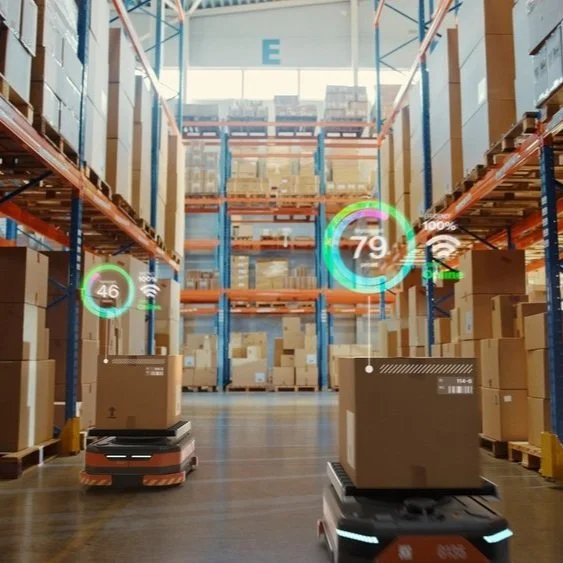
Humanoids don’t get a practice round. The minute they step into a warehouse, interact with humans, or navigate an unstructured environment, we expect them to perform safely, reliably, and without the luxury of trial and error that defined earlier robotics generations.

Despite these high stakes, momentum in the humanoid industry is exciting. Major players are moving from lab prototypes to real commercial pilots, and the early results look promising.

Amazon is piloting Agility’s Digit humanoid robots for material handling at Amazon warehouses, focusing on tote recycling and movement in dynamic environments. In 2022, Agility raised $150M, with Amazon’s Industrial Innovation Fund participating.

Figure’s humanoid robot, Figure 01, completed its first autonomous warehouse task in 2024, picking and placing objects. Figure AI has raised more than $675M from investors including Microsoft, OpenAI, and Nvidia. Meanwhile, Sanctuary’s Phoenix robot has been deployed in retail environments for tasks like stocking shelves and folding clothes, completing a world-first commercial deployment at a Canadian Tire store in 2023.

But these early wins tell only part of the story. Commercial readiness still lags way behind the headlines. Most humanoids today work only under carefully controlled conditions. When they succeed, it’s usually because someone spent weeks tuning the environment to match the robot’s quirks, not because the robot adapted to the real world.

That gap between viral demos and deployable systems is still wide. And companies betting big on humanoid technology are learning that brilliant engineering alone won’t bridge it. You need rock-solid validation systems that prove your robot works before you ship it, not after something goes wrong.

The biggest bottleneck? Real-world testing is brutally expensive and risky. Industry experts estimate that physical robot testing can cost $10,000 to $100,000 per week, according to a 2023 survey of robotics startups. Beyond the expense, real-world environments are inherently limited—no single warehouse, military base, or factory floor can expose a humanoid to the breadth of conditions it will eventually face. And when things go wrong, they go wrong fast. A 2022 OSHA report cited that 40% of warehouse automation incidents involved robots colliding with objects or people.

Smart teams are working around these challenges by leaning hard into simulation, synthetic data, and human-in-the-loop workflows, not as backup plans, but as the foundation of a scalable robotics pipeline that actually works in messy, complicated, human environments.

Key Challenges in Humanoid Robotics

Building deployable humanoids isn’t just a mechanical problem. It’s a systems-level challenge that spans perception, decision-making, human interaction, and safety validation. The hurdles standing between promising prototypes and scalable, field-ready platforms are distinct but interconnected challenges.

Cluttered and unpredictable environments

Human environments are cluttered, inconsistent, and emotionally charged. Imagine a humanoid stepping into a busy warehouse and immediately encountering a spilled box of screws. Someone shouts “Watch out!” from across the floor. A coworker extends a hand, but are they offering or asking for help? These moments happen dozens of times every shift, yet they’re not the dramatic edge cases that make headlines. They’re Monday through Friday realities. Teaching a robot to navigate them is where things get complicated.

Here’s the thing: Industrial robots have it easy. They work in controlled, predictable spaces where everything has its place. But humanoids? They’re stepping into our messy, intuitive world. A warehouse worker spots a tilted pallet and immediately thinks “danger.” A maintenance tech reads someone’s slumped shoulders and knows they need backup. These insights come from years of human experience, the kind of pattern recognition that doesn’t fit neatly into code.

The need for generalists instead of specialists

Most robots today are specialists; they excel at one task under predictable conditions. Humanoids need to be generalists who can switch between tasks, adapt to new layouts, and work with incomplete information. As Pieter Abbeel of Covariant AI has noted, robots typically fail not because they can’t perform a task, but because they struggle to adapt when conditions change even slightly.

Training for this kind of flexibility requires exposure to thousands of scenarios, including the rare and ambiguous ones that break most systems. That’s driving the shift toward synthetic data and curated scenario libraries. Companies like Covariant AI and Boston Dynamics report that up to 80% of their robot training data now comes from simulation and synthetic environments, not real-world trials.

And here’s where it gets tricky, because synthetic data quality makes or breaks everything. The difference between a functional prototype and a deployable humanoid is annotation precision. Your annotators must correctly label every sensor input: LIDAR point clouds, RGB feeds, depth maps, so the robot learns to distinguish between a cardboard box and a crouched human, between someone waving hello and someone signaling distress. It’s not basic labeling work. You need annotators with deep robotics knowledge and an understanding of human behavior patterns.

But annotation precision is just one piece of the puzzle. The generalist challenge goes beyond perception. Humanoids working alongside people need social intelligence, knowing when to pause, when to ask for help, and when to step back entirely. Training for those protocols calls for data that captures how humans actually behave under stress, fatigue, and time pressure. Not easy stuff to synthesize.

The cost and risk of real-world testing

The economics of physical testing create a brutal bottleneck as well. At such high costs, extensive real-world testing quickly becomes a luxury only the most well-funded teams can afford. And those numbers don’t even include the hidden costs, damaged equipment, stalled operations, and even safety incidents that shut down entire facilities.

Cost isn’t the only problem. Real-world testing environments are fundamentally limited. Your single warehouse can’t expose a robot to every lighting condition, floor texture, or human interaction pattern it might encounter across different facilities. A retail pilot can’t capture the full spectrum of customer behaviors or how seasonal merchandise changes affect navigation.

Those examples show exactly why smart teams are turning to simulation as more than just a backup plan. As MIT reports, a 2024 study in Science Robotics found that robots trained with a mix of synthetic and real data performed 30% better in novel scenarios than those trained only on real-world data. The breakthrough insight? Synthetic environments let you systematically explore edge cases that would be rare, expensive, or downright dangerous to recreate physically.

But the catch is that your synthetic data is only as good as the human expertise behind it. Creating realistic scenarios means understanding not just what objects look like, but how they behave under different conditions, how shadows mess with object recognition, how human posture shifts when someone’s exhausted versus alert, and how environmental factors throw off sensor readings. That level of nuance requires expert annotators who get both the technical requirements and the messy realities of deployment.

Simulation limitations and validation gaps

The most advanced robotics teams are pushing beyond basic simulation toward sophisticated digital twin environments that mirror real-world complexity. Boston Dynamics uses a hybrid approach: real-world testing at its Waltham, MA facility and extensive simulation of its Atlas robot’s acrobatic movements, like jumping and navigating obstacles.

But even the most sophisticated simulation needs HITL validation to make sure synthetic training actually translates to human-compatible behavior. In 2024, Figure AI partnered with OpenAI to use large language models for robot planning and HITL review, allowing humans to intervene and provide feedback during ambiguous tasks. This partnership illustrates a broader trend in the industry.

The HITL approach extends far beyond real-time intervention. It’s also critical for comprehensive data curation and labeling. Expert annotators review robot behavior, label edge cases, and provide the contextual understanding that bridges algorithmic decision-making and human expectations. You need annotators who don’t just see what’s happening, but understand what it means for robot safety and performance in the real world.

Covariant AI’s robots use reinforcement learning in simulation, plus human-in-the-loop feedback to correct errors and improve generalization. The human expertise in this loop is less about fixing mistakes and more about encoding a nuanced understanding of human environments into training data that robots can actually learn from.

This approach scales beautifully. Teams can create thousands of scenario variations: lighting changes, obstacle placements, human behavior patterns, and stress-test performance at a massive scale. HITL review sharpens those models further, helping robots learn both to execute tasks and to align with human expectations.

The validation challenge gets even trickier when you consider system-wide reliability. As Gill Pratt, CEO of Toyota Research Institute, has noted, the real world is full of edge cases. You can’t anticipate them all, but you can build systems that learn from them.

So, where do edge cases leave the industry? The path forward is becoming clearer.

What’s Next for Humanoid Robotics

The leap from prototype to product in humanoid robotics isn’t about better joints or faster processors. It’s about nailing the real-world stack: perception, planning, actuation, and human alignment, all working together seamlessly.

Sensor calibration will matter more than ever

Picture a humanoid walking the same hallway 10 times and hitting 10 lighting conditions. Can its vision systems still spot a dropped wrench or tell a crouched worker from a cardboard box? Most current sensor fusion approaches assume you’re working in controlled environments. Real deployment calls for systems that self-calibrate and maintain performance across wildly variable conditions.

Sensor calibration is where high-quality training data becomes critical. Your robots need exposure to thousands of object examples under different lighting, from various angles, in multiple contexts, all precisely labeled by experts who understand the subtle differences that actually matter for robot perception. But even perfect sensors need the right training foundation.

Simulation will continue to scale training and testing

Simulation’s value depends entirely on realism and relevance, making scenario curation based on actual field data and human review a core competency for robotics teams. The numbers back it up: Experts project that the global humanoid robot market will grow from $1.8B in 2023 to $13.8B by 2030, at a CAGR of 33.5%. Teams that can validate performance at scale will capture disproportionate value in this expanding market. All of this progress, however, will require new approaches to validation.

The need for new validation tools is increasing

The ISO 10218 and ISO/TS 15066 standards govern industrial robot safety, but as of 2025, no unified standard exists for humanoids in mixed human-robot environments. As humanoids grow more capable, their potential impact, good or bad, grows with them. Proving your system can recover from unexpected inputs or respond to emergent events isn’t optional. It’s table stakes.

The reality is that innovation is accelerating, but validation tools, coverage metrics, and scalable feedback loops are lagging. Until that gap closes, your deployment will be gated not by what humanoids can do in the lab, but by what they can prove in the field.

The most innovative teams already treat validation as a competitive advantage, not just a compliance headache. They’re using simulation to both train robots and build a systematic understanding of how human-robot collaboration works under pressure. They’re using HITL workflows to both fix errors and encode human intuition into scalable systems.

The companies that dominate this space will be those with access to the highest-quality labeled data, data that captures not just what objects look like but also how they behave, how humans interact with them, and how robots should respond. This level of data quality calls for specialized expertise in data annotation, scenario curation, and human-robot interaction patterns.

Closing Thoughts: Humanoids Outside the Lab

The dream of humanoids helping in hospitals, warehouses, and disaster zones is closer than ever. But we won’t get there by skipping the hard parts. We’ll get there by meeting complexity with clarity, and novelty with rigor.

At DDD, we specialize in high-quality data annotation and human-in-the-loop review that makes safe, reliable humanoid deployment possible. From complex video and sensor data labeling to scenario curation and expert review, we’re here to help your robotics teams build the data foundation systems you need to succeed in real-world environments. If you’re building, testing, or deploying such systems, let’s talk.

Capability alone will not define the next era of robotics. Context, data, and collaboration will, and the time to shape it is now.

Building Better Humanoids: Where Real-World Challenges Meet Real-World Data Read Post »

Prompt2Bengineering2Bfor2Bdefense2Btech

Prompt Engineering for Defense Tech: Building Mission-Aware GenAI Agents

By Umang Dayal

June 27, 2025

In defense tech, the speed of innovation is often the difference between strategic advantage and operational lag. At the center of this shift is Generative AI (GenAI), a technology poised to augment everything from tactical decision-making and threat analysis to mission planning and logistics coordination.

But while GenAI brings extraordinary potential, it also raises a high-stakes question: how do we ensure these systems operate with the precision, reliability, and awareness that defense demands? The answer lies in prompt engineering.

Unlike commercial applications, where creativity and open-ended interaction are assets, defense environments demand control, clarity, and domain specificity. Language models supporting these environments must reason over classified or high-context data, adhere to strict operational norms, and perform under unpredictable conditions.

Prompt engineering is the discipline that transforms a general-purpose GenAI system into a mission-aware agent, one that understands its role, respects constraints, and produces output that aligns with strategic goals.

This blog examines how prompt engineering for defence technology is becoming the foundation of national security. It offers a deep dive into techniques for embedding context, aligning behaviour, deploying robust prompt architectures, and ensuring that outputs remain safe, explainable, and operationally useful, while discussing real-world case studies.

What is Prompt Engineering?

Prompt engineering is the practice of crafting precise and intentional inputs known as prompts to elicit desired behaviors from large language models (LLMs). These models, such as GPT-4, Claude, and LLaMA, are trained on vast corpora of text and can generate human-like responses. However, their outputs are highly sensitive to how inputs are framed. Even slight variations in wording can produce dramatically different results. Prompt engineering provides the means to control that variability and align model behavior with specific objectives.

At its core, prompt engineering is both a linguistic and systems-level task. It requires an understanding of language model behavior, task design, and the operational context in which the model will be used. In defense applications, prompts are not just instructions; they must encapsulate domain-specific language, reflect operational intent, and respect the boundaries of safety and reliability.

What sets prompt engineering apart in the defense context is its requirement for consistency under constraints. Unlike consumer use cases, where creativity is often rewarded, defense prompts must produce outputs that are deterministic, safe, and traceable. Whether the model is generating reconnaissance summaries, responding to command-level queries, or assisting in battle damage assessment, its behavior must be predictable, interpretable, and aligned with clearly defined intent.

What are the Defense Requirements for GenAI in Defense Tech

Safety and Alignment:
GenAI systems must not produce outputs that are misleading, toxic, or outside the scope of intended behavior. This is particularly critical when these systems interact with sensitive mission data, generate operational recommendations, or assist in decision-making. Prompt engineering enables alignment by controlling how models interpret their task, restricting their generative range to within acceptable and safe boundaries. Safety-aligned prompts are designed to minimize ambiguity, reject harmful requests, and clarify the agent’s operational guardrails.

Reliability Under Adversarial Conditions:
Defense environments often involve adversarial pressures, both digital and physical. GenAI agents must perform reliably in scenarios where data is degraded, communications are delayed, or adversaries may attempt to exploit model weaknesses. Prompt engineering plays a key role in preparing models to operate under such conditions by embedding robustness into the interaction design, encouraging models to verify information, maintain operational discipline, and prioritize accuracy over creativity.

Domain Specificity and Operational Language:
Unlike general-purpose AI systems, defense GenAI agents must understand and respond in domain-specific language that includes acronyms, military jargon, classified terminologies, and procedural formats. Standard LLMs are not always trained on these lexicons, which means their native responses can lack contextual accuracy or relevance. Prompt engineering helps bridge this gap by conditioning the model through examples, context embedding, or prompt templates that familiarize the system with operationally appropriate language and tone.

Real-Time and Edge Deployment Constraints:
Many defense operations require GenAI agents to function in real-time and, in some cases, at the edge on hardware with limited compute resources, intermittent connectivity, and tight latency requirements. Prompt engineering contributes to efficiency by optimizing how tasks are framed and narrowing the model’s inference pathways. Well-designed prompts reduce the need for long inference chains or multiple retries, making them essential for time-sensitive missions where decision latency is unacceptable.

Explainability and Auditability:
In high-stakes missions, it is essential not only that GenAI systems make the right decisions but that their reasoning is understandable and their outputs auditable. Defense workflows must often be reviewed after the fact, whether for compliance, evaluation, or learning purposes. Prompt engineering supports this need by structuring model interactions to produce transparent reasoning paths, clear justifications, and traceable decision logic. Techniques such as Chain-of-Thought prompting and role-based output formatting make it easier to understand how and why a model arrived at a particular answer.

Why Prompt Engineering is Central to Mission-Awareness:
When these defense-specific requirements are considered collectively, a common dependency emerges: the need for GenAI models to be deeply aware of their operational role and mission context. Prompt engineering is the method through which this awareness is encoded and enforced. It enables the transformation of a general-purpose LLM into a domain-adapted, scenario-conscious, safety-aligned agent capable of functioning within the unique contours of defense technology.

Prompt Engineering Techniques in Defense Tech for Gen AI

Context-Rich Prompting:
Mission-aware agents must understand the broader situational context in which they are operating. This goes beyond task descriptions and includes environmental variables such as geographic location, mission phase, command hierarchy, and operational constraints. Context-rich prompting embeds these elements directly into the interaction.

For example, a battlefield agent might receive prompts that specify proximity to hostile zones, chain-of-command authority levels, and mission-critical rules of engagement. The inclusion of such parameters ensures that the model generates outputs grounded in the reality of the mission rather than generic or inappropriate responses. Contextualization also helps prevent hallucinations and aligns outputs with specific mission intents.

Chain-of-Thought and Reasoning Prompts:
Complex decision-making in defense often involves multiple steps of reasoning, balancing conflicting objectives, evaluating risks, and sequencing actions. Chain-of-Thought (CoT) prompting is a technique that explicitly encourages the model to walk through these steps before delivering a final output. This approach is especially useful in intelligence analysis, strategic planning, and simulation exercises.

For example, a CoT prompt used during an ISR (Intelligence, Surveillance, Reconnaissance) planning session might ask the model to first assess surveillance assets, then compare coverage capabilities, and finally recommend deployment sequences. By decomposing the reasoning process, prompt engineers enable GenAI agents to deliver outputs that are not only accurate but also explainable.

Role-Based Prompting:
In defense scenarios, agents often serve distinct operational roles, whether as a tactical analyst, mission planner, field officer assistant, or red team operator. Role-based prompting conditions the model to respond within the boundaries and expectations of that assigned role. This method restricts model behavior, reducing drift, and aligns tone and terminology with domain norms.

For instance, a prompt given to a model simulating an intelligence analyst would include language about threat vectors, reporting formats, and confidence ratings, whereas a logistics-focused agent would respond in terms of inventory movement, unit readiness, or route optimization. Role-based prompting not only improves relevance but also supports trust by enforcing consistency in how the model presents itself across tasks.

Human-in-the-Loop Optimization:
Even the best-engineered prompts require validation, particularly in high-stakes environments. Human-in-the-Loop (HiTL) optimization introduces iterative refinement into the prompt development lifecycle. Subject matter experts, field operators, and analysts review model outputs, identify inconsistencies, and suggest improvements to prompt structures.

This feedback loop can be formalized through annotation platforms or red-teaming exercises. In a mission planning context, HiTL might involve testing prompt variants against simulated combat scenarios and scoring their performance in terms of clarity, accuracy, and alignment. Integrating human judgment ensures that prompts reflect not only theoretical performance but also practical operational value.

Building GenAI Agents Using Prompt Engineering for Defense Tech

Establishing Mission Awareness in Agents:
Building mission-aware GenAI agents starts with the principle that large language models, while powerful, are inherently general-purpose until shaped through design. Mission awareness refers to a model’s ability to interpret, prioritize, and act in accordance with specific defense objectives, constraints, and operational context.

Achieving this requires more than model fine-tuning or dataset expansion; it depends on how tasks are framed and interpreted through prompts. Prompt engineering enables the operational encoding of mission-specific intent, ensuring that GenAI systems generate responses that align with military goals, policy parameters, and situational requirements.

Encoding Intent and Constraints through Prompts:
Prompt engineering makes it possible to shape a GenAI agent’s understanding of intent by embedding critical information directly into its instructions. For instance, in a battlefield assistant scenario, the agent must recognize that the goal is not to speculate but to interpret real-time sensor data conservatively, flag anomalies, and defer to human command when uncertain.

The prompt, therefore, must emphasize constraint-following behavior, avoidance of unverified claims, and clear role boundaries. By systematically encoding intent and constraints, prompt designers guide the agent toward outputs that exhibit discipline and mission fidelity, rather than open-ended reasoning typical of civilian GenAI applications.

Balancing Flexibility with Control:
A key challenge in defense AI systems is achieving the right balance between flexibility and control. Mission-aware agents must adapt to changing environments, incomplete information, and evolving command inputs, but they must also operate within strict boundaries, particularly regarding safety, classification, and escalation protocols. Prompt engineering offers levers to calibrate this balance.

Techniques like instruction layering, fallback scenarios, and constraint-aware role conditioning allow agents to be responsive without becoming unpredictable. For example, an autonomous analysis agent might generate threat reports with variable detail, but always follow a mandated template and abstain from conclusions unless explicitly requested.

Prompt Engineering as the Interface Layer:
In many GenAI deployment architectures, prompt engineering functions as the interface layer between mission systems and the language model itself. This layer translates structured data, sensor inputs, or user instructions into natural language prompts the model can understand, while preserving operational semantics.

Whether integrated into a larger C2 (Command and Control) system or acting independently, prompt logic governs what the model sees, how it interprets it, and what type of response is expected. As such, prompt engineering is not just an authoring task; it is part of the system design and directly impacts the behavior and reliability of deployed AI agents.

Operationalizing Prompt Engineering Practices:
To move from ad-hoc experimentation to operational deployment, prompt engineering for defense must become a repeatable and auditable process. This involves maintaining prompt libraries, standardizing prompt evaluation criteria, and developing version-controlled frameworks that track the evolution of prompts across updates.

Prompts used in live operations should undergo rigorous testing under representative scenarios, with red team involvement and post-mission analysis. In this model, prompt engineering becomes not only a creative exercise but a critical capability embedded into the AI development lifecycle for defense applications.

Read more: Facial Recognition and Object Detection in Defense Tech

What are the Use Cases of Gen AI Agents in Defense Tech

Intelligence Summarization and Threat Detection:
U.S. intelligence agencies are leveraging generative AI to process vast amounts of open-source data. For instance, the CIA has developed an AI model named Osiris, which assists analysts by summarizing unclassified information and providing follow-up queries. This tool aids in identifying illegal activities and geopolitical threats, enhancing the efficiency of intelligence operations.

Mission Planning and Scenario Generation:
Generative AI is being employed to create battlefield simulations and generate actionable intelligence summaries. These applications support commanders and analysts in high-pressure environments by enabling rapid synthesis of data, predictive analysis, and scenario generation.

Cybersecurity and Threat Detection:
In the realm of cybersecurity, generative AI models are instrumental in automating routine security tasks. They streamline incident response, automate the generation of security policies, and assist in creating detailed threat intelligence reports. This allows cybersecurity teams to focus on more complex problems, enhancing operational efficiency and response times.

Defense Logistics and Sustainment:
Virtualitics has introduced a Generative AI Toolkit designed to support mission-critical decisions across the Department of Defense. This toolkit enables defense teams to deploy AI agents tailored to sustainment, logistics, and planning, providing rapid, explainable insights for non-technical users on the front lines.

Geospatial Intelligence and ISR:
The Department of Defense is exploring the use of generative AI to enhance situational awareness and decision-making. By harnessing the full potential of its data, the DoD aims to enable more agile, informed, and effective service members, particularly in the context of geospatial intelligence, surveillance, and reconnaissance (ISR) operations.

Read More: Top 10 Use Cases of Gen AI in Defense Tech & National Security

Conclusion

The integration of Generative AI into defense technology marks a transformative shift in how mission-critical systems are designed, deployed, and operated. However, the power of GenAI does not lie solely in the sophistication of its models; it lies in how effectively those models are guided. Prompt engineering stands at the heart of this challenge as a mechanism through which intent, constraints, safety, and operational context are translated into model behavior.

In high-stakes defense environments, mission-aware GenAI agents must be predictable, auditable, and aligned with clearly defined objectives. They must reason with discipline, respond within roles, and adapt to dynamic conditions without exceeding their boundaries. These capabilities are not emergent by default; they are engineered, and prompts are the primary interface for doing so.

Looking ahead, as GenAI becomes increasingly embedded in decision-making, situational awareness, and autonomous systems, the demand for prompt engineering will grow, not just as a development skill but as a cross-disciplinary capability. It will require collaboration between technologists, domain experts, and operational leaders to ensure these systems function as true partners in defense readiness.

Whether you’re piloting GenAI agents for ISR, logistics, or battlefield intelligence, DDD can help you design, test, and scale systems that are safe, auditable, and aligned with mission intent. To learn more, talk to our experts.

References:

Beurer-Kellner, L., Buesser, B., Creţu, A.-M., Debenedetti, E., Dobos, D., Fabian, D., … & Volhejn, V. (2025). Design Patterns for Securing LLM Agents against Prompt Injections. arXiv. https://arxiv.org/abs/2506.08837

Schulhoff, S., Ilie, M., Balepur, N., Kahadze, K., Liu, A., Si, C., … & Resnik, P. (2024). The Prompt Report: A Systematic Survey of Prompting Techniques. arXiv. https://arxiv.org/abs/2406.06608

Giang, J. (2025). Safeguarding Sensitive Data: Prompt Engineering for GenAI. INCOSE Enchantment Chapter. https://www.incose.org/docs/default-source/enchantment/20250514_enchantment_safeguarding_sensitive_data_pe4genai.pdf

Frequently Asked Questions (FAQs)

1. How is prompt engineering different from fine-tuning a model for defense applications?
Prompt engineering focuses on guiding a pre-trained model’s behavior at inference time using structured inputs. Fine-tuning, on the other hand, involves retraining the model on additional domain-specific data to adjust its internal weights. While fine-tuning improves baseline performance over a class of tasks, prompt engineering enables rapid adaptation, safer testing, and scenario-specific alignment, making it more agile and mission-flexible, especially in contexts where retraining may be infeasible or restricted.

2. Can prompt engineering be used to handle classified or sensitive defense data?
Yes, but with strict constraints. Prompt engineering can be designed to work entirely within secure, air-gapped environments where LLMs are deployed on isolated infrastructure. Prompts can be structured to avoid revealing sensitive context while still enabling task completion. Additionally, engineering prompts to avoid triggering inadvertent inference from model pretraining data (i.e., data leakage risks) is a best practice in classified operations.

3. How does prompt engineering interact with Retrieval-Augmented Generation (RAG) in defense?
RAG systems combine prompt engineering with external document retrieval. In defense, this allows GenAI agents to generate answers grounded in live mission data or secure knowledge bases. Prompt engineers structure prompts to include retrieved context in a consistent, auditable format, ensuring the model stays factually anchored. This hybrid approach is particularly useful in ISR analysis, logistics, and operational reporting.

4. What are the limitations of prompt engineering in defense use cases?
Prompt engineering cannot guarantee model determinism, especially under ambiguous or adversarial inputs. It also requires careful testing to avoid subtle failures due to context misalignment, token limitations, or shifts in model behavior after updates. Furthermore, prompts do not modify the model’s latent knowledge, so they are ineffective at “teaching” new facts, only at structuring how the model uses what it already knows or is externally fed.

Prompt Engineering for Defense Tech: Building Mission-Aware GenAI Agents Read Post »

semantic2Band2Binstance2Bsegmentation

Semantic vs. Instance Segmentation for Autonomous Vehicles

DDD Solutions Engineering Team

June 24, 2025

Behind the sleek hardware and intelligent systems powering autonomous vehicles lies a complex web of perception technologies that enable machines to see, understand, and react to the world around them. Among these, two key techniques stand out: semantic segmentation and instance segmentation.

They allow an autonomous vehicle to know where the road ends, where a pedestrian begins, and how to respond in real time to a cluttered, unpredictable urban environment. From differentiating between two closely parked cars to detecting the edge of a curb under poor lighting, these segmentation methods are foundational to machine perception.

This blog explores the role of Semantic and Instance Segmentation for Autonomous Vehicles, examining how each technique contributes to vehicle perception, the unique challenges they face in urban settings, and how integrating both can lead to safer and more intelligent navigation systems.

What is Semantic and Instance Segmentation for Autonomous Vehicles

In autonomous driving, perception systems must translate raw visual data into a structured, actionable understanding. One of the most important components in this process is segmentation, which divides an image into distinct regions based on the objects or surfaces represented. This segmentation allows a vehicle to differentiate between the road, other vehicles, pedestrians, signage, and surrounding infrastructure, all of which are essential for safe navigation.

Semantic Segmentation 

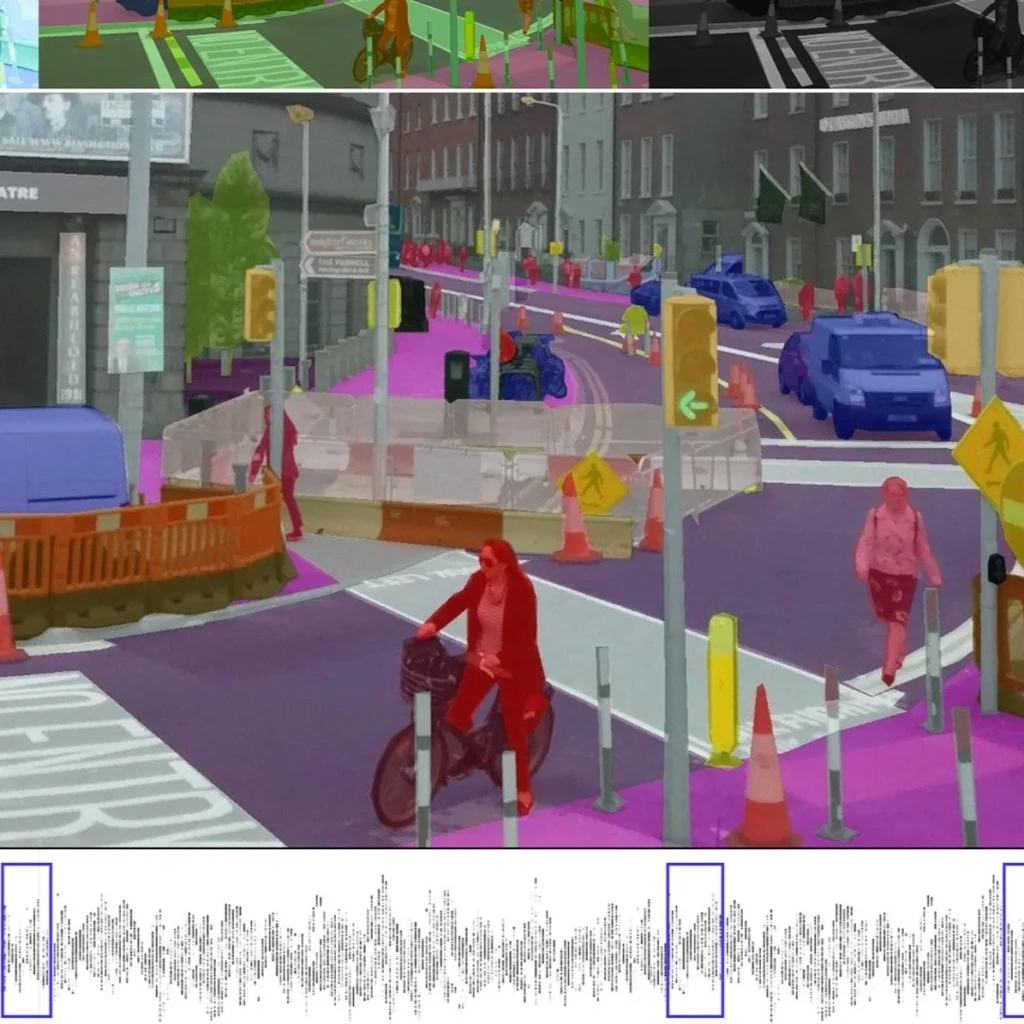
Semantic segmentation provides a broad understanding of the driving environment by assigning a category to each pixel in the image. All pixels that represent the same type of object, such as a building, a pedestrian, or the road, are grouped under a shared class label. This classification helps the vehicle recognize navigable surfaces, roadside boundaries, and static structures. In effect, semantic segmentation offers a map-like view of the surroundings, which is invaluable for high-level planning and general context awareness.

Despite its value, semantic segmentation cannot distinguish between separate objects of the same type. For example, while it can identify the presence of pedestrians in a scene, it cannot tell how many there are or where one individual ends and another begins. This limitation becomes critical in dense urban scenarios where vehicles must react differently to each nearby object. Without the ability to treat these objects as separate entities, the system cannot accurately track movement, predict behavior, or prioritize safety decisions in real time.

Advantages of Semantic Segmentation

Semantic segmentation offers several key benefits in the development and deployment of autonomous driving systems. Its primary strength lies in the ability to provide a comprehensive, high-level understanding of the environment by labeling every pixel with a class identifier. This full-scene categorization helps the vehicle recognize the structure of the road, the presence of sidewalks, crosswalks, curbs, lane markings, and traffic control elements such as signs or lights.

One significant advantage of semantic segmentation is its computational efficiency. Since it does not need to distinguish between individual object instances, it requires fewer resources, making it more suitable for real-time applications where rapid processing is essential. This efficiency is especially valuable in early perception stages or embedded systems where memory and processing power are limited.

Instance Segmentation

Instance segmentation builds on semantic segmentation by not only classifying pixels by object type but also distinguishing between individual instances within the same category. This means that two cars side by side or a group of pedestrians are treated as separate, uniquely identified objects. This capability is crucial for tracking motion over time, predicting trajectories, and making context-sensitive decisions. For autonomous driving, it enables the system to follow a specific vehicle, yield to a crossing pedestrian, or anticipate the movements of a cyclist in a way that semantic segmentation alone cannot support.

While semantic segmentation provides the foundational structure of a scene, instance segmentation enables nuanced object-level understanding. Together, they form a complementary system where one outlines the general layout and the other fills in the detailed behavior of dynamic elements. This dual-layered perception is particularly vital in urban environments where unpredictability, high object density, and rapid decision-making are the norms.

Advantages of Instance Segmentation

Instance segmentation provides an extra layer of intelligence by offering detailed, object-level awareness. Unlike semantic segmentation, it allows the vehicle to identify and distinguish between different objects within the same category. This capability is vital for dynamic interaction with the environment, where understanding individual behavior and movement patterns is necessary.

The main advantage of instance segmentation is its support for object tracking and trajectory prediction. For example, in a scenario with multiple pedestrians near a crosswalk, instance segmentation enables the vehicle to track each one separately, assess their movement patterns, and predict whether they intend to cross the street. This individualized attention makes it possible to make fine-grained driving decisions that prioritize safety and responsiveness.

Instance segmentation is also critical for collision avoidance and behavior prediction in dense traffic. By distinguishing between different vehicles, cyclists, or other moving agents, the system can estimate how each object is likely to behave and adapt its own actions accordingly. This is especially important in complex or crowded urban environments, where multiple agents are in motion simultaneously and in close proximity.

Integration of Semantic and Instance Segmentation in Urban Driving

In the dynamic and often unpredictable environment of urban driving, both semantic and instance segmentation play vital roles. Semantic segmentation provides a broad understanding of the scene, which is essential for navigation and path planning. Instance segmentation offers detailed information about individual objects, which is crucial for tasks like obstacle avoidance and interaction with other road users.

Recent advancements have seen the integration of both techniques into unified models, such as panoptic segmentation, which combines the strengths of semantic and instance segmentation to provide a comprehensive understanding of the scene. These integrated approaches are particularly beneficial in urban environments, where the complexity and density of objects require both broad and detailed scene interpretation.

By leveraging the strengths of both semantic and instance segmentation, autonomous vehicles can achieve a more robust and nuanced understanding of urban environments, leading to improved safety and efficiency in navigation and decision-making processes.

What are the Challenges of Semantic and Instance Segmentation

Urban environments present a complex array of visual elements, making accurate segmentation a formidable task. The challenges are multifaceted, impacting both semantic and instance segmentation techniques.

1. Occlusions and Overlapping Objects

In dense urban settings, objects frequently occlude one another. Pedestrians may be partially hidden by vehicles, or street signs might be obscured by foliage. Semantic segmentation often struggles in these scenarios, as it assigns the same label to all pixels of a class without distinguishing individual instances. Instance segmentation aims to overcome this by identifying separate objects, but occlusions can still lead to inaccuracies in delineating object boundaries.

2. Variability in Object Scales

Urban scenes encompass objects of varying sizes, from distant traffic signs to nearby pedestrians. This scale variability poses a significant challenge for segmentation algorithms, which must accurately identify and classify objects regardless of their size.

3. Dynamic Lighting and Weather Conditions

Lighting conditions in urban environments can change rapidly due to factors like time of day, weather, and artificial lighting. These variations can adversely affect the performance of segmentation models, which may have been trained under specific lighting conditions. To mitigate this, some approaches incorporate data augmentation techniques during training to expose models to a broader range of lighting scenarios.

4. Real-Time Processing Requirements

Autonomous vehicles require real-time processing of visual data to make immediate decisions. Semantic segmentation models often offer faster processing times but may lack the granularity needed for certain tasks. Instance segmentation provides more detailed information but at the cost of increased computational complexity. Balancing speed and accuracy remains a critical challenge in deploying these models in real-world urban driving scenarios.

5. Sparse and Noisy Data

Sensors like LiDAR generate point cloud data that can be sparse and noisy, especially at greater distances. This sparsity makes it difficult for segmentation algorithms to accurately identify and classify objects.

6. Dataset Limitations

The performance of segmentation models heavily depends on the quality and diversity of training datasets. Many existing datasets may not capture the full variability of urban environments, leading to models that perform well in training but poorly in real-world scenarios. Efforts are underway to develop more comprehensive datasets that include a wider range of urban scenes and conditions.

7. Integration of Multi-Modal Data

Combining data from multiple sensors, such as cameras and LiDAR, can enhance segmentation accuracy. However, integrating these data sources poses challenges in terms of synchronization, calibration, and data fusion. Developing models that can effectively leverage multi-modal data remains an active area of research.

Read more: In-Cabin Monitoring Solutions for Autonomous Vehicles

How Can We Help?

Digital Divide Data empowers AI/ML innovation by providing high-quality, human-annotated training data at scale. Here’s how we help autonomous driving companies solve annotation challenges.

Scalable, High-Precision Data Annotation

DDD specializes in large-scale data annotation services, including pixel-level labeling, object instance tagging, and 3D point cloud segmentation. These services are essential for training deep learning models to recognize and distinguish urban objects such as pedestrians, vehicles, road signs, and infrastructure under complex city conditions.

By integrating quality assurance workflows and domain-specific training for its workforce, DDD ensures that the labeled data used to train semantic and instance segmentation models meets industry standards for accuracy and consistency, particularly vital for safety-critical applications in autonomous driving.

Support for Multi-Modal and Diverse Urban Datasets

Modern autonomous systems rely on multi-sensor data fusion (e.g., LiDAR, RGB, radar). DDD supports annotation across these data types, enabling robust fusion-based segmentation models. Furthermore, DDD’s work often emphasizes geographic and environmental diversity, contributing to the development of models capable of generalizing across varied urban landscapes.

Enabling Rare Class Detection through Dataset Balancing

Rare but critical classes like emergency vehicles, construction zones, or atypical road behaviors are often underrepresented in datasets. DDD supports dataset balancing by sourcing, curating, and annotating niche scenarios, thus enabling models to recognize low-frequency but high-impact elements critical to safe driving.

Leveraging Human-in-the-Loop Processes

DDD incorporates human-in-the-loop methodologies in annotation workflows, particularly for edge cases common in urban scenes such as occluded pedestrians, irregular vehicle shapes, and ambiguous infrastructure. This hybrid approach, combining automated tools with skilled human reviewers, greatly improves annotation accuracy for complex urban segmentation datasets.

Read more: How to Conduct Robust ODD Analysis for Autonomous Systems

Conclusion

Urban driving scenes introduce significant challenges: occlusions, inconsistent lighting, sensor noise, and the need for real-time decision-making all push the limits of segmentation models. Overcoming these challenges requires more than just algorithmic sophistication; it demands high-quality annotated data, diverse and well-balanced datasets, and scalable workflows that integrate human expertise into the AI development lifecycle.

The evolution of semantic and instance segmentation techniques continues to play a critical role in advancing autonomous driving technologies. By addressing the inherent challenges of urban environments through innovative model architectures and data integration strategies, the field moves closer to realizing fully autonomous vehicles capable of safe and efficient navigation in complex cityscapes.

If your team is building perception systems for autonomous driving, let’s talk. We’re here to help you turn visual complexity into safe, actionable intelligence.

Let DDD power your computer vision pipeline with high-quality, real-world segmentation data. Talk to our experts today.

References:

Zou, Y., Weinacker, H., & Koch, B. (2021). Towards urban scene semantic segmentation with deep learning from LiDAR point clouds: A case study in Baden-Württemberg, Germany. Remote Sensing, 13(16), 3220. https://doi.org/10.3390/rs13163220

Vobecky, A., et al. (2025). Unsupervised semantic segmentation of urban scenes via cross-modal distillation. International Journal of Computer Vision. https://doi.org/10.1007/s11263-024-02320-3

Vobecky, A., et al. (2025). Unsupervised semantic segmentation of urban scenes via cross-modal distillation. International Journal of Computer Vision. https://doi.org/10.1007/s11263-024-02320-3

FAQs

1. How is segmentation different from object detection in autonomous driving?
While object detection identifies and localizes objects using bounding boxes, segmentation provides a much finer level of detail by classifying every pixel. This pixel-level understanding helps autonomous vehicles interpret the shape, boundary, and precise position of objects, which is essential for tasks like lane following or obstacle avoidance.

2. What role does synthetic data play in training segmentation models?
Synthetic data, generated from simulations or video game engines, is increasingly used to augment real-world datasets. It helps address class imbalances, rare scenarios, and edge cases while reducing the time and cost of manual annotation. However, models trained on synthetic data still require fine-tuning on real-world datasets to generalize effectively.

3. How do segmentation models handle moving objects versus static ones?
Segmentation itself is agnostic to motion; it labels objects based on appearance in a single frame. However, when used in video sequences, segmentation can be combined with tracking algorithms or temporal models to identify which objects are moving and predict their future positions.

4. Is instance segmentation always better than semantic segmentation for autonomous vehicles?
Not necessarily. Instance segmentation provides more detail, but it is also more computationally intensive. In some applications, such as identifying road surface or traffic signs, semantic segmentation is sufficient and more efficient. The choice depends on the task’s complexity, the required level of detail, and hardware constraints.

Semantic vs. Instance Segmentation for Autonomous Vehicles Read Post »

RLHF2Buse2Bcases2Bin2BGen2BAI

Real-World Use Cases of RLHF in Generative AI

By Umang Dayal

June 24, 2025

Generative AI models can now produce text, code, images, and audio with remarkable fluency. But raw capability is not enough. Businesses need AI that understands intent, follows instructions precisely, and behaves in ways users find helpful, relevant, and safe. This is where Reinforcement Learning from Human Feedback, or RLHF, comes into focus.

RLHF is a training technique that aligns the behavior of AI models with human preferences. It works by collecting human judgments on model outputs, such as which answer is more helpful or which image looks more accurate, and then using this feedback to train a reward model. This reward model guides a reinforcement learning algorithm that fine-tunes the generative model to prioritize preferred responses in future outputs. It teaches the model what “good” looks like from a human perspective.

Over the last two years, RLHF has moved from a research concept to a cornerstone of production AI systems. The result is a new class of AI that listens better, acts more responsibly, and delivers significantly improved user experiences.

This blog explores real-world use cases of RLHF in generative AI, highlighting how businesses across industries are leveraging human feedback to improve model usefulness, safety, and alignment with user intent. We will also examine its critical role in developing effective and reliable generative AI systems and discuss the key challenges of implementing RLHF.

Why RLHF in Gen AI is Important

The promise of generative AI is vast, but models trained solely on internet-scale data often struggle with practical use. They can generate outputs that are plausible but misleading, confident but incorrect, or technically impressive yet misaligned with user expectations. These failures stem from the fact that pretraining teaches models to imitate patterns in data, not to satisfy actual user needs.

RLHF addresses this by directly injecting human judgment into the training loop. Rather than optimizing for the next most likely token or image patch, models learn to optimize for what people prefer. This makes a critical difference in business settings, where user trust, brand alignment, and regulatory compliance are non-negotiable.

In commercial applications, RLHF helps bridge the gap between generic intelligence and specific usefulness. It enables fine control over tone, format, and ethical boundaries. It also makes it possible to train smaller, more efficient models that outperform larger ones in terms of real-world helpfulness. This has major implications for scalability, cost-effectiveness, and user satisfaction.

Use Cases of Reinforcement Learning from Human Feedback (RLHF) in Gen AI

Language: Conversational AI and Assistants

The most visible success of RLHF has been seen in conversational AI, such as OpenAI’s InstructGPT and its successor ChatGPT. Both models were trained using RLHF to produce responses that are helpful, truthful, and aligned with human instructions.

Before RLHF, large language models like GPT-3 could generate fluent responses, but often missed the point of user queries. InstructGPT introduced a shift: human labelers ranked multiple completions for various prompts, training a reward model that captured human preferences. Using this signal, OpenAI fine-tuned the model with reinforcement learning, leading to drastically improved instruction-following and response quality.

ChatGPT extended this approach and achieved mass adoption. It now serves as a customer support agent, content writer, coding assistant, and research companion. Its ability to refuse unsafe requests, stay on topic, and produce responses that match a conversational tone stems directly from RLHF training.

Anthropic’s Claude and DeepMind’s Sparrow followed similar paths. Both systems incorporated human feedback during development to align their behavior with helpfulness, truthfulness, and harmlessness. For businesses, RLHF-trained assistants enable lower risk, improved compliance, and better user engagement.

Code: Smarter Software Development Tools

Tools like GitHub Copilot, powered by models such as OpenAI Codex, help developers write code faster by suggesting completions, functions, and even full programs. However, raw code generation models may produce buggy, verbose, or insecure code unless guided carefully.

RLHF is now being used to make these tools more practical and trustworthy. By collecting data on which suggestions developers accept, reject, or modify, companies build reward models that favor high-quality, context-appropriate code. The model learns not just what compiles, but what developers find useful.

Microsoft has applied reinforcement learning based on user interactions to improve Copilot’s suggestion ranking. This results in a tool that better adheres to project conventions, reduces redundancy, and minimizes errors. It also improves usability in high-stakes environments, such as backend services or security-sensitive codebases.

The key benefit here is that RLHF allows models to learn from expert-level judgments without needing explicit labels for every possible coding scenario. Over time, the model internalizes what good code looks like in real-world use, enabling it to act as a more intelligent and reliable collaborator.

Images: Generative Visuals

Text-to-image models like DALL·E, Midjourney, and Stable Diffusion can create stunning visuals from natural language prompts, but quality can vary widely. Outputs may be incoherent, misaligned with the prompt, or aesthetically subpar. RLHF offers a way to fix this by learning directly from human preferences.

Google Research and DeepMind have conducted studies where human annotators evaluated thousands of generated images on realism, accuracy, and aesthetic quality. This feedback trained a reward model used to fine-tune the image generator, leading to improved alignment and output quality.

Open-source projects like ImageReward have extended this idea to Stable Diffusion, showing that RLHF can generalize across image models. Companies can use RLHF-tuned models to create on-brand visuals, product prototypes, marketing content, and personalized artwork with higher reliability and less manual curation.

Audio: Speech and Music

In audio generation, especially text-to-speech (TTS), RLHF is emerging as a way to produce more natural, expressive speech. Traditional models optimize for acoustic features, but these often fall short of capturing what listeners actually prefer.

Researchers have begun integrating human ratings, such as Mean Opinion Scores, into the training of TTS models. By learning from these subjective evaluations, models can adapt their style, pace, and emotion to match listener expectations.

This has practical implications for voice assistants, audiobooks, and customer service bots. RLHF-trained TTS systems can produce voices that are more pleasant, more appropriate for the context, and better aligned with brand identity. They also reduce listener fatigue and increase engagement in audio applications.

The same approach is being explored for music generation, where human feedback helps guide models to produce compositions that are harmonious, stylistically consistent, and emotionally resonant.

Industry-Specific Use Cases of RLHF in Gen AI

While RLHF is widely recognized for its role in powering general-purpose tools like chatbots and coding assistants, its adoption is accelerating in specialized domains where the notion of “quality” depends on context, subjectivity, and user expectations. In these settings, RLHF enables generative models to deliver outputs that are not only functional but also meaningful and aligned with domain-specific standards.

Education

AI tutors and learning platforms are increasingly incorporating generative models to deliver personalized educational support. However, what constitutes a “good” explanation can vary based on a student’s background, age, and subject proficiency. RLHF helps bridge this gap by integrating human feedback on clarity, helpfulness, and pacing.

  • Step-by-step guidance: Models are trained to break down complex topics into manageable parts based on how learners rate previous explanations.

  • Tone and accessibility: Feedback ensures explanations are not overly technical or condescending, promoting a supportive learning environment.

  • Curriculum alignment: Human reviewers guide the model to generate content that matches syllabus standards and learning objectives.

This results in AI tutors that are better equipped to adapt to different learning styles and skill levels, improving engagement and comprehension.

Healthcare

In healthcare, generative models are being used to answer patient queries, simplify clinical documents, and support administrative workflows. RLHF plays a crucial role in ensuring the responses maintain professional caution, emotional sensitivity, and factual integrity.

  • Trustworthy communication: Human feedback penalizes overconfident or speculative responses, encouraging models to use disclaimers or suggest consulting professionals.

  • Sensitive tone calibration: RLHF helps models express complex medical information with empathy, especially when delivering serious or uncertain results.

  • Improved summarization: Annotators help evaluate and refine how AI condenses medical texts, ensuring critical details are preserved without misrepresentation.

The result is a more reliable and patient-appropriate AI assistant that supports, but does not replace, human healthcare providers.

Content Creation

Many organizations use generative AI for writing product descriptions, social media copy, internal reports, and customer communications. However, generic outputs often fail to reflect the brand’s voice or regional nuances. RLHF allows businesses to fine-tune their models for tone, consistency, and audience relevance.

  • Style compliance: Human feedback enforces adherence to corporate writing guidelines and tone of voice.

  • Localization and cultural alignment: RLHF enables the model to adapt phrasing, idioms, or examples to suit regional audiences or markets.

  • Content effectiveness: Annotators evaluate how well the generated content drives engagement, clarity, or conversion, informing further model refinement.

This enables companies to scale content production without sacrificing quality or brand integrity.

Gaming

In interactive media and gaming, players increasingly expect non-player characters (NPCs) to be context-aware, emotionally engaging, and narratively coherent. RLHF offers a framework for capturing and applying player feedback to train generative models that can create or enhance in-game dialogue and behavior.

  • Dynamic conversation modeling: Human players rank NPC responses based on relevance, immersion, and entertainment value, helping the model adapt in real-time.

  • Role fidelity: Feedback ensures that AI-generated dialogue stays in character and aligns with the game’s narrative arc or lore.

  • Emotion and engagement tuning: RLHF enables NPCs to respond with appropriate tone or affect, enhancing player immersion and storytelling impact.

By learning from what players enjoy or reject, game developers can build more interactive and responsive AI-driven worlds that evolve with user preferences.

What are the Key Challenges of RLHF in Gen AI

The Cost of High-Quality Human Feedback

One of the primary challenges in deploying RLHF is the resource-intensive nature of collecting meaningful human feedback. Reward models require a substantial volume of data annotated by people who can accurately judge the quality, clarity, and relevance of generated outputs. In specialized domains such as healthcare or finance, this often means relying on expert annotators, which increases operational cost and complexity.

Additionally, evaluation guidelines must be carefully crafted to reduce ambiguity and ensure consistency. Without clear instructions and sufficient quality control, the feedback can become inconsistent or misaligned, which weakens the effectiveness of the reward model. The time and effort required for this process can be a limiting factor for smaller organizations or fast-moving product teams.

Scalability and Feedback Maintenance

As generative models are scaled across diverse products and industries, maintaining the relevance and freshness of feedback becomes increasingly difficult. What users consider “helpful” or “acceptable” can vary significantly over time and across contexts. A model trained on feedback from one domain may underperform in another unless continually updated with new, targeted evaluations.

Managing multiple feedback pipelines for different applications requires significant infrastructure and orchestration. While approaches like synthetic feedback and self-training loops are being explored as alternatives, they currently lack the nuance and reliability of human evaluation. Ensuring that models stay aligned as their usage grows remains an ongoing operational and technical challenge.

Bias in Human Judgment

RLHF systems are only as reliable as the human feedback that shapes them. If annotators share a narrow demographic or cultural background, their preferences can unintentionally introduce biases into the model. These biases may manifest in tone, phrasing, or content selection, resulting in outputs that feel out of touch or even offensive to broader audiences.

Furthermore, poorly defined annotation instructions can lead to inconsistent or conflicting judgments, making it harder for the reward model to generalize properly. To avoid these pitfalls, it is essential to design annotation workflows that include diverse perspectives, clear evaluation criteria, and robust mechanisms for auditing and correcting bias during training.

Read more: Bias in Generative AI: How Can We Make AI Models Truly Unbiased?

Integration into Product Development

For RLHF to deliver sustained value, it must be integrated into an organization’s product development workflow. This includes tools for collecting and managing feedback, processes for training and updating reward models, and governance frameworks that ensure ethical and consistent application.

Many teams lack the infrastructure to support this at scale, which creates friction between experimentation and production. Additionally, maintaining reward models requires ongoing effort as products evolve, and changes in model behavior must be versioned and reviewed like any other critical system component. Without this level of maturity, RLHF efforts may deliver short-term gains but struggle to remain effective over time.

Read more: RLHF (Reinforcement Learning with Human Feedback): Importance and Limitations

How DDD Supports RLHF in Generative AI

Digital Divide Data helps organizations implement RLHF effectively by providing high-quality, human feedback needed to align generative AI systems with real-world expectations.

  • Expert Data Annotation: We deliver diverse, relevant, and well-annotated datasets for training, fine-tuning, and evaluating AI models across domains.

  • Conversational AI Assistants: Improve chatbot tone, empathy, and clarity through human-rated feedback that guides models toward more helpful and polite responses.

  • Content Moderation & Safety: Identify and reduce harmful, biased, or offensive outputs using edge case analysis and safety-aligned human ratings.

  • Creative Content Generation: Annotate style, coherence, and originality to help models generate content that matches user preferences in tone and structure.

  • Code Generation & Developer Tools: Refine code quality by learning from annotated human corrections, reviews, and adherence to coding standards.

  • Personalized Learning Systems: Adapt content to different learning levels by integrating feedback on clarity, difficulty, and pacing.

  • Search & Recommendation Systems: Improve ranking models by rewarding content that real users find more accurate and engaging.

  • Enterprise Task Assistants: Enhance multi-step reasoning and workflow handling by capturing expert feedback on task execution accuracy.

With scalable human-in-the-loop processes, DDD ensures your generative AI systems are safer, more accurate, and better aligned with user intent.

Read more: Real-World Use Cases of Retrieval-Augmented Generation (RAG) in Gen AI

Conclusion

Reinforcement Learning from Human Feedback is rapidly becoming a defining feature of competitive generative AI. It bridges the gap between pretraining and productization, allowing models to adapt to real-world needs and values.

As generative AI becomes embedded in more products and services, RLHF will play a critical role in determining which systems are merely intelligent and which are truly useful. Companies that invest early in building feedback-informed AI will have an edge in delivering solutions that resonate with users and scale responsibly.

Now is the time to ask: How can RLHF help your AI listen better?

Power your generative AI with the high-quality human feedback it needs to perform safely, accurately, and at scale. Talk to our experts today.

References

Liang, Y., He, J., Li, G., Li, P., Klimovskiy, A., Carolan, N., Sun, J., Pont‑Tuset, J., Young, S., Yang, F., Ke, J., Dj, K., Collins, K., Luo, Y., Li, Y., Kohlhoff, K. J., Ramachandran, D., & Navalpakkam, V. (2023). Rich human feedback for text‑to‑image generation. Proceedings of the IEEE/CVF Conference on Computer Vision and Pattern Recognition (CVPR). https://doi.org/10.48550/arXiv.2312.10240

Huyen, C. (2023, May 2). RLHF: Reinforcement learning from human feedback. Hugging Face Blog. https://huggingface.co/blog/rlhf

Google Research. (2023). Rich human feedback for text‑to‑image generation. Google Research Blog. Retrieved from https://research.google/blog/rich-human-feedback-for-text-to-image-generation/

MarkTechPost. (2022, February 5). OpenAI team introduces ‘InstructGPT’ model developed with RLHF. MarkTechPost. https://www.marktechpost.com/2022/02/05/openai-team-introduces-instructgpt-model-developed-with-reinforcement-learning-from-human-feedback-rlhf-to-make-models-safer-helpful-and-aligned/

FAQs

Can RLHF be applied to multilingual or non-English generative AI models?
Yes, RLHF can be applied to multilingual models, but it requires human feedback from native or fluent speakers in each target language. Maintaining consistency across languages adds complexity, especially when cultural nuances affect how responses are evaluated.

How much human feedback is typically needed to train a reward model?
The volume depends on the complexity of the task and the variability of the outputs. For large-scale models like ChatGPT, tens or hundreds of thousands of labeled comparisons may be used. Smaller or domain-specific applications might require only a few thousand high-quality annotations to see impact.

What’s the difference between RLHF and fine-tuning with labeled datasets?
Fine-tuning uses labeled data to teach the model specific outputs. RLHF uses comparative human judgments to teach the model preferences between outputs, which is more flexible and effective when outputs can be good in multiple ways or when strict labeling is impractical.

How do companies ensure the reward model itself is accurate and unbiased?
Reward model training includes validation on held-out datasets, reviews for annotator consistency, and sometimes comparisons with expert-labeled gold standards. Companies may also audit reward models periodically and adjust for known biases in annotation patterns.

Real-World Use Cases of RLHF in Generative AI Read Post »

IMG 5393

Insights from DDD’s Roundtable at Autosens US 2025

On 10th June, Sahil Potnis, VP of Product and Partnerships at DDD, brought together Autonomy industry leaders for a high-impact roundtable focused on problems autonomous companies are struggling with: collecting meaningful, high-quality data from sensors and cameras.

With around 10 experts at the table, the session started with a refreshingly candid discussion. Sahil pointed out that despite the demand, data collection is still too hard, too expensive, and far too limited for the scale we need to train and validate real-world systems. His perspective resonated with many in the room, setting the tone for collaborative and insightful discussions.

Throughout the session, Sahil emphasized the value of pairing annotated datasets with clearly defined KPIs to drive more focused development and smarter validation. He shared how this approach helps surface performance issues early but also ensures teams are working toward metrics that matter.

The group shared their perspectives on collaboration challenges, use-case gaps, and openly shared issues they’ve encountered in the field. What emerged was a genuine sense of community–people eager to learn from one another and push the industry forward.

Because when it comes to building smarter, safer, more capable systems, better data isn’t optional, it’s everything in the Autonomy industry.

Insights from DDD’s Roundtable at Autosens US 2025 Read Post »

ODD2BAnalysis2Bfor2BAutonomy

How to Conduct Robust ODD Analysis for Autonomous Systems

DDD Solutions Engineering Team

June 19, 2025

Autonomous systems are no longer experimental technologies operating in closed labs; they are rapidly becoming integral to how we move, deliver, monitor, and interact with our environments.

From self-driving cars and aerial drones to intelligent humanoids, the complexity of these systems requires that their operational boundaries are clearly understood, rigorously tested, and transparently communicated. This is where Operational Design Domain, or ODD analysis for autonomous systems, comes into play.

An ODD defines the specific conditions under which an autonomous system is designed to operate safely. It includes parameters such as weather conditions, road types, traffic scenarios, geographical boundaries, lighting conditions, and more. Think of it as the system’s declared comfort zone. If the system operates within that zone, its behavior should be both predictable and verifiably safe. Outside of it, the system is not guaranteed to function correctly, which introduces unacceptable risk.

This blog provides a technical guide to conducting robust ODD analysis for autonomous driving, detailing how to define, structure, validate, and evolve an Operational Design Domain using formal taxonomies, scenario-based testing, coverage metrics, and integration to ensure the safe and scalable deployment.

What Is an Operational Design Domain (ODD) and Why its Important?

An Operational Design Domain (ODD) defines the specific set of conditions under which an autonomous system is intended to operate safely. These conditions span across environmental, geographic, temporal, infrastructure, and dynamic factors. For example, a self-driving shuttle might be restricted to operating only on urban roads with speed limits under 30 km/h, in daylight hours, during dry weather. This collection of constraints forms its ODD. By clearly delineating the scope of operation, ODDs enable engineers to focus system development, testing, and safety validation on a bounded set of real-world conditions.

An ODD should be structured in a modular and exhaustive way. Key dimensions include “Scenery” (road layout, intersections), “Environment” (weather, lighting), and “Dynamic elements” (presence of other vehicles, pedestrians, animals). Using this framework helps prevent omissions in defining where and how an autonomous system should behave safely.

Beyond technical design implications, ODDs also play a pivotal role in regulatory compliance and safety assurance. Authorities in both the United States and Europe increasingly require autonomous system developers to submit detailed ODD documentation as part of their safety cases. The National Highway Traffic Safety Administration (NHTSA) and European safety frameworks aligned with UNECE and ISO guidelines expect that a system’s ODD be transparent, traceable, and demonstrably validated. In this context, an articulated and well-analyzed ODD becomes not just an engineering tool but a legal and ethical obligation.

How Do You Structure an ODD Analysis Using Standards and Taxonomies?

Building a robust ODD starts with organizing it through a formal taxonomy. This ensures that the domain is described in a structured, modular way instead of relying on free-text or ad hoc formats. It supports consistent communication across engineering, safety, and compliance teams and creates a dependable foundation for testing and validation.

Core ODD Dimensions
A comprehensive ODD typically includes multiple categories:

  • Scenery: road layouts, types, and intersections

  • Environment: weather conditions, lighting, and visibility

  • Dynamic Elements: other vehicles, pedestrians, and animals

  • Time: time-of-day or daylight constraints

  • Infrastructure Dependencies: signals, signage, connectivity requirements
    These categories define the operational envelope and make it easier to identify and assess system capabilities and limitations.

Benefits of Standardized Structure
Standardized structures ensure completeness and uniformity. International standards like ISO 34503 offer a baseline for describing each category in a clear and reusable format. This allows systems to scale across use cases or geographies without losing clarity or consistency.

Layered ODD Models for Depth
Some methodologies break down the ODD further into layered models- functional, situational, and behavioral. These layers help developers map system behavior and decision-making to specific operating conditions, offering a deeper analysis of how the system responds to real-world inputs.

Integration into Simulation and Testing Tools
Structured ODDs can be encoded into machine-readable formats that feed directly into simulation platforms and scenario libraries. This allows for automated scenario selection, test planning, and coverage tracking, significantly improving testing efficiency and traceability.

Foundation for Lifecycle Alignment
A structured ODD is essential not only for development but for every phase of the product lifecycle. It links environmental assumptions directly to system requirements, design decisions, validation strategies, and regulatory submissions, serving as a common reference across disciplines.

How To Manage ODD Changes as the Autonomous System Evolves?

An autonomous system’s ODD is rarely static. As the system matures, adapts to new markets, or incorporates new features, its ODD often expands to cover more complex or variable conditions. Managing this evolution is critical to maintaining system safety and ensuring that each expansion is accompanied by appropriate analysis, validation, and documentation.

Expanding the ODD without structured oversight can introduce risk. For example, adding nighttime operation, new weather conditions, or different road types may challenge sensor performance, decision-making algorithms, or fallback strategies. To manage these transitions effectively, ODD changes must be assessed methodically, with full awareness of how new conditions impact the existing safety case.

Key Practices for ODD Change Management:

Incremental Expansion Strategy
Begin with a narrow, well-understood ODD and expand it in controlled phases. This allows teams to develop confidence in a smaller domain before layering on new variables. Each new capability, such as driving in rain or on rural roads, should be treated as a discrete change that triggers new analysis and validation.

Change Impact Analysis
Use structured traceability to assess how each ODD modification affects system design, functional safety, performance requirements, and test coverage. For instance, if the new ODD includes foggy conditions, assess how perception sensors behave, whether braking performance is still within limits, and if previously validated scenarios are still valid under the new conditions.

Link ODD to Safety Engineering Artifacts
A robust ODD should be explicitly connected to all dependent safety assets:

  • Hazard analyses

  • Functional and technical requirements

  • Scenario libraries

  • Validation plans
    This traceability ensures that when the ODD changes, you can identify exactly which elements of the safety case must be revisited, reducing the chance of unaddressed risk.

Versioning and Documentation
Maintain detailed documentation of each ODD version, including what changes were made, why, and what corresponding updates were performed in testing and validation. Version control enables accountability and simplifies regulatory reporting.

Cross-Domain Applicability
In some cases, the same system architecture may be deployed across multiple environments (e.g., from highways to industrial sites). Change management methods should allow the ODD to be compared, merged, or branched to accommodate each domain while minimizing redundant analysis.

Continuous Monitoring
Even after deployment, systems should monitor real-world conditions to identify when they operate outside their declared ODD or encounter edge cases. These occurrences should trigger a feedback process for refining or extending the ODD safely.

How Do You Use Scenario-Based Testing to Validate ODD Analysis?

Scenario-based testing has become a central method for validating autonomous systems. It replaces the impractical approach of accumulating endless on-road miles with targeted, repeatable, and measurable tests that reflect the real-world situations a system may encounter. For this testing to be meaningful, it must be grounded in the Operational Design Domain (ODD). The ODD defines the space of operational conditions, and scenario-based testing explores that space with structured, representative examples.

When properly linked, the ODD serves as the basis for defining what kinds of scenarios are needed to prove system safety. Each condition outlined in the ODD should be reflected in a set of corresponding test cases that cover nominal behavior, edge cases, and failure modes.

Core Strategies for ODD-Driven Scenario Testing

Scenario Derivation from ODD Parameters
The starting point is to systematically derive scenarios from the parameters defined in the ODD. For instance, if the ODD includes urban roads during heavy rain and night-time conditions, there should be test scenarios simulating pedestrians crossing in poorly lit areas during rainfall. This ensures the system is tested in the same conditions under which it claims to be safe.

ODD-Tagging of Test Cases
Each test scenario should be tagged with the specific ODD conditions it represents. This tagging allows teams to track which parts of the ODD have been tested and which still lack coverage. As the ODD evolves, tagging also helps in updating only the necessary tests rather than rebuilding the entire suite.

Coverage Metrics and Risk-Based Prioritization
It’s not enough to have scenarios; the value lies in understanding how well they cover the ODD. Coverage can be measured by comparing the number and distribution of test scenarios across ODD parameters. Some factors, like weather or road type, may be high-risk and require more testing. Prioritization based on risk, frequency of occurrence, and historical incident data helps allocate testing resources efficiently.

Use of Simulation and Synthetic Environments
Simulators allow testing across a broad range of ODD conditions that are rare, dangerous, or costly to reproduce in the real world. Scenario libraries can be programmatically filtered using the ODD definition to generate or select only those scenarios that are relevant to the system’s operational domain. This enables large-scale validation with consistent traceability.

Boundary and Edge Case Testing
One of the most important contributions of ODD-driven testing is identifying and evaluating system behavior at the edges of the defined domain. These are the areas most likely to challenge the system’s capabilities, where conditions are borderline or transitions are occurring, such as dawn-to-dusk lighting changes or the onset of rain.

Adaptive Scenario Selection
Scenario-based testing should adapt as the ODD changes or as new insights emerge from operational data. By maintaining a formal link between the ODD and test scenario metadata, teams can automatically detect which tests need to be added or rerun when the ODD is updated.

Read more: Accelerating HD Mapping for Autonomy: Key Techniques & Human-In-The-Loop

What Metrics Help Measure ODD Coverage and Test Effectiveness?

Measuring how well an autonomous system has been tested within its Operational Design Domain (ODD) is a critical part of ensuring safety. Without metrics, it’s impossible to know whether the testing is representative, comprehensive, or aligned with the actual conditions the system will encounter. Coverage metrics offer a quantifiable way to assess whether the system has been evaluated across the full range of ODD parameters and how thoroughly those conditions have been exercised through scenario-based testing.

Effective coverage measurement goes beyond simply counting test cases. It involves understanding what parts of the ODD are covered, how often they are tested, and how critical those conditions are to system safety. The goal is not just volume, but relevance and depth.

Key Metrics and Evaluation Techniques

ODD Parameter Coverage
This measures which specific ODD conditions have been addressed in test scenarios. For example, if the ODD includes ten types of weather conditions but testing only covers three, that indicates a significant gap. Teams can define thresholds for minimum acceptable coverage across scenery types, lighting conditions, traffic scenarios, and more.

Risk-Weighted Coverage
Not all conditions are equally important. Some may be rare but high-risk (e.g., heavy snow with low visibility), while others are frequent but low-risk (e.g., sunny daytime in low-traffic areas). Risk-weighted metrics assign a higher value to tests that address combinations with higher safety implications. This helps prioritize the most meaningful scenarios and ensures that critical conditions are not overlooked.

Frequency of Occurrence vs. Test Representation
This involves comparing the real-world frequency of specific ODD conditions to their representation in the test suite. If certain scenarios occur often in the field but are underrepresented in testing, that misalignment could lead to unanticipated system failures. Aligning test distribution with operational exposure improves reliability.

Test Redundancy and Scenario Diversity
Measuring diversity helps avoid over-testing similar conditions while neglecting others. Even if multiple tests are labeled under the same weather condition, they should vary in other factors such as lighting, road curvature, and dynamic interactions. This ensures that the system is evaluated under a meaningful range of permutations.

Edge Case Density
Edge case testing focuses on the boundaries of the ODD, such as low-visibility thresholds, sudden weather transitions, or densely populated intersections. Tracking how many of these edge cases are included, and how often they are revisited, indicates how well the system’s performance envelope is being challenged.

Confidence Metrics and Uncertainty Quantification
Some teams also employ metrics to assess the system’s uncertainty or confidence levels across different ODD conditions. For example, if the system consistently exhibits low confidence in foggy environments, this could prompt additional testing, ODD refinement, or system redesign.

Scenario-to-ODD Traceability Score
This metric evaluates how well each scenario is linked back to specific ODD parameters. Strong traceability enables targeted regression testing and faster updates when the ODD changes, making the validation process more agile and maintainable.

How Can We Help in ODD Analysis for Autonomous Systems?

Digital Divide Data (DDD) offers end-to-end support for teams developing and scaling autonomous systems by delivering structured, actionable ODD analysis. Whether you’re launching in a new environment, expanding your operational reach, or adapting existing autonomy stacks to different regulatory or physical conditions.

By examining environmental factors, infrastructure dependencies, agent behavior, and robotic system capabilities, DDD enables product and engineering teams to align autonomy solutions with the practical demands of specific regions or markets.

Read more: In-Cabin Monitoring Solutions for Autonomous Vehicles

Conclusion

As autonomous systems continue to move from controlled environments into public spaces, the importance of clearly defining and rigorously validating their Operational Design Domain (ODD) cannot be overstated. A well-structured ODD acts as a contract between the system, its developers, and the world it operates in, setting the boundaries for safe operation, guiding design decisions, and serving as the foundation for testing, hazard analysis, and regulatory compliance.

Robust ODD analysis is not a one-time exercise. It’s a dynamic, ongoing process that evolves with system capabilities, deployment contexts, and operational feedback. By leveraging structured taxonomies, integrating the ODD into all stages of the development lifecycle, and validating through targeted, scenario-based testing, teams can ensure their autonomous systems perform safely and predictably within their intended environments.

Accelerate your autonomous deployment with DDD’s structured ODD solutions.

To learn more, talk to our experts

Frequently Asked Questions (FAQs)

What is the purpose of defining an ODD for autonomous systems?
An ODD outlines the specific conditions under which an autonomous system is expected to operate safely. This includes variables like weather, road types, lighting, traffic, and infrastructure. Defining an ODD sets clear boundaries for system capabilities and ensures all engineering, testing, and safety validation efforts are aligned with real-world operational constraints.

How often should an ODD be updated?
Updates are necessary whenever the system’s features expand, when it is deployed in new environments, or when real-world incidents reveal edge cases or risks that weren’t accounted for. Ongoing monitoring and structured change management help maintain the ODD’s relevance and safety coverage.

What’s the relationship between ODD and scenario-based testing?
Scenario-based testing is used to validate that an autonomous system performs safely across the full range of conditions defined in the ODD. Each scenario represents a combination of factors like road layout, weather, and traffic. Effective testing involves selecting or generating scenarios that reflect all ODD parameters, particularly edge cases and high-risk combinations.

How can ODD analysis support system scalability?
Robust ODD analysis enables teams to systematically assess and manage changes when expanding to new regions, use cases, or environments. It supports evaluating the portability of capabilities, identifying necessary engineering updates, and guiding scenario-based validation. This structured approach makes it easier to scale without compromising safety or performance.

References: 

ASAM e.V. (2023). ASAM OpenODD: Operational Design Domain Standard for ADAS/AD. https://www.asam.net/standards/detail/openodd/

Fraunhofer IESE. (2024). Cross-Domain Safety Engineering to Support ODD Expansion. Retrieved from https://www.iese.fraunhofer.de/

ISO. (2022). ISO 34503: Road vehicles — Taxonomy and definitions for terms related to driving automation systems for road vehicles — Operational Design Domain (ODD). International Organization for Standardization.

UK Department for Transport & BSI. (2022). PAS 1883: ODD Taxonomy for Automated Driving Systems. British Standards Institution.

How to Conduct Robust ODD Analysis for Autonomous Systems Read Post »

Objectdetection

Facial Recognition and Object Detection in Defense Tech

By Umang Dayal

June 18, 2025

In a high-stakes defense environment, the speed and accuracy of information can define the outcome of missions, protect national borders, and save lives. Among the most critical enablers are facial recognition and object detection technologies.

These AI-driven systems are no longer confined to experimental labs or civilian applications; they are becoming central to how the military manages surveillance, secure facilities, conduct reconnaissance, and make tactical decisions in real time.

Facial recognition allows security forces to identify persons of interest across vast datasets, video feeds, and live drone surveillance, enabling more proactive threat detection and response. Object detection, on the other hand, powers everything from automated monitoring of suspicious vehicles and unattended baggage to identifying targets in combat zones. Whether deployed in UAVs scanning for threats over hostile terrain or in fixed-location cameras guarding critical infrastructure, these technologies form the backbone of a modern defense ecosystem that depends on automation for both strategic intelligence and real-time decision-making.

This blog explores how facial recognition and object detection in defense tech are transforming surveillance, threat detection, and decision-making. While also navigating challenges and recommendations, shaping their deployment.

Facial Recognition in Defense Tech

Facial recognition systems have rapidly evolved into indispensable tools for defense and security operations. Their applications extend beyond traditional surveillance, offering critical capabilities in identity verification, border control, watchlist monitoring, and mission-specific intelligence. However, as these systems mature, so do the tactics designed to undermine them, requiring equally advanced countermeasures and ongoing attention to legal and ethical implications.

Adversarial Attacks & Defenses

One of the most significant challenges facing facial recognition in defense is the emergence of adversarial attacks designed to fool AI systems. Cloaking techniques, which involve subtly altering a person’s appearance using algorithmically generated patterns, can render facial recognition systems ineffective. These patterns, often invisible to the human eye, are crafted to manipulate the model’s feature extraction layers, preventing accurate identification or causing deliberate misclassification.

To counter such threats, new defense systems are being developed that aim to purify the training data and harden recognition models against cloaked inputs. Among the most notable advancements is a training-time purification approach that filters out adversarial noise before it can corrupt the model. This method significantly reduces the success rate of cloaking attacks by refining the representation space, allowing the AI to learn more robust and generalized features. These defenses are particularly valuable in military systems that rely on long-term deployment in dynamic environments, where attackers may exploit open-source cloaking tools to bypass surveillance.

Cross-Spectrum Recognition

In operational scenarios where lighting is poor or visibility is limited, such as night-time patrols, covert surveillance, or operations in smoke-filled or foggy environments, traditional facial recognition systems based on visible light imagery become unreliable. To address these limitations, defense organizations are investing in cross-spectrum recognition technologies.

Cross-spectrum facial recognition leverages thermal-to-visible synthesis, a process that uses AI to generate a visible-light approximation of a thermal image. This allows standard recognition algorithms, trained on visible-light data, to function effectively even in complete darkness. By bridging the gap between thermal and visual spectrums, these technologies enable round-the-clock monitoring capabilities, particularly useful in perimeter defense, reconnaissance missions, and special operations conducted under low-light conditions.

Ethical & Legal Dimensions

As the use of facial recognition expands within defense tech operations, it raises critical questions around privacy, civil liberties, and accountability. Large-scale government surveillance programs, such as those managed by intelligence and law enforcement agencies, have sparked debate over the potential for misuse, biased algorithms, and a lack of transparency.

Programs run by defense tech have incorporated facial recognition into domestic and international intelligence workflows, often without full public disclosure or regulatory oversight. At the same time, research initiatives such as those under IARPA (Intelligence Advanced Research Projects Activity) aim to advance recognition capabilities to unprecedented levels of accuracy and scale.

The growing power of these systems has led to increasing calls for legislative guardrails and oversight mechanisms. Key concerns include the disproportionate impact of facial recognition errors on minority communities, the use of facial data without consent, and the potential for these tools to be used in ways that infringe on constitutional rights. For defense, maintaining public trust means not only building technically sound systems but also ensuring they are governed by clear policies, ethical frameworks, and transparent accountability structures.

Object Detection in Defense Tech

Object detection has become a cornerstone capability in modern defense operations, enabling automated systems to interpret visual data with speed and accuracy that surpasses human capability. From identifying potential threats in surveillance footage to guiding unmanned systems in complex combat environments, object detection plays a vital role in both strategic intelligence and real-time mission execution. As defense technology increasingly converges with AI, object detection is reshaping how information is gathered, targets are tracked, and operational decisions are made.

AI-Powered ISR & Targeting

Intelligence, Surveillance, and Reconnaissance (ISR) operations have traditionally relied on human analysts to interpret visual data collected from aerial and ground sensors. Today, AI-powered object detection systems are transforming ISR by automating the analysis of vast image and video datasets. One of the most prominent initiatives in this space is Project Maven, a U.S. Department of Defense program designed to integrate AI into battlefield decision-making. At the core of Project Maven is the ability to detect, classify, and track objects of interest, such as vehicles, weapons, or individuals, in drone footage and satellite imagery.

This automation dramatically accelerates the targeting cycle, reducing the time between identification and engagement of high-value targets. Object detection algorithms allow for real-time threat assessments, flagging suspicious movements or equipment without requiring constant human oversight. Beyond surveillance, object detection is also enabling advanced capabilities in unmanned ground vehicles (UGVs) and aerial systems. These platforms use AI to autonomously navigate terrain, track moving targets, and even assist in guiding munitions with high precision. In high-risk or GPS-denied environments, such autonomy can be critical to mission success and troop safety.

Adversarial Vulnerabilities

Despite its effectiveness, object detection is not immune to deception. Adversaries have developed techniques to exploit weaknesses in AI vision systems, most notably through patch-based adversarial attacks. These involve attaching carefully designed patterns, often resembling innocuous symbols or geometric shapes, to objects or vehicles to confuse or mislead detection algorithms. The result can be a failure to recognize a weapon, a misclassification of a hostile asset, or the complete evasion of automated tracking.

To counter these threats, defense researchers are developing inpainting-based defenses. These techniques aim to detect and digitally remove the adversarial patches from the input image before the object detection system processes it. By restoring a more “natural” visual representation, these defenses help the system recover its detection accuracy. In parallel, adversaries have also turned to more traditional forms of evasion such as camouflage, thermal masking, and concealment using foliage or terrain features. These low-tech countermeasures remain surprisingly effective, especially when combined with AI-targeted adversarial designs, underscoring the need for resilient, multi-modal detection systems.

System Integration & Ethics

As object detection systems become more integrated across defense platforms, their effectiveness increasingly depends on seamless fusion with other sensors and computing systems. Multi-modal integration, combining visible-spectrum cameras with thermal, infrared, radar, and acoustic sensors, provides a more comprehensive and reliable picture of the battlefield. Edge computing architectures allow this data to be processed locally on devices such as drones or autonomous vehicles, enabling low-latency decision-making even in disconnected or hostile environments. Predictive analytics further enhances these systems by using historical data and real-time observations to anticipate threats before they materialize.

However, the integration of object detection into weapons systems, particularly autonomous ones, raises profound ethical and legal questions. As lethal autonomous weapon systems (LAWS) become more capable, concerns about accountability, proportionality, and the risk of unintended engagements intensify. International discussions continue around the regulation or outright ban of fully autonomous weapons, with debates centered on the acceptable level of human control. For defense agencies, balancing technological advancement with ethical responsibility is critical, not only for compliance with international norms but also for maintaining legitimacy in the eyes of the global community.

Read more: Fleet Operations for Defense Autonomy: Bridging Human Control and AI Decisions

Challenges & Recommendations of Facial Recognition and Object Detection

Data Quality and Bias in Military AI

One of the most pressing challenges in deploying facial recognition and object detection in defense is the issue of poor data quality and model bias. AI systems trained on limited or non-representative datasets often perform inconsistently across different environments, lighting conditions, or demographic groups. In operational terms, this means identity mismatches in facial recognition or misclassification of key objects in surveillance feeds.

The recommendation here is to build more robust and representative datasets tailored to defense use cases, incorporating variations in terrain, time of day, atmospheric conditions, and population diversity. This should be complemented with continuous data auditing and the use of domain-specific data augmentation to help models generalize more effectively and reduce inherent biases.

False Positives, False Negatives, and Decision Integrity

A closely related concern is the occurrence of false positives and false negatives. In mission-critical defense operations, a false positive could result in the misidentification of a civilian as a hostile actor, while a false negative could allow a threat to go undetected. Both scenarios carry significant consequences for safety and mission outcomes.

To mitigate this, systems should be designed to include confidence scores and uncertainty estimates, giving human operators more nuanced insights into the AI’s decision-making. Additionally, employing ensemble models and multi-sensor fusion, such as combining visual and thermal data, can enhance reliability and minimize the chances of critical errors.

Adversarial Threats to Visual Recognition

Adversarial attacks are another significant threat to AI vision systems in defense. These include facial cloaking techniques that evade recognition and patch-based attacks that confuse object detection algorithms. Such tactics can effectively render AI systems blind to genuine threats. The defense against this lies in incorporating adversarial training methods that expose models to simulated attacks during development. Preprocessing techniques, like inpainting and data purification, can help restore the integrity of manipulated inputs. Creating adversarial testing environments also allows defense organizations to proactively assess vulnerabilities and improve system robustness before live deployment.

Human-AI Collaboration in High-Stakes Operations

The lack of structured human-AI collaboration frameworks presents another operational gap. Overreliance on AI systems without sufficient human oversight can result in blind trust and potentially catastrophic decisions. Conversely, sidelining AI can reduce efficiency and slow down responses.

A balanced approach involves integrating human-in-the-loop workflows, where AI assists rather than replaces decision-makers. This setup should include interpretable outputs and user interfaces that clearly communicate system confidence and rationale. Equally important is training defense personnel to understand AI limitations, fostering an environment of informed trust rather than unquestioning dependence.

Governance, Ethics, and Regulatory Oversight

The rapid integration of facial recognition and object detection into defense workflows has outpaced the development of regulatory and ethical oversight mechanisms. This creates uncertainty around issues such as privacy, consent, accountability, and adherence to international laws of engagement.

The recommendation here is to establish transparent and enforceable governance frameworks that define permissible applications and usage boundaries. This includes creating data governance policies, ethical review boards, and ensuring auditability of AI systems through explainable models and usage logs.

Operational Resilience in Mission-Critical Scenarios

Finally, mission readiness under operational stress remains a persistent concern. Defense AI systems must function reliably even in degraded environments, where communication is limited, adversaries deploy countermeasures, or natural conditions obscure visibility.

To address this, systems should be equipped with edge-processing capabilities to operate autonomously when disconnected from central servers. They should also be subjected to rigorous testing in both simulated and real-world defense scenarios to ensure resilience, adaptability, and fail-safe performance under pressure.

How We Can Help

Digital Divide Data (DDD) is uniquely positioned to support the defense tech in building resilient, ethical, and mission-ready AI systems through high-quality data services and scalable human-in-the-loop solutions. As AI adoption accelerates in surveillance, targeting, and threat detection workflows, the success of these applications increasingly depends on the quality, diversity, and security of the underlying data. DDD’s capabilities directly address these requirements.

We provide large-scale, high-fidelity data collection and annotation services tailored to defense and security contexts. This includes labeling of facial images under varied lighting, occlusion, and environmental conditions, as well as complex object detection tasks involving aerial, thermal, and multi-sensor imagery. By drawing from global, diverse data sources and using trained, security-vetted annotators, DDD helps ensure that AI models are trained on datasets that minimize bias and maximize operational generalizability.

We integrate human-in-the-loop workflows that enhance system reliability in high-stakes environments. Whether it’s verifying edge-case detections, annotating adversarial scenarios, or maintaining the accuracy of evolving datasets, DDD’s skilled teams offer continuous validation and refinement, critical for AI systems deployed in dynamic, adversarial settings. These workflows not only improve accuracy but also build in accountability and transparency, which are increasingly required in defense AI applications.

Our defense tech solutions are 100% U.S owned, operated by a U.S. workforce, and led by veterans. All data used in defense programs remains securely housed within the United States, ensuring compliance with data sovereignty requirements and the highest standards of national data protection.

Read more: Geospatial Data & GEOINT Use Cases in Defense Tech and National Security

Conclusion

As global threats grow more sophisticated, the defense sector is turning to advanced technologies like facial recognition and object detection to maintain strategic advantage and national security. These AI-driven capabilities are no longer experimental; they are embedded in mission-critical systems such as surveillance drones, unmanned vehicles, biometric access controls, and real-time targeting platforms.

To harness the full potential of these technologies, it is essential to strike a careful balance between technical innovation and responsible implementation. Defense systems must be built on diverse, high-quality datasets, hardened against manipulation, and designed with human oversight and ethical safeguards at their core. Investing in robust AI infrastructure is not just a matter of technological superiority; it is a matter of trust, accountability, and long-term resilience.

The future will depend not just on how powerful these systems become, but on how ethically, securely, and effectively they are deployed.

Partner with DDD to build secure, mission-ready AI systems using facial recognition and object detection in defense tech. Talk to our experts

Facial Recognition and Object Detection in Defense Tech Read Post »

RAG2Buse2Bcases2Bin2BGen2BAI

Real-World Use Cases of Retrieval-Augmented Generation (RAG) in Gen AI

By Umang Dayal

June 16, 2025

Generative AI has captured the attention of industries worldwide, offering the ability to generate human-like text, code, visuals, and more with unprecedented fluency. Large Language Models (LLMs), in particular, have become powerful tools for tasks like summarization, translation, and content creation.

However, they come with inherent limitations. LLMs often produce hallucinated or outdated information, lack domain-specific grounding, and cannot natively access proprietary or real-time data. These constraints can significantly reduce the reliability and trustworthiness of their outputs, especially in enterprise or high-stakes contexts.

This is where Retrieval-Augmented Generation (RAG) becomes critical. RAG introduces a mechanism to enhance LLMs by augmenting their responses with relevant, retrieved information from external sources such as internal knowledge bases, documentation repositories, or structured databases.

This blog explores the real-world use cases of RAG in GenAI, illustrating how Retrieval-Augmented Generation is being applied across industries to solve the limitations of traditional language models by delivering context-aware, accurate, and enterprise-ready AI solutions.

Understanding Retrieval-Augmented Generation (RAG)

Retrieval-Augmented Generation (RAG) is a hybrid approach that enhances the capabilities of generative models by combining them with a retrieval mechanism. Traditional large language models generate responses based solely on the knowledge encoded during training. While this works well for general-purpose tasks, it often fails when the model is asked to reference specific, up-to-date, or proprietary information. RAG addresses this limitation by injecting relevant external knowledge into the generation process, on demand.

The architecture of a RAG system can be broadly divided into two components: the retriever and the generator.

The retriever is responsible for searching and extracting relevant content from external sources such as enterprise documents, FAQs, knowledge bases, or research publications. This component typically uses dense retrieval methods, embedding documents into a vector space using language models like OpenAI’s embeddings, Cohere, or open-source alternatives. These embeddings are indexed in a vector database such as FAISS, Weaviate, or Pinecone, enabling fast and accurate semantic search.

Once relevant documents are retrieved, the generator takes over. This is typically a large language model, such as GPT-4, Claude, LLaMA, or Mixtral, which uses the retrieved content as additional context to generate grounded and context-aware responses. The retrieval step is invisible to the user, but it significantly boosts the model’s ability to deliver reliable, source-based answers.

Real World Use Cases of RAG in GenAI

Retrieval-Augmented Generation has evolved from a technical enhancement into a strategic enabler for real-world applications. Below are some of the most impactful use cases where RAG is transforming workflows and decision-making.

Enterprise Knowledge Management

In large organizations, employees often spend significant time searching for relevant information scattered across disparate systems, ranging from HR portals and legal repositories to product documentation and SOPs. This inefficiency not only slows down decision-making but also creates friction in day-to-day workflows. Retrieval-Augmented Generation (RAG) enables the creation of intelligent enterprise assistants that dynamically search across internal knowledge sources and provide immediate, context-rich answers. This eliminates the need for navigating multiple databases or submitting IT tickets, empowering employees to self-serve and resolve queries efficiently.

By combining the retriever’s ability to pinpoint precise documents with a generator that synthesizes those inputs into conversational responses, RAG-based systems enhance knowledge accessibility across departments. Whether it’s retrieving onboarding procedures, policy clarifications, or security protocols, these systems improve organizational agility. Unlike traditional search engines, which often return long lists of documents, RAG delivers directly actionable answers grounded in the source material, improving both speed and accuracy of internal knowledge consumption.

Customer Support Automation

Customer service functions are frequently challenged by high ticket volumes and the need for consistent, fast responses across various product lines or service queries. RAG transforms customer support by enabling AI agents to deliver responses grounded in real-time data such as user manuals, product catalogs, historical tickets, and troubleshooting logs. This allows support teams to handle a larger volume of customer interactions while ensuring that answers remain accurate, up-to-date, and relevant to the customer’s specific context.

Moreover, RAG reduces reliance on static decision trees and scripted responses, which are often too rigid to handle complex or evolving customer needs. Instead, it provides flexibility by generating customized responses based on what the customer is asking and what the underlying documentation supports. This adaptive capability significantly improves customer satisfaction, reduces escalations, and shortens issue resolution time. Additionally, it enables organizations to scale their customer support operations without a linear increase in staffing.

Legal and Compliance

The legal domain demands absolute precision, traceability, and adherence to strict regulatory standards. In this context, hallucinated responses or ambiguous interpretations can have serious consequences. RAG addresses this challenge by retrieving authoritative documents such as statutes, case law, compliance protocols, and contract templates, and using them to produce grounded responses. This makes it possible to automate and augment tasks such as legal research, document review, and contract analysis while maintaining high accuracy.

For compliance professionals, RAG also proves invaluable in navigating complex regulatory environments. By aggregating and contextualizing rules from various jurisdictions or regulatory bodies, RAG can help identify risks, highlight non-compliant language in documents, and summarize applicable legal frameworks. Unlike traditional search tools, which require users to interpret raw legal text, RAG systems present actionable insights while maintaining the traceability of their sources, which is crucial for legal defensibility and audit trails.

Healthcare and Medical Research

In healthcare settings, decisions often depend on the synthesis of diverse information sources, clinical notes, diagnostic images, treatment guidelines, and published research. RAG empowers medical professionals by integrating these sources into a unified retrieval-augmented workflow. It retrieves contextually relevant information from patient records, clinical databases, and peer-reviewed journals, which is then used to generate detailed, evidence-backed responses that support diagnosis, treatment planning, or documentation.

Beyond direct patient care, RAG can also be used in research and administrative settings. It can assist researchers in identifying emerging clinical evidence or trial data relevant to specific conditions, saving time and enhancing research quality. It enables healthcare institutions to build tools that bridge the gap between raw data and informed medical decisions, without the risks of misinformation. The model’s ability to stay current with newly published findings also addresses the issue of medical knowledge decay in fast-evolving fields.

Scientific Literature Search and Summarization

Researchers across disciplines are inundated with a growing volume of literature, much of which is fragmented across journals, preprints, and conference proceedings. Traditional keyword-based search often falls short in retrieving semantically relevant studies, especially for interdisciplinary queries. RAG changes this dynamic by semantically retrieving related research articles, abstracts, or data based on conceptual similarity rather than surface-level matching. This significantly enhances literature discovery and supports comprehensive reviews.

Additionally, RAG systems can summarize retrieved research into digestible formats tailored to the researcher’s question. This is particularly useful for early-stage exploratory research, hypothesis validation, or comparative analysis. Instead of reading dozens of full papers, users can get curated overviews that capture the core contributions, methods, and findings. This reduces cognitive load and accelerates innovation by helping researchers focus more on synthesis and interpretation rather than manual document retrieval.

Education and Tutoring Systems

Educational tools powered by RAG offer personalized and context-aware support for students and teachers alike. Unlike generic AI tutors, RAG-based systems can retrieve explanations, worked-out solutions, and contextual examples directly from textbooks, lecture notes, or curricular databases. This allows students to receive help that is not only accurate but also aligned with the learning materials and terminology they are already familiar with.

For educators, RAG can streamline curriculum design, question generation, and grading assistance. It can surface supplementary content tailored to specific learning objectives or help in identifying gaps in students’ understanding by reviewing questions and past responses. This approach supports differentiated instruction and fosters independent learning, where students are empowered to explore concepts deeply with the guidance of AI that respects and reflects their educational context.

Content Generation with Source Attribution

In professional writing, marketing, technical documentation, and academic publishing, it’s crucial to generate content that is not only fluent and informative but also factually verifiable. RAG supports this by retrieving relevant data points, quotes, or references from trusted sources before generating text. This process ensures that the AI’s outputs are grounded in identifiable documents, adding transparency and credibility to the generated content.

This capability is especially valuable in environments where content must be produced rapidly but must still adhere to editorial standards or regulatory compliance. Writers can create informed narratives with minimal manual research, while still being able to trace and cite every key statement. It also aids in reducing the spread of misinformation, a growing concern in content-heavy industries, by making source verification an integral part of the generation process.

Finance and Investment Insights

In financial services, decision-making is driven by data streams that are both vast and volatile. Analysts need to synthesize quarterly earnings, investor calls, economic indicators, regulatory filings, and third-party analysis to create accurate and timely assessments. RAG systems can retrieve and contextualize this data from various repositories, enabling users to generate grounded market insights that are responsive to real-time developments.

Furthermore, by integrating structured data (like earnings figures) with unstructured content (such as CEO commentary), RAG helps create comprehensive narratives that are both quantitative and qualitative. This aids in investment research, risk management, and portfolio strategy by surfacing insights that a human might overlook or be too slow to assemble. By anchoring its outputs in trusted financial documentation, RAG allows financial professionals to maintain a high level of confidence and accountability in automated insights.

Read more: Scaling Generative AI Projects: How Model Size Affects Performance & Cost 

How We Can Help

As organizations seek to operationalize Retrieval-Augmented Generation (RAG) in real-world applications, the need for high-quality, domain-specific data pipelines becomes a foundational requirement. This is where Digital Divide Data (DDD) brings a distinct value proposition. With years of experience in curating, annotating, and managing structured and unstructured datasets, DDD provides the essential groundwork that makes RAG systems effective, scalable, and reliable.

Our solutions are tailored to industry-specific use cases and are backed by a trained global workforce that ensures accuracy, security, and scalability. Below are some of the key RAG-enabling solutions we offer:

Enterprise Knowledge Assistants
We help build internal assistants that retrieve information from company wikis, policy documents, SOPs, reports, and HR/legal repositories. These systems empower employees to find answers quickly without combing through siloed platforms or requesting help from internal support teams.

Customer Support Automation
DDD structures and annotates support documents, troubleshooting guides, FAQs, and chat logs to feed RAG-powered virtual agents. These agents consistently resolve customer queries with grounded, accurate information, reducing escalations and improving resolution speed.

Healthcare & Clinical Decision Support
We support the ingestion and curation of medical literature, treatment protocols, and electronic medical records (EMRs), enabling RAG models to assist clinicians with timely, evidence-backed recommendations and insights that improve patient outcomes.

Legal & Compliance Research
Our legal data services include summarizing statutes, organizing case law, tagging contracts, and structuring compliance documentation. These datasets form the backbone of RAG tools that deliver fast, relevant, and reliable legal intelligence.

Education & Research Tools
DDD helps academic and edtech organizations by indexing textbooks, lecture materials, and scholarly articles. These data assets fuel personalized learning systems and research assistants capable of delivering context-aware answers and content summaries.

E-commerce & Product Assistants
We structure product specifications, customer reviews, compatibility information, and user guides to help RAG systems provide precise product comparisons, shopping assistance, and post-sales support.

Developer Support & Documentation
DDD also powers RAG systems for developers by managing code libraries, technical documentation, and API guides. This enables intelligent developer assistants that retrieve and explain relevant code snippets, patterns, or functions in real-time.

By partnering with DDD, organizations not only gain access to a reliable data infrastructure for RAG but also a scalable team with the expertise to align AI workflows with business objectives.

Read more: Bias in Generative AI: How Can We Make AI Models Truly Unbiased?

Conclusion

Retrieval-Augmented Generation (RAG) has rapidly transitioned from an experimental concept to a cornerstone of real-world Generative AI systems. As the limitations of traditional large language models become more apparent, especially in areas like factual grounding, domain specificity, and explainability, RAG presents a powerful and practical solution. Its architecture empowers organizations to bridge the gap between static, pre-trained models and the dynamic, evolving nature of real-world knowledge.

With the growing number of RAG deployments across industries, from internal knowledge assistants looking ahead, RAG is poised to play a foundational role in enterprise GenAI strategy. It’s not just about enhancing LLMs, it’s about making them useful, trustworthy, and truly aligned with human workflows. For businesses seeking scalable, grounded, and future-proof AI solutions, Retrieval-Augmented Generation isn’t optional; it’s necessary.

Ready to build trustworthy, gen AI solutions using RAG? Contact our experts

Real-World Use Cases of Retrieval-Augmented Generation (RAG) in Gen AI Read Post »

Geo252BIntelligence252B2528GeoINT2529

Geospatial Data & GEOINT Use Cases in Defense Tech and National Security

By Umang Dayal

June 12, 2025

Geospatial data has become a foundational asset in defense tech and national security operations. It broadly encompasses any information tied to a location, from satellite imagery and topographic maps to real-time sensor feeds and 3D models. In the defense sector, its significance has grown rapidly as the nature of warfare and intelligence gathering has shifted from static battlefield maps to dynamic, data-driven decision environments.

Geospatial data is now critical across various military functions: from early-warning systems and target acquisition to mission planning, logistics, and situational awareness. It underpins operations in diverse and complex terrains, urban battlegrounds, maritime chokepoints, and cyber-physical domains alike. Its value extends beyond just defense, supporting disaster response, infrastructure protection, and even pandemic monitoring.

This blog explores geospatial data & GEOINT use cases in defense and national security, highlighting how these technologies are driving recent innovations and operational strategies.

The Evolution of Geospatial Intelligence (GEOINT)

The roots of geospatial intelligence trace back to traditional cartography and reconnaissance, where physical maps and manual image interpretation formed the basis of battlefield strategy. Over time, as technology advanced, so did the sophistication of GEOINT. The rise of satellite imaging in the Cold War era marked a turning point, providing nations with a new level of visibility across borders and theaters of conflict. Today, that capability has expanded dramatically, with real-time feeds, hyperspectral imagery, and AI-assisted analysis redefining what is possible.

Modern GEOINT is no longer confined to static maps. It has evolved into a dynamic, multi-dimensional intelligence discipline that integrates geospatial data with artificial intelligence, machine learning, and real-time sensor fusion. These technologies enable defense analysts and commanders to not only visualize physical environments but also to predict movement, monitor behavioral patterns, and detect anomalies across domains.

Geospatial intelligence now plays a pivotal role in what are known as multi-domain operations, coordinated efforts that span land, air, sea, cyber, and space. Whether it’s supporting precision strikes, mapping urban terrain in real time, enabling autonomous drone navigation, or protecting digital infrastructure, GEOINT serves as the connective tissue between data and decisions in modern warfare.

This evolution marks a paradigm shift. What began as a supporting function is now a central pillar of national defense strategies, enabling speed, accuracy, and adaptability in complex, rapidly changing environments.

Use Cases of Geospatial Data and GEOINT in Defense Tech & National Security

Intelligence, Surveillance, and Reconnaissance (ISR)

Intelligence, Surveillance, and Reconnaissance (ISR) is a foundational pillar of modern military operations, enabling decision-makers to understand, anticipate, and respond to threats with speed and accuracy. At its core, ISR involves the collection, processing, and dissemination of information about adversarial forces, terrain, and activity, often under time-sensitive conditions. Today, geospatial data sits at the heart of this process.

The Role of Geospatial Data in ISR

Modern ISR relies heavily on geospatial data derived from satellites, manned aircraft, unmanned aerial vehicles (UAVs), ground-based sensors, and maritime platforms. These sources produce vast volumes of high-resolution imagery and telemetry data that must be interpreted rapidly to provide actionable intelligence. Geospatial intelligence (GEOINT) enables operators to:

  • Monitor adversarial movements and deployments

  • Detect changes in terrain, infrastructure, or activity patterns

  • Track time-series data to assess trends or anticipate actions

  • Fuse visual, radar, and multispectral data for more accurate detection

Geospatial data enhances ISR by anchoring intelligence within precise coordinates and temporal contexts, transforming raw visuals into operational insight.

AI and Foundation Models in ISR

The increasing complexity and volume of ISR data have accelerated the adoption of AI and machine learning models, particularly foundation models trained on vast datasets of satellite and aerial imagery. These models can:

  • Detect vehicles, aircraft, ships, and facilities automatically

  • Classify objects and activities (e.g., convoy movement, construction, force buildup)

  • Identify anomalies (e.g., sudden changes in terrain or unreported infrastructure)

  • Operate under diverse conditions, including night and poor weather (using SAR and thermal imagery)

Mission Planning and Terrain Analysis

Effective mission planning is impossible without a deep understanding of the physical, environmental, and structural complexities of the operational environment. In modern warfare, where the landscape can range from dense urban centers to remote mountainous terrain, geospatial data is the bedrock of planning, simulation, and tactical decision-making.

Why Terrain Intelligence Matters

Before boots hit the ground or autonomous systems are deployed, commanders must know:

  • Where threats may be hidden

  • Which paths offer the least resistance or exposure

  • How the landscape may affect communications or visibility

  • What risks do natural and man-made obstacles pose

Geospatial terrain analysis provides this foresight. It allows forces to rehearse missions virtually, conduct route feasibility studies, and tailor strategies to the terrain’s demands, minimizing the risk of surprise and optimizing operational efficiency.

Key Technologies in Terrain Analysis

Digital Elevation Models (DEMs):
DEMs offer precise height information of surface features, critical for planning helicopter landings, artillery placements, and line-of-sight (LOS) communications. In hilly or forested areas, they help anticipate visual obstructions or ambush points.

Land Use and Land Cover (LULC) Classification:
Geospatial tools classify terrain, such as urban, forest, desert, wetland, or agricultural zones. These classifications influence mobility, camouflage, and risk of detection. For instance, armored vehicles may avoid swampy terrain, while infantry units might use forests for cover.

3D Urban Mapping and Mesh Modeling:
Urban warfare demands a granular understanding of building layouts, alleyways, underground structures, and vertical access points (e.g., rooftops or subways). Advanced photogrammetry and LiDAR-derived 3D models are now routinely used for close-quarters mission rehearsals.

Real-Time Atmospheric and Environmental Data Integration:
Weather conditions, wind, fog, precipitation, and dust can dramatically impact visibility, aircraft performance, or the effectiveness of infrared sensors. Geospatial platforms now ingest meteorological data in real time to adapt plans dynamically.

Terrain Navigation and Autonomous Systems:
For drones, unmanned ground vehicles (UGVs), and autonomous naval vessels, terrain-aware navigation is essential. These systems use geo-tagged data to calculate elevation, identify natural barriers, and localize themselves even in GPS-denied environments.

Applications in Defense Scenarios

  • Reconnaissance and Infiltration: Identify safe and stealthy ingress/egress routes.

  • Fire Planning: Adjust artillery firing angles based on topography and slope.

  • Search and Rescue (SAR): Map out safe zones and terrain risk for deployment teams.

  • Logistics and Mobility Planning: Ensure convoys or supply chains avoid bottlenecks or bridges that can’t support heavy loads.

  • Cyber-Physical Simulations: Integrate terrain data into wargames and training simulators to test tactics in accurate virtual environments.

Border and Maritime Surveillance

Securing national boundaries both on land and at sea is a complex, resource-intensive endeavor that demands constant vigilance. In a time of increasing geopolitical tension, transnational crime, and illicit maritime activity, defense and homeland security agencies are turning to geospatial intelligence to ensure sovereignty, detect threats, and safeguard trade routes.

Geospatial surveillance systems are now the backbone of persistent monitoring, offering unmatched capabilities in detecting, classifying, and responding to suspicious activity across remote borders, coastal zones, and open oceans.

Geospatial Technologies in Use

Synthetic Aperture Radar (SAR):
Unlike traditional optical sensors, SAR can penetrate cloud cover and operate in total darkness, making it ideal for round-the-clock border and maritime surveillance. SAR is capable of detecting vehicle tracks, terrain disturbances, and unusual vessel movements even in low-visibility environments such as deserts, mountainous terrain, and high seas.

Thermal and Infrared Imaging:
Thermal sensors are instrumental in detecting heat signatures of individuals, vehicles, or boats, especially in night operations or during adverse weather. This capability is critical in identifying illegal border crossings, human trafficking movements, or unregistered vessels avoiding radar detection.

Automatic Identification Systems (AIS):
AIS transponders on ships transmit identity, position, course, and speed data. However, not all vessels use AIS legally. By fusing AIS data with SAR and electro-optical imaging, defense systems can detect “dark vessels” that deliberately disable their AIS to avoid detection, often used in smuggling, illegal fishing, or piracy.

Change Detection Algorithms and Pattern Recognition:
Satellite imagery over time allows agencies to compare changes in terrain or maritime routes. For example, repeated land disturbances near a border fence could signal illegal excavation or tunnel building, while altered shipping routes may indicate evasive behavior.

Persistent Surveillance from UAVs and HAPS (High-Altitude Pseudo Satellites):
Drones and high-altitude balloons equipped with EO/IR and radar payloads offer long-dwell surveillance over isolated or inaccessible regions, providing high-resolution feeds for both human analysts and AI systems.

Key Defense Applications

  • Border Security Monitoring: Detecting unauthorized crossings, vehicle incursions, and contraband movement across land borders in deserts, forests, or mountainous terrain.

  • Maritime Domain Awareness (MDA): Tracking vessel traffic, flag state violations, and illegal maritime operations in exclusive economic zones (EEZs) and critical chokepoints.

  • Anti-Piracy and Counter-Smuggling Operations: Identifying fast, unregistered boats operating off known smuggling corridors or near strategic maritime infrastructure.

  • Illegal Fishing Detection: Monitoring protected marine zones and identifying fishing trawlers operating without permits or in restricted areas a key issue in Southeast Asia, West Africa, and the Pacific.

  • Disaster and Refugee Movement Tracking: Supporting humanitarian missions by monitoring mass maritime migrations, especially in regions affected by conflict or natural disasters.

Read more: Top 10 Use Cases of Gen AI in Defense Tech & National Security

Autonomous Systems Navigation

Integration of autonomous systems into military operations is transforming how missions are conducted across air, land, and sea. Whether it’s unmanned ground vehicles (UGVs) conducting resupply, drones performing reconnaissance, or naval assets patrolling contested waters, the effectiveness of these autonomous platforms hinges on access to accurate and dynamic geospatial data.

Unlike manned missions, autonomous operations require a deeper pre-programmed understanding of the environment and the ability to adapt in real-time, often in GPS-denied or signal-contested scenarios. This is where high-fidelity geospatial intelligence becomes critical.

The Role of Geospatial Data in Autonomy

Autonomous military platforms must constantly answer three questions: Where am I? What’s around me? How do I get to the target location safely? 

Geospatial data provides the foundational input for all three, enabling machines to navigate, avoid hazards, and complete missions with minimal human intervention.

Core Components Enabling Autonomous Systems Navigation

High-Definition (HD) Maps:
HD maps contain precise representations of terrain features, road geometries, elevation profiles, obstacle zones, and traversable areas. These maps, often created using LiDAR and high-resolution satellite imagery, help autonomous vehicles understand not just location but context, such as sharp turns, inclines, restricted areas, and potential ambush sites.

Terrain-Referenced Navigation (TRN):
In GPS-denied or spoofed environments (a common tactic in modern electronic warfare), autonomous systems use terrain features like ridgelines, valleys, or man-made structures to localize themselves. By comparing onboard sensor inputs (camera, LiDAR, radar) with pre-mapped terrain models, they can navigate with a high degree of certainty even when GNSS is unavailable.

Simultaneous Localization and Mapping (SLAM):
For drones and ground vehicles operating in uncharted or dynamic environments, SLAM enables real-time mapping and localization. Geospatial SLAM systems fuse vision, radar, and inertial data to build and update their own maps while moving, critical for navigating unknown battlefields or collapsed urban areas.

Real-Time Map Updating via Recon Assets:
Autonomous systems don’t operate in isolation. Reconnaissance drones or satellites can relay updates on terrain changes, like roadblocks, craters, or enemy movement, which are then streamed to ground units to revise pathfinding decisions on the fly. This dynamic data flow is essential for last-mile operations, where outdated maps could mean mission failure or system loss.

Obstacle Detection and Avoidance:
Using fused geospatial and onboard sensor data, autonomous systems can classify and avoid obstacles such as debris, enemy assets, water bodies, or structural ruins, key for both stealth and safety in contested zones.

Use Cases in Defense Operations

  • Last-Mile Logistics: Autonomous ground convoys deliver supplies to forward operating bases or evacuation zones without risking human drivers in conflict areas.

  • Aerial Reconnaissance and Target Acquisition: UAVs use terrain and map data to fly at low altitude (terrain-following flight) to avoid radar detection while scanning specific geofenced regions.

  • Minefield Navigation: Unmanned platforms can use geospatial data and sensors to navigate around or clear suspected minefields autonomously.

  • Undersea Mapping and Patrol: Autonomous underwater vehicles (AUVs) rely on geospatial bathymetry and sonar-based SLAM to patrol and map littoral or deep-sea environments, often in strategic chokepoints.

Read more: Fleet Operations for Defense Autonomy: Bridging Human Control and AI Decisions

How We Can Help

As the demand for precise, actionable geospatial intelligence (GEOINT) grows across defense and national security, the ability to transform raw spatial data into mission-ready insights becomes a strategic imperative. Digital Divide Data (DDD) delivers tailored GEOINT solutions that empower defense organizations to gain a tactical and strategic edge.

DDD supports key geospatial workflows central to defense operations:

Map Building for Operational Planning:
DDD enables the creation of high-resolution, annotated maps that are essential for route planning, terrain analysis, and mission execution. These maps are enriched with geo-referenced features such as road networks, infrastructure, and elevation profiles.

Disaster Modeling and Humanitarian Support:
Leveraging satellite imagery and change detection models, DDD supports disaster response scenarios by generating geospatial layers that help defense and relief agencies assess damage, identify access routes, and coordinate aid delivery.

Satellite Navigation (SatNav) Validation:
We assist in validating SatNav systems by mapping and classifying terrain features used in autonomous vehicle localization and targeting systems. Our services help improve navigational accuracy in GPS-contested or denied environments.

Imagery Intelligence (IMINT) for Battle Damage Assessment (BDA):
Our teams are trained in IMINT workflows to support post-strike analysis. We annotate and interpret aerial and satellite imagery to evaluate strike accuracy, infrastructure damage, and residual threats, key for BDA and national security targeting operations.

DDD’s expertise lies not only in data processing but in delivering intelligent outputs that meet the standards required by defense analysts, AI developers, and ISR teams. With a dedicated US workforce and a focus on ethical impact, DDD ensures mission-critical geospatial workflows are supported with precision, scalability, and confidentiality.

Conclusion

As global defense strategies evolve to meet the demands of asymmetric warfare, cyber-physical threats, and rapid-response operations, geospatial data has emerged as a critical enabler of modern military capability. From strategic surveillance to autonomous navigation and real-time battlefield coordination, geospatial intelligence is no longer a supporting element; it is the foundation upon which decisions are made and missions are executed.

Yet, with this strategic importance comes the responsibility to build secure, interoperable, and ethically sourced geospatial ecosystems. As defense organizations scale their use of AI and automation, the demand for high-quality, annotated, and mission-specific geospatial data will only increase.

Let’s build smarter, safer, and more strategic defense ecosystems together. Talk to our experts

Geospatial Data & GEOINT Use Cases in Defense Tech and National Security Read Post »

Scroll to Top