
Celebrating 25 years of DDD's Excellence and Social Impact.

Data Training

Humanoids2BDDD

Building Better Humanoids: Where Real-World Challenges Meet Real-World Data

Johniece Clarke

June 30, 2025

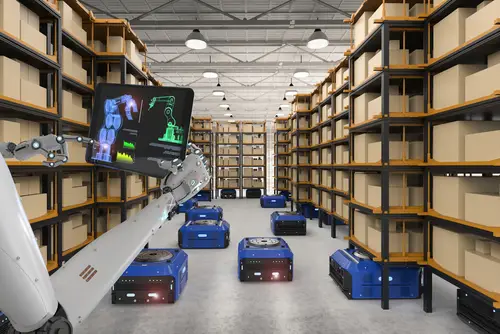
Humanoids don’t get a practice round. The minute they step into a warehouse, interact with humans, or navigate an unstructured environment, we expect them to perform safely, reliably, and without the luxury of trial and error that defined earlier robotics generations.

Despite these high stakes, momentum in the humanoid industry is exciting. Major players are moving from lab prototypes to real commercial pilots, and the early results look promising.

Amazon is piloting Agility’s Digit humanoid robots for material handling at Amazon warehouses, focusing on tote recycling and movement in dynamic environments. In 2022, Agility raised $150M, with Amazon’s Industrial Innovation Fund participating.

Figure’s humanoid robot, Figure 01, completed its first autonomous warehouse task in 2024, picking and placing objects. Figure AI has raised more than $675M from investors including Microsoft, OpenAI, and Nvidia. Meanwhile, Sanctuary’s Phoenix robot has been deployed in retail environments for tasks like stocking shelves and folding clothes, completing a world-first commercial deployment at a Canadian Tire store in 2023.

But these early wins tell only part of the story. Commercial readiness still lags way behind the headlines. Most humanoids today work only under carefully controlled conditions. When they succeed, it’s usually because someone spent weeks tuning the environment to match the robot’s quirks, not because the robot adapted to the real world.

That gap between viral demos and deployable systems is still wide. And companies betting big on humanoid technology are learning that brilliant engineering alone won’t bridge it. You need rock-solid validation systems that prove your robot works before you ship it, not after something goes wrong.

The biggest bottleneck? Real-world testing is brutally expensive and risky. Industry experts estimate that physical robot testing can cost $10,000 to $100,000 per week, according to a 2023 survey of robotics startups. Beyond the expense, real-world environments are inherently limited—no single warehouse, military base, or factory floor can expose a humanoid to the breadth of conditions it will eventually face. And when things go wrong, they go wrong fast. A 2022 OSHA report cited that 40% of warehouse automation incidents involved robots colliding with objects or people.

Smart teams are working around these challenges by leaning hard into simulation, synthetic data, and human-in-the-loop workflows, not as backup plans, but as the foundation of a scalable robotics pipeline that actually works in messy, complicated, human environments.

Key Challenges in Humanoid Robotics

Building deployable humanoids isn’t just a mechanical problem. It’s a systems-level challenge that spans perception, decision-making, human interaction, and safety validation. The hurdles standing between promising prototypes and scalable, field-ready platforms are distinct but interconnected challenges.

Cluttered and unpredictable environments

Human environments are cluttered, inconsistent, and emotionally charged. Imagine a humanoid stepping into a busy warehouse and immediately encountering a spilled box of screws. Someone shouts “Watch out!” from across the floor. A coworker extends a hand, but are they offering or asking for help? These moments happen dozens of times every shift, yet they’re not the dramatic edge cases that make headlines. They’re Monday through Friday realities. Teaching a robot to navigate them is where things get complicated.

Here’s the thing: Industrial robots have it easy. They work in controlled, predictable spaces where everything has its place. But humanoids? They’re stepping into our messy, intuitive world. A warehouse worker spots a tilted pallet and immediately thinks “danger.” A maintenance tech reads someone’s slumped shoulders and knows they need backup. These insights come from years of human experience, the kind of pattern recognition that doesn’t fit neatly into code.

The need for generalists instead of specialists

Most robots today are specialists; they excel at one task under predictable conditions. Humanoids need to be generalists who can switch between tasks, adapt to new layouts, and work with incomplete information. As Pieter Abbeel of Covariant AI has noted, robots typically fail not because they can’t perform a task, but because they struggle to adapt when conditions change even slightly.

Training for this kind of flexibility requires exposure to thousands of scenarios, including the rare and ambiguous ones that break most systems. That’s driving the shift toward synthetic data and curated scenario libraries. Companies like Covariant AI and Boston Dynamics report that up to 80% of their robot training data now comes from simulation and synthetic environments, not real-world trials.

And here’s where it gets tricky, because synthetic data quality makes or breaks everything. The difference between a functional prototype and a deployable humanoid is annotation precision. Your annotators must correctly label every sensor input: LIDAR point clouds, RGB feeds, depth maps, so the robot learns to distinguish between a cardboard box and a crouched human, between someone waving hello and someone signaling distress. It’s not basic labeling work. You need annotators with deep robotics knowledge and an understanding of human behavior patterns.

But annotation precision is just one piece of the puzzle. The generalist challenge goes beyond perception. Humanoids working alongside people need social intelligence, knowing when to pause, when to ask for help, and when to step back entirely. Training for those protocols calls for data that captures how humans actually behave under stress, fatigue, and time pressure. Not easy stuff to synthesize.

The cost and risk of real-world testing

The economics of physical testing create a brutal bottleneck as well. At such high costs, extensive real-world testing quickly becomes a luxury only the most well-funded teams can afford. And those numbers don’t even include the hidden costs, damaged equipment, stalled operations, and even safety incidents that shut down entire facilities.

Cost isn’t the only problem. Real-world testing environments are fundamentally limited. Your single warehouse can’t expose a robot to every lighting condition, floor texture, or human interaction pattern it might encounter across different facilities. A retail pilot can’t capture the full spectrum of customer behaviors or how seasonal merchandise changes affect navigation.

Those examples show exactly why smart teams are turning to simulation as more than just a backup plan. As MIT reports, a 2024 study in Science Robotics found that robots trained with a mix of synthetic and real data performed 30% better in novel scenarios than those trained only on real-world data. The breakthrough insight? Synthetic environments let you systematically explore edge cases that would be rare, expensive, or downright dangerous to recreate physically.

But the catch is that your synthetic data is only as good as the human expertise behind it. Creating realistic scenarios means understanding not just what objects look like, but how they behave under different conditions, how shadows mess with object recognition, how human posture shifts when someone’s exhausted versus alert, and how environmental factors throw off sensor readings. That level of nuance requires expert annotators who get both the technical requirements and the messy realities of deployment.

Simulation limitations and validation gaps

The most advanced robotics teams are pushing beyond basic simulation toward sophisticated digital twin environments that mirror real-world complexity. Boston Dynamics uses a hybrid approach: real-world testing at its Waltham, MA facility and extensive simulation of its Atlas robot’s acrobatic movements, like jumping and navigating obstacles.

But even the most sophisticated simulation needs HITL validation to make sure synthetic training actually translates to human-compatible behavior. In 2024, Figure AI partnered with OpenAI to use large language models for robot planning and HITL review, allowing humans to intervene and provide feedback during ambiguous tasks. This partnership illustrates a broader trend in the industry.

The HITL approach extends far beyond real-time intervention. It’s also critical for comprehensive data curation and labeling. Expert annotators review robot behavior, label edge cases, and provide the contextual understanding that bridges algorithmic decision-making and human expectations. You need annotators who don’t just see what’s happening, but understand what it means for robot safety and performance in the real world.

Covariant AI’s robots use reinforcement learning in simulation, plus human-in-the-loop feedback to correct errors and improve generalization. The human expertise in this loop is less about fixing mistakes and more about encoding a nuanced understanding of human environments into training data that robots can actually learn from.

This approach scales beautifully. Teams can create thousands of scenario variations: lighting changes, obstacle placements, human behavior patterns, and stress-test performance at a massive scale. HITL review sharpens those models further, helping robots learn both to execute tasks and to align with human expectations.

The validation challenge gets even trickier when you consider system-wide reliability. As Gill Pratt, CEO of Toyota Research Institute, has noted, the real world is full of edge cases. You can’t anticipate them all, but you can build systems that learn from them.

So, where do edge cases leave the industry? The path forward is becoming clearer.

What’s Next for Humanoid Robotics

The leap from prototype to product in humanoid robotics isn’t about better joints or faster processors. It’s about nailing the real-world stack: perception, planning, actuation, and human alignment, all working together seamlessly.

Sensor calibration will matter more than ever

Picture a humanoid walking the same hallway 10 times and hitting 10 lighting conditions. Can its vision systems still spot a dropped wrench or tell a crouched worker from a cardboard box? Most current sensor fusion approaches assume you’re working in controlled environments. Real deployment calls for systems that self-calibrate and maintain performance across wildly variable conditions.

Sensor calibration is where high-quality training data becomes critical. Your robots need exposure to thousands of object examples under different lighting, from various angles, in multiple contexts, all precisely labeled by experts who understand the subtle differences that actually matter for robot perception. But even perfect sensors need the right training foundation.

Simulation will continue to scale training and testing

Simulation’s value depends entirely on realism and relevance, making scenario curation based on actual field data and human review a core competency for robotics teams. The numbers back it up: Experts project that the global humanoid robot market will grow from $1.8B in 2023 to $13.8B by 2030, at a CAGR of 33.5%. Teams that can validate performance at scale will capture disproportionate value in this expanding market. All of this progress, however, will require new approaches to validation.

The need for new validation tools is increasing

The ISO 10218 and ISO/TS 15066 standards govern industrial robot safety, but as of 2025, no unified standard exists for humanoids in mixed human-robot environments. As humanoids grow more capable, their potential impact, good or bad, grows with them. Proving your system can recover from unexpected inputs or respond to emergent events isn’t optional. It’s table stakes.

The reality is that innovation is accelerating, but validation tools, coverage metrics, and scalable feedback loops are lagging. Until that gap closes, your deployment will be gated not by what humanoids can do in the lab, but by what they can prove in the field.

The most innovative teams already treat validation as a competitive advantage, not just a compliance headache. They’re using simulation to both train robots and build a systematic understanding of how human-robot collaboration works under pressure. They’re using HITL workflows to both fix errors and encode human intuition into scalable systems.

The companies that dominate this space will be those with access to the highest-quality labeled data, data that captures not just what objects look like but also how they behave, how humans interact with them, and how robots should respond. This level of data quality calls for specialized expertise in data annotation, scenario curation, and human-robot interaction patterns.

Closing Thoughts: Humanoids Outside the Lab

The dream of humanoids helping in hospitals, warehouses, and disaster zones is closer than ever. But we won’t get there by skipping the hard parts. We’ll get there by meeting complexity with clarity, and novelty with rigor.

At DDD, we specialize in high-quality data annotation and human-in-the-loop review that makes safe, reliable humanoid deployment possible. From complex video and sensor data labeling to scenario curation and expert review, we’re here to help your robotics teams build the data foundation systems you need to succeed in real-world environments. If you’re building, testing, or deploying such systems, let’s talk.

Capability alone will not define the next era of robotics. Context, data, and collaboration will, and the time to shape it is now.

Building Better Humanoids: Where Real-World Challenges Meet Real-World Data Read Post »

Fig 2 Autonomy Data Universe APS

Autonomy: Is Data a Big Deal?

By Sahil Potnis

February 13, 2025

Prelude

In the world of cutting-edge technology, from the most simplistic automation to the most advanced Artificial Intelligence (AI) applications – our global corpus of machines emits on average more than 400 million terabytes[1] of data every single day. While it took us ~2.5 million years to harness fire, it merely took us 66 years from the first flight to landing on the moon[2]. This exponential hyper-explosive progress shares its version of success in the area of Autonomy and the impact it has had at a global scale on transportation, manufacturing, defense, and mobility in general. Our evolutionary biology of millions of years from Homo Erectus to Homo Technologies coupled with cognitive adaptation, and muscle memory has helped us learn new skills. Take driving a car for example, a skill that can be easily learned in two days at best! What lies at the heart of this human civilization development is the same micro-unit that trains our machines, robots, and Autonomous Vehicles (AV) – i.e. Data.

The human brain is the most sophisticated neural network. It analyzes patterns within data, aggregates collected experiences, and uses this contextually to make decisions. Autonomous Systems (or Autonomy) do exactly the same – I’m not only talking about the obvious aspect of training neural networks but in fact the entire data value chain necessary to convert a human-supervised application to a fully capable, commercialized, hands-free Autonomous solution. From crafting a smart training data collection strategy, streamlining feedback from the field, and deploying simulation to test at volume (and cheaply so)… every single step in the process radiates niche data that needs to be backward propagated into the product development matrix. A good analogy I can think of is essentially of automotive gear (pun intended), tiny flywheels feeding into bigger flywheels, connected to a driving shaft, and so on. Technology’s time to mature is a direct reflection of this “gearbox efficiency factor” and data plays arguably the most important role as a necessary lubricant.

Let’s double-click on why it is a big deal.

Phase 1: Prove It Works

From “Stanley the robot” winning the 2nd DARPA Grand Challenge[3] in 2005 to Waymo’s consistent market expansion in 2025, our Autonomy index has macro-inflated over the last couple of decades. Productizing research and converting a strong technology conviction into a commercial reality takes a lot of good engineering backed by a strong data signal. In my decade’s worth of first-hand exposure to this evolution, we very rarely see an automotive platform designed specifically for Autonomy in its first iteration. It takes several hits (and misses) to figure out the sensor suite, compute requirements, driving controls, and data format to build a true system that can lift off and generate meaningful results. Not to neglect the complicated supply chain and logistics behind this massive uphill engineering task. The landscape is shifting positively with more purpose-built platforms for autonomous driving that are equipped to provide SAE L2-L3[4] support functions, with an extended scope to integrate L4-L5 automated driving levels further via strategic technology partnerships.

New platform bring-up activities get simpler iteratively as the output data becomes more rich and meaningful to the Autonomy development. Problems start shifting from sensor point cloud density, basic vehicular controls, and task latency to more so of raw driving behavior. Viola! There we have our first prototype, traversing a straight line or a small loop from A to B without any human intervention on the closed course. This all is way simplified of course to keep the length of the article in check – point being, the gritty picture it paints is clear on how packaging and structuring data from the get-go is critically transformative in building prototypes. Bench development of individual components has become more organized with state-of-the-art hardware-software integration (HSI) tools, calibration is more routine than a research process, and it takes much less effort to plug and play ROS output data into a neat visualization application than developing one from scratch, off the shelf data ingest and management solutions are plenty, etc.

General purpose technologies like cloud engineering, data pipelines, web GPUs, and full stack development have solidified to help us solve the real Autonomy problem. Foundational data models and GenAI are taking us multi-step further in real-world behavior interpretation. This is how we keep riding new technology waves. The ecosystem of data experts is stronger than ever, taking us to the next segment – now that you have data at your fingertips, how do you optimize engineering operations to move measurably quicker and build a verifiable, launch-worthy product?

Phase 2: Develop. Fail. Learn and Repeat.

I remember almost a year back, a horse galloping on I-95 made headlines[5] across the US. Now imagine an autonomous truck driving at 70 MPH next to it. Do you think its Perception stack can handle this situation? We or at least the Equus caballus most certainly would hope so! It’s a no-brainer that as humans, we will slow down or lane change and get further away from the stray horse to reduce the probability of conflict. The autonomous truck in our hypothetical example need not have a hyper-specific response to such a situation as long as it can safely, and predictably handle anomalies. These longtail scenarios or edge cases are true gold for data-driven ML Model Development.

Screenshot+2025 02 13+at+8.31.25%E2%80%AFPM

The above-simplified flow chart is true for supervised learning systems where the starting step is to figure out which model attributes need attention. Further, that decision gets multiplexed into a structured data collection >> curation >> annotations strategy. The opportunity (time) cost of this process is invariably high and hence a scientific approach to this data-driven effort-impact problem is a must. Material advancements in the availability of nuanced annotation tooling platforms with technical solutions as offered by companies like DDD have made this process highly predictable, cost: quality efficient, and democratized. Similar to the ML model development proposition, a few other data-centric areas remain critically important to talk about. Let’s take a couple of examples.

Performance Evaluation: Feedback from the field is indispensable for any learned behavior system, especially Autonomy. In a nutshell, performance evaluation refers to: a frequent activity of aggregating output from a range of test modalities (simulation, test track, public roads, HIL benches) into a crystallized set of priorities to improve the product performance. This involves predictive analysis, what-if scenarios, and data-driven failure defect management to remove any delays in improving the system’s performance. I truly believe that for any Autonomy product to succeed, its performance evaluation strategy needs to be spot on, else countless cycles are wasted in figuring out how to measure performance, what problems to fix, by when, and why.

Simulation Operations: Another complementary area or the flywheel we referred to earlier is, Simulation. Refers to: a product for simulating the true physical world representation of any system in a digital environment. Millions and billions of scenarios can be simulated in a shorter period of time, the number being the less important part compared to the time. Companies providing simulation tech as a service or platform have greatly appreciated the product-worthy nature of this vertical. From the primitive synthetic sim to advanced neural sims, the goal all along is to build solid evidence for proving the verifiability of the AI system. Top of the line players have figured out how to – build the sim engine, scale infrastructure, spawn out analysis workstreams, converge back the learnings, and finally, improve the product.

Machine Learning Model Development, Performance Evaluation,and Simulation are the top three continuous learning feedback loops which in my opinion remain fundamental to developing a safer, predictable autonomous product. The job however is not done yet, transferring this tech into the hands of the end user remains a key step and a long(er) pole than some of us had originally anticipated.

Autonomy Data Universe APS?format=original

Phase 3: The Launch

Operational muscle helps catapult Autonomy’s commercial deployment after the technology is ready for a launch. Locking in the operational recipe serves a very important role when it comes down to a holistic “all systems ready for launch” program status. Taking a step back, in the last 5 years or so, vertical integration of the commercial model has nicely shaped and taken priority frankly compared to the over-emphasized silos of early market entry advantage. This has led OEMs, Tier-1 suppliers, ridesharing platforms, and technology champions to partner together, overall diversifying the deployment risk. Data is at the forefront of planning such joint fleet operations – from command (control) center management, remote assistance, or planning a normalized exposure of your product to the target Operational Design Domain (ODD). I have massive respect for the teams managing CONOPS, and field support services to preserve the business continuity for applications like robotaxis. A substantial variable of this equation is a Human-Robot UXR problem, and data once again is a key catalyst in solving for the unknowns.

From the simplest of fleet management problems to the more involved ODD expansion needs, Autonomy development and its necessary commercialization are backed by data – tools that ingest the data – workforces that transform the data – and engineers who act on the data. We have made great strides in these areas over the past several years, but the job is surely not done yet.

In Conclusion

Data-driven development is more than just an acceptance that data is the key enabler for building Autonomy, it’s the actuality of building necessary infrastructure (tech + people) required to cycle through the data, selectively and with the right judgment to propel the progress.

DDD’s Autonomy Solutions are here to help you accelerate meeting the ends and making a quicker impact. We’re onward to something new that’s more exciting and cutting-edge in the coming days. Get in touch and don’t miss out!

Is data a big deal? Most certainly so.

Reference Links

  1. Amounts of Data Generated Per Day Stats

  2. World Economic Forum: Fast Pace of Tech Transformation

  3. Stanley: The Robot That Won the DARPA Grand Challenge

  4. SAE J3016 Levels of Driving Automation

  5. I-95 horse is back ‘safe’ at Philly stables

Autonomy: Is Data a Big Deal? Read Post »

Gen2BAI2Bchallenges

Major Gen AI Challenges and How to Overcome Them

By Umang Dayal

January 8, 2025

Generative AI has emerged as a revolutionary tool that automates creative tasks previously achievable only with human intervention. By leveraging advanced machine learning algorithms, Generative AI offers businesses unprecedented opportunities to boost productivity, enhance efficiency, and reduce costs.

Companies are integrating Gen AI into various processes, from generating content to optimizing workflows. However, implementing Generative AI brings challenges that need to be addressed beforehand.

In this blog, we’ll explore Gen AI challenges that businesses face when implementing this technology and how you can overcome these challenges.

What is Generative AI?

Generative AI refers to a class of advanced algorithms designed to create realistic outputs such as text, images, audio, and videos, based on patterns detected in training data. These models are often built on foundation models, which are large, pre-trained neural networks capable of handling multiple tasks after fine-tuning. Training these models involves analyzing massive amounts of data in an unsupervised manner, enabling them to recognize complex patterns and generate creative outputs across diverse applications.

For example:

Chat GPT is a foundation model trained on extensive text datasets, enabling it to answer queries, summarize text, perform sentiment analysis, and more.

DALL-E is another foundation model, specializes in generating images based on textual input. It can create entirely new visuals, expand existing images beyond their original dimensions, or even produce variants of famous artworks.

These examples demonstrate the versatility of Generative AI in mimicking human creativity across various capabilities.

Key Generative AI Challenges 

Here are the primary issues businesses face when implementing Gen AI for data generation and content creation.

Data Security Risks

Generative AI systems handle vast amounts of sensitive data, which makes data security a critical concern. To address these risks, businesses must ensure robust security measures, including encryption, secure APIs, and compliance with international data protection standards like GDPR.

The March 2023 ChatGPT outage highlighted this risk when a flaw in an open-source library allowed users to access other users’ chat histories and payment information. This incident raised alarm over the privacy implications of AI systems and led to temporary bans, such as the one imposed by Italy’s National Data Protection Authority.

Intellectual Property Concerns

Generative AI tools like ChatGPT and DALL-E use consumer-provided data for model training. While this allows these tools to improve, it also raises questions about intellectual property ownership. For instance, when users provide proprietary or confidential data, there’s a risk it could be incorporated into AI models and potentially reused or redistributed.

Organizations must carefully review terms of service and establish clear policies to prevent misuse of proprietary data and avoid potential legal disputes over IP rights.

Biases and Errors in AI Models

AI models are only as reliable as the data they are trained on. If training data contains inaccuracies, biases, or outdated information, these flaws are reflected in the outputs.

Generative AI systems can inadvertently reinforce stereotypes, produce misleading content, or generate incorrect information. This issue becomes particularly problematic in critical applications such as healthcare or legal industries, where errors can have severe consequences. Regular audits, diverse datasets, and ethical AI frameworks are essential to mitigate these risks.

Dependency on Third-Party Platforms

Relying on external AI platforms poses strategic risks for businesses. These platforms may change their pricing models, discontinue services, or can be banned in certain regions. Furthermore, the rapid evolution of AI technology means that a platform suitable today might be outperformed by competitors tomorrow. To minimize these risks, companies should explore hybrid approaches, such as combining third-party tools with in-house AI development, to retain flexibility and control.

Organizational Resistance and Training Needs

Integrating AI into corporate workflows often requires significant changes to processes, infrastructure, and employee roles. These changes can meet resistance from staff concerned about job displacement or increased complexity in their tasks.

Effective implementation demands extensive training programs to familiarize employees with AI tools and demonstrate how these technologies can complement, rather than replace, their roles. Change management strategies, open communication, and leadership support are key to overcoming resistance and ensuring successful adoption.

Data Quality Issues

Generative AI systems rely on large volumes of high-quality data to produce accurate and meaningful outputs. However, managing such data is a complex task. Inaccurate, incomplete, or biased datasets can lead to flawed AI models, resulting in poor performance and potentially harmful outcomes. Ensuring data quality requires rigorous validation processes, regular updates, and adherence to ethical standards in data collection and curation.

To resolve this issue you can hire a data labeling and annotation company that prioritizes delivering high quality and combines automation and a human-in-the-loop approach.

Data Privacy Compliance

The use of sensitive data in AI systems raises significant privacy concerns. Laws like GDPR, CCPA, and others impose strict requirements on data collection, storage, and processing.

Non-compliance can result in hefty fines and reputational damage. Companies must implement robust data governance frameworks, including anonymization techniques, access controls, and regular audits, to ensure compliance and protect user data.

Ethical and Regulatory Challenges

The rapid adoption of AI has sparked ethical debates about transparency, accountability, and fairness. Generative AI tools must provide clear explanations for their decisions to ensure trust and avoid discriminatory outcomes.

Regulatory frameworks like GDPR’s “right to explanation” and the Algorithmic Accountability Act mandate transparency and fairness in AI systems. Businesses must stay informed about evolving regulations and adopt ethical AI practices to navigate this complex landscape effectively.

Risk of Technical Debt

If not implemented strategically, Generative AI can contribute to technical debt, where systems become outdated or inefficient over time. For instance, using AI solely for minor workload reductions without a broader strategy can result in limited returns and increased operational complexity.

To avoid technical debt, businesses must align AI adoption with long-term objectives and ensure that implementations deliver meaningful and sustainable value.

Overcome Gen AI Challenges 

The adoption of generative AI is still in its early stages, but businesses can take proactive steps to establish responsible AI governance and accountability. By laying a strong foundation in the beginning, companies can address the ethical, legal, and operational challenges associated with generative AI while leveraging its transformative potential.

Where to Start

To create effective governance frameworks for generative AI, organizations should evaluate critical questions across multiple functions, ensuring a collaborative approach.

Key areas to address include:

1. Risk Management, Compliance, and Internal Audit

  • What governance frameworks, policies, and procedures are necessary to guide the ethical use of generative AI?

  • What risks should the business monitor, and what controls need to be implemented for safe AI deployment?

2. Legal Considerations

  • What data and intellectual property (IP) can or should be used in generative AI prompts?

  • How can the organization safeguard IP created using generative AI?

  • What contractual terms should be in place to protect sensitive data and ensure compliance?

3. Public Affairs

  • What strategies are in place to mitigate potential external misuse of generative AI that could harm the company’s reputation?

4. Regulatory Affairs

  • What are industry regulators saying about generative AI, and how should the organization align with these guidelines?

5. Business Stakeholders

  • How might the organization leverage generative AI across different functions, and what risks should be anticipated?

  • What measures can be implemented to track AI-generated content by internal and contingent workers?

  • How can employees be educated about the benefits and risks of generative AI?

Building a Governance Framework

Based on the insights gathered, organizations can create a governance structure to guide ethical and strategic decision-making. This framework should include:

  • Principles for Ethical AI Use: Develop clear guidelines aligned with the regulatory landscape to ensure responsible AI usage.

  • Digital Literacy Initiatives: Invest in improving organizational understanding of advanced analytics, fostering confidence in generative AI capabilities.

  • Automated Workflows and Validations: Implement tools to enforce AI standards throughout the development and production lifecycle.

Moving Forward with a Responsible AI Program

Once a governance framework is in place, organizations can focus on actionable steps to initiate the responsible use of generative AI:

  • Identify Stakeholders: Bring together representatives from relevant departments to provide oversight and input on generative AI initiatives.

  • Educate the Workforce: Offer training to build awareness of generative AI’s potential, benefits, and associated risks.

  • Develop an Internal Perspective: Encourage teams to explore how generative AI could be applied within their functions while maintaining a focus on ethical considerations.

  • Prioritize Risks: Assign ownership of identified risks to stakeholder groups, ensuring accountability across the AI lifecycle.

  • Align with Governance Principles: Embed governance principles into AI workflows to guide responsible use and compliance with regulatory requirements.

Read more: Gen AI for Government: Benefits, Risks and Implementation Process

How Can We Help?

At Digital Divide Data (DDD), we understand the complexities and challenges businesses face when adopting generative AI. With a focus on delivering superior data quality, ethical AI practices, and tailored strategies, we provide the expertise and resources you need to succeed.

The foundation of any successful generative AI application is high-quality data. Our data experts specialize in curating, generating, annotating, and evaluating custom datasets to meet your unique AI objectives. Whether you’re starting from scratch or enhancing an existing model, we ensure your data is accurate, diverse, and representative of real-world scenarios.

We focus on superior data quality, so you can focus on AI innovation.

Read more: Prompt Engineering for Generative AI: Techniques to Accelerate Your AI Projects

Final Thoughts

As generative AI capabilities grow, so does the importance of ensuring that its use is guided by transparent governance and ethical standards. By fostering digital literacy and building trust in AI-driven outcomes, organizations can fully utilize the potential of generative AI while mitigating risks. The ultimate goal is to balance innovation with responsibility, ensuring that AI adoption aligns with organizational values, customer expectations, and regulatory demands.

Contact us to learn how our expertise in data quality and customized solutions can empower your generative AI journey.

Major Gen AI Challenges and How to Overcome Them Read Post »

High-Quality Training Data for Autonomous Vehicles in 2023

By Aaron Bianchi
May 8, 2023

Self-driving or autonomous vehicles are one of the most fascinating applications of machine learning and artificial intelligence. These vehicles are able to navigate and drive without human intervention. But how do autonomous vehicles learn to drive?

The answer is, with lots and lots of data. How is this training data obtained? Who can help you gather high-quality training data for autonomous vehicles in 2023? In this guide, we’ll discuss all of that. So, let’s begin!

What is meant by Training Data?

When we talk about training data, we’re talking about a specific set of data that’s used to train a machine learning model. This data is used to teach the model (in this case, the technology used in autonomous vehicles) what to look for and how to make predictions. The training data is a collection of examples that the autonomous vehicle uses to learn. Each training example includes a set of input values (known as features) and a corresponding set of output values (known as labels).

The vehicle looks at the training data and “learns” the relationship between the input features and the output labels. Once it has learned this relationship, it can then be used to make predictions on new data.

It’s important to note that the autonomous vehicle can only learn from the training data. If there is no training data, then the model will not be able to learn anything. The quality of the training data is very important. If the training data is of poor quality, then the model will not be able to learn anything useful. In summary, training data is a specific set of data that’s used to train a machine learning model.

Importance of Training Data for Autonomous Vehicles

As the development of autonomous vehicles continues, the importance of high-quality training data becomes increasingly apparent. In order to ensure that autonomous vehicles are able to operate safely and effectively, it is essential that they are trained on a variety of data that is representative of the real world.

There are a number of factors that need to be considered when collecting training data for autonomous vehicles. First, the data must be of high quality in order to accurately represent the real world. Second, the data must be diverse in order to account for different scenarios that the vehicle may encounter. Finally, the data must be representative of the areas in which the autonomous vehicle will be operated.

High-quality training data is essential for the development of autonomous vehicles because of the following reasons:

  1. Autonomous Vehicles Can’t Operate Without Accurate Data
    Without accurate data, autonomous vehicles will not be able to learn how to properly operate in the real world. In order to ensure that the data is of high quality, it is important to use data that has been collected from a variety of sources. This will ensure that the data is representative of the real world and will not be biased in any way.

  2. Training Data Helps Vehicles Navigate Different Situations
    In addition to being of high quality, the training data must also be diverse. This is because autonomous vehicles need to be able to learn how to handle a variety of different situations. The data must be representative of different weather conditions, terrain, and traffic patterns. By having a diverse set of data, autonomous vehicles will be able to learn how to properly operate in a variety of conditions.

  3. Training Data Helps Vehicles With Specific Rules
    The training data must be representative of the areas in which the autonomous vehicle will be operated. This is because the vehicle needs to be able to learn the specific rules and regulations of the area in which it will be driving. By having data that is representative of the area, the autonomous vehicle will be able to learn the rules and regulations that are specific to that area.

Collecting high-quality, diverse, and representative training data is essential for the development of autonomous vehicles.

Where does Training Data come from?

When it comes to machine learning, data is key. Without data, there can be no training, and without training, there can be no machine learning. So where does this training data come from?

There are a few different ways to get training data. The first is to simply collect it yourself. This is often referred to as data scraping, and it can be a very tedious and time-consuming process. However, it can also be very rewarding, as you have complete control over the data that you collect.

Another way to get training data is to purchase it from a data provider. This is usually much easier and faster than collecting it yourself, but it can be quite expensive.

Finally, you can also use public data sets. These are data sets that have been made available by governments or other organizations for anyone to use. There are many different public data sets out there, and they can be very helpful for training machine learning models.

What Technology is Used to Gather Training Data?

Autonomous driving training data is used to teach self-driving cars how to navigate roads and traffic. This data is collected through a process called sensor fusion, which involves combining data from various sensors (including cameras, lidar, and radar) to build a comprehensive picture of the car’s surroundings.

  • LiDAR: LiDAR (Light Detection and Ranging) is a remote sensing technology that uses laser pulses to measure distance. This information can then be used to create 3D maps of the area being surveyed. LiDAR can be used to measure the distance to objects, as well as their shape, size, and other characteristics. This information can be used to create 3D models of the area being surveyed. The technology is used for a variety of applications, including mapping the surface of the Earth, measuring the height of trees, and surveying land for archaeological sites and is helpful for autonomous vehicles.

  • Radar: Radar technology is used extensively in data training. It is basically a technology that uses radio waves to identify objects and measure their distance, speed, and other characteristics. It provides such information about the target object that is being tracked. Radar technology can be used to track both moving and stationary objects.

  • Camera: Another method that can help with data training is the use of cameras to take pictures of various objects. These pictures can then be used to train the model. This can be done with a variety of different types of cameras, including traditional cameras, infrared cameras, and X-ray cameras.

Data Annotation Types for Autonomous Vehicles

Data annotation is the process of labeling data to provide context and enable machines to understand it. This is a critical step in training autonomous vehicles, as it allows the vehicles to learn from and make decisions based on data that has been specifically labeled for that purpose. Once the data has been labeled, it can be used to train the autonomous vehicle algorithms. This process is typically done with a supervised learning approach, where the labeled data is used to train a model that can then be applied to new data. This allows the autonomous vehicle to learn from and make decisions based on real-world data, rather than just simulated data.

Data annotation is a critical part of training autonomous vehicles, and it is important to ensure that the process is done accurately and with high quality data. Here are some data annotation and labeling tools used in the autonomous vehicle industry:

  • 2D Boxing: This is a process of creating a virtual box around an object in order to better track its movements. This is especially important for autonomous vehicles, as they need to be able to accurately track the movements of other objects in order to avoid collisions. There are a few different methods of 2D boxing, but the most common is to use lasers to create the box.

    2D boxing can be used to track the movements of multiple objects at the same time. This is important for avoiding collisions, as the vehicle will be able to see the movements of all of the objects in its vicinity.

  • Polygon: For precise object detection and positioning in images and videos, polygon is employed. Polygon is more accurate than 2D boxing, but it can be a time consuming process and costs more money. It’s especially useful when the objects are complex and irregular.

  • 3D Cuboids: This is similar to 2D boxing, but as the name suggests, the process creates 3D cuboids around objects. An anchor point is placed at each edge of the item after the annotator forms a box around it. Based on the characteristics of the item and the angle of the picture, the annotator makes an informed guess as to where the edge may be if it is absent or blocked by another object.

  • Video annotation: This can be done by adding labels to specific frames or regions of frames. Video annotation is widely used for autonomous vehicles in the driving prediction models as it helps track objects in a constant series of images.

  • Semantic Segmentation: This technology identifies objects in their environment. Semantic segmentation is a technique that uses artificial intelligence to classify each pixel in an image. This allows the vehicle to distinguish between different objects, such as cars, pedestrians, and traffic signs. Semantic segmentation requires a large amount of data to train the algorithms that identify objects.

  • Lines and Splines: Lines and splines are used to create a virtual map of the area around the vehicle. The map is then used by the vehicle’s computer to navigate. These lines and splines are created by sensors on the autonomous vehicle. The sensors send data to the computer that is then used to create the map.

  • 3D point cloud: 3D point cloud is a technology used in autonomous vehicles to create a three-dimensional map of the environment. LiDAR sensors are used to scan the environment and create a point cloud. The point cloud is then used to create a three-dimensional model of the environment that the autonomous vehicle can use to navigate. This helps vehicles plan their route and avoid obstacles.

How to Get Training Data for Autonomous Driving?

If you want to get training data for autonomous driving, there are a few options available to you. You can either purchase it from a data provider, or collect it yourself.

If you choose to purchase data, there are a few things to keep in mind:

  • Make sure that the data is of high quality and has been collected from a variety of different environments.

  • Consider the cost of the data. It can be expensive to purchase large amounts of high-quality data.

If you decide to collect data yourself, you must understand the following:

  • You will need to have a vehicle that is equipped with the necessary sensors for collecting data.

  • You will need to drive in a variety of different environments to collect data from.

  • You should have proper technology to label the data that you collect.

This entire process can be time-consuming and full of hurdles. It’s not easy to collect and label data, especially for autonomous driving where there can be no room for error. One mistake can eventually cost lives, which is why it’s important to know the challenges of collecting this data on your own.

Challenges of Collecting Training Data On Your Own

  1. One of the challenges of collecting training data is that it must be diverse enough to cover all potential driving scenarios. This means that data must be collected in a wide variety of locations and conditions, including both urban and rural areas, and in all weather conditions.

  2. Another challenge is that data must be collected continuously over time in order to capture changes in the environment, such as new construction or road closures. This can be a difficult and expensive proposition.

  3. High quality and accurate data is needed for rare events or extreme conditions in order to make autonomous driving error-free. This can be tough if done individually.

It’s best to weigh both options before narrowing down on one as this decision of how to obtain your training data for autonomous vehicles can have big consequences.


DigitalDivideData as a Reliable Data Labeling Partner

As you can see, gathering training data for autonomous cars isn’t a piece of cake. Not only does the data need to be of high-quality, but it should also be collected using all kinds of annotations for various scenarios and objects. Another important factor is maintaining the timely inflow of data to speed up the process of building your autonomous vehicle.

Digital Divide Data can provide your business with all of this. With a qualified team of highly-skilled tech professionals and data scientists, you’ll not have any doubts about the source and quality of your data. Get in touch with us for your data labeling and training needs.

High-Quality Training Data for Autonomous Vehicles in 2023 Read Post »

DDD ADAS Data 1

High-Quality Training Data for Autonomous Vehicles in 2023

By Aaron Bianchi
May 8, 2023

Self-driving or autonomous vehicles are one of the most fascinating applications of machine learning and artificial intelligence. These vehicles are able to navigate and drive without human intervention. But how do autonomous vehicles learn to drive?

The answer is, with lots and lots of data. How is this training data obtained? Who can help you gather high-quality training data for autonomous vehicles in 2023? In this guide, we’ll discuss all of that. So, let’s begin!

What is meant by Training Data?

When we talk about training data, we’re talking about a specific set of data that’s used to train a machine learning model. This data is used to teach the model (in this case, the technology used in autonomous vehicles) what to look for and how to make predictions. The training data is a collection of examples that the autonomous vehicle uses to learn. Each training example includes a set of input values (known as features) and a corresponding set of output values (known as labels).

The vehicle looks at the training data and “learns” the relationship between the input features and the output labels. Once it has learned this relationship, it can then be used to make predictions on new data.

It’s important to note that the autonomous vehicle can only learn from the training data. If there is no training data, then the model will not be able to learn anything. The quality of the training data is very important. If the training data is of poor quality, then the model will not be able to learn anything useful. In summary, training data is a specific set of data that’s used to train a machine learning model.

Importance of Training Data for Autonomous Vehicles

As the development of autonomous vehicles continues, the importance of high-quality training data becomes increasingly apparent. In order to ensure that autonomous vehicles are able to operate safely and effectively, it is essential that they are trained on a variety of data that is representative of the real world.

There are a number of factors that need to be considered when collecting training data for autonomous vehicles. First, the data must be of high quality in order to accurately represent the real world. Second, the data must be diverse in order to account for different scenarios that the vehicle may encounter. Finally, the data must be representative of the areas in which the autonomous vehicle will be operated.

High-quality training data is essential for the development of autonomous vehicles because of the following reasons:

  1. Autonomous Vehicles Can’t Operate Without Accurate Data
    Without accurate data, autonomous vehicles will not be able to learn how to properly operate in the real world. In order to ensure that the data is of high quality, it is important to use data that has been collected from a variety of sources. This will ensure that the data is representative of the real world and will not be biased in any way.

  2. Training Data Helps Vehicles Navigate Different Situations
    In addition to being of high quality, the training data must also be diverse. This is because autonomous vehicles need to be able to learn how to handle a variety of different situations. The data must be representative of different weather conditions, terrain, and traffic patterns. By having a diverse set of data, autonomous vehicles will be able to learn how to properly operate in a variety of conditions.

  3. Training Data Helps Vehicles With Specific Rules
    The training data must be representative of the areas in which the autonomous vehicle will be operated. This is because the vehicle needs to be able to learn the specific rules and regulations of the area in which it will be driving. By having data that is representative of the area, the autonomous vehicle will be able to learn the rules and regulations that are specific to that area.

Collecting high-quality, diverse, and representative training data is essential for the development of autonomous vehicles.

Where does Training Data come from?

When it comes to machine learning, data is key. Without data, there can be no training, and without training, there can be no machine learning. So where does this training data come from?

There are a few different ways to get training data. The first is to simply collect it yourself. This is often referred to as data scraping, and it can be a very tedious and time-consuming process. However, it can also be very rewarding, as you have complete control over the data that you collect.

Another way to get training data is to purchase it from a data provider. This is usually much easier and faster than collecting it yourself, but it can be quite expensive.

Finally, you can also use public data sets. These are data sets that have been made available by governments or other organizations for anyone to use. There are many different public data sets out there, and they can be very helpful for training machine learning models.

What Technology is Used to Gather Training Data?

Autonomous driving training data is used to teach self-driving cars how to navigate roads and traffic. This data is collected through a process called sensor fusion, which involves combining data from various sensors (including cameras, lidar, and radar) to build a comprehensive picture of the car’s surroundings.

  • LiDAR: LiDAR (Light Detection and Ranging) is a remote sensing technology that uses laser pulses to measure distance. This information can then be used to create 3D maps of the area being surveyed. LiDAR can be used to measure the distance to objects, as well as their shape, size, and other characteristics. This information can be used to create 3D models of the area being surveyed. The technology is used for a variety of applications, including mapping the surface of the Earth, measuring the height of trees, and surveying land for archaeological sites and is helpful for autonomous vehicles.

  • Radar: Radar technology is used extensively in data training. It is basically a technology that uses radio waves to identify objects and measure their distance, speed, and other characteristics. It provides such information about the target object that is being tracked. Radar technology can be used to track both moving and stationary objects.

  • Camera: Another method that can help with data training is the use of cameras to take pictures of various objects. These pictures can then be used to train the model. This can be done with a variety of different types of cameras, including traditional cameras, infrared cameras, and X-ray cameras.

Data Annotation Types for Autonomous Vehicles

Data annotation is the process of labeling data to provide context and enable machines to understand it. This is a critical step in training autonomous vehicles, as it allows the vehicles to learn from and make decisions based on data that has been specifically labeled for that purpose. Once the data has been labeled, it can be used to train the autonomous vehicle algorithms. This process is typically done with a supervised learning approach, where the labeled data is used to train a model that can then be applied to new data. This allows the autonomous vehicle to learn from and make decisions based on real-world data, rather than just simulated data.

Data annotation is a critical part of training autonomous vehicles, and it is important to ensure that the process is done accurately and with high quality data. Here are some data annotation and labeling tools used in the autonomous vehicle industry:

  • 2D Boxing: This is a process of creating a virtual box around an object in order to better track its movements. This is especially important for autonomous vehicles, as they need to be able to accurately track the movements of other objects in order to avoid collisions. There are a few different methods of 2D boxing, but the most common is to use lasers to create the box.

    2D boxing can be used to track the movements of multiple objects at the same time. This is important for avoiding collisions, as the vehicle will be able to see the movements of all of the objects in its vicinity.

  • Polygon: For precise object detection and positioning in images and videos, polygon is employed. Polygon is more accurate than 2D boxing, but it can be a time consuming process and costs more money. It’s especially useful when the objects are complex and irregular.

  • 3D Cuboids: This is similar to 2D boxing, but as the name suggests, the process creates 3D cuboids around objects. An anchor point is placed at each edge of the item after the annotator forms a box around it. Based on the characteristics of the item and the angle of the picture, the annotator makes an informed guess as to where the edge may be if it is absent or blocked by another object.

  • Video annotation: This can be done by adding labels to specific frames or regions of frames. Video annotation is widely used for autonomous vehicles in the driving prediction models as it helps track objects in a constant series of images.

  • Semantic Segmentation: This technology identifies objects in their environment. Semantic segmentation is a technique that uses artificial intelligence to classify each pixel in an image. This allows the vehicle to distinguish between different objects, such as cars, pedestrians, and traffic signs. Semantic segmentation requires a large amount of data to train the algorithms that identify objects.

  • Lines and Splines: Lines and splines are used to create a virtual map of the area around the vehicle. The map is then used by the vehicle’s computer to navigate. These lines and splines are created by sensors on the autonomous vehicle. The sensors send data to the computer that is then used to create the map.

  • 3D point cloud: 3D point cloud is a technology used in autonomous vehicles to create a three-dimensional map of the environment. LiDAR sensors are used to scan the environment and create a point cloud. The point cloud is then used to create a three-dimensional model of the environment that the autonomous vehicle can use to navigate. This helps vehicles plan their route and avoid obstacles.

How to Get Training Data for Autonomous Driving?

If you want to get training data for autonomous driving, there are a few options available to you. You can either purchase it from a data provider, or collect it yourself.

If you choose to purchase data, there are a few things to keep in mind:

  • Make sure that the data is of high quality and has been collected from a variety of different environments.

  • Consider the cost of the data. It can be expensive to purchase large amounts of high-quality data.

If you decide to collect data yourself, you must understand the following:

  • You will need to have a vehicle that is equipped with the necessary sensors for collecting data.

  • You will need to drive in a variety of different environments to collect data from.

  • You should have proper technology to label the data that you collect.

This entire process can be time-consuming and full of hurdles. It’s not easy to collect and label data, especially for autonomous driving where there can be no room for error. One mistake can eventually cost lives, which is why it’s important to know the challenges of collecting this data on your own.

Challenges of Collecting Training Data On Your Own

  1. One of the challenges of collecting training data is that it must be diverse enough to cover all potential driving scenarios. This means that data must be collected in a wide variety of locations and conditions, including both urban and rural areas, and in all weather conditions.

  2. Another challenge is that data must be collected continuously over time in order to capture changes in the environment, such as new construction or road closures. This can be a difficult and expensive proposition.

  3. High quality and accurate data is needed for rare events or extreme conditions in order to make autonomous driving error-free. This can be tough if done individually.

It’s best to weigh both options before narrowing down on one as this decision of how to obtain your training data for autonomous vehicles can have big consequences.


DigitalDivideData as a Reliable Data Labeling Partner

As you can see, gathering training data for autonomous cars isn’t a piece of cake. Not only does the data need to be of high-quality, but it should also be collected using all kinds of annotations for various scenarios and objects. Another important factor is maintaining the timely inflow of data to speed up the process of building your autonomous vehicle.

Digital Divide Data can provide your business with all of this. With a qualified team of highly-skilled tech professionals and data scientists, you’ll not have any doubts about the source and quality of your data. Get in touch with us for your data labeling and training needs.

High-Quality Training Data for Autonomous Vehicles in 2023 Read Post »

Computer Vision Hero Image

Everything You Need To Know About Computer Vision

Computer Vision Hero Image

By Aaron Bianchi
Updated May 2, 2023

If you’re looking for extra security for your home via installation of facial recognition on your doorstep, you’re not alone. The good news? It’s possible. And that’s not all. Computer vision can do a lot more in every area of your life.

There have been constant developments in artificial intelligence, deep learning and neural networks in recent years. Computer vision has made it possible to detect and label objects, being able to accomplish tasks that humans can’t.

Seems like computers are our best friends and can make our lives easier, more entertaining and more secure. Let’s find out what computer vision is, how it works and how you can use it to enhance your everyday life.

What is Computer Vision?

Computer vision is a technology of computer science that focuses on human vision and its replication in order to help computers see and identify objects around them, just like human beings do. In simpler words, computer vision is like replicating the functions of the human eye in a computer.

Remember we talked about face recognition technology right at the beginning of the article? That’s one of the things computer vision enables. It allows phone companies and smart home devices to use facial recognition as a measure of security.

Where did it all begin? 1950s! Yes, that’s how old computer vision is but its growth in recent years has been phenomenal. Back in those days (70s and 80s), it was used to differentiate typed text from handwritten text.

How does it even work? How is computer vision able to detect objects? Let’s find the answer to this and put all curiosity to rest.

How Does Computer Vision work?

This question is like asking how the human brain works. The field of neuroscience has forever been intrigued by how complex our brains are and how they work. Machine learning asks the same question and works in the answer to develop this field of computer science.

Now we all know that brains aren’t easy to study and even science doesn’t have all the answers yet on the exact way images are processed in the brain. This is why computer vision works on what we do know: recognizing patterns.

So how does the computer learn to recognize an image? It all gets down to understanding the complexity of pixels and colors. In simple words, if you feed an algorithm with millions of images of a book, a set of machine learning algorithms will help it analyze the colors, shapes and the relative distance between objects. This helps the computer understand what a “book” is based on the types of data sets. Once done, this computer will be able to recognize books from images that are fed into it in the future.

Let’s break it down into steps. Here’s what a computer does:

  • Acquire an image

  • Process the image

  • Understand the image

Advantages of Computer Vision

Computer vision benefits both the public and the private sector in various ways.

  1. Better Searching Methods

    Let’s talk about the advertising industry. Digital advertising mainly relied on keywords and tags. While the method works it’s not cent percent efficient. After the introduction of computer vision to this sector, results got a lot better.Instead of relying on traditional tags, computer vision compares the actual physical characteristics of a specific image. Because of this, people are able to search for exactly what they’re looking for by using a photo to find “similar products”.

  2. Better User Experience

    Those filters that transform your face on Snapchat and Instagram are a result of computer vision! With the use of facial mapping and augmentation, computer vision makes it possible to create such features on apps.

  3. Patient Identification And Better Medical Procedures

    Computer vision improves patient identification thereby preventing wrong person procedures. One can also expect a more accurate diagnosis via medical imaging analysis. From surgery training assistance to patient rehabilitation assistance, computer vision helps the medical field to achieve goals that were once far-fetched.

    The contribution of computer vision to the medical field is quite a boon. Here are some examples of how it helps:

    • Patient rehabilitation assistance.

    • Medical students training.

    • Patient identification.

  4. Better Security

    Computer vision works with cyber security systems to monitor any remote activity. This can be done from anywhere which makes it easier to recognize and analyze potential cyber threats and prevent them from happening.

    Here are some ways in which computer vision is used:
    • Biometrics for identification.
    • Security cameras.
    • Vehicle identification in instances of car theft.
    • AI fire detection that helps detect fires in buildings by taking images or videos.

  5. Transport Safety

    Computer vision is trained and used to identify unauthorized and harmful objects such as guns, biological weapons, etc, before they are loaded on passenger transport vehicles like an aircraft.

    This technology isn’t just used by some airlines but is also used by other public transport such as trains and buses to minimize risks and maximize security for the travelers.

Types of Computer Vision

DDD%2B %2BTYPES%2BOF%2BCOMPUTER%2BVISION

Image segmentation: Here, the image is divided into multiple regions that are examined separately.

  1. Object detection: This pertains to identification of a specific object in one image. For instance, a book like we talked about earlier. With advanced object detection, your computer can recognize multiple objects in one image.

  2. Facial recognition: Whether it’s human face recognition in general like in those app filters or recognition of a specific person like in a smartphone for unlocking, computer vision does it all.

  3. Edge detection: This method identifies the outer edges of objects to identify what the image consists of.

  4. Pattern detection: This technique helps with identification of colors, shapes, and other visual elements in images.

  5. Image classification: Organizing images into various groups and categories.

  6. Feature matching: This method helps match similarities in images to classify them.

While simple uses of computer vision might just require one of these techniques, more complex ones like self-driving cars may make the use of a combination of various types of computer vision.

Top 9 Computer Vision Applications

  1. Self-driving cars
    Since dreams of self-driving cars are coming true, a lot of is can be attributed to computer vision. Tesla has already come up with autonomous vehicles and it’s just a matter of time before you can get around your city in a driverless car too!

  2. Augmented Reality
    Augmented reality uses computer-generated augmentation to provide an experience of the natural surroundings. If you’ve played games that use AR, you know that they can make you feel like you’re actually in that virtual world while your actions here in the real world affect what’s going on inside the game! You swing your golf club here and the ball goes flying in the game. How cool is that?

  3. Medical Imaging
    How does a doctor classify X-rays and MRIs into diseases like cancer and pneumonia? Computer vision is the core of early diagnosis in the medical field. It has helped save thousands of lives by enabling doctors to detect diseases early with the help of imaging.

  4. Intelligent Video Analytics
    Identification techniques like pose estimation, face detection and object tracking have helped CCTV cameras in understanding a shopper’s interaction with various products in a retail shop, queue lengths at airports and malls and other such parameters in public places with large crowds.

  5. Manufacturing and Construction
    Computer vision systems help in detection of defects and with safety inspections. This helps in a better manufacturing process with fewer chances of error. 3D vision systems make inspections far more superior and efficient in production lines.

  6. Optical Character Recognition
    OCR goes back to 1974 but with the latest technology and Deep Learning systems, today’s OCR techniques can detect and translate text in natural environments without any human intervention.

    Read more: OCR in Machine Learning

  7. Retail
    Nowadays there are AI stores like “Amazon-go” across the United States that are cashierless and customers can self-checkout after shopping. This shows that computer vision can revolutionize shopping experiences for both the store owners and the consumers.

  8. Education
    There’s nothing better than providing a personalized learning experience to students because one size doesn’t fit all. Computer vision understands students’ learning behaviors to improve their learning experiences. The technology also helps assess students’ papers to reduce the burden on teachers.

  9. Sports and Fitness
    Computer vision can help fitness apps capture performance data. This can not only help the person using the app but also help coaches in training sessions. In sports, computer vision can track objects and ball movements to improve referees’ decision-making.

Top Industries Using Computer Vision

Since we already saw the application of computer vision, it’s not difficult to understand what industries benefit the most from it. Here are the industries that use computer vision the most and how the technology helps each industry.

  1. Agriculture

    • Helps identify pests with greater accuracy to optimize chemical application.

    • Automation of livestock management to reduce the need for human intervention in the field.

    • Helps monitor crop development to have a better quality yield.

    • Automotive enables self-driving cars with intelligence to detect objects.

    • Helps create a seamless and driverless experience with no human error.

    • Reduces the chances of accidents.

  2. Retail and E-commerce

  3. Sports Analytics

    • Better referee decisions because of accurate ball/object and human position captures.

    • Accurate and personalized fitness plans or goals via apps that monitor various bodily functions.

  4. Medical Institutions

    • Improved and early diagnosis of illnesses in patients via 3D imaging.

    • Real-surgery and training assistance for more effective outcomes.

    • Improved patient logs with better identification to avoid confusion.

FAQ’s

  •  

    Yes! Computer vision is a subfield of AI and Deep Learning. Because of this technology computers can visualize and interpret objects and the world around them.

  •  

    Computer vision is a subset of machine learning while machine learning itself is a subfield of AI. We can say that computer vision uses machine learning algorithms like neural networks. However, even though they have many commonalities overall, they’re applied differently.

  •  

    Implementing computer vision technology can be a challenge for businesses due to the lack of dedicated personnel and resources. Businesses often lack the internal expertise to effectively set up, configure, and maintain computer vision systems. Additionally, businesses may not have the resources to invest in the technology as it’s costly, making it difficult to implement.

  •  

    Deep learning is based on the concept of artificial neural networks, which are networks of simple algorithms that are designed to mimic the behavior of biological neurons in the human brain. By utilizing deep learning, computers can be taught to recognize objects, identify patterns in images, and even detect faces.

    Deep learning can be used to analyze videos and images to provide valuable insights into the data. Deep learning can also be used to generate synthetic images and videos, which can be used to train computers to recognize objects and patterns more accurately.

  •  

    Computer vision technology helps autonomous vehicles to identify and respond to objects, such as other vehicles, pedestrians, and traffic signs, in their environment in real time. This technology utilizes a combination of cameras, sensors and algorithms to process the data collected from its environment and create an accurate map of the area. Computer vision technology also helps autonomous vehicles to determine the position of other vehicles and objects around them. By utilizing cameras and sensors, the vehicle can create a 3D map of its environment.

  •  

    Computer vision technology can be used in surveillance and security systems to monitor, detect, and analyze activity in physical environments, such as buildings, streets, and public spaces. Computer vision technology can be used for a wide range of security applications, such as facial recognition, motion detection, object recognition, and anomaly detection.

    Another use of computer vision technology in security and surveillance systems is motion detection. This technology can detect movement in a surveillance video, which can be used to trigger an alert or to initiate a response such as activating a security system or alerting authorities. Motion detection can also help to detect intruders or other potential threats in a specific area.

Computer Vision Is The Future

As you can see, almost everything becomes easier, quicker, more effective and more secure with the help of computer vision. The best part is that it can be applied to every field and industry, helping not just professionals and businesses but also consumers and common people too. Everyone can enjoy the benefits that come with it.

If you’d like your business or setup to grow faster with more effective interactions with your consumers, you must go for the best computer vision services. Get futuristic today!

Everything You Need To Know About Computer Vision Read Post »

AutonomousDriving 1

4 Major Regulatory Hurdles in the Autonomous Driving Space

By Abhilash Malluru
March 13, 2023

Autonomous driving as a field is booming. As many automotive manufacturers integrate autonomous technologies in their vehicles, fully autonomous cars are becoming a mere stone’s toss away.

Regulations for autonomous driving typically focus on two key areas: safety and performance. This article is mostly focused on the regulatory and legislative hurdles regarding safety of automated driving and autonomous vehicles.

1. Liability and Autonomous Vehicles

No means of transportation is without its hiccups. And unfortunately, autonomous driving has had numerous fatal accidents, with eleven recorded in 2022 alone. Currently, all autonomous auto manufacturers are required to report accidents to the National Highway Traffic Safety Administration.

The points of failure in an autonomous vehicle are a little more nebulous, and concerns have surfaced about who is liable in an accident. Since the cars are not fully autonomous, the accident could be from driver carelessness. Or they could be a result of software malfunctions or mechanical failures. As the technology improves and cars become more autonomous, the accident liability will shift toward the manufacturers and developers. There is no clear-cut solution yet, as the issue has yet to mature.

A Problem of Interwoven Pieces

Autonomous vehicles are complex. There’s a lot of interconnectivity between the various pieces that power and control them. Some speculate that as liability shifts to developers and manufacturers, it will pose some severe hurdles to overcome per incident.

Those making the AVs must analyze every component of the vehicle and perhaps even divulge the proprietary software suites that power the car while assisting law enforcement.

2. Federal and State Regulations

The first road safety initiatives began years before computer chips ever graced automobiles. Much has changed in automotive technology since, but the regulatory bodies are slower to catch up. Currently, there isn’t a wide-sweeping federal regulation governing fully autonomous vehicles.

The NHTSA has made some provisions regarding autonomous vehicles and specific safety feature requirements. This is a positive sign since the safety features that auto manufacturers must include are congruent with autonomous vehicle technologies.

State Laws

Only 43 states out of 50 have legislation regarding automated vehicles. Some are restrictive, while others depend on each vehicle’s SAE automation level. Liability insurance factors into most of these laws since every state save Hawaii and Virginia requires it.

The other seven states haven’t enacted laws regarding autonomous vehicles, and there is no indication of when legislation might be drafted. Multiple states also require licensure for mandated drivers, adding another logistics drain onto larger fleet deployments.

Federal Laws

The only federal-level agency providing some oversight over autonomous driving is the previously mentioned NHTSA. Federal regulation currently stipulates safety features, not the deployment of large commercial autonomous vehicle fleets. This isn’t necessarily bad, but a lack of an overarching baseline may cause future headaches for manufacturers.

Limited federal regulations also mean manufacturers must consider various state laws when developing and deploying autonomous vehicles.

3. Cybersecurity of Autonomous Vehicles

Tech magnates worldwide have bolstered their cybersecurity after hard-learned lessons, including cyber attacks, extreme platform compromises, and significant money lost due to offline systems. Yet the nascent autonomous driving space hasn’t fully accounted for their lack of protected systems. And if a server goes down and a vehicle is compromised, the effects would not only be money and time lost but potentially lives.

Despite the technological marvels surrounding AVs, there isn’t much cybersecurity support. These vehicles have diverse means of connectivity, leaving many open attack vectors. For example, the Internet of Things (IoT) has long been a highly vulnerable method of communication. Many AVs communicate with smart devices in the home, and security measures haven’t yet been fully developed to address potential attacks.

Much could be done to bolster and harden the systems around autonomous vehicles. Encrypted digital transmission has been present in IoT for quite some time. Hardened entry points requiring user authentication could mitigate possible actions and deter bad actors.

A clear and effective incident response to a systems breach is now a necessity, as it provides a blueprint for how to respond to a compromised vehicle.

4. Data Usage and Privacy Concerns

Along with the lack of security, there is the question of what data auto manufacturers collect and how they use it.

We can expect manufacturers to collect performance metrics, but gathering personalized data presents grave privacy concerns. Regulatory bodies have already addressed the data collected in the medical, financial, and educational sectors. So perhaps it’s a matter of time before additional regulations develop regarding manufacturers’ collection and safeguarding of personal data.

Other concerns arise regarding what the companies do with the data collected from their autonomous vehicles. Location data gives a glimpse at the patterns and lifestyle of the operator of any autonomous vehicle, and it would be a simple step to leverage that data into marketing materials and betray the trust of a potential customer.

Current American legislature regulations regarding data collection could be adapted to provide some degree of security for user data. New legislature and regulations could further impact how manufacturers use the data gathered by AVs.

How to Position Your Enterprise at the Forefront of AD Policies

With all these concerns, how would you move forward?

Here are some steps that you can take to move forward and position your enterprise at the forefront of these policies and regulations.

  1. Liability: Your organization can handle self-reporting, which helps maintain paper trails for all incidents and prepares your staff to respond appropriately to any incidents.

  2. Federal and State Regulations: Maintaining liaisons with regulatory bodies nationwide could benefit your enterprise. It’s also best to adhere to good practices and industry-standard software stacks when approaching the development of these platforms.

  3. Cybersecurity: Cybersecurity has many glaring issues, but you could strengthen your organization by adopting some of the principles AI and ML companies use.

  4. Data: Software stacks could and should adhere to ISO standards regarding intelligent transport systems, like ISO 22737:2021. Data usage should be self-regulated, as there aren’t provisions for the safest practices concerning the protection of customer data.


Are you looking to integrate standard software solutions for your autonomous driving firm? Digital Divide Data provides data annotation services with SOC 2 Type 2 and ISO 27001 certification.

4 Major Regulatory Hurdles in the Autonomous Driving Space Read Post »

Car Aerial Annotated 01 1

Determining The New Gold Standard of Autonomous Driving

Car Aerial Annotated 01

By Abhilash Malluru
Feb 27, 2023

Autonomous driving is on the cusp of widespread adoption. As more manufacturers across the globe begin implementing AD systems in their vehicles, it is only a matter of time before it becomes a regular feature in future automobiles. And with the rise in popularity of AD systems comes a need for standardization.

Emerging standards are beginning to regulate how manufacturers approach navigation, safety, and AD modeling quality. These standards also influence policy creation, technology use, and the general framework for AD systems. Creating standard systems for these AD models will lead to a more uniform approach toward autonomous driving models.

An Overview of the Tech Behind Autonomous Driving

While the idea of autonomous driving dates back centuries with Leonardo da Vinci’s inventions, most of the tech has been developed in the last few decades. After Navlab5’s self-steering vehicle made headlines in the ’90s, autonomous driving really took off.

The first AD production vehicle started with Tesla’s Autopilot, an SAE 1 implementation that offered parking assistance and automated driver-assistive processes. Tesla doesn’t provide a fully autonomous platform for their production vehicles, but the Autopilot helped gauge interest in the general public.

Other manufacturers are also spearheading their own development of AD vehicles. For example, Volvo’s recent acquisition of Zenseact, a leading software and hardware developer for autonomous driving, shows the company’s commitment to producing a fully autonomous vehicle. Volvo has also started implementing more sophisticated technologies like LiDAR for its AD driving platforms.

LiDAR and other data annotation methods – like bounding boxes, polygons, and key points – have become ubiquitous in the autonomous driving space. These annotation methods rely on trained AI models with massive data sets that provide accurate information to the vehicle in real time so it can adapt and adjust to conditions on the road.

It’s extremely time-consuming to develop models, so there are still limitations, like a reliance on the driver to make crucial driving decisions. Still, this progress is leaps and bounds from where the earlier assistive processes were just a few years ago.

State governments in the United States have already convened and passed legislation regarding autonomous vehicles on public roadways. The most noteworthy is California, which has the most comprehensive regulations for autonomous vehicles. No federal legislature permits the deployment of fully autonomous vehicles yet. It operates more on a state-by-state basis.

The Standards Fueling AD’s Mass Adoption

Common methods and standards have grown around the autonomous driving industry. Some of these are just general classifications, and others go down to how the vehicles actually function. As the market around AD grows, it only makes sense that there are more robust systems taking hold to define how these vehicles should safely and effectively operate.

SAE and IEEE

SAE and IEEE have convened and already passed their own guidelines defining what autonomous vehicles are and how to classify them. IEEE has more exhaustive standards regarding safety on public roadways and connectivity between other cars. These aren’t necessarily driving the actual development behind Autonomous Driving. But they show that AD has reached a somewhat wide-scale acceptance among the various bodies developing the hardware and software that fuels it.

Simulations

Simulation is a vital method for developing and testing autonomous driving technology, enabling engineers and researchers to create a virtual environment that mirrors real-world conditions without putting people or property at risk. Simulation offers several benefits to developers, including cost-effectiveness, replicability, safety, scalability, and flexibility.

The cost of building and testing a physical vehicle can be high, but simulation can reduce expenses significantly. Simulating various driving scenarios in a virtual environment can help developers identify potential problems and make necessary adjustments without requiring physical testing, saving both time and money.

Simulations are highly replicable, meaning that a particular scenario can be repeated many times to test different algorithms, sensor configurations, or other variables. This enables developers to gather large amounts of data and draw reliable conclusions from their experiments, providing the necessary information to create efficient autonomous driving systems.

Simulation offers safety benefits as well. As autonomous driving technology is still in its early stages, testing in the real world can be risky. Simulating scenarios allows developers to test their technology in a safe environment, reducing the risk of accidents or injury.

Scalability is another benefit of simulation, as it can handle large amounts of data, allowing developers to test various algorithms and scenarios at the same time, while flexibility enables quick modification of variables and testing of different scenarios, reducing the time it takes to identify and address potential issues.

Vision Performance Standards

Much like the human driver behind the wheel, an autonomous vehicle needs a constant feed of visual data to interpret its environs. Visual performance is a crucial component behind autonomous driving and enables the car to recognize objects and react appropriately to them on the roadways. There are a few emerging standards empowering this innovation. For example, Intersection over Union (IoU), Average Precision (AP), and Mean Average Precision provide guidelines for visual processing implementation.

AP and IoU function similarly, dictating the visual detection system’s accuracy in predicting the movement of detected objects. Mean Average Precision can work like AP, but it looks at numerous data sets to effectively process visual detection.

System Implementation Standards

LiDAR is one of the many standard systems emerging behind autonomous vehicles. Beyond just bare visual processing and prediction, LiDAR helps accurately map a car’s surrounding environment. It isn’t intended for the predictive positioning of objects necessarily but provides a quicker and more accurate image using light. Think of it as a more refined and advanced take on the role radar has served in assistive technologies.

Radar in vehicles has been a cornerstone for autonomous driving for a few years. It has helped inform collision detection, lane keeping, and blind spot awareness. Plus, radar works with robust visual imaging suites and LiDAR for complete awareness of everything around the vehicle.

NHTSA

The National Highway Traffic Safety Administration is making real headway toward providing guidelines about what AD needs to be truly ready for America’s roads. The NHTSA has done quite a bit in standardizing automobile safety features over the past few years and made 2016-2025 safety feature stipulations for auto manufacturers. These recent additions are partially automated and very much in line with the aims and goals of autonomous driving. They also include items like lane-keeping assists, adaptive cruise control, and traffic jam assists. NHTSA has a stated goal for all new automobiles manufactured in the United States to have fully automated safety features from 2025 onward. With the headways made in the aforementioned systems, they very well may be on their way to ushering in autonomous driving across a wide swathe of vehicles.

Moving Forward With Autonomous Driving

Autonomous driving has progressed significantly toward providing standardized systems and guidelines for developing autonomous vehicles. As these vehicles – and their technology – mature, there will only be more robust frameworks and guidelines to bolster them.

Are you looking to integrate actionable experience towards developing your own autonomous driving systems? Digital Divide Data has the means and experience to develop robust systems adhering to the guidelines mentioned in this article. We offer support for a wide variety of visual imaging, object classification, and semantic segmentation. If you’re looking to bolster your AD platform, choose DDD to supply industry know-how for your data annotation.

Determining The New Gold Standard of Autonomous Driving Read Post »

Scroll to Top