
Celebrating 25 years of DDD's Excellence and Social Impact.

Data Training

DDD ADAS Data 1

High-Quality Training Data for Autonomous Vehicles in 2023

Self-driving or autonomous vehicles are one of the most fascinating applications of machine learning and artificial intelligence. These vehicles are able to navigate and drive without human intervention. But how do autonomous vehicles learn to drive?

The answer is, with lots and lots of data. How is this training data obtained? Who can help you gather high-quality training data for autonomous vehicles in 2023? In this guide, we’ll discuss all of that. So, let’s begin!

What is meant by Training Data?

When we talk about training data, we’re talking about a specific set of data that’s used to train a machine learning model. This data is used to teach the model (in this case, the technology used in autonomous vehicles) what to look for and how to make predictions. The training data is a collection of examples that the autonomous vehicle uses to learn. Each training example includes a set of input values (known as features) and a corresponding set of output values (known as labels).

The vehicle looks at the training data and “learns” the relationship between the input features and the output labels. Once it has learned this relationship, it can then be used to make predictions on new data.

It’s important to note that the autonomous vehicle can only learn from the training data. If there is no training data, then the model will not be able to learn anything. The quality of the training data is very important. If the training data is of poor quality, then the model will not be able to learn anything useful. In summary, training data is a specific set of data that’s used to train a machine learning model.

Importance of Training Data for Autonomous Vehicles

As the development of autonomous vehicles continues, the importance of high-quality training data becomes increasingly apparent. In order to ensure that autonomous vehicles are able to operate safely and effectively, it is essential that they are trained on a variety of data that is representative of the real world.

There are a number of factors that need to be considered when collecting training data for autonomous vehicles. First, the data must be of high quality in order to accurately represent the real world. Second, the data must be diverse in order to account for different scenarios that the vehicle may encounter. Finally, the data must be representative of the areas in which the autonomous vehicle will be operated.

High-quality training data is essential for the development of autonomous vehicles because of the following reasons:

  1. Autonomous Vehicles Can’t Operate Without Accurate Data
    Without accurate data, autonomous vehicles will not be able to learn how to properly operate in the real world. In order to ensure that the data is of high quality, it is important to use data that has been collected from a variety of sources. This will ensure that the data is representative of the real world and will not be biased in any way.

  2. Training Data Helps Vehicles Navigate Different Situations
    In addition to being of high quality, the training data must also be diverse. This is because autonomous vehicles need to be able to learn how to handle a variety of different situations. The data must be representative of different weather conditions, terrain, and traffic patterns. By having a diverse set of data, autonomous vehicles will be able to learn how to properly operate in a variety of conditions.

  3. Training Data Helps Vehicles With Specific Rules
    The training data must be representative of the areas in which the autonomous vehicle will be operated. This is because the vehicle needs to be able to learn the specific rules and regulations of the area in which it will be driving. By having data that is representative of the area, the autonomous vehicle will be able to learn the rules and regulations that are specific to that area.

Collecting high-quality, diverse, and representative training data is essential for the development of autonomous vehicles.

Where does Training Data come from?

When it comes to machine learning, data is key. Without data, there can be no training, and without training, there can be no machine learning. So where does this training data come from?

There are a few different ways to get training data. The first is to simply collect it yourself. This is often referred to as data scraping, and it can be a very tedious and time-consuming process. However, it can also be very rewarding, as you have complete control over the data that you collect.

Another way to get training data is to purchase it from a data provider. This is usually much easier and faster than collecting it yourself, but it can be quite expensive.

Finally, you can also use public data sets. These are data sets that have been made available by governments or other organizations for anyone to use. There are many different public data sets out there, and they can be very helpful for training machine learning models.

What Technology is Used to Gather Training Data?

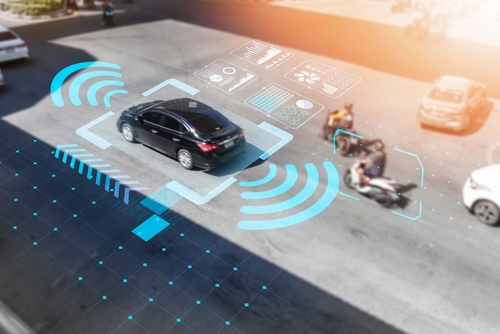
Autonomous driving training data is used to teach self-driving cars how to navigate roads and traffic. This data is collected through a process called sensor fusion, which involves combining data from various sensors (including cameras, lidar, and radar) to build a comprehensive picture of the car’s surroundings.

  • LiDAR: LiDAR (Light Detection and Ranging) is a remote sensing technology that uses laser pulses to measure distance. This information can then be used to create 3D maps of the area being surveyed. LiDAR can be used to measure the distance to objects, as well as their shape, size, and other characteristics. This information can be used to create 3D models of the area being surveyed. The technology is used for a variety of applications, including mapping the surface of the Earth, measuring the height of trees, and surveying land for archaeological sites and is helpful for autonomous vehicles.

  • Radar: Radar technology is used extensively in data training. It is basically a technology that uses radio waves to identify objects and measure their distance, speed, and other characteristics. It provides such information about the target object that is being tracked. Radar technology can be used to track both moving and stationary objects.

  • Camera: Another method that can help with data training is the use of cameras to take pictures of various objects. These pictures can then be used to train the model. This can be done with a variety of different types of cameras, including traditional cameras, infrared cameras, and X-ray cameras.

Data Annotation Types for Autonomous Vehicles

Data annotation is the process of labeling data to provide context and enable machines to understand it. This is a critical step in training autonomous vehicles, as it allows the vehicles to learn from and make decisions based on data that has been specifically labeled for that purpose. Once the data has been labeled, it can be used to train the autonomous vehicle algorithms. This process is typically done with a supervised learning approach, where the labeled data is used to train a model that can then be applied to new data. This allows the autonomous vehicle to learn from and make decisions based on real-world data, rather than just simulated data.

Data annotation is a critical part of training autonomous vehicles, and it is important to ensure that the process is done accurately and with high quality data. Here are some data annotation and labeling tools used in the autonomous vehicle industry:

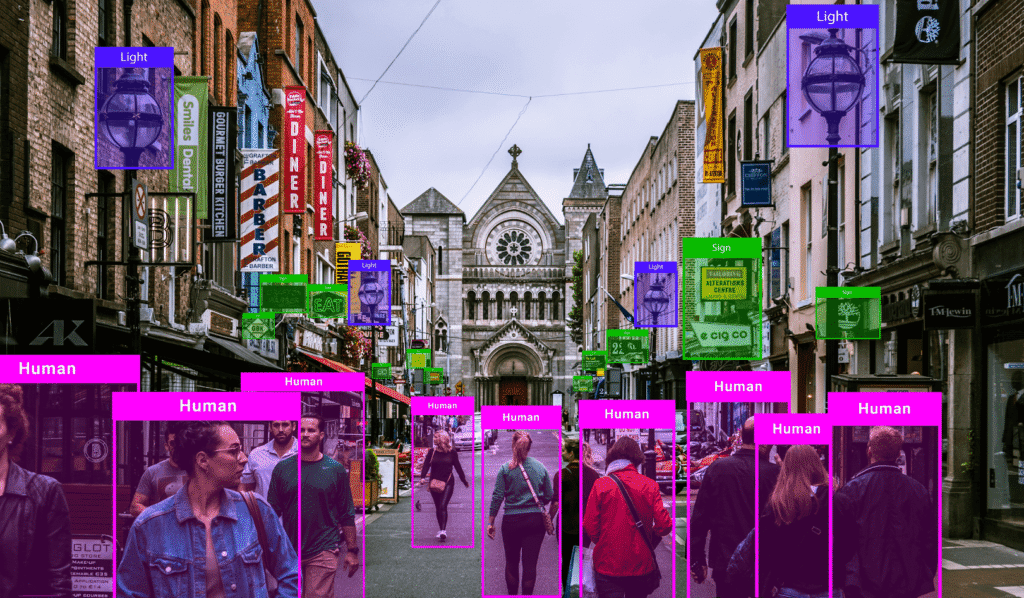
  • 2D Boxing: This is a process of creating a virtual box around an object in order to better track its movements. This is especially important for autonomous vehicles, as they need to be able to accurately track the movements of other objects in order to avoid collisions. There are a few different methods of 2D boxing, but the most common is to use lasers to create the box.

    2D boxing can be used to track the movements of multiple objects at the same time. This is important for avoiding collisions, as the vehicle will be able to see the movements of all of the objects in its vicinity.

  • Polygon: For precise object detection and positioning in images and videos, polygon is employed. Polygon is more accurate than 2D boxing, but it can be a time consuming process and costs more money. It’s especially useful when the objects are complex and irregular.

  • 3D Cuboids: This is similar to 2D boxing, but as the name suggests, the process creates 3D cuboids around objects. An anchor point is placed at each edge of the item after the annotator forms a box around it. Based on the characteristics of the item and the angle of the picture, the annotator makes an informed guess as to where the edge may be if it is absent or blocked by another object.

  • Video annotation: This can be done by adding labels to specific frames or regions of frames. Video annotation is widely used for autonomous vehicles in the driving prediction models as it helps track objects in a constant series of images.

  • Semantic Segmentation: This technology identifies objects in their environment. Semantic segmentation is a technique that uses artificial intelligence to classify each pixel in an image. This allows the vehicle to distinguish between different objects, such as cars, pedestrians, and traffic signs. Semantic segmentation requires a large amount of data to train the algorithms that identify objects.

  • Lines and Splines: Lines and splines are used to create a virtual map of the area around the vehicle. The map is then used by the vehicle’s computer to navigate. These lines and splines are created by sensors on the autonomous vehicle. The sensors send data to the computer that is then used to create the map.

  • 3D point cloud: 3D point cloud is a technology used in autonomous vehicles to create a three-dimensional map of the environment. LiDAR sensors are used to scan the environment and create a point cloud. The point cloud is then used to create a three-dimensional model of the environment that the autonomous vehicle can use to navigate. This helps vehicles plan their route and avoid obstacles.

How to Get Training Data for Autonomous Driving?

If you want to get training data for autonomous driving, there are a few options available to you. You can either purchase it from a data provider, or collect it yourself.

If you choose to purchase data, there are a few things to keep in mind:

  • Make sure that the data is of high quality and has been collected from a variety of different environments.

  • Consider the cost of the data. It can be expensive to purchase large amounts of high-quality data.

If you decide to collect data yourself, you must understand the following:

  • You will need to have a vehicle that is equipped with the necessary sensors for collecting data.

  • You will need to drive in a variety of different environments to collect data from.

  • You should have proper technology to label the data that you collect.

This entire process can be time-consuming and full of hurdles. It’s not easy to collect and label data, especially for autonomous driving where there can be no room for error. One mistake can eventually cost lives, which is why it’s important to know the challenges of collecting this data on your own.

Challenges of Collecting Training Data On Your Own

  1. One of the challenges of collecting training data is that it must be diverse enough to cover all potential driving scenarios. This means that data must be collected in a wide variety of locations and conditions, including both urban and rural areas, and in all weather conditions.

  2. Another challenge is that data must be collected continuously over time in order to capture changes in the environment, such as new construction or road closures. This can be a difficult and expensive proposition.

  3. High quality and accurate data is needed for rare events or extreme conditions in order to make autonomous driving error-free. This can be tough if done individually.

It’s best to weigh both options before narrowing down on one as this decision of how to obtain your training data for autonomous vehicles can have big consequences.


DigitalDivideData as a Reliable Data Labeling Partner

As you can see, gathering training data for autonomous cars isn’t a piece of cake. Not only does the data need to be of high-quality, but it should also be collected using all kinds of annotations for various scenarios and objects. Another important factor is maintaining the timely inflow of data to speed up the process of building your autonomous vehicle.

Digital Divide Data can provide your business with all of this. With a qualified team of highly-skilled tech professionals and data scientists, you’ll not have any doubts about the source and quality of your data. Get in touch with us for your data labeling and training needs.

High-Quality Training Data for Autonomous Vehicles in 2023 Read Post »

Computer Vision Hero Image

Everything You Need To Know About Computer Vision

Computer Vision Hero Image

If you’re looking for extra security for your home via installation of facial recognition on your doorstep, you’re not alone. The good news? It’s possible. And that’s not all. Computer vision can do a lot more in every area of your life.

There have been constant developments in artificial intelligence, deep learning and neural networks in recent years. Computer vision has made it possible to detect and label objects, being able to accomplish tasks that humans can’t.

Seems like computers are our best friends and can make our lives easier, more entertaining and more secure. Let’s find out what computer vision is, how it works and how you can use it to enhance your everyday life.

What is Computer Vision?

Computer vision is a technology of computer science that focuses on human vision and its replication in order to help computers see and identify objects around them, just like human beings do. In simpler words, computer vision is like replicating the functions of the human eye in a computer.

Remember we talked about face recognition technology right at the beginning of the article? That’s one of the things computer vision enables. It allows phone companies and smart home devices to use facial recognition as a measure of security.

Where did it all begin? 1950s! Yes, that’s how old computer vision is but its growth in recent years has been phenomenal. Back in those days (70s and 80s), it was used to differentiate typed text from handwritten text.

How does it even work? How is computer vision able to detect objects? Let’s find the answer to this and put all curiosity to rest.

How Does Computer Vision work?

This question is like asking how the human brain works. The field of neuroscience has forever been intrigued by how complex our brains are and how they work. Machine learning asks the same question and works in the answer to develop this field of computer science.

Now we all know that brains aren’t easy to study and even science doesn’t have all the answers yet on the exact way images are processed in the brain. This is why computer vision works on what we do know: recognizing patterns.

So how does the computer learn to recognize an image? It all gets down to understanding the complexity of pixels and colors. In simple words, if you feed an algorithm with millions of images of a book, a set of machine learning algorithms will help it analyze the colors, shapes and the relative distance between objects. This helps the computer understand what a “book” is based on the types of data sets. Once done, this computer will be able to recognize books from images that are fed into it in the future.

Let’s break it down into steps. Here’s what a computer does:

  • Acquire an image

  • Process the image

  • Understand the image

Advantages of Computer Vision

Computer vision benefits both the public and the private sector in various ways.

  1. Better Searching Methods

    Let’s talk about the advertising industry. Digital advertising mainly relied on keywords and tags. While the method works it’s not cent percent efficient. After the introduction of computer vision to this sector, results got a lot better.Instead of relying on traditional tags, computer vision compares the actual physical characteristics of a specific image. Because of this, people are able to search for exactly what they’re looking for by using a photo to find “similar products”.

  2. Better User Experience

    Those filters that transform your face on Snapchat and Instagram are a result of computer vision! With the use of facial mapping and augmentation, computer vision makes it possible to create such features on apps.

  3. Patient Identification And Better Medical Procedures

    Computer vision improves patient identification thereby preventing wrong person procedures. One can also expect a more accurate diagnosis via medical imaging analysis. From surgery training assistance to patient rehabilitation assistance, computer vision helps the medical field to achieve goals that were once far-fetched.

    The contribution of computer vision to the medical field is quite a boon. Here are some examples of how it helps:

    • Patient rehabilitation assistance.

    • Medical students training.

    • Patient identification.

  4. Better Security

    Computer vision works with cyber security systems to monitor any remote activity. This can be done from anywhere which makes it easier to recognize and analyze potential cyber threats and prevent them from happening.

    Here are some ways in which computer vision is used:
    • Biometrics for identification.
    • Security cameras.
    • Vehicle identification in instances of car theft.
    • AI fire detection that helps detect fires in buildings by taking images or videos.

  5. Transport Safety

    Computer vision is trained and used to identify unauthorized and harmful objects such as guns, biological weapons, etc, before they are loaded on passenger transport vehicles like an aircraft.

    This technology isn’t just used by some airlines but is also used by other public transport such as trains and buses to minimize risks and maximize security for the travelers.

Types of Computer Vision

DDD%2B %2BTYPES%2BOF%2BCOMPUTER%2BVISION

Image segmentation: Here, the image is divided into multiple regions that are examined separately.

  1. Object detection: This pertains to identification of a specific object in one image. For instance, a book like we talked about earlier. With advanced object detection, your computer can recognize multiple objects in one image.

  2. Facial recognition: Whether it’s human face recognition in general like in those app filters or recognition of a specific person like in a smartphone for unlocking, computer vision does it all.

  3. Edge detection: This method identifies the outer edges of objects to identify what the image consists of.

  4. Pattern detection: This technique helps with identification of colors, shapes, and other visual elements in images.

  5. Image classification: Organizing images into various groups and categories.

  6. Feature matching: This method helps match similarities in images to classify them.

While simple uses of computer vision might just require one of these techniques, more complex ones like self-driving cars may make the use of a combination of various types of computer vision.

Top 9 Computer Vision Applications

  1. Self-driving cars
    Since dreams of self-driving cars are coming true, a lot of is can be attributed to computer vision. Tesla has already come up with autonomous vehicles and it’s just a matter of time before you can get around your city in a driverless car too!

  2. Augmented Reality
    Augmented reality uses computer-generated augmentation to provide an experience of the natural surroundings. If you’ve played games that use AR, you know that they can make you feel like you’re actually in that virtual world while your actions here in the real world affect what’s going on inside the game! You swing your golf club here and the ball goes flying in the game. How cool is that?

  3. Medical Imaging
    How does a doctor classify X-rays and MRIs into diseases like cancer and pneumonia? Computer vision is the core of early diagnosis in the medical field. It has helped save thousands of lives by enabling doctors to detect diseases early with the help of imaging.

  4. Intelligent Video Analytics
    Identification techniques like pose estimation, face detection and object tracking have helped CCTV cameras in understanding a shopper’s interaction with various products in a retail shop, queue lengths at airports and malls and other such parameters in public places with large crowds.

  5. Manufacturing and Construction
    Computer vision systems help in detection of defects and with safety inspections. This helps in a better manufacturing process with fewer chances of error. 3D vision systems make inspections far more superior and efficient in production lines.

  6. Optical Character Recognition
    OCR goes back to 1974 but with the latest technology and Deep Learning systems, today’s OCR techniques can detect and translate text in natural environments without any human intervention.

    Read more: OCR in Machine Learning

  7. Retail
    Nowadays there are AI stores like “Amazon-go” across the United States that are cashierless and customers can self-checkout after shopping. This shows that computer vision can revolutionize shopping experiences for both the store owners and the consumers.

  8. Education
    There’s nothing better than providing a personalized learning experience to students because one size doesn’t fit all. Computer vision understands students’ learning behaviors to improve their learning experiences. The technology also helps assess students’ papers to reduce the burden on teachers.

  9. Sports and Fitness
    Computer vision can help fitness apps capture performance data. This can not only help the person using the app but also help coaches in training sessions. In sports, computer vision can track objects and ball movements to improve referees’ decision-making.

Top Industries Using Computer Vision

Since we already saw the application of computer vision, it’s not difficult to understand what industries benefit the most from it. Here are the industries that use computer vision the most and how the technology helps each industry.

  1. Agriculture

    • Helps identify pests with greater accuracy to optimize chemical application.

    • Automation of livestock management to reduce the need for human intervention in the field.

    • Helps monitor crop development to have a better quality yield.

    • Automotive enables self-driving cars with intelligence to detect objects.

    • Helps create a seamless and driverless experience with no human error.

    • Reduces the chances of accidents.

  2. Retail and E-commerce

  3. Sports Analytics

    • Better referee decisions because of accurate ball/object and human position captures.

    • Accurate and personalized fitness plans or goals via apps that monitor various bodily functions.

  4. Medical Institutions

    • Improved and early diagnosis of illnesses in patients via 3D imaging.

    • Real-surgery and training assistance for more effective outcomes.

    • Improved patient logs with better identification to avoid confusion.

FAQ’s

  •  

    Yes! Computer vision is a subfield of AI and Deep Learning. Because of this technology computers can visualize and interpret objects and the world around them.

  •  

    Computer vision is a subset of machine learning while machine learning itself is a subfield of AI. We can say that computer vision uses machine learning algorithms like neural networks. However, even though they have many commonalities overall, they’re applied differently.

  •  

    Implementing computer vision technology can be a challenge for businesses due to the lack of dedicated personnel and resources. Businesses often lack the internal expertise to effectively set up, configure, and maintain computer vision systems. Additionally, businesses may not have the resources to invest in the technology as it’s costly, making it difficult to implement.

  •  

    Deep learning is based on the concept of artificial neural networks, which are networks of simple algorithms that are designed to mimic the behavior of biological neurons in the human brain. By utilizing deep learning, computers can be taught to recognize objects, identify patterns in images, and even detect faces.

    Deep learning can be used to analyze videos and images to provide valuable insights into the data. Deep learning can also be used to generate synthetic images and videos, which can be used to train computers to recognize objects and patterns more accurately.

  •  

    Computer vision technology helps autonomous vehicles to identify and respond to objects, such as other vehicles, pedestrians, and traffic signs, in their environment in real time. This technology utilizes a combination of cameras, sensors and algorithms to process the data collected from its environment and create an accurate map of the area. Computer vision technology also helps autonomous vehicles to determine the position of other vehicles and objects around them. By utilizing cameras and sensors, the vehicle can create a 3D map of its environment.

  •  

    Computer vision technology can be used in surveillance and security systems to monitor, detect, and analyze activity in physical environments, such as buildings, streets, and public spaces. Computer vision technology can be used for a wide range of security applications, such as facial recognition, motion detection, object recognition, and anomaly detection.

    Another use of computer vision technology in security and surveillance systems is motion detection. This technology can detect movement in a surveillance video, which can be used to trigger an alert or to initiate a response such as activating a security system or alerting authorities. Motion detection can also help to detect intruders or other potential threats in a specific area.

Computer Vision Is The Future

As you can see, almost everything becomes easier, quicker, more effective and more secure with the help of computer vision. The best part is that it can be applied to every field and industry, helping not just professionals and businesses but also consumers and common people too. Everyone can enjoy the benefits that come with it.

If you’d like your business or setup to grow faster with more effective interactions with your consumers, you must go for the best computer vision services. Get futuristic today!

Everything You Need To Know About Computer Vision Read Post »

AutonomousDriving 1

4 Major Regulatory Hurdles in the Autonomous Driving Space

Autonomous driving as a field is booming. As many automotive manufacturers integrate autonomous technologies in their vehicles, fully autonomous cars are becoming a mere stone’s toss away.

Regulations for autonomous driving typically focus on two key areas: safety and performance. This article is mostly focused on the regulatory and legislative hurdles regarding safety of automated driving and autonomous vehicles.

1. Liability and Autonomous Vehicles

No means of transportation is without its hiccups. And unfortunately, autonomous driving has had numerous fatal accidents, with eleven recorded in 2022 alone. Currently, all autonomous auto manufacturers are required to report accidents to the National Highway Traffic Safety Administration.

The points of failure in an autonomous vehicle are a little more nebulous, and concerns have surfaced about who is liable in an accident. Since the cars are not fully autonomous, the accident could be from driver carelessness. Or they could be a result of software malfunctions or mechanical failures. As the technology improves and cars become more autonomous, the accident liability will shift toward the manufacturers and developers. There is no clear-cut solution yet, as the issue has yet to mature.

A Problem of Interwoven Pieces

Autonomous vehicles are complex. There’s a lot of interconnectivity between the various pieces that power and control them. Some speculate that as liability shifts to developers and manufacturers, it will pose some severe hurdles to overcome per incident.

Those making the AVs must analyze every component of the vehicle and perhaps even divulge the proprietary software suites that power the car while assisting law enforcement.

2. Federal and State Regulations

The first road safety initiatives began years before computer chips ever graced automobiles. Much has changed in automotive technology since, but the regulatory bodies are slower to catch up. Currently, there isn’t a wide-sweeping federal regulation governing fully autonomous vehicles.

The NHTSA has made some provisions regarding autonomous vehicles and specific safety feature requirements. This is a positive sign since the safety features that auto manufacturers must include are congruent with autonomous vehicle technologies.

State Laws

Only 43 states out of 50 have legislation regarding automated vehicles. Some are restrictive, while others depend on each vehicle’s SAE automation level. Liability insurance factors into most of these laws since every state save Hawaii and Virginia requires it.

The other seven states haven’t enacted laws regarding autonomous vehicles, and there is no indication of when legislation might be drafted. Multiple states also require licensure for mandated drivers, adding another logistics drain onto larger fleet deployments.

Federal Laws

The only federal-level agency providing some oversight over autonomous driving is the previously mentioned NHTSA. Federal regulation currently stipulates safety features, not the deployment of large commercial autonomous vehicle fleets. This isn’t necessarily bad, but a lack of an overarching baseline may cause future headaches for manufacturers.

Limited federal regulations also mean manufacturers must consider various state laws when developing and deploying autonomous vehicles.

3. Cybersecurity of Autonomous Vehicles

Tech magnates worldwide have bolstered their cybersecurity after hard-learned lessons, including cyber attacks, extreme platform compromises, and significant money lost due to offline systems. Yet the nascent autonomous driving space hasn’t fully accounted for their lack of protected systems. And if a server goes down and a vehicle is compromised, the effects would not only be money and time lost but potentially lives.

Despite the technological marvels surrounding AVs, there isn’t much cybersecurity support. These vehicles have diverse means of connectivity, leaving many open attack vectors. For example, the Internet of Things (IoT) has long been a highly vulnerable method of communication. Many AVs communicate with smart devices in the home, and security measures haven’t yet been fully developed to address potential attacks.

Much could be done to bolster and harden the systems around autonomous vehicles. Encrypted digital transmission has been present in IoT for quite some time. Hardened entry points requiring user authentication could mitigate possible actions and deter bad actors.

A clear and effective incident response to a systems breach is now a necessity, as it provides a blueprint for how to respond to a compromised vehicle.

4. Data Usage and Privacy Concerns

Along with the lack of security, there is the question of what data auto manufacturers collect and how they use it.

We can expect manufacturers to collect performance metrics, but gathering personalized data presents grave privacy concerns. Regulatory bodies have already addressed the data collected in the medical, financial, and educational sectors. So perhaps it’s a matter of time before additional regulations develop regarding manufacturers’ collection and safeguarding of personal data.

Other concerns arise regarding what the companies do with the data collected from their autonomous vehicles. Location data gives a glimpse at the patterns and lifestyle of the operator of any autonomous vehicle, and it would be a simple step to leverage that data into marketing materials and betray the trust of a potential customer.

Current American legislature regulations regarding data collection could be adapted to provide some degree of security for user data. New legislature and regulations could further impact how manufacturers use the data gathered by AVs.

How to Position Your Enterprise at the Forefront of AD Policies

With all these concerns, how would you move forward?

Here are some steps that you can take to move forward and position your enterprise at the forefront of these policies and regulations.

  1. Liability: Your organization can handle self-reporting, which helps maintain paper trails for all incidents and prepares your staff to respond appropriately to any incidents.

  2. Federal and State Regulations: Maintaining liaisons with regulatory bodies nationwide could benefit your enterprise. It’s also best to adhere to good practices and industry-standard software stacks when approaching the development of these platforms.

  3. Cybersecurity: Cybersecurity has many glaring issues, but you could strengthen your organization by adopting some of the principles AI and ML companies use.

  4. Data: Software stacks could and should adhere to ISO standards regarding intelligent transport systems, like ISO 22737:2021. Data usage should be self-regulated, as there aren’t provisions for the safest practices concerning the protection of customer data.


Are you looking to integrate standard software solutions for your autonomous driving firm? Digital Divide Data provides data annotation services with SOC 2 Type 2 and ISO 27001 certification.

4 Major Regulatory Hurdles in the Autonomous Driving Space Read Post »

Car Aerial Annotated 01 1

Determining The New Gold Standard of Autonomous Driving

Car Aerial Annotated 01

Autonomous driving is on the cusp of widespread adoption. As more manufacturers across the globe begin implementing AD systems in their vehicles, it is only a matter of time before it becomes a regular feature in future automobiles. And with the rise in popularity of AD systems comes a need for standardization.

Emerging standards are beginning to regulate how manufacturers approach navigation, safety, and AD modeling quality. These standards also influence policy creation, technology use, and the general framework for AD systems. Creating standard systems for these AD models will lead to a more uniform approach toward autonomous driving models.

An Overview of the Tech Behind Autonomous Driving

While the idea of autonomous driving dates back centuries with Leonardo da Vinci’s inventions, most of the tech has been developed in the last few decades. After Navlab5’s self-steering vehicle made headlines in the ’90s, autonomous driving really took off.

The first AD production vehicle started with Tesla’s Autopilot, an SAE 1 implementation that offered parking assistance and automated driver-assistive processes. Tesla doesn’t provide a fully autonomous platform for their production vehicles, but the Autopilot helped gauge interest in the general public.

Other manufacturers are also spearheading their own development of AD vehicles. For example, Volvo’s recent acquisition of Zenseact, a leading software and hardware developer for autonomous driving, shows the company’s commitment to producing a fully autonomous vehicle. Volvo has also started implementing more sophisticated technologies like LiDAR for its AD driving platforms.

LiDAR and other data annotation methods – like bounding boxes, polygons, and key points – have become ubiquitous in the autonomous driving space. These annotation methods rely on trained AI models with massive data sets that provide accurate information to the vehicle in real time so it can adapt and adjust to conditions on the road.

It’s extremely time-consuming to develop models, so there are still limitations, like a reliance on the driver to make crucial driving decisions. Still, this progress is leaps and bounds from where the earlier assistive processes were just a few years ago.

State governments in the United States have already convened and passed legislation regarding autonomous vehicles on public roadways. The most noteworthy is California, which has the most comprehensive regulations for autonomous vehicles. No federal legislature permits the deployment of fully autonomous vehicles yet. It operates more on a state-by-state basis.

The Standards Fueling AD’s Mass Adoption

Common methods and standards have grown around the autonomous driving industry. Some of these are just general classifications, and others go down to how the vehicles actually function. As the market around AD grows, it only makes sense that there are more robust systems taking hold to define how these vehicles should safely and effectively operate.

SAE and IEEE

SAE and IEEE have convened and already passed their own guidelines defining what autonomous vehicles are and how to classify them. IEEE has more exhaustive standards regarding safety on public roadways and connectivity between other cars. These aren’t necessarily driving the actual development behind Autonomous Driving. But they show that AD has reached a somewhat wide-scale acceptance among the various bodies developing the hardware and software that fuels it.

Simulations

Simulation is a vital method for developing and testing autonomous driving technology, enabling engineers and researchers to create a virtual environment that mirrors real-world conditions without putting people or property at risk. Simulation offers several benefits to developers, including cost-effectiveness, replicability, safety, scalability, and flexibility.

The cost of building and testing a physical vehicle can be high, but simulation can reduce expenses significantly. Simulating various driving scenarios in a virtual environment can help developers identify potential problems and make necessary adjustments without requiring physical testing, saving both time and money.

Simulations are highly replicable, meaning that a particular scenario can be repeated many times to test different algorithms, sensor configurations, or other variables. This enables developers to gather large amounts of data and draw reliable conclusions from their experiments, providing the necessary information to create efficient autonomous driving systems.

Simulation offers safety benefits as well. As autonomous driving technology is still in its early stages, testing in the real world can be risky. Simulating scenarios allows developers to test their technology in a safe environment, reducing the risk of accidents or injury.

Scalability is another benefit of simulation, as it can handle large amounts of data, allowing developers to test various algorithms and scenarios at the same time, while flexibility enables quick modification of variables and testing of different scenarios, reducing the time it takes to identify and address potential issues.

Vision Performance Standards

Much like the human driver behind the wheel, an autonomous vehicle needs a constant feed of visual data to interpret its environs. Visual performance is a crucial component behind autonomous driving and enables the car to recognize objects and react appropriately to them on the roadways. There are a few emerging standards empowering this innovation. For example, Intersection over Union (IoU), Average Precision (AP), and Mean Average Precision provide guidelines for visual processing implementation.

AP and IoU function similarly, dictating the visual detection system’s accuracy in predicting the movement of detected objects. Mean Average Precision can work like AP, but it looks at numerous data sets to effectively process visual detection.

System Implementation Standards

LiDAR is one of the many standard systems emerging behind autonomous vehicles. Beyond just bare visual processing and prediction, LiDAR helps accurately map a car’s surrounding environment. It isn’t intended for the predictive positioning of objects necessarily but provides a quicker and more accurate image using light. Think of it as a more refined and advanced take on the role radar has served in assistive technologies.

Radar in vehicles has been a cornerstone for autonomous driving for a few years. It has helped inform collision detection, lane keeping, and blind spot awareness. Plus, radar works with robust visual imaging suites and LiDAR for complete awareness of everything around the vehicle.

NHTSA

The National Highway Traffic Safety Administration is making real headway toward providing guidelines about what AD needs to be truly ready for America’s roads. The NHTSA has done quite a bit in standardizing automobile safety features over the past few years and made 2016-2025 safety feature stipulations for auto manufacturers. These recent additions are partially automated and very much in line with the aims and goals of autonomous driving. They also include items like lane-keeping assists, adaptive cruise control, and traffic jam assists. NHTSA has a stated goal for all new automobiles manufactured in the United States to have fully automated safety features from 2025 onward. With the headways made in the aforementioned systems, they very well may be on their way to ushering in autonomous driving across a wide swathe of vehicles.

Moving Forward With Autonomous Driving

Autonomous driving has progressed significantly toward providing standardized systems and guidelines for developing autonomous vehicles. As these vehicles – and their technology – mature, there will only be more robust frameworks and guidelines to bolster them.

Are you looking to integrate actionable experience towards developing your own autonomous driving systems? Digital Divide Data has the means and experience to develop robust systems adhering to the guidelines mentioned in this article. We offer support for a wide variety of visual imaging, object classification, and semantic segmentation. If you’re looking to bolster your AD platform, choose DDD to supply industry know-how for your data annotation.

Determining The New Gold Standard of Autonomous Driving Read Post »

DDD Webinar HeroImage Unretouched

Using Aerial Imagery as Training Data

DDD Webinar HeroImage Unretouched

Numerous industries use satellite and aerial imagery to apply machine learning to business and social problem sets. This is a particular strength for DDD given our experience in geospatial and aerial use cases in insurance, transportation, meteorology, environmental protection, agriculture, law enforcement, national security, remote delivery, and traffic management.

This experience has taught us a great deal about the challenges and pitfalls associated with aerial image segmentation. We aired a webinar on this subject, and you can view the recording on-demand. Our goal is to deliver a hands-on guide to overcoming these challenges.

  1. Price of failure. Consider the cost of inadequately or incorrectly training an algorithm to evaluate geospatial or aerial images. Say the project is agricultural. Can you imagine the impact of incorrectly identifying crop disease or inadequate irrigation? Or say the project is military. What are the potential costs of misidentifying an elementary school as an army barracks? You need to include the expected cost of this kind of failure into your DIY vs outsource equation.

  2. Workforce. Aerial and geospatial images are often very large and very detailed, meaning that a large workforce of labelers is required to generate sufficient volumes of training data in a timely fashion. In our experience, most data science teams don’t have access to an in-house workforce big enough to meet their training data demands. This lack of a workforce is one of the principal drivers of seeking a training data partner.

  3. Data volumes. Keep in mind that you may be able to support in-house data preparation for an initial, simple use case, but in your quest for greater levels of model confidence, you will have to train your algorithm on additional use cases, and eventually edge cases. You may be able to generate enough data in-house to train an algorithm to land a delivery drone on a simple graphical market, but what does it take to distinguish between a leaf on the marker and a three-year-old child? Each additional use case requires at least as much training data as the first one, and rarely-occurring edge cases may require significantly more data. This dramatically compounds your workforce requirements, a discovery that many data science teams make late in their projects when budgets are dwindling and deadlines are imminent.

  4. Process and tools. Extremely high-resolution images are far too large to assign to a single labeler. But breaking up images, assigning them to multiple labelers, and then reassembling everything coherently introduces issues around worker consistency and process management. Do you have the wherewithal to train consistency into your own workforce? Do you have the technology and process required to track changes to very high numbers of image fragments? Most data science teams don’t.

  5. Specialization. Are you confident that you can define the most efficient tasks required to label your training data? We had a client who wanted us to label every individual tree in enormous hi-res forest images. As it happened, they weren’t interested in tree density; rather, they were trying to detect illegal land clearing. Because we have been preparing training data for decades, we were able to show them a different approach to labeling their images that appropriately trained their algorithm, but at a fraction of the time and cost of their approach.

  6. Focus. Preparing training data for aerial and geospatial systems involves the application of human judgment to nuanced, and sometimes hard to decipher, images. Our own data shows that the longer individuals spend on a particular kind of interpretation the faster and more accurate they do the work. Data science teams that crowdsource their aerial segmentation work do not capture these workforce efficiencies. DDD assigns you a team that stays with you throughout the span of your project, meaning that you capture all the benefits of growing worker efficiency and your effective cost per transaction steadily declines.

Using Aerial Imagery as Training Data Read Post »

Flat lay of a professional hand tool set including wrenches, screwdrivers, pliers, drill bits, a measuring tape, and a utility knife arranged on a light blue background

ML Data Preparation Demands a Big Toolbox

Flat lay of a professional hand tool set including wrenches, screwdrivers, pliers, drill bits, a measuring tape, and a utility knife arranged on a light blue background

Part of the challenge of building machine learning models is that no two are the same. Train the same machine learning algorithm against different sets of data, and you end up with a different model.

If the quality of the raw data is high and the training data sampling is done well, the models shouldn’t vary a lot… but those are all big “if”s. Which is why data preprocessing, the actual data preparation process, is critically important.

A Forbes survey revealed that data scientists spend nearly 80% of their time on data prep, a quarter of that on data collection, and the other three quarters on data cleaning. Other survey results that indicate that real-world data science isn’t everything these practitioners thought it would be; clearly, data collection and data cleaning are not how they imagined they’d spend their working hours.

Data preparation is so time consuming because it is so important. The adage – or more appropriately in this setting, admonition – “Garbage In, Garbage Out” very much applies to data preparation for machine learning, which, in extreme cases, can involve the entire lifecycle of data collection to data cleaning and feature engineering. Missteps at any point in this process will result in low-confidence model predictions, or even a model that just misperforms.

Beyond their importance, training data sets for machine learning algorithms are also voluminous – many millions of data items in the case of complex problem spaces – and much of the data prep work demands human involvement (although much of this work is often repetitive and requires only contextual training to perform).

Finally, data preprocessing usually involves a variety of technologies, both for doing the actual work of preparing the data and for managing quality in the context of volume. If the problem space is simple – say, structured data with duplicates, null values and some lack of standardization – the technology needn’t be complex. But complex problem spaces – say, identifying and tracking video objects with complex taxonomies – can require specialized technology, much of it open source, with very particular feature sets.

In recent years, numerous solution providers have sprung up to fill the human and technological gaps that data scientists confront in preparing quality training data at scale. Some offload the human labor side of data prep. Others provide technology for cleaning and labeling training data sets. And yet, some provide both.

Data science teams would be well-advised to choose carefully when evaluating data preparation partners. DDD has “inherited” more than a few customers whose first vendor fell down, invariably on one or both of these two dimensions:

Something less than full lifecycle data prep. Recall that the Forbes survey indicated 60% of data scientists’ time is spent in data cleaning. Most of today’s data preparation vendors emphasize training data labeling and annotation. They presume that they will be given data that has already been cleaned.

If your data needs cleaning, i.e.,

  • it has not been de-duped

  • it is missing information

  • it is inconsistently presented from different sources

  • it requires entity resolution

  • it is image data of uneven quality or perspective

  • it is handwritten and requires transcription

If you don’t have data, or don’t have enough data, and need data collected or created, these vendors are not a good fit for you.

Reliance on a single technology platform. Every ML project is unique, with unique data. No single set of proprietary tools can possibly match up to every machine learning algorithm and training data set. Data science teams need to know that whoever is doing their data preparation is technology platform agnostic. They need to know that whoever is doing their data preparation has the flexibility and freedom to choose the best tool(s) for the project at hand and is not trying to shoehorn data into an inappropriate tool or trying to jerry-rig a third-party tool onto their platform for the sake of the team’s project.

ML Data Preparation Demands a Big Toolbox Read Post »

Scroll to Top