
Celebrating 25 years of DDD's Excellence and Social Impact. ✖

RAG Fine-Tuning

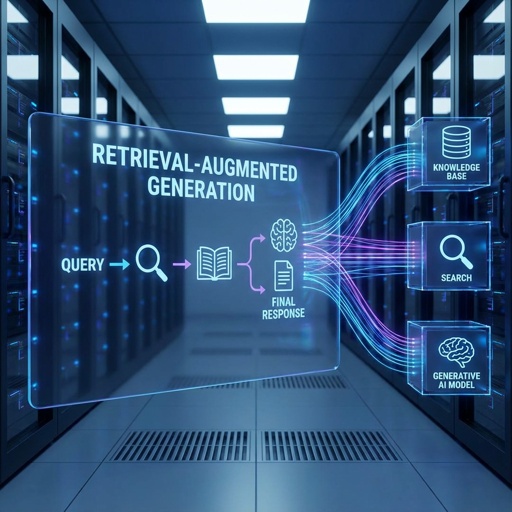
Knowledge base curation pipeline transforming raw documents into structured data for RAG retrieval

Why Your Retrieval System Is Only as Good as Your Knowledge Base Curation

Knowledge base curation for RAG is the upstream work of cleaning, structuring, chunking, tagging, and refreshing the source documents that a retrieval system searches. Retrieval quality sets a hard ceiling on answer quality, so a well-tuned retriever cannot recover from a noisy, stale, or badly segmented corpus. Teams that treat the knowledge base as a living, governed asset get more reliable RAG systems than teams that dump documents into a vector store and tune prompts afterward. Getting curation right often depends on disciplined structured data preparation and RAG fine-tuning.

Most RAG debugging starts in the wrong place. When answers are wrong, teams reach for a better embedding model, a larger context window, or a reranker, because those levers are visible and easy to change. The real constraint usually sits one layer up, in the documents themselves. A retriever can only return what the knowledge base contains, and it can only return it cleanly if the content was prepared to be found.

Key Takeaways

  • Your RAG system can only be as good as the documents it searches, so fixing the source content matters more than swapping models or tweaking prompts.
  • The way you split documents into pieces directly shapes what the system can find, and there’s no single right size; you have to always test it.
  • Tagging each piece with details like source, date, and section lets the system filter and cite answers instead of just guessing by similarity.
  • Old and duplicate documents quietly poison answers, because the system happily returns outdated content that still looks correct.
  • Regular checks against a fixed set of test questions are the only reliable way to know your knowledge base is actually working.

What is knowledge base curation for RAG?

Knowledge base curation for RAG is the set of upstream steps that turn raw source documents into a clean, well-labeled, searchable corpus that a retriever can query reliably. Retrieval-Augmented Generation, or RAG, is an architecture where a language model answers using text pulled from an external index at request time rather than from its trained weights. The knowledge base is everything the system is allowed to retrieve from, which includes the documents, the chunk boundaries, the metadata, and the vector index itself. Curation covers parsing, cleaning, deduplication, chunking, metadata tagging, and freshness management, and it is distinct from the generation logic that most teams spend their time tuning. Strong and successful teams consider data collection and curation as the product, not as a preprocessing afterthought.

The distinction matters because RAG has two phases, and each fails differently. Indexing prepares and stores content, while retrieval finds and returns it. A mistake during indexing can remain invisible during retrieval: if a document is parsed incorrectly or split across a concept boundary, the retriever may still return chunks and appear healthy in dashboards. The problem surfaces only when the system produces an incomplete or incorrect answer, which teams may then misattribute to the model itself. RAG data quality, evaluation, and governance are therefore critical for making this layer measurable, traceable, and easier to diagnose rather than simply assuming the retrieval pipeline is working as intended.

RAG converts source data to plain text and chunks it for retrieval, which works until the corpus grows diverse. As applications expand, plain-text retrieval becomes insufficient because textual information tends to be redundant and noisy, and complex questions often require joining several documents that plain text cannot relate to each other. The PIKE-RAG analysis of specialized knowledge for RAG makes this point directly; richer knowledge representations exist precisely because dumping documents in as-is degrades retrieval quality at scale. Curation is how you avoid that degradation before it compounds.

Why does source document quality cap retrieval accuracy?

Retrieval quality sets the ceiling for answer quality, which means no amount of prompt engineering or model choice can rescue a system whose retriever surfaces the wrong evidence. Generation only consumes what retrieval supplies, so if the right passage is buried, malformed, or absent from the index, the model has nothing accurate to ground its answer in. This is the single most important idea in RAG design, and it reframes the entire debugging process. When answers degrade, the first suspect should be the content and the retrieval path, not the language model.

Source quality caps accuracy through several concrete mechanisms rather than as a vague quality concept. Inconsistent parsing loses document structure, so headings, tables, and lists collapse into undifferentiated text that no longer signals what belongs together. Redundant and near-duplicate content pollutes the index, which pushes the retriever toward whichever copy happens to embed closest rather than toward the authoritative version. Study protocol manuals with non-uniform structure and description granularity, for example, cannot be used as-is and still yield consistent retrieval, a finding documented in a foundational study on retrieved chunk quality from real-world knowledge. The lesson generalizes well beyond medicine; upstream structure determines downstream precision.

There is a practical reason this failure mode persists in production teams. Cloud RAG platforms now automate layout analysis, chunk division, and indexing, which reinforces an assumption that existing manuals and documents can be fed in as-is and still produce satisfactory answers. That assumption holds for clean, uniform corpora and breaks for the messy, heterogeneous document sets most enterprises actually own. Preparing content properly through structured and enriched, AI-ready data is what closes the gap between a demo that works and a system that holds up under real query load.

How does chunk size affect RAG performance?

Chunk size controls the granularity of what the retriever can return, and it trades recall against precision on a curve that has no universal optimum. Chunks that are too large bundle several ideas together, which dilutes the embedding and forces the model to read past irrelevant text to reach the answer. Chunks that are too small fragment a single idea across boundaries, so the retriever surfaces a piece of the answer without the context needed to use it. The right size depends on document type, query pattern, and the embedding model, which is why chunking is an empirical decision rather than a default setting.

The strategy matters as much as the size, and several approaches trade off differently. The main options practitioners use are worth naming precisely:

  • Fixed-size chunking splits text into uniform segments, often around 512 tokens with 50 to 100 tokens of overlap, and is fast, predictable, and prone to cutting through concepts.
  • Recursive chunking splits hierarchically from sections to paragraphs to sentences, which respects structure better than fixed windows.
  • Semantic chunking draws boundaries where meaning shifts rather than at a token count, producing chunks that follow the natural flow of ideas.
  • Agentic chunking uses a model to decide split points, which can be accurate but is model-dependent and best reserved for a certified, high-value subset of the corpus.

Evidence backs the intuition that segmentation strategy changes measurable retrieval outcomes. A comparative evaluation of advanced chunking for clinical decision support built four otherwise identical RAG pipelines that differed only in chunking method, and found that fixed-length chunks split concepts and add noise in ways that measurably reduce precision, recall, and F1 relative to semantic and adaptive approaches. The practical takeaway is to start with a sensible default, then test chunking against real user queries and inspect the retrieved chunks by hand. Building training data for RAG therefore requires deliberate attention to chunk quality, relevance, and coverage so segmentation choices are validated against retrieval performance rather than based on guesswork alone.

What metadata should you add to documents for a RAG pipeline?

Metadata is the labeling layer that lets a retriever filter, route, and cite chunks instead of relying on vector similarity alone. Vector search finds semantically close text, but it has no built-in sense of source, recency, permission, or document type, and metadata supplies exactly those signals. Adding structured tags to each chunk turns an opaque similarity match into a query you can constrain, which improves precision and makes answers auditable. Treating metadata as foundational rather than optional is one of the clearest dividing lines between prototype and production RAG.

A practical metadata schema for RAG usually carries a consistent core set of fields:

  • Source and provenance: document title, author or owner, originating system, and a stable chunk ID so answers can cite a human-readable pointer back to the source.
  • Temporal fields: creation date, last-updated date, and an explicit staleness threshold, so the retriever can prefer current content and flag content that has aged past its useful life.
  • Structural context: section heading, document type, and position, which preserve the hierarchy that chunking would otherwise flatten.
  • Access and domain tags: permission level, business unit, and topic, which enable filtered retrieval and keep restricted content out of unauthorized answers.

Generating this metadata by hand does not scale, which is why enrichment increasingly uses models with human validation. Traditional curation methods scale poorly to unstructured enterprise datasets, a gap documented in a systematic framework for LLM-generated metadata to enhance RAG systems, which shows that document-level preprocessing through metadata enrichment measurably changes retrieval effectiveness. The reliable pattern is to tag metadata before chunking, use model-assisted extraction for entities and summaries, and keep a human in the loop for the fields where errors are expensive. This is core text and document annotation work, and it is where careful annotation design pays off directly in retrieval quality.

Why does deduplication and freshness management matter for RAG?

Deduplication and freshness management keep the index honest over time, and their absence produces the most dangerous class of RAG failure because it is silent. A knowledge base is not a static artifact; policies change, prices update, and manuals grow, so a corpus that was accurate at launch drifts out of date without any code change or infrastructure event. When an old version of a document stays indexed alongside a new one, the retriever returns confident, semantically relevant results that happen to be wrong. Nothing in a standard pipeline flags this, because vector similarity has no temporal dimension and a stale embedding scores just as high as a fresh one.

The operational danger is that freshness failures do not announce themselves the way chunking errors do. When chunking is misconfigured, retrieval quality suffers visibly and immediately, so teams tune it and move on. Staleness degrades distributionally instead; across hundreds of queries, accuracy quietly slips while every individual answer still looks plausible, and standard metrics like context recall and faithfulness keep scoring well because none of them measure whether the retrieved content is current. Reporting from practitioners tracking this describes the knowledge base staleness problem that teams solve last, usually after a customer incident report rather than before one. Deduplication addresses the same root issue by collapsing near-identical content so the retriever chooses the authoritative version rather than an accidental copy.

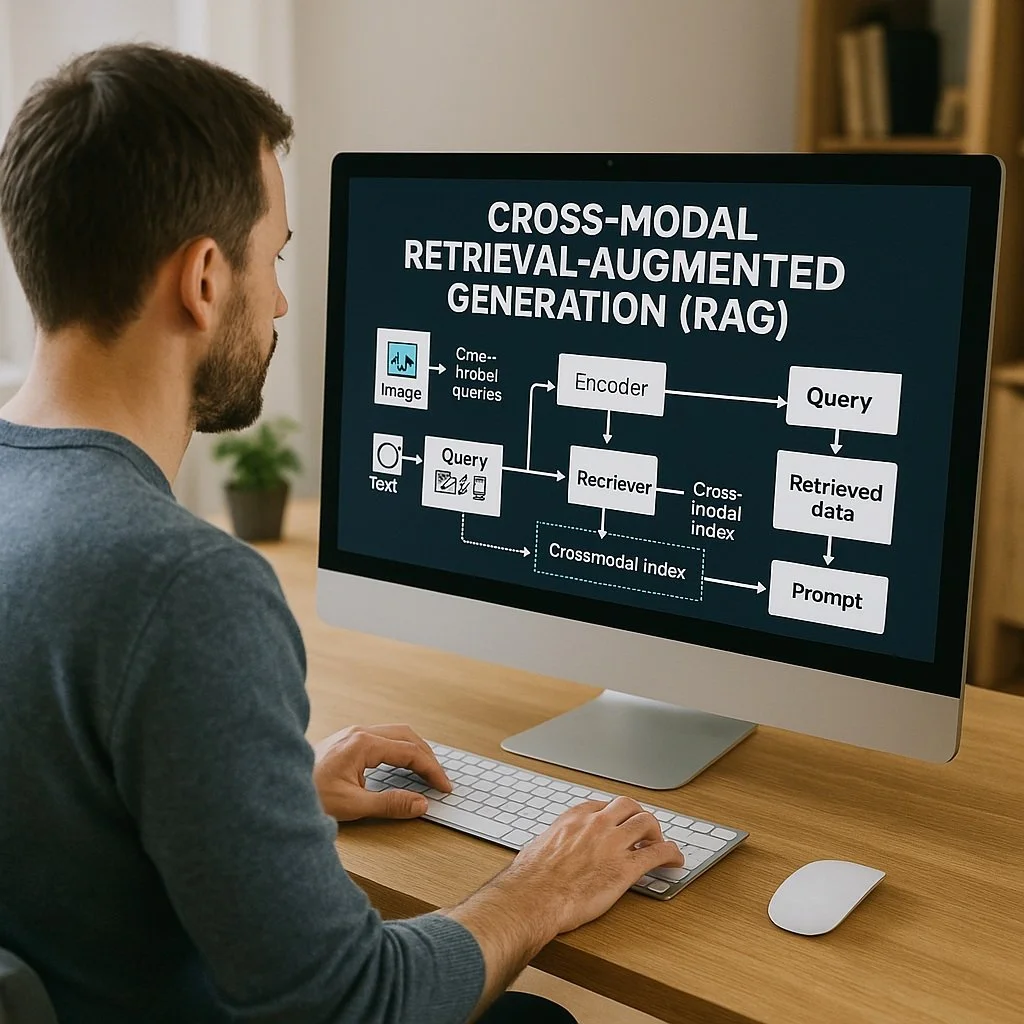
Managing this at scale requires treating freshness as a first-class part of the pipeline rather than a periodic cleanup. That means incremental indexing that detects and re-embeds only changed content instead of reprocessing the whole corpus, explicit staleness thresholds stored as metadata on every document, and monitoring for stale retrieval rate and coverage drift. It also means a reliable ingestion path, since freshness is only as good as the ML data collection pipeline feeding new and corrected content into the index. For multimodal corpora, where images, tables, and text must stay aligned, keeping the index current is harder still, and cross-modal RAG techniques for enhancing LLMs show why consistent curation across modalities matters.

How do you measure whether your knowledge base is actually working?

You measure a knowledge base by evaluating retrieval as its own component, separate from generation, using a curated test set rather than eyeballing final answers. The core instrument is a golden set: a fixed collection of representative questions paired with the passages that should support each answer. Running that set every time you change parsing, chunking, embeddings, or metadata tells you whether a change helped or quietly regressed retrieval. Without this, teams optimize blind and discover problems only when users complain, which is exactly the pattern that makes RAG projects fail after a successful proof of concept.

Retrieval evaluation checks whether the right chunks appear near the top of the results, which is distinct from assessing whether the final answer reads well. A fluent response can still be grounded in irrelevant, outdated, or superseded evidence. Measuring retrieval directly, using precision and recall against a golden set, helps isolate knowledge-base performance from model behavior and makes failure attribution more accurate. It also exposes freshness, duplication, and coverage issues that generation-level metrics may miss. Trust and safety solutions add another layer of control through grounding checks and output validation, confirming that generated answers are supported by the evidence retrieved from the approved knowledge base.

The discipline here is to treat the knowledge base as a system you validate, not a dump of documents you hope is complete. That reframing changes how teams spend their time. Instead of tuning chunk size in isolation as a local improvement, the teams that reach reliable, repeatable deployment govern the whole knowledge layer that feeds retrieval, which is a systemic one. In RAG in generative AI, knowledge base quality is therefore a system-level concern because weaknesses anywhere in the retrieval architecture can propagate directly into the model’s final answer.

How Digital Divide Data Can Help

Digital Divide Data works on the upstream layer that determines RAG performance, which is the preparation, structuring, and ongoing curation of the source documents a retrieval system depends on. Our data collection and curation services cover parsing heterogeneous document sets, deduplicating near-identical content, and building the clean, consistently structured corpus that retrieval quality rests on. Because curation is annotation work at its core, our text and document annotation teams design chunking schemas, apply metadata taxonomies, and validate the fields that are too expensive to get wrong, with human review built into the workflow rather than bolted on afterward.

Beyond initial preparation, we help teams keep knowledge bases current and trustworthy as they grow. That includes metadata enrichment for provenance, recency, and access control, incremental re-labeling as documents change, and grounding and output validation through our trust and safety solutions so answers can be traced back to authoritative sources. We build golden evaluation sets, run retrieval-level quality checks, and treat the knowledge base as a measured component rather than a static input, which is how curation stays honest at production scale across text and multimodal corpora alike.

Build a knowledge base that raises your retrieval ceiling instead of capping it. Talk to an Expert. 

Conclusion

Retrieval sets the ceiling, and the source documents set retrieval, so the knowledge base is where RAG quality is won or lost. The work that matters most, which is clean parsing, deliberate chunking, structured metadata, deduplication, and active freshness management, happens before a single query runs and stays invisible in most dashboards. That invisibility is exactly why it gets neglected, and why neglecting it produces confident wrong answers that standard evaluation never catches.

Organizations that treat the knowledge base as a living, governed, measurable asset build RAG systems that stay reliable as the corpus grows and changes. Organizations that treat it as a one-time document dump ship demos that work and production systems that quietly decay. The gap between the two is not a better model or a bigger context window; it is disciplined curation applied continuously. 

References

Wang, J., Fu, J., Wang, R., Song, L., & Bian, J. (2025). PIKE-RAG: sPecIalized KnowledgE and Rationale Augmented Generation. arXiv preprint. https://arxiv.org/pdf/2501.11551

Gomez-Cabello, C. A., Prabha, S., Haider, S. A., Genovese, A., Collaco, B. G., Wood, N. G., Bagaria, S., & Forte, A. J. (2025). Comparative Evaluation of Advanced Chunking for Retrieval-Augmented Generation in Large Language Models for Clinical Decision Support. PMC. https://www.ncbi.nlm.nih.gov/pmc/articles/PMC12649634/

Fukataki, Y., Hayashi, W., Kitayama, M., & Ito, Y. M. (2026). Measurement of retrieved chunk quality from real-world knowledge in retrieval-augmented generation: A Phase 1 foundational study. medRxiv preprint. https://www.medrxiv.org/content/10.64898/2026.01.01.26343326.full.pdf

Mishra, P. P., Yeole, K. P., Keshavamurthy, R., Surana, M. B., & Sarayloo, F. (2025). A Systematic Framework for Enterprise Knowledge Retrieval: Leveraging LLM-Generated Metadata to Enhance RAG Systems. arXiv preprint. https://arxiv.org/pdf/2512.05411

Frequently Asked Questions

What is knowledge base curation for RAG?

It is the upstream work of turning raw source documents into a clean, well-structured, well-labeled corpus that a retrieval system can search reliably. That includes parsing, cleaning, deduplication, chunking, metadata tagging, and keeping content current, all of which happen before generation and largely determine how good the answers can be.

How do I improve RAG retrieval accuracy?

Start with the documents, not the model. Fix inconsistent parsing so structure is preserved, remove duplicate and near-duplicate content, choose a chunking strategy that fits your document type, and add metadata for source, recency, and access so the retriever can filter as well as match. Then validate with a golden set of questions and expected passages so you can tell whether each change actually helped.

How does chunk size affect RAG performance?

Chunk size sets the granularity of what the retriever returns. Chunks that are too large mix several ideas together and dilute the match, while chunks that are too small split a single idea across boundaries and lose context. There is no universal best size, so you test against real queries and inspect the retrieved chunks, often starting near 512 tokens with some overlap and adjusting from there.

What metadata should I add to documents for a RAG pipeline?

At minimum, add source and provenance fields with a stable chunk ID for citation, temporal fields like last-updated date and a staleness threshold, structural context such as section heading and document type, and access or domain tags for filtered retrieval. Tagging metadata before chunking, with model-assisted extraction and human validation for the costly fields, gives the retriever signals that vector similarity alone cannot provide.

Why Your Retrieval System Is Only as Good as Your Knowledge Base Curation Read Post »

RAG

How to Build Training Data for Retrieval-Augmented Generation: Chunk Quality, Relevance, and Coverage

Udit Khanna

Retrieval-augmented generation (RAG) is the architecture in which a large language model (LLM) answers questions by first retrieving relevant passages from a document corpus and then generating a response grounded in what it retrieved. Since the original RAG formulation by Lewis and colleagues in 2020, the pattern has become the default way enterprises connect language models to their own knowledge. The reason is structural: the model can only be as good as what retrieval hands it. A generation step grounded in the wrong passage produces a fluent, confident, wrong answer.

What is less widely internalized is that RAG quality is dominated by data engineering decisions that happen before any model runs. Three decisions matter most: how documents are divided into chunks, whether relevance judgments exist to measure and tune retrieval, and whether the corpus actually covers the questions users ask.

Teams debug the model, swap the embedding, and tune the prompt. Meanwhile, the failure sits upstream: in a chunk that severed a definition from its term, in a retrieval metric that was never measured against human judgment, or in a coverage gap that guarantees hallucination for a whole category of questions.

This blog treats RAG as a data problem and covers its three pillars: chunk quality, relevance data, and coverage. The comprehensive survey of RAG methods by Gao and colleagues documents how much architectural variety now exists; the data requirements below apply across nearly all of it. 

Key Takeaways

  • Retrieval quality bounds generation quality. A RAG system’s ceiling is set at ingestion time by chunking and corpus decisions, and no amount of prompt engineering recovers information that retrieval never surfaced.
  • Chunks are semantic units, not character counts. Fixed-size splitting severs definitions from terms, steps from procedures, and cells from table headers. Structure-aware chunking with the right metadata is the highest-leverage single improvement in most underperforming RAG systems.
  • Relevance data is what makes retrieval measurable. Without human relevance judgments on real queries, teams tune embeddings and rerankers against intuition. Graded relevance labels with hard negatives convert retrieval tuning from guesswork into engineering.
  • Coverage determines the hallucination floor. Questions the corpus cannot answer will be answered anyway unless unanswerable queries are identified, labeled, and handled. Coverage mapping against the real query distribution is how those gaps become visible before users find them.
  • Evaluation sets are corpus infrastructure. A maintained golden set of query, passage, and answer triples, refreshed as the corpus and the query distribution drift, is what separates RAG programs that improve from those that oscillate.

Why RAG Is a Data Problem Before It Is a Model Problem

Every RAG answer is the product of a chain. The corpus was chunked, the chunks were embedded, a query retrieved some of them, and the model generated from what arrived.

 The generation step gets the attention because it produces the visible output, but each upstream link imposes a hard limit. If the relevant content was split across two chunks, neither of which is individually similar enough to the query, retrieval returns something else. If the corpus never contained the answer, retrieval returns the nearest irrelevant neighbor, and the model, given plausible-looking context, generates a plausible-looking answer. These are not model failures. They are data failures wearing a model failure’s symptoms, which is why they survive so many rounds of prompt and model iteration.

Pillar One: Chunk Quality

Why Chunk Boundaries Carry So Much Weight

A chunk is the unit of retrieval: it is what gets embedded (converted into a numeric vector that captures its meaning for similarity search), what gets matched against queries, and what the model reads.

 When a fixed-size splitter cuts every 500 tokens regardless of content, the damage is systematic. Definitions are severed from the terms they define. A procedure’s steps land in different chunks, so no single retrieved unit contains the whole method. A table is split from its header row, leaving cells with no column meaning. A contract clause is separated from the section heading that establishes its scope. Each of these produces chunks that are individually retrievable and individually useless.

Structure-Aware Chunking and Chunk Metadata

The alternative is chunking that follows document architecture: sections, headings, list and table boundaries, and semantic breaks, with size limits applied within structural units rather than across them. Two practices carry most of the benefit. First, contextual anchoring: each chunk carries its ancestry, document title, section path, and, for tables, the header row, so that a retrieved fragment arrives with the context that makes it interpretable. Second, chunk-level metadata: document type, date, jurisdiction or product version where applicable, and source authority, which enables filtered retrieval and lets freshness and authority participate in ranking. 

Reviewing a random sample of chunks by hand is the fastest diagnostic for an underperforming RAG system. Asking of each one whether a person could act on it in isolation routinely explains failures that had been attributed to the embedding model.

Chunk QA as a Labeling Task

At corpus scale, chunk quality becomes an annotation task: human reviewers sample chunks and label them as self-contained, context-dependent, or fragmentary, with fragment labels traced back to the chunking rules that produced them. This converts chunking from a one-time engineering guess into a measured process with an error rate, which is what allows the chunking configuration to be tuned against evidence.

Pillar Two: Relevance Data

What Relevance Judgments Are and Why Binary Is Not Enough

A relevance judgment is a human label on a query and passage pair, recording how well the passage answers the query. Binary labels (relevant or not) are cheap but blunt: they cannot distinguish a passage that fully answers a question from one that merely mentions its keywords. 

Graded judgment practice follows the standard established by retrieval benchmarks such as BEIR: typically a three or four-level scale distinguishing passages that fully answer, partially answer, are topically related, or are irrelevant. The distinctions matter because retrieval tuning optimizes whatever the labels can express. A system tuned on binary labels learns keyword adjacency; a system tuned on graded labels learns to rank complete answers above mentions.

Hard Negatives and Where Judgment Effort Goes

The most valuable relevance labels are the difficult ones: hard negatives, passages that look relevant, share vocabulary with the query, and score high on similarity, yet do not answer the question. The near-miss policy document from an adjacent product, the outdated version of the right procedure, the section that discusses the topic without containing the answer. These are exactly the passages retrieval confuses, and they only become training and evaluation signals when human judgment marks them. 

Annotator calibration for relevance work follows the same discipline as other subjective labeling: written guidelines with worked examples per grade, calibration rounds measured by inter-annotator agreement, and adjudication for disagreements. Domain-expert annotators handle corpora where relevance is a professional judgment, as it is in legal, medical, and financial content.

The Golden Evaluation Set

Relevance data culminates in a golden set: a maintained collection of real queries, each with its graded passage judgments and, for end-to-end evaluation, a verified reference answer. 

Against this set, retrieval is measured with three standard metrics. Recall at k asks whether a relevant passage appears in the top k results. Mean reciprocal rank (MRR) asks how high the first relevant passage ranks. Normalized discounted cumulative gain (nDCG) asks how well the full ranking orders passages by their graded relevance.

The golden set is what turns every subsequent change, a new embedding model, a chunking revision, a reranker (a second-pass model that reorders retrieved passages for relevance), into a measured comparison rather than a vibe check.

Pillar Three: Coverage

Mapping the Corpus Against the Query Distribution

Coverage asks a question that neither chunking nor relevance tuning can answer: does the corpus contain what users ask about? The map is built from real query logs, clustered into intents, with each cluster assessed against the corpus: fully answerable, partially answerable, or unanswerable. The output is a prioritized content gap list, and it routinely surprises teams because query distributions reflect what users actually need rather than what the documentation team assumed they would need.

Unanswerable Queries and the Hallucination Floor

The unanswerable cluster deserves specific handling because it sets the hallucination floor. A RAG system, when asked a question its corpus cannot answer, will retrieve the nearest content anyway, and the model will generate from it. Labeling a representative set of unanswerable queries and evaluating whether the system declines or deflects appropriately on them is the only way to measure this failure mode. The label set also feeds the fix: either the content gap is filled, or the system is trained and prompted to recognize the boundary and say so.

Freshness as Ongoing Coverage

Coverage decays. Products change, policies are revised, and the corpus quietly falls behind the world it describes, at which point retrieval serves confident answers from superseded documents. Freshness discipline is metadata plus process: effective dates and version fields on chunks, retrieval that prefers current versions, and a refresh cycle that re-runs the coverage map as the query distribution and the document base drift.

How Digital Divide Data Can Help

Whether a team builds this data layer internally or with a partner, the same three artifacts decide RAG quality: a chunk corpus that survives sampling, a relevance-judged golden set, and a coverage map against real queries. Producing them at production scale is the work we do.

Relevance data with calibrated judgment: text annotation teams produce graded relevance labels with hard-negative mining, domain-expert annotators for professional content, and the inter-annotator agreement discipline that makes the labels trustworthy enough to tune against.

Golden sets that stay golden: model evaluation services build and maintain the query, judgment, and answer sets, refreshed on a cadence, so recall, MRR, and nDCG remain measurements of the present system rather than of last quarter’s corpus.

Corpus and chunk quality at scale: AI data preparation runs chunk sampling and labeling programs, coverage mapping against query logs, and the freshness metadata work, with data engineering for AI building the ingestion pipelines that keep all of it current.

If your team can state its retrieval recall on a human-judged set and its coverage rate against last month’s queries, this layer exists. If it cannot, that is the gap. Talk to an expert.

Conclusion

RAG moved grounding from the model’s parameters into the data pipeline, and it moved the quality problem with it. The systems that answer reliably are built on three data assets that never appear in an architecture diagram: chunks that preserve meaning, relevance judgments that make retrieval measurable, and a coverage map that knows what the corpus cannot answer. Each one is produced by disciplined human labeling and maintained by process, not discovered by model iteration.

The diagnostic for any RAG program fits into three questions. Could a person act on a randomly sampled chunk in isolation? Is retrieval measured against human relevance judgments or against intuition? And when a user asks something the corpus cannot answer, does anyone know before the user does?

References

Lewis, P., Perez, E., Piktus, A., Petroni, F., Karpukhin, V., Goyal, N., Küttler, H., Lewis, M., Yih, W., Rocktäschel, T., Riedel, S., & Kiela, D. (2020). Retrieval-augmented generation for knowledge-intensive NLP tasks. In Advances in Neural Information Processing Systems (NeurIPS). https://arxiv.org/abs/2005.11401

Gao, Y., Xiong, Y., Gao, X., Jia, K., Pan, J., Bi, Y., Dai, Y., Sun, J., Wang, M., & Wang, H. (2023). Retrieval-augmented generation for large language models: A survey. arXiv. https://arxiv.org/abs/2312.10997

Thakur, N., Reimers, N., Rücklé, A., Srivastava, A., & Gurevych, I. (2021). BEIR: A heterogeneous benchmark for zero-shot evaluation of information retrieval models. In NeurIPS Datasets and Benchmarks Track. https://arxiv.org/abs/2104.08663

Frequently Asked Questions

Q1. Our embeddings are state of the art. Why does retrieval still miss obvious answers?

Because embeddings can only represent what chunking preserved. If the answer was split across two chunks, neither fragment embeds close enough to the query; if the chunk lost its section context, the embedding represents the fragment rather than its meaning. Before changing models, run the sampling diagnostic: pull the queries that failed, inspect which chunks the answer actually lives in, and check whether those chunks are self-contained. In a large share of cases, the state-of-the-art embedding is faithfully representing a broken unit of text, and the fix is upstream in chunking and metadata, not in the model.

Q2. How large does a relevance-judged golden set need to be?

Large enough to cover the query distribution’s major intents, not a fixed universal number. The construction sequence matters more than the count: cluster real query logs into intents, sample queries proportionally across clusters including tail intents and known unanswerables, then judge retrieved and mined candidate passages per query with a graded scale. 

A few hundred well-distributed, carefully judged queries typically produce more reliable tuning signal than thousands of hastily labeled ones. The set’s value also depends on maintenance: judgments must be refreshed as the corpus changes, or the golden set silently becomes a measurement of a system that no longer exists.

Q3. Can we generate relevance labels and QA pairs synthetically with an LLM instead of using human annotators?

Synthetic generation has a legitimate role and a specific danger. It is effective for scaling coverage of easy cases, drafting candidate QA pairs for human verification, and generating query variations. The danger is circularity: labels produced by a model correlate with model beliefs, and hard negatives, the near-miss passages retrieval actually confuses, are precisely where model judgment is least trustworthy and where human judgment carries the value. The workable pattern is hybrid: synthetic drafting with human verification for the general population, and fully human judgment for hard negatives, professional-domain content, and the golden evaluation set that everything else is measured against.

Q4. How do we handle documents that update frequently without rebuilding everything?

Design ingestion for versioned incremental updates from the start. Each document carries version and effective-date metadata that its chunks inherit; an update re-chunks and re-embeds only the affected document, marks superseded chunks rather than deleting them where audit requirements apply, and retrieval filters or down-ranks stale versions. The corresponding evaluation discipline is a freshness slice in the golden set: queries whose correct answer changed with a known update, verified to confirm the system now serves the current answer. Programs that skip the versioning metadata discover the cost later as confident answers from documents that were superseded months earlier.

Q5. Which retrieval metric should we optimize: recall at k, MRR, or nDCG?

Match the metric to how generation consumes retrieval. If the model reads the full top-k context window, recall at k is primary: what matters is that a fully answering passage is present anywhere in what the model sees. If the system feeds few passages or users see ranked citations, rank position matters, and MRR or nDCG better reflect experienced quality, with nDCG preferred when graded judgments exist because it credits ranking complete answers above partial ones. In practice, report recall at k and nDCG together and watch their divergence: rising recall with flat nDCG means the right passages are being found but buried, which points the tuning effort at reranking rather than at retrieval.


How to Build Training Data for Retrieval-Augmented Generation: Chunk Quality, Relevance, and Coverage Read Post »

RAG

How to Build a Knowledge Base That Actually Makes RAG Reliable

The most common failure mode in enterprise RAG programs is not the language model. It is the knowledge base that the model is retrieving from. Teams spend months selecting an LLM, tuning prompts, and evaluating generation quality. The knowledge base design gets a fraction of that attention, and the retrieval failures that follow are treated as model problems when they are almost always data problems.

A poorly designed knowledge base degrades retrieval precision regardless of how sophisticated the retrieval pipeline is. Irrelevant chunks get retrieved. Relevant ones get missed. The model generates from a bad context, and the output looks like a hallucination. The root cause is upstream.

This blog covers the specific design decisions that determine whether a knowledge base supports reliable retrieval or undermines it. Retrieval-augmented generation and data collection and curation services are the two capabilities where these decisions have the most direct impact on production RAG quality.

Key Takeaways

  • Knowledge base design determines the ceiling of RAG performance. A well-configured retrieval pipeline cannot compensate for a poorly structured or poorly maintained corpus.
  • The chunking strategy is the most consequential design decision. Semantic boundary chunking consistently outperforms fixed-size chunking for heterogeneous enterprise content.
  • Metadata is not optional. Without structured metadata, retrieval cannot filter by source, date, document type, or access level, which means every query searches everything.
  • Deduplication and version control are prerequisites for retrieval reliability. Duplicate and outdated documents introduce noise that degrades precision before the retrieval pipeline even runs.
  • Knowledge base governance is an ongoing operational requirement, not a one-time setup task. Corpus quality degrades unless there are active processes to manage it.

Why a Good Knowledge Base Sets Everything Up 

The Retrieval Pipeline Can Only Work With What the Index Contains

Retrieval pipeline sophistication, hybrid search, reranking, and query expansion are valuable. But every technique in the pipeline operates on chunks that were indexed from documents that were prepared before any of that architecture was built. If the chunks are malformed, the index is stale, or the documents are duplicated and contradictory, no retrieval technique can recover that.

The knowledge base is the upstream dependency on which all retrieval quality depends. Teams that treat it as a straightforward data loading step and focus their engineering effort entirely on the retrieval and generation layers are solving the wrong problem first.

What a Knowledge Base Actually Is in a RAG Context

In a RAG pipeline, the knowledge base is the indexed corpus from which the retrieval layer surfaces relevant content at query time. It is built from source documents that are parsed, cleaned, split into chunks, embedded, and stored in a vector index with associated metadata. The retrieval layer queries that index. The quality of what gets retrieved is bounded by the quality of what was indexed.

This means the knowledge base is not just a storage layer. It is a processed, structured representation of the organization’s knowledge that has been deliberately designed to support the specific retrieval queries the system will need to answer. Design choices at every stage of that process, parsing, cleaning, chunking, metadata, versioning, affect retrieval precision in ways that are difficult to correct after the index is built.

Chunking Strategy: The Decision That Determines Everything Downstream

Why Fixed-Size Chunking Fails for Enterprise Content

Fixed-size chunking splits documents into segments of a fixed token count, with optional overlap between consecutive chunks. It is simple to implement and works adequately for uniform content like FAQ documents or knowledge base articles, where information is consistently structured. For the heterogeneous document types that characterize enterprise knowledge bases, it produces consistently poor results.

An enterprise corpus typically includes contracts, policies, technical specifications, email threads, meeting notes, and product documentation. These document types have different structural logic. A clause in a contract that spans a paragraph boundary has legal meaning as a unit. Splitting it across two fixed-size chunks produces fragments that are meaningless in isolation. A technical specification organized by section headers loses navigability when those headers land in the middle of a chunk that also contains unrelated content from the preceding section.

Semantic Boundary Chunking and When to Use It

Semantic boundary chunking splits documents at natural structural boundaries: section headers, paragraph breaks, sentence endings, and logical transitions. The resulting chunks are coherent as standalone units because they respect the document’s own organizational logic rather than imposing an arbitrary size constraint on it.

For enterprise RAG programs working with heterogeneous document types, semantic boundary chunking is the appropriate baseline. Data collection and curation services that design chunking approaches around document structure rather than token count produce corpora that support significantly higher retrieval precision.

Chunk Size and Overlap Calibration

Even within semantic boundary chunking, chunk size and overlap require calibration to the specific retrieval use case. Smaller chunks support higher precision retrieval because the retrieved content is more tightly scoped to the query. Larger chunks support better context completeness because more surrounding information is included. The right balance depends on the types of queries the system needs to answer and the typical information density of the source documents.

Overlap between consecutive chunks is a useful hedge against boundary errors. A chunk that begins mid-sentence because of a parsing error becomes retrievable if the preceding chunk has sufficient overlap to include the full sentence. Overlap adds index size but reduces the impact of imperfect boundary detection. For enterprise corpora with diverse document formatting, some overlap is almost always worth the cost.

Metadata Design: What Makes Retrieval Filterable

Why Metadata Determines Retrieval Precision

Vector similarity search finds semantically similar content. Metadata filtering constrains retrieval to content from the right sources, the right time periods, the right document types, and the right access levels. Without metadata, every query searches the entire corpus regardless of whether the query is specifically about a recent policy update, a particular product line, or documents accessible to the querying user.

Metadata precision directly controls retrieval precision. A query about a contract amendment from last quarter should not retrieve contract templates from three years ago that happen to be semantically similar. A user query that should only surface content accessible to their role should not retrieve board-level documents they are not authorized to see. Neither of these constraints is achievable without well-structured metadata.

What Metadata the Knowledge Base Needs

The minimum metadata set for enterprise RAG includes document source, document type, creation date, last updated date, content owner, and access level or sensitivity classification. These fields enable the retrieval layer to filter candidates before ranking them by relevance, which reduces noise and improves precision without requiring changes to the retrieval architecture.

Beyond the minimum set, domain-specific metadata adds significant value for specific retrieval use cases. For legal document corpora, contract type, counterparty, and effective date enable highly scoped retrieval. For technical documentation, product version, platform, and deprecation status prevent outdated specifications from contaminating current guidance. Designing metadata schemas around the specific filtering requirements of the retrieval use cases the system needs to support, rather than applying a generic metadata template, is a design investment that pays back in retrieval precision.

Metadata Enrichment as a Data Preparation Step

Many enterprise documents do not carry structured metadata in their original form. A scanned policy document may have a filename but no creation date, owner, or access classification embedded in its content. A legacy technical specification may exist as a plain text file with no structural metadata at all. Metadata enrichment, the process of extracting, inferring, or manually assigning structured metadata to documents before indexing, is a data preparation step that most knowledge bases require but few teams budget for explicitly. Text annotation services that include metadata enrichment as part of corpus preparation treat it as an annotation task rather than an afterthought, producing indexes where every document carries the metadata that retrieval filtering depends on.

Deduplication, Versioning, and Corpus Maintenance

What Duplicate Documents Do to Retrieval Quality

Duplicate documents in a knowledge base do not just waste index space. They actively degrade retrieval quality. When two versions of the same document are both indexed, queries that should return one precise result return two partially overlapping chunks from different versions. If those versions contain different information, which is common in enterprise environments where documents are updated and re-uploaded without removing the originals, the retrieval layer surfaces conflicting context. The model then generates from contradictory source material.

Deduplication before indexing is not a nice-to-have. It is a prerequisite for retrieval reliability. Content-based deduplication that identifies near-duplicate documents and retains only the canonical version, combined with a version management process that replaces rather than appends when documents are updated, prevents duplicate content from accumulating in the index.

Version Control for a Living Knowledge Base

Enterprise knowledge bases are not static. Policies change. Contracts get amended. Product specifications are updated. A knowledge base that was well-maintained at launch will degrade in retrieval quality over time if there is no ongoing process for managing document versions.

Version control for a RAG knowledge base means defining what happens to the existing indexed version of a document when an updated version is ingested. The safe approach is to retire the old version, index the new version, and update the metadata to reflect the change. Programs that append new versions without retiring old ones accumulate version conflicts that are invisible to the retrieval layer but produce inconsistent retrieval outputs. Data collection and curation services that include ongoing corpus maintenance alongside initial ingestion treat the knowledge base as a living asset that requires active management rather than a one-time build.

Index Freshness and Re-indexing Pipelines

Re-indexing should trigger on source document change, not on a fixed schedule. A weekly batch re-index means that for up to seven days after a policy change, the retrieval layer is surfacing the old version with full confidence. For regulated industries where policy currency matters for compliance, that is an unacceptable gap.

Change-triggered re-indexing pipelines require integration between the document management system and the indexing pipeline, which adds engineering complexity. That complexity is worth managing. The alternative is a knowledge base that gradually becomes a source of confidently stated outdated information, which is the failure mode that damages user trust in RAG systems faster than almost anything else.

Access Control at the Knowledge Base Layer

Why Document-Level Access Control Must Live in the Index

Access control for enterprise RAG cannot rely on the generation layer to filter sensitive content from outputs. The generation layer sees whatever the retrieval layer passes to it. If the retrieval layer surfaces a document that the querying user should not have access to, the generation layer has already been exposed to that content before any output filter can operate.

Document-level access control must be enforced at the retrieval layer, before candidates are ranked and passed to the model. This means the metadata schema must include sensitivity classification and access role mapping for every indexed document, and the retrieval pipeline must filter on those fields as a precondition to similarity search, not as a post-processing step.

Multi-Tenancy and Namespace Isolation

For enterprise environments where different user groups should access different subsets of the knowledge base, namespace isolation or multi-tenant vector store configuration is the appropriate architecture. A single shared vector store with metadata-based access filtering is manageable at a moderate scale. At a large scale with many user roles and sensitivity levels, namespace isolation that physically separates document subsets by access group provides stronger guarantees and simpler access control logic.

The design choice between metadata filtering and namespace isolation depends on the number of distinct access groups, the overlap between them, and the compliance requirements of the organization. Both approaches are viable. What is not viable is a single shared index with no access control logic, which is the default configuration of most early RAG implementations.

How Digital Divide Data Can Help

Digital Divide Data supports enterprise RAG programs at the knowledge base layer, where retrieval reliability is determined before the retrieval pipeline is ever configured.

For programs preparing document corpora for indexing, data collection, and curation services, including document parsing, deduplication, semantic boundary chunking design, metadata enrichment, and access classification as part of corpus preparation, producing indexes built for retrieval precision from the start.

For programs managing ongoing knowledge base maintenance, text annotation services support continuous metadata enrichment and version management workflows that keep corpus quality stable as document collections evolve.

For programs evaluating retrieval quality against knowledge base design choices, model evaluation services provide retrieval-specific evaluation frameworks that diagnose whether precision failures originate in the knowledge base or in the retrieval pipeline.

If your RAG system is returning irrelevant results or surfacing outdated content, the answer is almost always in the knowledge base design. Talk to an expert.

Conclusion

A RAG system is only as reliable as the knowledge base it retrieves from. Retrieval pipeline sophistication cannot compensate for a corpus with poor chunking, missing metadata, duplicate documents, or stale content. The knowledge base is the upstream dependency, and the design decisions made when building it determine the ceiling of retrieval quality regardless of what is built on top of it.

The programs that build reliable RAG systems treat knowledge base design as a first-class engineering discipline. They invest in semantic chunking strategies that respect document structure, metadata schemas designed around their retrieval use cases, deduplication and versioning processes that prevent corpus degradation, and access control architectures that enforce document-level security at the retrieval layer. Retrieval-augmented generation built on a well-designed knowledge base is what separates the enterprise AI systems that users trust from the ones that quietly accumulate retrieval failures until trust erodes entirely.

References

Miyaji, R., Moulin, R., Monção, S., & Machado, L. (2025). Empowering business decisions and knowledge management through advanced RAG-driven QA systems. 2025 IEEE Conference on Artificial Intelligence (CAI). https://doi.org/10.1109/CAI64502.2025.00016

Frequently Asked Questions

Q1. Why does knowledge base design matter more than retrieval pipeline configuration for RAG quality?

The retrieval pipeline operates on chunks that were indexed from documents that were prepared before the pipeline was built. If the chunks are malformed, duplicated, or missing metadata, the retrieval pipeline has no way to recover that. Retrieval technique sophistication, hybrid search, reranking, and query expansion all improve results within the constraints set by the knowledge base. The knowledge base sets the ceiling.

Q2. What is semantic boundary chunking, and why does it outperform fixed-size chunking for enterprise content?

Semantic boundary chunking splits documents at natural structural boundaries such as section headers, paragraph breaks, and logical transitions. Fixed-size chunking splits at token counts regardless of document structure. For heterogeneous enterprise content where different document types have different structural logic, semantic boundary chunking produces coherent chunks that are meaningful as standalone units. Fixed-size chunking produces fragments that cut across logical boundaries, degrading retrieval precision because the retrieved chunk may not contain the complete information the query needs.

Q3. What metadata fields are essential for an enterprise RAG knowledge base?

The minimum set includes document source, document type, creation date, last updated date, content owner, and access level or sensitivity classification. These fields enable the retrieval layer to filter candidates before ranking by relevance. Beyond the minimum, domain-specific metadata fields calibrated to the specific retrieval use cases of the system, such as contract type for legal corpora or product version for technical documentation, substantially improve retrieval precision for those use cases.

Q4. How should a knowledge base handle document updates to prevent stale content from degrading retrieval?

Updated documents should replace rather than append to existing indexed versions. This means the old version is retired from the index, and the new version is ingested and indexed with updated metadata. Programs that append new versions without retiring old ones accumulate version conflicts where queries return chunks from multiple versions of the same document containing different information. Change-triggered re-indexing pipelines that detect document updates and trigger re-ingestion automatically are the production standard for maintaining index freshness.

How to Build a Knowledge Base That Actually Makes RAG Reliable Read Post »

Retrieval-augmented,Generation,(rag)

RAG Detailed Guide: Data Quality, Evaluation, and Governance

Retrieval Augmented Generation (RAG) is often presented as a simple architectural upgrade: connect a language model to a knowledge base, retrieve relevant documents, and generate grounded answers. In practice, however, most RAG systems fail not because the idea is flawed, but because they are treated as lightweight retrieval pipelines rather than full-fledged information systems.

When answers go wrong, teams frequently adjust prompts, swap models, or tweak temperature settings. Yet in enterprise environments, the real issue usually lies upstream. Incomplete repositories, outdated policies, inconsistent formatting, duplicated files, noisy OCR outputs, and poorly defined access controls quietly shape what the model is allowed to “know.” The model can only reason over the context it receives. If that context is fragmented, stale, or irrelevant, even the most advanced LLM will produce unreliable results.

In this article, let’s explore how Retrieval Augmented Generation or RAG should be treated not as a retrieval pipeline, but as a data system, an evaluation system, and a governance system.

Data Quality: The Foundation Of RAG Performance

There is a common instinct to blame the model when RAG answers go wrong. Maybe the prompt was weak. Maybe the model was too small. Maybe the temperature was set incorrectly. In many enterprise cases, however, the failure is upstream. The language model is responding to what it sees. If what it sees is incomplete, outdated, fragmented, or irrelevant, the answer will reflect that.

RAG systems fail more often due to poor data engineering than poor language models. When teams inherit decades of documents, they also inherit formatting inconsistencies, duplicates, version sprawl, and embedded noise. Simply embedding everything and indexing it does not transform it into knowledge. It transforms it into searchable clutter. Before discussing chunking or embeddings, it helps to define what data quality means in the RAG context.

Data Quality Dimensions in RAG

Data quality in RAG is not abstract. It can be measured and managed.

Completeness
Are all relevant documents present? If your knowledge base excludes certain product manuals or internal policies, retrieval will never surface them. Completeness also includes coverage of edge cases. For example, do you have archived FAQs for discontinued products that customers still ask about?

Freshness
Are outdated documents removed or clearly versioned? A single outdated HR policy in the index can generate incorrect advice. Freshness becomes more complex when departments update documents independently. Without active lifecycle management, stale content lingers.

Consistency
Are formats standardized? Mixed encodings, inconsistent headings, and different naming conventions may not matter to humans browsing folders. They matter to embedding models and search filters.

Relevance Density
Does each chunk contain coherent semantic information? A chunk that combines a privacy disclaimer, a table of contents, and a partial paragraph on pricing is technically valid. It is not useful.

Noise Ratio
How much irrelevant content exists in the index? Repeated headers, boilerplate footers, duplicated disclaimers, and template text inflate the search space and dilute retrieval quality.

If you think of RAG as a question answering system, these dimensions determine what the model is allowed to know. Weak data quality constrains even the best models.

Document Ingestion: Cleaning Before Indexing

Many RAG projects begin by pointing a crawler at a document repository and calling it ingestion. The documents are embedded. A vector database is populated. A demo is built. Weeks later, subtle issues appear.

Handling Real World Enterprise Data

Enterprise data is rarely clean. PDFs contain tables that do not parse correctly. Scanned documents require optical character recognition and may include recognition errors. Headers and footers repeat across every page. Multiple versions of the same file exist with names like “Policy_Final_v3_revised2.”

In multilingual organizations, documents may switch languages mid-file. A support guide may embed screenshots with critical instructions inside images. Legal documents may include annexes appended in different formats.

Even seemingly small issues can create disproportionate impact. For example, repeated footer text such as “Confidential – Internal Use Only” embedded across every page becomes semantically dominant in embeddings. Retrieval may match on that boilerplate instead of meaningful content.

Duplicate versions are another silent problem. If three versions of the same policy are indexed, retrieval may surface the wrong one. Without clear version tagging, the model cannot distinguish between active and archived content. These challenges are not edge cases. They are the norm.

Pre-Processing Best Practices

Pre-processing should be treated as a controlled pipeline, not an ad hoc script.

OCR normalization should standardize extracted text. Character encoding issues need resolution. Tables require structure-aware parsing so that rows and columns remain logically grouped rather than flattened into confusing strings. Metadata extraction is critical. Every document should carry attributes such as source repository, timestamp, department, author, version, and access level. This metadata is not decorative. It becomes the backbone of filtering and governance later.

Duplicate detection algorithms can identify near-identical documents based on hash comparisons or semantic similarity thresholds. When duplicates are found, one version should be marked authoritative, and others archived or excluded. Version control tagging ensures that outdated documents are clearly labeled and can be excluded from retrieval when necessary.

Chunking Strategies

Chunking may appear to be a technical parameter choice. In practice, it is one of the most influential design decisions in a RAG system.

Why Chunking Is Not a Trivial Step

If chunks are too small, context becomes fragmented. The model may retrieve one paragraph without the surrounding explanation. Answers then feel incomplete or overly narrow. If chunks are too large, tokens are wasted. Irrelevant information crowds the context window. The model may struggle to identify which part of the chunk is relevant.

Misaligned boundaries introduce semantic confusion. Splitting a policy in the middle of a conditional statement may lead to the retrieval of a clause without its qualification. That can distort the meaning entirely. I have seen teams experiment with chunk sizes ranging from 200 tokens to 1500 tokens without fully understanding why performance changed. The differences were not random. They reflected how well chunks aligned with the semantic structure.

Chunking Techniques

Several approaches exist, each with tradeoffs. Fixed-length chunking splits documents into equal-sized segments. It is simple but ignores structure. It may work for uniform documents, but it often performs poorly on complex policies. Recursive semantic chunking attempts to break documents along natural boundaries such as headings and paragraphs. It requires more preprocessing logic but typically yields higher coherence.

Section-aware chunking respects document structure. For example, an entire “Refund Policy” section may become a chunk, preserving logical completeness. Hierarchical chunking allows both coarse and fine-grained retrieval. A top-level section can be retrieved first, followed by more granular sub-sections if needed.

Table-aware chunking ensures that rows and related cells remain grouped. This is particularly important for pricing matrices or compliance checklists. No single technique fits every corpus. The right approach depends on document structure and query patterns.

Chunk Metadata as a Quality Multiplier

Metadata at the chunk level can significantly enhance retrieval. Each chunk should include document ID, version number, access classification, semantic tags, and potentially embedding confidence scores. When a user from the finance department asks about budget approvals, metadata filtering can prioritize finance-related documents. If a document is marked confidential, it can be excluded from users without proper clearance.

Embedding confidence or quality indicators can flag chunks generated from low-quality OCR or incomplete parsing. Those chunks can be deprioritized or reviewed. Metadata also improves auditability. If an answer is challenged, teams can trace exactly which chunk was used, from which document, and at what version. Without metadata, the index is flat and opaque. With metadata, it becomes navigable and controllable.

Embeddings and Index Design

Embeddings translate text into numerical representations. The choice of embedding model and index architecture influences retrieval quality and system performance.

Embedding Model Selection Criteria

A general-purpose embedding model may struggle with highly technical terminology in medical, legal, or engineering documents. Multilingual support becomes important in global organizations. If queries are submitted in one language but documents exist in another, cross-lingual alignment must be reliable. Latency constraints also influence model selection. Higher-dimensional embeddings may improve semantic resolution but increase storage and search costs.

Dimensionality tradeoffs should be evaluated in context. Larger vectors may capture nuance but can slow retrieval. Smaller vectors may improve speed but reduce semantic discrimination. Embedding evaluation should be empirical rather than assumed. Test retrieval performance across representative queries.

Index Architecture Choices

Vector databases provide efficient similarity search. Hybrid search combines dense embeddings with sparse keyword-based retrieval. In many enterprise settings, hybrid approaches improve performance, especially when exact terms matter.

Re-ranking layers can refine top results. A first stage retrieves candidates. A second stage re ranks based on deeper semantic comparison or domain-specific rules. Filtering by metadata allows role-based retrieval and contextual narrowing. For example, limiting the search to a particular product line or region. Index architecture decisions shape how retrieval behaves under real workloads. A simplistic setup may work in a prototype but degrade as corpus size and user complexity grow.

Retrieval Failure Modes

Semantic drift occurs when embeddings cluster content that is conceptually related but not contextually relevant. For example, “data retention policy” and “retention bonus policy” may appear semantically similar but serve entirely different intents. Keyword mismatch can cause dense retrieval to miss exact terminology that sparse search would capture.

Over-broad matches retrieve large numbers of loosely related chunks, overwhelming the generation stage. Context dilution happens when too many marginally relevant chunks are included, reducing answer clarity.

To make retrieval measurable, organizations can define a Retrieval Quality Score. RQS can be conceptualized as a weighted function of precision, recall, and contextual relevance. By tracking RQS over time, teams gain visibility into whether retrieval performance is improving or degrading.

Evaluation: Making RAG Measurable

Standard text generation metrics such as BLEU or ROUGE were designed for machine translation and summarization tasks. They compare the generated text to a reference answer. RAG systems are different. The key question is not whether the wording matches a reference, but whether the answer is faithful to the retrieved content.

Traditional metrics do not evaluate retrieval correctness. They do not assess whether the answer cites the appropriate document. They cannot detect hallucinations that sound plausible. RAG requires multi-layer evaluation. Retrieval must be evaluated separately from generation. Then the entire system must be assessed holistically.

Retrieval Level Evaluation

Retrieval evaluation focuses on whether relevant documents are surfaced. Metrics include Precision at K, Recall at K, Mean Reciprocal Rank, context relevance scoring, and latency. Precision at K measures how many of the top K retrieved chunks are truly relevant. Recall at K measures whether the correct document appears in the retrieved set.

Gold document sets can be curated by subject matter experts. For example, for 200 representative queries, experts identify the authoritative documents. Retrieval results are then compared against this set. Synthetic query generation can expand test coverage. Variations of the same intent help stress test retrieval robustness.

Adversarial queries probe edge cases. Slightly ambiguous or intentionally misleading queries test whether retrieval resists drift. Latency is also part of retrieval quality. Even perfectly relevant results are less useful if retrieval takes several seconds.

Generation Level Evaluation

Generation evaluation examines whether the model uses the retrieved context accurately. Metrics include faithfulness to context, answer relevance, hallucination rate, citation correctness, and completeness. Faithfulness measures whether claims in the answer are directly supported by retrieved content. Answer relevance checks whether the response addresses the user’s question.

Hallucination rate can be estimated by comparing answer claims against the source text. Citation correctness ensures references point to the right documents and sections. LLM as a judge approach may assist in automated scoring, but human evaluation loops remain important. Subject matter experts can assess subtle errors that automated systems miss. Edge case testing is critical. Rare queries, multi-step reasoning questions, and ambiguous prompts often expose weaknesses.

System Level Evaluation

System-level evaluation considers the end-to-end experience. Does the answer satisfy the user? Is domain-specific correctness high? What is the cost per query? How does throughput behave under load? User satisfaction surveys and feedback loops provide qualitative insight. Logs can reveal patterns of dissatisfaction, such as repeated rephrasing of queries.

Cost per query matters in production environments. High embedding costs or excessive context windows may strain budgets. Throughput under load indicates scalability. A system that performs well in testing may struggle during peak usage.

A Composite RAG Quality Index can aggregate retrieval, generation, and system metrics into a single dashboard score. While simplistic, such an index helps executives track progress without diving into granular details.

Building an Evaluation Pipeline

Evaluation should not be a one-time exercise.

Offline Evaluation

Offline evaluation uses benchmark datasets and regression testing before deployment. Whenever chunking logic, embedding models, or retrieval parameters change, retrieval and generation metrics should be re-evaluated. Automated scoring pipelines allow rapid iteration. Changes that degrade performance can be caught early.

Online Evaluation

Online evaluation includes A B testing retrieval strategies, shadow deployments that compare outputs without affecting users, and canary testing for gradual rollouts. Real user queries provide more diverse coverage than synthetic tests.

Continuous Monitoring

After deployment, monitoring should track drift in embedding distributions, drops in retrieval precision, spikes in hallucination rates, and latency increases. A Quality Gate Framework for CI CD can formalize deployment controls. Each new release must pass defined thresholds:

  • Retrieval threshold
  • Faithfulness threshold
  • Governance compliance check

Why RAG Governance Is Unique

Unlike standalone language models, RAG systems store and retrieve enterprise knowledge. They dynamically expose internal documents. They combine user input with sensitive data. Governance must therefore span data governance, model governance, and access governance.

If governance is an afterthought, the system may inadvertently expose confidential information. Even if the model is secure, retrieval bypass can surface restricted documents.

Data Classification

Documents should be classified as Public, Internal, Confidential, or Restricted. Classification integrates directly into index filtering and access controls. When a user submits a query, retrieval must consider their clearance level. Classification also supports retrieval constraints. For example, external customer-facing systems should never access internal strategy documents.

Access Control in Retrieval

Role-based access control assigns permissions based on job roles. Attribute-based access control incorporates contextual attributes such as department, region, or project assignment. Document-level filtering ensures that unauthorized documents are never retrieved. Query time authorization verifies access rights dynamically. Retrieval bypass is a serious risk. Even if the generation model does not explicitly expose confidential information, the act of retrieving restricted documents into context may constitute a policy violation.

Data Lineage and Provenance

Every answer should be traceable. Track document source, version history, embedding timestamp, and index update logs. Audit trails support compliance and incident investigation. If a user disputes an answer, teams should be able to identify exactly which document version informed it. Without lineage, accountability becomes difficult. In regulated industries, that may be unacceptable.

Conclusion

RAG works best when you stop treating it like a clever retrieval add-on and start treating it like a knowledge infrastructure that has to behave predictably under pressure. The uncomfortable truth is that most “RAG problems” are not model problems. They are data problems that show up as retrieval mistakes, and evaluation problems that go unnoticed because no one is measuring the right things. 

Once you enforce basic hygiene in ingestion, chunking, metadata, and indexing, the system usually becomes calmer. Answers get more stable, the model relies less on guesswork, and teams spend less time chasing weird edge cases that were baked into the corpus from day one.

Governance is what turns that calmer system into something people can actually trust. Access control needs to happen at retrieval time, provenance needs to be traceable, and quality checks need to be part of releases, not a reaction to incidents. 

None of this is glamorous work, and it may feel slower than shipping a demo. Still, it is the difference between a tool that employees cautiously ignore and a system that becomes part of daily operations. If you build around data quality, continuous evaluation, and clear governance controls, RAG stops being a prompt experiment and starts looking like a dependable way to deliver the right information to the right person at the right time.

How Digital Divide Data Can Help

Digital Divide Data brings domain-aware expertise into every stage of the RAG data pipeline, from structured data preparation to ongoing human-in-the-loop evaluation. Teams trained in subject matter nuance help ensure that retrieval systems surface contextually correct and relevant information, reducing the kind of hallucinated or misleading responses that erode user trust.

This approach is especially valuable in high-stakes environments like healthcare and legal research, where specialized terminology and subtle semantic differences matter more than textbook examples. For teams looking to move RAG from experimentation to trusted production use, DDD offers both the technical discipline and the people-centric approach that make that transition practical and sustainable. 

Partner with DDD to build RAG systems that are accurate, measurable, and governance-ready from day one.

References

National Institute of Standards and Technology. (2024). Artificial Intelligence Risk Management Framework: Generative AI Profile. https://www.nist.gov/publications/artificial-intelligence-risk-management-framework-generative-artificial-intelligence

European Union. (2024). Regulation (EU) 2024/1689 laying down harmonised rules on artificial intelligence. https://eur-lex.europa.eu/eli/reg/2024/1689/oj

European Data Protection Supervisor. (2024). TechSonar: Retrieval Augmented Generation. https://www.edps.europa.eu/data-protection/technology-monitoring/techsonar/retrieval-augmented-generation-rag_en

Microsoft Azure Architecture Center. (2025). Retrieval augmented generation guidance. https://learn.microsoft.com/en-us/azure/architecture/ai-ml/guide/rag

Amazon Web Services. (2025). Building secure retrieval augmented generation applications. https://aws.amazon.com/blogs/machine-learning

FAQs

  1. How often should a RAG index be refreshed?
    It depends on how frequently underlying documents change. In fast-moving environments such as policy or pricing updates, weekly or even daily refresh cycles may be appropriate. Static archives may require less frequent updates.
  2. Can RAG eliminate hallucination?
    Not entirely. RAG reduces hallucination risk by grounding responses in retrieved documents. However, generation errors can still occur if context is misinterpreted or incomplete.
  3. Is hybrid search always better than pure vector search?
    Not necessarily. Hybrid search often improves performance in terminology-heavy domains, but it adds complexity. Empirical testing with representative queries should guide the choice.
  4. What is the highest hidden cost in RAG systems?
    Data cleaning and maintenance. Ongoing ingestion, version control, and evaluation pipelines often require sustained operational investment.
  5. How do you measure user trust in a RAG system?
    User feedback rates, query repetition patterns, citation click-through behavior, and survey responses can provide signals of trust and perceived reliability.


RAG Detailed Guide: Data Quality, Evaluation, and Governance Read Post »

RAGinGenAI

What Is RAG and How Does It Improve GenAI?

Retrieval-Augmented Generation (RAG) in Gen AI is an emerging approach in artificial intelligence that brings together two critical elements: the reasoning power of large language models and the precision of targeted information retrieval. Instead of relying solely on what a model has memorized during training, RAG augments responses with data from external sources in real-time. This creates outputs that are not only fluent and coherent but also grounded in relevant and up-to-date information.

The importance of RAG has grown as organizations and users demand more reliable interactions with generative AI. While traditional large language models are capable of producing human-like text, they also come with inherent weaknesses. They may generate responses that sound confident but are factually incorrect, a problem commonly referred to as hallucination. They can also become outdated quickly, since once trained, their internal knowledge remains static. In addition, most models struggle to adapt effectively to highly specialized or domain-specific contexts without extensive retraining.

RAG directly addresses these challenges by introducing an adaptive layer between the user query and the model response. By retrieving information from trusted datasets, knowledge bases, or documents before generating an answer, RAG strengthens the credibility and usefulness of generative AI. This makes it especially valuable for applications where accuracy, transparency, and timeliness are essential.

In this blog, we will explore why RAG has become essential for generative AI, how it works in practice, the benefits it brings, real-world applications, common challenges, and best practices for adoption.

Importance of RAG in Generative AI

Large language models represent a breakthrough in natural language processing, but their strengths come with clear limitations. Once trained, these models function as static systems. They cannot automatically access new developments, industry-specific regulations, or recent research findings. This limitation becomes critical in environments where accuracy and timeliness are non-negotiable, such as healthcare, finance, or legal compliance.

Another challenge lies in trustworthiness. Generative models often produce text that sounds plausible but is not factually correct. Without a grounding in reliable sources, outputs can mislead users or provide incomplete information. For organizations that want to integrate AI into customer support, research, or policy-driven decision-making, this lack of reliability poses a significant barrier.

Traditional solutions like fine-tuning or retraining help address domain specificity but are resource-intensive. Training a large model with proprietary data requires massive computational power, significant time investment, and ongoing maintenance. For many enterprises, this is neither scalable nor sustainable.

Retrieval-Augmented Generation offers a more efficient alternative. By combining the generative capabilities of language models with a retrieval layer that sources relevant information from curated datasets or live knowledge bases, RAG allows organizations to overcome the constraints of static training. The result is a system that adapts quickly to new information while retaining the expressive fluency of large language models.

In effect, RAG positions itself as a bridge between pre-trained knowledge and dynamic, real-world data. It ensures that generative AI applications are not only intelligent in form but also dependable in substance, making them suitable for practical deployment across industries where accuracy, adaptability, and trust matter most.

How RAG Works in GenAI

At its core, Retrieval-Augmented Generation (RAG) operates on a simple principle: enhance the reasoning of a large language model by grounding it in external knowledge before producing an answer. Instead of relying entirely on what the model has stored during pretraining, RAG introduces a retrieval step that brings in contextually relevant information for each query. This architecture ensures that the model’s responses are not only fluent but also anchored in evidence.

The process can be understood in two main phases. The retrieval phase begins when a user submits a query. The system searches external sources such as enterprise knowledge bases, document repositories, or even real-time databases. Through techniques like semantic search or vector similarity, it identifies the most relevant pieces of information that can inform the model’s response.

Once retrieval is complete, the generation phase begins. The selected context is fed into the language model along with the user’s query. This allows the model to craft an answer that is both contextually rich and factually aligned with the retrieved information. The combination of retrieval and generation transforms the model from a static text generator into a dynamic problem-solving system capable of addressing diverse and evolving needs.

This workflow is adaptable across domains. In customer support, retrieval ensures the model references the latest policies or manuals. In healthcare, it enables access to current clinical guidelines. In legal services, it grounds responses in regulatory documents. Regardless of the domain, the principle remains the same: retrieval supplies the knowledge, and generation delivers the language.

By separating these two functions, RAG provides a flexible framework that can continuously improve as the underlying data sources are updated. This makes it a more sustainable and scalable approach compared to retraining large models whenever new information becomes available.

Major Benefits of RAG in GenAI

The adoption of Retrieval-Augmented Generation (RAG) brings several clear advantages that directly address the shortcomings of traditional large language models. These benefits extend beyond technical improvements, shaping how organizations can trust and deploy generative AI in real-world environments.

Improved Accuracy
One of the most important benefits of RAG is its ability to reduce hallucinations. By grounding model outputs in retrieved, verifiable information, RAG ensures that responses are based on evidence rather than speculation. This makes the system more reliable, especially in contexts where factual precision is critical.

Domain Adaptability
Traditional models often underperform when applied to specialized domains like law, medicine, or engineering. With RAG, organizations can connect the generative model to domain-specific datasets without retraining the entire system. This adaptability makes RAG suitable for niche use cases where expertise and accuracy are required.

Efficiency
Training or fine-tuning large models is expensive and time-consuming. RAG provides a cost-effective alternative by leveraging retrieval pipelines instead of re-engineering the model itself. Updates to knowledge sources can be made independently, keeping the system current without incurring the cost of repeated training cycles.

Up-to-Date Knowledge
Because RAG can pull information from frequently refreshed databases or document collections, it ensures that outputs remain aligned with the latest developments. This is particularly valuable in fast-changing industries where relying on static training data alone would quickly lead to outdated or irrelevant responses.

Transparency and Explainability
RAG also contributes to building trust in AI systems. Since outputs can be linked back to retrieved documents, users gain visibility into the sources informing the model’s responses. This traceability improves confidence in the system and supports compliance in regulated industries.

Real-World Applications of RAG in GenAI

The practical value of Retrieval-Augmented Generation becomes most visible when applied to real-world scenarios. By combining retrieval with generation, organizations can deploy AI systems that are both intelligent and trustworthy across a variety of industries.

Customer Support
RAG-powered chatbots and virtual assistants can pull responses directly from product manuals, support articles, and troubleshooting guides. This reduces the risk of inaccurate or generic answers and ensures customers receive clear, context-aware support.

Healthcare
In clinical environments, accuracy and timeliness are essential. RAG allows AI assistants to reference medical literature, treatment protocols, and evolving guidelines. This not only enhances decision support for professionals but also contributes to safer patient interactions.

Legal and Compliance
Regulatory landscapes change frequently, making it difficult for static models to remain reliable. RAG enables legal and compliance tools to ground their outputs in updated legislation, case law, or policy documents, ensuring advice and summaries reflect current standards.

Enterprise Knowledge Management
Large organizations often face challenges in making internal knowledge easily accessible. RAG can index and retrieve information from documents, wikis, and reports, then generate concise and actionable summaries. This improves productivity and reduces the time employees spend searching for information.

Education and Training
AI tutors and learning platforms powered by RAG can deliver more accurate and contextually appropriate content by pulling from textbooks, scholarly articles, and curated resources. This helps create tailored learning experiences that adapt to student needs while ensuring accuracy.

By grounding generative models in authoritative sources, RAG transforms AI from a tool that simply generates plausible text into a system capable of supporting critical tasks in diverse professional domains.

Key Challenges in Implementing RAG

While Retrieval-Augmented Generation offers clear advantages, its implementation is not without hurdles. Organizations adopting RAG must carefully plan for both technical and operational challenges to ensure its success in production environments.

Retrieval Quality
The effectiveness of RAG depends heavily on the quality of retrieval. If the system retrieves irrelevant, incomplete, or poorly structured documents, the generated output will also suffer. Building robust retrieval pipelines with accurate indexing and semantic search capabilities is essential.

Scalability
As the volume of data and queries grows, maintaining speed and cost efficiency becomes complex. Scaling RAG solutions requires optimized infrastructure, efficient vector databases, and strategies for balancing latency with performance. Without these, users may experience delays or prohibitive operating costs.

Data Freshness
Keeping knowledge sources current is another challenge. Outdated or stale information undermines the value of RAG, particularly in industries where new regulations, research findings, or customer data constantly emerge. Continuous data ingestion and update pipelines are necessary to maintain relevance.

Evaluation Complexity
Measuring the performance of RAG systems is more complicated than evaluating traditional models. Beyond accuracy, organizations need to assess retrieval relevance, response coherence, transparency, and user trust. Developing meaningful evaluation frameworks is still an evolving area.

Integration Overhead
Deploying RAG into existing workflows requires careful integration with enterprise systems, databases, and APIs. This can be resource-intensive, especially for organizations with legacy systems or fragmented data infrastructure. Aligning technical implementation with business needs often requires significant effort.

Best Practices for Adopting RAG

To maximize the value of Retrieval-Augmented Generation, organizations need a structured approach that balances technical execution with business priorities. The following best practices can help ensure that RAG implementations are effective, scalable, and sustainable.

Start Small with a Clear Use Case
Rather than attempting to deploy RAG across all workflows at once, it is best to begin with a focused application where accuracy and efficiency can be measured clearly. A targeted pilot project allows teams to validate the approach, identify weaknesses, and refine processes before scaling.

Evaluate Data Sources for Quality and Reliability
Since the retrieval step drives the overall effectiveness of RAG, the quality of the underlying datasets is critical. Organizations should prioritize structured, well-curated, and authoritative sources while avoiding reliance on unverified or inconsistent data. Data governance frameworks should be in place to maintain reliability over time.

Incorporate Human-in-the-Loop Oversight
For industries such as healthcare, law, or finance where mistakes carry high risk, human review should remain a core element of the pipeline. Human-in-the-loop validation ensures that generated outputs are accurate, compliant, and aligned with professional standards.

Continuously Monitor and Update Pipelines
Monitoring retrieval performance, updating indices, and refreshing data pipelines are essential for keeping the system accurate and relevant. Automated alerts and evaluation tools can help maintain performance at scale.

Balance Performance, Transparency, and Ethics
While speed and cost are important, organizations must also prioritize transparency and ethical deployment. Clear documentation of data sources, traceability of responses, and responsible use guidelines build trust and support compliance with regulations.

How We Can Help

The effectiveness of Retrieval-Augmented Generation depends not only on advanced algorithms but also on the quality, structure, and reliability of the underlying data. This is where Digital Divide Data (DDD) provides significant value. We ensure your models are trained, fine-tuned, and evaluated using relevant, diverse, and well-annotated datasets. From data collection and labeling to performance analysis and continuous feedback integration, our approach enables more accurate, personalized, and safer AI outputs.

Conclusion

Retrieval-Augmented Generation represents a major step forward in making generative AI more reliable, adaptable, and usable in practical settings. By combining the strengths of large language models with the precision of real-time retrieval, it directly addresses the limitations of static training, outdated knowledge, and unverified outputs. The result is an AI approach that reduces hallucinations, adapts to specialized domains, and provides transparency that builds trust.

As generative AI continues to evolve, RAG will remain central to bridging the gap between powerful models and the practical realities of business and governance. Its adaptability and focus on grounding outputs in reliable data make it a long-term architecture pattern that enterprises can trust as they scale their AI initiatives.

Unlock the full potential of RAG through clean, structured, and reliable datasets that power trustworthy GenAI. To learn more, talk to our experts


References

European Data Protection Supervisor. (2025). TechSonar: Retrieval-augmented generation and data protection. EDPS. https://edps.europa.eu

Shone, O. (2025, February 4). Common retrieval augmented generation (RAG) techniques explained. Microsoft Cloud Blog. https://www.microsoft.com/en-us/microsoft-cloud/blog/2025/02/04/common-retrieval-augmented-generation-rag-techniques-explained/

Merritt, R. (2025, January 31). What Is Retrieval-Augmented Generation, aka RAG? NVIDIA Blogs. https://blogs.nvidia.com/blog/what-is-retrieval-augmented-generation


FAQs

Q1: How is RAG different from simply connecting a chatbot to a database?
A chatbot linked directly to a database can only fetch and return information. RAG, in contrast, combines retrieval with generative capabilities, enabling the system to interpret the retrieved content, contextualize it, and deliver a fluent and coherent response.

Q2: Can RAG be integrated with existing enterprise systems without replacing them?
Yes. RAG can be layered on top of existing knowledge management or search systems. It retrieves information from those sources and uses generative models to present results in a more natural, human-like way.

Q3: Does RAG require proprietary data to be effective?
Not necessarily. While proprietary datasets can improve domain-specific performance, RAG can also be implemented using public or third-party sources. The key is ensuring that whichever data sources are used are reliable and relevant to the intended application.

Q4: How does RAG impact data privacy and compliance?
Since RAG often integrates external and enterprise data sources, governance is critical. Organizations must ensure that the retrieval layer respects data access controls, complies with privacy regulations, and avoids exposing sensitive information.

Q5: Is RAG only suitable for text-based applications?
No. While most implementations today focus on text, research and development are extending RAG into multimodal settings. This includes retrieving and grounding responses using images, audio, or structured datasets, expanding its applicability across industries.

What Is RAG and How Does It Improve GenAI? Read Post »

RAG2Buse2Bcases2Bin2BGen2BAI

Real-World Use Cases of Retrieval-Augmented Generation (RAG) in Gen AI

Generative AI has captured the attention of industries worldwide, offering the ability to generate human-like text, code, visuals, and more with unprecedented fluency. Large Language Models (LLMs), in particular, have become powerful tools for tasks like summarization, translation, and content creation.

However, they come with inherent limitations. LLMs often produce hallucinated or outdated information, lack domain-specific grounding, and cannot natively access proprietary or real-time data. These constraints can significantly reduce the reliability and trustworthiness of their outputs, especially in enterprise or high-stakes contexts.

This is where Retrieval-Augmented Generation (RAG) becomes critical. RAG introduces a mechanism to enhance LLMs by augmenting their responses with relevant, retrieved information from external sources such as internal knowledge bases, documentation repositories, or structured databases.

This blog explores the real-world use cases of RAG in GenAI, illustrating how Retrieval-Augmented Generation is being applied across industries to solve the limitations of traditional language models by delivering context-aware, accurate, and enterprise-ready AI solutions.

Understanding Retrieval-Augmented Generation (RAG)

Retrieval-Augmented Generation (RAG) is a hybrid approach that enhances the capabilities of generative models by combining them with a retrieval mechanism. Traditional large language models generate responses based solely on the knowledge encoded during training. While this works well for general-purpose tasks, it often fails when the model is asked to reference specific, up-to-date, or proprietary information. RAG addresses this limitation by injecting relevant external knowledge into the generation process, on demand.

The architecture of a RAG system can be broadly divided into two components: the retriever and the generator.

The retriever is responsible for searching and extracting relevant content from external sources such as enterprise documents, FAQs, knowledge bases, or research publications. This component typically uses dense retrieval methods, embedding documents into a vector space using language models like OpenAI’s embeddings, Cohere, or open-source alternatives. These embeddings are indexed in a vector database such as FAISS, Weaviate, or Pinecone, enabling fast and accurate semantic search.

Once relevant documents are retrieved, the generator takes over. This is typically a large language model, such as GPT-4, Claude, LLaMA, or Mixtral, which uses the retrieved content as additional context to generate grounded and context-aware responses. The retrieval step is invisible to the user, but it significantly boosts the model’s ability to deliver reliable, source-based answers.

Real World Use Cases of RAG in GenAI

Retrieval-Augmented Generation has evolved from a technical enhancement into a strategic enabler for real-world applications. Below are some of the most impactful use cases where RAG is transforming workflows and decision-making.

Enterprise Knowledge Management

In large organizations, employees often spend significant time searching for relevant information scattered across disparate systems, ranging from HR portals and legal repositories to product documentation and SOPs. This inefficiency not only slows down decision-making but also creates friction in day-to-day workflows. Retrieval-Augmented Generation (RAG) enables the creation of intelligent enterprise assistants that dynamically search across internal knowledge sources and provide immediate, context-rich answers. This eliminates the need for navigating multiple databases or submitting IT tickets, empowering employees to self-serve and resolve queries efficiently.

By combining the retriever’s ability to pinpoint precise documents with a generator that synthesizes those inputs into conversational responses, RAG-based systems enhance knowledge accessibility across departments. Whether it’s retrieving onboarding procedures, policy clarifications, or security protocols, these systems improve organizational agility. Unlike traditional search engines, which often return long lists of documents, RAG delivers directly actionable answers grounded in the source material, improving both speed and accuracy of internal knowledge consumption.

Customer Support Automation

Customer service functions are frequently challenged by high ticket volumes and the need for consistent, fast responses across various product lines or service queries. RAG transforms customer support by enabling AI agents to deliver responses grounded in real-time data such as user manuals, product catalogs, historical tickets, and troubleshooting logs. This allows support teams to handle a larger volume of customer interactions while ensuring that answers remain accurate, up-to-date, and relevant to the customer’s specific context.

Moreover, RAG reduces reliance on static decision trees and scripted responses, which are often too rigid to handle complex or evolving customer needs. Instead, it provides flexibility by generating customized responses based on what the customer is asking and what the underlying documentation supports. This adaptive capability significantly improves customer satisfaction, reduces escalations, and shortens issue resolution time. Additionally, it enables organizations to scale their customer support operations without a linear increase in staffing.

Legal and Compliance

The legal domain demands absolute precision, traceability, and adherence to strict regulatory standards. In this context, hallucinated responses or ambiguous interpretations can have serious consequences. RAG addresses this challenge by retrieving authoritative documents such as statutes, case law, compliance protocols, and contract templates, and using them to produce grounded responses. This makes it possible to automate and augment tasks such as legal research, document review, and contract analysis while maintaining high accuracy.

For compliance professionals, RAG also proves invaluable in navigating complex regulatory environments. By aggregating and contextualizing rules from various jurisdictions or regulatory bodies, RAG can help identify risks, highlight non-compliant language in documents, and summarize applicable legal frameworks. Unlike traditional search tools, which require users to interpret raw legal text, RAG systems present actionable insights while maintaining the traceability of their sources, which is crucial for legal defensibility and audit trails.

Healthcare and Medical Research

In healthcare settings, decisions often depend on the synthesis of diverse information sources, clinical notes, diagnostic images, treatment guidelines, and published research. RAG empowers medical professionals by integrating these sources into a unified retrieval-augmented workflow. It retrieves contextually relevant information from patient records, clinical databases, and peer-reviewed journals, which is then used to generate detailed, evidence-backed responses that support diagnosis, treatment planning, or documentation.

Beyond direct patient care, RAG can also be used in research and administrative settings. It can assist researchers in identifying emerging clinical evidence or trial data relevant to specific conditions, saving time and enhancing research quality. It enables healthcare institutions to build tools that bridge the gap between raw data and informed medical decisions, without the risks of misinformation. The model’s ability to stay current with newly published findings also addresses the issue of medical knowledge decay in fast-evolving fields.

Scientific Literature Search and Summarization

Researchers across disciplines are inundated with a growing volume of literature, much of which is fragmented across journals, preprints, and conference proceedings. Traditional keyword-based search often falls short in retrieving semantically relevant studies, especially for interdisciplinary queries. RAG changes this dynamic by semantically retrieving related research articles, abstracts, or data based on conceptual similarity rather than surface-level matching. This significantly enhances literature discovery and supports comprehensive reviews.

Additionally, RAG systems can summarize retrieved research into digestible formats tailored to the researcher’s question. This is particularly useful for early-stage exploratory research, hypothesis validation, or comparative analysis. Instead of reading dozens of full papers, users can get curated overviews that capture the core contributions, methods, and findings. This reduces cognitive load and accelerates innovation by helping researchers focus more on synthesis and interpretation rather than manual document retrieval.

Education and Tutoring Systems

Educational tools powered by RAG offer personalized and context-aware support for students and teachers alike. Unlike generic AI tutors, RAG-based systems can retrieve explanations, worked-out solutions, and contextual examples directly from textbooks, lecture notes, or curricular databases. This allows students to receive help that is not only accurate but also aligned with the learning materials and terminology they are already familiar with.

For educators, RAG can streamline curriculum design, question generation, and grading assistance. It can surface supplementary content tailored to specific learning objectives or help in identifying gaps in students’ understanding by reviewing questions and past responses. This approach supports differentiated instruction and fosters independent learning, where students are empowered to explore concepts deeply with the guidance of AI that respects and reflects their educational context.

Content Generation with Source Attribution

In professional writing, marketing, technical documentation, and academic publishing, it’s crucial to generate content that is not only fluent and informative but also factually verifiable. RAG supports this by retrieving relevant data points, quotes, or references from trusted sources before generating text. This process ensures that the AI’s outputs are grounded in identifiable documents, adding transparency and credibility to the generated content.

This capability is especially valuable in environments where content must be produced rapidly but must still adhere to editorial standards or regulatory compliance. Writers can create informed narratives with minimal manual research, while still being able to trace and cite every key statement. It also aids in reducing the spread of misinformation, a growing concern in content-heavy industries, by making source verification an integral part of the generation process.

Finance and Investment Insights

In financial services, decision-making is driven by data streams that are both vast and volatile. Analysts need to synthesize quarterly earnings, investor calls, economic indicators, regulatory filings, and third-party analysis to create accurate and timely assessments. RAG systems can retrieve and contextualize this data from various repositories, enabling users to generate grounded market insights that are responsive to real-time developments.

Furthermore, by integrating structured data (like earnings figures) with unstructured content (such as CEO commentary), RAG helps create comprehensive narratives that are both quantitative and qualitative. This aids in investment research, risk management, and portfolio strategy by surfacing insights that a human might overlook or be too slow to assemble. By anchoring its outputs in trusted financial documentation, RAG allows financial professionals to maintain a high level of confidence and accountability in automated insights.

Read more: Scaling Generative AI Projects: How Model Size Affects Performance & Cost 

How We Can Help

As organizations seek to operationalize Retrieval-Augmented Generation (RAG) in real-world applications, the need for high-quality, domain-specific data pipelines becomes a foundational requirement. This is where Digital Divide Data (DDD) brings a distinct value proposition. With years of experience in curating, annotating, and managing structured and unstructured datasets, DDD provides the essential groundwork that makes RAG systems effective, scalable, and reliable.

Our solutions are tailored to industry-specific use cases and are backed by a trained global workforce that ensures accuracy, security, and scalability. Below are some of the key RAG-enabling solutions we offer:

Enterprise Knowledge Assistants
We help build internal assistants that retrieve information from company wikis, policy documents, SOPs, reports, and HR/legal repositories. These systems empower employees to find answers quickly without combing through siloed platforms or requesting help from internal support teams.

Customer Support Automation
DDD structures and annotates support documents, troubleshooting guides, FAQs, and chat logs to feed RAG-powered virtual agents. These agents consistently resolve customer queries with grounded, accurate information, reducing escalations and improving resolution speed.

Healthcare & Clinical Decision Support
We support the ingestion and curation of medical literature, treatment protocols, and electronic medical records (EMRs), enabling RAG models to assist clinicians with timely, evidence-backed recommendations and insights that improve patient outcomes.

Legal & Compliance Research
Our legal data services include summarizing statutes, organizing case law, tagging contracts, and structuring compliance documentation. These datasets form the backbone of RAG tools that deliver fast, relevant, and reliable legal intelligence.

Education & Research Tools
DDD helps academic and edtech organizations by indexing textbooks, lecture materials, and scholarly articles. These data assets fuel personalized learning systems and research assistants capable of delivering context-aware answers and content summaries.

E-commerce & Product Assistants
We structure product specifications, customer reviews, compatibility information, and user guides to help RAG systems provide precise product comparisons, shopping assistance, and post-sales support.

Developer Support & Documentation
DDD also powers RAG systems for developers by managing code libraries, technical documentation, and API guides. This enables intelligent developer assistants that retrieve and explain relevant code snippets, patterns, or functions in real-time.

By partnering with DDD, organizations not only gain access to a reliable data infrastructure for RAG but also a scalable team with the expertise to align AI workflows with business objectives.

Read more: Bias in Generative AI: How Can We Make AI Models Truly Unbiased?

Conclusion

Retrieval-Augmented Generation (RAG) has rapidly transitioned from an experimental concept to a cornerstone of real-world Generative AI systems. As the limitations of traditional large language models become more apparent, especially in areas like factual grounding, domain specificity, and explainability, RAG presents a powerful and practical solution. Its architecture empowers organizations to bridge the gap between static, pre-trained models and the dynamic, evolving nature of real-world knowledge.

With the growing number of RAG deployments across industries, from internal knowledge assistants looking ahead, RAG is poised to play a foundational role in enterprise GenAI strategy. It’s not just about enhancing LLMs, it’s about making them useful, trustworthy, and truly aligned with human workflows. For businesses seeking scalable, grounded, and future-proof AI solutions, Retrieval-Augmented Generation isn’t optional; it’s necessary.

Ready to build trustworthy, gen AI solutions using RAG? Contact our experts

Real-World Use Cases of Retrieval-Augmented Generation (RAG) in Gen AI Read Post »

RAG

Cross-Modal Retrieval-Augmented Generation (RAG): Enhancing LLMs with Vision & Speech

AI has come a long way in natural language processing, but traditional Large Language Models (LLMs) still face some significant challenges. They often hallucinate, struggle with limited context, and can’t process images or speech effectively.

Retrieval-Augmented Generation (RAG) has helped improve things by letting LLMs pull in external knowledge before responding. But here’s the catch: most RAG models are still text-based. That means they fall short in scenarios that require a mix of text, images, and speech to fully understand and respond to queries.

That’s where Cross-Modal Retrieval-Augmented Generation (Cross-Modal RAG) comes in. By incorporating vision, speech, and text into AI retrieval models, we can boost comprehension, reduce hallucinations, and expand AI’s capabilities across fields like visual question answering (VQA), multimodal search, and assistive AI.

In this blog, we’ll break down what Cross-Modal RAG is, how it works, its real-world applications, and the challenges that still need solving.

Understanding Cross-Modal Retrieval-Augmented Generation (RAG)

What is Cross-Modal RAG?

Cross-Modal RAG is an advanced AI technique that lets LLMs retrieve and generate responses using multiple types of data: text, images, and audio. Unlike traditional RAG models that only fetch text-based information, Cross-Modal RAG allows AI to retrieve images for a text query, analyze speech for deeper context, and combine multiple data sources to craft better, more informed responses.

Why is Cross-Modal RAG important?

  • More Accurate Responses: RAG helps by grounding their answers in real data, and with multimodal retrieval, AI gets even better at pulling fact-based, relevant information.

  • Richer Context Understanding: Many queries involve images or audio, not just text. Imagine asking about a car part, it’s much easier if the AI retrieves a labeled diagram rather than just trying to describe it.

  • More Dynamic AI Interactions: AI assistants, chatbots, and search engines get a serious upgrade when they can use text, images, and audio together. This makes conversations more intuitive and useful.

  • Smarter Decision-Making: In fields like healthcare, autonomous driving, and security, AI needs to process multimodal data to make the best decisions. Cross-Modal RAG helps make that happen.

How Cross-Modal RAG Works

Cross-Modal RAG follows a structured process to find and generate information from multiple sources. Here’s how it works:

Encoding & Retrieving Data

Multimodal Data Embeddings: Different types of content (text, images, audio) are encoded into a shared embedding space using models like CLIP (for text-image matching), Whisper (for speech-to-text conversion), and multimodal transformers like Flamingo and BLIP.

AI searches vector databases (like FAISS, Milvus, or Weaviate) to find the most relevant content. This means the model can retrieve an image for a text query or pull a transcript from audio. AI keeps track of timestamps, sources, and confidence scores to ensure retrieved information stays relevant and reliable.

Knowledge Augmentation

Once relevant multimodal data is retrieved, it’s integrated into the LLM’s prompt before generating a response. AI uses image-caption alignment and cross-attention mechanisms to make sure it understands an image’s context or an audio snippet’s meaning before responding. This allows prioritizing different data types depending on context. For example, when answering a question about music theory, it might focus more on text and audio rather than images.

Response Generation

Now, AI generates a cohesive, human-like response by pulling together all the retrieved text, images, and audio insights. For this to work well, the model must fuse multimodal data in a way that makes sense. Cross-attention mechanisms help the AI focus on the most relevant parts of retrieved images or transcripts, ensuring that responses are both accurate and insightful.

To keep responses engaging and accessible, AI also uses dynamic prompt engineering. This means AI formats answer differently depending on the type of query. If answering a medical question, it might provide a structured response with step-by-step explanations. If responding to a retail inquiry, it might generate a quick product comparison with images.

Here are a few examples of use cases:

  • A visual question-answering system retrieves and analyzes an image before responding.

  • A multimodal chatbot pulls audio snippets, images, and documents to craft insightful replies.

  • A medical AI system retrieves X-ray images and reports to assist doctors in diagnosis.

Real-World Applications of Cross-Modal RAG

Smarter Multimodal Search

Imagine searching for something without having to describe it in words. Cross-modal retrieval allows AI to fetch images, videos, and even audio clips based on text-based queries. This capability is transforming how people interact with search engines and databases, making information access more intuitive and efficient.

In retail and e-commerce, shoppers no longer need to struggle to find the right keywords to describe a product. Instead, they can simply upload a photo, and AI will match it with visually similar items, streamlining the shopping experience. This is particularly useful for fashion, furniture, and rare collectibles, where descriptions can be subjective or difficult to communicate.

Visual Question Answering (VQA)

AI is now capable of analyzing images and answering questions about them, opening up new possibilities for education, research, and everyday convenience.

In education, students can upload diagrams, maps, or complex visuals and ask AI to explain them. Whether it’s breaking down a biology chart, interpreting a historical map, or explaining a complex physics experiment, VQA makes learning more interactive and accessible. This technology also enhances academic research by enabling better analysis of scientific images and infographics.

Assistive AI for Accessibility

For people with disabilities, cross-modal AI can bridge communication gaps in powerful ways. AI-powered tools can convert text into speech, describe images, and generate captions for videos, making digital content more accessible.

Real-time speech-to-text transcription is a game-changer for individuals with hearing impairments, enabling them to follow live conversations, lectures, and broadcasts effortlessly. Similarly, visually impaired users can benefit from AI that provides spoken descriptions of images, documents, and surroundings, significantly improving their ability to navigate the digital and physical world.

Cross-Lingual Multimodal Retrieval

Language should never be a barrier to accessing information. AI-driven cross-lingual retrieval allows users to find relevant images and videos using text queries in different languages.

This is particularly impactful in journalism and media, where AI can translate and retrieve multimodal content across languages, making global news and cultural insights more accessible. Whether it’s searching for international footage, multilingual infographics, or foreign-language articles, this technology helps break down linguistic silos and connect people across borders.

Key Challenges & What’s Next?

One of the biggest hurdles in cross-modal retrieval is aligning text, images, and audio effectively. Since different data types exist in distinct formats- text as words, images as pixels, and audio as waveforms- AI needs to map them into a common vector space where they can be meaningfully compared.

Achieving this requires sophisticated deep learning models trained on vast multimodal datasets, but even then, discrepancies in meaning and context can arise. A photo of a “jaguar” might refer to the animal or the car, and without proper alignment, the AI could misinterpret the query.

Another major concern is computational cost. Multimodal retrieval demands significantly more processing power than traditional text-only searches. Every query involves analyzing and comparing high-dimensional embeddings across multiple modalities, often requiring large-scale GPUs or TPUs to process in real time. This makes deployment expensive, and for companies working with limited resources, scalability becomes a serious challenge. Optimizing these models for efficiency while maintaining accuracy is a crucial area of research.

Biases and ethical issues also pose significant risks. If the AI is trained on biased datasets- whether in images, text, or audio, it can inherit and amplify those biases. For example, if a model is trained mostly on Western-centric images, it might struggle to accurately retrieve or categorize content from other cultures. Similarly, voice-based AI systems might perform better for certain accents while failing to recognize others. Addressing these biases requires careful dataset curation, fairness-aware training techniques, and continuous monitoring of model outputs.

While multimodal AI has made impressive strides, achieving seamless, instant retrieval across text, images, and audio is still challenging. Current systems often introduce delays, especially when dealing with large-scale databases or high-resolution media files. Advances in model compression, edge computing, and distributed processing could help mitigate these issues, but for now, real-time multimodal AI remains an ambitious goal rather than a fully realized capability.

As research continues, overcoming these challenges will be key to unlocking the full potential of cross-modal retrieval. Future developments in more efficient architectures, better alignment techniques, and responsible AI practices will shape the next generation of smarter, fairer, and faster multimodal AI systems.

Read more: The Role of Human Oversight in Ensuring Safe Deployment of Large Language Models (LLMs)

Conclusion

Cross-Modal Retrieval-Augmented Generation (RAG) is changing the game by combining vision, speech, and text into retrieval-based AI models. This approach boosts accuracy, deepens contextual understanding, and unlocks new AI applications from visual search to accessibility solutions.

As AI continues to evolve, Cross-Modal RAG will become a key tool for developers, businesses, and researchers.

If you’re looking to build smarter AI applications, now’s the time to explore multimodal RAG! Talk to our experts at DDD and learn how we can help you.

Cross-Modal Retrieval-Augmented Generation (RAG): Enhancing LLMs with Vision & Speech Read Post »

Scroll to Top