
Celebrating 25 years of DDD's Excellence and Social Impact. ✖

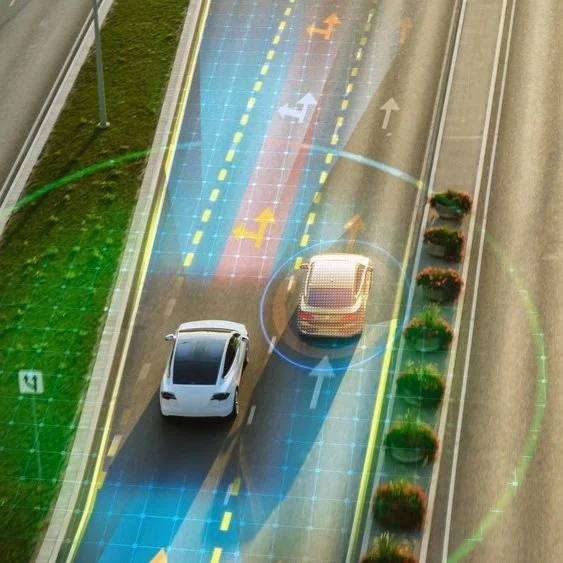
Autonomous Driving

shutterstock 1968875884

Applications of Computer Vision in Defense: Securing Borders and Countering Terrorism

Borders today are no longer just physical boundaries; they are high-stakes frontlines where technology, security, and humanitarian realities collide. From airports and seaports to remote terrain and refugee corridors, the task of maintaining secure, sovereign borders has become more complex than ever.

Traditional surveillance tools such as CCTV cameras, patrols, and physical inspections can only go so far. They’re limited by human attention, constrained by geography, and often reactive rather than preventative.

That’s why security agencies are increasingly turning to artificial intelligence, and in particular, computer vision solutions: a branch of AI that enables machines to interpret visual data with speed and precision. From identifying forged documents at immigration checkpoints to spotting unusual behavior along unmonitored border zones, it’s transforming how nations protect their perimeters.

This blog explores computer vision applications in defense, particularly how it is enhancing border security and countering terrorism across different nations.

The Evolving Landscape of Border Threats

In the current geopolitical climate, borders are more than lines on a map; they are dynamic spaces where national security, humanitarian concerns, and geopolitical tensions intersect.

The rise in global displacement due to conflict, climate change, and economic disparity has created a surge in migration flows that often overwhelm existing border control infrastructures. Smuggling syndicates and extremist groups have become adept at exploiting legal and physical blind spots, using forged documents, altered travel routes, and digital deception to bypass traditional checkpoints.

However, traditional border surveillance systems are struggling to keep pace. Reliant on static infrastructure, manual inspections, and human vigilance, these systems often operate with limited situational awareness and response time. Even when supported by basic monitoring technologies like CCTV, their effectiveness is constrained by the volume of data and the cognitive limits of human operators. This gap between the volume of threats and the capability to monitor them in real-time highlights the limitations of human-dependent systems.

To effectively respond to evolving threats, modern border security requires tools that can process vast streams of data, detect anomalies instantly, and operate continuously without fatigue. This operational need sets the stage for advanced technologies, particularly computer vision, to play a key role in building a more secure and responsive border environment.

Computer Vision in Defense & National Security

Computer vision, a rapidly evolving branch of artificial intelligence, allows machines to interpret and make decisions based on visual inputs such as images and video. In simple terms, it gives computers the ability to “see” and analyze the visual world in ways that were previously limited to human perception. When applied to border security, this technology enables the automated monitoring of people, vehicles, and objects across diverse environments such as airports, seaports, land crossings, and remote border zones.

What makes computer vision particularly effective in border operations is its real-time responsiveness, scalability, and consistency. It can process hundreds of camera feeds simultaneously, flag anomalies within seconds, and track movements with precision across large, complex terrains. Whether it is a crowded international terminal or a remote desert checkpoint, computer vision can adapt to varying conditions without compromising performance.

In modern deployments, computer vision is rarely used in isolation. It is often integrated with other data sources such as biometric sensors, drones, satellite imagery, and centralized surveillance systems. This fusion of data enhances decision-making by providing border authorities with a comprehensive, real-time operational picture. For example, a drone might capture live video of a remote area, which is then analyzed by computer vision software to detect unauthorized crossings, unusual behavior, or potential threats.

Beyond detection, these systems support intelligent responses, such as AI can prioritize alerts, reduce false positives, and even assist in forensic investigations by automatically tagging and retrieving relevant footage.

Key Applications of Computer Vision in Defense: Border Security & Counter-Terrorism

Computer vision is no longer experimental in border management; it is actively deployed in various operational contexts. The following subsections outline the most impactful applications currently being used or piloted.

Facial Recognition and Identity Verification

Biometric Matching Against Global Watchlists

One of the most established uses of computer vision at borders is facial recognition. At checkpoints and airports, systems scan travelers’ faces and automatically match them against government databases such as Eurodac in the European Union or biometric records maintained by the U.S. Department of Homeland Security. These tools can identify individuals flagged for criminal activity, prior deportations, or affiliations with terrorist organizations, significantly reducing the window of risk for unauthorized entry.

Operational Integration at Checkpoints and eGates

Facial recognition is frequently embedded into automated systems such as eGates, which speed up immigration procedures while maintaining security. These systems compare live images to biometric data stored in passports or digital ID chips. Their accuracy has improved significantly with the advent of deep learning models trained on diverse datasets, resulting in reduced error rates even in challenging conditions such as low light or partial face visibility.

Behavioral Anomaly Detection

Tracking Movement Patterns in Real Time

Beyond verifying identities, computer vision is increasingly used to monitor and assess behaviors at border zones. AI models trained on large volumes of surveillance footage can identify movement patterns that deviate from normal flow. For example, a person lingering unusually long near a restricted area, repeatedly circling a checkpoint, or moving against the typical flow of traffic may trigger automated alerts for further inspection. This continuous, context-aware monitoring supports early detection of suspicious activity that could signal trafficking, smuggling, or reconnaissance.

Detecting Subtle Signs of Risk or Evasion

Modern anomaly detection models go beyond simple motion detection. By analyzing posture, gait, pace, and trajectory, these systems can flag micro-behaviors that might be imperceptible to human observers. In high-traffic settings like ports of entry or transit hubs, where human attention is stretched thin, this capability acts as a powerful early-warning system. It also supports crowd control by alerting security teams to potential threats without disrupting the flow of legitimate travelers.

Document Fraud Detection

Automated Verification of Travel Documents

Border authorities routinely face attempts to cross borders using forged or altered documents. Computer vision systems now play a vital role in countering document fraud by automating the inspection of passports, visas, and identity cards. These systems use high-resolution image analysis to detect inconsistencies such as tampered photos, font anomalies, irregular seals, or microprint alterations, details that can often escape the notice of a human inspector, especially under time pressure.

Integration with eGates and Kiosks

This functionality is increasingly embedded within automated immigration infrastructure such as self-service kiosks and eGates. When a traveler presents a document, computer vision algorithms instantly analyze its authenticity and cross-check the information with backend databases. This not only improves security but also reduces congestion at border control points by accelerating processing for legitimate travelers.

Enhancing Trust Through Standardization

Several nations are adopting machine-readable travel documents with standardized security features to support these AI-based validation processes. In the EU, for instance, updated Schengen regulations mandate electronic document verification systems at major entry points. These systems rely heavily on computer vision to ensure that the document format, biometric photo, and embedded chip data align without requiring manual intervention.

Surveillance and Situational Awareness

Monitoring Expansive Border Zones with Computer Vision

Maintaining comprehensive situational awareness across thousands of miles of border terrain is a persistent challenge for security agencies. Computer vision addresses this gap by enabling automated, high-volume analysis of video feeds from fixed cameras, mobile units, and aerial platforms. Whether monitoring a remote desert crossing or a busy international terminal, these systems provide uninterrupted visibility and real-time analysis across vast and often inaccessible regions.

Real-Time Analysis from Drones and Satellites

Unmanned aerial vehicles (UAVs) and satellite imagery have become critical tools in border surveillance. When paired with computer vision, these platforms transform into intelligent reconnaissance systems capable of detecting human activity, vehicles, or unusual heat signatures with precision. For example, a drone equipped with infrared cameras can scan terrain at night and relay visual data to AI models that identify movement patterns inconsistent with legal crossings.

Geo-Tagged Threat Detection and Prioritization

What sets computer vision systems apart is their ability to geo-tag detections and prioritize alerts based on threat level. If a group of individuals is detected moving toward a restricted area, the system can not only flag the event but also provide coordinates, estimated numbers, and direction of movement. This enables border patrol units to respond more efficiently and with better context. Such capabilities reduce the risk of false alarms and optimize resource allocation during incident response.

Read more: Top 10 Use Cases of Gen AI in Defense Tech & National Security

Conclusion

Over the past two years, we have seen a shift from experimentation to real-world implementation. From facial recognition systems at airports to drone-based perimeter surveillance and anomaly detection tools at remote crossings, computer vision is no longer a future promise; it is a present reality. These technologies enable faster, more accurate, and more scalable responses to a range of threats, from identity fraud to human trafficking and organized terrorism.

The future of secure borders will be defined not just by how well we deploy technology, but by how wisely we govern it.

From facial recognition to object detection and geospatial analysis, DDD delivers the data precision that mission-critical applications demand, at scale, with speed, and backed by a globally trusted workforce.

Let DDD be your computer vision service partner for building intelligent and more secure applications. Talk to our experts!

References:

Bertini, A., Zoghlami, I., Messina, A., & Cascella, R. (2024). Flexible image analysis for law enforcement agencies with deep neural networks. arXiv. https://arxiv.org/abs/2405.09194

EuroMed Rights. (2023). Artificial intelligence in border control: Between automation and dehumanisation [Presentation]. https://euromedrights.org/wp-content/uploads/2023/11/230929_SlideshowXAI.pdf

IntelexVision. (2024). iSentry: Real-time video analytics for border surveillance [White paper]. https://intelexvision.com/wp-content/uploads/2024/08/AI-in-Border-Control-whitepaper.pdf

Wired. (2024, March). Inside the black box of predictive travel surveillance. https://www.wired.com/story/inside-the-black-box-of-predictive-travel-surveillance

Border Security Report. (2023). AI in border management: Implications and future challenges. https://www.border-security-report.com/ai-in-border-management-implications-and-future-challenges

Frequently Asked Questions (FAQs)

1. How do computer vision systems at borders handle poor image quality or environmental conditions?

Computer vision models used in border environments are increasingly trained on diverse datasets that include images in low light, poor weather, and obstructions such as face masks or sunglasses. Infrared and thermal imaging can also be integrated to improve detection accuracy during nighttime or in remote terrains. However, edge cases still present challenges and system performance often depends on sensor quality and environmental calibration.

2. Can computer vision help with the humanitarian aspects of border management?

Yes, there are emerging applications aimed at improving humanitarian outcomes. For example, computer vision is being tested to detect signs of distress among migrants crossing hazardous terrain, identify trafficking victims in crowded transit hubs, or monitor detention conditions. However, these use cases remain experimental and face ethical scrutiny, particularly around consent and unintended consequences.

3. How do border agencies train staff to work with AI-based surveillance systems?

Training programs are evolving to include modules on AI literacy, system interpretation, and human-in-the-loop decision-making. Border agents are trained not just to monitor alerts but to understand system limitations, verify results, and escalate cases responsibly. Some agencies also conduct scenario-based simulations to prepare staff for interpreting machine-generated intelligence in real time.

Applications of Computer Vision in Defense: Securing Borders and Countering Terrorism Read Post »
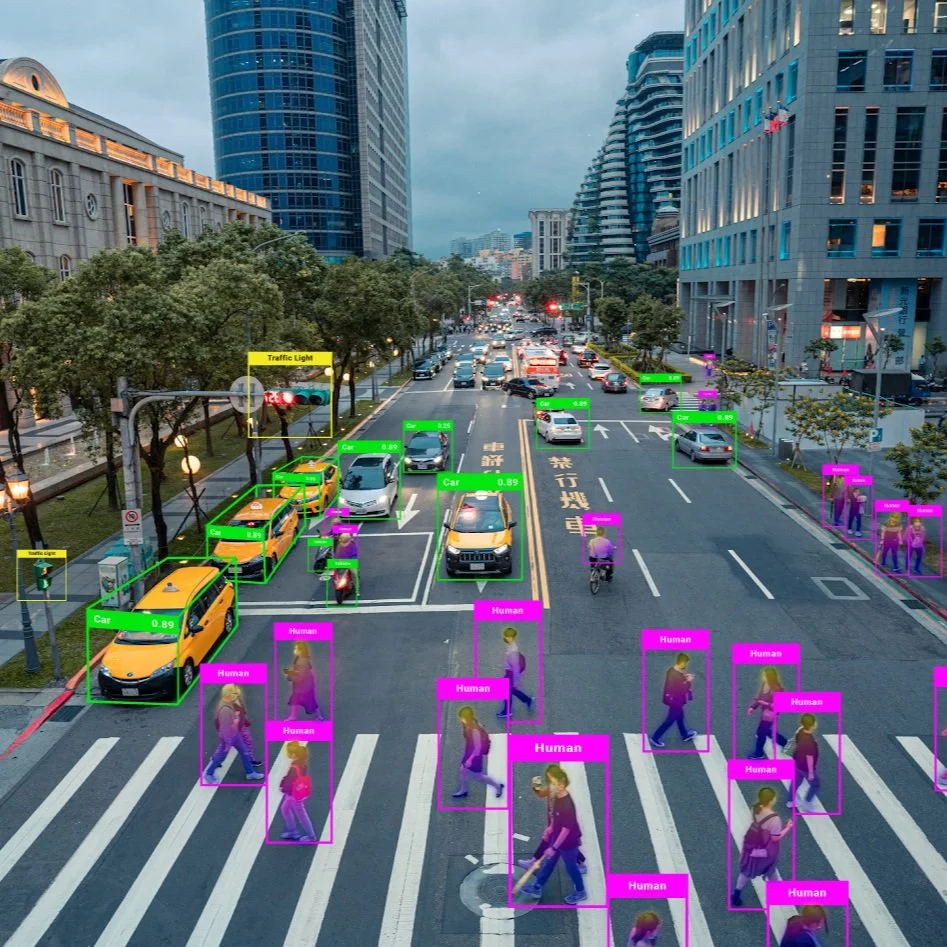

semantic2Band2Binstance2Bsegmentation

Semantic vs. Instance Segmentation for Autonomous Vehicles

Behind the sleek hardware and intelligent systems powering autonomous vehicles lies a complex web of perception technologies that enable machines to see, understand, and react to the world around them. Among these, two key techniques stand out: semantic segmentation and instance segmentation.

They allow an autonomous vehicle to know where the road ends, where a pedestrian begins, and how to respond in real time to a cluttered, unpredictable urban environment. From differentiating between two closely parked cars to detecting the edge of a curb under poor lighting, these segmentation methods are foundational to machine perception.

This blog explores the role of Semantic and Instance Segmentation for Autonomous Vehicles, examining how each technique contributes to vehicle perception, the unique challenges they face in urban settings, and how integrating both can lead to safer and more intelligent navigation systems.

What is Semantic and Instance Segmentation for Autonomous Vehicles

In autonomous driving, perception systems must translate raw visual data into a structured, actionable understanding. One of the most important components in this process is segmentation, which divides an image into distinct regions based on the objects or surfaces represented. This segmentation allows a vehicle to differentiate between the road, other vehicles, pedestrians, signage, and surrounding infrastructure, all of which are essential for safe navigation.

Semantic Segmentation 

Semantic segmentation provides a broad understanding of the driving environment by assigning a category to each pixel in the image. All pixels that represent the same type of object, such as a building, a pedestrian, or the road, are grouped under a shared class label. This classification helps the vehicle recognize navigable surfaces, roadside boundaries, and static structures. In effect, semantic segmentation offers a map-like view of the surroundings, which is invaluable for high-level planning and general context awareness.

Despite its value, semantic segmentation cannot distinguish between separate objects of the same type. For example, while it can identify the presence of pedestrians in a scene, it cannot tell how many there are or where one individual ends and another begins. This limitation becomes critical in dense urban scenarios where vehicles must react differently to each nearby object. Without the ability to treat these objects as separate entities, the system cannot accurately track movement, predict behavior, or prioritize safety decisions in real time.

Advantages of Semantic Segmentation

Semantic segmentation offers several key benefits in the development and deployment of autonomous driving systems. Its primary strength lies in the ability to provide a comprehensive, high-level understanding of the environment by labeling every pixel with a class identifier. This full-scene categorization helps the vehicle recognize the structure of the road, the presence of sidewalks, crosswalks, curbs, lane markings, and traffic control elements such as signs or lights.

One significant advantage of semantic segmentation is its computational efficiency. Since it does not need to distinguish between individual object instances, it requires fewer resources, making it more suitable for real-time applications where rapid processing is essential. This efficiency is especially valuable in early perception stages or embedded systems where memory and processing power are limited.

Instance Segmentation

Instance segmentation builds on semantic segmentation by not only classifying pixels by object type but also distinguishing between individual instances within the same category. This means that two cars side by side or a group of pedestrians are treated as separate, uniquely identified objects. This capability is crucial for tracking motion over time, predicting trajectories, and making context-sensitive decisions. For autonomous driving, it enables the system to follow a specific vehicle, yield to a crossing pedestrian, or anticipate the movements of a cyclist in a way that semantic segmentation alone cannot support.

While semantic segmentation provides the foundational structure of a scene, instance segmentation enables nuanced object-level understanding. Together, they form a complementary system where one outlines the general layout and the other fills in the detailed behavior of dynamic elements. This dual-layered perception is particularly vital in urban environments where unpredictability, high object density, and rapid decision-making are the norms.

Advantages of Instance Segmentation

Instance segmentation provides an extra layer of intelligence by offering detailed, object-level awareness. Unlike semantic segmentation, it allows the vehicle to identify and distinguish between different objects within the same category. This capability is vital for dynamic interaction with the environment, where understanding individual behavior and movement patterns is necessary.

The main advantage of instance segmentation is its support for object tracking and trajectory prediction. For example, in a scenario with multiple pedestrians near a crosswalk, instance segmentation enables the vehicle to track each one separately, assess their movement patterns, and predict whether they intend to cross the street. This individualized attention makes it possible to make fine-grained driving decisions that prioritize safety and responsiveness.

Instance segmentation is also critical for collision avoidance and behavior prediction in dense traffic. By distinguishing between different vehicles, cyclists, or other moving agents, the system can estimate how each object is likely to behave and adapt its own actions accordingly. This is especially important in complex or crowded urban environments, where multiple agents are in motion simultaneously and in close proximity.

Integration of Semantic and Instance Segmentation in Urban Driving

In the dynamic and often unpredictable environment of urban driving, both semantic and instance segmentation play vital roles. Semantic segmentation provides a broad understanding of the scene, which is essential for navigation and path planning. Instance segmentation offers detailed information about individual objects, which is crucial for tasks like obstacle avoidance and interaction with other road users.

Recent advancements have seen the integration of both techniques into unified models, such as panoptic segmentation, which combines the strengths of semantic and instance segmentation to provide a comprehensive understanding of the scene. These integrated approaches are particularly beneficial in urban environments, where the complexity and density of objects require both broad and detailed scene interpretation.

By leveraging the strengths of both semantic and instance segmentation, autonomous vehicles can achieve a more robust and nuanced understanding of urban environments, leading to improved safety and efficiency in navigation and decision-making processes.

What are the Challenges of Semantic and Instance Segmentation

Urban environments present a complex array of visual elements, making accurate segmentation a formidable task. The challenges are multifaceted, impacting both semantic and instance segmentation techniques.

1. Occlusions and Overlapping Objects

In dense urban settings, objects frequently occlude one another. Pedestrians may be partially hidden by vehicles, or street signs might be obscured by foliage. Semantic segmentation often struggles in these scenarios, as it assigns the same label to all pixels of a class without distinguishing individual instances. Instance segmentation aims to overcome this by identifying separate objects, but occlusions can still lead to inaccuracies in delineating object boundaries.

2. Variability in Object Scales

Urban scenes encompass objects of varying sizes, from distant traffic signs to nearby pedestrians. This scale variability poses a significant challenge for segmentation algorithms, which must accurately identify and classify objects regardless of their size.

3. Dynamic Lighting and Weather Conditions

Lighting conditions in urban environments can change rapidly due to factors like time of day, weather, and artificial lighting. These variations can adversely affect the performance of segmentation models, which may have been trained under specific lighting conditions. To mitigate this, some approaches incorporate data augmentation techniques during training to expose models to a broader range of lighting scenarios.

4. Real-Time Processing Requirements

Autonomous vehicles require real-time processing of visual data to make immediate decisions. Semantic segmentation models often offer faster processing times but may lack the granularity needed for certain tasks. Instance segmentation provides more detailed information but at the cost of increased computational complexity. Balancing speed and accuracy remains a critical challenge in deploying these models in real-world urban driving scenarios.

5. Sparse and Noisy Data

Sensors like LiDAR generate point cloud data that can be sparse and noisy, especially at greater distances. This sparsity makes it difficult for segmentation algorithms to accurately identify and classify objects.

6. Dataset Limitations

The performance of segmentation models heavily depends on the quality and diversity of training datasets. Many existing datasets may not capture the full variability of urban environments, leading to models that perform well in training but poorly in real-world scenarios. Efforts are underway to develop more comprehensive datasets that include a wider range of urban scenes and conditions.

7. Integration of Multi-Modal Data

Combining data from multiple sensors, such as cameras and LiDAR, can enhance segmentation accuracy. However, integrating these data sources poses challenges in terms of synchronization, calibration, and data fusion. Developing models that can effectively leverage multi-modal data remains an active area of research.

Read more: In-Cabin Monitoring Solutions for Autonomous Vehicles

How Can We Help?

Digital Divide Data empowers AI/ML innovation by providing high-quality, human-annotated training data at scale. Here’s how we help autonomous driving companies solve annotation challenges.

Scalable, High-Precision Data Annotation

DDD specializes in large-scale data annotation services, including pixel-level labeling, object instance tagging, and 3D point cloud segmentation. These services are essential for training deep learning models to recognize and distinguish urban objects such as pedestrians, vehicles, road signs, and infrastructure under complex city conditions.

By integrating quality assurance workflows and domain-specific training for its workforce, DDD ensures that the labeled data used to train semantic and instance segmentation models meets industry standards for accuracy and consistency, particularly vital for safety-critical applications in autonomous driving.

Support for Multi-Modal and Diverse Urban Datasets

Modern autonomous systems rely on multi-sensor data fusion (e.g., LiDAR, RGB, radar). DDD supports annotation across these data types, enabling robust fusion-based segmentation models. Furthermore, DDD’s work often emphasizes geographic and environmental diversity, contributing to the development of models capable of generalizing across varied urban landscapes.

Enabling Rare Class Detection through Dataset Balancing

Rare but critical classes like emergency vehicles, construction zones, or atypical road behaviors are often underrepresented in datasets. DDD supports dataset balancing by sourcing, curating, and annotating niche scenarios, thus enabling models to recognize low-frequency but high-impact elements critical to safe driving.

Leveraging Human-in-the-Loop Processes

DDD incorporates human-in-the-loop methodologies in annotation workflows, particularly for edge cases common in urban scenes such as occluded pedestrians, irregular vehicle shapes, and ambiguous infrastructure. This hybrid approach, combining automated tools with skilled human reviewers, greatly improves annotation accuracy for complex urban segmentation datasets.

Read more: How to Conduct Robust ODD Analysis for Autonomous Systems

Conclusion

Urban driving scenes introduce significant challenges: occlusions, inconsistent lighting, sensor noise, and the need for real-time decision-making all push the limits of segmentation models. Overcoming these challenges requires more than just algorithmic sophistication; it demands high-quality annotated data, diverse and well-balanced datasets, and scalable workflows that integrate human expertise into the AI development lifecycle.

The evolution of semantic and instance segmentation techniques continues to play a critical role in advancing autonomous driving technologies. By addressing the inherent challenges of urban environments through innovative model architectures and data integration strategies, the field moves closer to realizing fully autonomous vehicles capable of safe and efficient navigation in complex cityscapes.

If your team is building perception systems for autonomous driving, let’s talk. We’re here to help you turn visual complexity into safe, actionable intelligence.

Let DDD power your computer vision pipeline with high-quality, real-world segmentation data. Talk to our experts today.

References:

Zou, Y., Weinacker, H., & Koch, B. (2021). Towards urban scene semantic segmentation with deep learning from LiDAR point clouds: A case study in Baden-Württemberg, Germany. Remote Sensing, 13(16), 3220. https://doi.org/10.3390/rs13163220

Vobecky, A., et al. (2025). Unsupervised semantic segmentation of urban scenes via cross-modal distillation. International Journal of Computer Vision. https://doi.org/10.1007/s11263-024-02320-3

Vobecky, A., et al. (2025). Unsupervised semantic segmentation of urban scenes via cross-modal distillation. International Journal of Computer Vision. https://doi.org/10.1007/s11263-024-02320-3

FAQs

1. How is segmentation different from object detection in autonomous driving?
While object detection identifies and localizes objects using bounding boxes, segmentation provides a much finer level of detail by classifying every pixel. This pixel-level understanding helps autonomous vehicles interpret the shape, boundary, and precise position of objects, which is essential for tasks like lane following or obstacle avoidance.

2. What role does synthetic data play in training segmentation models?
Synthetic data, generated from simulations or video game engines, is increasingly used to augment real-world datasets. It helps address class imbalances, rare scenarios, and edge cases while reducing the time and cost of manual annotation. However, models trained on synthetic data still require fine-tuning on real-world datasets to generalize effectively.

3. How do segmentation models handle moving objects versus static ones?
Segmentation itself is agnostic to motion; it labels objects based on appearance in a single frame. However, when used in video sequences, segmentation can be combined with tracking algorithms or temporal models to identify which objects are moving and predict their future positions.

4. Is instance segmentation always better than semantic segmentation for autonomous vehicles?
Not necessarily. Instance segmentation provides more detail, but it is also more computationally intensive. In some applications, such as identifying road surface or traffic signs, semantic segmentation is sufficient and more efficient. The choice depends on the task’s complexity, the required level of detail, and hardware constraints.

Semantic vs. Instance Segmentation for Autonomous Vehicles Read Post »

Autonomous systems industry experts participating in DDD’s roundtable at AutoSens US 2025

Insights from DDD’s Roundtable at Autosens US 2025

On 10th June, Sahil Potnis, VP of Product and Partnerships at DDD, brought together Autonomy industry leaders for a high-impact roundtable focused on problems autonomous companies are struggling with: collecting meaningful, high-quality data from sensors and cameras.

With around 10 experts at the table, the session started with a refreshingly candid discussion. Sahil pointed out that despite the demand, data collection is still too hard, too expensive, and far too limited for the scale we need to train and validate real-world systems. His perspective resonated with many in the room, setting the tone for collaborative and insightful discussions.

Throughout the session, Sahil emphasized the value of pairing annotated datasets with clearly defined KPIs to drive more focused development and smarter validation. He shared how this approach helps surface performance issues early but also ensures teams are working toward metrics that matter.

The group shared their perspectives on collaboration challenges, use-case gaps, and openly shared issues they’ve encountered in the field. What emerged was a genuine sense of community–people eager to learn from one another and push the industry forward.

Because when it comes to building smarter, safer, more capable systems, better data isn’t optional, it’s everything in the Autonomy industry.

Insights from DDD’s Roundtable at Autosens US 2025 Read Post »

ODD2BAnalysis2Bfor2BAutonomy

How to Conduct Robust ODD Analysis for Autonomous Systems

Autonomous systems are no longer experimental technologies operating in closed labs; they are rapidly becoming integral to how we move, deliver, monitor, and interact with our environments.

From self-driving cars and aerial drones to intelligent humanoids, the complexity of these systems requires that their operational boundaries are clearly understood, rigorously tested, and transparently communicated. This is where Operational Design Domain, or ODD analysis for autonomous systems, comes into play.

An ODD defines the specific conditions under which an autonomous system is designed to operate safely. It includes parameters such as weather conditions, road types, traffic scenarios, geographical boundaries, lighting conditions, and more. Think of it as the system’s declared comfort zone. If the system operates within that zone, its behavior should be both predictable and verifiably safe. Outside of it, the system is not guaranteed to function correctly, which introduces unacceptable risk.

This blog provides a technical guide to conducting robust ODD analysis for autonomous driving, detailing how to define, structure, validate, and evolve an Operational Design Domain using formal taxonomies, scenario-based testing, coverage metrics, and integration to ensure the safe and scalable deployment.

What Is an Operational Design Domain (ODD) and Why its Important?

An Operational Design Domain (ODD) defines the specific set of conditions under which an autonomous system is intended to operate safely. These conditions span across environmental, geographic, temporal, infrastructure, and dynamic factors. For example, a self-driving shuttle might be restricted to operating only on urban roads with speed limits under 30 km/h, in daylight hours, during dry weather. This collection of constraints forms its ODD. By clearly delineating the scope of operation, ODDs enable engineers to focus system development, testing, and safety validation on a bounded set of real-world conditions.

An ODD should be structured in a modular and exhaustive way. Key dimensions include “Scenery” (road layout, intersections), “Environment” (weather, lighting), and “Dynamic elements” (presence of other vehicles, pedestrians, animals). Using this framework helps prevent omissions in defining where and how an autonomous system should behave safely.

Beyond technical design implications, ODDs also play a pivotal role in regulatory compliance and safety assurance. Authorities in both the United States and Europe increasingly require autonomous system developers to submit detailed ODD documentation as part of their safety cases. The National Highway Traffic Safety Administration (NHTSA) and European safety frameworks aligned with UNECE and ISO guidelines expect that a system’s ODD be transparent, traceable, and demonstrably validated. In this context, an articulated and well-analyzed ODD becomes not just an engineering tool but a legal and ethical obligation.

How Do You Structure an ODD Analysis Using Standards and Taxonomies?

Building a robust ODD starts with organizing it through a formal taxonomy. This ensures that the domain is described in a structured, modular way instead of relying on free-text or ad hoc formats. It supports consistent communication across engineering, safety, and compliance teams and creates a dependable foundation for testing and validation.

Core ODD Dimensions
A comprehensive ODD typically includes multiple categories:

  • Scenery: road layouts, types, and intersections

  • Environment: weather conditions, lighting, and visibility

  • Dynamic Elements: other vehicles, pedestrians, and animals

  • Time: time-of-day or daylight constraints

  • Infrastructure Dependencies: signals, signage, connectivity requirements
    These categories define the operational envelope and make it easier to identify and assess system capabilities and limitations.

Benefits of Standardized Structure
Standardized structures ensure completeness and uniformity. International standards like ISO 34503 offer a baseline for describing each category in a clear and reusable format. This allows systems to scale across use cases or geographies without losing clarity or consistency.

Layered ODD Models for Depth
Some methodologies break down the ODD further into layered models- functional, situational, and behavioral. These layers help developers map system behavior and decision-making to specific operating conditions, offering a deeper analysis of how the system responds to real-world inputs.

Integration into Simulation and Testing Tools
Structured ODDs can be encoded into machine-readable formats that feed directly into simulation platforms and scenario libraries. This allows for automated scenario selection, test planning, and coverage tracking, significantly improving testing efficiency and traceability.

Foundation for Lifecycle Alignment
A structured ODD is essential not only for development but for every phase of the product lifecycle. It links environmental assumptions directly to system requirements, design decisions, validation strategies, and regulatory submissions, serving as a common reference across disciplines.

How To Manage ODD Changes as the Autonomous System Evolves?

An autonomous system’s ODD is rarely static. As the system matures, adapts to new markets, or incorporates new features, its ODD often expands to cover more complex or variable conditions. Managing this evolution is critical to maintaining system safety and ensuring that each expansion is accompanied by appropriate analysis, validation, and documentation.

Expanding the ODD without structured oversight can introduce risk. For example, adding nighttime operation, new weather conditions, or different road types may challenge sensor performance, decision-making algorithms, or fallback strategies. To manage these transitions effectively, ODD changes must be assessed methodically, with full awareness of how new conditions impact the existing safety case.

Key Practices for ODD Change Management:

Incremental Expansion Strategy
Begin with a narrow, well-understood ODD and expand it in controlled phases. This allows teams to develop confidence in a smaller domain before layering on new variables. Each new capability, such as driving in rain or on rural roads, should be treated as a discrete change that triggers new analysis and validation.

Change Impact Analysis
Use structured traceability to assess how each ODD modification affects system design, functional safety, performance requirements, and test coverage. For instance, if the new ODD includes foggy conditions, assess how perception sensors behave, whether braking performance is still within limits, and if previously validated scenarios are still valid under the new conditions.

Link ODD to Safety Engineering Artifacts
A robust ODD should be explicitly connected to all dependent safety assets:

  • Hazard analyses

  • Functional and technical requirements

  • Scenario libraries

  • Validation plans
    This traceability ensures that when the ODD changes, you can identify exactly which elements of the safety case must be revisited, reducing the chance of unaddressed risk.

Versioning and Documentation
Maintain detailed documentation of each ODD version, including what changes were made, why, and what corresponding updates were performed in testing and validation. Version control enables accountability and simplifies regulatory reporting.

Cross-Domain Applicability
In some cases, the same system architecture may be deployed across multiple environments (e.g., from highways to industrial sites). Change management methods should allow the ODD to be compared, merged, or branched to accommodate each domain while minimizing redundant analysis.

Continuous Monitoring
Even after deployment, systems should monitor real-world conditions to identify when they operate outside their declared ODD or encounter edge cases. These occurrences should trigger a feedback process for refining or extending the ODD safely.

How Do You Use Scenario-Based Testing to Validate ODD Analysis?

Scenario-based testing has become a central method for validating autonomous systems. It replaces the impractical approach of accumulating endless on-road miles with targeted, repeatable, and measurable tests that reflect the real-world situations a system may encounter. For this testing to be meaningful, it must be grounded in the Operational Design Domain (ODD). The ODD defines the space of operational conditions, and scenario-based testing explores that space with structured, representative examples.

When properly linked, the ODD serves as the basis for defining what kinds of scenarios are needed to prove system safety. Each condition outlined in the ODD should be reflected in a set of corresponding test cases that cover nominal behavior, edge cases, and failure modes.

Core Strategies for ODD-Driven Scenario Testing

Scenario Derivation from ODD Parameters
The starting point is to systematically derive scenarios from the parameters defined in the ODD. For instance, if the ODD includes urban roads during heavy rain and night-time conditions, there should be test scenarios simulating pedestrians crossing in poorly lit areas during rainfall. This ensures the system is tested in the same conditions under which it claims to be safe.

ODD-Tagging of Test Cases
Each test scenario should be tagged with the specific ODD conditions it represents. This tagging allows teams to track which parts of the ODD have been tested and which still lack coverage. As the ODD evolves, tagging also helps in updating only the necessary tests rather than rebuilding the entire suite.

Coverage Metrics and Risk-Based Prioritization
It’s not enough to have scenarios; the value lies in understanding how well they cover the ODD. Coverage can be measured by comparing the number and distribution of test scenarios across ODD parameters. Some factors, like weather or road type, may be high-risk and require more testing. Prioritization based on risk, frequency of occurrence, and historical incident data helps allocate testing resources efficiently.

Use of Simulation and Synthetic Environments
Simulators allow testing across a broad range of ODD conditions that are rare, dangerous, or costly to reproduce in the real world. Scenario libraries can be programmatically filtered using the ODD definition to generate or select only those scenarios that are relevant to the system’s operational domain. This enables large-scale validation with consistent traceability.

Boundary and Edge Case Testing
One of the most important contributions of ODD-driven testing is identifying and evaluating system behavior at the edges of the defined domain. These are the areas most likely to challenge the system’s capabilities, where conditions are borderline or transitions are occurring, such as dawn-to-dusk lighting changes or the onset of rain.

Adaptive Scenario Selection
Scenario-based testing should adapt as the ODD changes or as new insights emerge from operational data. By maintaining a formal link between the ODD and test scenario metadata, teams can automatically detect which tests need to be added or rerun when the ODD is updated.

Read more: Accelerating HD Mapping for Autonomy: Key Techniques & Human-In-The-Loop

What Metrics Help Measure ODD Coverage and Test Effectiveness?

Measuring how well an autonomous system has been tested within its Operational Design Domain (ODD) is a critical part of ensuring safety. Without metrics, it’s impossible to know whether the testing is representative, comprehensive, or aligned with the actual conditions the system will encounter. Coverage metrics offer a quantifiable way to assess whether the system has been evaluated across the full range of ODD parameters and how thoroughly those conditions have been exercised through scenario-based testing.

Effective coverage measurement goes beyond simply counting test cases. It involves understanding what parts of the ODD are covered, how often they are tested, and how critical those conditions are to system safety. The goal is not just volume, but relevance and depth.

Key Metrics and Evaluation Techniques

ODD Parameter Coverage
This measures which specific ODD conditions have been addressed in test scenarios. For example, if the ODD includes ten types of weather conditions but testing only covers three, that indicates a significant gap. Teams can define thresholds for minimum acceptable coverage across scenery types, lighting conditions, traffic scenarios, and more.

Risk-Weighted Coverage
Not all conditions are equally important. Some may be rare but high-risk (e.g., heavy snow with low visibility), while others are frequent but low-risk (e.g., sunny daytime in low-traffic areas). Risk-weighted metrics assign a higher value to tests that address combinations with higher safety implications. This helps prioritize the most meaningful scenarios and ensures that critical conditions are not overlooked.

Frequency of Occurrence vs. Test Representation
This involves comparing the real-world frequency of specific ODD conditions to their representation in the test suite. If certain scenarios occur often in the field but are underrepresented in testing, that misalignment could lead to unanticipated system failures. Aligning test distribution with operational exposure improves reliability.

Test Redundancy and Scenario Diversity
Measuring diversity helps avoid over-testing similar conditions while neglecting others. Even if multiple tests are labeled under the same weather condition, they should vary in other factors such as lighting, road curvature, and dynamic interactions. This ensures that the system is evaluated under a meaningful range of permutations.

Edge Case Density
Edge case testing focuses on the boundaries of the ODD, such as low-visibility thresholds, sudden weather transitions, or densely populated intersections. Tracking how many of these edge cases are included, and how often they are revisited, indicates how well the system’s performance envelope is being challenged.

Confidence Metrics and Uncertainty Quantification
Some teams also employ metrics to assess the system’s uncertainty or confidence levels across different ODD conditions. For example, if the system consistently exhibits low confidence in foggy environments, this could prompt additional testing, ODD refinement, or system redesign.

Scenario-to-ODD Traceability Score
This metric evaluates how well each scenario is linked back to specific ODD parameters. Strong traceability enables targeted regression testing and faster updates when the ODD changes, making the validation process more agile and maintainable.

How Can We Help in ODD Analysis for Autonomous Systems?

Digital Divide Data (DDD) offers end-to-end support for teams developing and scaling autonomous systems by delivering structured, actionable ODD analysis. Whether you’re launching in a new environment, expanding your operational reach, or adapting existing autonomy stacks to different regulatory or physical conditions.

By examining environmental factors, infrastructure dependencies, agent behavior, and robotic system capabilities, DDD enables product and engineering teams to align autonomy solutions with the practical demands of specific regions or markets.

Read more: In-Cabin Monitoring Solutions for Autonomous Vehicles

Conclusion

As autonomous systems continue to move from controlled environments into public spaces, the importance of clearly defining and rigorously validating their Operational Design Domain (ODD) cannot be overstated. A well-structured ODD acts as a contract between the system, its developers, and the world it operates in, setting the boundaries for safe operation, guiding design decisions, and serving as the foundation for testing, hazard analysis, and regulatory compliance.

Robust ODD analysis is not a one-time exercise. It’s a dynamic, ongoing process that evolves with system capabilities, deployment contexts, and operational feedback. By leveraging structured taxonomies, integrating the ODD into all stages of the development lifecycle, and validating through targeted, scenario-based testing, teams can ensure their autonomous systems perform safely and predictably within their intended environments.

Accelerate your autonomous deployment with DDD’s structured ODD solutions.

To learn more, talk to our experts

Frequently Asked Questions (FAQs)

What is the purpose of defining an ODD for autonomous systems?
An ODD outlines the specific conditions under which an autonomous system is expected to operate safely. This includes variables like weather, road types, lighting, traffic, and infrastructure. Defining an ODD sets clear boundaries for system capabilities and ensures all engineering, testing, and safety validation efforts are aligned with real-world operational constraints.

How often should an ODD be updated?
Updates are necessary whenever the system’s features expand, when it is deployed in new environments, or when real-world incidents reveal edge cases or risks that weren’t accounted for. Ongoing monitoring and structured change management help maintain the ODD’s relevance and safety coverage.

What’s the relationship between ODD and scenario-based testing?
Scenario-based testing is used to validate that an autonomous system performs safely across the full range of conditions defined in the ODD. Each scenario represents a combination of factors like road layout, weather, and traffic. Effective testing involves selecting or generating scenarios that reflect all ODD parameters, particularly edge cases and high-risk combinations.

How can ODD analysis support system scalability?
Robust ODD analysis enables teams to systematically assess and manage changes when expanding to new regions, use cases, or environments. It supports evaluating the portability of capabilities, identifying necessary engineering updates, and guiding scenario-based validation. This structured approach makes it easier to scale without compromising safety or performance.

References: 

ASAM e.V. (2023). ASAM OpenODD: Operational Design Domain Standard for ADAS/AD. https://www.asam.net/standards/detail/openodd/

Fraunhofer IESE. (2024). Cross-Domain Safety Engineering to Support ODD Expansion. Retrieved from https://www.iese.fraunhofer.de/

ISO. (2022). ISO 34503: Road vehicles — Taxonomy and definitions for terms related to driving automation systems for road vehicles — Operational Design Domain (ODD). International Organization for Standardization.

UK Department for Transport & BSI. (2022). PAS 1883: ODD Taxonomy for Automated Driving Systems. British Standards Institution.

How to Conduct Robust ODD Analysis for Autonomous Systems Read Post »

A row of futuristic unmanned ground vehicles (UGVs) resembling compact military tanks with tracked wheels and turrets, photographed in an outdoor environment

Fleet Operations for Defense Autonomy: Bridging Human Control and AI Decisions

By Umang Dayal

June 05, 2025

Modern defense strategies are undergoing a significant transformation as nations race to integrate autonomous systems into their fleet operations across air, land, sea, and space.

With autonomous systems capable of executing missions faster, with greater precision, and at reduced risk to human life, their adoption is accelerating. However, this shift raises a critical challenge: how to balance the efficiency of AI-driven autonomy with the oversight, judgment, and adaptability of human decision-makers.

This blog explores the evolving landscape of fleet operations in defense autonomy, focusing on how modern militaries are bridging the gap between rapid AI-driven decision-making and human oversight.

The Shift to Autonomous Defense Fleets

Over the past decade, the defense sector has steadily advanced from piloting isolated autonomous platforms to developing integrated, AI-enabled fleet operations. This evolution is driven by the operational need to outpace adversaries in environments where speed, scale, and coordination are critical. Whether it’s swarms of aerial drones providing real-time surveillance, unmanned surface vessels patrolling contested waters, or autonomous ground convoys delivering logistics support, AI is rapidly becoming central to modern defense readiness.

Unlike legacy systems that operated under rigid, pre-programmed instructions, today’s autonomous fleets are designed to adapt, making decisions in real-time based on sensor inputs, mission objectives, and environmental changes. This dynamic autonomy enables forces to respond faster and more effectively to emerging threats. For example, autonomous unmanned aerial systems (UAS) can conduct ISR (Intelligence, Surveillance, Reconnaissance) missions continuously, feeding high-resolution data into AI engines that generate actionable insights within seconds. Naval operations are seeing similar transformations, with autonomous vessels capable of long-duration deployments without resupply or human presence.

At the strategic level, defense planners see autonomy not as a replacement for human operators but as a way to extend their reach. The goal is to create force multipliers, platforms that can operate semi-independently, coordinate with manned units, and execute tasks that would be too dangerous or too resource-intensive for humans alone. The shift to autonomous defense fleets marks a fundamental rethinking of how military assets are deployed, coordinated, and supported, laying the groundwork for a more agile and resilient force structure.

Importance of Human-AI Collaboration in Fleet Operations for Defense Autonomy

As AI systems become more capable of making tactical and strategic decisions in defense environments, the role of human oversight becomes even more critical. Autonomous systems can navigate, identify targets, and even initiate responses based on data-driven models, but they lack context, moral reasoning, and the ability to weigh consequences in the nuanced way a human can. In high-stakes scenarios where a single misjudgment could lead to unintended escalation or collateral damage, human judgment is irreplaceable.

Human-AI collaboration in defense operations ensures that AI systems serve as decision-support tools rather than autonomous actors operating in a vacuum. This is particularly important in lethal contexts, where legal and ethical frameworks require a “human-in-the-loop” to authorize or supervise decisions. These models of interaction, ranging from direct control to supervisory oversight, are essential to maintaining accountability, compliance with international humanitarian law, and operational trust.

Moreover, humans bring domain expertise, cultural intelligence, and experience-based reasoning that AI simply cannot replicate. In contested environments where adversaries may intentionally deceive or spoof autonomous systems, human intuition and adaptability become decisive advantages. AI may detect a pattern or anomaly, but it’s a human who determines whether that anomaly represents a threat, a mistake, or a benign irregularity.

Ultimately, the success of AI in defense fleet operations doesn’t lie in replacing people, it lies in enabling better decisions, faster responses, and smarter resource deployment through intelligent collaboration.

Key Technologies Enabling Combined Human-AI Fleet Operations

The transition from manual to autonomous fleet operations in defense is underpinned by a suite of emerging technologies that allow AI and human operators to function as cohesive teams. These technologies are not just enabling autonomy, they’re shaping how decisions are made, delegated, and supervised in mission-critical environments.

At the core is the Human-in-the-Loop (HiTL) and Human-on-the-Loop (HoTL) architecture. In HiTL systems, humans make or approve decisions before execution, ensuring oversight in every action. In HoTL configurations, AI systems can execute actions independently, but a human supervises and can intervene or override decisions as needed. These models provide scalable oversight, allowing operators to manage multiple systems simultaneously without losing situational awareness or control.

Sensor fusion is another foundational technology, aggregating data from a range of inputs, visual, thermal, radar, acoustic, and more, into a unified operational picture. This real-time synthesis enables both AI and human operators to act on accurate, comprehensive information. Combined with edge computing, which allows data to be processed locally on the device rather than in a centralized server, this ensures low-latency responses critical for battlefield scenarios.

Explainable AI (XAI) is becoming essential for fostering trust in autonomous decisions. In a military setting, commanders must understand why an AI system made a recommendation, especially when lives are on the line. XAI tools provide interpretable feedback, helping human operators validate and contextualize AI-driven insights before taking action.

Finally, a secure, resilient communications infrastructure is vital to maintain the flow of data between humans and autonomous systems. This includes encrypted mesh networks, satellite-based communication links, and redundancy protocols that ensure continuity even under cyber or electronic warfare attacks.

These technologies, when integrated thoughtfully, enable a synchronized human-AI defense operation, where machines handle scale and speed, while humans ensure judgment, compliance, and strategic alignment. The result is not just automation, but a force architecture optimized for agility, resilience, and trust in the face of complex threats.

Learn more: Reducing Hallucinations in Defense LLMs: Methods and Challenges

Challenges and Risk Factors in Fleet Operations for Defense Autonomy

While the integration of AI into defense fleet operations offers transformative potential, it also introduces complex challenges that cannot be ignored. At the core is the issue of trust calibration, deciding when to rely on AI outputs and when to override them. Over-trusting AI can lead to catastrophic consequences if systems misinterpret a situation or are manipulated by adversarial inputs. Under-trusting AI, on the other hand, can negate the very efficiencies and speed it is meant to deliver. Building systems that clearly communicate confidence levels, uncertainties, and rationale is essential for informed human oversight.

Adversarial environments pose another major risk. Unlike controlled commercial applications, defense settings are contested by intelligent opponents actively trying to mislead or disrupt autonomous systems. Techniques like sensor spoofing, data poisoning, and electromagnetic jamming can misguide AI models or degrade their decision-making quality. Ensuring resilience through adversarial training, redundancy, and fallback modes is a top priority in such scenarios.

Interoperability remains a persistent hurdle. Defense fleets are composed of heterogeneous systems from multiple vendors and legacy platforms, often designed without modern AI integration in mind. Achieving seamless communication, coordination, and decision-sharing between manned and unmanned assets requires robust interface standards, real-time data protocols, and system-level testing, none of which are trivial in fast-evolving battlefield environments.

Another critical issue is cybersecurity. Autonomous systems, especially those with remote connectivity and real-time data streams, expand the attack surface for adversaries. A single exploited vulnerability in an AI-enabled platform could lead to system hijack, intelligence leaks, or operational disruption. This makes secure-by-design architectures, ongoing threat modeling, and real-time monitoring indispensable for fleet-level autonomy.

Lastly, legal and accountability gaps persist. When AI makes or executes a decision that results in unintended consequences, it’s often unclear where responsibility lies. Current military doctrines and international laws are still catching up with questions of liability, proportionality, and ethical compliance in autonomous operations. Establishing clear governance, chain-of-command protocols, and audit trails is essential for operational legitimacy.

Addressing these challenges head-on is not optional, it’s foundational. Without solutions to these risks, the effectiveness and adoption of AI in defense fleet operations will remain constrained, no matter how advanced the technology becomes.

Learn more: How GenAI is Transforming Administrative Workflows in Defense Tech

How Digital Divide Data Can Help

Digital Divide Data (DDD) plays a critical role in enabling the responsible deployment of AI across defense fleet operations by supporting both the technical infrastructure and the human-AI collaboration necessary for mission success. As autonomous systems become more data-driven and real-time in nature, the need for accurate, scalable, and secure data workflows becomes central.

Our Human-in-the-Loop (HiTL) services are purpose-built for defense-grade AI operations. We provide data annotation, validation, and continuous feedback mechanisms that train and refine autonomous models to perform reliably in complex environments. Whether it’s object recognition for ISR systems, behavioral classification in maritime surveillance, or threat detection from aerial data streams, our teams ensure the data powering your models reflects operational realities and edge-case scenarios.

Our experience in data curation and compliance-driven workflows ensures that defense AI deployments adhere to the highest standards of quality, security, and traceability. We specialize in structured datasets for fleet operations, autonomy benchmarking, and model stress-testing, services essential for building trusted, testable AI systems that remain aligned with legal and ethical frameworks.

Conclusion

The integration of AI-driven autonomy into defense fleet operations marks a pivotal shift in modern military strategy. The future of defense fleets lies in seamless collaboration between intelligent systems and human operators, combining the speed and scale of AI with the experience, ethics, and contextual awareness unique to people.

Bridging human control and AI decision-making is essential not only for operational effectiveness but also for maintaining accountability, trust, and compliance with legal and ethical standards. This hybrid approach ensures that autonomous fleets can operate safely and adaptively in contested, high-stakes environments while empowering commanders with better situational awareness and decision support.

Achieving this balance will define the next generation of defense capabilities, one where autonomy amplifies human potential rather than replaces it, ultimately securing strategic advantage in complex and dynamic spaces.

Let’s discuss how DDD can support your next-generation defense autonomy initiatives. Contact our experts

References:

Defense Innovation Board. (2023). Responsible artificial intelligence guidelines for the Department of Defense. U.S. Department of Defense. https://www.ai.mil

Scharre, P., & Horowitz, M. C. (2023). Artificial intelligence and the future of war. Center for a New American Security. https://www.cnas.org/publications/reports

DARPA. (2024). Mosaic warfare and human-machine teaming. Defense Advanced Research Projects Agency. https://www.darpa.mil

NATO ACT. (2023). Autonomous systems in multi-domain operations: Human-machine integration. NATO Allied Command Transformation. https://www.act.nato.int

Fleet Operations for Defense Autonomy: Bridging Human Control and AI Decisions Read Post »

Simulation2BServices

Simulation-Based Scenario Diversity in Autonomous Driving: Challenges & Solutions

As autonomous vehicles edge closer to widespread adoption, the industry’s central challenge remains the same: Safety.

Despite enormous advancements, the road ahead is unpredictable, shaped by an almost infinite combination of factors, including weather patterns, pedestrian behavior, erratic drivers, road construction, and even cultural driving norms. Testing for such variability in physical environments is costly and time-consuming, and dangerously inadequate for edge-case scenarios that are rare yet high-risk.

This is where simulation comes into play. Simulation has become the industry’s most powerful tool for accelerating development, enabling engineers to test thousands of driving scenarios in a fraction of the time it would take in the real world. Scenario diversity refers to the breadth and variability of driving situations modeled in a simulation. This includes differences in road geometry, actor behaviors, lighting conditions, traffic density, and unexpected obstacles. Diverse scenarios are what allow autonomous driving systems to experience the long-tail of rare, high-risk events that rarely occur during routine driving but are critical to system reliability.

In this blog, we will discuss scenario diversity in simulation for autonomous driving, why it’s important, what the associated challenges are, and how to solve them.

The Limits of Real-World Testing in Autonomous Driving

Despite being the ultimate ground truth, real-world testing presents significant limitations when it comes to preparing autonomous vehicles for the complexities of public roads. One of the most glaring issues is its inefficiency in exposing AV systems to rare but high-stakes scenarios, known as edge cases. These are the unpredictable situations that occur infrequently but carry significant safety implications, such as a pedestrian suddenly darting into traffic, a vehicle running a red light, or unexpected debris on a highway. Encountering these scenarios during naturalistic testing can take millions of driven miles, an impractical and risky proposition.

Real-world testing is also resource-intensive. Each mile driven on public roads involves vehicle hardware, safety drivers, permits, insurance, and environmental impact. Not only is it expensive, but it also puts the public at risk if the AV software encounters a scenario it has not been adequately trained to handle.

Furthermore, real-world testing is inherently reactive rather than proactive. Engineers must wait for edge cases to occur organically rather than being able to design and iterate on them in a controlled environment. This lag stifles the pace of development and hampers the ability to debug and fine-tune AV systems with precision. It also restricts the ability to test vehicles in hazardous conditions, such as severe weather, nighttime in dense traffic, or school zones during peak hours, without endangering human lives.

In contrast, simulation offers a pathway to safety and scalability by allowing developers to recreate, vary, and stress-test these difficult scenarios under controlled, repeatable conditions. But for simulation to fulfill that promise, it must move beyond repetition of simple driving patterns and embrace a methodology built around diverse, dynamic scenario modeling. That is the bridge between testing and true safety readiness.

What is Scenario Diversity in Autonomous Driving Simulations

Scenario diversity in simulation refers to the comprehensive range of distinct driving situations and environmental conditions that autonomous vehicles are exposed to during virtual testing. Unlike basic simulation runs that might repeat standard driving patterns, such as straight highway cruising or simple stop-and-go city traffic, scenario diversity emphasizes varying multiple elements simultaneously to reflect the complexity of real-world driving.

A “scenario” in the autonomous vehicle context can encompass a broad set of factors: road layouts (highways, urban streets, intersections, roundabouts), environmental conditions (rain, fog, night, glare), dynamic actors (pedestrians, cyclists, other vehicles), traffic behaviors (aggressive lane changes, jaywalking, sudden braking), and unexpected events (obstacles on the road, emergency vehicles, construction zones). The value lies in the variation and combinations of these parameters, which generate an extensive set of test cases, each presenting unique challenges for perception, decision-making, and control systems.

For example, the same scenario of a pedestrian crossing can be diversified by altering the time of day, the pedestrian’s speed and intent, the vehicle’s approach speed, and the surrounding traffic density. When multiplied across thousands of such permutations, scenario diversity creates a rich tapestry of experiences that stress-test an autonomous vehicle’s capabilities.

This approach goes beyond simple coverage of the “typical” or “expected” scenarios and intentionally targets the “long tail” of rare, high-risk events. Capturing this breadth is essential because autonomous driving systems must be resilient not only in common situations but also when facing unpredictable, complex interactions that could otherwise lead to failures.

By defining and varying scenarios along multiple axes, simulation environments become powerful tools for exposing gaps in system robustness and for validating how AV software performs under conditions that would be difficult, dangerous, or impossible to recreate repeatedly on real roads.

Importance of Scenario Diversity for Safety in Autonomy Solutions

Scenario diversity is fundamental to achieving safety in autonomous driving because it addresses one of the core challenges: preparing vehicles to handle the unexpected. Autonomous systems rely heavily on machine learning models trained on vast amounts of data, but these models tend to perform well only within the scope of scenarios they have “seen” during training and testing. Without exposure to diverse situations, vehicles risk becoming brittle, performing adequately in routine conditions but failing when faced with novel or complex events.

Diverse scenarios enable comprehensive coverage of edge cases and long-tail events, which are often the root causes of accidents and system failures. By incorporating these into simulations, developers can identify weaknesses in perception, prediction, and planning modules before deployment.

Moreover, scenario diversity supports the robustness of machine learning models by providing varied and representative data that helps avoid overfitting to common conditions. This variation is critical for building adaptable AV systems capable of generalizing well across different geographic locations, weather conditions, and traffic cultures.

Beyond training, diverse scenarios serve as rigorous stress tests that benchmark system performance in challenging conditions, such as poor visibility, erratic actor behavior, or sudden changes in road geometry. These tests reveal vulnerabilities that may not surface under average driving conditions, enabling targeted improvements and iterative validation. It is this deliberate and structured variation in simulation that forms the backbone of safer autonomous driving systems.

Scenario Diversity Challenges in Autonomous Driving

While scenario diversity is crucial for safe autonomous driving, delivering it effectively within simulation environments is a complex task fraught with technical and organizational challenges. Below, we explore the key obstacles in detail.

The Combinatorial Explosion of Scenario Variability

One of the foremost challenges is the sheer scale of variability that needs to be captured. Autonomous driving involves countless interacting variables: different road types (highways, urban streets, intersections), environmental factors (weather, lighting, road conditions), dynamic actors (vehicles, pedestrians, cyclists), and behavioral patterns (aggressive driving, jaywalking, emergency maneuvers).

When these parameters are combined, the total number of possible scenarios grows exponentially, often referred to as the combinatorial explosion. This creates a vast and practically infinite space of potential test cases, making exhaustive coverage impossible. To manage this, simulation teams must develop sophisticated prioritization and sampling techniques, focusing on scenarios with the highest safety relevance, such as those known to cause accidents or stress AV systems.

Ensuring Realism and Validity in Simulation

Scenario diversity is only valuable if the simulated scenarios are realistic and valid. Simulations must accurately model real-world physics, sensor responses, and actor behaviors to produce meaningful test outcomes. Any discrepancy between the virtual environment and real conditions can introduce a “sim-to-real gap,” where results from simulation do not reliably predict actual vehicle performance.

This gap arises from limitations in sensor modeling (e.g., imperfect LiDAR or camera simulation), simplified traffic participant behavior models, or physics engines that cannot fully replicate complex interactions like tire-road friction or occlusions. Addressing this challenge requires continuous advances in simulation fidelity, sensor calibration, and behavioral modeling, often validated against real-world data.

Data Annotation and Labeling Bottlenecks

High-quality annotations are essential to define and validate diverse scenarios within simulations. These annotations specify object identities, trajectories, environmental conditions, and event timings. Creating such detailed metadata manually is labor-intensive, costly, and time-consuming, which slows down the scenario generation pipeline.

Although automated annotation tools and synthetic data generation techniques have reduced some of this burden, there remains a significant gap in maintaining large, accurately labeled scenario databases. Without reliable annotations, it becomes difficult to systematically generate, search, and evaluate diverse scenarios for their impact on system performance.

Regulatory and Cultural Hurdles

Regulatory acceptance of simulation-based testing, especially using synthetic or AI-generated scenarios, remains cautious and uneven across regions. Many safety authorities require extensive real-world validation, making it challenging to rely solely on simulation results for certification.

Building trust requires transparent, standardized processes for scenario generation, documentation, and validation. Additionally, the industry must bridge the cultural divide between traditional automotive safety practices and the software-centric, data-driven nature of autonomous vehicle development. This includes educating regulators and stakeholders on the rigor and reproducibility of simulation testing.

Integrating Scenario Diversity into Development Workflows

Introducing broad scenario diversity into autonomous vehicle development processes is not trivial. Teams must balance testing a wide range of scenarios (breadth) against deep analysis and debugging of specific critical cases (depth).

Without mature tooling and well-defined workflows, the volume of simulation data and scenario variants can overwhelm engineers and slow down iterative development. Maintaining continuous feedback loops, where simulation insights directly inform system improvements, requires robust infrastructure and cross-functional coordination.

Read more: Guidelines for Closing the Reality Gaps in Synthetic Scenarios for Autonomy?

How We Overcome the Challenges of Scenario Diversity

At Digital Divide Data (DDD), we understand that achieving sufficient scenario diversity in simulation is essential to advancing the safety and performance of autonomous driving solutions. Our expertise in autonomous vehicle data collection, data labeling for autonomous driving, and simulation-driven development enables us to tackle the complexity of this challenge with precision.

Advanced Scenario Prioritization Through Data Analytics

We utilize sophisticated data analytics and risk-based prioritization models to address the combinatorial explosion of real-world driving conditions. We identify the most safety-critical scenarios by analyzing autonomous driving datasets, historical incident reports, and high-risk edge cases. This ensures simulation for autonomous vehicles is focused on exposing vulnerabilities that impact system safety and reliability, ultimately enhancing the robustness of AI in autonomous vehicles.

Enhancing Realism with High-Fidelity Data Annotation

DDD specializes in creating richly annotated automotive datasets critical for modeling realistic driving environments. Our globally distributed teams use cutting-edge tools and stringent QA processes to label objects, behaviors, and contextual details with high precision. This level of quality narrows the sim-to-real gap and strengthens the validity of simulation-based testing, supporting more dependable autonomous vehicle AI validation.

Scalable Annotation and Synthetic Data Generation

To overcome the limitations of manual labeling, we combine AI-assisted annotation with synthetic data generation. This scalable approach accelerates the development of diverse autonomous vehicle training data libraries, helping clients maintain expansive and accurate scenario databases. These hybrid pipelines are essential for companies building advanced autonomy solutions that must evolve rapidly in line with emerging challenges.

Embedding Scenario Diversity in Development Pipelines

We work closely with AV engineering teams to seamlessly integrate scenario diversity into existing simulation and development workflows. Our support spans automated scenario generation, test execution, and result analytics. This ensures consistent feedback loops that streamline iteration and align with agile practices, critical for developing and scaling autonomous vehicle solutions in dynamic environments.

At DDD, we provide a complete stack of autonomous vehicle data and simulation support services, combining deep domain expertise in autonomous vehicle annotation, scenario planning, and automobile datasets. By bridging data operations with AI development, we empower our clients to meet the complex demands of autonomy in AI and deliver production-ready autonomous vehicle AI systems that are safer, smarter, and regulation-ready.

Read more: Accelerating HD Mapping for Autonomy: Key Techniques & Human-In-The-Loop

Conclusion

By systematically exposing autonomous systems to a wide spectrum of driving environments, actor behaviors, and edge-case events, scenario diversity enables developers to identify weaknesses, build resilience, and reduce the likelihood of failure under real-world conditions. It provides a safe, scalable, and repeatable means to explore and refine system performance in ways that are simply not feasible or ethical on public roads.

As the AV industry matures, simulation with diverse, high-fidelity scenarios will be the proving ground where trust is built, safety is validated, and innovation moves from concept to reality. Scenario diversity is not just a testing strategy.

Partner with Digital Divide Data to build safer autonomous systems through smarter, scenario-driven simulation. To learn more, Talk to our experts.

Simulation-Based Scenario Diversity in Autonomous Driving: Challenges & Solutions Read Post »

HD2BMapping

Accelerating HD Mapping for Autonomy: Key Techniques & Human-In-The-Loop

High-definition (HD) maps have become a cornerstone of autonomous vehicle (AV) systems, offering centimeter-level precision that enables vehicles to interpret and navigate complex driving environments. These maps provide far more than just road layouts; they include detailed annotations such as lane boundaries, traffic signs, road curvature, crosswalks, and elevation changes, essential elements that help autonomous systems make informed driving decisions.

However, creating and maintaining such maps at scale remains one of the most labor-intensive and costly aspects of deploying AV technology commercially. This blog will examine the key techniques in HD mapping for autonomy and learn how HITL enhances the scalability and accuracy of HD maps.

What is HD Mapping for Autonomy

HD (High-Definition) mapping refers to the creation of extremely detailed, centimeter-level maps designed specifically for autonomous vehicles. Unlike standard navigation maps used in consumer GPS systems, HD maps are built to give self-driving systems a ground-truth reference of their environment, offering both geometric and semantic understanding of the road. This includes lane boundaries, lane centerlines, traffic signs, crosswalks, stop lines, curbs, and even the slope and curvature of the road surface.

An HD map serves as a static complement to the dynamic perception stack of an autonomous vehicle. While sensors like LiDAR, radar, and cameras capture real-time information, the HD map provides a prior, essentially a structured and highly accurate reference layer that helps the vehicle localize itself precisely and make context-aware decisions. For instance, an AV can anticipate a sharp curve or a hidden stop sign based on HD map data before its sensors detect it, enabling smoother and safer navigation.

These maps are typically built through a fusion of data collected by sensor-equipped mapping fleets and manual annotation processes. After raw sensor data is collected, algorithms attempt to extract relevant features, but due to the variability in real-world conditions, occlusions, lighting changes, and inconsistent infrastructure, human intervention is still essential to ensure accuracy and completeness.

A key distinction is that HD maps are not just about navigation; they are about prediction and safety. They enable the AV to anticipate road conditions and make more informed choices, which becomes especially important in complex urban environments. However, this level of detail requires frequent updates and large-scale data processing, making the mapping process not only technical but also logistically intensive.

HD Mapping Techniques for Autonomy

Creating high-fidelity, production-grade HD maps for autonomous driving involves a blend of advanced sensing technologies, data processing algorithms, and specialized mapping strategies. These techniques must balance precision, scalability, and update frequency to ensure autonomous vehicles have an accurate, up-to-date representation of their operating environment. Below are the key techniques currently shaping the HD mapping landscape.

Sensor Fusion from Multi-Modal Data Sources
At the foundation of HD map creation is sensor fusion, the process of combining inputs from multiple sensor types to form a comprehensive spatial understanding of the environment. LiDAR provides dense 3D point clouds that capture road geometry and elevation with centimeter-level accuracy. Cameras contribute semantic information such as colors, textures, and road signs. Radar adds depth and robustness in adverse weather conditions. Integrating these data streams ensures redundancy, improves feature detection accuracy, and provides a richer environmental model than any single sensor alone.

Simultaneous Localization and Mapping (SLAM)
SLAM algorithms are central to aligning sensor data with geographic coordinates. They enable vehicles to build a map of an environment while simultaneously estimating their position within it. In the context of HD mapping, SLAM is used to create geo-referenced 3D representations of roads and infrastructure, allowing for consistent, real-world alignment of features like lanes, traffic lights, and barriers. Modern SLAM implementations often include loop closure detection, which corrects for drift and enhances long-range mapping accuracy.

Crowd-Sourced and Fleet-Based Mapping
To accelerate map scalability, many companies leverage fleet vehicles for continuous data collection. These vehicles, often equipped with reduced-cost sensor suites compared to dedicated mapping units, collect data passively during operation. By aggregating data from thousands of vehicles, map providers can update road changes faster and expand coverage without deploying dedicated survey teams. Crowd-sourced mapping introduces challenges in standardization and noise filtering, which are addressed using consensus algorithms and data quality checks.

Machine Learning for Feature Extraction and Classification
Deep learning models play a pivotal role in automating the extraction of map features from raw sensor data. Convolutional neural networks (CNNs) and transformer-based architectures are commonly used to identify lane markings, road edges, pedestrian crossings, and signage. Semantic segmentation helps distinguish between road types and surface materials, while object detection models recognize contextual elements such as stop signs or bollards. Training these models on diverse datasets improves their generalization across varied road environments.

Change Detection and Incremental Map Updates
Instead of rebuilding maps from scratch, modern HD mapping workflows prioritize change detection, identifying differences between new sensor data and the existing map. This enables incremental updates that are more efficient and cost-effective. Algorithms analyze deltas in point clouds, imagery, and annotations to pinpoint altered features, such as a shifted lane or new construction barrier. These changes are then flagged for human validation or automatically updated, depending on model confidence and application criticality.

Cloud-Based Map Storage and Real-Time Distribution
HD maps are no longer static datasets; they’re dynamic, cloud-hosted platforms that continuously evolve. Map data is stored, versioned, and served from centralized cloud systems, which enable real-time updates and over-the-air delivery to vehicles in the field. These platforms often use layered architecture, separating base geometry, traffic rules, and temporary data (like construction zones) to allow targeted updates and minimize data transfer loads to vehicles.

Hybrid Mapping Architectures: Dense vs. Sparse Representations
Some mapping providers adopt dense HD maps with centimeter-level detail, while others favor sparse or semantic maps that prioritize essential navigational cues. Dense maps are better for full autonomy (L4/L5), where ultra-precise localization is needed, especially in urban environments. Sparse maps, often used by companies pursuing vision-only approaches, offer greater scalability and lower bandwidth requirements. The choice depends on the autonomy stack architecture and sensor strategy of the AV developer.

Simulation-Driven Validation of Map Data
Before maps are deployed to vehicles, they are often validated in simulation environments. This allows developers to test how autonomous systems will behave when using the updated map data, evaluating localization performance, route planning, and safety-critical decisions under varied conditions. Simulation ensures that errors or omissions in the map are caught before they affect real-world operations, improving both safety and reliability.

Read more: Guidelines for Closing the Reality Gaps in Synthetic Scenarios for Autonomy?

How HITL Accelerates HD Mapping for Autonomy

Sensor Data Ingestion and Automated Feature Extraction
HD map creation begins with raw data collected from sensor-equipped vehicles, LiDAR, radar, GPS, and high-resolution cameras. This data is fed into automated pipelines powered by computer vision and deep learning models, which attempt to identify critical road features such as lane boundaries, curbs, traffic lights, and signage. While these models can handle well-structured scenarios confidently, they often falter in complex, occluded, or changing environments. This is where human input becomes essential.

Intelligent Task Routing Based on Model Confidence
Machine learning models assign confidence scores to each output, and only low-confidence or ambiguous cases are routed to human annotators. This approach reduces human workload by focusing their attention where it’s needed most, on scenes with construction, visual occlusions, unusual layouts, or other edge cases. It prevents wasteful redundancy while preserving high accuracy in critical mapping regions.

Pre-Labeling and Human Validation for Efficiency
Instead of starting from scratch, human annotators often work from pre-labeled data, annotations generated by the AI model. These initial outputs serve as a draft that annotators refine or confirm. This significantly accelerates annotation speed, often halving the time required per task. It also standardizes output quality and improves the consistency of labels across large teams. Corrections made in this process are captured and fed back into the training pipeline, enhancing the model over time.

Continuous Model Improvement Through Active Learning
HITL workflows enable a feedback loop where human corrections directly improve machine performance. This is typically implemented through active learning, where the model selectively queries human annotators for the most informative data points. Each corrected instance becomes a training example, allowing the model to generalize better to complex or rare scenarios in future iterations. Over time, this loop reduces the system’s dependence on human intervention while increasing its mapping accuracy.

Accelerated Map Updates for Dynamic Environments
Roads evolve constantly due to construction, seasonal changes, and new infrastructure. Traditional remapping methods are often too slow and expensive to respond in real time. HITL enables fast, parallelized human validation of localized changes, allowing maps to be updated within days or even hours. Distributed annotation teams, supported by AI-powered tools, can quickly review and integrate new data into production maps, keeping them aligned with real-world conditions.

Scalable Quality Assurance Without Sacrificing Speed
HITL workflows incorporate multi-tiered quality assurance, including peer review, automated consistency checks, and escalation of critical errors to expert annotators. This layered approach ensures that every map feature meets the high-precision standards required for safety-critical AV applications. By combining speed and accuracy, HITL offers a sustainable path to scale.

Strategic Integration of Human Insight and Automation
The value of HITL lies not in replacing automation but in complementing it. Humans are deployed strategically, where their contextual understanding, reasoning, and intuition provide a clear advantage. When supported by smart tooling and machine assistance, human annotators can operate with both speed and precision. This collaboration creates a mapping workflow that is faster, more adaptive, and ultimately more cost-effective than either automation or manual processes alone.

How We Can Help

At DDD, we specialize in delivering comprehensive navigation and mapping solutions that enhance the efficiency, accuracy, and scalability of autonomous systems. Our offerings span across a variety of Autonomy applications, ensuring that the maps and navigation systems we create are not only precise but also adaptable to dynamic, real-world conditions.

By integrating advanced technologies with human expertise, we provide robust, high-quality maps that empower autonomous vehicles and robotics to navigate safely and efficiently, even in complex or ever-changing environments.

Read more: Developing Effective Synthetic Data Pipelines for Autonomous Driving

Conclusion

HD mapping is a cornerstone of autonomous vehicle technology, providing the spatial and semantic context required for safe and reliable navigation. Yet, the creation and maintenance of these high-precision maps remain among the most resource-intensive and technically complex challenges in the autonomy ecosystem.

Human-in-the-Loop (HITL) workflows offer a practical and powerful solution to bridge the gap between automation and operational reality. By combining the efficiency of machine learning techniques with the precision and judgment of human oversight, HITL enables faster, more accurate, and more scalable HD map production.

The path to autonomy isn’t about choosing between humans and AI; it’s about designing systems where the two work seamlessly together to meet the demands of real-world autonomy at scale.

Looking to strengthen your HD mapping and navigation operations with a reliable Human-in-the-Loop partner? Get in touch with our experts!

Accelerating HD Mapping for Autonomy: Key Techniques & Human-In-The-Loop Read Post »

shutterstock 2436155615

Top 10 Use Cases of Gen AI in Defense Tech & National Security

The defense tech and national security are undergoing a profound technological shift, and at the forefront of this transformation is Generative AI. From creating battlefield simulations to generating actionable intelligence summaries, GenAI is beginning to play a critical role in how modern militaries operate and respond.

As global security environments become increasingly complex and multi-domain, from cyberspace to urban warfare, the demand for faster, more adaptive, and more autonomous systems has never been greater. Traditional approaches to decision-making and defense operations often struggle to keep up with the speed and scale of today’s threats. GenAI offers a powerful solution by enabling rapid synthesis of data, predictive analysis, and scenario generation, thereby supporting commanders and analysts in high-pressure environments.

This blog explores the top 10 use cases of Gen Ai in defense tech and national security, and explores real-world applications.

Use Cases of Gen AI in Defense Tech and National Security

Intelligence Summarization and Threat Analysis

Modern military operations generate vast amounts of data from various sources, including satellite imagery, intercepted communications, and open-source intelligence. Processing this data manually is time-consuming and prone to oversight. Generative AI models can automate the summarization of this information, extracting key insights and presenting them in a concise format for analysts.

These AI systems can identify patterns and anomalies that might be indicative of emerging threats. By continuously learning from new data, they adapt to evolving tactics and strategies employed by adversaries. This dynamic analysis enables military intelligence units to stay ahead of potential threats, providing timely warnings and recommendations. However, the integration of AI into intelligence analysis also raises concerns about the reliability and potential biases of AI-generated insights, necessitating human oversight to validate findings.

Mission Planning and Simulation

Mission planning in military operations involves complex decision-making processes that consider numerous variables, including terrain, enemy capabilities, and logistical constraints. Generative AI can assist by rapidly generating multiple courses of action (COAs), simulating potential outcomes, and identifying optimal strategies. For example, the Pentagon’s “Thunderforge” project aims to enhance military planning using AI tools developed in collaboration with tech companies, integrating data from intelligence sources and battlefield sensors to provide commanders with strategic recommendations.

These AI-driven simulations allow for the testing of various scenarios, enabling commanders to anticipate potential challenges and adapt plans accordingly. By incorporating real-time data, generative AI can adjust simulations to reflect changing battlefield conditions, providing dynamic support for decision-making. This capability enhances the agility and responsiveness of military operations, particularly in rapidly evolving conflict zones.

Autonomous Drone Coordination

The deployment of autonomous drones in military operations has transformed surveillance, reconnaissance, and combat strategies. Generative AI enhances the capabilities of these drones by enabling real-time decision-making and coordination without direct human intervention.

These AI systems allow drones to adapt to changing environments, identify targets, and coordinate with other units to execute missions effectively. For instance, in swarm operations, generative AI enables multiple drones to work collaboratively, sharing information and adjusting tactics in response to threats. This level of autonomy enhances operational efficiency and reduces the risk to human personnel in hostile environments.

Electronic Warfare Simulation

Electronic warfare (EW) involves the use of the electromagnetic spectrum to disrupt enemy communications and radar systems. Generative AI can simulate complex EW scenarios, generating synthetic signals and interference patterns to test and improve defense systems. By creating realistic simulations, military units can train for and adapt to various EW threats without the need for live exercises, which can be costly and risky.

These simulations enable the development of countermeasures and the refinement of tactics to protect against electronic attacks. For example, AI-generated decoy signals can be used to confuse enemy sensors, while adaptive jamming techniques can be tested against simulated adversary systems. This proactive approach allows for the continuous improvement of EW capabilities in response to evolving threats.

Personalized Military Training Modules

Traditional military training programs often adopt a one-size-fits-all approach, which may not address the specific needs and learning styles of individual soldiers. Generative AI offers the potential to create personalized training modules that adapt to the performance and progress of each trainee. By analyzing data on a soldier’s strengths and weaknesses, AI can tailor training content to focus on areas requiring improvement, enhancing overall effectiveness.

These AI-driven training systems can simulate a wide range of scenarios, from basic drills to complex combat situations, providing immersive and interactive learning experiences. For instance, virtual reality environments powered by generative AI can replicate battlefield conditions, allowing soldiers to practice decision-making and tactical skills in a controlled setting. This approach not only improves readiness but also reduces the costs and risks associated with live training exercises.

Doctrine and Policy Drafting

Developing military doctrines and policies is a complex process that involves analyzing historical data, current capabilities, and future projections. Generative AI can assist by processing vast amounts of information to identify patterns and generate draft documents that serve as starting points for human review. This capability accelerates the development of strategic guidelines and ensures that policies are informed by comprehensive data analysis.

AI-generated drafts can highlight potential areas of concern, suggest alternative strategies, and provide evidence-based recommendations. By automating the initial stages of policy development, military organizations can allocate more resources to critical evaluation and refinement, enhancing the quality and relevance of the final documents. This approach also allows for more frequent updates to doctrines, ensuring that they remain aligned with evolving threats and technologies.

Conversational Battle Assistants

In high-pressure combat situations, access to timely and accurate information is critical for decision-making. Conversational battle assistants powered by generative AI can provide real-time support to commanders and soldiers by answering queries, offering recommendations, and retrieving relevant data. These AI systems can process natural language inputs, making them accessible and user-friendly in the field.

For example, the U.S. Army has experimented with AI chatbots trained to provide battle advice in war game simulations, demonstrating the potential of such systems to enhance operational planning. By integrating with existing communication and information systems, conversational assistants can serve as valuable tools for situational awareness and tactical support.

Synthetic Target Generation for Training and AI Model Development

Effective training and the development of AI models for target recognition rely on extensive datasets representing various scenarios and conditions. Generative AI can create synthetic images and data that simulate different environments, targets, and situations, providing a rich resource for training purposes. This approach addresses the limitations of collecting real-world data, which can be time-consuming, expensive, and potentially hazardous.

Synthetic data generation enables the creation of diverse and customizable datasets tailored to specific training needs. For instance, AI can generate images of vehicles or personnel in various terrains, weather conditions, and lighting conditions.

Cyber Defense and Threat Hunting

The cyber domain is now a critical battleground in defense, with state-sponsored cyberattacks, espionage, and sabotage becoming increasingly common. Generative AI plays a pivotal role in strengthening cyber defense by analyzing massive volumes of network data to identify vulnerabilities, generate synthetic attack scenarios, and simulate potential intrusions. These capabilities allow defense tech to proactively hunt for threats before they escalate. AI can learn from past breaches, model attacker behavior, and simulate zero-day exploits to test a system’s resilience in a controlled environment.

In addition to reactive capabilities, generative AI supports continuous monitoring of complex digital infrastructures. It can create synthetic phishing emails or malware variants to evaluate the robustness of existing detection systems. This synthetic generation helps in training cybersecurity models to recognize novel threats that have not yet been encountered in the wild. It also aids red teams in stress-testing internal systems, thereby improving preparedness. By continuously generating new threats for simulation, defense units can stay ahead of evolving cyber tactics used by adversaries.

Logistics Optimization and Autonomous Resupply

Efficient logistics are foundational to successful military operations, particularly in austere or contested environments. Generative AI is transforming military logistics by optimizing supply chain routes, forecasting demand, and simulating resupply scenarios. These models can process real-time data on terrain, weather, and enemy movement to generate resupply plans that minimize risk and maximize speed. This has led to significant advancements in automated resupply systems using unmanned vehicles or drones capable of navigating complex environments autonomously.

Generative AI also enhances inventory management by forecasting equipment and ammunition consumption patterns based on mission profiles. It can simulate multiple logistical scenarios under different constraints, enabling planners to assess trade-offs in real time. For example, an AI system could model the impact of delayed fuel delivery on a forward operating base and generate mitigation strategies like route changes or reallocation of resources. These AI-powered logistics systems contribute to more agile and adaptive operations, especially in multi-domain operations (MDO) environments.

A key application area is autonomous convoy planning, where AI helps unmanned ground vehicles chart optimal paths through hazardous zones while dynamically responding to threats. By integrating AI into both strategic and tactical logistics, militaries can reduce the need for human personnel in dangerous supply missions, thereby decreasing casualties.

Real-World Examples of Generative AI Applications in Defense Tech

Project Maven – U.S. Department of Defense

Project Maven is the Pentagon’s flagship AI initiative, designed to process and analyze vast amounts of surveillance data. In May 2024, Palantir Technologies secured a $480 million contract to expand the Maven Smart System.

This system leverages AI to ingest data from multiple sources, such as satellite imagery and geolocation data, and uses it to automatically detect potential targets. The expansion aims to provide this capability to thousands of users across various combatant commands, enhancing decision-making processes across the Department of Defense.

Osiris – CIA’s Open-Source AI Tool

The CIA has developed an AI tool named Osiris to manage the overwhelming influx of data from global surveillance technology. Osiris processes open-source data and assists analysts with summaries and follow-up queries, functioning similarly to ChatGPT.

While the integration of generative AI like Osiris offers significant advantages in processing and analyzing intelligence data, it also raises concerns about reliability and potential biases, necessitating human oversight to validate findings.

Anduril’s Lattice for Mission Autonomy and Autonomous Drones

Anduril Industries has developed Lattice for Mission Autonomy, a software platform that simplifies the management of potentially hundreds of drones and robots. In May 2023, the company unveiled this software, which serves as a central node for threat identification, electronic signature management, maneuvering, and more. Lattice enables a single operator to control multiple uncrewed systems, enhancing operational efficiency and reducing the need for extensive manpower.

DARPA’s Air Combat Evolution (ACE) Program

DARPA’s ACE program aims to increase human trust in autonomous platforms through AI-driven air combat simulations. In April 2024, a series of trials witnessed a manned F-16 face off against a bespoke Fighting Falcon known as the Variable In-flight Simulator Aircraft (VISTA), which was controlled by an AI agent. These trials demonstrated the potential of AI in executing complex air combat maneuvers, marking a significant milestone in the integration of AI into military aviation.

Palantir and the Army Vantage Program

Palantir Technologies has been instrumental in enhancing military logistics and data management through the Army Vantage program. In September 2023, the U.S. Army awarded Palantir a contract worth up to $250 million to research and experiment with artificial intelligence and machine learning. This initiative focuses on integrating and analyzing thousands of disparate data sources to support readiness, supply chain forecasting, and strategic planning, thereby streamlining decision-making processes across various military domains.

How We Can Help

At Digital Divide Data, we offer comprehensive Generative AI solutions designed to streamline processes and empower your AI models in the defense tech and national security. Our human-in-the-loop process and advanced AI-Integration tools enable us to deliver highly reliable and accurate training data solutions for computer vision and LLM applications.

In the defense sector, accurate, timely, and secure data is critical for operations ranging from intelligence gathering to autonomous systems. Our data operation solutions and data preparation services at DDD enable military and defense contractors to efficiently process large volumes of data such as satellite imagery, video feeds, and sensor data into actionable insights.

Conclusion

Generative AI is transforming defense tech and national security, introducing advanced capabilities that enhance strategic decision-making, operational efficiency, and battlefield effectiveness. From intelligence gathering and autonomous systems to cyber defense and logistics optimization, the potential applications of generative AI in defense are vast and increasingly vital for modern military operations.

Adoption of such technologies requires careful consideration of security, ethical, and operational risks. The reliance on AI models to make critical decisions whether in autonomous combat scenarios or logistics optimization requires robust oversight, continuous training, and transparent accountability to ensure safe deployment. As defense agencies and private sector innovators continue to push the boundaries of what generative AI can achieve, it is crucial to remain mindful of the broader implications, including the potential for misuse and unintended consequences.

Talk to our experts to accelerate innovation in defense technology with trusted generative AI.

Top 10 Use Cases of Gen AI in Defense Tech & National Security Read Post »

shutterstock 2338082613

GenAI Model Evaluation in Simulation Environments: Metrics, Benchmarks, and HITL Integration

As generative AI (GenAI) systems become more capable and widely deployed, the demand for rigorous, transparent, and context-aware evaluation methodologies is growing rapidly. These models, ranging from large language models (LLMs) to generative agents in robotics or autonomous vehicles, are no longer confined to research labs. They’re being embedded into interactive systems, exposed to real-world complexity, and expected to perform reliably under unpredictable conditions. In this environment, simulation emerges as a critical tool for assessing GenAI performance before models are released into production.

Simulation environments provide a controlled yet dynamic setting where GenAI models can be tested against repeatable scenarios, rare edge cases, and evolving contexts. For applications like autonomous driving, human-robot interaction, or digital twin systems, simulation offers a practical middle ground: it captures enough real-world complexity to be meaningful while remaining safe, scalable, and cost-effective. However, simply running a GenAI model in a simulated world is not enough. What matters is how we evaluate its performance, what metrics we choose, how we benchmark it, and where we allow human judgment to intervene.

This blog explores the core components of GenAI model evaluation in simulation environments. We’ll look at why simulation is critical, how to select meaningful metrics, what makes a benchmark robust, and how to integrate human input without compromising scalability.

The Role of Simulation Environments in GenAI Evaluation

Simulation environments have become foundational in testing and validating the performance of generative AI systems, particularly in high-stakes domains such as robotics, autonomous vehicles, and interactive agents. These environments replicate complex, real-world scenarios with controllable variables, allowing developers and researchers to expose models to a broad spectrum of conditions, including rare or risky edge cases, without the consequences of real-world failure. For example, a language model embedded in a vehicle control system can be stress-tested in thousands of driving scenarios involving weather variability, pedestrian unpredictability, and dynamic road rules, all without ever putting lives at risk.

In the context of GenAI evaluation, simulations are not just a testing tool, they are a critical infrastructure. They enable scalable, cost-effective experimentation, support safe model deployment pipelines, and form the basis for the next generation of benchmarks. But to fully realize their potential, we must pair them with rigorous metrics, task-relevant benchmarks, and human oversight.

Evaluation Metrics: Quantitative and Qualitative

Effective evaluation of GenAI models in simulation environments hinges on the choice and design of metrics. These metrics serve as proxies for real-world performance, guiding decisions about model readiness, deployment, and iteration. But unlike traditional supervised learning tasks, where accuracy or loss may suffice, evaluating generative models, particularly in interactive or multimodal simulations, requires a more nuanced approach. Metrics must capture not just correctness, but also plausibility, coherence, safety, and human alignment.

Quantitative Metrics

Quantitative metrics provide measurable, repeatable insights into model behavior. In text-based tasks, this includes traditional NLP scores such as BLEU, ROUGE, and METEOR, which compare generated output against reference responses. In vision or multimodal simulations, metrics like Inception Score (IS), Fréchet Inception Distance (FID), and Structural Similarity Index (SSIM) assess visual quality or image fidelity.

For agent-based simulations, like autonomous driving or robotic navigation, metrics become more task-specific: collision rate, lane departure frequency, time to task completion, and trajectory efficiency are common examples.

However, these metrics often fail to capture the full spectrum of desired outcomes in generative contexts. For instance, a driving assistant might technically complete a simulated route without collision but still exhibit erratic or non-humanlike behavior that undermines user trust. Similarly, a conversational agent may generate syntactically perfect responses that are semantically irrelevant or socially inappropriate.

Qualitative Evaluation

Qualitative evaluation incorporates human judgment to assess dimensions such as relevance, fluency, contextual appropriateness, and ethical alignment. This can be executed through Likert-scale surveys, preference-based comparisons (e.g., A/B testing), or open-ended feedback from domain experts. In simulation settings, human annotators may watch replays of model behavior or interact directly with the system, offering evaluations that combine intuition, expertise, and contextual sensitivity. While subjective, this form of evaluation is often the only way to assess higher-order traits like empathy, creativity, or social competence.

The biggest challenge lies in balancing the objectivity and scalability of quantitative metrics with the richness and contextual grounding of qualitative methods. Often, evaluation pipelines combine both: automated scoring systems flag performance thresholds, while human reviewers provide deeper insight into edge cases and system anomalies. Increasingly, researchers are exploring hybrid approaches, where model outputs are first filtered or clustered algorithmically and then selectively reviewed by humans, a necessary step in scaling evaluation while preserving depth.

Ultimately, no single metric can capture the full performance profile of a generative AI model operating in a dynamic, simulated environment. A robust evaluation strategy must be multidimensional, blending task-specific KPIs with general-purpose metrics and layered human oversight.

Benchmarks for Measuring Simulation-Based GenAI

While metrics quantify performance, benchmarks provide the structured contexts in which those metrics are applied. They define the scenarios, tasks, data, and evaluation procedures used to systematically compare generative AI models. For simulation-based GenAI, benchmarks must do more than an accuracy test, they must evaluate generalization, adaptability, alignment with human intent, and resilience under changing conditions. Designing meaningful benchmarks for such models is an active area of research and a cornerstone of responsible model development.

Traditional benchmarks like GLUE, COCO, or ImageNet have played a foundational role in AI progress, but they fall short for generative and interactive models that operate in dynamic environments. To address this, newer benchmarks such as HELM (Holistic Evaluation of Language Models) and BIG-bench have emerged, offering broader, multidimensional evaluations across tasks like reasoning, translation, ethics, and commonsense understanding.

While these are valuable, they are often limited to static input-output pairs and lack the interactivity and environmental context necessary for simulation-based evaluation.

such as CARLA, AI2-THOR, Habitat, and Isaac Sim allow for the construction of repeatable, procedurally generated tasks in autonomous driving, indoor navigation, or robotic manipulation.

Within these environments, benchmark suites define specific objectives, like navigating to an object, avoiding obstacles, or following language-based instructions, along with ground truth success criteria. The ability to customize environment parameters (e.g., lighting, layout, adversarial agents) enables stress-testing under a wide variety of conditions.

What makes a benchmark truly effective is not just the complexity of the task, but the clarity and relevance of its evaluation criteria. For GenAI, benchmarks must address not only can the model complete the task, but also how it does so. For instance, in a driving simulation, success might require not just reaching the destination, but doing so with human-like caution and compliance with implicit social norms. In interactive agents, benchmarks might assess multi-turn coherence, goal alignment, and user satisfaction areas that cannot be captured by pass/fail results alone.

Open, standardized evaluation protocols and public leaderboards help ensure that results are comparable across systems. However, in generative contexts, benchmark validity can erode quickly due to overfitting, prompt optimization, or changes in model behavior across versions. This has led to a growing interest in adaptive or dynamic benchmarks, where tasks evolve in response to model performance, helping identify limits and blind spots that static datasets may miss.

Finally, benchmarks must be aligned with deployment realities. In high-risk fields such as autonomous driving or healthcare, it’s not enough for a model to succeed in simulation; it must be benchmarked under failure-aware, safety-critical conditions that reflect operational constraints. This often includes stress testing, adversarial scenarios, and integration with HITL components for on-the-fly validation or override.

Human-in-the-Loop (HITL) Evaluation Frameworks

While simulation environments and automated benchmarks offer scale and repeatability, they lack one crucial element: human judgment. Generative AI systems, especially those operating in open-ended, interactive, or safety-critical contexts, frequently produce outputs that are difficult to evaluate through static rules or quantitative scores alone. This is where Human-in-the-Loop (HITL) evaluation becomes indispensable. It provides the necessary layer of contextual understanding, ethical oversight, and domain expertise that no fully automated system can replicate.

HITL evaluation refers to the integration of human feedback into the model assessment loop, either during development, fine-tuning, or deployment. In the context of simulation environments, this involves embedding human evaluators within the test process to score, intervene, or analyze a model’s behavior in real time or post-hoc. This allows for assessment of complex qualities like intent alignment, safety, usability, and subjective satisfaction, factors often invisible to automated metrics.

HITL plays a critical role in three stages of model evaluation:

  1. Training and Fine-Tuning
    This includes techniques like Reinforcement Learning from Human Feedback (RLHF), where human evaluators rank model outputs to guide policy optimization. In simulation settings, human preferences can steer agent behavior, helping the model learn not just to accomplish tasks, but to do so in ways that feel intuitive, ethical, or socially acceptable. This is particularly useful for LLM-driven agents or copilots that must interpret vague or underspecified instructions.

  2. Validation and Testing
    Human reviewers are often employed to validate model behavior against real-world expectations. For example, in a driving simulation, a model might technically obey traffic rules but drive in a way that feels unnatural or unsafe to humaannn passengers. Human evaluators can assess these subtleties, flag ambiguous edge cases, and identify failure modes that metrics alone might miss. This type of evaluation is often implemented through structured scoring interfaces or post-simulation reviews.

  3. Deployment Supervision
    In high-risk or regulatory-sensitive domains, HITL is also embedded into production systems to enable real-time intervention. Simulation environments can simulate such HITL workflows, for example, allowing a human operator to override a robotic agent during test runs, or pausing and annotating interactions when suspicious or harmful behavior is detected. These practices ensure not only safety but also provide continuous feedback loops for model improvement.

How We Can Help?

Digital Divide Data’s deep expertise in HiTL practices ensures that evaluation protocols go beyond static benchmarks, incorporating real-time human feedback to assess nuance, intent, and operational alignment. This makes HiTL an essential layer in validating the safety, realism, and market-readiness of GenAI systems, especially where simulation fidelity alone cannot capture the unpredictability of real-world use.

Conclusion

The evaluation of GenAI models in simulation environments is no longer a niche concern, it’s a central challenge for ensuring the reliability, safety, and societal alignment of increasingly autonomous systems. By combining high-fidelity simulation, robust metrics, standardized benchmarks, and structured human oversight, we can move toward a more holistic and responsible model of AI assessment.

The road ahead is complex, but the tools and frameworks outlined above provide a strong foundation for building AI systems that are not only powerful but also trustworthy and fit for the real world.

Reach out to our team to explore how DDD can support your next GenAI project backed with HITL.

GenAI Model Evaluation in Simulation Environments: Metrics, Benchmarks, and HITL Integration Read Post »

Scroll to Top