Celebrating 25 years of DDD's Excellence and Social Impact.

Author name: DDD

Avatar of DDD
Digital2BDivide2BData2BMulti2BSensor2BFusion

Utilizing Multi-sensor Data Annotation To Improve Autonomous Driving Efficiency

DDD Solutions Engineering Team

October 8, 2024

Autonomous vehicle sensors such as LiDAR, radar, and cameras detect objects in highly dynamic scenarios. These objects can be cars, motorbikes, pedestrians, traffic signs, roadblocks, etc. To improve the reliability of these autonomous driving systems it’s critical to improve the accuracy of the final result when performing multi-sensor data annotation.

In this blog, we will briefly discuss the implementation of LiDAR, radar, and cameras in autonomous driving and how to improve AD efficiency using multi-sensor data annotation.

What is LiDAR?

LiDAR or Light Detection and Ranging, is a remote sensing technology that uses advanced laser beams to quickly scan surrounding environments and calculate distance by measuring the time it takes for the light to reach back. Each laser pulse in LiDAR reflects off different wavelengths and surfaces, measuring precise location mapping. These collected data points create a point cloud that forms an accurate 3D depiction of the scanned objects.

How is LiDAR used in Autonomous Driving?

LiDAR sensors receive real-time data from thousands of laser pulses every second, it uses an onboarding system to analyze these ‘point clouds’ to animate a 3D representation of the surrounding terrain or environment. To ensure that LiDAR technology can create accurate 3D representations training is required to onboard AI models with annotated point cloud datasets. This annotated data allows ADAS to identify, detect, and classify different objects in the environment. For example; image and video annotations help autonomous vehicles to accurately identify road signs, moving lanes, objects, traffic flow, etc.

What is LiDAR Annotation?

LiDAR annotation is also known as point cloud annotation, this process classifies the point cloud data generated through LiDAR sensors. During this annotation process, each point is assigned a unique label, such as “pedestrian”, “roadblock”, “building”, “vehicle”, etc. These labeled data points are important to train machine learning models, giving them necessary information about the location and nature of the object present in the real world. In autonomous vehicles, accurate LiDAR annotations allow systems to identify road signs, pedestrians, and moving vehicles, therefore allowing safe navigation. To achieve an accurate understanding of the scene and to recognize objects a high quality of LiDAR annotation is required.

Use of Camera in Autonomous Driving

Cameras can be termed as the most adopted technology for perceiving surroundings for an autonomous vehicle. A camera detects lights emitted from the environment on a photosensitive surface through a camera lens to produce clear images of the surroundings. Cameras are relatively cost-effective and allows the system to identify traffic lights, road lanes, traffic signals. In some autonomous applications, more advanced monocular cameras are used for dual-pixel autofocus hardware, collecting depth information and calculating complex algorithms. For most effective utilization two cameras are installed in autonomous vehicles to form a binocular camera system.

Cameras are ubiquitous technology that delivers high-resolution images and videos, including the texture and color of the perceived surroundings. The most common use of cameras in autonomous vehicles is detecting traffic signs and recognizing road markings.

Using Radar in Autonomous Driving

Radar uses the Doppler property of EM waves to specify the relative position and relative speed of the detected objects. Doppler shift or Doppler effect refers to the deviations or shifts in wave frequencies due to relative motion between a moving target and wave source. For example; the frequency of the signal received shows shorter waves as the signal increases and moves toward the direction of the radar system. The Radar sensors in autonomous vehicles are integrated into several locations such as, near the windshield and behind the vehicle bumper. These radar sensors detect any moving objects that come closer to the sensors integrated with the autonomous system.

What is Sensor Fusion?

Sensor fusion is the process of collecting inputs from Radar, LiDAR, Camera, and Ultrasonic sensors collectively, to interpret surroundings accurately. As it’s difficult for each sensor to deliver all the information individually these sensors need to fuse together to provide the highest degree of safety in autonomous vehicles.

Sensor calibration is the foundation block of all autonomous systems and is a requisite step before implementing sensor fusion algorithms or techniques for autonomous driving systems. This informs the AD system about the sensor’s orientation and position in the real-world coordinates by comparing the relative position of known features as detected by the sensors. Precise sensor calibration is critical for sensor fusion and implementation of ML algorithms for localization and mapping, object detection, parking assistance, and vehicle control.

How is Sensor Fusion Executed?

There are three major approaches for combining multi-sensor data from different sensors.

High-Level Fusion: In the HLF approach, each sensor performs object detection, and subsequently fusion is achieved. HLF approach is most suitable for a lower relative complexity. When there are several overlapping obstacles, HLF delivers inadequate information.

Low-Level Sensor Fusion: In the LLF approach, data from each sensor are fused at the lowest level of raw data or abstraction. This allows all information to be retained and can potentially improve the accuracy of detecting obstacles. LLF requires precise extrinsic calibration of sensors to fuse accurately with their perception of the surrounding environment. The sensors are also required to counterbalance ego motion and are calibrated temporarily.

Mid-Level Fusion: Also known as feature-level sensor fusion is an abstraction level between LLF and HLF. This method fuses features extracted from interconnected raw measurements or sensor data, such as color inputs from images or locations using radar and LiDAR, and subsequently recognizes and classifies fused multi-sensor features. MLF is still insufficient to achieve an SAE Level 4 or Level 5 in autonomous driving due to its limited sense of the surroundings and missing contextual information.

Read More: Annotation Techniques for Diverse Autonomous Driving Sensor Streams

How to improve operational efficiency for Autonomous vehicles using Multi-Sensor Data Annotation?

Utilizing multi-sensor data fusion from numerous detectors such as cameras, radar, Lidara, and ultrasonic sensors improves the accuracy of perceptions of the environment. Sensor fusion allows a comprehensive understanding and information of the surroundings, from all individual sensors combined. When integrating data from multiple sensors AD systems can better detect road signals, assist automated parking, read road markings, and offer enhanced safety such as emergency braking systems, collision warnings, and cross-traffic alerts.

3D Mapping and Localization allow self-driving cars to navigate the environment with high accuracy using point cloud data and map annotations. This high level of accuracy in localization allows autonomous vehicles to detect if lanes are forking or merging, subsequently, it can plan lane changes or determine lane paths. Localization provides the 3D position of the autonomous car inside a high-definition map, 3D orientation, and any uncertainties.

Accurately Annotated Sensor Data allows ML models to detect and classify objects such as vehicles, obstacles, pedestrians, and more with better accuracy. Labeling 3D point clouds using LiDAR and combining its data with other sensors ensures that the car can identify objects not just its shape and position but their identities and intentions. This is highly essential in real-world situations when a pedestrian is about to cross a street or when there is any obstruction on the road.

Preprocessing Data to remove irrelevant information and noise from point clouds improves the overall performance and safety of the autonomous vehicle. Techniques like downsampling, filtering, and noise removal, make the annotation process much more efficient. This step is critical to ensure that only relevant data and features are highlighted for the annotators to enhance the accuracy of the final AD models.

Conclusion

Autonomous vehicles rely on the accuracy of the multi-sensor annotated data to recognize objects, pedestrians, and road signs when perceiving real-world surroundings. The safety and reliability of AD systems rely on multi-sensor fusion, 3d mapping and location, accurately annotated sensor data, and preprocessing data. The safety of autonomous driving is uncertain without accurately annotated multi-sensor data annotation. At Digital Divide Data we offer ML data operation solutions specializing in computer vision, Gen-AI, & NLP for ADAS and autonomous driving.

Utilizing Multi-sensor Data Annotation To Improve Autonomous Driving Efficiency Read Post »
DigitalTwinDDD

Top 8 Use Cases of Digital Twin in Autonomous Driving

By Umang Dayal

September 24, 2024

With the advent of Industry 4.0, the automotive industry is rapidly moving towards digital technologies of the future. In the growing trend of technology convergence, the automotive industry is driving technologies like AI, IoT, and cloud computing.

With emerging digital technologies, vintage automobile OEMs are working with tech giants to maintain their position. 3D printing, smart vehicles, digital twins, and production line sensors are the key to the automotive industry. In this blog, we will explore the top 8 use cases of digital twins in the autonomy industry.

Digital twin technology is the most emerging technology in the field of digital modeling in Industry 4.0. From performance modeling to real-time predictive modeling, digital twins not only create a digital representation of a physical object but also provide continuous information flow from and to the physical object. The market is set to grow at a CAGR of 61.3% between 2023 and 2028.

Enhancing Design and Development Processes

Optimization of the manufacturing process and enhanced design and development is the most crucial part, apart from the production process itself. Being able to identify errors in the design and correct these at the design stage has a major influence, and that is what Digital Twin does.

The tool addresses problems from the initial stage of the project with the correct location of manufacturing equipment to the modification and elimination of waste in sub-delivery manufacture from suppliers. Optimizing the supply chain control procedure can also be a use case for the digital twin in aerospace design. It has been one of the first aspects of digital twins in the automotive industry, ensuring not only fault testing and elimination but also optimizing the end-to-end design and production process.

Optimizing Manufacturing and Production Operations

Streamlining and optimizing manufacturing and production operations is one of the key use cases of digital twins in the automotive industry. The use of a virtual representation of machines, assembly lines, and facilities speeds up the optimization of performance and processes. It significantly reduces the time and effort required for implementing changes.

The ability to run simulations of the complete production process allows engineers to determine an optimal assembly sequence and avoid clashes in high component density areas. It also helps to estimate cycle times and utilize digital analysis to adjust buffer sizes and minimize waiting times, improving production efficiency further. The detailed digital model of the shop floor and equipment can be used in the training and development of the production teams. Virtual machines and production lines are also becoming a part of the digital factory technology, which sets a foundation for Industry 4.0.

A digital representation of the equipment, connected to the internet, exposes the current status and all the relevant data for analytics and maintenance. It makes it easier and quicker to monitor the health of the machine, predict the possible failures long before they could lead to downtime, and avoid expensive unplanned stoppages. The automated analysis of connected devices helps to plan maintenance with fewer checks and more focused inspections and repairs. This also includes checking that the parts made on the machines fit other components perfectly, as they are part of the digital twin of the finished production. This becomes especially vital when different production sites work on varying parts of a single product.

Improving Predictive Maintenance and Asset Management

The automotive industry is also using digital twin technology to gather real-time data and simulation imagery, which is being used in predictive maintenance practices. A digital replica of every vehicle model is filled up with machinery information and maintenance records. The software constantly receives data from installed chip sensors on live vehicles about various parts, conditions, and status. It then promptly mines the data for early signs of breakdown or underperformance. The moment an issue is suspected, the software drafts a comprehensive report detailing which part requires attention. The report is then transferred to a mechanic who services the vehicle before any foreseeable major loss occurs. Through predictive maintenance, it is additionally possible to utilize accurate simulations of the parts and their surroundings to maximize the life of maintenance parts and predict which part might fail soon. Consequently, OEMs can reduce the amount of money spent on warehousing maintenance parts to minimum necessary levels of up to 25% through 2032.

This technology also enables the automotive industry to visualize and simulate the factory to review real assets and real-time data. In summary, this use case offers the creation and visualizing a digital factory compared to the actual one, predicting potential faults and enabling the automotive industry to perform proactive maintenance for predictable downtimes, building performance models, and simulating the best directions for performing proactive maintenance to increase part lifespan.

Enhancing Driver and Passenger Safety

The concept of the digital twin itself is directly related to safety in the automotive industry. By creating a digital twin, manufacturers can run different simulations to ensure safety compliance concerning all sorts of conditions. This includes crash simulations, which allow automotive manufacturers to build more robust car designs that can withstand more extreme scenarios while protecting the passenger and the driver.

In addition, manufacturers can run collision simulations specifically for hazardous cargo scenarios, as well as emergencies occurring during vehicle failure. By ensuring enhanced simulation accuracy with the correct amount of data fed into the simulation models, the automotive industry can start improving global safety, a cornerstone of the modern automotive industry. Not to mention, enhancing safety in autonomous vehicle testing and during project runs, everyone who takes part in the testing benefits from the technology.

Reading suggestion: High-Quality Training Data for Autonomous Vehicles in 2023

Enabling Autonomous Vehicle Development

The development of autonomous vehicles encompasses a broad scope of technologies requiring extensive validation. Traffic scenarios are often unique and unsuitable for physical testing. AI algorithms can manage, albeit virtually, the vast amounts of simulations required for exhaustive validation. Virtual shortcuts provide meaningful orientation for further physical testing in test tracks or piloted cars. They also accelerate the validation process by filtering pertinent scenarios.

Offerings from the leading vendors in this sector encompass real-time simulation services and platforms, libraries of scenarios, data labeling mechanisms, and different tools to qualify the AI decisional stack models. These platforms are typically general, multi-industry simulations with top-notch capacity. It is then up to specialized companies to create a relevant set of simulated traffic scenarios.

Furthermore, Digital Twin providers also propose data collection and management platforms. Their data pipeline processes acquired data from physical testing scenarios to qualify the vehicle perception system. They also include scenarios from real-life driving, construction, and municipal data relevant to the validation set of scenarios.

ADAS scenario libraries have obvious business-for-a-given model potential. Traffic simulation platforms often use a business model for credits or subscriptions. In this scenario, the further the scale, the more profit there will be. Presently, data management platforms focusing on self-driving vehicle scenario management are specific to the customer’s existing data infrastructure. Their business model might encompass a one-time project or subscription. Their specialization is sometimes focused on the processing and annotation of specific data like raw sensor data or data from directed test drives while combining this with the customer’s simulated traffic scenarios. This is typically reflected in the business model.

Enhancing Supply Chain Management

Modern cars are highly complex, with higher proportions of electronic and software components all the time. In recent years, vehicles have stopped being simply cars or means of transport, and big manufacturers such as Ford, Volkswagen, and Nissan are turning into tech companies that create hardware and devices with autonomous driving features, connectivity, continuous updates, infotainment, car sharing, or user experience for their wide customer base. In this challenging context, the digital twin has become an enabler to achieving such a digital transformation in the automotive industry by offering accurate and predictive mirrored simulations of their products, manufacturing processes, and supply chains.

Vulnerabilities in the automotive value chain demand transparency in terms of security and resilience. With the help of a digital twin representation, possible risks can be identified and weighted within the surroundings of each directly involved member of the chain. Especially, complex supply chains can benefit from this type of digital overview. Place digital twins along the supply chain to enhance individual awareness of the entire relevant factors and benefit from joint security concepts, mitigating easy attack capabilities that arise due to non-cooperation between trusted partners. Therefore, cyber-physical attacks generally start with targeting industry suppliers as the weakest link within the supply chain. Different members must be considered and aware of these risks, in case some action is required.

Reading suggestion: Enhancing Safety Through Perception: The Role of Sensor Fusion in Autonomous Driving Training

Improving Energy Efficiency and Sustainability

For the last two centuries, the automotive has been a symbol of industrial development and changing society. Like many other industries, automotive is under the pressure of Industry 4.0 requirements (time compression, fast and flexible manufacturing, efficacy increase, etc.) and the needs of the environmental, social, and regulatory forces. These challenges often have an antagonistic nature. For example, reducing a vehicle’s weight improves energy efficiency but makes production more difficult. Energy efficiency and waste reduction are also important factors. Digital Twin has applications in all stages of the automotive life cycle and for all processes of this life cycle.

The goals of the automotive industry are quite diverse but can be formulated in the form of answering the following questions: how to convince a customer to buy vehicles produced, and how to produce these vehicles (car, bus, motorcycle, bicycle, tractor, earthmover machine, etc.) in a profitable, energetic, and sustainable way.

The customer acquisition question results in increasing the vehicle’s technology and diversification, profitability, safety, etc. The trading and production answer leads to the need for eco-friendly means and methods of promoting, for example, less polluting vehicles, intermodal transportation, urban light electric vehicles, critical materials substitution, remanufacturing, etc. Therefore, Digital Twin with its combinations of smart, electric, digital, material, and ecology tools is a proper methodology for solving these tasks.

Enhancing Customer Experience and Personalization

With centralized and accessible data on the vehicles in the field, it is possible to personalize services and customer experience. A clear characteristic is the prediction and rectification of failures before the user is affected. With the aid of supervised learning combined with the fault tree analysis technique, it is possible to build models to predict which parts and/or systems will fail, and, based on the data of the vehicle and the location of these components, it can guide the next maintenance of the car. It is as if the brand is suggesting taking the car to the concessionaire to avoid a possible problem. Of course, with this same tool, it is possible to make more general reports. For example, suggest places to which the customer can take their vehicles for detailing, new tires, a part that must be updated, among others.

Conclusion

As digitization continues to unlock opportunities across industries, there has been a marked interest in digital twin solutions, and the automotive industry has been no exception. From products to production, digital twin technology has the potential to bring foresight and insight to companies, that are taking steps to embrace innovative digital twin technologies to thrive in competitive markets.

At Digital Divide Data we stand at the forefront of technology and we strategically integrate digital twin simulations while training autonomous driving data sets. You can learn more about our autonomous driving solutions or talk to our experts at DDD.

Top 8 Use Cases of Digital Twin in Autonomous Driving Read Post »

shutterstock 2198513207

The Role of Data Annotation in Building Autonomous Vehicles

DDD Solutions Engineering Team

September 19, 2024

The autonomous driving industry is gaining momentum with big players like Tesla, Google, and Uber eyeing to achieve the ultimate goal: “full autonomy.” The global market for autonomous vehicles was about $42.3 billion in 2022 and is expected to grow at a CAGR of 21.9% from 2023 to 2030.

These cutting-edge vehicles have the ability to analyze the environment around them to navigate safely. For this innovative technology to replicate the human decision-making process, vast and diverse amounts of data are required.  To aid this process, a lot of development and funding has been pivoted towards data annotation services, which are critical for training autonomous vehicles to interpret and respond to their environments.

In this article, we cover the importance of data annotation in building autonomous vehicles and how it’s revolutionizing the industry.

Data Annotation in Autonomous Vehicles 

Most self-driving cars are taught to drive with trained data in the form of annotated images, bounding boxes, polygon annotation, semantic segmentation, and LiDAR annotation. This data is harnessed consistently to supplement any new or unique driving scenario. Annotated data for self-driving cars is vast in scope and is not confined to the common road scenario of traffic signal, pedestrian, and vehicle interaction.

Completing tasks such as ideation, categorizing, and annotating new objects constitute only 70%, after which detailed data annotations are required to build high-performing models as these models require both safety and regulation.

Techniques and Tools for Data Annotation in Autonomous Vehicles

A core component of developing autonomous vehicles involves ML data operation solutions to perfect their functionality and build safer and reliable autonomous vehicles.

In the context of autonomous vehicles, the components of data can be images, videos, sensor data, etc. Techniques and tools used to annotate these components are different and specialized. Data annotation primitives represent an extensive and complementary set of metadata that describe the important aspects of the content in which the labels exist. This allows easy sorting and filtering of the data.

Image Annotation

Many software programs like Amazon Mechanical Turk and Google’s Open Images dataset provide a ready-to-use schema for image annotation. These schemas help in classifying the objects present in the images according to their location, represented using conventions like bounding boxes or segmentation masks.

Video Annotation

Video annotation is even tougher than image annotation. As in the case of the sequence of frames, there is another dimension attached to it. Consequently, in addition to finding objects of interest, there is a need to label these same objects in consecutive frames and also label the inter-object relationships.

Sensor Data Annotation

In ADAS, many detectors are used like LiDAR, Radar, UV, or any additional advanced sensor. The data collected via these sensors need to be annotated precisely. For example, to generate 3D point clouds from LIDAR data of the vehicle’s surroundings, it is necessary to annotate the various elements present in the scene.

Synthetic dataset annotation

With synthetic data training, you can model any environment that is difficult to recreate physically. These programmatically created virtual simulations can add high-quality vehicles, pedestrian behavior, weather conditions, and obstacles to make AV performance more accurate and safe for human use.

Read more: Enhancing Safety Through Perception: The Role of Sensor Fusion in Autonomous Driving Training

Challenges in Data Annotation for Autonomous Vehicles

Autonomous vehicles’ performance is highly correlated with the amount and quality of data they are trained on. Training computer vision models for AV is challenging because of the amount of annotated data required. Training data is almost always one of the most critical factors in machine learning model performance.

The approximated number of annotated training images is in millions, and one scene can be produced at different times, seasons, and weather conditions. Additionally, annotating the pixel-wise image of 10-minute videos for only one scene can take up to 5 days. Annotated data gets captured at the time of prediction for facilitating the training and inference. The most popular applications rely heavily on real-time data annotations to attain the highest accuracy and degree of detail.

Data annotation in AV is under non-trivial challenges that are to be accomplished. Annotations should be performed in real-time, and highly diversified in terms of the background scene and weather conditions. Another obstacle in the driving scenario can consist of heavy dynamic regions of interest.

Accuracy has a vital role in dealing with the variation in obstacles, and authorization of different lanes at high speed. Controlled velocity is necessary to achieve better results on these heavy dynamic labels and time management. The drop in real-time labels reduces labor’s attention resulting in a downfall in the quality of the labels. Moreover, annotation should be provided in the sensor’s augmented aerial view obstacles so that the labels of stacked semantic categories can be easily differentiated from each other.

Apart from the period of these data capturing activities, these platforms heavily depend on GPS for car position and driver status annotation to bridge down the carter space position to real-world local demography. These systems are facilitated with the help of Unity, Radar, and Monocular stereo camera preprocessing.

Impact of High-Quality Data Annotation in Autonomous Vehicles

The availability of large volumes of expertly annotated data is the fundamental generator of the success of AI learning algorithms, the development of autonomous vehicles heavily depends on the data collection, curation, and organization that happens at the hands of data annotators.

This is critical for self-driving cars because the volume of their collected data is growing by the day, and the complexity of sensorial data at even a single time point is a lot for vehicle technology to manage without human guidance. Thus, data annotators are a necessary part of the autonomous vehicle industry and directly heavily impact vehicle performance and safety. For the same, the government budget allocations for research and development (GBARD) of the EU allocated $ 118.16 billion which represents 0.74% of the GDP of the EU for high-quality data and R&D into AVs. Data annotation is already paramount in ensuring the efficient application and robust development of self-driving technologies.

An AI that learns how to make decisions by studying driver inputs for lane changes, eye tracking for pedestrians, and brake pedal response to traffic can learn to make those same decisions without humans behind the wheel to correct any mistakes. The abstract inferences it can make about these patterns through data annotation have direct life-or-death impacts.

Final Thoughts

Data annotation has become an important industry in machine learning and AI in many applications, especially autonomous driving. It is poised for growth with AI and ML algorithms being increasingly used across various industries and expected to grow in many scientific domains, serving a broader array of fields.

In particular, data annotation for autonomous vehicles is likely to grow, presenting opportunities for development and innovation. Data annotation using AR or 3D techniques is used for automotive training data, annotating various scenarios/objects on images like stop signs, pedestrians, cars, etc.

One interesting direction for annotating data for autonomous vehicles may be a focus on 3D point clouds as a complementary technique to image-based annotation. With continued advancements in artificial intelligence and machine learning across computing, storage, networking, and technology platforms, data curation via annotation with this compute-intensive data is growing rapidly.

As one of the leading data annotation companies, we focus on providing comprehensive data annotation and labeling solutions for autonomous driving vehicles. You can book a free call with our experts to discuss your data annotation needs.

The Role of Data Annotation in Building Autonomous Vehicles Read Post »

DDD2BAutonomous2BDriving

Annotation Techniques for Diverse Autonomous Driving Sensor Streams

By Umang Dayal

August 21, 2024

Autonomous vehicles requires large quantities of sensory data, fueling the development of accurate and capable sensors. These sensors can be categorized depending on their sensing modalities, such as cameras, lidars, radars, ultrasonics, or microphones, and by their position in the car, such as in-car, on-vehicle, or external sensors.

Not all vehicles carry all sensor types, and the choice of what sensor to employ is influenced by operating conditions (e.g., inside cities, on highways) and technical and economic constraints.

Despite their differences, rendering sensor data intelligible to an autonomous driving agent, for example by annotating them with geometric shapes. These include bounding boxes, critical in the development of sensor-independent models for a multitude of tasks like object detection, semantic segmentation, optical flow, and pose estimation.

Common to all sensors is also the need to record the vehicle’s own state and position relative to the environment, whether for situational awareness, adaptive speed control, or navigation. Recording these signals often also requires a means to combine and synchronize the autonomous driving sensor streams.

Types of Autonomous Driving Sensors

When discussing annotation techniques for autonomous cars, it is crucial to mention the different types of sensors used in these vehicles. The data from these sensors is likely to prove useful in different ways and may have unique annotation techniques. Autonomous driving cars use various types of sensors: Lidar, Radar, and camera.

LiDAR

LiDAR sensors measure the distance to objects based on the travel time of laser signals, and the scan range of most LiDAR configurations includes 360° of horizontal field of view, 30° to 40° (and up to 45°) of vertical field of view, and can reach ranges of up to 300m.

LiDAR point clouds, consisting of coordinate data and the reflectance or intensity signal for every measured point, are typically used as a backbone for obstacle detection, feature extraction, and most mapping techniques. A notable disadvantage of LiDAR is the distribution of the point cloud over the sensor’s 3D range field, which follows a specific scan pattern.

One revolution in horizontal and vertical space produces a complete scan with a certain number of layers, but the limited measurement rate of each individual sensor leads to a low number of points per scan layer.

Three main challenges exist when working with LiDAR data.

  • The reflectance measured with LiDARs is a function of the 3D object’s surface and the light intensity, an abrupt change in the 3D geometry (in areas such as vertical structures, car corners, and tackles) can cause low-intensity in-plane measurements, making these spots tougher to distinguish than off-plane objects in fog or dust.

  • The high density of information is due to multiple measurements of planar and point structures that LiDAR devices can provide.

  • 3D object boundaries in the point clouds are often more evident than within them, which is why center point offsets are used. Unfortunately, low-point density objects may have problems with the topological analysis, which will lead to ambiguity during the annotation processes.

Radar

Autonomous cars often utilize radar sensors to enable important key features, such as blind spot monitoring, cross-traffic alert, or adaptive cruise control. Its technical concept works fundamentally in real-world scenarios, no matter if it is dark or foggy, independent of other road users, and unaffected by environmental conditions. These features are currently in full industrial utilization.

The most important attribute of autonomous driving is a competent system that navigates complex, crowded urban settings. Annotating massive radar sensor data to document user preferences can amount to significant manpower efforts and serve to understand industrial development decisions.

Currently, only radar sensor rotation poses lead to the available and significantly increased degradation of sensor-specific low-level (box-long) result prediction. Available long-term radar annotations depend on the utilization of radar reflections caused by the environment’s nearby objects.

Camera

Cameras are vital sensors for ADAS applications, and many autonomous driving datasets consist of or contain camera data. Images are also a critical part of many annotation pipelines. Digital cameras capture color images that have a range of spatial resolutions and influence the speed at which the image data can be processed.

The majority of camera sensors in autonomous driving applications capture visible light. This creates the possibility of using a common sense and object recognition model that is already trained on visible light images. There is also significant literature on increasing the capability of cameras in different conditions and scenes. Additionally, there are reduced sensor requirements for LiDAR and radar, which makes the camera an attractive sensor choice in some applications.

There have been several advances in the automated annotation of camera images for autonomous vehicles. Perspective boxes are popular annotation types for camera images, and images are often taken prior to the greatest distance of a lidar or radar sensor. This is because they can then be used to help with other sensors’ depth estimation and data association.

The challenges of camera data for annotation include being closer to the ground (causing overlap), of the axis of the vehicle motion (causing relative motion articulation), trees and buildings that can make areas without visible labels, a lack of an explicit rotation signal, and a wide range of light conditions.

Challenges in Annotating Sensor Data

Annotating sensor data is an essential step in the development of intelligent systems. This step becomes particularly challenging in the context of autonomous driving for several reasons.

  • The scale at which data is collected in autonomous driving leads to a large volume that humans alone cannot fully process.

  • A wide variety of sensor inputs are involved and should be annotated. Their diversity covers inputs from cameras, Light Detection And Ranging (LiDAR) sensors, Global Navigation Satellite System (GNSS) modules, as well as environmental information such as semantic maps, road furniture, and events. Furthermore, while cameras are widely employed as peripheral sensors in autonomous cars, no limiting factor compels other sensor modalities to be used.

  • The content, in the form of objects and events, must be accurately annotated as it is classifiable and used as input for decision-making. Finally, these elements, especially 2-D bounding boxes for object detection, characterize a 3-D world mapped onto 2-D space and encapsulate sensor noise, a characteristic of sensory data.

Problems mainly arise from variations in the collected data. Some categories in the provided MOD are inadequate, especially defects (errors and omissions) that incur quality costs such as missed obstacles, and crashes, making the data useless for supervised learning.

Sensor input data is often noisy or extremely time-consuming to overwrite during annotation review. Due to the inherent diversity of sensor data, some annotations are not even possible. Overall, missing, mislabeled, or low-quality annotations generate non-representative data that bias model training and degrade the model’s performance.

Thus, it is important to improve annotation quality and assess annotation consistency thoroughly before using a different annotation system to implement and test semi-automated annotation approaches.

Traditional Annotation Methods

There are a number of traditional road car sensor streams like structured data such as internal state variables, structured outputs from image processing pipelines, etc., with typically annotation-based approaches to generating them. The manual annotation is not usually feasible with respect to computational cost and/or the inconsistent agreement between different annotators.

Rule-based systems that can infer these structured outputs directly from raw sensor data are not available. Vision-based internal function estimation is still an open issue, despite significant attempts in computer graphics, computer vision, and machine learning.

The level of annotation can be segregated into manual, semi-automatic, automatic, and hyper-automatic. The last term refers to a version of the automatic annotation by which unsupervised learning methods are able to annotate the video according to the same criteria used by humans.

Many video perception systems require a clear description of the experimental conditions (targets, perspectives, brightness) and a clear instruction set for the annotation task. It is known that the performance of automatic methods strongly depends on the level of detail needed for the description, with a forward dependency from the confidence threshold required to successfully assess the answers to the annotation.

As an example, a simple annotation of car equipment is easily carried out by end-users by only considering the evidence of a boundary of the windshield in the captured images. After this step, more specific driving lanes can be clearly defined as identified homogeneous-color pixels, leading to a form of initial segmentation.

Advanced Annotation Techniques

Even with the latest annotation technology, many companies are either using or experimenting with various state-of-the-art annotation tools that can provide a more precise way of solving specified autonomy requirements. These tools employ clever machine learning or computer vision algorithms to achieve difficult annotations. It’s one of the primary pioneers in using this technology to support advanced ADAS and automated vehicle programs.

Today, these tools are built into a large-scale machine learning platform that enables an end-to-end ML training pipeline with advanced support for annotating vast datasets of many different sensor types and ADAS features.

Read More: How Image Segmentation and AI is Revolutionizing Traffic Management

Conclusion

The development of autonomous driving cars has proved to be highly complicated, partly due to the closed-loop system where perception and reasoning abilities rely on a high-level understanding of vehicle motion and complex surrounding scenes. More importantly, robust autonomous driving algorithms with different sensors actually rely on high-quality, large-scale, sensor-specific annotation datasets. In summary, the techniques for annotating different sensor data from autonomous vehicles would be an essential development for future self-driving vehicle use cases.

Object detection and instance segmentation are among the most popular computer vision tasks and form the basis for many others, representing a fundamental step of semantic scene understanding.

As one of the leading data annotation companies, we provide comprehensive data annotation solutions for diverse autonomous driving sensor streams.

Annotation Techniques for Diverse Autonomous Driving Sensor Streams Read Post »

Traffic2BManagement2BDDD

How Image Segmentation and AI is Revolutionizing Traffic Management

By Umang Dayal

July 26, 2024

As cities become larger and more crowded, managing city traffic has become increasingly difficult. Traffic accidents, air pollution, and inefficient transportation systems are leading to higher economic and social costs for autonomous vehicles.

To address these concerns, many cities have currently established various systems in charge of traffic surveillance using Intelligent Transportation System (ITS) technologies.

For example, the United States employs many advanced control systems for traffic in most urban areas. The advanced Traffic Management Centers (TMCs) in the US use digital video cameras to monitor traffic conditions, as well as systems that can control freeway ramp meters and keep vacant lanes for emergencies.

Various AI vision-based ITS systems have been developed that automate the detection, tracking, and classification of road users and traffic events.

Understanding Image Segmentation in Traffic Management

The challenges of traffic management cannot all be solved simply by building a better object detection system. The vast majority of vehicles that need to be tracked in real-time are stationary vehicles that have just parked at the roadside. Also, most object detection systems do not have any information about the spatial occupancy of the parking positions.

Successful vehicle tracking is essential for intelligent traffic scheduling, safe autonomous driving, and essentially all other traffic management advancements. The effort of developing a real-time and accurate system that achieves this goal has always involved extensive research and resource allocation.

Applications of AI in Traffic Management

While much work rests with traffic and local government agencies to plan and implement alterations to improve current traffic flow, AI has a wide number of applications that can alleviate traffic-related problems.

One of these applications is image segmentation. With the help of super-advanced machines and cloud resources that enable the segmentation of static images on a larger scale, it becomes possible to analyze historical images of roadways over time. This enables traffic managers to discern patterns, collect data, and plan for changes that over time offer impact on traffic management.

Alongside this vital role, researchers are also investigating methods to analyze the image sequences derived from time-lapse video from roadway cameras in real time. This enables the development and implementation of new smart traffic signal management systems that can substantially improve traffic flow on our roadway networks.

Traffic Flow Prediction

Traffic congestion has become a major problem in both developing and developed countries. Most major cities around the world are suffering, or will soon suffer, from severe traffic congestion. This problem is not only related to the amount of traffic in the city but also to the inappropriate management of city roads and inadequate traffic management systems.

The traffic management system involves multi-discipline activities such as setting traffic signals at the intersection and providing real-time information using various sensors which is called an intelligent traffic management system.

Traffic flow prediction is the forecasting of traffic state in the future, such as speed, volume, or occupancy. Traffic flow prediction is an important part of the intelligent traffic management system. Along with the development of machine learning and deep learning, the accuracy of traffic flow prediction has greatly improved.

Furthermore, the operations of intelligent traffic management systems can be optimized using accurate traffic flow prediction. The significant increase in the amount of data poses both opportunities and challenges for traffic flow prediction. In fact, traffic flow prediction is a multistep time series forecasting problem, where future time windows have a large range of desired differences between the input feature and model predictions.

Anomaly Detection

A very popular application of AI for automatically finding the events that are of particular interest in the traffic images. The purpose of traffic monitoring is to detect possible traffic jamming, vehicle flow, accidents, and so on. It could massively benefit the decision-making process of the administrator. The most recent approaches use a lot of ADAS techniques and often deep learning models to outperform all the classical models in what is referred to as object detection.

The main problem with the object detection method is that the learned features are capable of recognizing the predefined behaviors or objects but not recognizing abnormal behavior compared with the traffic analysis. There is a wide range of methods based on the features that are taken in the digital images for the purpose of figure representation and/or recognition by an AI: The scale-invariant feature transform (SIFT) which describes the image at different scales, color SIFT (CSIFT) using color information of the detected feature, or Speeded-Up Robust Feature (SURF). The reinforcement Learning model is another model that offers a better flow time series of about 86% when compared to the competition.

Traffic Sign Detection

Traffic sign detection is usually the first stage of traffic sign recognition or classification. Each sign-specific algorithm uses different techniques such as color segmentation, pattern matching, and template or model matching. The motivation for using template matching is that traffic signs are both large and relatively rigid.

Some algorithms are developed based on decision-making and image partitioning techniques able to increase the detection performances. A camera-based onboard system of intelligent vehicles to detect road and bridge signs on Iran roads was implemented and the results were quite positive. The problem of sign detection under low light conditions was studied by implementing the information gathered from sensor fusion based on the data obtained from image and LIDAR sensors. The proposed method reduces the number of false positives during night-time driving.

Pedestrian Detection

In urban environments, the detection of pedestrians is one of the most relevant tasks within automatic pedestrian monitoring systems. For this reason, a wide range of methods to perform pedestrian detection have been introduced in the last few years. According to the used strategy, it can be divided into three main categories:

  1. Region-based methods

  2. Regression-based methods

  3. One-stage methods.

The region-based algorithms first set regions containing pedestrians to speculate their presence, and then calculate and classify those regions using features. The method provides good performances in terms of precision but tend to have slower execution times. On the other hand, regression-based methods use feature extraction to calculate the position of the pedestrian. Additionally, one-stage methods estimate the position of the pedestrian and perform classification in a unique stage. This category provides lower precision but has faster execution times.

Challenges and Limitations

There are various limitations to the image segmentation methods with AI and computer vision for traffic management. A few drawbacks pertaining to the challenges and limitations are provided below.

  1. In addition to vans, trucks, and buses, image segmentation might fail for the detection of clean vehicles since their shape, size, and symmetry are opposed to the watercraft case.

  2. If there is a road sign or traffic light with the same color (i.e., red, yellow, or green) in the background, the recognition accuracy further deteriorates with higher vehicle locations and larger-sized road signs.

  3. The training process is not timely. How to expand the training data by excluding the background information or adding the vehicle mask image? So that there is room for the vehicle in addition to the vehicle of a specific color (e.g., red?) to improve the learning algorithm.

  4. The segmentation accuracy is not yet in place. The work simply uses the PixelLink algorithm to obtain coarse vehicle pixel-level boundary, and simply by adjusting the boundary, there will be many noise locations since some road signs and traffic lights in the background are recognized as vehicles.

  5. The algorithm may respond slowly and unsatisfactorily. Extensive experiments are to be conducted to further optimize and improve the performance of the used algorithm.

Future Trends and Innovations

AI can revolutionize everything, from data management to supply chain and consumer relationships. IoT is greatly beneficial in yielding real-time data for decision-making. Though there are various means to monitor transport conditions, IoT is going to make it available in real-time on a widespread scale. As IoT gets its due priority in traffic data management, the means of acquiring and storing such petabytes of data should also be addressed systematically.

Image segmentation is an AI technique used to partition the pixels of a digital image, and it can be used in traffic control measures to delineate different traffic-obstructing objects present in a traffic image. The fusion of information from various sources into a cohesive model that portrays the current traffic status accurately is another trend to be seen in the near future. Various research initiatives are currently testing the feasibility of combining such databases with the objective of software attack prevention.

An all-inclusive and constantly updated modeling of the traffic network could be very useful in enacting various transport and land-use planning policies. Every single day, the use of means of transportation and infrastructure optimization may shape the city’s future, overcoming these constraints and making it more resilient. A smarter city should be founded on smart mobility that enhances safety, efficiency in the transport network manager, and environmental sustainability.

Read more: Data Annotation Techniques in Training Autonomous Vehicles and Their Impact on AV Development

Final Thoughts

Given the challenging urban environments, detecting and counting vehicles accurately is a challenging task necessitating the use of large datasets from multiple viewpoints.

Importantly, it can be used as a feature to detect vehicles in other types of traffic data. It is believed that this is the first time that deep CNNs have been trained and tested on the Brisbane traffic camera network dataset. A live feed demonstration application is generated that can unleash the potential capabilities of Vehicle IoT. In practice, the proposed approach along with future work can be used by city planners to optimize traffic flow. Such a tool can be used to prioritize traffic management interventions to minimize commuter travel times during rush hours.

Based on real-time traffic congestion levels, action plans can be generated for individuals to follow. Finally, the use of significant research in Traffic Management to enable a major city to better manage its traffic forecast and monitor its use by commuters. These steps will then later lead to the safe implementation of emerging autonomous vehicles and reduce the so-much-feared traffic congestion that autonomous vehicles might bring to our future cities.

As one of the leading data annotation companies, we always focus on prioritizing future innovations by specializing in delivering accurate and comprehensive data annotation solutions for autonomous driving and ADAS applications.

How Image Segmentation and AI is Revolutionizing Traffic Management Read Post »

Healthcare2BDDD

The Emerging Role of Computer Vision in Healthcare Diagnostics

By Umang Dayal

April 8, 2024

Transitioning towards the 21st century, the entire healthcare sector has revolutionized its technological implementations. From the usage of robots in surgeries to AI & ML for the rendering of organs, the applications of computer vision in healthcare diagnostics are significant. Out of these multiple applications, computer vision stands apart, enabling machines and algorithms to interpret, understand, and analyze data.

Computer vision allows machines to see and react based on pre-determined parameters. When this technology is implemented in the healthcare domain, it enables precise disease detection and accurate X-ray, MRI, and CT scan assessments. Now that we have a basic understanding of computer vision, let’s delve deeper into how it is revolutionizing healthcare diagnostics.

Benefits of Using Computer Vision in Healthcare

Improving Safety 

We all know that hospitals are the hotspots for various diseases, germs, and infections. In recent scenarios, computer vision has been highly effective in detecting diseases and allowing proactive decisions for safety and hygiene. They can analyze patient rooms and surfaces for cleanliness, detecting dirt, dust, and other forms of contamination that could be harmful to patients and staff. CV can ensure that medical equipment is properly sterilized before use, reducing the risk of disease transmission. Some CV systems can monitor air quality and detect the presence of airborne pathogens in hospital environments.

Enhancing Treatment Procedure

Computer vision helps in rectifying human error when it comes to the identification of anomalies in medical imaging—in turn causing a domino effect by reducing medical costs, targeting treatment, and improving the way of life. The same has been confirmed by a study that was conducted on a deep learning algorithm which was effective in detecting conditions such as diabetic retinopathy from retinal fundus photographs.

Streamlined Resource Allocation

Hospitals need to ensure that all departments work in harmony to provide timely and appropriate treatment to each patient. However, computer vision takes it to a whole new level wherein it ensures that all assets are optimally distributed based on demand and supply. Thus, resulting in reduced wait time and optimal use of medical resources.

Automating Tasks

Automation of data entry tasks can be easily replaced by AI and ML models, computer vision expands the probability of solving challenging tasks, which include counting cells in a test tube sample, storing or processing images for better understanding, identifying and measuring tumors, and much more. Additionally, computer vision has enabled healthcare operations to enhance accuracy and reduce human errors by diminishing labor dependency.

Learn more: The Evolving Landscape of Computer Vision and Its Business Implications

Enhancing Patient Experience

Computer vision in healthcare assists in the identification of medical emergencies, by processing data faster leading to shorter wait times. In turn, this leads to better personalized medical care and an immediate call to action during underlying conditions. This results in improved patient care, higher retention rates, more referrals, and better growth opportunities for treatment centers.

Improved Patient Identification 

With advancements in facial recognition software, medical computer vision systems can seamlessly locate records and verify patient identity. While wide-scale implementation has not been achieved, a study revealed 100% success in making predictions for patient identification, paving the way for correct treatment and medication for the right patient.

Learn more: Deep Learning in Computer Vision: A Game Changer for Industries

Computer Vision Utilized in Healthcare Diagnostics

We have provided a comprehensive overview of different segments where computer vision excels in replacing traditional methodologies in treatment and healthcare diagnostics.

Radiology

Radiology has been one of the first departments in healthcare to adopt computer vision. Radiologists depend on DICOM medical imaging data which is the culmination of data & information coming from multiple sources, and the use of computer vision takes innovation to another level. The implementation of advanced algorithms to detect objects has made image analysis seamless and efficient for medical experts. With the increased adoption of technological innovations, doctors and radiologists can determine new tissue formations, identify microscopic bone fractures, and monitor long-term treatment results.

Dermatology

Through the implementation of advanced AI and ML models enhanced using computer vision technology, doctors can accurately diagnose patients for their skin conditions. By training AI models over a sequence of images and videos to accurately predict skin conditions and even detect cancer & benign formations. Furthermore, computer vision is being utilized in dermatology for the detection of skin diseases at an early stage and formulation of a personalized skincare routine based on skin types.

Cardiology

Computer vision helps doctors understand and monitor congenital heart diseases and detect any kind of heart anomalies. During surgeries, doctors can use dedicated CV models to visualize blood flow in arteries and approximate blood loss.

Orthopedics

Orthopedics utilizes computer vision technology on a wide spectrum covering preoperative, intraoperative, and postoperative areas. The application of CV models, helps surgeons to plan operations effectively, plan MRI-based arthroplasty, and even integrate robotic surgery to get the best result during treatment.

Ophthalmology 

Computer vision helps in the detection of early-stage eye abnormalities, analysis of the retina, eyesight tracking for accurate eye correction, and pre-operative planning for patients. There are plenty of CV applications that leverage computer vision using mobile phone cameras to detect early-stage eye diseases in children and adults.

Future of Computer Vision in Healthcare Diagnostics

Computer vision is still in its nascent stages and the growth potential is huge. Adjusting treatment in real-time and monitoring patient care around the clock would soon become a reality. Thus, taking personalized care to a whole new level. Computer vision will become much smarter and more efficient in its output because of cleaner and better quality data sets and ever-evolving advanced algorithms.

Conclusion 

Healthcare diagnostics is just one of the many fields that have witnessed radical developments made by computer vision. It has paved the way for exceptional capabilities in diagnostics such as abnormality detection, surgery assistance, improved eye correction, and much more. It has transformed how surgeries are conducted and medical processes are executed while improving the chance of success.

Computer vision has helped in the disruption of several traditional practices and paved the way for unparalleled automation and efficacy in healthcare. However, the success of computer vision implementation depends on the machine learning model and the data set it was trained upon.

At DDD, we specialize in delivering precise and comprehensive data preparation solutions. Our human-in-the-loop approach enhances AI and ML models, ensuring they offer robust support for healthcare diagnostics.

The Emerging Role of Computer Vision in Healthcare Diagnostics Read Post »

shutterstock 23407884312B252812529

Neural Networks: Transforming Image Processing in Businesses

By Umang Dayal

March 27, 2024

A regular image can easily be transformed into “Starry Night”, a painting style used by Vincent Van Gogh. This process is part of an image manipulation technique that uses deep learning algorithms to transform images.

This blog will explore how machines perceive images, the function of neural networks, and commonly used image-processing techniques.

What is Image Processing?

Image processing involves enhancing existing images. It deals with manipulating digital images using computer algorithms for applications such as object detection, image compression, or facial recognition technology.

Computer vision along with deep learning algorithms can dramatically improve the performance of such models.

How Computer See Images?

Digital image processing deals with 2D or 3D matrices, where pixel values represent dimensions, known as intensity or pixels. The computer sees digital images as a function of I(x,y) where “I” denotes the intensity of the pixel and (x,y) represents coordinates binary, grayscale, or RGB images.

Computer image processing consists of various image-based functions such as.

1. Binary Image

Images with pixel intensity “0” represent black, and “1” represent white in binary images. Such an image processing method is generally used for highlighting colored parts of an image and also used for image segmentation.

2. Grayscale Image

Grayscale comprises 256 unique colors where pixel intensity of “0” denotes a black color and 255 represents a white color. All colors between 0 to 254 represent different shades of gray color.

3. RGB Color Image

The most commonly used images are RGB or colored images consisting of 16-bit matrices. This means 65,536 unique colors can be represented for each pixel. RGB simply means Red, Green, and Blue color channels of an image.

When the pixel value is (0,0,0)  it denotes black color and when it is (255, 255, 255) it signifies white color. Any other combination of these 3 numbers can denote different colors. You can see a few combinations of RGB colors below.

  • Red (255, 0, 0)

  • Green (0, 255, 0)

  • Blue (0, 0, 255)

4. RGBA Image

RGBA is similar to RGB with the addition of “A,” representing “Alpha,” which denotes the opacity range of the image from 0 to 100%.

Utilization of Neural Networks in Image Processing

Neural networks are revolutionizing the computer vision industry by allowing machine learning to analyze and understand images. Convolutional neural networks (CNN) have become one of the most popular techniques of image processing, where neural networks employ various methods to process images, recognizing them for training data or generating accurate results.

Some of the most common neural network image processing techniques include:

Image Classification: It signifies assigning a label based on the category of the image, whether it is an image of a cat, fish, or a dog.

Object Detection: This technique identifies different objects inside an image.

Image Segmentation: This converts an image into various regions of pixels that can be represented in a labeled image by masks.

Image Generation: The most commonly used computer vision technique where new images are generated based on certain criteria.

There are various other neural networks used in image processing such as landmark detection, image restoration, human post estimation, style transfer, etc.

Learn more: 5 Best Practices To Speed Up Your AI Projects

Most Common Image Processing Techniques

Image Enhancement

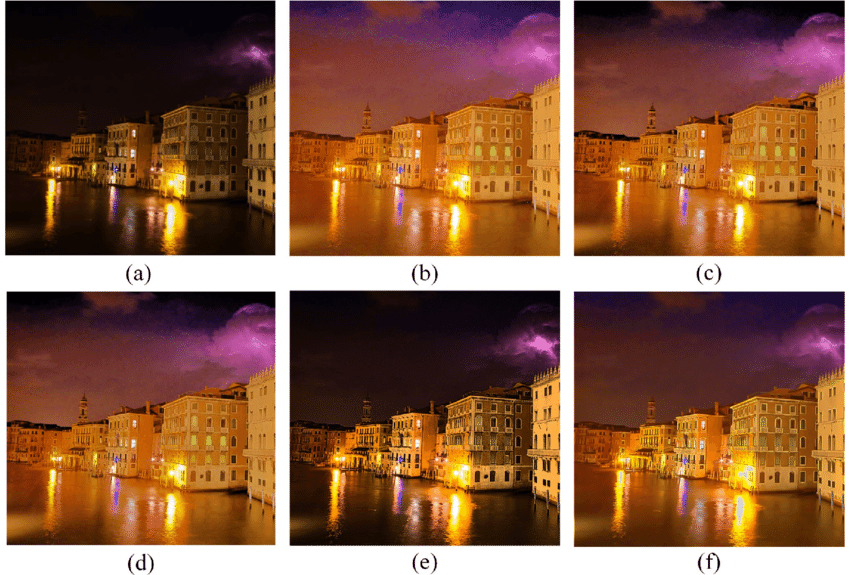
Image enhancement improves the quality of an existing image. It is widely used in remote sensing and surveillance systems. Image enhancement can be used to adjust the contrast and brightness of an image. Both brightness and contrast can be adjusted by multiple image editing applications making it lighter and clearer to see. The below image displays how image enhancement works; (a) is the original image used in the process.

Image+enhancement+DDD

Source: Study

Image Restoration

This image processing technique can be used to restore the quality of damaged or unclear images. This method is often used to potentially restore historically damaged documents or images. The image below shows how the image restoration process works.

image+restoration+DDD

Source: Guvi

Deep learning algorithms in computer vision can help reveal a lot of information from torn documents. An image restoration technique called image inpainting fills in missing information using pixels in the image. This is done using synthesis image algorithms to fill in missing information using pattern recognition techniques.

Read more: Everything You Need To Know About Computer Vision

Image Segmentation

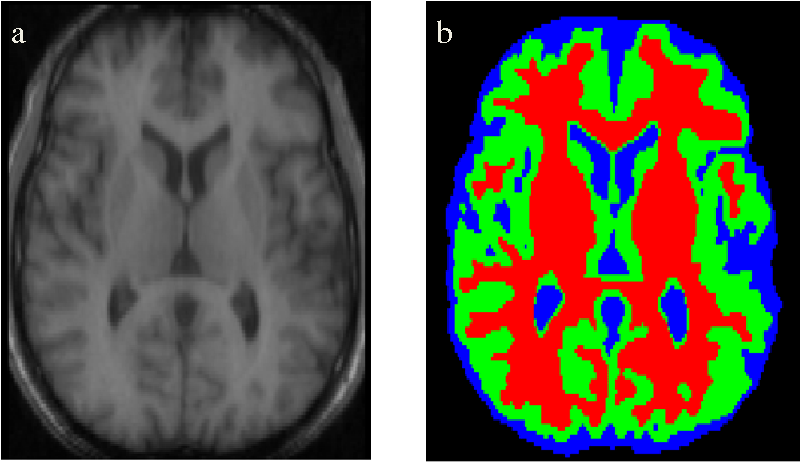
Image segmentation is a computer vision technique to partition images into different regions or segments. Each segment in the image denotes a unique object which is mostly used in training data for object detection. The below image shows how image segmentation is used in the medical industry.

Image+Segmentation+DDD

Source: Paper

Binary thresholding is the most common approach in image segmentation. It’s a process where each pixel is either denoted by the color black or white. A threshold value is chosen at the start and any pixel that goes above the threshold level is turned white and pixels that go below the threshold limit are turned black. This method segments images distinctly using black-and-white pixel regions.

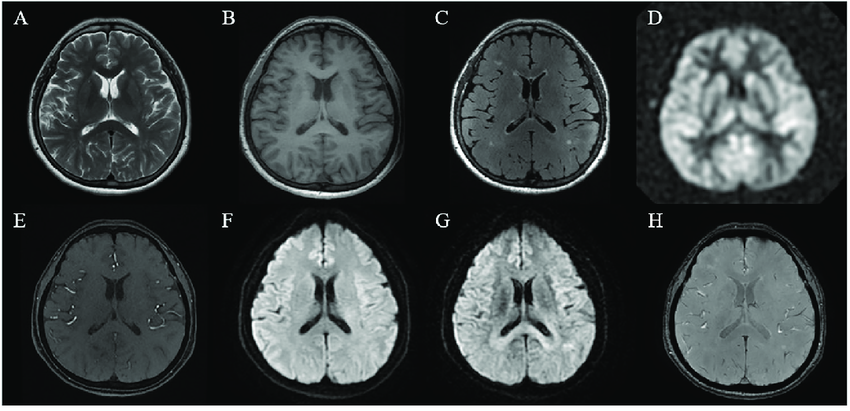
In medical imaging such as MRI segmentation multi thresholding technique is used where different image parts are converted into unique shades of grey color. An example of MRI image segmentation is shown below.

MRI+Image+segmentation+DDD

Source: Paper

Object Detection

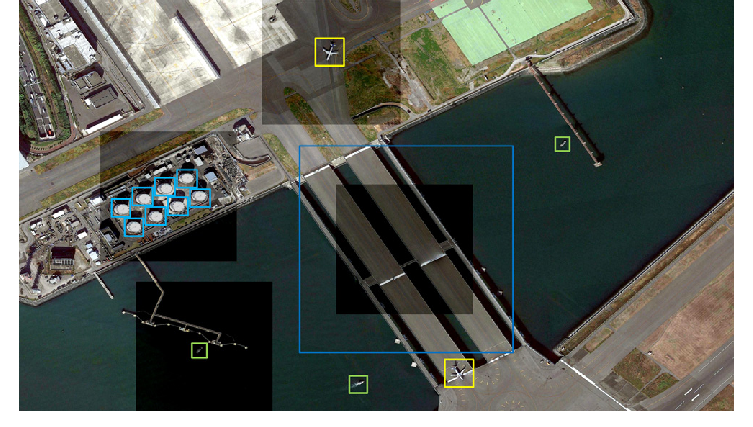
Object Detection is a method of identifying objects in an image using deep learning models. These neural networks detect objects using a bounding box which signifies the object with its class label. Convolution Neural Network (CNN) is designed for image processing to see patches in an image instead of dealing with a single pixel at a time. The image below displayed a use case for CNN in remote sensing.

DDD+remote+sensing

Source: Paper

Computer vision algorithms identify an object’s location in the image by creating a box around it. These inputs are analyzed to determine the object’s location by considering its height, width, and the position of the bounding box.

The most commonly used neural networks in object detection are:

  • R-CNN and Faster R-CNN

  • You Only Look Once (YOLO)

  • Single Shot Detector

  • Retina-Net

Read more: The Impact of Computer Vision on E-commerce Customer Experience

Image Generation

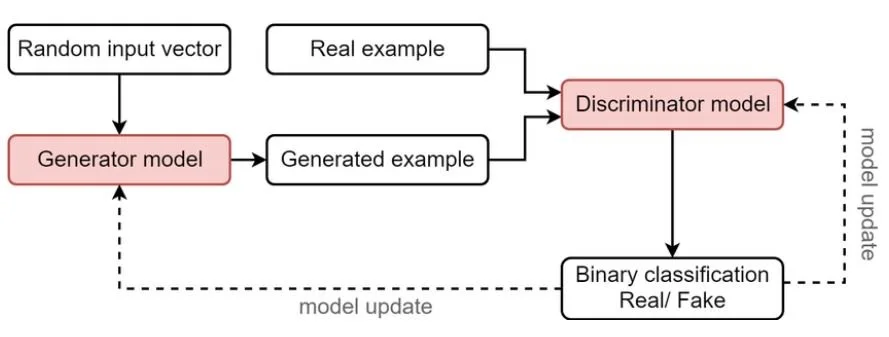
Neural networks are developed to understand large datasets of images and generate realistic images, a process also known as Image Generation. A complex process that generates new images based on the data set of input images. Several neural network architectures have been developed for image generation, including Variational Autoencoders (VAEs), Autoregressive Models, and Generative Adversarial Networks (GANs). Besides these architectures, there are a few hybrid solutions created by OpenAI such as DALL-E.

GAN includes two separate models; generator and discriminator. The Generator creates synthetic images that look realistic and try to fool the discriminator, while the discriminator acts as a critique to identify whether the image is real or synthetic. The image below explains the generic workflow of the Generative Adversarial Network.

GAN+DDD

Source: Paper

These two models work simultaneously through multiple iterations to produce high-quality photo-realistic images.

Final Thoughts

We have discussed a brief overview of how neural networks transform image processing. Each neural network has its own architecture and functionality in image processing to perform specific tasks. A lot of effort and image processing algorithms such as CNN work coherently to simplify business processes in computer vision.

We at DDD offer image processing services based on neural networks.

Neural Networks: Transforming Image Processing in Businesses Read Post »

Quality2BControl2Bwith2BComputer2BVision2BDDD

Revolutionizing Quality Control with Computer Vision

By Umang Dayal

March 22, 2024

According to McKinsey & Company, businesses that utilized computer vision for quality assessments reported a 90% improvement in detecting defective items.

By imitating human vision, computer vision can identify product defects, measure dimensions, classify objects, and accurately assess quality. Let’s learn more about computer vision use cases in quality assurance and how it is transforming various industries.

Computer Vision Enhancing Quality Control

Computer vision is a subfield of artificial intelligence that develops ML models capable of understanding, interpreting, and identifying visual data. CV technology can be deployed in manufacturing processes via sensors, cameras, and radars to offer real-time analysis, allowing quick decision-making and reducing errors.

CV models are invaluable assets for quality control which allows integration of automation in the production line, avoids incorrect supply chain management, and reduces costs. The time and effort required for manual labor are reduced significantly, and talent can be allocated to more decisive functions.

Computer vision is already streamlining quality control and verification processes for many industries. In the FMCG category, where each product contains a specific expiry date, APRIL Eye combines ML algorithms with computer vision to simplify the traditionally used date code verification system. If the date code seems incorrect, the production line comes to a halt so no expired product is released in the supply chain. This whole verification method is fully automated to save time and allow FMCG products to achieve full traceability and efficiency.

How Computer Vision is Revolutionizing Quality Control

Enhancing Defect Detection

Computer vision models can be trained to analyze images or videos of items to detect flaws and abnormalities. These systems can assist in identifying minor faults, and critical defects and provide real-time alerts to manufacturers to take immediate corrective measures.

Computer Vision used for Coating Inspection

The first thing that buyers see after unpacking medicines is the coating of tablets. This is the major reason why pharma companies are extremely particular about coating instructions.

Computer vision can be used for coating inspection and quality assurance. These CV algorithms can analyze large quantities of tablets, and if a pill does not meet the standard criteria, the system will display rejected tablets for manual inspection. CV systems can inspect thousands of tablets in an hour and reduce the load for manual inspection of such tiny objects.

Computer Vision Battling Corrosion

Oil and gas companies use specialized CV systems for identifying corrosion on their offshore and marine structures. They cannot gather sufficient data from these offshore structures due to their large dimensions and inaccessible areas. Computer vision-integrated drones can be used to gather this data and identify the exact location of damages. These CV systems can evaluate the damaged areas and see real-time pictures of corrosion to take corrective actions.

Precision Measurement and Dimension Analysis

Advanced computer vision systems utilizing high-resolution cameras and sensors can measure various attributes such as height, weight, length, angles, and distance of objects. The machines can measure these attributes against predetermined specifications to ensure every product meets the required standards. When implemented practically, these CV systems allow manufacturers to maintain product consistency and prevent additional costs.

Read more: The Impact of Computer Vision on E-commerce Customer Experience

Real-time Monitoring and Process Control

Computer vision allows real-time monitoring of the supply chain operations. These AI-driven CV systems can capture visual data and analyze objects in a production line, allowing the workforce to identify deviations and take corrective actions.

Manufacturing companies can utilize these insights to make informed decisions and optimize the production process. Real-time monitoring and process control help identify defective products at the early stage to prevent large-scale production of deficient items or increase additional costs.

Seamless Integration

Manufacturing processes can be easily integrated with computer vision technology for seamless automation and efficient operations. CV models can assist manufacturers with uninterrupted quality assessment and inspection adhering to standard protocols. These systems can provide data insights by analyzing market trends, failure patterns, and scope for improvement.

Automated Defect Detection

A major challenge in quality control is the identification of defective items, which can be time-consuming, costly, and contain the potential for errors. Computer vision models can be utilized to analyze defective items and compare them to pre-defined standards. These automated CV algorithms can improve accuracy, reduce costs, and minimize human error.

Quality Control through Visual Inspection

Human quality inspectors can miss minor defects due to fatigue, overwork, or tired eyes. Computer vision can work non-stop for a longer period of time as it is not limited to human capabilities. These machines can perform visual inspection with more accuracy and without witnessing general fatigue or tired eyes. By minimizing manual processes and deploying a human workforce in a more efficient and decisive role, companies can expand operations and focus on achieving customer satisfaction.

The Future of Computer Vision in Product Inspection

Food Marketing Institute recently conducted a survey, and it revealed that 68% of retail grocery stores are considering the adoption of computer vision as their top investment priority. Another study, published by the International Journal of Engineering Research and Technology emphasized the importance of computer vision in quality control and defect detection, which can achieve 98.5% accuracy in various industries.

As computer vision technology is expanding rapidly we can expect more innovations in quality control and defect identification. Companies adopting CV systems will improve their overall production efficiency by analyzing real-time insights, reducing defects, and quality control. Computer vision technology can be integrated with other innovative technologies such as the Internet of Things (IoT) and robotics to enhance productivity and optimize operations.

Final Thoughts

Computer vision’s ability to automate product inspection can revolutionize how manufacturers maintain and manage quality. With data-driven CV systems, businesses can minimize human error and ensure that flawless products reach the market. These CV algorithms are simplifying how the quality inspection process is conducted and operations are automated for improved efficiency, and cost reduction. This revolution can immensely boost customer satisfaction and enhance brand loyalty.

If you are looking for innovative computer vision solutions for quality control, DDD can assist you with their highly accurate human-in-the-loop annotation services.

Revolutionizing Quality Control with Computer Vision Read Post »

shutterstock 1869592531

Deep Learning in Computer Vision: A Game Changer for Industries

By Umang Dayal

March 12, 2024

Humans learn from experience and so do the machines.

Deep learning is an application of AI that can improve its performance with more data, after which it can perform specific functions such as driving a car, detecting fraudulent activities, recognizing voice commands, and much more. In this blog, we will discuss the application of deep learning in computer vision and how it’s transforming various industries.

What is Computer Vision?

Computer vision is an application of artificial intelligence that allows machines to interpret and extract information from visual data such as images, videos, and texts. The goal of CV systems is to develop smart computers that can recognize and process visual content to perform dedicated functions. This technology has been prominently used in autonomous cars, video surveillance, supply chain management, agriculture, etc.

Understanding Deep Learning

Deep learning is a machine learning process inspired by the human brain functionality. It uses artificial neural networks (ANN) to train and develop large datasets using multiple layers of information units called Neurons. Each neuron is trained to perform its operation and sends its output to other neurons until the desired result is achieved. These neural networks are developed on multiple parameters enabling them to process complex information.

The most widely used neural networks are:

  • Convolutional Neural Networks (CNN)

  • Recurrent Neural Networks (RNN)

  • Generative Adversarial Networks (GAN)

The most successful neural network in computer vision is CNN which has been successfully implemented in the healthcare and aerospace industries.

How Deep Learning is Transforming Industries?

Transportation

Deep learning has allowed seamless analysis of traffic using relatively cheaper surveillance systems. Using a wide variety of sensors such as LiDAR, CCTV, and thermal imaging, it is much easier to track, identify, and segment vehicles in populated cities. Computer vision enables automatic detection of road violations such as speeding, wrong-way driving, illegal turning, skipping red lights, and accidents.

Deep learning systems have facilitated the widespread implementation of effective parking occupancy detection using CCTV cameras. This benefits parking spaces with low-cost maintenance, easier management, sophisticated installation, and better space allocation.

Healthcare

Using deep learning models such as image recognition scientists and medical experts can differentiate between cancerous and non-cancerous MRI scans. In practical use cases, deep learning has been highly effective in detecting serious health conditions such as strokes, heart attacks, skin cancers, etc.

Computer vision allows clinical diagnostics to accurately analyze patient movements using pose estimation algorithms. The rehabilitation programs built using deep learning models are helping patients to move correctly and prevent any future injuries.

Sports

Deep learning models can identify the patterns and movements of athletes through images or recorded videos. Cameras installed above and below the water level can accurately detect swimmers’ poses in real time. Using convolutional neural networks trainers can automatically gather necessary data to improve the speed and body movements of athletes.

Computer vision is also used in Tennis to detect and categorize player strokes, which can be later analyzed by instructors to improve player strength and agility. In team sports, deep learning methods such as motion analysis are utilized to gather trajectory information from recorded videos, for improving game strategy and planning team lineups.

Banking & Finance

Deep learning has effectively prevented financial losses and secured customer portfolios. Machine learning algorithms built using deep learning are used for anomaly detection, behavioral analysis, and predictive modeling to detect and prevent fraudulent activities.

After leveraging deep learning, banks can easily analyze large volumes of data from social media, market trends, news, etc., and identify patterns to make risk assessments for their clients. This allows banks and financial organizations to make informed decisions and avoid potential risks. Deep learning is widely used to analyze customer behavior and patterns from website or app interaction. This information is used to recommend personalized financial products and services as per customer requirements.

Retail & E-Commerce

Deep learning has improved overall customer experience and increased sales for eCommerce and retail businesses. Using deep learning algorithms, companies can analyze various types of consumer data such as purchase history, buying habits, and user preferences. Subsequently, they can then use this data to recommend personalized products.

Neural networks allow retailers to forecast product demand, study market trends, and monitor social media activity to meet future demands and avoid understocking or overstocking products, leading to increased efficiency and saving inventory costs.

As eCommerce is gaining popularity fraudulent purchases and stolen credit card information has become a major concern. Deep learning algorithms can safeguard retail and eCommerce businesses from such suspicious activities and take a proactive approach to maintaining safety protocols.

AutoNOMOUS Driving

One of the most applicable uses of deep learning is autonomous driving. Companies such as Tesla, have developed fully autonomous vehicles that can navigate through traffic, read road signals, avoid obstacles, etc. These algorithms are built using computer vision technology that utilizes a combination of cameras, LiDAR, radar, and sensors to gather real-time information from its environment. This data is processed using neural networks to make crucial automated decisions while driving such as steering, accelerating, and braking.

Deep learning is also transforming the way engineers design cars. They can use Generative Adversarial Networks (GANs) to generate various car designs based on specific standards such as aesthetics or aerodynamics. These GAN models are trained on large visual data sets of existing cars to generate desired results based on specific criteria.

Learn more: The Art of Data Annotation in Machine Learning

Education

Educational institutes are leveraging the deep learning technology to revolutionize how students learn and teachers teach in the classrooms. Deep learning sophisticated algorithms allow educators to create custom learning modules for individual students based on their learning styles and preferences. This personalized learning makes studying easier and improves academic performance.

Language learning and translation is another field where deep learning is making waves. Schools enroll students from diverse backgrounds and language barriers can always hinder communication and the learning process. With advancements in NLP, machine learning models can quickly and accurately translate texts from another language in real-time. These deep learning capabilities are making classrooms more inclusive and interactive for training a global workforce.

Grading and assessing students is another crucial and time-consuming process that is prone to errors. Deep learning assessment tools can automatically grade students based on scoring algorithms, allowing teachers to see real-time insights and identify areas for improvement.

Final Thoughts

Deep learning is not only transforming the autonomous driving industry, it is a powerful driving force behind innovations in various fields such as retail, eCommerce, sports, finance, education, and much more. Neural networks built on deep learning algorithms simply human processes, reduce costs, study market trends, and understand user behavior. However, training deep learning models requires a lot of data, time, and expertise. This is where DDD comes in, our humans-in-the-loop annotators can help you train large amounts of data with the highest accuracy rate.

Deep Learning in Computer Vision: A Game Changer for Industries Read Post »

Scroll to Top