Celebrating 25 years of DDD's Excellence and Social Impact.

Author name: DDD

Avatar of DDD
DDD2Bblog2Bcomputer2Bvision

The Evolving Landscape of Computer Vision and Its Business Implications

By Umang Dayal

March 7, 2024

How do you instruct a machine to see? And what is this vision capable of?

Computer vision enables machines to extract information from data sets such as images, videos, or other visual elements. Using this information, these AI models can make specific decisions or perform dedicated tasks.

This technology harmoniously integrates with current business operations and offers novel solutions to various industries. As computer vision is expanding AI algorithms are improving its ability to recognise objects, faces, and even human emotions. In this blog, we will explore how computer vision works and how it’s evolving future landscape.

How Computer Vision ‘Sees the World’?

Computer vision sees the world the same way as we do. It has its own set of eyes such as sensors, cameras, and radars to collect visual data and perceive information.

But the real magic is what happens after this visual data is collected. Advanced algorithms function like a human brain and learn vast information, recognize visuals, and interpret complex data. These neural networks can be trained using millions of data points and accurately identify objects and make predictive decisions.

By understanding and studying how our brain functions, scientists have enhanced computer vision capabilities making it more adept at processing intricate visuals with over 95% accuracy.

How Computer Vision is Transforming Businesses?

Autonomous Driving

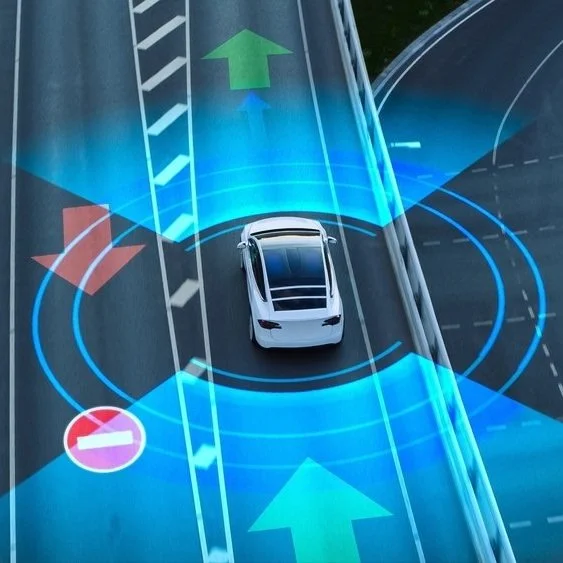
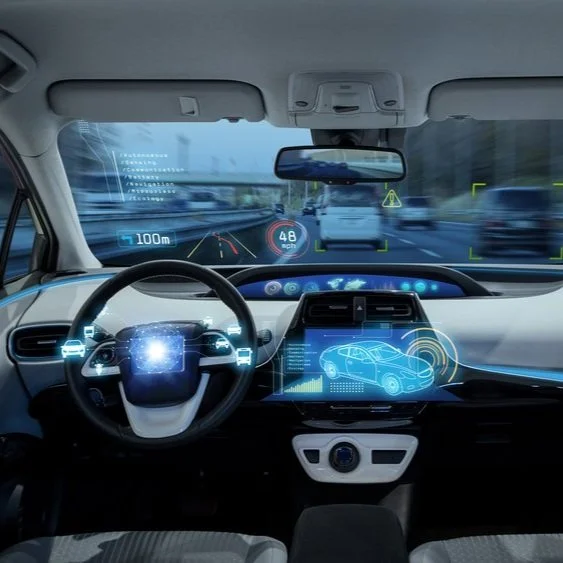
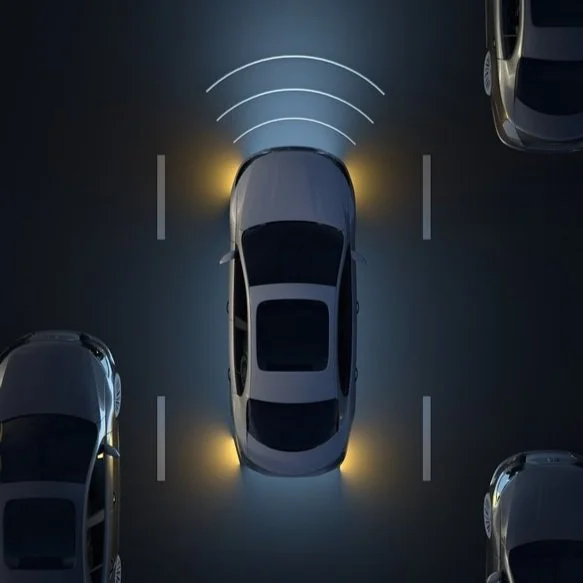
Autonomous driving is no longer confined to future prototypes, many successful automobile manufacturers are already using it. Tesla’s autopilot system is designed based on computer vision technology that recognizes obstacles, pedestrians, and traffic signals to make human-like decisions while driving.

Acting as the eyes of self-driving cars, computer vision can identify and interact with the environment. Algorithms quickly adapt and detect reliable pathways using automated sensors for animals or pedestrians to avoid collisions.

Augmented Reality

Computer vision is smoothly transitioning our lives from real to virtual worlds. Augmented reality is already being used in the Apple Vision Pro device that allows users to see and interact with virtual reality. These technologies allow computer vision to recognize objects, shapes, and orientations in a 3D environment. In Natural Navigation, users can navigate through virtual space or manipulate objects as CV systems track their gestures and movements. In Augmented Reality (AR), CV systems are being used to detect and track objects, count the number of people, and create virtual maps using Simultaneous Localization and Mapping (SLAM). This technology is already revolutionizing various industries such as healthcare, education, gaming, space, and tourism.

Learn more: 5 Best Practices To Speed Up Your AI Projects With Effective Data Annotation

Healthcare

Medical experts and doctors constantly use computer vision systems to analyze scans and images to identify and diagnose diseases. CV algorithms can differentiate between healthy tissues and cancerous cells and provide accurate analysis for record keeping and medical procedures. For example, during surgical operations, these AI systems can be trained to ensure that no medical equipment is left inside the body after the surgery is completed.

One example of a groundbreaking CV model in healthcare is Google’s DeepMind, which can detect more than 50 eye diseases with 94% accuracy even surpassing medical experts. This tool is the perfect example of how computer vision can help in early diagnosis and treatment to save millions of lives.

Retail

Computer vision in the retail industry is helping experts to understand customer behavior and shopping preferences. For example, Amazon GO store is using computer vision technology to allow customers for automatic checkouts. You can simply walk into these stores, pick up your items, and leave. These smart CV systems automatically detect your purchased items and bill your accounts.

This seamless integration of commerce and computer vision is simplifying retail operations and enhancing customer experience. These AI-based algorithms are also helping retailers personalize marketing strategies to increase sales, gather insights, and enhance customer satisfaction.

Learn more: Navigating the Challenges of Implementing Computer Vision in Business

Agriculture

Based on a case study by the University of Illinois, implied the benefits of computer vision in agriculture. Where precision farming can increase crop yield by 20%, and reduce the use of fertilizers by 15%. This technical innovation is highly efficient in areas where water resources and fertilizers are significantly used.

The integration of agriculture with computer vision is enabling farmers to monitor crops with drone cameras to survey fields and utilize computer vision algorithms to gather data on soil conditions, crop health, or pest infestation.

Future Landscape of Computer Vision

Computer vision’s evolving landscape is helping humans to reduce the burden of identifying egregious content. Major social media platforms are already using CV systems for image, video, and text moderation which can perform these tasks quickly and efficiently. Computer vision is less likely to make mistakes as machines can be trained to work for long hours and perform non-stop, and the best part is, that they don’t get tired eyes or general fatigue.

There are more than 300 million photos uploaded on Facebook alone, and every minute users post 510,000 comments and 293,000 status updates. While the majority of content is benign a large number is considered harmful for users. Facebook now alone has 15,000 moderators and according to a report, the company’s human moderators and AI systems flag more than 3 million content daily.

The evolving potential of computer vision is filled with endless possibilities. Imagine using CV systems for precision surgical procedures with increased accuracy and reduced recovery time, a smart city where all traffic lights and vehicles are guided by intelligent CV systems that can react in real-time, reducing traffic and accidents. Augmented reality will become so advanced that you can interact with the physical and virtual worlds in real time. These technical innovations will redefine how we do business and revolutionize technology for personal use.

Final Thoughts

We are already seeing a transformative impact of computer vision in various industries. In Agriculture, farmers are utilizing CV technology to monitor crops, reduce pesticides, and detect crop diseases to optimize farm yield. In the retail industry, companies are enhancing customer experience with cashless shopping stores. Autonomous cars are using driver assistance systems and improving safety protocols for humans.

Overall, computer vision holds the potential to revolutionize manufacturing, healthcare, automotive, transportation sectors, and many more. This technology has the power to transform and reshape the future and the world we live in.

At Digital Divide Data, we are dedicated to providing computer vision solutions for various industries.

The Evolving Landscape of Computer Vision and Its Business Implications Read Post »

Workforce

The Art of Data Annotation in Machine Learning

By Umang Dayal

March 5, 2024

Data annotation has redefined machine learning by taking the spotlight for developing efficient and reliable machine learning algorithms. The industry is thriving today and by 2030, the market for data collection and labeling is projected to grow at a CAGR of 28.9%.

Data annotation helps a machine learning model to predict and fine-tune its assumptions accurately. This ranges from autonomous vehicles to facial recognition by a smartphone and much more. It plays a significant role in converting visual data into interpretable information. Now that the basics are covered, let’s explore more about data annotation and its use cases in machine learning.

What is Data Annotation?

Data annotation is the systematic process of labeling, tagging, or marking information in images, videos, or text to help AI models perceive the world as we humans do. Generally, data annotation acts like a teacher for students (AI and ML models) to learn the patterns and behaviors for better prediction and smoother result generation. Thus, helping it to understand human behavior and language from a better perspective.

Through data annotation, AI and ML models can easily function in complex environments and interact with users like Virtual Assistants. In computer vision, auditory and visual data are processed at a higher level to provide users with accurate results. Other use cases for data annotation range from algorithms for healthcare diagnostics to precision farming, paving the way for converting unstructured raw data into insightful information.

The Art of Data Annotation in Machine Learning

Data annotation isn’t a one-stop solution to train your ML models. Instead, it is a customized solution that helps train your machine-learning model for its functionalities and data sets. Thus, to understand the different types of data annotation in machine learning, a few techniques are described below.

Data Annotation for Object Detection

Data annotation helps machine learning models in the detection of objects, assisting autonomous vehicles with navigation and providing better driving assistance. In supply chain management, it can also be used in warehouses to locate different types of items, track movement, and manage inventory.

Audio/Video Annotation

Annotation spans far and wide and its application in audio and video is undeniable. Facial recognition in security systems is a perfect use-case scenario for image data annotation, used in smartphones. Similarly, video is another area where data annotation helps in identifying moving objects which is crucial in applications like traffic monitoring and sports analysis. Speech recognition and voice identification are the brainchild of data annotation where audio files are transcribed and labeled using machine learning algorithms.

Emotional and Sentimental Annotation

Computer vision helps in deciphering the emotional and sentimental quotient in the audio/text file to provide inputs on customer behavior and opinions. Which is perfect for assessing customer feedback, and survey reports across digital platforms.

Natural Language Processing Annotation

NLP annotation trains the machine learning models to understand the contextual tone of the user to provide relevant feedback in real-time. It is done by either tagging certain contexts or parsing sentences to understand the data entered by the user. This technology is responsible for the development of various chatbots and virtual assistants.

Annotation in SEO Enhancement

Data annotation helps in optimizing the generated results in a search engine. Certain keywords are tagged such that algorithms can quickly navigate various URLs and load pages relevant to a particular keyword. However, certain guidelines and parameters are laid down by the search engine to showcase genuine URLs.

Learn more: Computer Vision Trends That Will Help Businesses in 2024

Simplifying The Process of Data Annotation

Data annotation follows a structured, sophisticated, and layered approach to ensure that the machine-learning model is functioning successfully. To understand these steps, we have segregated them for better understanding.

Task and Guidelines Definition

The first and foremost step is to lay down the foundation of the project in which the objectives, goals, scope, and intent behind the data annotation process are to be defined clearly. It is necessary to determine the level of annotation required along with the format and type of data sets.

Incorporation of High-Quality Data Sets

For the smooth functioning of any machine learning model, data quality is most important. Data can be in any form such as videos, audio files, text, and images. Ensure that you gather only high-quality data since the output quality of the machine learning system is proportional to the data it was trained upon.

Choosing the Right Data Annotation Tools and Services

Once the data is gathered, the next step is the selection of data annotation services that are completely based on your requirements. However, ensure that the service you choose offers robust results and scalability potential of the project. A rule of thumb in selecting the data annotation service is to understand the format & type of data, and the level of annotation required. Based on these factors, you can choose the appropriate tools and services that fulfill your project requirements.

Quality Control

Quality control is an ongoing process in data annotation. However, once the data is completely annotated testing models for inaccurate data is the key. Having manual and automated interventions can help streamline the process of identifying errors and inconsistencies. Once the model is trained, then implementing it in real-life applications can help in identifying errors and scope for improvements. Do remember that based on your project, the machine learning model will need continuous refinement (and training based on the new data set) to ensure smooth operations.

Learn more: The Impact of Computer Vision on E-commerce Customer Experience

Future Challenges of Data Annotation in Machine Learning

The future of data annotation looks promising and dynamic. It has evolved by leaps and bounds in supporting various technologies and enhancing their productive outcome. But with progress, there are always challenges that need to be addressed. Some of these challenges are discussed below.

  • In the process of training machine learning models, using over-sensitive and private data will always be a challenge. Thus, a code of conduct must be established to ensure that ethical standards are maintained during the whole annotation process.

  • While data annotation is a boon to modern technology, cost and time are factors that cannot be denied. Constant development needs to be made to ensure that the expenses and time taken in the overall process of data annotation are brought down.

  • As every company jumps on the bandwagon of implementing data annotation with their machine learning models, the future looks demanding. However, implementing data annotation onto these complex, data-hungry machine learning systems is still a hurdle limited due to today’s technology and infrastructure.

Conclusion

Data annotation has become a cornerstone in the development cycle of any AI or ML model. It plays a vital role in laying the foundation for training ML models on the data sets. It increases the efficacy and performance of these systems based on the use case scenario. Although riddled with challenges, it is set to become more sophisticated with constant strides being made in technology and innovation.

If you want to simplify your data annotation process you can rely on Digital Divide Data’s end-to-end high-quality human in-loop data annotation solutions.

The Art of Data Annotation in Machine Learning Read Post »

ComputerVisionDDD 1

Navigating the Challenges of Implementing Computer Vision in Business

By Umang Dayal

February 29, 2024

Gartner’s 2023 Impact Radar highlights emerging technologies for leaders to improve, differentiate, remain competitive, and capitalize on market opportunities. Many of these emerging technologies are based on computer vision that’s revolutionizing EdTech, healthcare, automotive, retail industries, and more.

Implementation of computer vision technology in your business can be an expensive and challenging task, that requires expert supervision and strong data annotations. This blog discusses four challenges that you can face while implementing computer vision technology. We will explore a few use cases and problems associated with implementing CV, and provide recommendations so you can create a sustainable business and maximize your ROI.

What is Computer Vision?

Computer vision is more than just an image recognition technology. It provides intelligent recommendations to make decisions based on unseen images. Machine learning or software trained using these AI models can quickly process images or videos and make intelligent decisions. Computer vision can perform various functions such as image classification, segmentation, facial recognition, feature matching, extraction, pattern recognition, and object detection.

How Computer Vision is Reshaping Businesses?

Artificial intelligence and automation systems trained using computer vision are changing business operations with minimal to no human interaction. Companies such as SpaceX are using AI and automation to dock astronauts successfully in the International Space Station. Grocery stores are using automatic checkout features to buy products.

Computer vision systems are being developed to help many industries such as healthcare, security and surveillance, transport or traffic management, and much more.

Top 4 Challenges of Implementing Computer Vision in Business

Poor Data Quality & Training 

High-quality data annotations and labeling are the foundation for any computer vision system. In the healthcare industry, it is important to use high-quality data as any repercussions due to inaccurate or incomplete data sets can significantly damage medical operations. This was witnessed during COVID-19 when a computer vision system failed due to poor quality of data sets.

If you are planning to mitigate this issue you should consider working with medical data annotation specialists who are experts in building computer vision systems.

For training data sets, you need sufficient and relevant sources which can pose challenges for many companies. For example, if you are working in the healthcare industry collecting data sources can be a challenge because of its sensitive nature and the privacy concerns of the patients or hospitals. Most of these medical data sets are strictly private and not shared by hospitals or healthcare professionals. This means developers might not have enough data sets to train computer vision systems to begin with.

Solutions For Poor Data Training

To resolve this issue and obtain adequate data for your computer vision programs you should consider outsourcing or crowdsourcing your project. This reduces the overall burden of collecting data sets and the responsibility of quality management will be transferred to a third party that specializes in computer vision data gathering and data annotation services. You can work with a trusted third party to obtain and train your visual data sets for your computer vision projects.

High Costs

Any computer vision application’s architectural design and infrastructure contribute to its total cost, which can be highly variable when considering its functionality or when software or hardware is not adequate.

A web or mobile application that only analyzes a few images is completely different from computer vision systems that are highly advanced and resource intensive and perform various tasks such as image and video processing in real time. These powerful processors, complex hardware, and software increase the costs exponentially.

Read more: Hurdles in Autonomous Driving

Solutions To Reduce High Costs

To decrease costs use cross platforms for hardware and software requirements while processing data sets. Use pre-processed models to standardize images before feeding them into machine learning algorithms, this provides better accuracy for the training models. To increase the delivery or deployment of applications reduce the use of manual coding for applications. Instead, use automation tools which does not require too much human interference. Use up-to-date data annotation frameworks to make a big leap in real-time object detection and performance.

Weak Planning

Another challenge in implementing computer vision in business can be weak planning for machine learning models used for the deployment of a project. If executives set overly ambitious targets in the planning stage the data science team might find it difficult to achieve objectives. This can lead to unnecessary costs, insufficient accuracy, inaccurate results, or unrealistic computing power.

Solutions To Avoid Weak Planning 

To overcome these overly ambitious targets businesses should create stronger planning by understanding and analyzing technology’s maturity levels. The executives should create measurable objectives with definitive targets. The ability to acquire data sets or purchase labeled data sets should be discussed beforehand. Before initiating the project, the planning team must consider the costs of training models and deployment. To avoid mistakes you should learn from existing case studies that are similar to your business domain.

Read more: High-quality training data for autonomous vehicles

Inadequate Hardware

Computer vision technology is incomplete without the right combination of hardware and software. To ensure its efficiency businesses must install sensors, bots, and high-resolution cameras. These hardware components can be costly and if installed incorrectly, it can lead to blind spots making the computer vision systems ineffective.

Solutions To Avoid Inadequate Hardware

To avoid this challenge businesses should consider installing high-resolution cameras that provide adequate frames per second for the computer vision system. The engineers must cover all surveillance areas using cameras and sensors so there are no blind spots left. For example, in the case of a retail store cameras should cover all the items on each shelf. The two most significant costs during installation are the hardware requirement and costs of cloud computing which should be considered in the planning stage. All devices should be properly configured before the computer vision system is deployed.

Final Thoughts

The computer vision implementation process is complex and requires expertise and deeper understanding from all stakeholders. To quantify your ROI, businesses should consider data quality, overall costs, hardware requirements, and stronger planning to obtain measurable results. If your project has time constraints you should consider outsourcing data collection or computer vision solutions to a third party. We at DDD can help you with computer vision services that require technical expertise and dedicated machine-learning tools.

Navigating the Challenges of Implementing Computer Vision in Business Read Post »

ecommerce2BDDD 1

The Impact of Computer Vision In E-Commerce: Enhancing Customer Experience

By Umang Dayal

February 26, 2024

A picture is worth a thousand words and by using computer vision it can be worth millions. Computer vision is reshaping how buyers and sellers use e-commerce platforms and implementing mind-boggling technologies that have only seemed impossible before. Large e-commerce brands have recognized their customers’ behaviors and begun harnessing the full potential of computer vision and AI.

This blog will discuss how computer vision in retail is enhancing customer experience and also how it is helping store owners. We will discuss four areas where computer vision technology is reshaping the shopping experience and explore a few use cases.

Implementation of Computer Vision In Retail (Use Cases)

In 2019 Amazon used a visual search feature for its fashion products using the brand name StyleSnap. While shopping online, users can upload an image in StyleSnap that will recommend similar products. Amazon’s StyleSnap extended its features for home-based items where users can search for furniture or home-based products using the visual search feature. Customers can directly look for similar products that match the uploaded image or screenshot instead of looking through hundreds of tables or lamp options for their homes.

Amazon+shopthelook+DDD

Source: shopthelook

ASOS is a famous fashion retail brand that uses visual search for its e-commerce platform to help customers find clothes and accessories using their smartphones. The idea is simple yet brilliant where users can snap pictures of people on the street or social media with their smartphone and search for matching products on the ASOS e-commerce platform.

asos+visual+search

Source: engadget.com

How Computer Vision Is Enhancing E-commerce Customer Experience

Visual Search Capabilities

Computer vision has allowed eCommerce to unleash its visual search technology by simply uploading a picture and finding suitable products to buy. Computer Vision algorithms work ingeniously to identify related products or items and deliver accurate results for customers. This trend is gaining popularity among ecommerce websites and shoppers are acclimating to this new feature.

A survey revealed that 62% of Gen Z and Millennials in the US and UK markets want to use visual search capabilities to discover products that they are inspired to purchase quickly. Small retailers are still building architecture and training machine learning AI to adopt visual search technology for their platform but large online retailers are already doing it and expanding their sales as we speak.

Personalized Recommendations

A survey conducted by Accenture found that 91% of customers prefer brands that remember them and provide recommendations based on their preferences. Computer vision analyzes how customers interact with visual content by understanding user behavior, and preferences and displaying highly targeted and personalized results. It’s like having a personal assistant who already knows what type of clothes or products you like and only displays relevant options.

The goal of computer vision technology here is to tag visual content and display personalized product recommendations. This AI eCommerce feature has significantly improved the average value per order for online retailers and expanded sales across their platforms.

Suppose a customer simply comes across your e-commerce website to look for random items but using AI-based product recommendations as per his/her preferences can convert them into a paying customer. One of the biggest brands that are using this feature conveniently is Pinterest Style Finder, which shows cross-selling items for potential customers.

Read more: Computer Vision Trends in 2024

Virtual Try-On

Every one of us wants to try a product before actually buying it online. That’s already becoming a reality sooner than you think! Computer vision combined with augmented reality is making it possible for users to virtually try almost everything from clothing, and accessories, to cosmetics, and much more just by using your smartphone. This virtual immersive feature is leaving customers super satisfied, reducing purchase hesitation, and enhancing product engagement.

Using augmented reality you can see how a particular table or lamp will look in your living or dining room. You can rotate the product, try different colors, and decide on the correct position before even purchasing the product This is perfect for shoppers who want to be sure of what they want to buy and how it looks in real-time. IKEA brand is allowing customers to check how their products will look at their homes as more companies follow through.

IKEA+DDD

Source: IKEA.com

Inventory Management & Virtual Warehousing

Inventory management is another aspect of running a successful ecommerce store and computer vision is already bringing its technical brilliance to improve supply chain management. Computer vision can analyze videos and images, keep track of inventory, identify out-of-stock products, and help eCommerce managers with demand forecasting.

Today shoppers expect fast delivery and any e-commerce business that can deliver on the same day is disrupting the industry. However, managing and delivering products is dealt with lots of pressure from retailers who rely on a decentralized supply chain and warehousing. To reduce this pressure inventory can be housed in temporary facilities or even virtual warehouses. These virtual warehouses can track physical stock from anywhere and allow faster and more efficient distribution. Whenever an order is placed a virtual warehouse can identify the faster way to fulfill any order.

Computer vision programs regularly scan inventory in the virtual warehouse such as weight, color, volume, size, and expiration date, and raise potential flags while encountering an error. Concerned employees can be immediately notified about the situation to take appropriate action and resolve the issue. To achieve streamlined operations computer vision services can be utilized with cameras and intelligent video analytical tools. This computer vision AI-driven approach can optimize warehouse operations and inventory management.

Read more: Everything about Computer Vision

Conclusion

With shoppers demanding virtual try-ons and faster delivery, the application of computer vision is not only necessary but already gaining adoption from major e-commerce brands. Computer vision technology is helping businesses with inventory management, faster delivery, quality management, and fraud detection. For online shoppers its AI capabilities allow them to try products virtually using augmented reality, perform visual searches, get personalized product recommendations, and have a fun and interactive shopping experience.

This AI technology has already moved from an experimental to a commercially driven tool for the e-commerce industry. If you are planning to expand your eCommerce business DDD can assist you with computer vision-led solutions that can put you at the forefront of the industry and surpass your customers’ expectations.

FAQ’s

  •  

    Computer Vision technology is allowing e-commerce business owners to expand their business using inventory management, virtual warehousing, faster delivery, and quality control. It also enhances the customer experience by providing virtual try-on options using augmented reality and recommending personalized products to shoppers.

  •  

    Computer vision detects and understands the image that the customer has uploaded and then uses NLP or Natural language processing to process the request based on its trained data using machine learning programs.

  •  

    Computer vision is effectively reshaping the e-commerce industry by improving stock management, supply chain, and faster delivery, and providing customers with the option to perform visual searches and try their favorite products virtually.

The Impact of Computer Vision In E-Commerce: Enhancing Customer Experience Read Post »

DDDDataAnnotationService 1

5 Best Practices To Speed Up Your Data Annotation Project

By Umang Dayal
February 2, 2024

A California-based company used an AI model that was trained using video annotation through a combination of human annotators and automated tools to read motion, visuals, and label targets in the video footage. This allowed the company to use its AI model to predict traffic congestion, improve road planning, and prevent road accidents.

Artificial intelligence and automation systems are getting more intelligent with better inputs used to develop these AI models. Various computer vision algorithms gather and train data sets to enhance robotics, drones, self-driving cars, etc. Training data can be a lengthy process if you don’t follow a definitive strategy and objective-based planning for an effective data annotation project. In this blog, we will discuss 5 best practices to speed up your data annotation project.

What is Data Annotation in Machine Learning?

Data annotation is the process of creating data sets like text, images, and videos for computer vision algorithms. The data labeling process follows a specific technique to annotate data for text, images, and videos as an initial input that can be supplied to machine learning algorithms which read and understand it to perform accurate outputs.

Why Data Annotation is Important?

Data labelling is the backbone of AI models which enables them to perform functions using the provided data sets and make predictions to create new functions. This process involves data labeling of relevant tags, metadata, and annotations, which helps the system to identify patterns and make accurate decisions. Data annotation is what determines the accuracy, performance, and accuracy of AI and machine learning models.

There are various strategies involved in the data annotation process which include image annotation, video or audio annotation, text annotation, LiDAR annotation, and more. Each technique can be used for unique AI-specific projects. For example, automated cars use a highly trained data set that is used by large automotive companies such as Tesla, to build and operate in real-time situations.

How To Speed Up Your Data Annotation Project

Use Ground Truth Data Annotation 

Ground truth data annotation refers to human-verified data that can be used as facts. When you involve humans in the verification and classification of data sets the algorithm’s logical decision-making accuracy goes high and you get accurate outputs. You need these accurately trained datasets while creating a foundation for your AI projects. Ground truth data labeling can fast-track your annotation process and maximize quality.

Decide The Type of Annotation

Before starting the data annotation project you should decide the type of annotation you require. This will make complicated functions simpler in the long run i.e. streaming services or online shopping platforms. Let’s discuss a few use cases for more clarity.

While using Image annotation keywords, tags, captions, identifiers, etc, to help the AI model read annotated data as a different item. These algorithms can then understand and classify these set parameters and learn automatically. A Swiss food waste solution company trained thousands of food images to train their AI model. This company has helped world-renowned restaurants and hotels tackle the problem of food wastage by instantly analyzing food waste using their AI model.

Similarly, text annotation is used to classify emotions, fun, anger sarcasm, or abstract language. Moreover, text annotation and audio annotation are disrupting the music and entertainment industries as we speak.

Many manual annotation tools offer a friendly user interface and intuitive functionality that can make your data labeling process easier. They offer a range of annotation tools such as bounding boxes, cuboids, polygons, key points, instance segmentation, semantic segmentation, and more.

Combine Artificial and Human Intelligence

A combination of humans and AI is the perfect blend to build the most efficient and effective AI models. AI systems have been developed that can make optimal decisions with large data sets but nothing can surpass the human recognition pattern with even small or poor quality data sets. Leveraging the human annotator’s abilities and machine learning’s target mapping for large datasets can be the best approach to speed up AI projects with an effective data annotation strategy.

Learn more: Why Data Annotation Still Needs a Human Touch

Adopt Latest Technologies 

In the global AI industry, we are seeing huge adoption of automated labeling for speeding up the annotation process and improving the security and accuracy of data sets. You can leverage these latest trends to gather large sets of data and reduce manual input for faster results.

Neurosymbolic AI has increased the statistical knowledge of ML frameworks and reduced dependency on humans. In turn, you can save a lot of time, costs, and effort in the whole data annotation process.

For large data, you can significantly speed up your entire labeling process by leveraging AI tools that can label data points based on predefined patterns or rules from existing trained annotations. SuperAnnotate is one such example that uses ML to accelerate your data labeling process. It offers features like auto annotation of data sets and active learning that are perfect for large annotation projects.

Learn more: Human-Powered Data Annotation vs Tools/Software

Outsource Your Data Annotation Project

When acquiring correct data sets and performing the data labeling process gets complicated and costly you should consider levering the services of data annotation solution-based companies. These companies are experts at labeling and training machine learning algorithms with the correct data sets, this will allow you to speed up your development project by focusing on your expertise in artificial intelligence. These third-party data labeling companies offer highly accurate trained data sets that can be customized as per your project needs.

Conclusion

If you want to speed up your AI project’s data annotation you should leverage ground truth, identify your data annotation requirement, use combined efforts of human and machine annotators, use the latest technologies, and consider outsourcing your data annotation process to a third party.

By speeding up and scaling your data annotation project businesses can acquire a competitive advantage in this data-driven world. The accuracy and effectiveness of your AI models depend on meaningful annotations that can drive innovation and business value. You can explore DDD’s computer vision data annotation services to fully annotate your AI projects.

5 Best Practices To Speed Up Your Data Annotation Project Read Post »

computervisiontrends DigitalDivideData

Computer Vision Trends That Will Help Businesses in 2024

By Aaron Bianchi
November 22, 2023

When it comes to artificial intelligence, computer vision is fast gaining immense ground. It’s estimated to grow from $9.03 billion in 2021 to $95.08 billion in 2027!

If you run a business looking to take advantage of an AI human vision system in the coming days, there are specific trends to keep in mind. Some of which we will mention below.

1. Edge Computing and Computer Vision

Definition: Edge computing typically refers to use cases where computing and data processing happens on a local device instead of on the cloud or some other server type solution. This means that you don’t need to be connected to the cloud to complete your computation!

Advantages: Computer vision requires enormous computing time and bandwidth. Complex models and large volumes of data heavily impact the overall computational power requirements.

Also, in many cases, computer vision data must get processed almost instantaneously. For example, when logging a user into their phone using facial recognition.

This is where edge computing can help computer vision by reducing bandwidth, improving response times, and keeping personally identifying information (PIII) locally contained.

Examples: Facial recognition on smartphones is a big application of edge computing and computer vision. As is, analyzing products on the assembly line to detect defective items.

2. 3D Computer Vision

Definition: When trying to recognize objects using depth and geometry, 3D computer vision comes into play. It involves the construction of 3D objects within a machine, such as a computer.

Advantages: It provides much richer information than the typically used 2D computer vision. It also allows for manipulating said 3D object models in many ways for various purposes.

Examples: The most prominent usage of 3D computer vision is in self-driving cars or autonomous driving. Also, AR/VR headsets which are becoming very popular nowadays, use 3D computer vision.

3. Natural Language Processing and Computer Vision

Definition: Natural Language Processing (NLP) enables the understanding of spoken or written language. The software learns how to string together words to communicate a prescribed message, just like humans do every single day.

Advantages: Computers are well-suited to repeatedly detect objects, recognize patterns and communicate back what they see. They can perform these tasks flawlessly repeatedly over time. Computers can then start creating accurate descriptions of pictures.

Examples: Medical images like CT, PET, MRI, and X-ray imagery get used to diagnose patients and determine the best treatment options. With Computer vision and NLP, these images can be analyzed and an initial report of its findings can be generated.

Learn more: Applications powered by NLP

4. Image Recognition and Computer Vision

Definition: A machine can “see” images using algorithms and other techniques. They label and categorize the content of the picture. This is also known as image classification and image labeling.

Advantages: The machine can identify objects, people, entities, and other variables in images. This data can then be used to segment the images or filter them for various purposes.

Examples: This machine learning method gets used in manufacturing to see if labels got attached properly to items or if they were packed correctly into boxes. This relieves pressure on customer service and the Quality Assurance team.

Similarly applied in the pharmaceutical industry to ensure the correct number of pills get packed and in the right color, length, and width. This way, patients don’t run out of their medication in the middle of their treatment. This reduces medical errors due to prescription medications.

5. Object Detection and Computer Vision

Definition: Object identification or detection is used to identify and count objects in a scene and then determine and track their precise locations. All while accurately labeling them. This can be done in an image or a video.

Advantages: It can extend and act as an artificial offset of human perception. Also, it can help identify, detect, and recognize our surroundings for various purposes.

Examples: You can improve security in the private sector using object detection. Businesses can monitor their territory and check for any uninvited guests at night. Object detection can also determine the personality of the person using identification technologies in the system.

Parking lots also use object detection to determine parking lot occupancy and thus inform drivers which lot has more space available for them. This way, drivers aren’t driving around looking for a space in a packed lot.

Cancer detection is another real-world application of object detection and computer vision.

6. Facial Recognition and Computer Vision

Definition: This technology is used to match images containing people’s faces with their identities by computers and machines. They do this by detecting facial features in images. Then compare them to various databases.

Advantages: Facial recognition has become a widely used computer vision application in various applications.

Examples: Google Photos and Facebook use facial recognition to determine who’s in a photo. Then label them using the person’s name with just one click.

This application is also used at country borders by customs to identify people. And then match them with their passports.

Google Maps uses facial recognition for privacy purposes by blurring out any faces in street view images.

7. Data Labeling and Computer Vision

Definition: This is when you add tags to raw data, such as images and videos. Each tag is associated with predetermined object classes in the data. Thus, unclassified data can soon have a semblance of organization and categorization using data labeling.

Remember that most of the world’s data is unlabeled. So, AI and machines would have no idea what these images contain without computer vision and data labeling.

Advantages: Using data labeling, you can segment and tag images or videos in seconds rather than hours, when done traditionally by humans. This makes the whole process cheaper and more lucrative in general.

Examples: These highlighted images with labels get used to training AI and machine learning models. They can become better at labeling and identifying objects within photos and videos. Soon they will be able to use machine learning models to recognize objects on their own without any help from humans.

8. Semi-supervised Learning and Computer Vision

Definition: This machine learning technique utilizes labeled and unlabeled data for learning, hence the term “semi-supervised learning.” A pseudo label is generated and benefits from a large amount of unlabeled data.

In many computer vision techniques (object detection is one), machines use supervised learning algorithms to learn how to identify objects in images. But in semi-supervised learning, a predictive model is created using some labeled data and lots of unlabeled data.

Advantages: This semi-supervised learning can improve the generalization and performance of the model over time. In countless scenarios, labeled data isn’t available.

In such cases, semi-supervised learning can achieve impeccable results even with only a fraction of the data labeled. Labeling is expensive. So semi-supervised learning can help save on costs for businesses when dealing with unlabeled data.

Examples: Google uses semi-supervised learning to rank and label web pages in search results. Image and video analysis is also done using semi-supervised learning, as much of this data is unlabeled.

9. Transfer Learning and Computer Vision

Definition: This is a machine learning method where you reuse a pre-trained model as the starting point for a model on a new task. A model trained on one task will be repurposed and reused for a second task. The second task has to be related to the first one, as that allows for optimization and rapid progress on the second task.

Advantages: Significant progress can get made on related tasks using only a model and a small amount of data. This can help save not only on time but also on the resources allocated to these models.

The machines don’t require training from scratch, which is computationally expensive. You don’t need large amounts of data with transfer learning, either. You can achieve better results with a small data set.

Examples: Tech companies like Microsoft, IBM, Nvidia, and AWS use transfer learning toolkits. This helps eliminate the need to build models from scratch every single time. It saves them time and money in the long run.

Noise removal from images is another application of transfer learning. It requires basic knowledge and pattern recognition of familiar images (modeling).

10. Synthetic Data in Computer Vision

Definition: In the realm of computer vision, synthetic data refers to artificially generated visual information that replicates real-world scenarios. It involves creating images or videos through algorithms and simulations to train and improve computer vision models.

Advantages: Synthetic data plays a pivotal role in enhancing the performance of computer vision systems. One key advantage lies in the augmentation of training datasets. By generating diverse synthetic images, models can be exposed to a broader range of scenarios, leading to improved generalization when applied to real-world situations.

Moreover, synthetic data helps overcome limitations associated with the availability of labeled datasets. Annotated real-world data for specific tasks may be scarce, but synthetic data allows for the creation of labeled examples, facilitating more robust model training.

The cost-effectiveness of synthetic data generation is another notable advantage. Acquiring and annotating large datasets can be resource-intensive, while synthetic data offers a more economical solution without compromising the quality of model training.

Examples: In autonomous vehicle development, synthetic data is extensively used to simulate various driving conditions. This enables training computer vision models to recognize and respond to diverse scenarios such as adverse weather, complex traffic situations, and rare events, contributing to the safety and reliability of autonomous systems.

For facial recognition technology, synthetic data aids in training models to recognize faces across different demographics and under varying lighting conditions. This ensures that the algorithm performs effectively in real-world scenarios, minimizing biases and improving overall accuracy.

In essence, synthetic data emerges as a valuable asset in the evolution of computer vision, propelling advancements in technology by broadening the scope of training datasets and addressing challenges associated with real-world data limitations.

11. Generative AI in Computer Vision: Transforming Visual Understanding

Definition: Generative AI in computer vision refers to the utilization of algorithms that can create and enhance visual content. These algorithms go beyond recognizing existing patterns and instead generate new images or modify existing ones. This dynamic approach enhances the capabilities of computer vision systems, allowing them to adapt to a broader range of scenarios.

Advantages: The integration of generative AI into computer vision brings forth several advantages. One notable benefit is the ability to generate synthetic data for training models. By creating diverse visual scenarios, generative AI aids in building robust computer vision models that can effectively handle a variety of real-world situations.

Another advantage lies in image synthesis and enhancement. Generative AI algorithms can transform low-resolution images into high-resolution counterparts, improve image quality, and even fill in missing visual information. This proves invaluable in applications such as medical imaging, where enhanced visuals contribute to more accurate diagnoses.

Examples: In autonomous vehicles, generative AI is employed to simulate and augment visual data. This includes creating realistic scenarios such as different weather conditions, diverse landscapes, and challenging road situations. This synthetic data enhances the training of computer vision models, ensuring they can navigate effectively in the complexities of the real world.

For facial recognition systems, generative AI contributes to the generation of facial images across various demographics and expressions. This broadens the scope of training datasets, leading to more inclusive and accurate algorithms capable of recognizing faces in diverse contexts.

Generative AI in computer vision exemplifies the fusion of artificial intelligence and visual understanding, pushing the boundaries of what these systems can achieve and adapt to in an ever-evolving technological landscape.

12. Detecting Deepfakes for Computer Vision: Safeguarding Businesses

Definition: Detecting deepfakes in computer vision involves the use of advanced algorithms and techniques to identify manipulated or synthetic visual content. Deepfakes are digitally altered images or videos that can deceive viewers by realistically depicting events or individuals that never occurred. Businesses utilize detection methods to ensure the authenticity of visual content in various applications.

Advantages: The ability to detect deepfakes is paramount for businesses in preserving trust, credibility, and security. In sectors like media, finance, and e-commerce, where visual content plays a crucial role, ensuring the authenticity of images and videos is essential. By implementing deepfake detection in computer vision systems, businesses can mitigate the risks associated with misinformation, fraud, and reputational damage.

Moreover, industries relying on video conferencing and online communication platforms benefit from deepfake detection to prevent malicious activities. This safeguards sensitive information, maintains the integrity of communications, and protects against potential threats to organizational security.

Examples: In the entertainment industry, where the use of celebrities in advertisements is prevalent, deepfake detection is vital. Businesses can employ computer vision algorithms to verify the authenticity of celebrity endorsements and promotional content, preventing the spread of misleading information.

Financial institutions leverage deepfake detection to secure transactions and prevent fraudulent activities. By ensuring the legitimacy of visual data in identity verification processes, businesses can enhance the overall security of their operations and protect both clients and the organization itself.

Detecting deepfakes in computer vision is an indispensable tool for businesses, offering a proactive approach to maintaining trust, security, and the reliability of visual content in an increasingly digital and interconnected world.

13. Ethical Computer Vision for Businesses: Navigating the Digital Landscape Responsibly

Definition: Ethical computer vision for businesses entails the responsible development, deployment, and use of computer vision technologies. It involves ensuring that these systems adhere to ethical principles, respect privacy, avoid biases, and contribute positively to society.

Advantages: Embracing ethical considerations in computer vision provides businesses with several advantages. Firstly, it fosters trust among users and customers. By prioritizing privacy and transparency, businesses can build stronger relationships with their clientele, assuring them that their data and interactions are handled with integrity.

Ethical computer vision also mitigates the risk of bias in algorithms, ensuring fair and unbiased decision-making processes. This is particularly crucial in sectors like hiring and finance, where biased algorithms can perpetuate societal inequalities. By prioritizing ethical practices, businesses contribute to a more inclusive and just technological landscape.

Examples: In recruitment, businesses can use ethical computer vision to ensure fairness and impartiality. By removing demographic identifiers from resumes and employing algorithms that focus solely on skills and qualifications, companies can avoid perpetuating biases and promote diversity in hiring processes.

Retail businesses can implement ethical computer vision in surveillance systems by being transparent about data collection and usage. This includes informing customers about the presence of security cameras and clearly outlining how their data is handled, fostering a sense of security without compromising privacy.

In healthcare, businesses can use ethical computer vision to ensure patient confidentiality. By implementing robust security measures and anonymizing patient data, healthcare organizations can harness the benefits of computer vision for diagnostics and treatment planning without compromising sensitive information.

Embracing ethical considerations in computer vision is not just a moral imperative but a strategic move for businesses, fostering trust, fairness, and societal well-being in an increasingly digitized world.

14. Satellite Computer Vision for Businesses: Gaining Insights from Above

Definition: Satellite computer vision for businesses involves the utilization of advanced imaging and analysis techniques applied to satellite imagery. This technology enables businesses to extract valuable insights, monitor environmental changes, and make informed decisions based on high-resolution satellite data.

Advantages: The integration of satellite computer vision offers businesses a plethora of advantages. One primary benefit is the ability to gather geospatial information on a large scale. Industries such as agriculture, urban planning, and environmental monitoring can leverage this data to optimize resource allocation, plan infrastructure development, and track changes in land use over time.

Cost-effectiveness is another key advantage. Instead of relying on ground-based surveys or physical reconnaissance, businesses can utilize satellite computer vision to obtain real-time data and insights without the need for extensive fieldwork. This streamlined approach enhances efficiency and reduces operational costs.

Examples: In agriculture, businesses leverage satellite computer vision to monitor crop health, assess soil conditions, and optimize irrigation. This data-driven approach enhances precision farming practices, leading to increased yields and sustainable agricultural practices.

Urban planning and development benefit from satellite computer vision by providing detailed information on infrastructure, population density, and land use. This data aids businesses and city planners in making informed decisions regarding zoning, transportation, and sustainable development.

The energy sector utilizes satellite computer vision for monitoring pipelines, assessing the environmental impact of energy projects, and identifying potential risks. This proactive approach enhances safety measures and contributes to responsible and sustainable energy practices.

Satellite computer vision empowers businesses with a bird’s-eye view, enabling them to make strategic decisions, enhance operational efficiency, and contribute to environmentally conscious practices in an ever-evolving global landscape.


Ready to Use Computer Vision in Your Business?

In 2024, businesses can take advantage of the latest computer vision trends to improve their operations. And also increase productivity, and gain a competitive edge. From edge computing to transfer learning, these trends have the potential to revolutionize various industries.

By staying up-to-date with the latest developments in computer vision, businesses can implement these technologies to unlock new opportunities and drive growth. Incorporate having Digital Divide Data as a data labeling/data annotation partner. Or as a go-to for computer vision-related needs.

Computer Vision Trends That Will Help Businesses in 2024 Read Post »

DDD ADAS Sensors

Enhancing Safety Through Perception: The Role of Sensor Fusion in Autonomous Driving Training

By Aaron Bianchi
Sep 6, 2023

Introduction

In the quest to achieve fully autonomous driving, one of the critical challenges lies in creating a reliable perception system. Autonomous vehicles need to interpret their surroundings accurately and make informed decisions in real time. Sensor fusion, a cutting-edge technology, holds the key to improving perception and safety in autonomous driving. This blog post will delve into the concept of sensor fusion and its pivotal role in shaping the future of autonomous vehicles.

The Power of Sensor Fusion

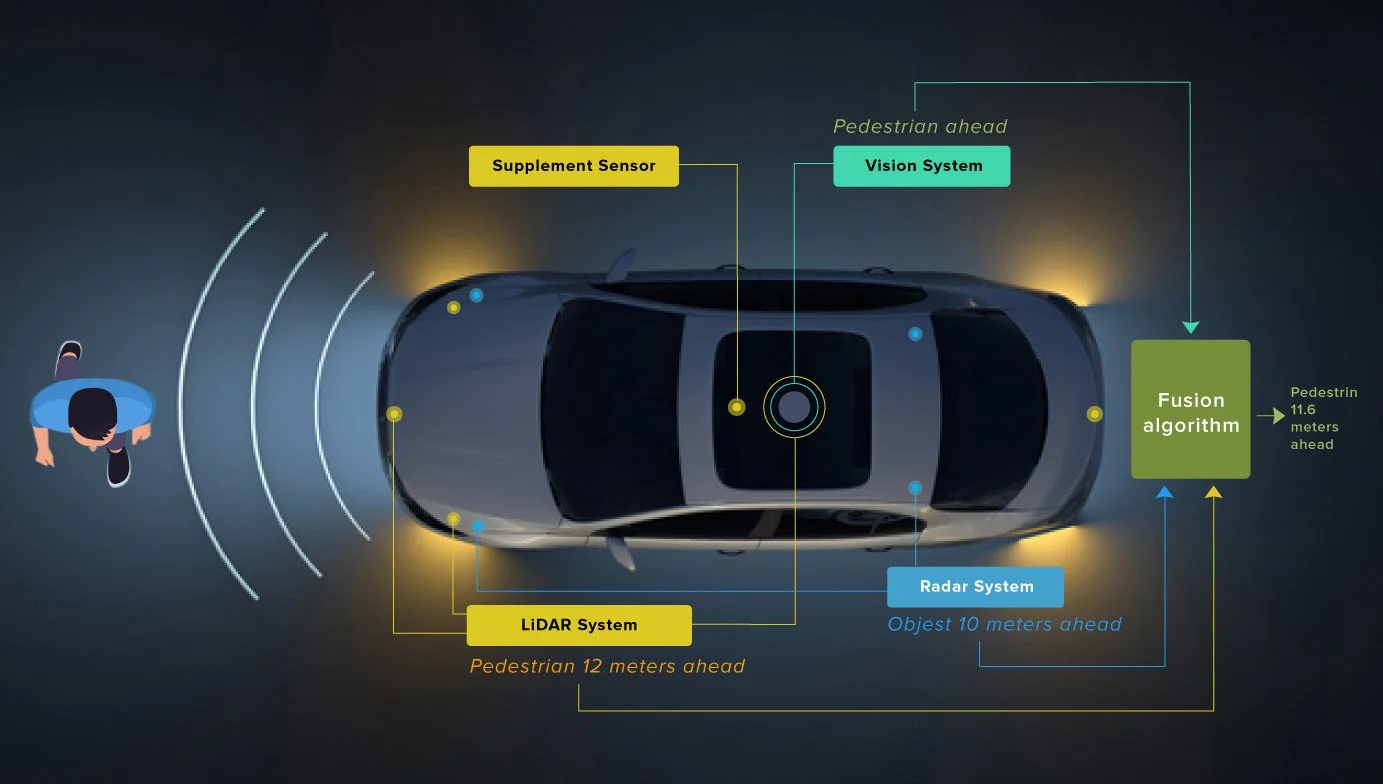
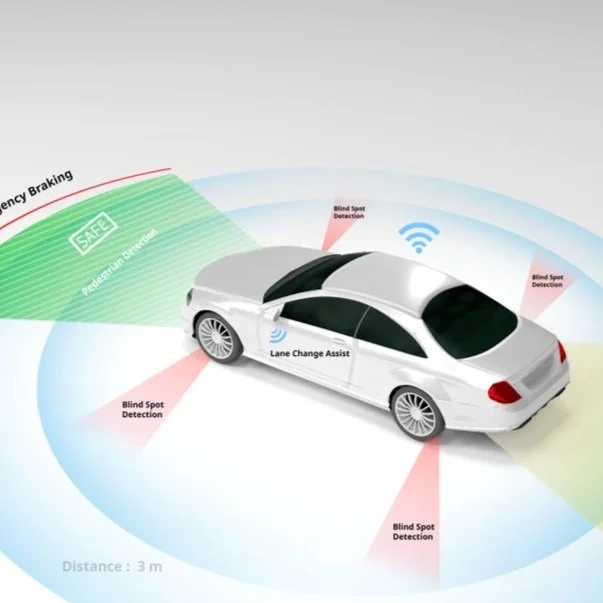
Sensor fusion involves integrating data from various sensors, such as cameras, radars, and lidar, to form a singular and detailed view of the vehicle’s environment. Each sensor provides unique information, and by combining them, autonomous vehicles can achieve a holistic perception of the world around them. For instance, cameras are excellent at recognizing objects, while radars can accurately measure distance and speed. Lidar, on the other hand, creates precise 3D maps of the surroundings. The strengths and weaknesses of these sensors can also change based on lighting conditions, weather, and environment. Integrating these data streams before performing any modeling or analysis enables vehicles to overcome the limitations of individual sensors and enhances their perception capabilities significantly.

Training Algorithms for Fused Data

To interpret and exploit the fused sensor data effectively, autonomous driving algorithms must undergo rigorous training. Training involves exposing the algorithms to vast amounts of labeled data, allowing them to learn and adapt to different scenarios. In 2017, Waymo became the first company to deploy fully self-driving cars in the US. Their history-making success can be attributed to perception systems that include a custom suite of sensors and software, allowing their vehicles to more accurately understand what is happening around them.

Challenges arise in calibrating, synchronizing, and aligning the data from diverse sensors, ensuring consistent data quality, and managing computational complexity. Advanced machine learning techniques, like deep neural networks, play a crucial role in training these algorithms to make sense of the fused data accurately. Some challenges to training algorithms for fused data include:

  1. Syncing and Aligning Data: Integrating sensor data with varying rates must be precise to avoid errors.

  2. Ensuring Calibration across sensors: Accurate calibration is crucial; variations impact performance for a model that relies on fused data inputs.

  3. Handling Large Data: Real-time sensor fusion requires efficient algorithms due to computational complexity and a need for edge deployment in dynamic vehicles.

  4. Managing Sensor Failures: Redundancy is essential to maintain safety during sensor malfunctions.

  5. Addressing Edge Cases: Fused algorithms must handle rare and challenging scenarios effectively, which is heavily determined by training data – both real and synthetic.

  6. Costly Training Data: Acquiring labeled data from multiple sensors is time-consuming and expensive.

  7. Interpretability Concerns: Deep learning’s “black-box” nature hinders decision understanding.

  8. Ensuring Generalization: Algorithms should work well in various environments to ensure broad adoption.

Real-World Applications and Case Studies

Sensor fusion has already made a significant impact on real-world autonomous driving applications. From simple applications with RGB and IR cameras that provide more robust sensing in light and dark conditions, to the fusion of camera and lidar data that enable vehicles to detect pedestrians and cyclists more reliably. Moreover, radar-lidar fusion improves object detection in adverse weather conditions, such as heavy rain or fog, where cameras might struggle. These case studies demonstrate how sensor fusion contributes to creating a safer and more efficient autonomous driving experience.

Future Prospects of Sensor Fusion Technologies

As technology continues to advance, sensor fusion will continue to be critical for AV deployments at scale.. Research and development efforts are focused on refining algorithms to handle complex edge cases and improve real-time decision-making capabilities. Advancements in hardware, such as more compact and affordable sensors, will further drive the adoption of sensor fusion in the industry. Additionally, the ongoing development of 5G networks will enable vehicles to communicate and share perception data, enhancing the overall safety of autonomous driving systems.

Conclusion

In conclusion, sensor fusion is a critical enabler of enhanced safety in autonomous driving. By combining data from multiple sensors, autonomous vehicles can achieve a comprehensive understanding of their surroundings, improving perception capabilities and decision-making. Although challenges exist in training algorithms for fused data, real-world applications and case studies demonstrate the tangible benefits of this technology. Looking ahead, continuous research and development will further refine sensor fusion technologies, making autonomous driving safer and more reliable than ever before. As we move towards a future with autonomous vehicles, sensor fusion stands as a beacon of hope, steering us closer to a world of safer and smarter transportation.

Enhancing Safety Through Perception: The Role of Sensor Fusion in Autonomous Driving Training Read Post »

High-Quality Training Data for Autonomous Vehicles in 2023

By Aaron Bianchi
May 8, 2023

Self-driving or autonomous vehicles are one of the most fascinating applications of machine learning and artificial intelligence. These vehicles are able to navigate and drive without human intervention. But how do autonomous vehicles learn to drive?

The answer is, with lots and lots of data. How is this training data obtained? Who can help you gather high-quality training data for autonomous vehicles in 2023? In this guide, we’ll discuss all of that. So, let’s begin!

What is meant by Training Data?

When we talk about training data, we’re talking about a specific set of data that’s used to train a machine learning model. This data is used to teach the model (in this case, the technology used in autonomous vehicles) what to look for and how to make predictions. The training data is a collection of examples that the autonomous vehicle uses to learn. Each training example includes a set of input values (known as features) and a corresponding set of output values (known as labels).

The vehicle looks at the training data and “learns” the relationship between the input features and the output labels. Once it has learned this relationship, it can then be used to make predictions on new data.

It’s important to note that the autonomous vehicle can only learn from the training data. If there is no training data, then the model will not be able to learn anything. The quality of the training data is very important. If the training data is of poor quality, then the model will not be able to learn anything useful. In summary, training data is a specific set of data that’s used to train a machine learning model.

Importance of Training Data for Autonomous Vehicles

As the development of autonomous vehicles continues, the importance of high-quality training data becomes increasingly apparent. In order to ensure that autonomous vehicles are able to operate safely and effectively, it is essential that they are trained on a variety of data that is representative of the real world.

There are a number of factors that need to be considered when collecting training data for autonomous vehicles. First, the data must be of high quality in order to accurately represent the real world. Second, the data must be diverse in order to account for different scenarios that the vehicle may encounter. Finally, the data must be representative of the areas in which the autonomous vehicle will be operated.

High-quality training data is essential for the development of autonomous vehicles because of the following reasons:

  1. Autonomous Vehicles Can’t Operate Without Accurate Data
    Without accurate data, autonomous vehicles will not be able to learn how to properly operate in the real world. In order to ensure that the data is of high quality, it is important to use data that has been collected from a variety of sources. This will ensure that the data is representative of the real world and will not be biased in any way.

  2. Training Data Helps Vehicles Navigate Different Situations
    In addition to being of high quality, the training data must also be diverse. This is because autonomous vehicles need to be able to learn how to handle a variety of different situations. The data must be representative of different weather conditions, terrain, and traffic patterns. By having a diverse set of data, autonomous vehicles will be able to learn how to properly operate in a variety of conditions.

  3. Training Data Helps Vehicles With Specific Rules
    The training data must be representative of the areas in which the autonomous vehicle will be operated. This is because the vehicle needs to be able to learn the specific rules and regulations of the area in which it will be driving. By having data that is representative of the area, the autonomous vehicle will be able to learn the rules and regulations that are specific to that area.

Collecting high-quality, diverse, and representative training data is essential for the development of autonomous vehicles.

Where does Training Data come from?

When it comes to machine learning, data is key. Without data, there can be no training, and without training, there can be no machine learning. So where does this training data come from?

There are a few different ways to get training data. The first is to simply collect it yourself. This is often referred to as data scraping, and it can be a very tedious and time-consuming process. However, it can also be very rewarding, as you have complete control over the data that you collect.

Another way to get training data is to purchase it from a data provider. This is usually much easier and faster than collecting it yourself, but it can be quite expensive.

Finally, you can also use public data sets. These are data sets that have been made available by governments or other organizations for anyone to use. There are many different public data sets out there, and they can be very helpful for training machine learning models.

What Technology is Used to Gather Training Data?

Autonomous driving training data is used to teach self-driving cars how to navigate roads and traffic. This data is collected through a process called sensor fusion, which involves combining data from various sensors (including cameras, lidar, and radar) to build a comprehensive picture of the car’s surroundings.

  • LiDAR: LiDAR (Light Detection and Ranging) is a remote sensing technology that uses laser pulses to measure distance. This information can then be used to create 3D maps of the area being surveyed. LiDAR can be used to measure the distance to objects, as well as their shape, size, and other characteristics. This information can be used to create 3D models of the area being surveyed. The technology is used for a variety of applications, including mapping the surface of the Earth, measuring the height of trees, and surveying land for archaeological sites and is helpful for autonomous vehicles.

  • Radar: Radar technology is used extensively in data training. It is basically a technology that uses radio waves to identify objects and measure their distance, speed, and other characteristics. It provides such information about the target object that is being tracked. Radar technology can be used to track both moving and stationary objects.

  • Camera: Another method that can help with data training is the use of cameras to take pictures of various objects. These pictures can then be used to train the model. This can be done with a variety of different types of cameras, including traditional cameras, infrared cameras, and X-ray cameras.

Data Annotation Types for Autonomous Vehicles

Data annotation is the process of labeling data to provide context and enable machines to understand it. This is a critical step in training autonomous vehicles, as it allows the vehicles to learn from and make decisions based on data that has been specifically labeled for that purpose. Once the data has been labeled, it can be used to train the autonomous vehicle algorithms. This process is typically done with a supervised learning approach, where the labeled data is used to train a model that can then be applied to new data. This allows the autonomous vehicle to learn from and make decisions based on real-world data, rather than just simulated data.

Data annotation is a critical part of training autonomous vehicles, and it is important to ensure that the process is done accurately and with high quality data. Here are some data annotation and labeling tools used in the autonomous vehicle industry:

  • 2D Boxing: This is a process of creating a virtual box around an object in order to better track its movements. This is especially important for autonomous vehicles, as they need to be able to accurately track the movements of other objects in order to avoid collisions. There are a few different methods of 2D boxing, but the most common is to use lasers to create the box.

    2D boxing can be used to track the movements of multiple objects at the same time. This is important for avoiding collisions, as the vehicle will be able to see the movements of all of the objects in its vicinity.

  • Polygon: For precise object detection and positioning in images and videos, polygon is employed. Polygon is more accurate than 2D boxing, but it can be a time consuming process and costs more money. It’s especially useful when the objects are complex and irregular.

  • 3D Cuboids: This is similar to 2D boxing, but as the name suggests, the process creates 3D cuboids around objects. An anchor point is placed at each edge of the item after the annotator forms a box around it. Based on the characteristics of the item and the angle of the picture, the annotator makes an informed guess as to where the edge may be if it is absent or blocked by another object.

  • Video annotation: This can be done by adding labels to specific frames or regions of frames. Video annotation is widely used for autonomous vehicles in the driving prediction models as it helps track objects in a constant series of images.

  • Semantic Segmentation: This technology identifies objects in their environment. Semantic segmentation is a technique that uses artificial intelligence to classify each pixel in an image. This allows the vehicle to distinguish between different objects, such as cars, pedestrians, and traffic signs. Semantic segmentation requires a large amount of data to train the algorithms that identify objects.

  • Lines and Splines: Lines and splines are used to create a virtual map of the area around the vehicle. The map is then used by the vehicle’s computer to navigate. These lines and splines are created by sensors on the autonomous vehicle. The sensors send data to the computer that is then used to create the map.

  • 3D point cloud: 3D point cloud is a technology used in autonomous vehicles to create a three-dimensional map of the environment. LiDAR sensors are used to scan the environment and create a point cloud. The point cloud is then used to create a three-dimensional model of the environment that the autonomous vehicle can use to navigate. This helps vehicles plan their route and avoid obstacles.

How to Get Training Data for Autonomous Driving?

If you want to get training data for autonomous driving, there are a few options available to you. You can either purchase it from a data provider, or collect it yourself.

If you choose to purchase data, there are a few things to keep in mind:

  • Make sure that the data is of high quality and has been collected from a variety of different environments.

  • Consider the cost of the data. It can be expensive to purchase large amounts of high-quality data.

If you decide to collect data yourself, you must understand the following:

  • You will need to have a vehicle that is equipped with the necessary sensors for collecting data.

  • You will need to drive in a variety of different environments to collect data from.

  • You should have proper technology to label the data that you collect.

This entire process can be time-consuming and full of hurdles. It’s not easy to collect and label data, especially for autonomous driving where there can be no room for error. One mistake can eventually cost lives, which is why it’s important to know the challenges of collecting this data on your own.

Challenges of Collecting Training Data On Your Own

  1. One of the challenges of collecting training data is that it must be diverse enough to cover all potential driving scenarios. This means that data must be collected in a wide variety of locations and conditions, including both urban and rural areas, and in all weather conditions.

  2. Another challenge is that data must be collected continuously over time in order to capture changes in the environment, such as new construction or road closures. This can be a difficult and expensive proposition.

  3. High quality and accurate data is needed for rare events or extreme conditions in order to make autonomous driving error-free. This can be tough if done individually.

It’s best to weigh both options before narrowing down on one as this decision of how to obtain your training data for autonomous vehicles can have big consequences.


DigitalDivideData as a Reliable Data Labeling Partner

As you can see, gathering training data for autonomous cars isn’t a piece of cake. Not only does the data need to be of high-quality, but it should also be collected using all kinds of annotations for various scenarios and objects. Another important factor is maintaining the timely inflow of data to speed up the process of building your autonomous vehicle.

Digital Divide Data can provide your business with all of this. With a qualified team of highly-skilled tech professionals and data scientists, you’ll not have any doubts about the source and quality of your data. Get in touch with us for your data labeling and training needs.

High-Quality Training Data for Autonomous Vehicles in 2023 Read Post »

DDD ADAS Data 1

High-Quality Training Data for Autonomous Vehicles in 2023

By Aaron Bianchi
May 8, 2023

Self-driving or autonomous vehicles are one of the most fascinating applications of machine learning and artificial intelligence. These vehicles are able to navigate and drive without human intervention. But how do autonomous vehicles learn to drive?

The answer is, with lots and lots of data. How is this training data obtained? Who can help you gather high-quality training data for autonomous vehicles in 2023? In this guide, we’ll discuss all of that. So, let’s begin!

What is meant by Training Data?

When we talk about training data, we’re talking about a specific set of data that’s used to train a machine learning model. This data is used to teach the model (in this case, the technology used in autonomous vehicles) what to look for and how to make predictions. The training data is a collection of examples that the autonomous vehicle uses to learn. Each training example includes a set of input values (known as features) and a corresponding set of output values (known as labels).

The vehicle looks at the training data and “learns” the relationship between the input features and the output labels. Once it has learned this relationship, it can then be used to make predictions on new data.

It’s important to note that the autonomous vehicle can only learn from the training data. If there is no training data, then the model will not be able to learn anything. The quality of the training data is very important. If the training data is of poor quality, then the model will not be able to learn anything useful. In summary, training data is a specific set of data that’s used to train a machine learning model.

Importance of Training Data for Autonomous Vehicles

As the development of autonomous vehicles continues, the importance of high-quality training data becomes increasingly apparent. In order to ensure that autonomous vehicles are able to operate safely and effectively, it is essential that they are trained on a variety of data that is representative of the real world.

There are a number of factors that need to be considered when collecting training data for autonomous vehicles. First, the data must be of high quality in order to accurately represent the real world. Second, the data must be diverse in order to account for different scenarios that the vehicle may encounter. Finally, the data must be representative of the areas in which the autonomous vehicle will be operated.

High-quality training data is essential for the development of autonomous vehicles because of the following reasons:

  1. Autonomous Vehicles Can’t Operate Without Accurate Data
    Without accurate data, autonomous vehicles will not be able to learn how to properly operate in the real world. In order to ensure that the data is of high quality, it is important to use data that has been collected from a variety of sources. This will ensure that the data is representative of the real world and will not be biased in any way.

  2. Training Data Helps Vehicles Navigate Different Situations
    In addition to being of high quality, the training data must also be diverse. This is because autonomous vehicles need to be able to learn how to handle a variety of different situations. The data must be representative of different weather conditions, terrain, and traffic patterns. By having a diverse set of data, autonomous vehicles will be able to learn how to properly operate in a variety of conditions.

  3. Training Data Helps Vehicles With Specific Rules
    The training data must be representative of the areas in which the autonomous vehicle will be operated. This is because the vehicle needs to be able to learn the specific rules and regulations of the area in which it will be driving. By having data that is representative of the area, the autonomous vehicle will be able to learn the rules and regulations that are specific to that area.

Collecting high-quality, diverse, and representative training data is essential for the development of autonomous vehicles.

Where does Training Data come from?

When it comes to machine learning, data is key. Without data, there can be no training, and without training, there can be no machine learning. So where does this training data come from?

There are a few different ways to get training data. The first is to simply collect it yourself. This is often referred to as data scraping, and it can be a very tedious and time-consuming process. However, it can also be very rewarding, as you have complete control over the data that you collect.

Another way to get training data is to purchase it from a data provider. This is usually much easier and faster than collecting it yourself, but it can be quite expensive.

Finally, you can also use public data sets. These are data sets that have been made available by governments or other organizations for anyone to use. There are many different public data sets out there, and they can be very helpful for training machine learning models.

What Technology is Used to Gather Training Data?

Autonomous driving training data is used to teach self-driving cars how to navigate roads and traffic. This data is collected through a process called sensor fusion, which involves combining data from various sensors (including cameras, lidar, and radar) to build a comprehensive picture of the car’s surroundings.

  • LiDAR: LiDAR (Light Detection and Ranging) is a remote sensing technology that uses laser pulses to measure distance. This information can then be used to create 3D maps of the area being surveyed. LiDAR can be used to measure the distance to objects, as well as their shape, size, and other characteristics. This information can be used to create 3D models of the area being surveyed. The technology is used for a variety of applications, including mapping the surface of the Earth, measuring the height of trees, and surveying land for archaeological sites and is helpful for autonomous vehicles.

  • Radar: Radar technology is used extensively in data training. It is basically a technology that uses radio waves to identify objects and measure their distance, speed, and other characteristics. It provides such information about the target object that is being tracked. Radar technology can be used to track both moving and stationary objects.

  • Camera: Another method that can help with data training is the use of cameras to take pictures of various objects. These pictures can then be used to train the model. This can be done with a variety of different types of cameras, including traditional cameras, infrared cameras, and X-ray cameras.

Data Annotation Types for Autonomous Vehicles

Data annotation is the process of labeling data to provide context and enable machines to understand it. This is a critical step in training autonomous vehicles, as it allows the vehicles to learn from and make decisions based on data that has been specifically labeled for that purpose. Once the data has been labeled, it can be used to train the autonomous vehicle algorithms. This process is typically done with a supervised learning approach, where the labeled data is used to train a model that can then be applied to new data. This allows the autonomous vehicle to learn from and make decisions based on real-world data, rather than just simulated data.

Data annotation is a critical part of training autonomous vehicles, and it is important to ensure that the process is done accurately and with high quality data. Here are some data annotation and labeling tools used in the autonomous vehicle industry:

  • 2D Boxing: This is a process of creating a virtual box around an object in order to better track its movements. This is especially important for autonomous vehicles, as they need to be able to accurately track the movements of other objects in order to avoid collisions. There are a few different methods of 2D boxing, but the most common is to use lasers to create the box.

    2D boxing can be used to track the movements of multiple objects at the same time. This is important for avoiding collisions, as the vehicle will be able to see the movements of all of the objects in its vicinity.

  • Polygon: For precise object detection and positioning in images and videos, polygon is employed. Polygon is more accurate than 2D boxing, but it can be a time consuming process and costs more money. It’s especially useful when the objects are complex and irregular.

  • 3D Cuboids: This is similar to 2D boxing, but as the name suggests, the process creates 3D cuboids around objects. An anchor point is placed at each edge of the item after the annotator forms a box around it. Based on the characteristics of the item and the angle of the picture, the annotator makes an informed guess as to where the edge may be if it is absent or blocked by another object.

  • Video annotation: This can be done by adding labels to specific frames or regions of frames. Video annotation is widely used for autonomous vehicles in the driving prediction models as it helps track objects in a constant series of images.

  • Semantic Segmentation: This technology identifies objects in their environment. Semantic segmentation is a technique that uses artificial intelligence to classify each pixel in an image. This allows the vehicle to distinguish between different objects, such as cars, pedestrians, and traffic signs. Semantic segmentation requires a large amount of data to train the algorithms that identify objects.

  • Lines and Splines: Lines and splines are used to create a virtual map of the area around the vehicle. The map is then used by the vehicle’s computer to navigate. These lines and splines are created by sensors on the autonomous vehicle. The sensors send data to the computer that is then used to create the map.

  • 3D point cloud: 3D point cloud is a technology used in autonomous vehicles to create a three-dimensional map of the environment. LiDAR sensors are used to scan the environment and create a point cloud. The point cloud is then used to create a three-dimensional model of the environment that the autonomous vehicle can use to navigate. This helps vehicles plan their route and avoid obstacles.

How to Get Training Data for Autonomous Driving?

If you want to get training data for autonomous driving, there are a few options available to you. You can either purchase it from a data provider, or collect it yourself.

If you choose to purchase data, there are a few things to keep in mind:

  • Make sure that the data is of high quality and has been collected from a variety of different environments.

  • Consider the cost of the data. It can be expensive to purchase large amounts of high-quality data.

If you decide to collect data yourself, you must understand the following:

  • You will need to have a vehicle that is equipped with the necessary sensors for collecting data.

  • You will need to drive in a variety of different environments to collect data from.

  • You should have proper technology to label the data that you collect.

This entire process can be time-consuming and full of hurdles. It’s not easy to collect and label data, especially for autonomous driving where there can be no room for error. One mistake can eventually cost lives, which is why it’s important to know the challenges of collecting this data on your own.

Challenges of Collecting Training Data On Your Own

  1. One of the challenges of collecting training data is that it must be diverse enough to cover all potential driving scenarios. This means that data must be collected in a wide variety of locations and conditions, including both urban and rural areas, and in all weather conditions.

  2. Another challenge is that data must be collected continuously over time in order to capture changes in the environment, such as new construction or road closures. This can be a difficult and expensive proposition.

  3. High quality and accurate data is needed for rare events or extreme conditions in order to make autonomous driving error-free. This can be tough if done individually.

It’s best to weigh both options before narrowing down on one as this decision of how to obtain your training data for autonomous vehicles can have big consequences.


DigitalDivideData as a Reliable Data Labeling Partner

As you can see, gathering training data for autonomous cars isn’t a piece of cake. Not only does the data need to be of high-quality, but it should also be collected using all kinds of annotations for various scenarios and objects. Another important factor is maintaining the timely inflow of data to speed up the process of building your autonomous vehicle.

Digital Divide Data can provide your business with all of this. With a qualified team of highly-skilled tech professionals and data scientists, you’ll not have any doubts about the source and quality of your data. Get in touch with us for your data labeling and training needs.

High-Quality Training Data for Autonomous Vehicles in 2023 Read Post »

Scroll to Top