Celebrating 25 years of DDD's Excellence and Social Impact.

Author name: DDD

Avatar of DDD
DDD OCR ML ReceiptBlog 1

How OCR and Machine Learning Improve Document Processing

By Aaron Bianchi
May 5, 2023

In today’s fast-paced digital world, document processing is a must-have for organizations to remain cost-effective and efficient in their operations as possible. Optical Character Recognition (OCR) and Machine Learning (ML) are two technologies that have significantly improved the speed, accuracy, and overall efficiency of document processing.

OCR and ML technologies have become increasingly popular in the last few years, enabling organizations to automate repetitive and time-consuming manual tasks. They allow organizations to convert paper-based documents into digital format, recognize and extract text and data, and automatically classify and organize them.

In this article, we will explore the benefits of OCR and ML in document processing and how they can help organizations to improve their workflow and productivity.

  1. Faster Processing Time

    OCR and ML technologies automate the conversion of paper-based documents into digital format, which significantly reduces the time required for manual data entry. With OCR, documents can be scanned and converted into editable digital files within seconds, making it faster and more efficient than manual data entry.

    ML, on the other hand, can help to automate complex tasks such as document classification and data extraction. By training ML algorithms on a large dataset of documents, organizations can teach machines to recognize patterns and make predictions about new documents, reducing the time required for manual document processing.

  2. Improved Accuracy

    Manual data entry is prone to errors and can be a time-consuming task. OCR and ML technologies have significantly improved the accuracy of document processing by reducing the risk of errors and inconsistencies.

    OCR technology recognizes and extracts text and data from documents with high accuracy, reducing the need for manual data entry. ML algorithms can be trained to recognize specific patterns and keywords in documents, making it easier to extract and classify data accurately.

  3. Enhanced Document Security

    OCR and ML technologies can improve document security by enabling organizations to store and manage documents securely. With OCR, documents can be converted into digital format and stored securely in the cloud or on-premise servers.

    ML algorithms can also be used to detect anomalies in documents, such as unusual patterns or changes in text, making it easier to identify potential security threats. By implementing OCR and ML technologies, organizations can improve the security and privacy of their documents.

  4. Cost-Effective Solution

    OCR and ML technologies offer a cost-effective solution for organizations that need to process a large volume of documents regularly. By automating document processing, organizations can reduce the need for manual labor and minimize the risk of errors and inconsistencies.

    OCR and ML technologies are also scalable, making it easier for organizations to handle document processing at any scale. By implementing OCR and ML technologies, organizations can achieve significant cost savings and improve their bottom line.

Conclusion

OCR and ML technologies have revolutionized document processing, making it faster, more accurate, and cost-effective. By implementing these technologies, organizations can improve their workflow, productivity, and bottom line.

In summary, OCR and ML technologies offer the following benefits:

  • Faster processing time

  • Improved accuracy

  • Enhanced document security

  • Cost-effective solution

By embracing these technologies, organizations can stay ahead of their competitors and achieve success in today’s digital world.

How OCR and Machine Learning Improve Document Processing Read Post »

Computer Vision Hero Image

Everything You Need To Know About Computer Vision

Computer Vision Hero Image

By Aaron Bianchi
Updated May 2, 2023

If you’re looking for extra security for your home via installation of facial recognition on your doorstep, you’re not alone. The good news? It’s possible. And that’s not all. Computer vision can do a lot more in every area of your life.

There have been constant developments in artificial intelligence, deep learning and neural networks in recent years. Computer vision has made it possible to detect and label objects, being able to accomplish tasks that humans can’t.

Seems like computers are our best friends and can make our lives easier, more entertaining and more secure. Let’s find out what computer vision is, how it works and how you can use it to enhance your everyday life.

What is Computer Vision?

Computer vision is a technology of computer science that focuses on human vision and its replication in order to help computers see and identify objects around them, just like human beings do. In simpler words, computer vision is like replicating the functions of the human eye in a computer.

Remember we talked about face recognition technology right at the beginning of the article? That’s one of the things computer vision enables. It allows phone companies and smart home devices to use facial recognition as a measure of security.

Where did it all begin? 1950s! Yes, that’s how old computer vision is but its growth in recent years has been phenomenal. Back in those days (70s and 80s), it was used to differentiate typed text from handwritten text.

How does it even work? How is computer vision able to detect objects? Let’s find the answer to this and put all curiosity to rest.

How Does Computer Vision work?

This question is like asking how the human brain works. The field of neuroscience has forever been intrigued by how complex our brains are and how they work. Machine learning asks the same question and works in the answer to develop this field of computer science.

Now we all know that brains aren’t easy to study and even science doesn’t have all the answers yet on the exact way images are processed in the brain. This is why computer vision works on what we do know: recognizing patterns.

So how does the computer learn to recognize an image? It all gets down to understanding the complexity of pixels and colors. In simple words, if you feed an algorithm with millions of images of a book, a set of machine learning algorithms will help it analyze the colors, shapes and the relative distance between objects. This helps the computer understand what a “book” is based on the types of data sets. Once done, this computer will be able to recognize books from images that are fed into it in the future.

Let’s break it down into steps. Here’s what a computer does:

  • Acquire an image

  • Process the image

  • Understand the image

Advantages of Computer Vision

Computer vision benefits both the public and the private sector in various ways.

  1. Better Searching Methods

    Let’s talk about the advertising industry. Digital advertising mainly relied on keywords and tags. While the method works it’s not cent percent efficient. After the introduction of computer vision to this sector, results got a lot better.Instead of relying on traditional tags, computer vision compares the actual physical characteristics of a specific image. Because of this, people are able to search for exactly what they’re looking for by using a photo to find “similar products”.

  2. Better User Experience

    Those filters that transform your face on Snapchat and Instagram are a result of computer vision! With the use of facial mapping and augmentation, computer vision makes it possible to create such features on apps.

  3. Patient Identification And Better Medical Procedures

    Computer vision improves patient identification thereby preventing wrong person procedures. One can also expect a more accurate diagnosis via medical imaging analysis. From surgery training assistance to patient rehabilitation assistance, computer vision helps the medical field to achieve goals that were once far-fetched.

    The contribution of computer vision to the medical field is quite a boon. Here are some examples of how it helps:

    • Patient rehabilitation assistance.

    • Medical students training.

    • Patient identification.

  4. Better Security

    Computer vision works with cyber security systems to monitor any remote activity. This can be done from anywhere which makes it easier to recognize and analyze potential cyber threats and prevent them from happening.

    Here are some ways in which computer vision is used:
    • Biometrics for identification.
    • Security cameras.
    • Vehicle identification in instances of car theft.
    • AI fire detection that helps detect fires in buildings by taking images or videos.

  5. Transport Safety

    Computer vision is trained and used to identify unauthorized and harmful objects such as guns, biological weapons, etc, before they are loaded on passenger transport vehicles like an aircraft.

    This technology isn’t just used by some airlines but is also used by other public transport such as trains and buses to minimize risks and maximize security for the travelers.

Types of Computer Vision

DDD%2B %2BTYPES%2BOF%2BCOMPUTER%2BVISION

Image segmentation: Here, the image is divided into multiple regions that are examined separately.

  1. Object detection: This pertains to identification of a specific object in one image. For instance, a book like we talked about earlier. With advanced object detection, your computer can recognize multiple objects in one image.

  2. Facial recognition: Whether it’s human face recognition in general like in those app filters or recognition of a specific person like in a smartphone for unlocking, computer vision does it all.

  3. Edge detection: This method identifies the outer edges of objects to identify what the image consists of.

  4. Pattern detection: This technique helps with identification of colors, shapes, and other visual elements in images.

  5. Image classification: Organizing images into various groups and categories.

  6. Feature matching: This method helps match similarities in images to classify them.

While simple uses of computer vision might just require one of these techniques, more complex ones like self-driving cars may make the use of a combination of various types of computer vision.

Top 9 Computer Vision Applications

  1. Self-driving cars
    Since dreams of self-driving cars are coming true, a lot of is can be attributed to computer vision. Tesla has already come up with autonomous vehicles and it’s just a matter of time before you can get around your city in a driverless car too!

  2. Augmented Reality
    Augmented reality uses computer-generated augmentation to provide an experience of the natural surroundings. If you’ve played games that use AR, you know that they can make you feel like you’re actually in that virtual world while your actions here in the real world affect what’s going on inside the game! You swing your golf club here and the ball goes flying in the game. How cool is that?

  3. Medical Imaging
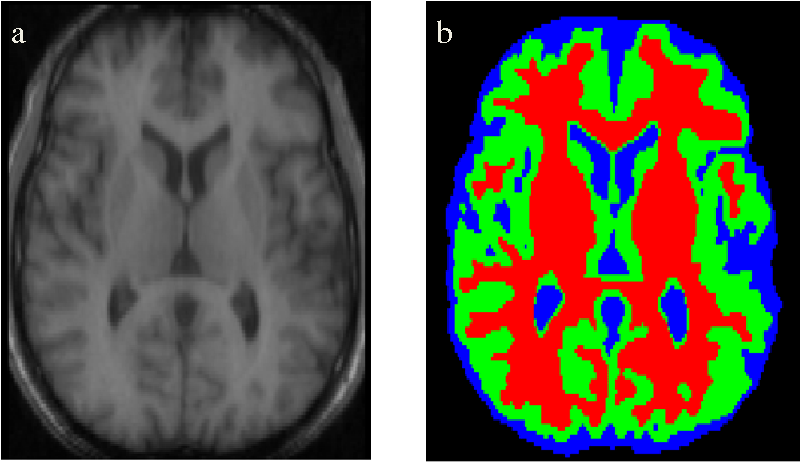
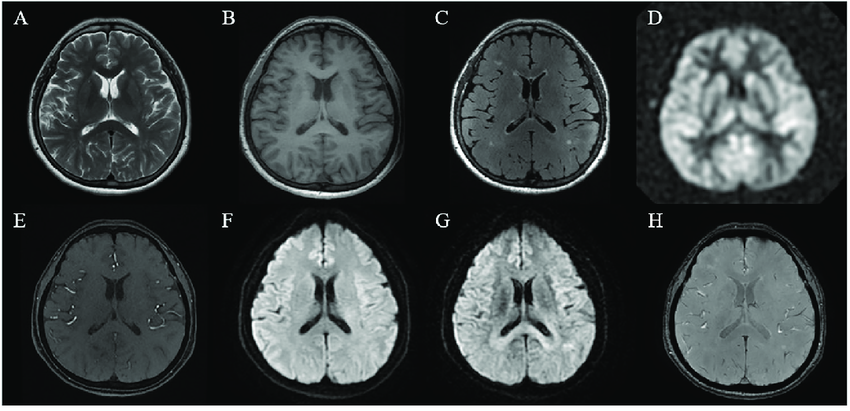
    How does a doctor classify X-rays and MRIs into diseases like cancer and pneumonia? Computer vision is the core of early diagnosis in the medical field. It has helped save thousands of lives by enabling doctors to detect diseases early with the help of imaging.

  4. Intelligent Video Analytics
    Identification techniques like pose estimation, face detection and object tracking have helped CCTV cameras in understanding a shopper’s interaction with various products in a retail shop, queue lengths at airports and malls and other such parameters in public places with large crowds.

  5. Manufacturing and Construction
    Computer vision systems help in detection of defects and with safety inspections. This helps in a better manufacturing process with fewer chances of error. 3D vision systems make inspections far more superior and efficient in production lines.

  6. Optical Character Recognition
    OCR goes back to 1974 but with the latest technology and Deep Learning systems, today’s OCR techniques can detect and translate text in natural environments without any human intervention.

    Read more: OCR in Machine Learning

  7. Retail
    Nowadays there are AI stores like “Amazon-go” across the United States that are cashierless and customers can self-checkout after shopping. This shows that computer vision can revolutionize shopping experiences for both the store owners and the consumers.

  8. Education
    There’s nothing better than providing a personalized learning experience to students because one size doesn’t fit all. Computer vision understands students’ learning behaviors to improve their learning experiences. The technology also helps assess students’ papers to reduce the burden on teachers.

  9. Sports and Fitness
    Computer vision can help fitness apps capture performance data. This can not only help the person using the app but also help coaches in training sessions. In sports, computer vision can track objects and ball movements to improve referees’ decision-making.

Top Industries Using Computer Vision

Since we already saw the application of computer vision, it’s not difficult to understand what industries benefit the most from it. Here are the industries that use computer vision the most and how the technology helps each industry.

  1. Agriculture

    • Helps identify pests with greater accuracy to optimize chemical application.

    • Automation of livestock management to reduce the need for human intervention in the field.

    • Helps monitor crop development to have a better quality yield.

    • Automotive enables self-driving cars with intelligence to detect objects.

    • Helps create a seamless and driverless experience with no human error.

    • Reduces the chances of accidents.

  2. Retail and E-commerce

  3. Sports Analytics

    • Better referee decisions because of accurate ball/object and human position captures.

    • Accurate and personalized fitness plans or goals via apps that monitor various bodily functions.

  4. Medical Institutions

    • Improved and early diagnosis of illnesses in patients via 3D imaging.

    • Real-surgery and training assistance for more effective outcomes.

    • Improved patient logs with better identification to avoid confusion.

FAQ’s

  •  

    Yes! Computer vision is a subfield of AI and Deep Learning. Because of this technology computers can visualize and interpret objects and the world around them.

  •  

    Computer vision is a subset of machine learning while machine learning itself is a subfield of AI. We can say that computer vision uses machine learning algorithms like neural networks. However, even though they have many commonalities overall, they’re applied differently.

  •  

    Implementing computer vision technology can be a challenge for businesses due to the lack of dedicated personnel and resources. Businesses often lack the internal expertise to effectively set up, configure, and maintain computer vision systems. Additionally, businesses may not have the resources to invest in the technology as it’s costly, making it difficult to implement.

  •  

    Deep learning is based on the concept of artificial neural networks, which are networks of simple algorithms that are designed to mimic the behavior of biological neurons in the human brain. By utilizing deep learning, computers can be taught to recognize objects, identify patterns in images, and even detect faces.

    Deep learning can be used to analyze videos and images to provide valuable insights into the data. Deep learning can also be used to generate synthetic images and videos, which can be used to train computers to recognize objects and patterns more accurately.

  •  

    Computer vision technology helps autonomous vehicles to identify and respond to objects, such as other vehicles, pedestrians, and traffic signs, in their environment in real time. This technology utilizes a combination of cameras, sensors and algorithms to process the data collected from its environment and create an accurate map of the area. Computer vision technology also helps autonomous vehicles to determine the position of other vehicles and objects around them. By utilizing cameras and sensors, the vehicle can create a 3D map of its environment.

  •  

    Computer vision technology can be used in surveillance and security systems to monitor, detect, and analyze activity in physical environments, such as buildings, streets, and public spaces. Computer vision technology can be used for a wide range of security applications, such as facial recognition, motion detection, object recognition, and anomaly detection.

    Another use of computer vision technology in security and surveillance systems is motion detection. This technology can detect movement in a surveillance video, which can be used to trigger an alert or to initiate a response such as activating a security system or alerting authorities. Motion detection can also help to detect intruders or other potential threats in a specific area.

Computer Vision Is The Future

As you can see, almost everything becomes easier, quicker, more effective and more secure with the help of computer vision. The best part is that it can be applied to every field and industry, helping not just professionals and businesses but also consumers and common people too. Everyone can enjoy the benefits that come with it.

If you’d like your business or setup to grow faster with more effective interactions with your consumers, you must go for the best computer vision services. Get futuristic today!

Everything You Need To Know About Computer Vision Read Post »

AutonomousDriving 1

4 Major Regulatory Hurdles in the Autonomous Driving Space

By Abhilash Malluru
March 13, 2023

Autonomous driving as a field is booming. As many automotive manufacturers integrate autonomous technologies in their vehicles, fully autonomous cars are becoming a mere stone’s toss away.

Regulations for autonomous driving typically focus on two key areas: safety and performance. This article is mostly focused on the regulatory and legislative hurdles regarding safety of automated driving and autonomous vehicles.

1. Liability and Autonomous Vehicles

No means of transportation is without its hiccups. And unfortunately, autonomous driving has had numerous fatal accidents, with eleven recorded in 2022 alone. Currently, all autonomous auto manufacturers are required to report accidents to the National Highway Traffic Safety Administration.

The points of failure in an autonomous vehicle are a little more nebulous, and concerns have surfaced about who is liable in an accident. Since the cars are not fully autonomous, the accident could be from driver carelessness. Or they could be a result of software malfunctions or mechanical failures. As the technology improves and cars become more autonomous, the accident liability will shift toward the manufacturers and developers. There is no clear-cut solution yet, as the issue has yet to mature.

A Problem of Interwoven Pieces

Autonomous vehicles are complex. There’s a lot of interconnectivity between the various pieces that power and control them. Some speculate that as liability shifts to developers and manufacturers, it will pose some severe hurdles to overcome per incident.

Those making the AVs must analyze every component of the vehicle and perhaps even divulge the proprietary software suites that power the car while assisting law enforcement.

2. Federal and State Regulations

The first road safety initiatives began years before computer chips ever graced automobiles. Much has changed in automotive technology since, but the regulatory bodies are slower to catch up. Currently, there isn’t a wide-sweeping federal regulation governing fully autonomous vehicles.

The NHTSA has made some provisions regarding autonomous vehicles and specific safety feature requirements. This is a positive sign since the safety features that auto manufacturers must include are congruent with autonomous vehicle technologies.

State Laws

Only 43 states out of 50 have legislation regarding automated vehicles. Some are restrictive, while others depend on each vehicle’s SAE automation level. Liability insurance factors into most of these laws since every state save Hawaii and Virginia requires it.

The other seven states haven’t enacted laws regarding autonomous vehicles, and there is no indication of when legislation might be drafted. Multiple states also require licensure for mandated drivers, adding another logistics drain onto larger fleet deployments.

Federal Laws

The only federal-level agency providing some oversight over autonomous driving is the previously mentioned NHTSA. Federal regulation currently stipulates safety features, not the deployment of large commercial autonomous vehicle fleets. This isn’t necessarily bad, but a lack of an overarching baseline may cause future headaches for manufacturers.

Limited federal regulations also mean manufacturers must consider various state laws when developing and deploying autonomous vehicles.

3. Cybersecurity of Autonomous Vehicles

Tech magnates worldwide have bolstered their cybersecurity after hard-learned lessons, including cyber attacks, extreme platform compromises, and significant money lost due to offline systems. Yet the nascent autonomous driving space hasn’t fully accounted for their lack of protected systems. And if a server goes down and a vehicle is compromised, the effects would not only be money and time lost but potentially lives.

Despite the technological marvels surrounding AVs, there isn’t much cybersecurity support. These vehicles have diverse means of connectivity, leaving many open attack vectors. For example, the Internet of Things (IoT) has long been a highly vulnerable method of communication. Many AVs communicate with smart devices in the home, and security measures haven’t yet been fully developed to address potential attacks.

Much could be done to bolster and harden the systems around autonomous vehicles. Encrypted digital transmission has been present in IoT for quite some time. Hardened entry points requiring user authentication could mitigate possible actions and deter bad actors.

A clear and effective incident response to a systems breach is now a necessity, as it provides a blueprint for how to respond to a compromised vehicle.

4. Data Usage and Privacy Concerns

Along with the lack of security, there is the question of what data auto manufacturers collect and how they use it.

We can expect manufacturers to collect performance metrics, but gathering personalized data presents grave privacy concerns. Regulatory bodies have already addressed the data collected in the medical, financial, and educational sectors. So perhaps it’s a matter of time before additional regulations develop regarding manufacturers’ collection and safeguarding of personal data.

Other concerns arise regarding what the companies do with the data collected from their autonomous vehicles. Location data gives a glimpse at the patterns and lifestyle of the operator of any autonomous vehicle, and it would be a simple step to leverage that data into marketing materials and betray the trust of a potential customer.

Current American legislature regulations regarding data collection could be adapted to provide some degree of security for user data. New legislature and regulations could further impact how manufacturers use the data gathered by AVs.

How to Position Your Enterprise at the Forefront of AD Policies

With all these concerns, how would you move forward?

Here are some steps that you can take to move forward and position your enterprise at the forefront of these policies and regulations.

  1. Liability: Your organization can handle self-reporting, which helps maintain paper trails for all incidents and prepares your staff to respond appropriately to any incidents.

  2. Federal and State Regulations: Maintaining liaisons with regulatory bodies nationwide could benefit your enterprise. It’s also best to adhere to good practices and industry-standard software stacks when approaching the development of these platforms.

  3. Cybersecurity: Cybersecurity has many glaring issues, but you could strengthen your organization by adopting some of the principles AI and ML companies use.

  4. Data: Software stacks could and should adhere to ISO standards regarding intelligent transport systems, like ISO 22737:2021. Data usage should be self-regulated, as there aren’t provisions for the safest practices concerning the protection of customer data.


Are you looking to integrate standard software solutions for your autonomous driving firm? Digital Divide Data provides data annotation services with SOC 2 Type 2 and ISO 27001 certification.

4 Major Regulatory Hurdles in the Autonomous Driving Space Read Post »

Car Aerial Annotated 01 1

Determining The New Gold Standard of Autonomous Driving

Car Aerial Annotated 01

By Abhilash Malluru
Feb 27, 2023

Autonomous driving is on the cusp of widespread adoption. As more manufacturers across the globe begin implementing AD systems in their vehicles, it is only a matter of time before it becomes a regular feature in future automobiles. And with the rise in popularity of AD systems comes a need for standardization.

Emerging standards are beginning to regulate how manufacturers approach navigation, safety, and AD modeling quality. These standards also influence policy creation, technology use, and the general framework for AD systems. Creating standard systems for these AD models will lead to a more uniform approach toward autonomous driving models.

An Overview of the Tech Behind Autonomous Driving

While the idea of autonomous driving dates back centuries with Leonardo da Vinci’s inventions, most of the tech has been developed in the last few decades. After Navlab5’s self-steering vehicle made headlines in the ’90s, autonomous driving really took off.

The first AD production vehicle started with Tesla’s Autopilot, an SAE 1 implementation that offered parking assistance and automated driver-assistive processes. Tesla doesn’t provide a fully autonomous platform for their production vehicles, but the Autopilot helped gauge interest in the general public.

Other manufacturers are also spearheading their own development of AD vehicles. For example, Volvo’s recent acquisition of Zenseact, a leading software and hardware developer for autonomous driving, shows the company’s commitment to producing a fully autonomous vehicle. Volvo has also started implementing more sophisticated technologies like LiDAR for its AD driving platforms.

LiDAR and other data annotation methods – like bounding boxes, polygons, and key points – have become ubiquitous in the autonomous driving space. These annotation methods rely on trained AI models with massive data sets that provide accurate information to the vehicle in real time so it can adapt and adjust to conditions on the road.

It’s extremely time-consuming to develop models, so there are still limitations, like a reliance on the driver to make crucial driving decisions. Still, this progress is leaps and bounds from where the earlier assistive processes were just a few years ago.

State governments in the United States have already convened and passed legislation regarding autonomous vehicles on public roadways. The most noteworthy is California, which has the most comprehensive regulations for autonomous vehicles. No federal legislature permits the deployment of fully autonomous vehicles yet. It operates more on a state-by-state basis.

The Standards Fueling AD’s Mass Adoption

Common methods and standards have grown around the autonomous driving industry. Some of these are just general classifications, and others go down to how the vehicles actually function. As the market around AD grows, it only makes sense that there are more robust systems taking hold to define how these vehicles should safely and effectively operate.

SAE and IEEE

SAE and IEEE have convened and already passed their own guidelines defining what autonomous vehicles are and how to classify them. IEEE has more exhaustive standards regarding safety on public roadways and connectivity between other cars. These aren’t necessarily driving the actual development behind Autonomous Driving. But they show that AD has reached a somewhat wide-scale acceptance among the various bodies developing the hardware and software that fuels it.

Simulations

Simulation is a vital method for developing and testing autonomous driving technology, enabling engineers and researchers to create a virtual environment that mirrors real-world conditions without putting people or property at risk. Simulation offers several benefits to developers, including cost-effectiveness, replicability, safety, scalability, and flexibility.

The cost of building and testing a physical vehicle can be high, but simulation can reduce expenses significantly. Simulating various driving scenarios in a virtual environment can help developers identify potential problems and make necessary adjustments without requiring physical testing, saving both time and money.

Simulations are highly replicable, meaning that a particular scenario can be repeated many times to test different algorithms, sensor configurations, or other variables. This enables developers to gather large amounts of data and draw reliable conclusions from their experiments, providing the necessary information to create efficient autonomous driving systems.

Simulation offers safety benefits as well. As autonomous driving technology is still in its early stages, testing in the real world can be risky. Simulating scenarios allows developers to test their technology in a safe environment, reducing the risk of accidents or injury.

Scalability is another benefit of simulation, as it can handle large amounts of data, allowing developers to test various algorithms and scenarios at the same time, while flexibility enables quick modification of variables and testing of different scenarios, reducing the time it takes to identify and address potential issues.

Vision Performance Standards

Much like the human driver behind the wheel, an autonomous vehicle needs a constant feed of visual data to interpret its environs. Visual performance is a crucial component behind autonomous driving and enables the car to recognize objects and react appropriately to them on the roadways. There are a few emerging standards empowering this innovation. For example, Intersection over Union (IoU), Average Precision (AP), and Mean Average Precision provide guidelines for visual processing implementation.

AP and IoU function similarly, dictating the visual detection system’s accuracy in predicting the movement of detected objects. Mean Average Precision can work like AP, but it looks at numerous data sets to effectively process visual detection.

System Implementation Standards

LiDAR is one of the many standard systems emerging behind autonomous vehicles. Beyond just bare visual processing and prediction, LiDAR helps accurately map a car’s surrounding environment. It isn’t intended for the predictive positioning of objects necessarily but provides a quicker and more accurate image using light. Think of it as a more refined and advanced take on the role radar has served in assistive technologies.

Radar in vehicles has been a cornerstone for autonomous driving for a few years. It has helped inform collision detection, lane keeping, and blind spot awareness. Plus, radar works with robust visual imaging suites and LiDAR for complete awareness of everything around the vehicle.

NHTSA

The National Highway Traffic Safety Administration is making real headway toward providing guidelines about what AD needs to be truly ready for America’s roads. The NHTSA has done quite a bit in standardizing automobile safety features over the past few years and made 2016-2025 safety feature stipulations for auto manufacturers. These recent additions are partially automated and very much in line with the aims and goals of autonomous driving. They also include items like lane-keeping assists, adaptive cruise control, and traffic jam assists. NHTSA has a stated goal for all new automobiles manufactured in the United States to have fully automated safety features from 2025 onward. With the headways made in the aforementioned systems, they very well may be on their way to ushering in autonomous driving across a wide swathe of vehicles.

Moving Forward With Autonomous Driving

Autonomous driving has progressed significantly toward providing standardized systems and guidelines for developing autonomous vehicles. As these vehicles – and their technology – mature, there will only be more robust frameworks and guidelines to bolster them.

Are you looking to integrate actionable experience towards developing your own autonomous driving systems? Digital Divide Data has the means and experience to develop robust systems adhering to the guidelines mentioned in this article. We offer support for a wide variety of visual imaging, object classification, and semantic segmentation. If you’re looking to bolster your AD platform, choose DDD to supply industry know-how for your data annotation.

Determining The New Gold Standard of Autonomous Driving Read Post »

DDD CVPR 2023

CVPR 2023

Vancouver, Canada
june 18-22

Silver Sponsors!

We are Silver Sponsors at the 2023 CVPR Conference. This year’s conference will take place at the Vancouver Convention Center and gathers thousands of professionals, students, and leading organizations for a week of discovery, learning, networking, and more.

Visit our booth and see how we’re helping deliver successful Computer Vision programs. Or schedule a time to talk to us about your project by clicking the button below.

CVPR 2023 Read Post »

DDD AutonomousVehicles 2023

Autonomous Vehicles USA 2023

Anaheim, CALIFORNIA
APRIL 17-18

Gold Sponsors!

We are excited to announce our Gold sponsorship for the 2023 Autonomous Vehicles forum! The event will take place April 17-18 in Los Angeles and will connect leaders in automated vehicle technologies from around the world. Schedule a time to come by our booth and see what’s new!

Autonomous Vehicles USA 2023 Read Post »

DDD MLconf NYC 2023

ML Conf NYC

New York City, ny
march 30

MEET WITH DDD IN NEW YORK CITY!

ML CONF NYC is a one day event that happens every year and you can always find DDD here. The conference gathers professionals across many industries and professions to network and learn about all things Machine Learning.

Interested in speaking/meeting with us? Setup a time here.

ML Conf NYC Read Post »

the future of retail featured image

The Future Of Retail: How Computer Vision Is Modernizing Retail

the future of retail featured image

By Aaron Bianchi
Updated Feb 6, 2023

Computer vision in retail has become a necessity for most companies in today’s times. To give their customers a better and enhanced experience, retailers are adopting computer vision-led solutions. Moreover, it also helps retail businesses with shelf space management and customer behavior analysis. With so many advantages, computer vision has truly modernized the way retailers sell and the way customers purchase. What all can happen with retail AI? Let’s find out.

What is Computer Vision?

Computer vision is a technology of computer science that focuses on human vision and its replication to help computers see and identify objects around them, just like human beings do. In simpler words, computer vision is like replicating the functions of the human eye in a computer.

It is as interesting as it sounds because its application in multiple industries is beneficial, not only for businesses but also for consumers. It makes every kind of process and experience faster and smoother. Whether it’s face recognition in your smart home or retail stores without cashiers, everything is so advanced with computer vision that not using it might slow down your life.

Talking specifically about retail, isn’t it interesting that everyday work like inventory management can become a lot easier? What other advantages does the application of computer vision have for the retail industry? Let’s explore.

How is Computer Vision used in Retail?

Computer vision can help upgrade a customer’s journey by improving store layouts based on real feedback and data. There’s no need to rely on “projections” anymore as you have actual customer data to help you define their experience.

With the e-commerce boom, how do you attract and retain customers for a retail store? A retail store is competing with online shops that take just a few minutes to give the customer what they want. The customer checks out in no time too. If you replicate this experience in a physical store, you keep your customers happy.

In the retail industry, computer vision is used in various ways like self-checkout, virtual mirrors and autonomous robots among others. We will discuss 12 applications of computer vision in retail to give you a clearer picture.

Top 12 Computer Vision Applications in Retail

DDD%2B %2BCOMPUTER%2BVISION%2BAPPLICATIONS%2BIN%2BRETAIL

  1. Cashierless Stores
    Customers can now enjoy “Self-checkout”. No hassle of long waiting times and reduction in human error in billing is now possible, all thanks to solutions that come from computer vision. The new age deep learning technologies can automatically detect product prices and calculate the bill.

  2. Virtual Mirrors
    Virtual mirrors provide unparalleled personalization options that boost customer experience in retail. It is a traditional mirror that has a display behind the glass. These virtual mirrors have computer vision cameras that help them display a broad range of contextual information to the consumer. For example, a fashion brand’s virtual mirror can have the technology that allows the customer to see various outfit options that will suit them without even trying them on physically!

  3. Targeted In-Store Ads
    Computer vision in retail has the ability to help the shops recognize and analyze buying patterns in returning customers. This is a powerful tool that allows businesses to send customized discounts or relevant Ads when these customers enter the store. Their purchase history metrics also allow the store to recommend products that will appeal more to the buyer increasing the likelihood of a sale.

  4. Inventory Management
    With computer vision, retailers can automate their inventory count which helps them update their inventory system in real time. Customers expect to know the availability information of products beforehand, so this feature greatly enhances the customer delight level. Think about it. Who wants to visit a shop only to find that the item they’re looking for is out of stock? You’ll do them a favor and you’ll do your business a favor too by not losing out on that sale.

  5. Customer Behavior Analysis
    Computer vision helps retail stores count the number of shoppers every day and study their overall behavior. From calculating the total time spent with each product to how much time buyers spend in the store, retailers can keep improving their sales strategy with the help of computer vision.

  6. Store Layout Improvement
    Cameras with computer vision can map customer movements and identify “hot areas” where customers spend the most of their time. This helps retailers to manage the overall layout of the store and maximize customer experience preventing early walkouts. From better product placement to focusing their discounts and deals in specific areas, retailers can now improve their store layout to meet customer needs, all thanks to computer vision.

  7. Barcode Scanning Smartphone Apps
    A lot of people trust the online shopping experience more because they have easy access to product reviews. This helps them make more informed decisions instantly. When it comes to physical stores, you walk in and you like a product, buy it and walk out. The next thing you know is that the product has horrible reviews and it turned out to be a complete waste of your money. Nobody wants to be in this situation.

    Computer vision gives physical stores the ability to showcase reviews as instantly as online stores. There are barcode scanning apps which help customers scan the barcode of products via their smartphone cameras and receive all the information and reviews about the product.

  8. Customer Mood Tracking
    Computer vision can detect the customers’ mood during their shopping journey. For example, Walmart has already introduced a facial recognition system which helps cameras detect annoyed customers via cameras at the checkout point. If such a case is detected, a store personnel can salvage the situation by talking to the customer about what’s bothering them. This helps show the customer that the store cares about how they feel and they’re ready to resolve any grievance that the customer may have.

  9. Supply Chain Management
    Just like inventory management, supply chain management can become a seamless process with the help of computer vision. With the availability of data like the sales history of products, customer demands, trends, promotions, weather, etc AI can be used for effective restocking. This leads to fewer things going unpicked while there’s enough available for those who want more of a particular type of product.

  10. Price Predictions
    Based on specific demands and trends, launch dates, and characteristics, a retail business can predict the pricing of a product. This technology can be used in retail by creating a tool or app that helps customers know the price changes and upcoming price trends for a product. This feature is easy to build with the help of artificial intelligence and can help a brand to build customer loyalty.

  11. Price Adjustments
    AI Applications for retail stores can help stores visualize and try multiple pricing strategies. Once all the information about other products and promotions, sales, etc is collected, computer vision can help businesses prepare their best offers to acquire new customers. This flexibility in changing the pricing strategy based on actual information can be a great way to scale one’s business and wouldn’t be possible without computer vision.

  12. In-Store Advancement
    There are many other things in a store that can be revolutionized with the help of computer vision. Some retailers use The Kroger Edge technology that eliminates paper price tags and replaces them with smart shelf tags. This technology also helps with video ads and promotions on display screens. Other such in-store technologies and bots use translation for different languages to help assist customers from various regions.

How Can Computer Vision Solve Retail Industry Challenges?

  • With so many amazing and helpful things that computer vision does for the retail industry, it surely does solve a lot of problems faced by both businesses and customers. Here are nine such challenges that computer vision eliminates.

  • With accurate estimation of supply chain expenses at every level there is less chance of extra expenditure and losses in the process.

  • This correct estimation of supply chain expenses also lowers freight costs for third-party associates. This helps them prevent losses and ensures long-term relationships with their business partners.

  • Analytics and prediction of trends and changing prices saves businesses from overpricing or underpricing their products. This helps them reduce their chances of losses. For the customers, this comes as a delight as they have more competitive prices and products to choose from without having to settle for something they don’t like.

  • All the important information gathered via computer vision in retail from big supply chain datasets can be used for an effective retail decision-making process. Without computer vision retail decision-making was a difficult process as there was not much verifiable information available.

  • AI could be connected with other systems and departments within the business to improve the demand and supply planning and capacity management.

  • Computer vision helps in optimizing orders to accurately meet demand. This increases customer loyalty thereby reducing the number of irate customers.

  • Automating vehicles in the supply chain such as trucks and delivery robots increases efficiency thereby making some parts of the process autonomous.

  • Artificial intelligence when linked with GPS can track and help with better routes for delivery. This can improve the employees’ and the customers’ experience as deliveries can be faster.

  • When it comes to routing, AI can also plan all delivery operations for the business making all processes smooth and efficient.

How Can Digital Divide Data Help?

If you’re a retail business that wants to be right at the top of your game and exceed your customers’ expectations, computer vision is your answer. That’s one method that lets you measure and analyze your growth while making your processes easier and faster. There’s no better way to scale your business and you’ll believe it when you use it. No idea where to start with AI implementation for your business? We’re just a click away.

The Future Of Retail: How Computer Vision Is Modernizing Retail Read Post »

Scroll to Top