Celebrating 25 years of DDD's Excellence and Social Impact.

Author name: DDD

Avatar of DDD
dataannotationtechniques

Mastering Data Annotations Techniques for Autonomous Driving: Key Types & Guidelines

By Umang Dayal

November 26, 2024

Autonomous driving is a revolutionary change in the field of transportation, offering promising benefits such as road safety, reduced traffic, and shorter travel time. Machine learning algorithms are used by self-driving cars to sense the environment and act on immediate decisions. This ability is based on its underpinning, “data annotation techniques for autonomous driving.” a process of adding labels to data, such as images, video, or sensor output, so that machine learning models gain the power to “see” and comprehend the world around them.

In this blog, we will dig deeper into the various types of data annotation techniques for autonomous vehicles and the best guidelines to follow.

Why Data Annotation is Crucial for Autonomous Vehicles?
data+annotation+techniques

Let’s say that you are driving a car on a busy street. You note road signs, predict the paths of pedestrians, and respond to cars that are behind or in front of you, all in the span of seconds. For a self-driving car, mimicking these human instincts involves processing huge quantities of data in real-time. Annotated datasets are essential for training algorithms. Some of these functionalities are provided as follows.

  • Detect Objects such as cars, pedestrians, traffic lights, etc.

  • Interpret Scenarios like rationalizing behavior between objects, like a cyclist running a junction.

  • Determining paths to pursue, and performing maneuvers resulting from detecting obstacles and studying traffic flow.

Machine learning models need to be labeled to understand these tasks, and this is exactly why data annotation is considered critical for autonomous vehicles.

Autonomous Driving Annotation Techniques

Real-world environments are highly variable, and ADAS require various types of annotations. Thus, they are classified into different fields and types. Let’s discuss a few of them below.

2D Bounding Boxes

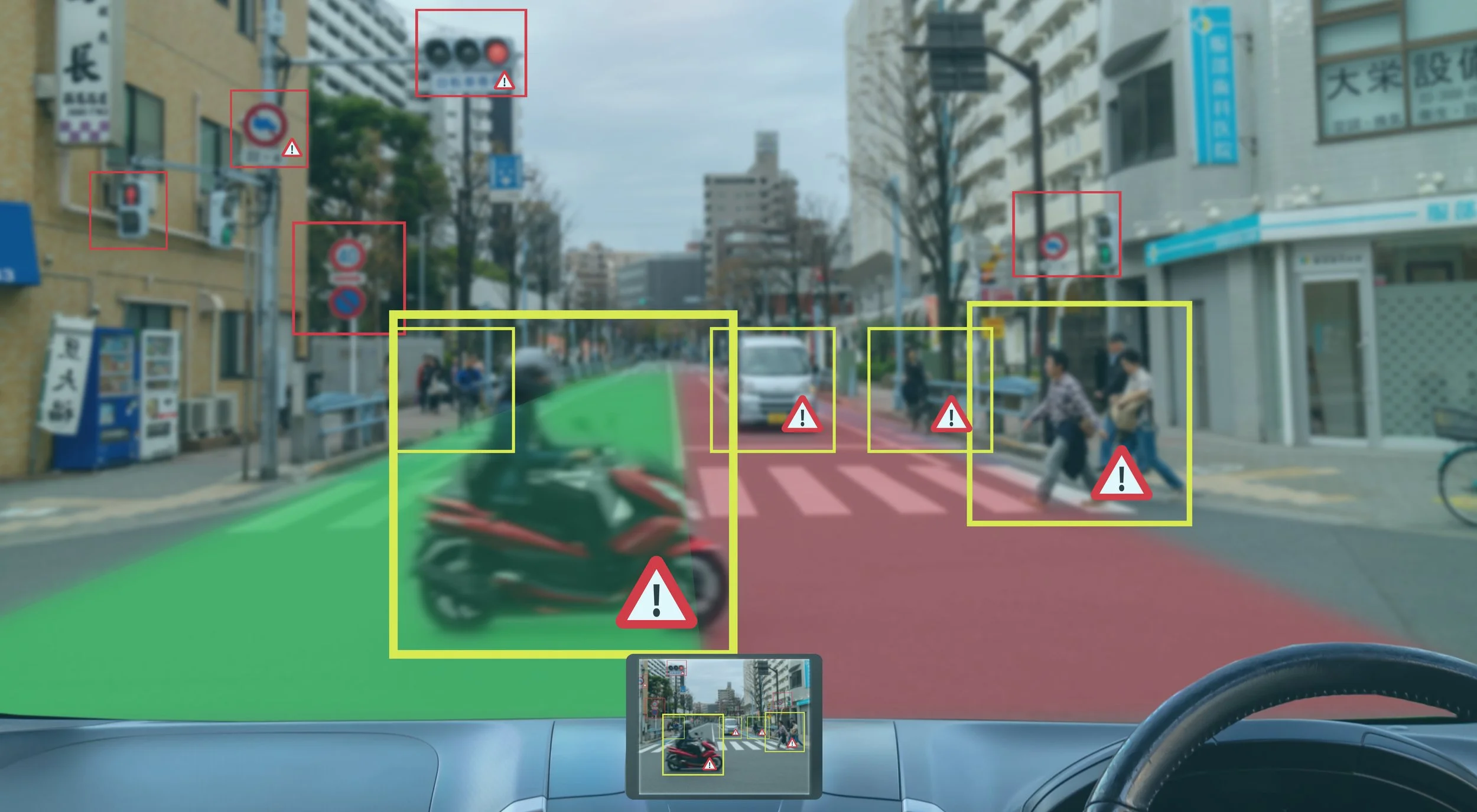
One of the most common annotation types is bounding boxes. A rectangular box that is drawn around the objects of interest (cars, pedestrians, or animals) to show their location and dimensions in an image. Applicable in annotating car, bike, and pedestrian detection and recognition of traffic lights and signs.

3D Bounding Boxes (Cuboids)

3D bounding boxes extend this to three dimensions, enclosing objects with depth, width, and height. This practice is particularly useful for vehicles’ depth perception, or the relative position of things in a three-dimensional space. Applicable in judging the distance and the size of other vehicles and making accurate spatial maps for navigation.

Polygon Annotation

The annotation takes outlines of things to annotate, outlining the accurate contours of a wide variety of shapes. This is best suited for people, animals, or miscellaneous vegetation (trees or bushes).

Semantic Segmentation

Semantic segmentation refers to the task of assigning a class label to each pixel in an image to segment it into parts that make sense. This level of detail on a pixel level allows autonomous systems to identify a road surface as different from a sidewalk or other object in the field of view. Beneficial for detection of farthest and nearby road boundaries and differentiating between vehicles, pedestrians, and objects.

Instance Segmentation

Instance segmentation unifies semantic segmentation and object-level differentiation, where models can distinguish between individual objects of the same class and label them separately (e.g., two pedestrians or two cars). applicable in the personal identification of road users in complex scenarios and tracking objects over time (i.e., counting)

Line and Spline Annotation

Annotation of lines and splines refers to linear elements such as lanes, road edges, or crosswalks. This is an essential technique for lane-keeping and path-planning systems. Highly beneficial for lane departure warnings automatic lane changes and detection of boundaries on roads in the city/village.

Key point Annotation

Key point annotation indicates the coordinates of particular points of interest on objects, for example, the surrounding landmarks on pedestrians or joints on cyclists. Annotation of this type is crucial for pose estimation. Applicable for predicting behaviors of pedestrians and cyclists and utilizing gesture recognition to interact with road users outside of the vehicle.

LiDAR and Radar Annotation

LiDAR and radar sensors (point cloud sensors) generate their own unique data that needs to be annotated with the objects in the data as well as their spatial properties. The depth of information from point clouds is key in mastering low-visibility surroundings. This annotation technique is highly beneficial in 3D mapping, obstacle avoidance, and navigating in fog, rain, or darkness.

Read more: The Critical Role of Data Annotation in Autonomous Vehicle Safety

Guidelines to Follow for Accurate Data Annotation

  • Create standard protocols for annotation to ensure consistency.

  • Make use of advanced tools for automation & collaboration.

  • Ensure rigorous checks to eliminate errors and maintain quality.

  • Provide appropriate training for annotators; make sure annotators know the specific role key point annotation plays for autonomous driving.

  • Regularly enhance the methodology of annotation in accordance with the outcomes of the models and the provided feedback.

How Can We Help?

We provide comprehensive data annotation services, trusted by Fortune 500 companies and pioneering mobility, ADAS, and autonomous driving innovators worldwide. We ensure that you achieve the highest safety and performance of your AI/ML model training with our human-in-the-loop approach. We specialize in image, video, Lidar labeling and annotation, multi-sensor data fusion, mapping & localization, and digital twin validation.

As a leading data annotation and labeling company we offer end-to-end support, regardless of the scale of your project, and come with a guaranteed level of quality, a global workforce with 24 x 7 x 365 labeling capacity, and best-in-class SOC 2 Type 2 and ISO 27001 data security and confidentiality.

Read more: The Critical Role of Data Annotation in Autonomous Vehicle Safety

Conclusion

From bounding boxes to complex LiDAR point cloud annotations, each has its own purpose, enabling self-driving cars to navigate safely and efficiently through their surroundings. There are certain challenges in undertaking this annotation process, from scaling to quality assurance but adopting annotation best practices, and hiring an experienced data annotation company can help your ADAS models deliver better results and build reliable autonomous systems.

Mastering Data Annotations Techniques for Autonomous Driving: Key Types & Guidelines Read Post »

AdobeStock 595255234

The Crucial Link Between Data Annotation and Autonomous Cruise Control Systems

DDD Solutions Engineering Team

November 12, 2024

With the advancement of transportation technology, autonomous driving is slowly starting to seep into our vehicles every year, making them more independent and smarter. This is illustrated by advanced autonomous cruise control systems (ACC) that can receive live data and use predictions to adapt their speed to the traffic flow, making the ride both safe and comfortable.

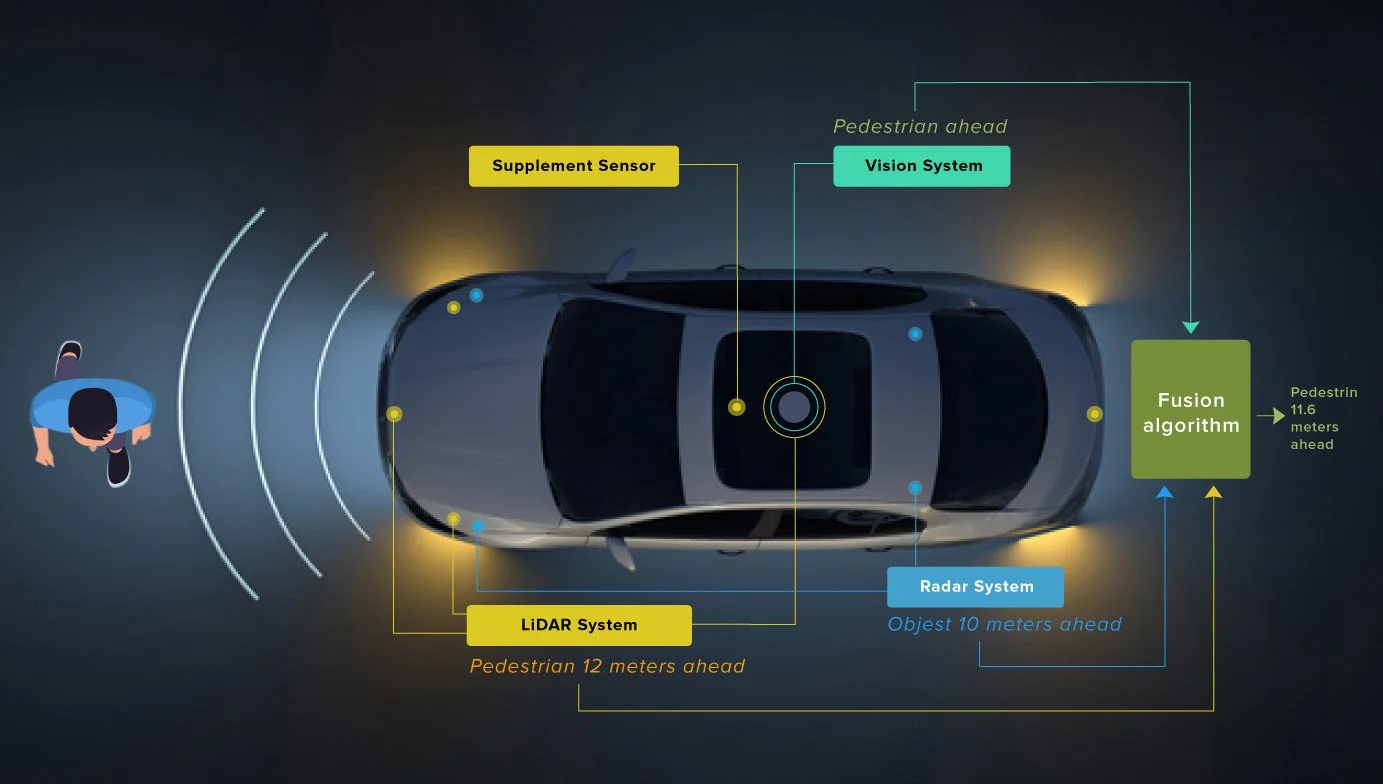
These systems fuse information from Lidar, radar, ultrasound, video, thermal, and GPS sensors, each one comprehensively labeled to synthesize a “global view.”

Data annotation for autonomous driving is a way of tagging raw data to identify critical situations on the road for the ML models to react and make important decisions. This allows the autonomous vehicles to ‘see’ their environment such as identifying, classifying, and locating objects that are not only nearby but also differentiating between vehicles, pedestrians, and obstructions.

In this blog, we will explore the interlinking of data annotation with autonomous cruise control in autonomous vehicles, its various annotation techniques, and associated challenges.

Understanding Autonomous Cruise Control Systems

Autonomous+Cruise+Control

Autonomous cruise control (ACC) systems are an essential component of ADAS to incorporate features like lane keeping, traffic management, and automated steering. Instead of simple distance-keeping models with alarms, these systems have become automation wonders that use radar to control speed and prevent collision. Today, ACC systems not only improve the safety of the vehicle but drastically reduce congestion and rear-end collisions.

These technologies consist of sensors that detect and warn the driver about any potential threats or collisions when driving. For example; when this situation occurs a red light begins to flash with an alert showing ‘brake now’ appears on the dashboard, along with an audible warning to help the driver slow down the vehicle. The effective use of autonomous cruise control systems will maximize traffic flow due to its spatial awareness.

The Role of Data Annotation in Autonomous Cruise Control Systems

Data annotation is a big step in training data for autonomous cruise control. The process involves extensive and thorough identification and classification of data which considerably improves the training process for these systems. Machine learning algorithms need to be trained in different driving situations and scenarios to make these ACC systems highly accurate and safe in real-world situations.

Reorganizing this labeled data not only aids in its interpretation but subsequently reduces the amount of computational power required and increases the number of sensors that can be efficiently utilized. Whenever there are limited sensors or data available in any scenario, then a pre-annotated dataset can act as a booster for system performance. It enables the vehicle to evaluate different situations from various angles, improving its decision-making process.

Now that we have understood how data annotation helps ACC systems, let’s take a closer look at the different types of data annotation techniques and their use case scenarios.

  • Manual Annotation – As the name suggests, these are primary types of annotations where a human carries out the entire annotation process.

  • Bounding Box Labeling – This method is effective for fast detection, such as detecting cars or pedestrians. This means putting boxes around objects in an image and is a simple, low-effort labeling task.

  • Semantic Segmentation – This technique provides a label to every pixel of an image which specifies the category each object falls into, useful for more granular analysis and understanding of objects in the scene.

  • Instance Segmentation – Similar to semantic segmentation it goes further by distinguishing between different instances of the same type of object within the scene.

  • Lane and Drivable Area Marking – This is an annotation type that is particularly used for autonomous driving, lane marking, and marking the drivable area found by the vehicle.

  • Point Cloud Data Annotation – This technique is applied in 3D modeling, as it is used for labeling the data acquired from LiDAR sensors that are needed for constructing the vehicle’s understanding of its surroundings in three dimensions.

  • Video Motion PredictionAnnotating video data to predict future object motions for anticipatory actions in autonomous driving

  • Contextual or Sensor Data Annotation – This can be a specific set of labels according to context or sensor readings, used for certain scenarios or conditions.

These various data annotation services cater to different needs within autonomous cruise control systems, enhancing their performance and reliability by providing detailed and accurate data for training machine learning algorithms.

Challenges in Data Annotation for Autonomous Cruise Control

Data annotation is very complex when it comes to Autonomous Cruise Control systems. However, the biggest challenge is data collection. The root cause is ingrained in collecting diverse and comprehensive driving data in the most realistic driving scenarios. It is also difficult to obtain consistent data over different driving routes because it is nearly impossible to deliver a clean drive test on the exact same route with a consistent reference driver.

Let’s say that you have acquired high-quality data, the next challenge is to create labeling guidelines that do not too closely adhere to the reference driver behavior. This becomes a daunting task in an urban landscape, which is characterized by non-linear scenarios and variance in human driving styles. The chances are quite high for the ACC system to unknowingly learn poor driving behaviors from the data that mirrors the human driving behavior which may not be desirable.

In addition, modifying the guidelines on what is considered to be newer information or re-assessed behavior of data remains difficult. The process itself is prone to inherent biases, a common problem across machine learning applications but most amplified in traffic-related studies as those bear socio-legal implications. The intrinsic limitations of existing algorithms, combined with the practical constraints on resources for creating large new datasets, make this process unfeasible to execute at scale.

Quality Control

Accurate data annotations are critical, especially since wrong data can actually end up executing incorrect driving decisions and posing serious risks. Standardizing annotation is beneficial to ease the integration of diverse modules into a unified system. However, this standardization comes with its own errors due to discrepancies in the annotating process.

Some strategies to address these error types include a thorough

  • Training of annotators.

  • Multiple annotations by selected experts on the data.

  • Use of simpler ML models (i.e.: models trained only for assisting annotators).

  • Collaborative platforms where annotators can talk about edge cases.

Exploring advanced quality control mechanisms and developing new tools for training data could significantly improve the reliability of datasets used in autonomous driving. While each of these contributes to improved data quality, the variability associated with human judgment presents an ongoing challenge that is addressed through a combination of human factors and machine learning techniques as well as collaborative platforms.

Pathway to Innovation and Future Trends

Data annotation plays a pivotal role in the development of autonomous driving technologies, particularly by refining cruise control systems. Enhancing this process could potentially stem from collaborative efforts among researchers, practitioners, and industry leaders. This includes the integration of machine learning and automation to improve the scalability and efficiency of data annotation. Given the rapid advancements in computer vision and machine learning, they provide significant enhancements to image-based annotation methods which could considerably reduce time of implementation while tremendously increasing system precision.

An interesting direction for autonomous systems is shadow mode neural networks. These networks are trained on the same data inputs as traditional autopilot systems, but their response patterns are monitored based on what they do in real-time driving scenarios. This has the effect of incremental adaptation over time in reliability, whereby learning when exactly the vehicle should brake/be cautious when getting close to something.

Another avenue is with the accessibility of raw GPS data also appears to be heading toward a more unified approach globally. The goal is to create a common standard that would facilitate the sharing of this data and thus reduce the mistakes of navigation systems based on GPS information. An international incentive system using harmonized past trends will encourage more extensive collaboration among stakeholders possessing the data.

Furthermore, as this industry matures, the attention to regulatory and standardization principles is increasing, especially in annotation for data referring to how training of autonomous driving systems happens and what validity shall take place. Regulations governing driver licensing, vehicle safety ratings, and crash tests can also be used as a model for stricter annotation standards that could promote safer practices. Not only would it increase the accountability of driving, but also motivate car manufacturers to build safer cars.

Moving ahead, incorporating LiDAR data to measure Doppler shifts, could provide additional information about how fast other vehicles are moving improving autonomous systems to respond to changing speed environments. This is one step in a process that will involve thousands of experts over the years, all synthesizing many systems and challenging each other to navigate the safe adoption of these technologies into everyday use.

Resolving these aspects will bring us closer to truly reliable, efficient, and safer autonomous automobile solutions opening the path for the widespread acceptance and implementation of such technologies in the near future.

Read more: Ground Truth Data in Autonomous Driving – Challenges and Solutions

Final Thoughts

When it comes to Autonomous Cruise Control (ACC) systems, the importance of making quick decisions is critical when driving in the real world. Data annotation provides essential information that algorithms require to process and connect sensor data with operational systems. A well-trained output from these ADAS models allows these systems to recognize better and respond to hazards in challenging scenarios.

How Can We Help?

As a data labeling and annotation company, we provide comprehensive solutions for data annotation and labeling for autonomous cruise control systems to enhance reliability and safety in real-world situations. Talk to our experts about how DDD can help you with your autonomous driving projects.

The Crucial Link Between Data Annotation and Autonomous Cruise Control Systems Read Post »

Ground2Btruth2Bdata2Bfor2Bautonomous2Bdriving

Ground Truth Data in Autonomous Driving – Challenges and Solutions

DDD Solutions Engineering Team

November 12, 2024

We are witnessing exponential growth and innovation in autonomous driving. This growth is powered by vastly trained datasets that allow ADAS to learn and make quick decisions in real-world situations.

The effectiveness of these autonomous systems mostly depends upon the quality of data used during the training and evaluation process. This is where ground truth data for autonomous vehicles comes into the picture. It refers to the accurate real-world data that acts as the solid benchmark for training AV models when assessing their performance.

In this blog, we explore why ground truth data for autonomous driving is critical and discuss various associated challenges and solutions.

What is Ground Truth Data in Autonomous Driving?

Ground truth data is the information gathered from real-world observations used to evaluate and assess AV algorithms or models. Simply put, it’s the reality that you teach your AI models to draw the right conclusions and make the right decisions when

Ground truth data allows AI models to understand the actual situations and scenarios they will encounter on the road, such as traffic signals, road obstacles, and pedestrian movements. This understanding is not just about detecting objects it allows autonomous systems to understand situations similar to human perception, allowing AVs to make informed and safe decisions.

When trained right it allows machines to process data as human beings, for example enabling autonomous vehicles to protect pedestrian safety while operating in the real world. AV models trained using ground truth data can significantly improve their accuracy, and safety, and reduce costs.

According to McKinsey, 75% of AI and machine learning models require updating the solutions regularly with new ground truth data, and 24% require daily refreshed annotated datasets.

Collecting Ground Truth Data

Ground truth data for autonomous driving can be collected from multiple sources such as high-resolution cameras, LiDAR, GPS, Radar, Ultrasonic sensors, and other sensors. This data may consist of images, videos, sound, etc.

In major cases, AV models need labeled or annotated data, which can be used to learn from specific samples and generalize that information to new data.

Image Detection requires images with annotated bounding boxes so AV models can detect them automatically. It is highly effective when annotating data to identify pedestrians, road signs, vehicles, or different objects to ensure safe driving.

Facial recognition systems require data that includes faces with labels for a person’s features, which can be used in autonomous vehicles to identify driver fatigue, concentration, prolonged distraction, anti-theft, and built robust in-cabin monitoring systems.

Challenges in collecting ground truth data for ADAS

There are significant challenges when collecting ground truth data for ADAS and autonomous driving. Let’s discuss the critical ones below.

Diversity in Data

Collecting data for ground truth must source data from the real world that is highly accurate for autonomous driving. The data should be properly balanced so that no part is under or overrepresented, which could lead to poor AV model performance and biased outcomes.

For example, when training AV models for facial recognition it is critical to consider demographic diversity when collecting ground truth data. The data must include diversity in age, gender, ethnicity, education, socio-economic background, and more.

Ethical Considerations in Ground Truth Data

Ethical aspects in ground truth data collection are necessary to ensure that the process respects the rights and privacy of individuals and to enhance trust, fairness, and integrity in AI applications. Here are some key ethical aspects that you should consider:

  • Data privacy: Data collection for ground truth must adhere to privacy laws and regulations such as the General Data Protection Regulation or the California Consumer Privacy Act. For example, data scraped from the internet might include personal information, which might lead to a breach of privacy. To prevent this situation, all sensitive personal information should be anonymized to safeguard people’s identities.

  • Data transparency: Data should be collected from transparent sources to ensure its authenticity and relevancy. It is important to maintain clear documentation that includes information about the origin of the datasets, their characteristics, how they were obtained and selected, and the cleaning methodologies and labeling procedures used.

  • Informed consent: Individuals whose data is being collected for training AV models should be fully informed about the purpose and use of their data and give explicit consent to use it.

  • Copyright compliance: Data collection should comply with all relevant laws governing data usage for the country. For example, data gathered from the internet may contain copyrighted materials that can violate intellectual property rights.

  • Fair representation: Data collection should depict diverse and equitable demographics to avoid biased or prejudiced decisions that could be detrimental to specific groups.

  • Ethical content: Data collection should exclude content that can be ethically problematic, such as hate speech or violent material, to prevent the perpetuation of harmful, abusive, or offensive behavior.

Data Annotation Challenges

When large data is to be annotated companies need to rely on hiring data annotators for analyzing and labeling data accurately. Ensuring quality and consistency in annotated data can pose a significant challenge. Here are a few examples.

When analyzing sentiment different annotators might interpret the sentiment differently based on their cultural background, perspective, or contextual understanding. For example, a particular situation can be interpreted as neutral, positive, or slightly negative by different annotators.

When tagging images in image segmentation different annotations may have different viewpoints on object boundaries, especially when the object is partially obscured or overlapping.

It is important to realize that human annotators can introduce errors that may compromise data quality. These errors can arise due to human fallibility, lack of domain expertise, unclear instructions, cognitive overload, or fatigue. These human-induced errors can pose a significant impact on the reliability and performance of autonomous vehicles.

All annotation projects must begin with clear and detailed guidelines to help you identify systematic errors and inconsistencies. You can even follow these strategies to make your AV models more accurate.

Inter-Annoator Agreement: A measurement criteria on how often annotators agree on their decision for a particular category.

Pearson Correlation Coefficient: Assesses linear relationship between different annotated labels for subjective taste.

Automated Quality Checks: Includes scripts that randomly reassign the same task to the same annotators to make sure they are consistent and attentive.

Manual Spot Check: Where expert annotators randomly review and verify annotated data to identify inconsistencies or erroneous annotations.

How We Can Help?

As a data labeling and annotation company, we focus on combining human intelligence and AI technologies to achieve the highest accuracy when training data for autonomous vehicles. Our expert annotators are highly trained when it comes to labeling workflows managing complex edge cases, and implementing judgment and subjective labeling for ADAS and autonomous driving.

We provide our strategic partners with 24x7x365 labeling capabilities from our highly secure delivery centers that are SOC2 Type 2 and ISO 27001 compliant.

Conclusion

Ground truth data is the backbone of effective autonomous driving model training. Despite the challenges in collecting and maintaining high-quality data, its significance cannot be overstated. It provides a reliable benchmark for measuring the performance of AV models for meaningful comparisons between different algorithms and facilitates informed decision-making. In a broader sense, ground truth data assists in evaluating high-quality data to build safer and reliable autonomous vehicles.

Learn more about how we can help you with ground truth and data labeling & annotation solutions for your autonomous driving project.

Ground Truth Data in Autonomous Driving – Challenges and Solutions Read Post »

video2Bannotation2Bfor2Bautonomous2Bdriving

Video Annotation for Autonomous Driving: Key Techniques and Benefits

DDD Solutions Engineering Team

November 7, 2024

Autonomous vehicles depend on vast amounts of video data to drive effectively and safely. Video feeds are one of the critical sources of this data as they record various conditions such as weather and lighting, pedestrians, and other variables in real-time. Capturing and implementing video annotation for autonomous driving on these datasets is extremely crucial for identifying objects, detecting pedestrians, and taking immediate actions while driving.

Let’s explore important aspects of video annotation for autonomous driving, its various techniques, and how it’s implemented for training ADAS models.

Importance of Video Annotation in Autonomous Driving

Video annotation is a tedious process to execute because the video is saved and labeled after it has been shot which requires meticulous attention to detail and constant verification. The labels applied are essential and these must be made by data labeling experts who are well-versed in identifying each video footage and use appropriate annotation techniques. These annotations improve the validity and usability of the video by providing dimensions, distances, and other spatial characteristics that enhance vehicle performance and safety.

Annotated data are critical for developing an ADAS model with digital and remote sensing. This is especially true in the case of object detection and facial recognition, where massive, annotated datasets can be used to train algorithms to detect and classify different objects into various classes (and within these classes, distinguish different instances of the same object in varying conditions) also known as instance segmentation.

Training datasets for pedestrian detection are traditionally mainly focused on daytime frames, which sometimes do not reflect depending upon different lighting or weather conditions. To reduce these inconsistencies, proximity-based annotation techniques are utilized to improve the quality of this data which in turn makes detection better across diverse scenarios such as dusk/night scene time periods.

The improved algorithms not only improve pedestrian detection but also help minimize false alarms for an overall efficient smart city sensor. As an example, specific video annotations are intended to precisely represent crosswalk trajectories and create detailed object marks during the dark, promoting improved object detection and identifying accuracy.

Understanding Common Video Annotation Techniques and Their Significance

As machine perception systems are developing rapidly in the landscape of autonomous vehicles, video annotation techniques serve as building blocks for helping the vehicles comprehend their surroundings, how to make decisions, and how to plan their way ahead.

Zoom and Freeze

The simplest but most renowned video annotation method is freezing (pausing) the video and zooming in on the details. The method helps annotators to zoom in on small details without the involvement of continuous movement, which makes the objects easier to identify and classify. This is useful in situations where accuracy is very important such as identifying objects that look alike or even something very small that the machine needs to learn.

Annotators, with the help of specific tools, directly interact with the video footage to label relevant areas. The exact position where the video is labeled generally corresponds to the focal point of the user’s gaze, providing an additional layer of data and how machines might be trained to recognize the same patterns in the future.

Markers

Markers help the annotator to tag the object or event within the video and are one of the key annotation tools. These help us in constructing a rich history of an object moving through various frames, which is used when you need an object to be persistent such as while tracking the path of a vehicle or people in a city. Markers can help in tracking annotations across a range of frames, along with behavior/coordinates/movement observed in the video.

Another important use of makers is to assist behavioral analysis, a quantitative method for analyzing video data in which the driver behavior is annotated for duration and intensity. The usefulness of this method involves the behavior of the driver, passengers, or any other dynamic activity important for autonomous driving algorithms to take a proactive approach in case of extreme situations.

Bounding Boxes

In video annotation, bounding boxes play a key role, giving visual help to locate and track objects across different frames. The rectangles drawn around objects in each frame are analyzed to track the movement and appearance changes of the object. Continuous tracking is essential for autonomous driving as systems have to reliably detect and track objects, pedestrians, and obstacles in real time.

Bounding box annotations use different kinds of labels depending on the requirement:

  • Complete: Uses a small database to create a dataset that has many labels for every object visible in the frame.

  • Outside: Some objects are partially visible, but the label is still applied so that all objects can be recognized whenever it is fully visible later.

  • Ignored: This means that an object is present but is ‘ignored’ for training due to the irrelevance of the task (for example falling snowflakes which may confuse the model in tagging it as another object).

Autonomous vehicles then learn how to use these accurate video annotation techniques and develop a detailed understanding of the environment of operation. True understanding is critical to making sure they can traverse a convoluted real-world environment both safely and efficiently; as such, high-quality data annotation services are an absolute requirement for autonomous technology development.

Addressing Challenges in Video Annotation for Autonomous Driving

When talking about autonomous or intelligent vehicles, you might picture something like a self-driving car or a drone. There are many different forms of intelligent mobility — warehouse robots that sort packages, municipal robots that clean the environment, and service robots in hotels, shopping malls, and healthcare facilities. All of these technologies require a common foundation: good navigation and recognition of objects, which you get by processing visual input from cameras (vision) or LiDAR (light detection).

Training the models on a large scale with labeled video data is one of the critical processes needed to make these capabilities reliable. Video annotation is an important but challenging task, especially for complex multi-modal videos involving data from different sensors. It often involves manual labeling of vast numbers of small images or frames, which can be complex and time-consuming.

Addressing Data Variability in Model Training

One of the biggest challenges in training models for self-driving cars is dealing with the variance in the data. Good data labeling provides context and meaning, which is important for machines when it’s in the training stage. Having these models experience diverse scenarios is critical for them to learn and transfer their skills to the open world.

As an example, if a model is designed to detect and track multiple road users, that model must be trained with not just passenger cars, but also trucks, buses, cyclists, motorcyclists, and pedestrians. Depending on the type of the training task, the complexity of the annotation ranges from a per-pixel level for high accuracy such as in object tracking and scene parsing to multiple levels of annotation needed in case of depth prediction.

The variety and quality of these annotations have a direct effect on the image annotation quality for various computer vision tasks such as object detection, facial recognition, scene understanding, and in-cabin monitoring, to name a few. Well-rounded annotations aid these models with the ability to generalize better and respond appropriately in varying circumstances. This technique further solidifies the overall robustness and versatility of the autonomous models to perform effectively in several possible surroundings.

By addressing these challenges and ensuring comprehensive training data, we can enhance the functionality and reliability of autonomous vehicles, leading to safer and more efficient operations.

Read more: Data Annotation Techniques in Training Autonomous Vehicles and Their Impact on AV Development

Final Thoughts 

Video annotation for autonomous driving leads to highly efficient ADAS models that can make quick decisions while driving and in emergency situations, as it is already trained on all the possible outcomes using dedicated video footage. Various video annotation techniques are used to address specific driving scenarios and train autonomous vehicles with Driver Behavior Analysis, parking assistance systems, Traffic Sign Recognition, and more.

How Can We Help?

As a data labeling and annotation company, we utilize humans in the loop process and dedicated AI technologies to provide the highest quality and most accurate data using our video annotation solutions. To learn more, you can book a free consultation with our data operation experts.

Video Annotation for Autonomous Driving: Key Techniques and Benefits Read Post »

DDD2Bmulti2Bsensor2Bfusion

Multi-Sensor Data Fusion in Autonomous Vehicles — Challenges and Solutions

By Umang Dayal

November 5, 2024

Autonomous driving remains a rapidly evolving field and automotive multi-sensor systems are needed to navigate or comprehend the field of vision. With the trend focusing on advanced technologies from manufacturers and policymakers, the use of multi-sensor data fusion has become critical. These techniques fuse information from multiple sensors to create a 360° view of a vehicle’s environment, which is necessary for safe and reliable autonomous vehicles.

Nevertheless, the combination of the various data streams poses a significant challenge due to the complexity and the variability of the sensor outputs. In this blog, we will discuss some of the challenges in fusing data from different sensors. At the same time, explore scalable recommendations on how to combine these technologies, and explain why fusing multiple sensors is important for autonomous driving.

Importance of Multi-Sensor Data Fusion in Autonomous Driving

 Multi-Sensor Data Fusion

Multi-sensor data fusion is a key element to improve safety and reliability for autonomous vehicles offering driverless cars a multitude of sensors to safely navigate their environment. LIDAR excels at producing precise 3D maps of the environment, while radar is ideal at measuring the distance and speed of nearby objects. Cameras on the other hand do not have the resolution of LIDAR or radar, but they are critical in producing a rich amount of visual information.

These sensors complement each other helping the vehicle understand much more than any single sensor ever could. As an example, cameras deliver rich information regarding the visual environment where the car is driving. However, radar provides reliable measurements of targets and speeds, which is important for making dynamic driving decisions.

Synthesizing this data from sensors helps the ADAS to make better decisions and improves situational awareness and reliability. This multi-sensor fusion is an important aspect to overcome the limitation of depending on one type of sensor that may not have the necessary data for autonomous vehicles.

But sensor fusion is more than just data collection; the data must be computed, interpreted, and acted upon constantly due to the fact that driving situations change in real-time. The ability to compute data in real-time is critical for self-driving cars to understand their environment and react accordingly.

With the increasing automation of vehicles, the requirement for more advanced and dependable sensor systems becomes even more critical. To gain the household assurance of the general public on self-sufficient vehicles and perform properly in varied weather conditions, high-performing multi-sensor model systems are inevitable. Therefore, multi-sensor data fusion is necessary for the evolution of autonomous driving systems that can consistently provide safer, and reliable transportation solutions.

Challenges in Interlinking Multi-Sensor Data Fusion

The primary challenge in autonomous vehicles is fusing data from multiple sensors, mainly due to the diffidence in the sensor technologies. Lidars, radars, cameras, and other sensors all have different principles of operation and yield data at different times, formats, and dimensions. In turn, this combination requires an accurate per-sensor type real-world analysis to provide reliable asynchronous detections, which are then needed as input to implement the reliable behavior for autonomous systems.

Let’s discuss more challenges in multi-sensor data fusion in autonomous vehicles:

Overcoming Sensor Diversity

To ensure a safe and efficient functioning, autonomous vehicles make use of a host of sensors. These sensors include lidars, radars, vision sensors, and many more which have different accuracy, resolution, and noise characteristics, making data fusion a very difficult task. As an example, a radar system that is great at distance detection in bad weather and a vision sensor is adequate at providing information in normal conditions to return great imagery. Merging these different streams of data together requires a strong method capable of managing the inconsistencies between sensor outputs.

Response to these challenges requires the development of algorithms that would provide general functions to accommodate the heterogeneous properties of sensor outputs. This software layer is an intermediary step that essentially transforms diverse data into a common format that can be leveraged by the decision-making algorithms running on the car. Moreover, modeling each sensor to make reliable models is also essential. Such autonomous models assist in classifying and processing data from these sensors efficiently and make the integration process more convenient.

Simplifying Data Integration & Alignment

Performing effective multi-sensor data fusion demands greater attention to detail while syncing and aligning data. Even when all sensors are synchronized to a central clock, timing discrepancies can occur because of the different speeds in data collection for different sensors. For some, data from camera and RF classifiers are usually processed sooner than lidar data, and there is potential for temporal mismatch.

It is an essential requirement to correct these discrepancies to ensure the credibility of the data fusion process. This means preprocessing all the temporal and spatial data from the sensors to make sure everything is correct and updated in real-time. Keeping this data in sync is important for the vehicle navigation system that makes safe and efficient decisions when executing maneuvers. Proper alignment contributes to error reduction and system efficiency and consequently leads to safer autonomous driving.

If these technical issues are tackled with the right solution and software tools, it’s possible to make multi-sensor data integration significantly better. This enhances both the operational dependability of autonomous vehicles and their effectiveness and safety, thus enabling the proliferation of this transformative technology.

Techniques and Strategies for Resolving Interlinking Challenges

Data from multiple sensors and input delivery technology systems that process streams of diverse information face significant challenges in integrating sensor data. That means addressing these issues is key to enabling the effectiveness and efficiency of operations. Below are a few of the methods to address these issues.

Sensor Calibration for Data Synergy

Sensor calibration is one of the most important things that helps align and merge the data from different sensors accurately. This process calibrates the sensors to give accurate measurements for physical quantities, making it essential that devices give similar outputs when they are identical. However, two types of calibration help with this process. They are as follows.

Static Calibration: This includes fixating static parameters of sensors such as internal bias values, and others to calibrate inherent inaccuracies. For example, calibrating inertial sensors, for instance, so that they do not have a bias that impacts readings.

Dynamic Calibration: This includes calibrating factors that are time-varying to establish methods for real-time processing of the sensor outputs using dynamic calibration, this allows data to remain accurate even with the impact of external parameters.

By fine-tuning not only the static characteristic of a sensor but also its dynamic behavior, the data quality can be improved, and proper data fusion is achieved from independent sources.

Read more: Utilizing Multi-sensor Data Annotation To Improve Autonomous Driving Efficiency

Improving data fusion with the help of Deep Learning

Deep learning has changed the way the systems analyze and study huge data sets. Ever since the early 20’s, this method has been beneficial for the fusion of data from multiple sensors because it can autonomously learn features from large datasets and manipulate them. Some of the benefits of deep learning multi-sensor fusion techniques include:

Feature Hierarchies: Deep learning algorithms automatically develop layered terms of data features. These captured levels comprise abstraction, which can be fundamental in integrating and interpreting sensor data.

High-Dimensional: Deep learning handles high-dimensional data naturally from regular sensors, making it a suitable candidate for fusion tasks. This allows the system to identify intricate patterns and connections that may not be captured by conventional approaches.

Use in Sensor Fusion: Deep learning frameworks have successfully been applied to a combination of sensors that include radar, LiDAR, ultrasonics, and others. Thus, resulting in an enhanced understanding of the environment and more informed decision-making in sensor-dependent systems.

Fusing the data of multiple sensors helps improve the functionality and accuracy of a technology system to a great extent. It offers a systematic approach to managing the complexities associated with the various data types involved, ensuring that systems can manage complexity in a seamless and efficient manner.

Read more: Data Annotation Techniques in Training Autonomous Vehicles and Their Impact on AV Development

Conclusion

Multi-sensor data fusion is essential to improve the quality of sensor outputs, making them more accurate and reliable in delivering information allowing innovations in autonomous systems. While substantial strides have been achieved in tackling the complexities of multi-sensor data integration, some challenges still exist. Over the past decade, many of the problems have been resolved by automotive engineers, but some remain and continue to be the focus of continuous research and development.

At Digital Divide Data, we focus on calibrating different sensors with data training and multi-sensor data fusion techniques. To learn more about how we can help you calibrate multiple sensors you can talk to our experts.

Multi-Sensor Data Fusion in Autonomous Vehicles — Challenges and Solutions Read Post »

Data2Bannotation2Bcompany

Data Annotation Techniques in Training Autonomous Vehicles and Their Impact on AV Development

By Umang Dayal

October 28, 2024

When artificial intelligence (AI) was introduced to the public, many people associated it with autonomous driving. Whether it is a robot playing a soccer match or a smart car figuring its path in heavy traffic, AI algorithms are not shy in attracting huge crowds. We are living with pixels that are constantly evolving and, as a result, we generate data, in the petabytes of scale every second of every day. The driving force behind autonomous driving technology predominantly revolves around safety, particularly in fatality prevention: ML data operations support and accurate data annotation techniques go a long way to preventing accidents on the roads.

In this blog, we will explore various data annotation techniques used in training autonomous vehicles and their impact on AV development.

What is Data Annotation?

Data annotation is essential for autonomous driving, creating structured training data that teaches AV systems to interpret real-world environments. Ensuring all critical scenarios are captured accurately enhancing AV safety and performance.

Autonomous driving aims to create a maximum amount of annotated training data that can improve automatically due to fleet and posterior learning, among other things. However, an increasing part of the vision in autonomous driving development is to guarantee that all relevant real-world traffic scenarios are simulated at some point. With the greater power of a car’s automatic system, collecting large amounts of annotated data becomes feasible for improving automatic driving technology.

Key Techniques and Tools in Data Annotation

Data annotation takes a lot of time and effort, but it is really an essential step of data pre-processing because only noise-free and reliable data can allow these algorithms to work effectively. There are various technical annotation methods and tools for autonomous driving, including manual annotation, semi-automated annotation, and machine learning-based annotation.

Manual Annotation

The human-driven process of generating annotations for data is often referred to as manual annotation. Manual annotation is slower than the other techniques used, but this often results in accurate annotations that are valuable in the training of neural networks. Majorly data annotation companies that rely on humans-in-the-loop process utilize this technique. Further, this technique can be broken down into three segments.

Bounding box annotation

Bounding box annotation places rectangular labels around objects like vehicles, pedestrians, and road signs, helping AVs recognize and respond to obstacles and traffic patterns. This approach is easier than producing a classification and segmentation model, as the labor requirements are reduced.

Data Classification

Data classification categorizes objects such as cars, pedestrians, and road markings, allowing AVs to differentiate between elements in dynamic traffic environments. The common annotations for the classification model are vehicles, pedestrians, and others. The common phrase is referred to as “car” for the vehicle model, “person” for the pedestrian model, and “no object” for the other model.

Data Segmentation

The segmentation model focuses on the annotation of parts of the scene that require specific processing. This contrasts with the bounding box model, which only annotates generic elements of the scene. The annotated data is segmented into ground, road, obstacles, route, and road boundaries. Each of these segments is unique and has a labeled ID that ingresses the training system of the sector model.

Each of these areas has its distinctive value and is used differently within the training of autonomous vehicles. As data needs to be labeled to be useful as training data, these manual annotations are turned into data and input directly into the ADAS deep learning systems.

Semi-Automated Annotation

Most of the widely used and commercially available annotation approaches still rely heavily on human expertise. In terms of temporal modes of processing, there are three different approaches:

  • Proactive

  • Reactive

  • Interactive

In proactive approaches, human expertise is needed at the beginning to train the systems. In reactive or interactive approaches, the software requests feedback in uncertain cases or does not process elements that it does not master. It is especially crucial in autonomous driving, and also in general, as image analysis has certain limitations in diverse environments. In this context, the human decides based on onboard systems, but there are switches between manual control and automatic control.

The semi-automated annotation, where we can find the combination between human skill and the power of machines, is the most common way to carry out the annotation task. In the field of computer vision, this mixed type of processing is valuable considering the vendor’s expertise in creating AI tools and the unique use-case knowledge of every company in the application field. In highly complex solutions, where the challenge of the use-case cannot be solved only with computer vision tools, personalized algorithms are being created, requiring the expertise of data scientists and reconstructions of certain models from scratch.

Machine Learning-Based Annotation

Machine learning-based annotation uses predictive models to handle vast data volumes, improving scalability and accuracy in AV training datasets. An automatic machine learning-based annotation has the ability to recognize and correct human-supervised mistakes, returning a refined prediction. The human expert can still accept this prediction or submit an entirely new data annotation. Semi-automatic machine learning annotation projects often initially leverage human ability and, once sufficient trained outputs are generated, start to automatically predict a certain percentage of the data.

Therefore, machine learning is fully capable of performing annotations that may come close to automating self-driving engineering, due to predictive modeling related to autonomous driving being built primarily on machine learning. So, it becomes evident that researchers study the potential capabilities of machine learning annotations. Thus, machine learning is already firm in the development of artificial intelligence solutions and can help large-scale data annotation to a certain extent.

Impact on Autonomous Driving Development

When developing autonomous driving and driver-assisting technology, well-labeled data is of paramount importance. The labeled data in a dataset provides reference data points, or ground truths, for the complex process of machine learning. Labeling refers to the act of placing labels, such as bounding boxes in an image or tracking the position of a pedestrian as they move across a scene. This annotated data vastly improves the overall accuracy of a model or the effectiveness of the performance of the technology you are developing. The performance of an autonomous vehicle or advertising system is only as good as the data used to train it.

Enhanced Training Data Quality

Annotating data plays a key role in building self-driving systems. A large number of trained examples helps to perceive more complex practical scenes. Image annotation aids autonomous vehicles by providing recognizable feedback on object features including obstacles, roads, and traffic signals. When training an object detection, localization, and recognition model, labeled training datasets are needed. This model receives images as input and generates a hypothesis about the contents of the image in terms of label or probability. The degree of correlation between the actual object images and those predicted by the model is then compared.

Data Volume

Labeled data not only defines individual instances but also allows algorithms to ignore information about the rest of the frame. This results in smarter algorithms and fewer false positive error signals. Similar to face detection, one can halve their training data for the same improvement by providing an object recognizer with the coordinates of the objects of interest.

Variability

Automatically annotated or synthesized data is only as good as the data it is trained on, any mistakes or patterns in the original data will be learned by the split. Labeled data can be used to focus learning difficulties on hard positive cases rather than easy negative cases. This feature is essential when the negative data is small. Since the learning patterns are adjusted, the model can focus on the boundary regions that are most important for classification providing much better localization and classification results.

Response

Interest is shifted to the region of actual interest so that many more resources are dedicated to this region and less to redundant data. Object recognition algorithms trained on annotated data outperform standard object recognition. Highly localized models, as opposed to standard big-rectangle models, result in better performance when accuracy needs to be improved.

Improved Model Performance

The model performance of computer vision and deep learning-based algorithms improves with the quantity and quality of data. Because autonomous driving also utilizes such models and algorithms, the role of data annotation professionals is critical. Data labeling services are typically sought in a hierarchical manner for low, mid, and high-level annotations such as 2D bounding boxes, 3D bounding boxes, semantic maps, lane markers, and instance segmentation masks. Data annotation takes data from the real domain and makes it more understandable to machines that the algorithms can work with. The annotators provide ground truth information about the data they label that guide learning processes in real-world applications.

Read more: The Critical Role of Data Annotation in Autonomous Vehicle Safety

Final Thoughts

Annotated data cannot effectively be operated without an established understanding of deep learning or manual techniques of feature removal and deployment, or at least a vast pool of the latest annotations in developing tools and equipment in existing production systems that are all too literal. If the available tools are to be utilized on collected data, one should stay informed and maintain expertise about more than one tool.

The rapid advancement in machine learning/deep learning algorithms has seen a rapid increase in the volume of annotated data. The efficacy of these algorithms in improving performance can no longer be denied. Scalability of annotation services is no longer a choice; it is critical. Therefore, organizations that generate data for deep learning algorithms may need to process large volumes of data. It can be challenging for new organizations to scale their data annotation tasks.

Once requirements have been established to generate data for a project, an organization has to ensure that data is annotated to maintain a high level of accuracy and precision. The level of feature analysis required for the annotation of data might be rigorous or straightforward. Rigorous feature analysis might be required where behavior, actions, and object detection are critical requirements for use cases such as traffic simulation and autonomous driving scenarios. Therefore, ensuring quality, defining processes, and building systems/tools for annotation are key regulatory processes for generating such datasets.

As an expert data labeling and annotation company, we provide reliable and expert data annotation services to support AV innovation. Connect with us to learn more about our autonomous vehicle solutions.

Data Annotation Techniques in Training Autonomous Vehicles and Their Impact on AV Development Read Post »

shutterstock 1484018306

The Critical Role of Data Annotation in Autonomous Vehicle Safety

DDD Solutions Engineering Team

October 18, 2024

A self-driving car, also recognized as an autonomous vehicle, driverless car, or robotic car, is a vehicle that is capable of sensing its situation and environment and navigating with minimal or no human input. These vehicles rely on sensors such as radars, cameras, and LIDAR to perceive their surroundings and predict the actions of other vehicles, allowing them to make safety-critical decisions without human intervention. The majority of self-driving cars are controlled by artificial intelligence using methods like machine learning.

These systems are used to gather data, recognize selected objects and circumstances using data annotation, and adapt to the capabilities of the AV system for superior effectiveness. An autonomous vehicle or self-driving car can sense and gather information for the immediate situation within the vehicle. Data annotation is the categorical labeling of data according to the requirements of the artificial intelligence software or model in use. The structured data is improved and made usable by categorizing or adding descriptions to generated data through data annotation.

Data Annotation: Key Concepts and Techniques

Data annotation refers to the process of labeling raw data to make it usable for AI models, especially in deep learning, a subset of machine learning We use deep learning to train AI machines to identify objects, detect faces, recognize speech, and lots of other functions. This type of learning requires machines to be exposed to tens of thousands of examples to recognize what we want them to be able to pick out.

Now, let’s talk about self-driving cars. On the whole, data annotations of all kinds are key to giving machines the information to help them understand the chaotic situations they might encounter on public roads. Although the terminology used to describe the process may differ slightly from company to company, there are some fundamental ways labels are used in the process of training self-driving cars.

There are two major categories of labeled training data needed for successful self-driving applications. They are:

Bounding Box Annotations – The image annotation refers to marking the exact areas and boundaries detected in an image. This indicates the areas identified so the machine learns to recognize them. There are several types of image annotation techniques. One of the oldest techniques is known as Bounding Box Annotation.

It is the graphically drawn rectangular boundary of the relevant object. This is the most cost-effective way to mark objects and works well for certain requirements. However, it can be inadequate in case of certain overlaps, smaller entities, less visible entities, or parts related to the main entity.

Semantic Segmentation Annotation – The type of annotation marks the figure’s contours to illustrate the special concern of the entities. It informs the unit of the clear object and also maintains the dimension and direction of the object figure. However, the degree of complexity associated with this annotation, as well as the costs involved, can be higher.

Applications of Data Annotation in Self-Driving Cars

Data annotation through collectively processed and labeled data is a pivotal step in the process of training machine learning models. Labeled data helps the algorithms differentiate between the objects they need to pay attention to when operating the vehicle and those that they can ignore so that they can better comply with traffic regulations.

Object detection in the context of self-driving is primarily intended to avoid or minimize accidents involving pedestrians, cyclists, or other cars. As part of autonomous driving, object detection builds on the video stream from vehicle-mounted cameras to detect objects via real-time processing.

Data annotation is used not only to label vehicle occupants, bicyclists, pedestrians, and buildings but also to designate environmental factors like lighting conditions and weather, such as rain or snow. The task can be either to label people or different types of traffic signs or establish an autonomous driving route for a self-driving vehicle.

Training Machine Learning Models

The secret to what separates human drivers from machines is contained in the training of machine learning models. It is ‘trained’ to generalize from the data so that when it confronts a new curve, it can steer the car off-road rather than crashing. The training of the model is what teaches it how to behave in hypothetical future situations. Each piece of data that is stored and every piece that is used to correct the driving system’s behavior should ideally be annotated to indicate what happened just before, during, and after the incident so that ADAS can be developed and optimized.

In recent years, deep learning algorithms have improved the performance of many perception problems, particularly those related to computer vision. Such neural networks are often trained using some combination of gradient descent, backpropagation, convolution, pooling, normalization, and softmax. Where such state-of-the-art methods often struggle, they do not know anything about the development of classification labels for the detection of pedestrians, cyclists, vehicles, road signs, lane lines, drivable areas, and other objects or attributes relevant to autonomous driving. The training and validation processes require huge amounts of labeled data, including very advanced simulations.

Object Detection and Recognition

The central challenge that autonomous vehicles must meet is to provide accurate and continuous environment information, allowing the vehicle to perceive events and objects in its surroundings. Consequently, a series of perception and enhanced perception modules must be designed and integrated to support processes like object detection, recognition, and tracking. With the steady development of Convolutional Neural Networks (CNN) and other advanced methods, image-based feature representations and embedded information structures effectively support object detection and classification modules, leading to high performance of autonomous vehicles.

However, an enormous identity-labeled dataset is required to sufficiently train the model, considering the variation in visual backgrounds, lighting conditions, object deformations, and environmental clutter, all of which largely affect the vehicle’s operational safety. For the data to be effectively used to train the underlying neural network model, each image must be accurately annotated with impactful labels by an annotation tool for a specific task.

Read more: Utilizing Multi-sensor Data Annotation To Improve Autonomous Driving Efficiency

Challenges and Future Directions

High-quality Annotation

Annotation, either performed by humans or machines, must have an acceptable quality of annotation (QoA) to offer training and supervising systems with maximum confidence. Labels with lower QoA could act negatively, causing the model to function on wrong decisions. QoA measurement is proprietary and subject to business competition, and in the current industrial trend of outsourcing, it should be considered as a standard beyond the annotation constancy. Either purely statistical or machine learning-based solutions are needed where crawling metadata and the actions of the annotators are recorded but without disclosing the business-private operational activities.

Smarter annotation management

High precision in domains like road sites, traffic signs, and so forth may be gained through low amounts of human intervention. In fact, productive use of synthetic data and unsupervised pipelines including autoencoders are also impressive tasks that have optimization advantages due to very high annotation-free training.

The realism of large-scale simulations diminishes with increasing the sampling time, and it is infinitely challenging to standardize your simulation to match all the possible real-world scenarios. Limiting our algorithm to simulation increases the cost of moving from research to actually implementing the system in the real world. Thus, the virtual-world simulations are also included in the future research plan.

Requirement of specific annotation tasks

While techniques like object detection, lane marking, and pedestrian crossing are also trained in universities and seminars, they have additional requirements. To provide more detailed state-of-the-art knowledge about annotating pedestrian trajectory, parking spaces, and so forth is crucial. Detecting and tracking behavioral signs of pedestrians is a possible future direction. Detailed clear sessions should also be undertaken for training instructors and developers around the realm.

Quality and Accuracy of Annotations

Trust and safety are two of the most critical aspects of autonomous driving technology because most customers are already nervous or hesitant about it. Every one of the scenarios referred to is classified as dangerous or unsafe. The more data models learn about these hazards, injuries, bad results, or inconveniences attributed to human intervention during these situations, the safer and more efficient the AI autopilot system will become. Engineers can instruct machines on how humans’ “tools” are used to act via exposure and observation of these situations. The performance of these data annotations must be accurate and reliable in order to avoid misleading or tarnishing these AI systems’ expectations and operations.

Ethical Considerations

Considerations should be made regarding the end use of the vehicle images being annotated. In the case of a self-driving car, the image data also contains identifiable footage of people just passing by, completely unknown that they are being used for data annotation.

In such cases, it is the responsibility of data integrators to disclose, through privacy policies or terms of use, how their datasets are used and which companies or projects have accessed them. Failing to inform integrators of this opens collaborators to claims of neglect, invasion of privacy, potential litigation, and other disastrous circumstances.

Conclusion

Self-driving cars, a long-standing dream, have begun to appear in people’s lives and have caused widespread concern. To realize the intelligent dispatching of vehicles and the automatic driving of vehicles, it is necessary to equip the vehicle with self-driving technology, digital maps, perceptive decision-making, and communication among the four aspects of the car.

As one of the leading data annotation companies, we offer comprehensive ML data operations solutions and data annotation services for autonomous vehicles. For more information, you can contact our experts on how we can help you train safer and ethical data for your AV projects.

The Critical Role of Data Annotation in Autonomous Vehicle Safety Read Post »

Digital2BTwins2BDDD

The Role of Digital Twins in Reducing Environmental Impact of Autonomous Driving

DDD Solutions Engineering Team

October 18, 2024

Digital twins are becoming a crucial tool in the development and operation of autonomous vehicles. By enabling virtual testing and managing increasing system complexity, digital twins form the foundation for advanced data analysis, forecasting, and design optimization. Automotive companies have shown great interest in digital twins given their potential for cost savings and lifetime carbon footprint reduction.

Environmental issues in automotive production cannot be overemphasized because of the nature of the manufacturing processes involved. The traditional automotive supply chain is complex due to the high differentiation of the vehicle’s component structure and the number of suppliers, who are not always direct investors.

Manufacturing processes also generate substantial waste and emissions, including high carbon footprints and volatile organic compound (VOC) emissions. However, the rising societal demand for energy efficiency and lower emissions can be addressed effectively with the adoption of digital twin technology.

Understanding Digital Twins

A digital twin is a detailed virtual replica of a physical asset, mimicking its characteristics and behaviors. It can be used to observe conditions that cannot ethically or practically be implemented in the real world or must simply be produced faster and cheaper in virtual representation.

Therefore, digital twins can be useful throughout the complete lifecycle of a product, from the original concept, through design, manufacturing, and on to end-of-life. By integrating feeds and feedback, the digital twin will change and evolve through modeling and data analytics. Over time, it will include the complete, double-sided traceability of each detail according to strict quality features, including design specifications, architecture, and performance.

Applications of Digital Twins in Autonomous Driving

Digital twins, data-driven models of the real world, provide a collaborative and reliable way to make manufacturing decisions. It is said that the digital twin market is set to grow at a CAGR of 61.3% between 2023 and 2028 to reach $110.0 billion. Here are a few applications of digital twins in autonomous driving.

Design and Engineering Phase

In the main design phase of stock production processes, the role of the DT of the first type is to create a digital model of the future production process. It contributes to the modeling and optimization of the production process from the point of view of its efficiency. This approach allows the early prediction of environmental impact and the early elimination of compromises in the decision-making process during the design and preparation of the production system. It also leads to suitable final outcomes for the constructed production plant and its environmental performance. The potential of carbon footprint reduction can also affect material selection, the formation of components, assembly processes, and the amount of energy consumption.

The enhanced CO2 footprint reduction is also linked with the main design phase in the factory’s logistics system. The role of digital twin technology is logistic planning and execution and contributing to the collection of current, real-time internal logistics processing, and manufacturing data with high precision. With DT, a realistic environment modeling can be set up for the purpose of testing complex real-time control and logistics algorithms. The carbon footprint can be minimized by lowering the possibility of distribution and warehousing at every stage of the production process, from the stage of initial conversion of the material to the formal stage of the distribution of the final product to the customer.

Manufacturing Phase

The second phase where the digital twin can optimize autonomous vehicles is the manufacturing phase, where it is used not only for predictive quality testing but also for the monitoring of the production parameters of machinery and processing equipment. Indeed, it is essential to use real-time data to monitor and control the production step, improving the performance, product quality, and overall productivity of the plant. Concerning the latter, it is noted that by optimizing the performance of the equipment or the overall production, a reduction in energy consumption is possible, while preserving the same production capacity – with an evident positive impact on environmental performance. An accurate digital twin is therefore an excellent tool for monitoring and optimizing production machinery and for improving their reliability. According to GSMA, North America’s total number of consumer and industrial IoT connections is forecast to grow to $5.4 billion by 2025.

Operational Phase

The application of a digital twin is not restricted to development or production, as it can deliver a lot of value in the long phase of the vehicle lifecycle. While models are extremely useful for simulating the behavior of a system, this is done via guesswork. A sensor can measure the actual behavior of the real system, reducing the need for guesswork to zero. The last stage of a vehicle’s lifecycle involves its utilization. Data collected for vehicle utilization, combined with more data on its operation (location, load, driver behavior, road signs, status of subsystems), provide critical information that can be used in training for emergency simulations and safety validation.

Environmental Benefits of Digital Twins

The available empirical evidence that investigates the determinants of people’s transport carbon footprint helps to identify variables that may affect both car travel distance and car fuel efficiency.

Resource Optimization

The current approach in the automotive industry is to track the resources consumed daily for analyzing resource reduction potential. It is difficult to measure resource losses and their impact, as not all resource use is directly visible or is only measured at a high level. For more detailed information, sensors must be applied to track the consumption of single equipment.

In some cases, high-cost calculations are performed by the accounting office to calculate resource consumptions or losses. As a result, optimization of production lines or single equipment, or improved utilization, is often calculated at a gross level covering all the single items that consume resources. 29% of global manufacturing companies have either fully or partially implemented their digital twin strategies. A digital twin approach can be applied to simulating the consumption of the resources at a much deeper level with a cost-effective plan to calculate how possible changes could reduce resource loss.

Waste Reduction and Recycling

Waste disposal challenges are global issues that the world is trying to manage. Waste management systems are complex. They have to be designed and positioned in specific scenarios. For this reason, a hierarchy in management needs to be applied. The order of the hierarchy consists of prevention, reuse, recycling, recovery, and disposal. The higher up the hierarchy, the more preferable the solution.

Efforts are, therefore, needed in the prevention and re-use of the waste. Recycle, recover, and dispose of solutions are strategies to strongly orient. Digital twins are, therefore, expected to play a significant role in their development considering that the European automotive industry, in a circular economy framework, is strongly oriented towards the reuse and recycling of waste in an optimal way.

Energy Efficiency

Energy efficiency is becoming an issue due to increasing electricity prices. Through the use of real-time data, digital twins can optimize energy-efficient operation strategies and be applied in use cases such as:

  1. Intelligent control of high energy-consuming systems and equipment such as press shops, paint, and welding systems.

  2. Concept validation and design application in energy-efficient applications.

  3. Optimization of cyclical energy consumption.

  4. Monitoring and analysis of energy efficiency in real-time.

The digital twin provided by the proposed framework applies its data-driven modules to successfully forecast energy consumption from industrial systems and components.

Read more: Enhancing In-Cabin Monitoring Systems for Autonomous Vehicles with Data Annotation

Challenges and Future of Digital Twin Technologies

While the physical-model parts of DTs provide low generalization against real-world data, optimizing these models using real-world data also creates difficulties due to potential damage to the physical models. More robust hybrid architectures accompanied by a data-centric approach can be alternative ways to solve this problem as research directions in this context. Besides this, the infrastructure and software necessary for obtaining data from manufacturing equipment are progressively advanced. Thus, the implementation of DT may be problematic due to high costs in many firms.

Data Security and Privacy Challenges in Digital Twins

Data security and privacy are critical concerns in digital twin technology. Complex data environments and interconnected systems, such as those in Industry 4.0 and IoT, are vulnerable to potential threats. Companies must take control to implement robust security measures to mitigate these risks.

Read more: Top 8 Use Cases of Digital Twin in Autonomous Driving

Conclusion 

The environmental impact of any production system remains to be of paramount importance. A successful and sustainable industry is one that considers its own environmental impact.

The future of autonomous driving relies on continuously innovating systems to meet the ever-changing demands of autonomy and road safety. Digital Twin technology is a powerful tool that can accelerate development and reduce the environmental impact of autonomous driving. These simulations facilitate the development of intelligent driving systems, resource optimization, energy efficiency, recycling, and more.

As a data labeling and annotation company, we offer comprehensive digital twin solutions with our expertise in autonomous driving. Our team ensures that your ADAS models align with data security, reliability, and safety standards. You can talk to our experts and learn more about how our digital twin solutions can help your autonomous models reach their full potential.

The Role of Digital Twins in Reducing Environmental Impact of Autonomous Driving Read Post »

In2Bcabin2Bmonitoring2Bsystems

Enhancing In-Cabin Monitoring Systems for Autonomous Vehicles with Data Annotation

DDD Solutions Engineering Team

October 15, 2024

Building autonomous vehicles begins by acknowledging the importance of in-cabin monitoring systems. While driving, occupants generate essential information such as user preferences and behavioral patterns, this data can be used as a foundation to build safer and more efficient autonomous vehicles.

Data annotation for driver monitoring systems labels relevant facial features, eye movement, and body postures to indicate signs of distraction and fatigue. This allows AI systems to alert the driver in case of emergency, prevent accidents, and make autonomous vehicles safer. In this blog, we will learn how driver monitoring systems work, what type of data is collected, and discuss the data annotation process for in-cabin monitoring systems.

What is an In-Cabin Monitoring System?

A driver monitoring system or in-cabin monitoring system for autonomous vehicles is a collection of software and hardware that monitor driver behavior and detect potential risks. These AI systems are trained using a variety of driver data, sensors, and cameras to detect any potential threat and send warning signals accordingly.

How does it work?

A driver monitoring system utilizes a driver-facing camera, installed into the vehicle’s dashboard or dash cam. These cameras capture facial expressions and movements using LED lights. After analyzing every movement AI systems get a better picture of the driver’s state of mind, attentiveness, and safety.

These devices check variations of the driver and signal decreased driving abilities whenever necessary. For example, a person constantly blinking may suggest fatigue and the driver needs to rest. These warning signs are generally displayed on a control panel, notified by sound alerts, and vibrations in the steering wheel. Other signs of driver monitoring systems include head tilting, eye constrictions, driver behavior analysis, driver distraction monitoring, speed monitoring, and more.

What type of data is collected in-cabin monitoring?

The sensors track eye movements, facial expressions, and body posture to assess the concentration and alertness of the driver. It also senses the position of passengers to optimize safety features and comfort settings.

Real-time information is collected from sensors and cameras about the vehicle’s interior and exterior surroundings. These systems capture and analyze driver behavior and passenger presence, so AI can quickly respond to dynamic situations keeping in mind safety, efficiency, and comfortable driving.

Data Annotation for In-Cabin Monitoring 

The process of annotating in-cabin monitoring data includes meticulously labeling diverse data sets containing information from the vehicle’s sensors and cameras. Accurate tagging of data requires human annotators and automated systems to accurately tag sensory and visual data with specific metadata. This includes annotating specific points in images to mark the driver’s position and actions, enabling AI systems to predict and analyze behavior. Accurate annotations enable AI systems to predict driver behavior and enhance the safety of autonomous vehicles.

How Annotation Improves the Accuracy and Reliability of Monitoring Systems

Data annotation for driver monitoring systems improves its accuracy and reliability by providing appropriate labeled data that allows ML to recognize and interpret driving patterns effectively. Annotated data sets enable monitoring systems to accurately distinguish between normal and abnormal behavior, enhancing the system’s ability to make real-time decisions. The iterative approach of training data for monitoring systems leads to more refined and accurate algorithms capable of making decisions in real-time.

Types of Annotations for in-cabin monitoring

Bounding Boxes in driver monitoring systems involve drawing boxes around persons or objects in an image or video. These bounding boxes specify the position and boundary of the individuals present inside the cabin, allowing systems to identify and track occupants. Human annotators use various tools to annotate and structure raw sensor data for ML models.

Semantic segmentation is used to label each pixel of an image to an integrated class of objects. This allows systems to distinguish between different objects, and elements in the background and identify the overall context of the scene by segmenting road, sky, and other vehicles in the environment.

Keypoint Annotation is used to identify precise anatomical features of occupants, such as their nose, mouth, eyes, and joints for pose estimation, gesture recognition, and drowsiness detection. Additionally, they are used in identifying and analyzing facial expressions and emotional labels that determine the emotional condition such as sad, happy, and surprised corresponding to facial expressions.

Object Recognition allows annotating different objects inside the cabin to help recognize and classify objects such as electronic devices, bags, and more to enhance understanding of the cabin.

Temporal segmentation tracks the time intervals during specific activities within the cabin such as eating, reading, talking, or using mobile devices.

Challenges in Annotating Diverse In-Cabin Activities

Due to the variability and complexity of human behavior inside the cabin annotating diverse activities can pose various challenges. To analyze subtle facial expressions to identify fatigue to normal, reflexes during emergencies, requires highly accurate and precise annotations to work effectively. Additionally, varying lighting conditions can obscure visual data in videos and images which can pose challenges for annotators to identify and annotate accurately.

Privacy and Data Security Concerns In-Cabin Monitoring 

Deploying DMS raises various concerns about data security and privacy. Continuously monitoring vehicle occupants and collecting sensitive information such as biometric data and facial expressions, require a rigorous procedure to safeguard privacy. In these scenarios, data anonymization can be utilized to remove or mask personally identifiable information to protect personal data.

Driver monitoring systems can unlock new possibilities to prioritize user trust and regulatory compliance. Gesture control systems can allow intuitive interchange among infotainment systems and vehicle control, which can enhance driver convenience and reduce distraction. Furthermore, vital sign monitoring can be utilized to detect subtle physiological changes such as fatigue, stress, and medical emergencies and potentially save lives.

Occupant personalization, gesture control, and vital sign monitoring should comply with data protection regulations such as the (GDPR) General Data Protection Regulation. These systems must offer transparency to their users so occupants understand what type of data is collected, who is collecting it, and how it’s being used. The human-in-the-loop process anonymizes data training and assures that data handling meets legal requirements.

By learning individual preferences, DMS can customize the in-cabin experience for each user as per his needs and comfort. This personalization includes adjusting the driver seat, and climate control, and suggesting a personalized music playlist. As vehicles transcend into higher levels of autonomy, Driver management systems will be highly adaptable in transitioning from manual to autonomous driving modes. By monitoring the driver’s engagement, DMS can ensure safe handoffs to avoid accidents caused by complacency or disengagement.

Read More: Top 8 Use Cases of Digital Twin in Autonomous Driving

The Future of In-Cabin Monitoring Systems

DMS is critical for autonomous driving to ensure the safety of the vehicle and occupants, using advanced computer vision, behavioral analysis, and object detection to mitigate risks. However, real-world environments are inherently complex and unpredictable which requires adaptable monitoring systems backed by diverse training data of high quality. These systems must be trained using data where HITL data labeling is involved to ensure AI models interpret surroundings accurately.

As technology advances, in-cabin monitoring systems are realizing their potential, but it’s important to address the ethical and societal implications. Striking an equilibrium between innovation and human values is critical. The symbiotic relationship between driver management systems and humans-in-the-loop can be the driving force in this journey.

Read More: Utilizing Multi-sensor Data Annotation To Improve Autonomous Driving Efficiency

How Can DDD Help?

As a data labeling and annotation company, we utilize a human-in-the-loop process to refine the accuracy and reliability of in-cabin monitoring systems by ensuring high-quality data training, ethical protocols, real-world use cases, and exceeding performance standards. We are dedicated to transforming the future of autonomous driving with safer roads and more enjoyable journeys.

Enhancing In-Cabin Monitoring Systems for Autonomous Vehicles with Data Annotation Read Post »

Scroll to Top