Celebrating 25 years of DDD's Excellence and Social Impact.

Author name: DDD

Avatar of DDD
Scenario Dataset Services Slide 5

Democratizing Scenario Datasets for Autonomy

By Sutirtha Bose

March 04, 2025

Developing safer, reliable Autonomy and commercializing Autonomous Vehicles (AVs) necessitates rigorous testing and product validation. While real-world testing is indispensable, it is capital-intensive and limits scalability to encompass the range of potential driving conditions and edge cases in the target Operational Design Domain (ODD). Over the years, AV Companies have adopted a multitude of strategies to boost test coverage without incurring prohibitive costs. A few of these strategies are as follows:

  • Simulation-First Testing – Validates AV software in a scalable, cost-effective, and risk-free virtual environment. Shifting the testing paradigm to the left to discover known, predictable issues provides a cost and time advantage over real-world data.

  • Edge Case & Adversarial Testing – Evaluates AV performance in rare, unpredictable, and high-risk situations mostly in simulated environments (e.g. Pedestrians crossing in front of the AV out of occlusion).

  • Closed-Course Structured Testing – Tests (verifies) AVs in a physical world but with a controlled set of scenarios (test tracks) before the public road deployment.

  • Real-World Testing – Tests (validates) AV performance in an uncontrolled, real-world environment (public roads) for maximizing the Autonomy stack exposure.

In this article, we will explore how a set of services built around Scenario Curation, Analysis, and Management can accelerate the AV product development lifecycle. Let’s dive in!

The Curse of Rarity

Diverse weather conditions (snow storm, rain, low visibility, etc.), dense downtown areas with a high number of pedestrians, unprotected left turns, and occluded motorbikes – all of these are ODD conditions that can lead to an edge case interaction with the AV and real-world physical element. If the Autonomy model is developed and evaluated using scenarios accounting for these edge cases after a thorough ODD analysis, then the risk of a safety-critical incident can be reduced to unknown unknowns. A scenario-based approach for training Autonomy models and performance evaluation provides a safer AV without spending years of effort in real-world testing.

The Cost of Developing a Safer AV

According to a news article published by The Information in 2020, the AV Industry has cumulatively spent a whopping $16 billion to develop AVs. A significant chunk of this capital has been spent on data collection, training, and performance evaluation efforts. All of these problems can be alleviated by using bespoke scenario datasets. All the well-funded large companies (Waymo, Cruise, Uber/Aurora, Baidu, etc.) have developed their infrastructure ground-up to support generating synthetic or hybrid scenarios. These companies plus many others in the space have heavily invested in sim infrastructure and scenario-based operations.

One might think that these large well-funded companies have the first-mover advantage and it is difficult for new entrants to catch up. At the very least, it is difficult to outspend the incumbents. However, with advancements in silicon chip design, computing power, and network speeds: we are at the cusp of a revolution in the usage of Simulation and synthetic scenarios. In the present-future terms, we expect many of these platforms, and data services to be available off-the-shelf and democratize the adoption of scenario-based performance evaluation.

Recent Trends

The last few years have witnessed the launch of multiple foundational physical AI models. These models make it easy to construct scenarios on-demand and run Simulation engines for various performance evaluation use cases. A few prominent examples of technological advances include:

  • NVIDIA has recently launched its Cosmos platform. Along with NVIDIA’s Scenario Editor, developers can now speedily build synthetic scenarios or generate new scenarios from existing ground truth data.

  • Waabi’s UniSim is a neural closed-loop sensor simulator that can generate multiple scenarios from a single recorded log captured by a sensor-equipped vehicle. Provides far better test coverage using such base scenario variations.

  • PD Replica Sim by Parallel Domain allows AV companies to create simulation scenarios from their own captured data.

  • Companies like Nexar are crowdsourcing automotive scenario generation and reconstruction using dash-cams or ADAS cameras on a fleet of millions of production vehicles.

Such platforms have removed the initial barriers of entry and reduced the need for:

  1. Sourcing ground-truth ML data for training Autonomy models, dropping data collection costs significantly

  2. Large-scale infrastructure setup for scenario-based simulated performance evaluation, dropping overhead engineering costs

The current trend conclusively shows that scenario management and simulation-based processes need not be built ground-up anymore compared to ~5 years back. To take full advantage of the ecosystem, there is a need for a system integrator and service provider who can manage the lifecycle of scenario datasets from scenario generation, scenario management, edge case curation, and analysis. At DDD, with deep expertise in AV Safety and Performance Analysis, we are well-equipped to take up this role as an important catalyst in the democratization of AV development and adoption.

Scenario Datasets Services

So far we have delved into a scenario-based approach for AV development; the problems it solves and how the recent technological trajectory makes it easily accessible to a wider set of stakeholders. In this section, we will focus on the services that can be built around Scenario Management and the Applications this will facilitate.

At a high level, the following services are the backbone of the solution suite:

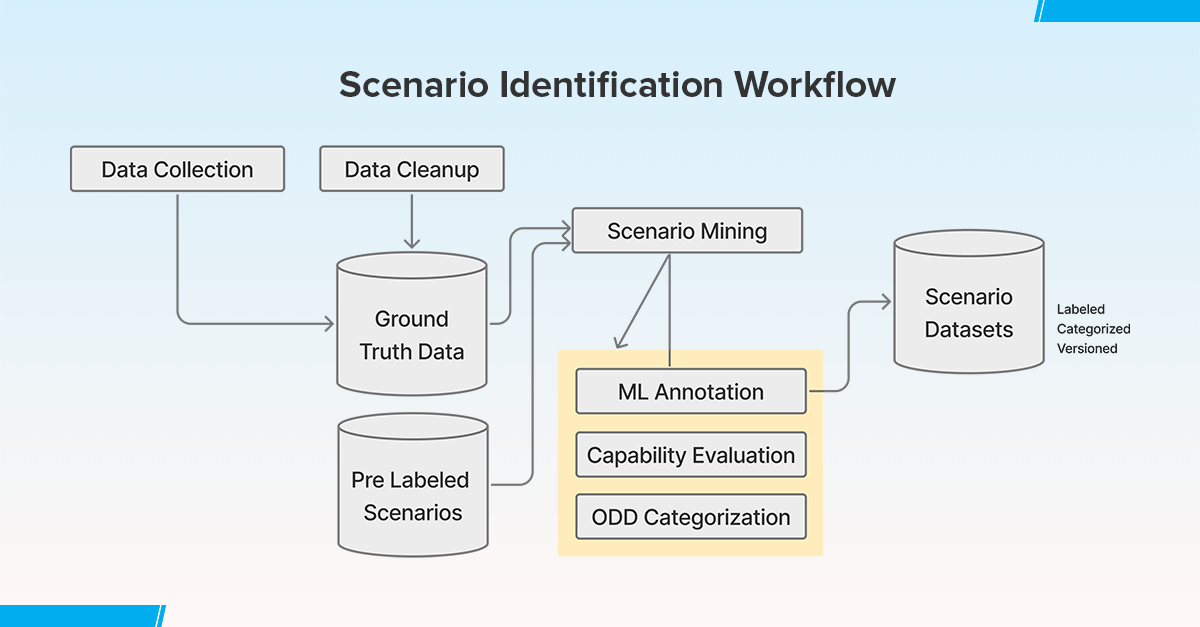
Scenario Identification: The real-world driving situations that the AV must handle are mined. The net collected data is reviewed further for identifying relevant scenarios using the ODD context and for further labeling, performance analysis, or other taxonomic classification. The identified scenarios are then categorized into normal (everyday) and edge-case (rare, high-risk) situations. Factors like weather, traffic density, road conditions, unexpected obstacles, etc. are considered. This library of categorized Scenario Datasets are versioned and kept ready for ML foundational models or analytical product development to build the prioritized Autonomy capability set. This process can be entirely manual or semi-automated, in combination with other parameters such as downstream tech stack requirements.
Scenario Dataset Services Slide 2

Fig 1: Scenario Identification Workflow

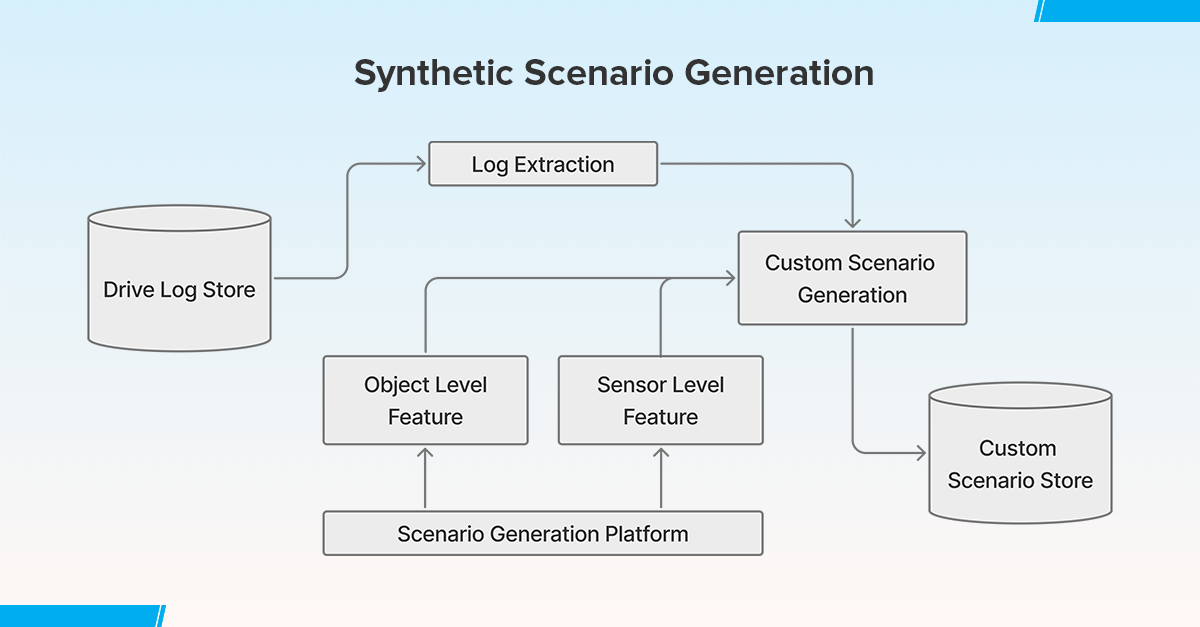
Synthetic Scenario Generation: Scenarios are created synthetically and from real-world driving logs. Object-level and sensor-level scenarios are created with GUI tools and parameterized approaches. These synthetic or hybrid scenarios bridge the gap between real-world datasets and rare edge cases an AV may encounter. These scenarios can be labeled and then used to train, validate new autonomy model versions, or evaluate existing models against evolved requirements.
Scenario Dataset Services Slide 3

Fig 2: Synthetic Scenario Generation

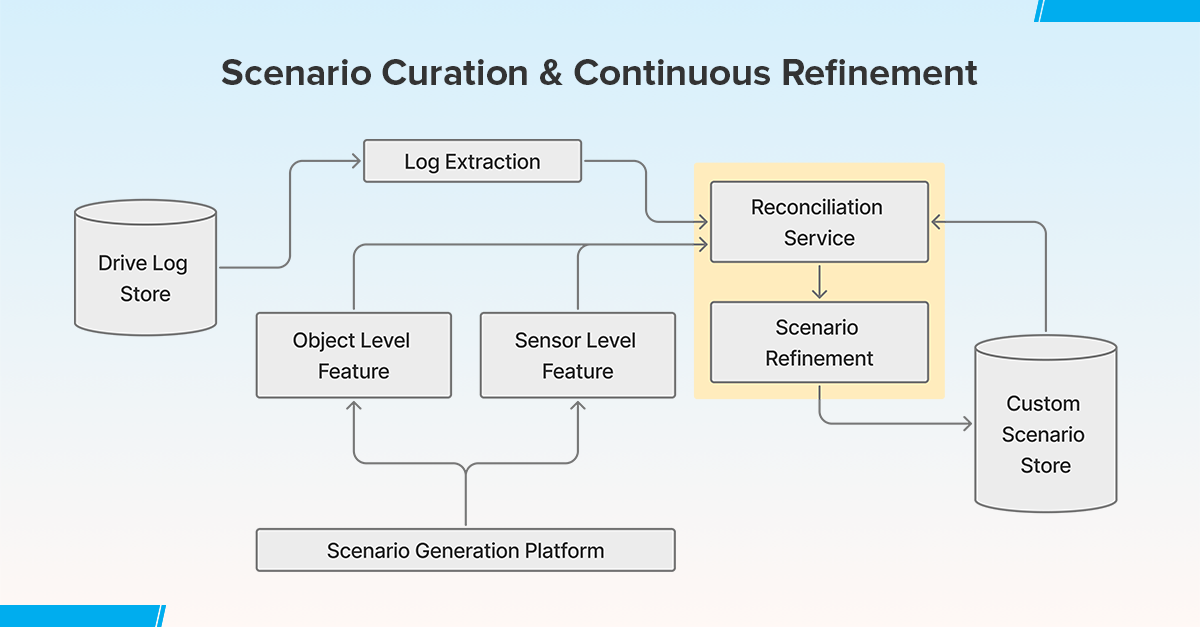
Curation & Continuous Refinement: To maintain scenarios relevant to the AV development lifecycle, there is a need to optimize existing scenario datasets to account for real-world events and changes to ground truth. Analyzing and fine-tuning scenarios can be used to isolate systemic defects, perform CAPA analysis, and implement changes for further training, testing, and validation. This is particularly useful for the matured stage of product development.
Scenario Dataset Services Slide 4

Fig 3: Scenario Curation & Continuous Refinement

With the above services, we can develop a library of curated, categorized, and up-to-date Scenario Datasets which can then be utilised for various applications and use cases. We will discuss a few of the applications in the next section.

Key Applications of Scenario Dataset Services

1. Working with Edge Cases – Accelerating AV Development

A diverse curated Scenario Dataset library is particularly useful to address the challenge of data scarcity in edge-case scenarios, such as adverse weather conditions, temporary construction zones, low-visibility environments, etc. This approach enhances the availability of diverse and high-risk driving scenarios, which are often underrepresented in real-world datasets (Dosovitskiy et al., 2017; Sun et al., 2020). By integrating both real-world log data and synthetically generated scenarios, the dataset library enables comprehensive training, validation, and performance evaluation of autonomous vehicle (AV) systems.

Synthetic scenario generation, leveraging simulation platforms such as CARLA or LGSVL, provides scalable and repeatable test cases for rare but critical situations. Additionally, scenario augmentation techniques using generative models and domain adaptation enhance the robustness of AV perception systems (Sadeghi & Levine, 2017).

This methodology significantly accelerates the AV product development lifecycle by reducing the time required for data collection and annotation, thereby expediting training, validation, and performance evaluation cycles. Moreover, by continuously updating the dataset library with newly encountered real-world edge cases, the AV system can iteratively improve its decision-making capabilities.

2. Safety & Compliance in AVs

Scenario datasets play a crucial role in AV development to enhance safety and regulatory compliance, particularly in handling safety-critical incidents. These incidents often involve non-conforming and erratic vehicle behavior, vulnerable road users (VRUs), and unexpected road hazards, which require extensive dataset coverage to ensure robust AV decision-making.

By leveraging readily available high-fidelity scenario datasets, AV developers can systematically improve the detection of potentially harmful situations and develop response mechanisms, particularly for pedestrians, cyclists, emergency vehicles, and other unpredictable entities in urban and highway environments. Furthermore, scenario augmentation techniques using generative models and reinforcement learning facilitate the expansion of dataset variability to improve generalization across diverse ODDs.

From a compliance perspective, readily available scenario datasets increase test coverage and ensure alignment with regulatory frameworks such as ISO 26262 (functional safety), ISO 21448 (safety of the intended functionality, SOTIF), and NCAP assessment protocols. By integrating synthetic and real-world scenarios into safety validation pipelines, AV manufacturers can systematically address regulatory testing requirements, ensuring that AVs can safely operate under complex, high-risk driving conditions.

3. Global Expansion for AVs

The Scenario Dataset Library can be filtered for specific locations to essentially generate a region-specific dataset. This is highly useful for AV developers who want to expand to new locations (cities, regions, countries). Region-specific datasets (hybrid and synthetic) account for different road infrastructures, traffic laws, weather, and pedestrian behaviors. Usage of region-specific datasets drastically reduces the time and effort to fine-tune autonomy models as per specific ODDs relevant to the new location.

4. Collision & Near Collision Analysis:

Retrospective collision and near collision (or near misses) identification is part of the safety critical event performance evaluation, necessary for extracting crucial information on potential system failures. It is a systematic approach to dissect the problem, root cause analysis, and hazard analysis for minimizing the exposure of your autonomous system to similar situations. Existing scenario datasets can be used in addition to logs of safety-critical incidents to analyse and identify root causes. The findings can then be used to reconstruct scenarios for relabeling and re-simulation to actively prevent recurrence. The availability of a library of datasets for safety-critical scenarios provides an accelerated mechanism for handling retrospective analysis for safety issues.

Conclusion

Scenario dataset services play an integral role in Autonomous Vehicle (AV) development including model training, validation, and evaluation. By leveraging a library of high-fidelity datasets, developers can enhance AV performance, ensure regulatory compliance, and improve real-world safety outcomes. As the AV industry advances, the continued evolution of scenario dataset services — coupled with Machine Learning advancements and standardized validation frameworks — will be pivotal in shaping the future of safe and reliable Autonomous Mobility.

DDD’s Scenario Dataset Services can be used for such end-to-end applications and derivative use cases that will help AV developers expedite their product development and take it to market.

References:

  • Riedmaier, S., et al. (2020). “Scenario-Based Testing for Automated Driving.” IEEE Transactions on Intelligent Vehicles

  • Nidhi Kalra, Susan M. Paddock (2016) “Driving to Safety:How Many Miles of Driving Would It Take to Demonstrate Autonomous Vehicle Reliability?”. RAND.

  • Simulated terrible drivers cut the time and cost of AV testing by a factor of one thousand

  • Money Pit: Self-Driving Cars’ $16 Billion Cash Burn

  • Dosovitskiy, A., Ros, G., Codevilla, F., Lopez, A., & Koltun, V. (2017). CARLA: An open urban driving simulator. Conference on Robot Learning (CoRL).

  • Rong, G., Zhao, H., Bian, J., Xia, Y., Zhao, Y., … & Li, K. (2020). LGSVL Simulator: A high-fidelity simulator for autonomous driving. arXiv preprint arXiv:2005.03778

  • Sadeghi, F., & Levine, S. (2017). CAD2RL: Real single-image flight without a single real image. Robotics: Science and Systems (RSS).

  • Bansal, M., Krizhevsky, A., & Ogale, A. (2018). ChauffeurNet: Learning to drive by imitating the best and synthesizing the worst. NeurIPS.

  • Philion, J., Kar, A., Lebedev, V., Kolve, E., Fidler, S., & Urtasun, R. (2020). Learning to evaluate perception models using planner-centric metrics. CVPR.

  • Geiger, A., Lenz, P., Stiller, C., & Urtasun, R. (2013). Vision meets robotics: The KITTI dataset. International Journal of Robotics Research (IJRR).

  • Richter, S. R., Vineet, V., Roth, S., & Koltun, V. (2017). Playing for data: Ground truth from computer games. IEEE Transactions on Pattern Analysis and Machine Intelligence (TPAMI).

  • Winner, H., Hakuli, S., Lotz, F., & Singer, C. (2017). Handbook of Driver Assistance Systems: Basic Information, Components and Systems for Active Safety and Comfort. Springer.

  • Koopman, P., & Wagner, M. (2017). Autonomous vehicle safety: An interdisciplinary challenge. IEEE Intelligent Transportation Systems Magazine.

Democratizing Scenario Datasets for Autonomy Read Post »

1000000873

Simulation Operations: Accelerating the Path to the Age of Autonomous Systems

By Sutirtha Bose

February 25, 2025

Introduction

The ultimate pursuit of a fully Autonomous System stretching from – Autonomous Vehicles (AVs) and unmanned Aerial Vehicles (UAVs – Drones) to Delivery and Manufacturing Robots, Micro-mobility, etc. has been a longstanding ambition for humanity. Achieving this steep goal necessitates overcoming significant Engineering, Regulatory (Policy), and Safety challenges. While we surely are moving in the right direction and this ambition is achieved by some on the playing field, it remains a very interesting problem for the rest to solve.

1000000873

Simulation is one of the most effective tools in developing and validating an Autonomous System. All Autonomy applications rely on a strong verification and validation strategy for a commercially viable product, with Simulation as the backbone. Broadly speaking, this encapsulates creating simulated representations of the physical world to build the Autonomy AI. The complexity lies in the levers of simulated realism, scalability as a function of cost and compute, and ease of creating a parameterized space to extract the signal of interest (amongst many others).

In this post, we explore how Human in the Loop Workflows (HiTL) expedites adopting this Simulation tool to build maximum test coverage for safer, reliable Autonomous Systems. We will look back on the history of Simulation, key components of the Sim-eng-ops ecosystem, present-day trends in foundational models, building effective Simulation Operations, and how these aspects connect to speed up meaningful product development.

A Brief History of Computer Simulations in the Automotive Industry

Computer Simulations have played a pivotal role in engineering disciplines since the mid-20th century, initially emerging in safety-critical fields such as Nuclear Physics (defense tech) and Aerospace Engineering. The Automotive industry quickly followed suit and adopted simulation techniques to enhance design and safety testing. Before the introduction of computational methods, crash testing relied solely on physical prototypes, which were costly, time-consuming, and often destructive.

The advent of Finite Element Analysis (FEA) in the 1960s and 1970s revolutionized vehicle safety testing by enabling virtual crash simulations. By leveraging FEA, engineers could model complex material behaviors and simulate crash scenarios, leading to several cost reductions, increased efficiency, and enhanced insight.

It may surprise you to learn that some of the crash simulations required overnight computer runtimes to produce results for a single iteration in the 1980s (Haug et al., 1986). This is impossible to imagine in the current era of unlimited GPU and Quantum Computing power. As computational power exploded, simulation methodologies evolved to include multi-physics modeling, near-real-time processing, and machine learning-enhanced neural modeling. These advancements have minimized barriers to entry for simulation and paved the way for a quicker integration into Autonomy Systems and similar Physical AI development.

Trends in Physical AI Foundational Models

With advancements in silicon chip design, computing power, and network speeds: we are at the cusp of a revolution in the usage of Simulation. This is similar to the inflection point in cloud computing spend, which grew 10x in the last 10 years (Link). Reports from the National Bureau of Economic Research (NBER) indicate that the prices of basic cloud services fell at double-digit annual rates between 2014 and 2016. The rate of decline has reduced but overall prices have continued to have a downward trend due to technological evolution and higher adoption.

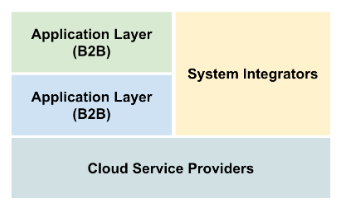
Let’s draw an analogy between these two massively adopted technologies: Cloud Computing and Simulations. The Cloud Computing landscape has 3 primary categories:

  • Cloud Service Providers: Led by AWS, Microsoft Azure, and Google Cloud Platform (GCP)

  • Application Layer: B2C (Netflix, Zoom, Ube,r etc.) and B2B (Databricks, Shopify, Workday, etc.) players building applications on Cloud

  • System Integrators: B2C service providers helping corporations adopt cloud computing (Accenture, Capgemini, TC,S etc.) for their internal and external needs.

simulation

Fig 1: Cloud Industry Structure

Similar to Cloud Computing, the landscape of Simulations is becoming clearer due to the development of underlying infrastructure. The last few years have witnessed the launch of multiple foundational models that act as core simulation engines.

To note a few companies championing this:

  • NVIDIA’s Cosmos platform (launched in Jan 2025): The openness of Cosmos’ state-of-the-art models unblocks physical AI developers building robotics and AV technology and enables enterprises of all sizes to more quickly bring their physical AI applications to market. Developers can use Cosmos models directly to generate physics-based synthetic data, or they can harness the NVIDIA NeMo framework to fine-tune the models with their own videos for specific physical AI setups.

  • PD Replica Sim by Parallel Domain: PD Replica Sim allows AV companies to recreate simulations from their own capture data in near-pixel-perfect scene reconstructions and create fully annotated, simulation-ready environments with unparalleled realism and variety.

  • Meta’s Habitat 3.0 (launched in Mar 2024): Habitat 3.0 is a simulation platform for studying collaborative human-robot tasks in indoor and home environments.

These models address critical challenges in physical AI development, such as data scarcity, high computational costs, and safety concerns. The ability of such platforms to generate realistic, physics-based synthetic data and their support for efficient model customization makes them a valuable asset for developers aiming to advance the capabilities of autonomous systems and robotic applications.

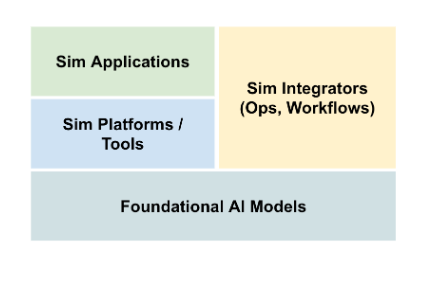
It is unclear at this point what the leaderboard for physical AI foundational models will look like in 10 years. We can definitely crystalball a trend where other players will jump on board; and use these models to build platforms and applications making Simulation a modular off-the-shelf capability for verifying Autonomy Systems. The industry structure in the future will shadow the cloud ecosystem with the following players:

  • Foundational AI Model Developers: Companies such as NVIDIA, and Meta will create foundational physical AI models

  • Sim Platforms/Tool Developers: Companies who will create platforms for Sims adoption. Some of the current cloud platforms such as AWS are already creating such services.

  • Sim Apps Developers: Specialised companies who will build applications for specific use cases such as on-demand Sim Generation, Sim Lifecycle Management, etc.

  • Sim Integrators: Companies who will perform the task of last mile adoption by creating an effective and efficient workforce for system integration, running SIM operations and workflows.

Autonomy+simulation

Fig 2: Sim Industry Structure

With the advent of sim-in-the-loop development, we are about to experience breakthrough improvements in the following area

  • Safety & Test Coverage: Simulation allows for testing dangerous scenarios without risking human life or property. It enables developers to identify and address potential safety issues early in the development process.

  • Accelerated Development Cycle: Simulating scenarios is significantly faster and cheaper than real-world testing. It avoids the need for physical prototypes, test tracks, and associated logistical expenses. This accelerates the development cycle.

  • Scalability and Repeatability: Simulations can be easily scaled to run thousands or millions of scenarios concurrently. The same scenarios can be repeated consistently, allowing for rigorous testing and comparison of different algorithms and software versions.

Some of the second-order benefits of simulation adoption include

  • Innovation & Creativity: With reduced cost of adoption, simulation will not be reserved for large megacorps. With the increased democratisation of this technology, we will be witnessing new products, business models, and academic pursuits.

  • Safety as a Core Tenet: By accelerating the physical AI development cycle, Simulations can create a safer future both from existing problems (e.g. car accidents, industrial accidents); and also create a framework of safety for any new product development. This will inherently prioritize safety as a core tenet of any physical product development.

At DDD, we feel that a system integrator/operator will be required to accelerate and democratize the use of Simulation for companies trying to build autonomous products. With our vast experience in Model Training, Safety Review, and Triage Operations serving L4+ AV customers, we are confident to fit into this role seamlessly.

Double Click on HiTL Simulation Operations

Now that we have a good understanding of the Simulation landscape, let us dive a little deeper into Simulation Operations. Simulation Operations refers to the structured orchestration of simulation workflows, tools, and infrastructure to support large-scale, data-driven autonomous system development. Unlike traditional simulation approaches, Simulation Operations emphasizes automation, scalability, and integration across multiple domains. Key components include:

Sim Suite Management

As companies scale their test operations and developer ecosystem, it becomes critically important to manage offline testing modality to provide a maximum ROI and seamless experience. Simulation Suite Management encompasses the application of specialized tools, processes, and practices to organize the simulation macro (input tests, output data, result conclusions) in easy-to-interpret constructs. It includes the following broader areas:

  • Scenario creation, editing, and augmentation overlay

  • Scenario expiration, and its lifecycle management

  • Aggregate sim suite health and status reporting

  • Adversarial Testing – rare but critical failure scenarios, such as GPS outages or sensor malfunctions

  • Centralized data access: Cloud-based platforms for seamless team interactions.

  • Standardized metrics: Common performance benchmarks and reporting structures.

  • Stakeholder engagement: Transparent reporting mechanisms for regulatory bodies and safety auditors.

Sim Creation

Simulation creation is the process of generating virtual environments and scenarios to train, test, and validate the behavior of autonomous systems. It involves creating realistic digital replicas of the real world, including roads, traffic, pedestrians, weather conditions, and other relevant factors. These simulations allow developers to evaluate the performance of autonomous systems in a safe and controlled environment, without the risks and limitations associated with real-world testing.

There are broadly following ways in which Sims are created:

  • Synthetic Sim Creation: This involves creating virtual environments from scratch using foundational models, computer graphics, and 3D modeling techniques. It allows for a high degree of control and customization but can be time-consuming and may not always capture the full complexity of the real world.

  • Log-based Sim Creation: This approach uses real-world data, such as sensor logs from autonomous systems or recordings of human usage behavior, to recreate specific scenarios in a virtual environment. It can be more efficient than synthetic simulation and ensures that the simulated scenarios are realistic, but may be limited by the availability and quality of the data.

Digital Twin Validation

Digital Twin is a virtual replica of a physical object, system, or process that accurately mirrors its real-world counterpart’s behavior, and performance, and even predicts its future behavior. Digital twin validation is the process of making sure that a digital twin accurately reflects the real-world object or system it represents. It’s a correlation analysis that provides a higher degree of confidence in the virtual environment for scaling up any V&V activity. In addition to AV use cases, this process is widely used in robotics, aerospace, defense, and any safety-critical system analysis.

Sim Results Analysis & Reporting

Sim Results Analysis & Reporting is the process of extracting meaningful insights from simulation data and communicating those findings effectively. It’s a critical step in any simulation project, as it allows you to understand the behavior of the system being modeled and make informed decisions based on the results.

The integration of Simulation Operations into Autonomous Systems development accelerates progress by addressing critical industry challenges such as safety and risk mitigation, scalability, and cost-effectiveness. The industry trend indicates that a well-defined end-to-end Simulation Operations expertise will turbocharge the development cycle for autonomous products.

Conclusion

Just as simulation transformed automotive crash testing, Simulation Operations is revolutionizing the development of autonomous systems. By providing a scalable and automated framework for testing and validation, and end-to-end Simulation Operations offering accelerates the deployment of safe and reliable technology. As computational capabilities continue to advance, the integration of AI-driven simulations and real-world validation will further refine AV technology, pushing the boundaries of automation and safety. The future of Simulations is also exciting –  innovations such as Neural Sims, which can generate multiple simulation environments from one solitary log can multiply the effectiveness of simulations. In conclusion, the future seems bright – the age of Physical AI is imminent and Simulations will unlock the doors to that age.

DDD has positioned itself to be at the forefront of this revolution and contribute to ushering in the Age of Autonomy Systems. To learn more talk to our simulation experts.

References

  • Belytschko, T., Liu, W. K., Moran, B., & Elkhodary, K. (2000). Nonlinear Finite Elements for Continua and Structures. Wiley.

  • Haug, E., T. Scharnhorst, P. Du Bois (1986) “FEM-Crash, Berechnung eines Fahrzeugfrontalaufpralls”, VDI Berichte 613, 479–505.

  • Kalra, N., & Paddock, S. M. (2016). Driving to Safety: How Many Miles of Driving Would It Take to Demonstrate Autonomous Vehicle Reliability? RAND Corporation.

  • Koopman, P., & Wagner, M. (2017). “Autonomous Vehicle Safety: An Interdisciplinary Challenge.” IEEE Intelligent Transportation Systems Magazine, 9(1), 90-95.

  • UniSim: A Neural Closed-Loop Sensor Simulator, CVPR 2023 –  Ze Yang,  Yun Chen,  Jingkang Wang,  Siva Manivasagam,  Wei-Chiu Ma,  Anqi Joyce Yang,  Raquel Urtasun

Simulation Operations: Accelerating the Path to the Age of Autonomous Systems Read Post »

Fig 2 Autonomy Data Universe APS

Autonomy: Is Data a Big Deal?

By Sahil Potnis

February 13, 2025

Prelude

In the world of cutting-edge technology, from the most simplistic automation to the most advanced Artificial Intelligence (AI) applications – our global corpus of machines emits on average more than 400 million terabytes[1] of data every single day. While it took us ~2.5 million years to harness fire, it merely took us 66 years from the first flight to landing on the moon[2]. This exponential hyper-explosive progress shares its version of success in the area of Autonomy and the impact it has had at a global scale on transportation, manufacturing, defense, and mobility in general. Our evolutionary biology of millions of years from Homo Erectus to Homo Technologies coupled with cognitive adaptation, and muscle memory has helped us learn new skills. Take driving a car for example, a skill that can be easily learned in two days at best! What lies at the heart of this human civilization development is the same micro-unit that trains our machines, robots, and Autonomous Vehicles (AV) – i.e. Data.

The human brain is the most sophisticated neural network. It analyzes patterns within data, aggregates collected experiences, and uses this contextually to make decisions. Autonomous Systems (or Autonomy) do exactly the same – I’m not only talking about the obvious aspect of training neural networks but in fact the entire data value chain necessary to convert a human-supervised application to a fully capable, commercialized, hands-free Autonomous solution. From crafting a smart training data collection strategy, streamlining feedback from the field, and deploying simulation to test at volume (and cheaply so)… every single step in the process radiates niche data that needs to be backward propagated into the product development matrix. A good analogy I can think of is essentially of automotive gear (pun intended), tiny flywheels feeding into bigger flywheels, connected to a driving shaft, and so on. Technology’s time to mature is a direct reflection of this “gearbox efficiency factor” and data plays arguably the most important role as a necessary lubricant.

Let’s double-click on why it is a big deal.

Phase 1: Prove It Works

From “Stanley the robot” winning the 2nd DARPA Grand Challenge[3] in 2005 to Waymo’s consistent market expansion in 2025, our Autonomy index has macro-inflated over the last couple of decades. Productizing research and converting a strong technology conviction into a commercial reality takes a lot of good engineering backed by a strong data signal. In my decade’s worth of first-hand exposure to this evolution, we very rarely see an automotive platform designed specifically for Autonomy in its first iteration. It takes several hits (and misses) to figure out the sensor suite, compute requirements, driving controls, and data format to build a true system that can lift off and generate meaningful results. Not to neglect the complicated supply chain and logistics behind this massive uphill engineering task. The landscape is shifting positively with more purpose-built platforms for autonomous driving that are equipped to provide SAE L2-L3[4] support functions, with an extended scope to integrate L4-L5 automated driving levels further via strategic technology partnerships.

New platform bring-up activities get simpler iteratively as the output data becomes more rich and meaningful to the Autonomy development. Problems start shifting from sensor point cloud density, basic vehicular controls, and task latency to more so of raw driving behavior. Viola! There we have our first prototype, traversing a straight line or a small loop from A to B without any human intervention on the closed course. This all is way simplified of course to keep the length of the article in check – point being, the gritty picture it paints is clear on how packaging and structuring data from the get-go is critically transformative in building prototypes. Bench development of individual components has become more organized with state-of-the-art hardware-software integration (HSI) tools, calibration is more routine than a research process, and it takes much less effort to plug and play ROS output data into a neat visualization application than developing one from scratch, off the shelf data ingest and management solutions are plenty, etc.

General purpose technologies like cloud engineering, data pipelines, web GPUs, and full stack development have solidified to help us solve the real Autonomy problem. Foundational data models and GenAI are taking us multi-step further in real-world behavior interpretation. This is how we keep riding new technology waves. The ecosystem of data experts is stronger than ever, taking us to the next segment – now that you have data at your fingertips, how do you optimize engineering operations to move measurably quicker and build a verifiable, launch-worthy product?

Phase 2: Develop. Fail. Learn and Repeat.

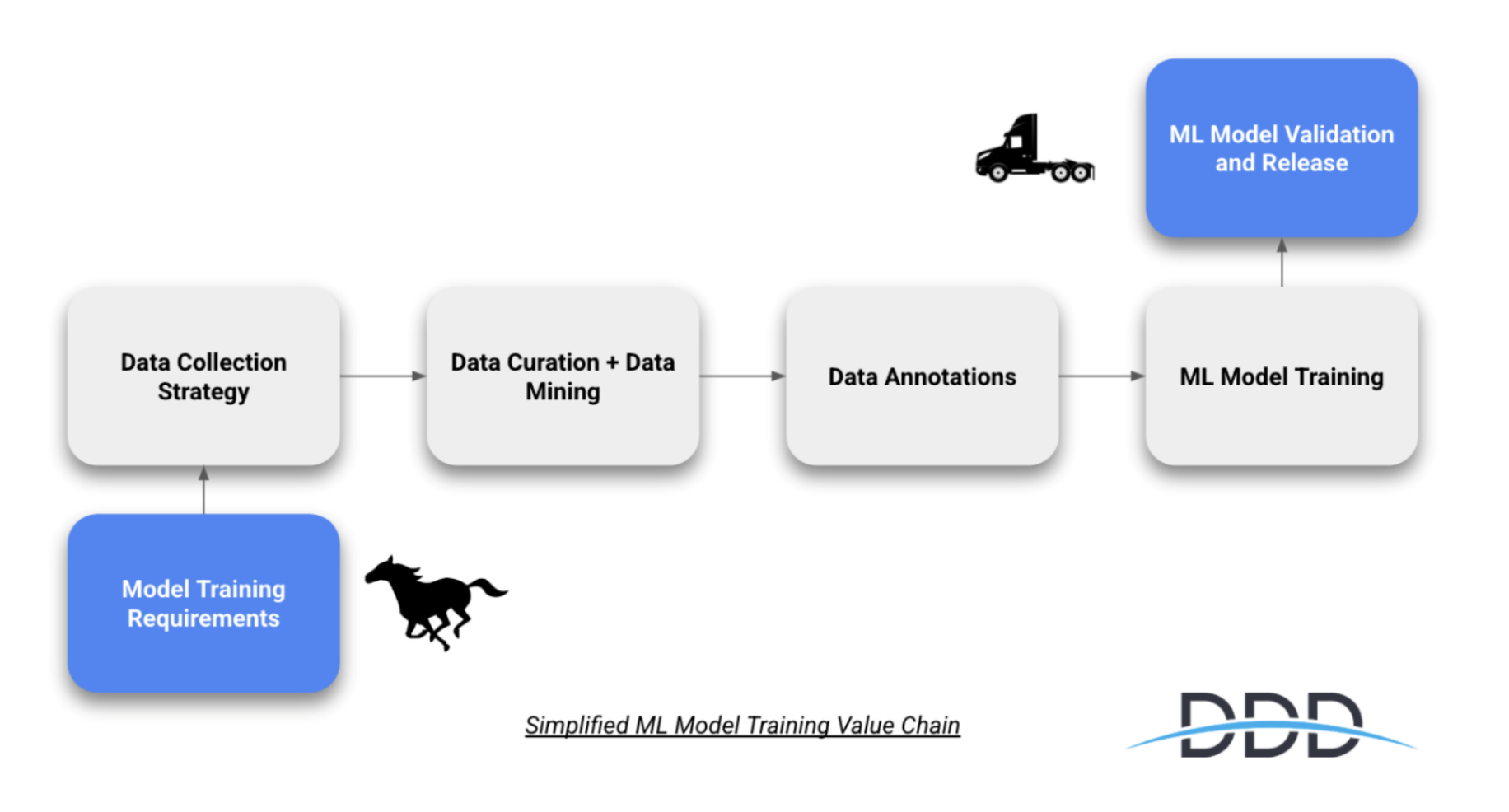
I remember almost a year back, a horse galloping on I-95 made headlines[5] across the US. Now imagine an autonomous truck driving at 70 MPH next to it. Do you think its Perception stack can handle this situation? We or at least the Equus caballus most certainly would hope so! It’s a no-brainer that as humans, we will slow down or lane change and get further away from the stray horse to reduce the probability of conflict. The autonomous truck in our hypothetical example need not have a hyper-specific response to such a situation as long as it can safely, and predictably handle anomalies. These longtail scenarios or edge cases are true gold for data-driven ML Model Development.

Screenshot+2025 02 13+at+8.31.25%E2%80%AFPM

The above-simplified flow chart is true for supervised learning systems where the starting step is to figure out which model attributes need attention. Further, that decision gets multiplexed into a structured data collection >> curation >> annotations strategy. The opportunity (time) cost of this process is invariably high and hence a scientific approach to this data-driven effort-impact problem is a must. Material advancements in the availability of nuanced annotation tooling platforms with technical solutions as offered by companies like DDD have made this process highly predictable, cost: quality efficient, and democratized. Similar to the ML model development proposition, a few other data-centric areas remain critically important to talk about. Let’s take a couple of examples.

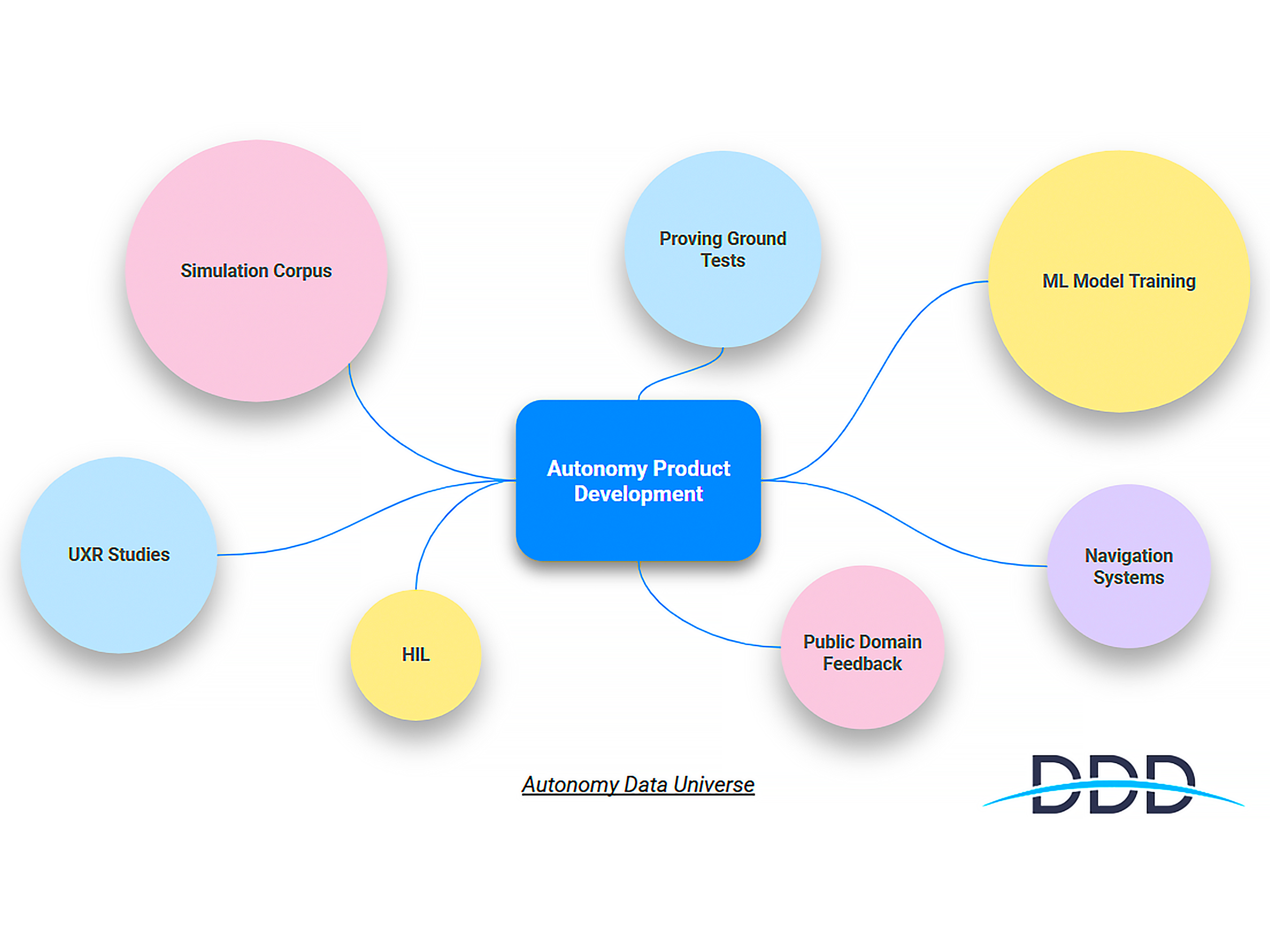
Performance Evaluation: Feedback from the field is indispensable for any learned behavior system, especially Autonomy. In a nutshell, performance evaluation refers to: a frequent activity of aggregating output from a range of test modalities (simulation, test track, public roads, HIL benches) into a crystallized set of priorities to improve the product performance. This involves predictive analysis, what-if scenarios, and data-driven failure defect management to remove any delays in improving the system’s performance. I truly believe that for any Autonomy product to succeed, its performance evaluation strategy needs to be spot on, else countless cycles are wasted in figuring out how to measure performance, what problems to fix, by when, and why.

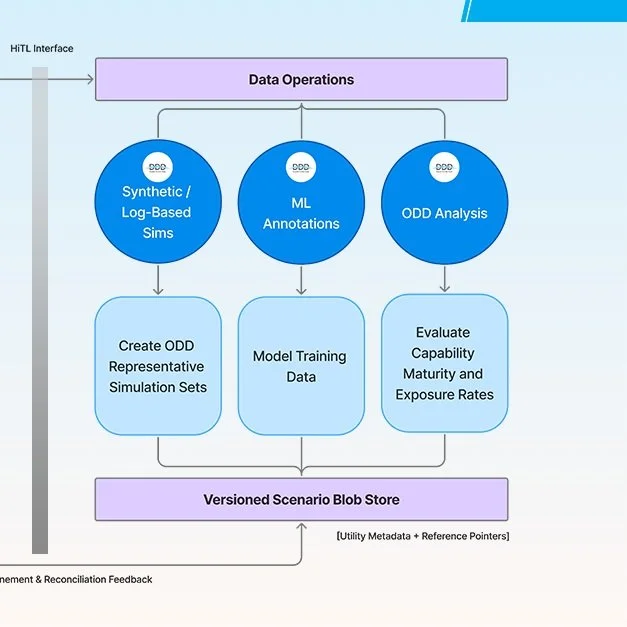
Simulation Operations: Another complementary area or the flywheel we referred to earlier is, Simulation. Refers to: a product for simulating the true physical world representation of any system in a digital environment. Millions and billions of scenarios can be simulated in a shorter period of time, the number being the less important part compared to the time. Companies providing simulation tech as a service or platform have greatly appreciated the product-worthy nature of this vertical. From the primitive synthetic sim to advanced neural sims, the goal all along is to build solid evidence for proving the verifiability of the AI system. Top of the line players have figured out how to – build the sim engine, scale infrastructure, spawn out analysis workstreams, converge back the learnings, and finally, improve the product.

Machine Learning Model Development, Performance Evaluation,and Simulation are the top three continuous learning feedback loops which in my opinion remain fundamental to developing a safer, predictable autonomous product. The job however is not done yet, transferring this tech into the hands of the end user remains a key step and a long(er) pole than some of us had originally anticipated.

Autonomy Data Universe APS?format=original

Phase 3: The Launch

Operational muscle helps catapult Autonomy’s commercial deployment after the technology is ready for a launch. Locking in the operational recipe serves a very important role when it comes down to a holistic “all systems ready for launch” program status. Taking a step back, in the last 5 years or so, vertical integration of the commercial model has nicely shaped and taken priority frankly compared to the over-emphasized silos of early market entry advantage. This has led OEMs, Tier-1 suppliers, ridesharing platforms, and technology champions to partner together, overall diversifying the deployment risk. Data is at the forefront of planning such joint fleet operations – from command (control) center management, remote assistance, or planning a normalized exposure of your product to the target Operational Design Domain (ODD). I have massive respect for the teams managing CONOPS, and field support services to preserve the business continuity for applications like robotaxis. A substantial variable of this equation is a Human-Robot UXR problem, and data once again is a key catalyst in solving for the unknowns.

From the simplest of fleet management problems to the more involved ODD expansion needs, Autonomy development and its necessary commercialization are backed by data – tools that ingest the data – workforces that transform the data – and engineers who act on the data. We have made great strides in these areas over the past several years, but the job is surely not done yet.

In Conclusion

Data-driven development is more than just an acceptance that data is the key enabler for building Autonomy, it’s the actuality of building necessary infrastructure (tech + people) required to cycle through the data, selectively and with the right judgment to propel the progress.

DDD’s Autonomy Solutions are here to help you accelerate meeting the ends and making a quicker impact. We’re onward to something new that’s more exciting and cutting-edge in the coming days. Get in touch and don’t miss out!

Is data a big deal? Most certainly so.

Reference Links

  1. Amounts of Data Generated Per Day Stats

  2. World Economic Forum: Fast Pace of Tech Transformation

  3. Stanley: The Robot That Won the DARPA Grand Challenge

  4. SAE J3016 Levels of Driving Automation

  5. I-95 horse is back ‘safe’ at Philly stables

Autonomy: Is Data a Big Deal? Read Post »

Fine2Btuning2BLLM

Fine-Tuning for Large Language Models (LLMs): Techniques, Process & Use Cases

By Umang Dayal

January 30, 2025

Large language models (LLMs) stand out due to two defining traits: their immense scale and their general capabilities. “Large” refers to the vast datasets they are trained on and the billions of parameters they contain and “general-purpose” signifies their ability to perform a wide range of language-related tasks, rather than being limited to a single function.

However, their broad, generalized training makes them less effective for specialized industry applications. For example, an LLM trained in general knowledge may be proficient at summarizing news articles, but it would struggle with summarizing complex surgical reports that contain highly technical medical terminology.

To bridge this gap, fine-tuning is required, an additional training process that tailors the LLM to a specific domain by exposing it to specialized data. Curious about how this fine-tuning process works? This guide will explore fine-tuning for LLMs, covering key techniques, a step-by-step process, and real-world use cases.

What is Fine-Tuning?

Fine-tuning is a crucial process in machine learning that enhances a pre-trained model’s performance on specific tasks by continuing its training with domain-specific data. Instead of training a model from scratch (a process that requires enormous computational power and vast datasets) fine-tuning allows us to build on the knowledge an existing model has already acquired. This method tailors the general capabilities of large language models (LLMs) to meet the unique demands of specialized applications, such as legal document analysis, medical text summarization, or financial forecasting.

How Fine-Tuning Works

Pre-trained LLMs, such as GPT, Llama, or T5, start with a broad knowledge base acquired from extensive training on massive datasets, including books, research papers, websites, and open-source code repositories. However, these models are not optimized for every possible use case. While they can generate human-like text and understand language structure, their generalist nature means they lack deep expertise in niche fields.

Fine-tuning bridges this gap by exposing the model to targeted datasets that reinforce industry-specific knowledge. This process involves adjusting certain model parameters while retaining the foundational knowledge from the original training. By doing so, the model refines its understanding and becomes significantly more accurate for the intended application.

For example, an LLM fine-tuned for legal contract review will become adept at identifying clauses, legal terminology, and potential risks within agreements. Similarly, a model fine-tuned for healthcare will be more effective at interpreting medical reports, summarizing patient records, or assisting in diagnostics.

Importance of Fine-Tuning 

Fine-tuning is essential for several reasons:

Improved Efficiency and Reduced Training Time

Training a large language model from scratch can take weeks or months, requiring high-end GPUs or TPUs and immense datasets. Fine-tuning, on the other hand, leverages an existing model and requires far fewer resources. By updating only a fraction of the model’s parameters, fine-tuning accelerates training while maintaining high performance.

Enhanced Model Performance on Specific Tasks

A general-purpose LLM might struggle with highly technical or industry-specific jargon. Fine-tuning enables the model to learn the intricacies of a specific domain, significantly improving accuracy and contextual relevance.

Addressing Data Scarcity Challenges

Many industries lack extensive labeled datasets for training AI models from scratch. Fine-tuning helps mitigate this issue by transferring knowledge from a broadly trained model to a specialized dataset, allowing for high performance even with limited labeled data.

Customization for Unique Business Needs

Every organization has distinct requirements, whether it’s automating customer support, detecting fraud, or analyzing market trends. Fine-tuning ensures that AI models align with business goals and workflows, providing tailored solutions rather than generic outputs.

Major Fine-Tuning Techniques for LLMs

Advanced fine-tuning techniques allow us to optimize specific aspects of a model while retaining its foundational knowledge. Here are some of the most effective fine-tuning methods:

Full Fine-Tuning

This traditional approach involves updating all model parameters during fine-tuning. While it leads to high-quality domain adaptation, it requires substantial computational resources and memory, making it impractical for very large models. Full fine-tuning is best suited for cases where the model requires significant adaptation, such as translating legal texts or understanding medical terminology in-depth.

Parameter-Efficient Fine-Tuning (PEFT)

PEFT is a more efficient fine-tuning approach that updates only a small subset of parameters instead of modifying the entire model. This technique drastically reduces memory and computational requirements while preserving the model’s general knowledge.

Some key PEFT methods include:

Low-Rank Adaptation (LoRA)

LoRA fine-tunes LLMs by introducing small trainable matrices (rank decomposition layers) within the model’s existing layers. Instead of updating all model weights, LoRA modifies only these lightweight adapters, preserving most of the pre-trained knowledge while learning new domain-specific insights.

Quantized LoRA (QLoRA)

QLoRA builds on LoRA by reducing the model’s precision to 4-bit quantization during training, further cutting down memory usage while maintaining accuracy. Despite the reduced precision, QLoRA recalculates critical computations at full precision when needed, ensuring optimal performance.

Adapters (Adapter Layers)

Adapter layers are small neural network modules inserted between existing layers of an LLM. Instead of modifying the entire network, adapters selectively adjust only these additional layers, making them ideal for multi-task learning.

Instruction-Tuning

Instruction-tuning involves training an LLM to follow human-like task instructions more effectively. This technique is particularly useful for enhancing zero-shot and few-shot learning capabilities, enabling the model to perform well on tasks it hasn’t seen before.

Reinforcement Learning from Human Feedback (RLHF)

RLHF is an advanced fine-tuning method that refines LLM outputs based on human preferences. It combines supervised fine-tuning with reinforcement learning, using a reward model trained on human-labeled responses.

Prefix-Tuning and Prompt-Tuning

These methods modify only the input representations rather than model parameters, making them lightweight alternatives to traditional fine-tuning. This adds additional context (prefixes) to the input to guide model responses, ideal for adapting models to new domains without retraining. This allows training a small number of learnable prompt embeddings that are prepended to input queries, influencing how the model generates responses.

Multi-task and Continual Fine-Tuning

Multi-task fine-tuning trains a model on multiple datasets at once, enabling it to generalize across different tasks. Continual fine-tuning involves periodically updating a model with fresh data to keep it relevant over time. This is especially useful for industries with rapidly changing information, such as news, finance, or cybersecurity.

The best fine-tuning method depends on factors like computational resources, task complexity, and data availability. If efficiency is a priority, PEFT techniques like LoRA or QLoRA are ideal. RLHF is the best approach for enhancing human alignment. Meanwhile, instruction tuning is excellent for improving general task performance.

The Fine-Tuning Process

To achieve optimal results, fine-tuning must be conducted systematically, following best practices and optimization techniques. Below is a comprehensive breakdown of the fine-tuning process.

Data Preparation

High-quality, well-prepared data ensures the model learns effectively from relevant examples. The first step involves data collection, where relevant domain-specific datasets are gathered. These can be sourced from structured databases, industry reports, customer support logs, or publicly available datasets. In cases where labeled data is unavailable, techniques such as data augmentation, synthetic data generation, or semi-supervised learning can be employed to generate more training examples.

Once data is collected, it undergoes a cleaning and preprocessing phase to remove noise and irrelevant information. Ensuring a balanced dataset is particularly important in classification tasks, as an imbalanced dataset may lead to biases in model predictions. After cleaning, the dataset must be formatted correctly to align with the model’s input structure.

Choosing the Right Pre-Trained Model

Selecting an appropriate pre-trained model is crucial for successful fine-tuning. Several factors influence this choice, including model architecture, training data, model size, and inference speed. Models such as GPT-3, T5, BERT, LLaMA, and Falcon each serve different purposes, and the choice depends on the specific application. A model pre-trained on datasets relevant to the target domain will generally yield better results than one trained on unrelated data.

While larger models tend to perform better, they require significantly more computational resources. If hardware limitations are a concern, opting for smaller models like GPT-2 or T5-small may be a practical approach. Additionally, for real-time applications, selecting a model with a faster inference speed ensures efficient performance.

Identifying the Right Fine-Tuning Parameters

The learning rate controls how much the model updates its weights during training. A lower learning rate prevents overfitting but increases training time, while a higher learning rate may cause instability.

To enhance efficiency, several fine-tuning techniques can be applied. Layer freezing is a method where the earlier layers of the model remain unchanged while only the later layers are fine-tuned, allowing the model to retain previously learned general knowledge. Gradient accumulation helps when working with small batch sizes by accumulating gradients over multiple iterations before updating model weights. Another useful technique is early stopping, which halts training once validation performance stops improving, thereby preventing unnecessary computation and overfitting.

Training the Model

Once data is prepared and hyperparameters are configured, the training process begins. The first step involves loading the pre-trained model using frameworks like TensorFlow, PyTorch, or Hugging Face Transformers. The processed dataset is then fed into the model, ensuring that it is formatted correctly. During training, an appropriate objective function must be defined, such as CrossEntropyLoss for classification tasks or Mean Squared Error for regression problems.

Training is typically performed using GPU acceleration, which significantly speeds up computation. During this phase, monitoring progress is essential to track loss curves, accuracy levels, and other key performance metrics.

Validation and Evaluation

Once training is complete, the model must be rigorously tested to ensure it performs as expected. Validation techniques include cross-validation, where data is split into training and validation sets to test generalization, and holdout validation, which uses a separate dataset for evaluation after training. Another common approach is k-fold cross-validation, where data is divided into multiple subsets, with each subset used as a validation set in different iterations to improve reliability.

Evaluation metrics vary depending on the task. For classification models, accuracy, precision, and recall are essential indicators of performance. In natural language processing (NLP) tasks such as translation, BLEU scores measure how closely generated text matches reference text.

Model Iteration and Optimization

After evaluation, further refinements may be necessary to enhance model performance. One common approach is hyperparameter tuning, which involves experimenting with different learning rates, batch sizes, or training epochs. If the model’s predictions contain errors or inconsistencies, additional data augmentation techniques such as paraphrasing, back-translation, or synthetic data generation can be used to enrich the dataset.

Other optimization techniques include ensemble learning, where outputs from multiple fine-tuned models are combined to improve accuracy, and knowledge distillation, which transfers insights from a larger fine-tuned model to a smaller, more efficient version.

Model Deployment

Once the fine-tuned model meets the desired performance standards, it is ready for deployment. Key deployment considerations include scalability, ensuring that the model can handle increasing workloads, and latency optimization, which may involve using techniques like model quantization or pruning to reduce computational overhead. Security measures must also be implemented to prevent biased or harmful outputs. Continuous monitoring is crucial for maintaining long-term reliability and for providing performance tracking in real environments.

Read more: Red Teaming Generative AI: Challenges and Solutions

Use Cases for Fine-Tuning LLMs

Here are some of the most impactful real-world applications of fine-tuned LLMs:

Sentiment Analysis and Customer Insights

Businesses rely on customer feedback to understand user sentiment and improve their products or services. Fine-tuned LLMs are widely used for sentiment analysis, helping companies analyze social media posts, reviews, and customer support interactions. By training models on industry-specific datasets, businesses can gain deeper insights into customer preferences, detect dissatisfaction early, and optimize marketing strategies.

For instance, e-commerce platforms use fine-tuned sentiment analysis models to classify product reviews as positive, neutral, or negative. Similarly, banks and financial institutions analyze customer interactions to detect dissatisfaction and improve their customer service strategies.

Medical and Healthcare Applications

General-purpose models lack the precise terminology and contextual understanding required for complex medical tasks. By fine-tuning models on datasets from medical journals, clinical notes, and electronic health records, AI-powered systems can assist healthcare professionals in multiple ways.

Fine-tuned models can be used for automated medical report summarization, helping doctors quickly interpret patient histories. Additionally, they aid in disease diagnosis by analyzing symptoms described in medical literature. For example, IBM’s Watson Health has leveraged NLP models trained on vast medical datasets to assist in oncology research and treatment planning.

Legal Document Analysis and Compliance

Fine-tuned LLMs can automate legal document analysis, contract review, and case law summarization, significantly reducing the time required for legal research.

Legal AI models trained on case law and contracts can assist in identifying key clauses, risks, and compliance violations. These models are particularly useful for regulatory compliance in industries like finance, where organizations must adhere to strict legal guidelines. By automating routine legal document processing, firms can improve efficiency and reduce human error.

Financial Analysis and Market Prediction

Fine-tuned LLMs are used to analyze vast amounts of financial data, including earnings reports, news articles, and social media sentiment, to predict market trends. By training models on historical financial datasets, investment firms can build AI-powered tools for stock price forecasting, risk assessment, and automated portfolio management.

Additionally, chatbots in banking are fine-tuned to provide personalized financial advice, helping customers manage their accounts, investments, and loans more effectively. Models that understand financial terminology and customer behavior patterns are key to enhancing digital banking experiences.

Enhanced Chatbots and Virtual Assistants

Fine-tuning enables virtual assistants and chatbots to provide more accurate, relevant, and personalized responses in sectors such as healthcare, finance, and customer service.

For example, fine-tuned chatbots in the healthcare industry can provide symptom-checking assistance by understanding medical terminology. Similarly, HR departments use fine-tuned models to create AI-driven recruitment assistants that answer candidate queries and automate resume screening. In retail, AI-driven customer support chatbots handle order tracking, refunds, and FAQs with improved accuracy.

Language Translation and Multilingual AI

A legal translation model trained on multilingual contracts ensures precise interpretations of legal terms, while a medical translation model accurately conveys critical health information.

Fine-tuned translation models also help companies expand into global markets by enabling seamless communication between teams speaking different languages. By training LLMs on industry-specific corpora, businesses can ensure that translations retain meaning and context, avoiding costly misinterpretations.

Code Generation and Software Development

Models like Codex (the foundation of GitHub Copilot) are fine-tuned on vast repositories of code, allowing them to generate programming solutions, suggest code completions, and even detect errors.

Software engineers use these models for rapid prototyping, reducing development time and enhancing productivity. By fine-tuning LLMs for specific programming languages or frameworks, organizations can create highly specialized AI coding assistants that align with their development needs.

Scientific Research and Academic Assistance

Fine-tuned LLMs play a crucial role in scientific research, automating literature reviews, summarizing research papers, and assisting in hypothesis generation. Researchers in fields like physics, chemistry, and biology use these models to process vast amounts of scientific literature and extract relevant insights.

Academic institutions are also leveraging fine-tuned models for personalized tutoring systems, helping students with subject-specific learning. AI-driven tools trained on educational materials assist with explanations, problem-solving, and knowledge reinforcement.

Cybersecurity and Threat Detection

AI models trained on cybersecurity datasets help identify phishing emails, malware signatures, and suspicious activity in network logs. By continuously fine-tuning these models with new threat intelligence, security teams can stay ahead of evolving cyber threats.

Additionally, AI-driven threat analysis systems can automate security report generation, enabling organizations to respond to vulnerabilities more efficiently. Fine-tuned LLMs play a crucial role in enhancing automated security monitoring and intrusion detection systems.

Read more: Major Gen AI Challenges and How to Overcome Them

How We Can Help with Fine-Tuning LLMs

At Digital Divide Data, we specialize in fine-tuning large language models (LLMs) to meet the specific needs of your business, industry, and use case. We work closely with you to understand your requirements and define the right approach to fine-tuning. Our process includes:

Data Collection & Preparation: We gather domain-specific data, clean it, and prepare it for the fine-tuning process, ensuring it’s of the highest quality for your needs.

Pre-Trained Model Selection: We help you choose the most suitable pre-trained model based on the scale of your needs and the specifics of your sector.

Fine-Tuning Techniques: We apply the most effective techniques to enhance your model’s performance without wasting resources.

Continuous Optimization: Our team uses advanced techniques like reinforcement learning from human feedback (RLHF), multi-task learning, and continual fine-tuning to ensure that your model is consistently improving and adapting to new data and tasks.

Conclusion

By leveraging fine-tuning, companies can enhance model performance, improve efficiency, and address challenges like data scarcity, all while reducing the resources required compared to training from scratch. As industries evolve and new challenges arise, the ability to continuously refine and adapt these models ensures that organizations remain competitive and innovative.

By investing in the fine-tuning of LLMs, businesses can harness the power of AI to solve real-world problems, drive operational efficiency, and provide exceptional value to customers.

Partner with us to leverage the full potential of fine-tuned LLMs and drive innovation.

Fine-Tuning for Large Language Models (LLMs): Techniques, Process & Use Cases Read Post »

syntheticdatageneration

Synthetic Data Generation for Edge Cases in Perception AI

By Umang Dayal

January 22, 2025

Synthetic data refers to artificially generated datasets that mimic real-world data’s characteristics without containing actual individual or event-related information. This innovative approach offers an alternative to real-world data, providing safe, diverse, and scalable solutions for research, development, and testing.

In this blog, we will explore synthetic data generation for edge cases in perception AI, exploring its benefits and the different types of synthetic data.

What Is Synthetic Data Generation?

Synthetic data generation involves using advanced algorithms, statistical methods, or machine learning models to simulate patterns, distributions, and structures found in real-world data. This process is particularly valuable when data privacy, sensitivity, or availability limitations make it difficult to use actual datasets. Synthetic data serves as a critical substitute, enabling seamless model development, testing, and validation while adhering to strict privacy regulations.

Why Use Synthetic Data for Edge Cases?

Perception AI systems, such as those used in autonomous vehicles, facial recognition, and robotics, often struggle with edge cases. These edge cases can be underrepresented or absent in real-world data, leading to gaps in system performance. Synthetic data can fill these gaps by generating diverse datasets tailored to specific scenarios, ensuring that AI models are robust and well-prepared for unexpected situations.

Benefits of Synthetic Data Generation in Perception AI

The adoption of synthetic data in Perception AI offers numerous advantages, particularly in addressing the challenges associated with training and testing AI systems for edge cases.

Enhanced Diversity

Synthetic data generation enables the creation of datasets that encompass a wide range of scenarios, including rare and extreme edge cases. This capability is especially critical for Perception AI systems which must perform reliably across diverse and unpredictable situations. For example, synthetic data can simulate low-visibility weather conditions, unusual lighting scenarios, or interactions with rare object types, providing training examples that might never be encountered in real-world data collection.

Privacy Protection

One of the most significant challenges in using real-world data is safeguarding the privacy of individuals, especially when dealing with personally identifiable information (PII). Synthetic data eliminates this concern by being entirely artificial and devoid of links to actual individuals or events. This ensures compliance with strict data privacy regulations such as the General Data Protection Regulation (GDPR) and the Health Insurance Portability and Accountability Act (HIPAA).

Furthermore, privacy-protecting features like differential privacy can be integrated into synthetic data generation processes, adding layers of protection against data leakage or misuse. This makes synthetic data an ideal choice for industries like healthcare, finance, and public services, where data sensitivity is critical.

Scalability

Unlike real-world data, synthetic data can be generated on demand in virtually unlimited quantities. This scalability is particularly beneficial when training machine learning models that require large datasets to achieve high accuracy. Additionally, this ability to scale allows for iterative improvements to datasets, ensuring they remain relevant as model requirements grow.

Cost Efficiency

The process of gathering, cleaning, and annotating real-world data is often expensive and resource-intensive, requiring significant investment in labor, infrastructure, and time. Synthetic data generation, in contrast, significantly reduces these costs by automating the creation of high-quality datasets. Moreover, synthetic data also minimizes costs related to data storage, transport, and security.

Accelerated Development Cycles

Synthetic data accelerates the development and testing of Perception AI systems by eliminating delays associated with acquiring and preparing real-world data. Developers can quickly generate custom datasets tailored to specific scenarios, enabling rapid prototyping and validation of AI models. This is especially valuable in fast-moving industries, such as technology and automotive, where time-to-market is a critical factor.

Improved Model Performance

By introducing diverse and challenging scenarios into training datasets, synthetic data helps improve the generalization capabilities of AI models. This is particularly relevant for edge cases that are underrepresented or missing in real-world data. Synthetic data allows developers to fine-tune models for specific conditions, leading to better performance in real-world applications.

How Accurate Is Synthetic Data Compared to Real Data?

Contrary to misconceptions, high-quality synthetic data can rival or even outperform real-world data in accuracy. For example, models trained on synthetic data have demonstrated superior performance in specific tasks. Studies have shown that synthetic datasets achieve mean accuracies within 1–2% of their real-world counterparts, even with advanced privacy features like differential privacy enabled.

Techniques for Generating Synthetic Data

  1. Generative Adversarial Networks (GANs): These models produce realistic data by pitting a generator against a discriminator, iteratively refining the quality of the synthetic data.

  2. Variational Auto-Encoders (VAEs): VAEs summarize the characteristics of real-world data to create synthetic datasets with similar properties.

  3. Transformers (e.g., GPT): These models excel in generating synthetic tabular, textual, and multimodal datasets by learning patterns from large-scale real-world data.

Types of Synthetic Data

Synthetic data comes in various forms, each tailored to specific use cases and industries. These types of data allow researchers and developers to replicate real-world scenarios across diverse domains. Below is a detailed look at the primary types of synthetic data and their unique characteristics:

Tabular Data

Tabular data is among the most commonly used formats in synthetic data generation. It includes structured datasets organized into rows and columns, representing information such as customer demographics, financial transactions, or product inventories. Popular formats for tabular data include CSV, JSON, and Parquet.

Tabular synthetic data is extensively used in finance, healthcare, and retail for tasks like fraud detection, predictive modeling, and trend analysis. For instance, a bank might generate synthetic transaction records to train models that detect anomalies or predict customer behavior.

Time-Series Data

Time-series data involves sequences of data points recorded over time intervals. Examples include financial market trends, sensor readings, weather patterns, and health monitoring data (e.g., heart rate or glucose levels).

Time-series synthetic data is crucial for industries like IoT (Internet of Things), healthcare, and finance, where understanding trends, seasonality, and anomalies over time is essential. For example, synthetic time-series data can simulate energy consumption patterns in smart grids to test predictive maintenance algorithms.

Text Data

Text-based synthetic data, also known as natural language data, involves generating human-readable sentences, paragraphs, or documents. This type of data is widely used in training models for natural language processing (NLP) tasks such as text classification, language translation, sentiment analysis, and chatbot development.

Text synthetic data is beneficial for industries like customer service, legal, and education. For example, a company might generate synthetic email conversations to train AI models for automated customer support.

Image and Video Data

Synthetic image and video data have become increasingly popular due to advancements in computer vision and AI. These datasets include still images or sequences of frames that simulate real-world scenes, objects, or movements.

Synthetic video data is used to train perception systems for self-driving cars, simulating various road conditions, traffic scenarios, and weather events. Synthetic medical images, such as X-rays or MRI scans, help train models for disease detection without exposing sensitive patient data.

Simulation Data

Simulation data involves creating 3D environments that mimic real-world settings, often generated using game engines or specialized simulation platforms. Robots can be trained in simulated environments to perform tasks like object manipulation or navigation and virtual simulations allow self-driving cars to practice handling complex traffic situations.

Audio Data

Synthetic audio data involves generating sound waves, voice samples, or environmental sounds. This type of data is particularly valuable in speech recognition, music generation, and noise cancellation applications. It is highly useful in training automated speech recognition (ASR) models to understand diverse accents and languages and generating synthetic voices for virtual assistants like Siri or Alexa.

Multimodal Data

Multimodal synthetic data combines multiple data types, such as text, images, and audio, into a single dataset. Multimodal data is used for complex AI tasks like autonomous vehicle training, where sensor data (e.g., LiDAR), camera footage, and textual descriptions are integrated. It is also valuable in medical AI, where images (e.g., X-rays) are paired with patient records for diagnostic models.

How Can We Help

At Digital Divide Data (DDD), we specialize in providing cutting-edge solutions for synthetic data generation, tailored to meet the unique challenges of your AI projects. Whether you’re developing Perception AI systems or enhancing machine learning models our expertise ensures you have the right tools and data to succeed.

We offer custom synthetic data generation services that cater to your specific requirements. Using advanced technologies like Generative Adversarial Networks (GANs), Variational Autoencoders (VAEs), and state-of-the-art simulation tools, we help you with high-quality data preparation for diverse applications.

Conclusion

Synthetic data generation is revolutionizing Perception AI by enabling robust model training, particularly for edge cases that are difficult to capture with real-world data. Its ability to provide scalable, diverse, and privacy-safe datasets ensures that AI systems can perform reliably across a wide range of scenarios. As advancements in synthetic data techniques continue, they hold the potential to redefine the boundaries of AI innovation.

Contact us today to learn more about how synthetic data can transform your projects and propel your AI systems to new heights.

Synthetic Data Generation for Edge Cases in Perception AI Read Post »

Red2Bteaming2BGen2BAI

Red Teaming Generative AI: Challenges and Solutions

By Umang Dayal

January 20, 2025

Red teaming, a concept rooted in the Cold War era during military exercises, has long been associated with simulating adversarial thinking. U.S. “blue” teams initially competed against Soviet “red” teams to anticipate and counter potential threats. Over time, this methodology expanded into the IT domain, which was used to identify network, system, and software vulnerabilities.

Today, red teaming has taken on a new challenge: stress-testing generative AI models to uncover potential harms, ranging from security vulnerabilities to social bias. In this blog, we will explore the Red Teaming generative AI implementation process and associated challenges.

Red Teaming Generative AI: Overview

Unlike traditional software, generative AI models present novel risks. Beyond the familiar threats of data theft and service disruption, these models can generate content at scale, often mimicking human creativity. This capability introduces unique challenges, such as producing harmful outputs like hate speech, misinformation, or unauthorized disclosure of sensitive data, including personal information.

Red teaming for generative AI involves deliberately provoking models to bypass safety protocols, surface biases, or generate unintended content. These insights enable developers to refine their systems and strengthen safeguards for Gen AI models.

During model alignment, systems are fine-tuned using human feedback to reflect desired values. Red teaming extends this process by crafting prompts that challenge safety controls. Increasingly, these prompts are generated by “red team” AI models trained to identify vulnerabilities in target systems.

Implementing Red Teaming for Generative AI

Planning and Preparation

The first step in implementing an effective red teaming strategy is planning. This involves defining clear objectives, identifying key vulnerabilities, and outlining the scope of testing. What specific risks are you targeting? Are you focusing on ethical concerns, such as biases and harmful content, or technical weaknesses such as security vulnerabilities? By establishing these goals early, teams can ensure their efforts are aligned with the organization’s priorities.

Additionally, red teams should consider the resources and expertise required. A mix of skills, including knowledge of NLP, adversarial techniques, and ethical AI, ensures a well-rounded approach. Selecting the right tools and datasets for testing is equally critical. While many open-source datasets exist, custom datasets tailored to the model’s use cases can often yield more meaningful insights.

Attack Methodologies

Red teaming involves deploying a variety of attack methods to stress-test the AI system. These methods fall into two primary categories: manual and automated attacks.

Manual attacks rely on human creativity and expertise to craft tailored prompts and scenarios. This approach is particularly useful for exposing nuanced vulnerabilities, such as cultural or contextual biases. Examples include:

  • Complex Hypotheticals: Creating intricate “what if” scenarios that subtly challenge the model’s guardrails.

  • Role-Playing: Assigning the model a persona or perspective that may lead it to generate undesirable content.

  • Scenario Shifting: Changing the context mid-interaction to test the model’s adaptability and potential weaknesses.

Automated attacks use red team AI models or scripts to generate a high volume of adversarial prompts. These can include:

  • Prompt Variations: Generating thousands of variations of a base prompt to identify specific triggers.

  • Adversarial Input Generation: Using algorithms to craft inputs that exploit known weaknesses in the model’s architecture.

  • Indirect Prompt Injection: Embedding malicious instructions in external content, such as web pages or files, to test the model’s response when accessing external data.

Dynamic Testing with Iterative Feedback

A hallmark of effective red teaming is dynamic testing, where feedback loops are continuously integrated. Each discovered vulnerability informs subsequent rounds of testing, refining both the attack strategies and the model’s defenses. This iterative process ensures that the red team stays ahead of potential adversaries.

Collaboration and Coordination

Red teaming requires close collaboration between various stakeholders, including red teams, developers, data scientists, and legal advisors. Teams should establish clear communication channels to share findings and coordinate responses such as scheduling frequent meetings to discuss testing progress and address emerging issues and using shared platforms to log vulnerabilities, attack strategies, and resolutions.

Real-World Simulations

One of the most effective ways to assess generative AI models is by simulating real-world scenarios. These simulations replicate the types of interactions the model is likely to encounter in deployment. Examples include:

  • Misinformation Campaigns: Testing how the model responds to prompts designed to spread false information.

  • Social Engineering: Evaluating the model’s susceptibility to prompts aimed at extracting sensitive information.

  • Crisis Scenarios: Simulating high-pressure situations to test the model’s decision-making and adherence to ethical guidelines.

Monitoring and Metrics

An essential aspect of red teaming is defining metrics to evaluate the success of testing efforts. Key performance indicators (KPIs) might include:

  • The frequency and severity of vulnerabilities discovered.

  • The time taken to address identified issues.

  • The model’s improvement in resisting adversarial prompts after successive rounds of alignment.

Integrating Findings into Model Development

The ultimate goal of red teaming is to make generative AI systems more robust and secure and to achieve this, findings must be seamlessly integrated into the development pipeline. This can involve:

  • Adding new examples to fine-tuning datasets that address uncovered vulnerabilities.

  • Refining the model’s safety protocols to mitigate specific risks.

  • Continuously improving the model based on red teaming feedback, ensuring it evolves alongside emerging threats.

Preparing for the Unexpected

AI models often exhibit unanticipated behaviors when exposed to novel prompts or conditions. Red teams must remain adaptable, continuously iterating their methods and strategies to uncover hidden vulnerabilities.

By combining strategic planning, innovative testing methods, and robust collaboration, organizations can effectively implement red teaming to enhance the safety, security, and reliability of generative AI systems.

Challenges in Red Teaming Generative AI

Despite its importance, red-teaming generative AI comes with a unique set of challenges that can complicate the process and limit its effectiveness. These challenges stem from the complexity of generative AI systems, their potential for unexpected behavior, and the evolving nature of threats. Let’s discuss a few of them below.

Scale and Complexity of Generative Models

Modern generative AI models are enormous in scale, with billions of parameters and the ability to generate outputs across diverse contexts. This complexity introduces several hurdles such as the range of possible outputs is vast, requiring extensive testing to cover even a fraction of the potential vulnerabilities.

Models often evolve post-deployment as developers refine their alignment or users adapt to the system’s outputs. This dynamic nature complicates red teaming efforts, as discovered vulnerabilities may become irrelevant or transform into new risks.

Ambiguity in Harm Definition

Determining what constitutes harm in a generative AI system is not always straightforward. What is considered harmful in one cultural or social context may be acceptable or even beneficial in another.

Therefore, detecting and mitigating biases in generative models can be challenging, as fairness is often subjective and varies depending on the stakeholders. Some outputs, such as satire or controversial opinions, may straddle the line between acceptable and harmful content, complicating the identification of issues.

Attack Variability and Innovation

The adversarial landscape evolves rapidly, with attackers continuously developing new methods to exploit generative AI systems. Techniques like indirect prompt injection, adversarial attacks, and jailbreaks are constantly being refined, making it difficult for red teams to stay ahead.

Limited Automation Tools

While automated tools can generate large volumes of test prompts, they are not always effective in uncovering nuanced or context-specific vulnerabilities. Automated systems may miss subtle issues that require human intuition and ethical reasoning to identify and it only focuses on existing vulnerabilities, potentially overlooking novel or emerging threats.

Legal and Ethical Complexities

Red teaming for generative AI may inadvertently expose sensitive data or personal information, raising legal and ethical questions. As governments implement AI regulations, organizations must ensure their red teaming practices comply with evolving legal and ethical frameworks.

Read more: Major Gen AI Challenges and How to Overcome Them

Addressing Challenges

While these challenges are significant, they can be mitigated through thoughtful planning and execution. Prioritizing collaboration, investing in skilled personnel, leveraging innovative tools, and maintaining robust documentation and communication protocols are critical to overcoming these challenges.

How We Can Help

We offer comprehensive support to help organizations implement effective red teaming for generative AI systems, ensuring their robustness and alignment with safety and ethical standards. Our actionable reporting for red teaming ensures every vulnerability is documented with clear recommendations for remediation and provides follow-up support to help implement fixes and retest models effectively.

We focus on building long-term resilience by helping you establish continuous monitoring systems and iterative fine-tuning processes. These efforts ensure that your AI systems remain secure, ethical, and aligned with your organizational goals.

Read more: Red Teaming For Defense Applications and How it Enhances Safety

Conclusion

Red teaming is a critical practice for ensuring the safety, security, and ethical alignment of generative AI systems. As these technologies continue to evolve, so do the challenges and threats they face. Effective red teaming goes beyond identifying vulnerabilities, it’s about building resilient AI systems that can adapt to emerging risks while maintaining their usefulness and integrity. By leveraging a combination of expertise, innovative tools, and a collaborative approach, organizations can safeguard their models and ensure they serve responsibly.

Contact us today to learn more and take the first step toward a more secure AI future.

Red Teaming Generative AI: Challenges and Solutions Read Post »

Promptengineeringinlegaltech

The Role of Prompt Engineering in Legal Tech: Advantages and Implementation Method 

By Umang Dayal

January 17, 2025

In the rapidly evolving field of artificial intelligence (AI), prompt engineering has emerged as a crucial capability in legal tech. This method, which involves designing precise inputs to guide AI models toward desired outputs, is both a skill and a science. Especially in legal technology, where accuracy and context are paramount, effective prompt engineering is essential for unlocking the full potential of AI tools.

Well-designed prompts play a pivotal role in generating accurate and user-specific responses, while also reducing the risk of errors or so-called “hallucinations” in AI outputs. In this blog, we will understand the importance of prompt engineering in legal tech and how it can be implemented in the legal tech industry.

Understanding Prompt Engineering

Prompt engineering is the process of drafting carefully structured instructions, or “prompts,” in natural language to guide AI tools in performing specific tasks. These prompts define the task and often include context, objectives, and expected outcomes. The process is iterative, requiring refinement to optimize results and ensure ethical outputs.

A well-designed prompt can transform a generic AI tool into a specialized assistant capable of drafting contracts, analyzing case law, or summarizing complex legal documents. Conversely, poorly designed prompts can lead to inaccuracies or misinterpretations, underscoring the high stakes of prompt engineering in the legal domain.

Why Prompt Engineering Matters in Legal Tech

The integration of AI into legal practices is reshaping how professionals approach tasks like due diligence and case preparation. Prompt engineering plays a pivotal role in this transformation by ensuring AI tools produce reliable and legally sound outputs.

Legal language is highly specialized, nuanced, and context-dependent. Unlike prompts in other industries, legal prompts must account for specific terminology, jurisdictional differences, and the unique interpretative nature of legal principles.

For example, a prompt designed to analyze contracts must not only identify key clauses but also consider their implications within the relevant legal framework. Preparing such prompts requires an in-depth understanding of legal reasoning and the ability to guide AI in guiding complex scenarios.

Implementing Prompt Engineering for Legal Tech

To maximize the potential of AI tools in legal practice, adopting effective strategies for crafting prompts is essential. Legal prompt engineering demands attention to detail, contextual awareness, and an iterative approach to ensure the desired outcomes are achieved. Below are the key practices to follow:

Clearly Define Objectives

Define what you aim to accomplish, whether it’s generating a detailed case summary, drafting a legally sound contract, or identifying critical clauses in an agreement. Clear and detailed objectives provide a foundation for creating prompts that align with your needs.

For instance, when reviewing a contract, specify whether the AI should summarize the document, flag unusual clauses, or provide suggestions for amendments. The more precise your objectives, the better the AI can tailor its response to meet your expectations.

Use Precise Language

Use accurate and unambiguous legal terminology that reflects the task at hand. Ambiguity in prompts can lead to misinterpretation or incomplete responses, so aim for specificity.

For example, instead of saying, “Summarize this agreement,” instruct the AI to “Identify and summarize the key obligations, termination clauses, and indemnity provisions in this agreement.” Such specificity helps the AI produce more relevant and actionable results.

Provide Adequate Context

Include information such as the jurisdiction, applicable legal standards, the nature of the legal matter, and any case-specific details. For instance, when asking the AI to analyze a court ruling, mention the legal system (e.g., common law or civil law) and the relevant statutes or precedents.

Providing comprehensive context ensures that the AI understands the scope and intricacies of the task, which is particularly important given the variability of laws across jurisdictions and cases.

Specify the Desired Output Format

Whether it’s a memorandum, brief, contract clause, or bulleted summary, make your expectations explicit in the prompt. For example, instead of asking for “an analysis of this case,” you could request, “Provide a two-paragraph analysis summarizing the key legal arguments and their implications for future litigation.” Specifying the format ensures the output aligns with your practical requirements and saves time on further edits.

Highlight Key Points to Emphasize

If certain aspects of a task are particularly important, ensure they are explicitly mentioned in the prompt. For instance, if you’re reviewing a contract, you might ask the AI to focus on confidentiality clauses and their alignment with GDPR regulations. Breaking down the task into distinct focus areas ensures that critical elements are addressed with adequate depth, especially when dealing with complex legal matters involving multiple components.

Iterate and Refine Your Prompts

Prompt engineering is not a one-time effort it often requires iterative refinement to achieve optimal results. If the AI-generated response falls short of your expectations, analyze the gaps and adjust your prompt accordingly.

Experiment with different phrasings, include additional context or provide examples of desired outcomes. Each iteration is an opportunity to enhance the prompt’s clarity and effectiveness, ensuring consistent improvements over time.

Consider Ethical and Responsible AI Usage

Ethical considerations are vital when working with AI, particularly in the legal field. Avoid including sensitive or personal data in your prompts to prevent confidentiality breaches. Familiarize yourself with the limitations of AI tools, such as their potential for hallucinations or generating biased outputs. Establish protocols to review and validate AI-generated content to ensure compliance with ethical and legal standards. Responsible use of AI protects client confidentiality and reinforces trust in its application within the legal industry.

By adhering to these best practices, legal professionals can harness the full potential of AI tools, enhancing productivity, accuracy, and ethical compliance in their work. As the field evolves, the ability to craft precise and effective prompts will become a critical skill for lawyers and legal teams navigating the future of legal technology.

Read more: Prompt Engineering for Generative AI: Techniques to Accelerate Your AI Projects

How Can We Help?

At Digital Divide Data, we offer cutting-edge legal solutions powered by advanced AI and LLMs, transforming the way legal professionals work. Our services are designed to empower attorneys and legal teams by improving accuracy, efficiency, and reliability in their workflows. By combining innovative technology with a deep understanding of legal processes, we provide the tools necessary for legal tech.

Read more: Major Gen AI Challenges and How to Overcome Them

Final Thoughts

The intersection of law and AI is paving the way for transformative advancements in legal practice. As AI models become more sophisticated, the role of prompt engineering will expand, enabling greater precision, efficiency, and accessibility. Legal professionals equipped with prompt engineering expertise will be better positioned to lead this evolution, shaping the future of the legal tech industry.

Contact us today to learn how our tailored Generative AI solutions can help you transform your legal practice with AI.

The Role of Prompt Engineering in Legal Tech: Advantages and Implementation Method  Read Post »

GenerativeAIinautonomousdriving

Role of Generative AI in Autonomous Driving Innovation

By Umang Dayal

January 15, 2025

Generative AI is revolutionizing the automotive industry, transforming how vehicles are designed, manufactured, and marketed. The market for generative AI in automotive is projected to soar to USD 3,900.03 million by 2033, growing at a CAGR of 23.3% from 2024 to 2034. This rapid growth highlights Gen AI’s key role in driving efficiency, innovation, and profitability in the Autonomous driving industry.

This blog explores the fundamentals of generative AI in autonomous driving, its impact on AV innovation, the ethical considerations and challenges, and the step-by-step implementation process.

Generative AI in Autonomous Driving: An Overview

Generative AI is offering promising solutions to streamline design, development, and production processes in the AV industry. By leveraging vast datasets and powerful algorithms, generative AI can predict outcomes, analyze patterns, and generate creative solutions, all of which are crucial for autonomous driving technologies.

Gen AI is critical in developing and refining self-driving systems by providing simulations that test how these systems behave under various conditions. Additionally, it is essential to create new materials and energy sources that contribute to more sustainable and efficient vehicles, further driving innovation. The potential applications of generative AI in autonomous driving are vast, offering safer, more efficient, and sustainable mobility solutions.

How Generative AI is Driving Innovation in Autonomous Driving

Let’s explore how generative AI is shaping the future of autonomous vehicles across key areas:

Designing and Optimizing Autonomous Systems

Designing and optimizing self-driving systems is inherently complex, involving decision-making processes such as route planning, motion control, and energy management. Generative AI plays a critical role by simulating a wide range of design options and identifying the most effective solutions.

For example, it can optimize motion planning algorithms, determining how a self-driving vehicle should navigate its environment. By running parallel simulations of multiple routes, generative models can find the safest, most efficient, and most energy-effective routes, ensuring optimal navigation. Similarly, gen AI can simulate various driving behaviors, helping to refine energy management strategies by identifying the best ways to maximize vehicle range and reduce energy consumption during operation.

Enhancing Sensor Data Processing

Autonomous vehicles rely on a combination of sensors, including cameras, LiDAR, radar, and ultrasonic devices, to detect and interpret their environment. These sensors generate enormous amounts of data that must be processed in real-time to make quick, informed driving decisions.

However, gaps in sensor data can occur due to various factors like environmental conditions or technical limitations. Here, generative AI can enhance sensor data processing by filling in missing information and improving the resolution of captured data.

For example, generative models can help improve image quality from cameras or generate additional LiDAR points where coverage is sparse, ensuring that the vehicle’s perception system has a more accurate and complete understanding of its surroundings. This enhanced data processing leads to safer and more reliable decision-making on the road.

Simulating Real-World Driving Environments

Testing autonomous vehicles in real-world conditions can be time-consuming, expensive, and dangerous. Generative AI provides an efficient solution by creating realistic virtual simulations of various driving environments, including different weather patterns, road conditions, and traffic scenarios.

These AI-generated simulations allow developers to test self-driving algorithms extensively, without the need for physical testing in the real world. The ability to mimic rare and hazardous driving situations enables autonomous systems to be trained on edge cases that might be difficult to replicate in real life.

For example, Generative Adversarial Networks (GANs) can produce highly detailed, lifelike simulations of urban environments, populated with pedestrians, moving vehicles, varying lighting, and dynamic traffic conditions. These simulations are crucial for helping autonomous vehicles navigate complex and unpredictable real-world situations.

Refining Object Recognition and Prediction

Accurate object recognition and prediction are essential for autonomous vehicles to avoid collisions and navigate safely. Generative AI contributes significantly to enhancing these capabilities by expanding training datasets with synthetic data, which in turn improves the system’s ability to recognize and predict the behavior of objects in the environment.

For example, GANs can be used to generate images of pedestrians to simulate the future movements of pedestrians, cyclists, or other vehicles by analyzing past behavior, improving the system’s ability to anticipate and react to potential threats on the road. This predictive power enhances the overall safety of autonomous driving systems.

Training and Simulation for Engineers

Generative AI-powered tools, such as VR and AR, can offer immersive training experiences that allow engineers to visualize and interact with autonomous vehicle systems in a virtual environment.

These tools can simulate real-world driving scenarios, providing engineers with a hands-on way to refine their skills and improve their understanding of how autonomous systems operate. By simulating complex situations, such as unexpected road hazards or system failures, engineers can gain valuable insights into how to design more effective and robust autonomous vehicles.

Ethical Considerations and Challenges

Generative AI with its innovation also brings forth a range of ethical considerations and challenges that need to be addressed. Let’s explore them in more detail.

Bias in AI Models and Data

One of the most pressing concerns when using generative AI is the potential for bias in the data used to train models. If the training datasets are unbalanced or unrepresentative of real-world diversity, the AI systems may produce biased outcomes, leading to unsafe or unfair decisions.

In the context of autonomous driving, for example, biased data could cause the vehicle’s AI system to misidentify pedestrians of certain demographics, misinterpret driving conditions, or make flawed decisions in edge cases. These biases can result in accidents or discriminatory behavior that could harm individuals or communities.

Ensuring that training datasets are diverse, inclusive, and representative of various driving scenarios is vital to minimizing bias and improving the overall fairness and safety of AI-powered systems.

AI Hallucinations and Safety Risks

Another major challenge in generative AI for autonomous driving is the risk of “hallucinations” – instances where AI generates inaccurate, irrelevant, or even nonexistent data. For example, an AI system might “hallucinate” an object on the road that doesn’t exist, or it might misinterpret sensor data, creating false positives. These hallucinations can lead to potentially dangerous situations where the vehicle might make a wrong decision, such as braking unnecessarily or swerving in the wrong direction.

Hallucinations can be especially problematic in areas like LiDAR perception, where incorrect sensor data could mislead the vehicle into responding incorrectly to its environment. Minimizing hallucinations requires constant vigilance, robust testing, and the implementation of fail-safe mechanisms to ensure that the vehicle’s AI system can reliably process real-world data without making misleading or unsafe decisions.

Interpretability and Transparency of AI Systems

Generative AI models are often referred to as “black boxes” because their decision-making processes are not always easily understood by humans. This lack of interpretability poses a significant challenge in autonomous driving, as it is essential to understand how the AI arrives at specific decisions.

If a self-driving vehicle encounters an issue or makes an unexpected decision, it is crucial to be able to explain why that decision was made. Without transparency, it becomes difficult to identify and rectify flaws in the system, raising concerns about accountability, liability, and trust.

To address this challenge, there is a growing demand for interpretable AI models that offer greater insight into how decisions are made, helping developers and regulators assess and validate the safety and reliability of autonomous systems.

Data Privacy and Security

Autonomous vehicles generate and process vast amounts of data, including personal information about drivers and passengers, such as location history, driving habits, and even health data. Protecting this data from unauthorized access, misuse, or breaches is a fundamental ethical concern. Additionally, the use of generative AI in analyzing and storing sensitive information raises the question of how to safeguard individuals’ privacy.

Robust encryption techniques, data anonymization practices, and stringent cybersecurity measures must be in place to ensure that the personal data collected by autonomous vehicles is secure and protected from malicious actors. Adhering to privacy regulations, such as the General Data Protection Regulation (GDPR), is also critical to ensuring that individuals’ rights are respected.

Accountability and Liability

When an autonomous vehicle makes a mistake or causes an accident, questions of accountability and liability become complex. If a self-driving car were to crash due to a failure in its AI system, who would be held responsible? Is it the vehicle manufacturer, the software developer, or the owner of the vehicle?

As generative AI systems become more integral to autonomous driving, the legal and ethical frameworks surrounding liability will need to evolve. It is crucial for policymakers, regulators, and industry stakeholders to establish clear guidelines and regulations to determine liability in the case of accidents or failures involving AI systems. This will not only ensure that the rights of individuals are protected but also promote the responsible development and deployment of autonomous vehicles.

Ethical Decision-Making in Critical Situations

Autonomous vehicles may encounter situations where they must make difficult ethical decisions, such as when an accident is unavoidable, and the vehicle must choose between two harmful outcomes. This “trolley problem” scenario raises significant ethical questions about how an AI system should be programmed to make life-and-death decisions. Should the vehicle prioritize the safety of its passengers over pedestrians, or vice versa? What ethical principles should guide these decisions?

While generative AI can help simulate and test these situations, creating a universally accepted framework for autonomous decision-making is challenging. It requires input from ethicists, regulators, and society at large to ensure that these decisions align with human values and societal norms.

Read more: Importance of Human-in-the-Loop for Generative AI: Balancing Ethics and Innovation

Implementing Generative AI in the Automotive Industry

Implementing generative AI within the automotive industry requires a well-thought-out strategy that ensures the technology is integrated effectively into various aspects. Here’s a step-by-step approach to successfully implementing generative AI for autonomous projects:

Define Clear Objectives and Use Cases

The first step in implementing generative AI is to define the specific goals and use cases that the technology will address. Automotive companies should identify the areas where generative AI can deliver the most value, whether it’s enhancing design processes, improving manufacturing efficiency, personalizing customer interactions, or optimizing supply chain management.

For instance, generative AI can be applied in generative design for vehicle components, predictive maintenance for fleets, or even in the development of AI-powered voice assistants for in-car experiences. By clearly defining these goals, organizations can prioritize their AI initiatives and allocate resources effectively.

Data Collection and Preparation

A successful generative AI implementation heavily relies on high-quality, diverse, and relevant data. Automotive companies must gather data that aligns with their use cases. This could include performance data from vehicles, production line data, customer feedback, or data related to supply chain logistics.

Once collected, this data must be cleaned, preprocessed, and formatted to ensure that it is suitable for training generative AI models. Proper data preparation is essential to maximize the accuracy and efficiency of the AI models, as poor-quality data can lead to suboptimal performance and unreliable results.

Select Appropriate Generative AI Models

The next step is to choose the right generative AI models for the intended applications. Different models are suited to different tasks. For example, generative design tasks may use specialized algorithms, while predictive maintenance could benefit from machine learning models trained on historical failure data.

Automotive companies must explore various AI models, such as Generative Adversarial Networks (GANs) or Variational Autoencoders (VAEs), to determine which ones are most effective for their specific use cases. In some cases, companies may choose to customize existing models or build their own, ensuring that they can address the unique challenges of their autonomous projects.

Integration and Development

After selecting the appropriate AI models, the next step is to integrate them into existing systems or build new applications from the ground up. This may require collaboration with AI development firms or the establishment of a dedicated in-house team with expertise in generative AI.

It’s important to ensure that AI models can seamlessly work within the existing ecosystem. Successful integration will help improve workflows, increase efficiency, and drive innovation across various departments.

Test, Validate, and Optimize

Once generative AI models are integrated, thorough testing and validation are essential to ensure their effectiveness and alignment with the set objectives. It’s important to evaluate AI models using both synthetic and real-world data to assess their accuracy and performance. Developers should test AI-generated outcomes against key performance indicators (KPIs) to ensure that the technology is producing reliable results.

If necessary, the models should be refined and optimized to address any shortcomings or limitations. Continuous testing and optimization will also help mitigate any risks associated with the technology, ensuring that the AI-driven systems operate safely and reliably.

Focus on Security and Compliance

Implementing generative AI also requires attention to data security and compliance with industry standards. Automotive companies must prioritize safeguarding sensitive data, including customer information, production data, and vehicle performance data.

Implementing robust security measures, such as encryption, access control, and secure data transfer protocols, is critical to protect this information. Furthermore, ensuring compliance with relevant regulations, such as GDPR or industry-specific standards, is essential to avoid legal issues and maintain consumer trust.

Monitor, Maintain, and Improve

The implementation of generative AI does not end once the models are deployed. Continuous monitoring, maintenance, and improvement of AI systems are necessary to keep them running optimally.

As the automotive industry evolves, so does the needs of the business, requiring gen AI systems to be updated and adapted over time. Regularly monitoring the performance of AI models will allow companies to identify areas for improvement, fine-tune the models, and incorporate new data to further enhance performance. This iterative approach ensures that generative AI continues to deliver value and remains aligned with the company’s long-term goals.

How We Can Help

At Digital Divide Data (DDD), we are committed to supporting the development and deployment of autonomous driving systems with our comprehensive ML data operations support services.

We partner with leading automotive companies in the creation and continuous validation of training datasets, helping them improve the performance of their ADAS and autonomous driving systems. Our expertise spans across critical areas for AV development, including:

  • LIDAR/Multi-Sensor Labeling: Accurately labeling and annotating LIDAR data to improve the precision of sensor fusion algorithms for autonomous vehicles.

  • In-Cabin Monitoring: Helping autonomous systems monitor driver and passenger behavior to ensure safety and compliance.

  • Semantic Mapping: Creating detailed and accurate semantic maps to support localization and navigation in complex environments.

  • Labeling for Critical Events: Annotating critical safety events and edge cases that are essential for testing and validating autonomous driving algorithms.

  • 2D/3D Labeling: Supporting the development of vision-based perception systems with precise 2D and 3D annotations for better object detection and classification.

  • Mapping & Localization: Supporting precise mapping and localization to enhance the vehicle’s navigation capabilities.

  • Digital Twin Validation: Assisting with digital twin creation and validation for real-world testing and development.

By partnering with us, you gain access to a global workforce with a 24/7 capacity to handle large-scale data labeling projects.

Learn more: A Guide To Choosing The Best Data Labeling and Annotation Company

Conclusion

Generative AI is driving innovation across various functions in the automotive industry such as vehicle design, manufacturing, maintenance, and user experience. It enables efficient simulations, predictive maintenance, and personalized in-car functionalities, enhancing mobility and safety. As the technology evolves toward a fully operational self-driving car, Gen AI promises a future of innovation and improved efficiency in the automotive industry.

Learn how we can transform your AV project using Gen AI, talk to our experts and schedule a free consultation.

Role of Generative AI in Autonomous Driving Innovation Read Post »

Generative2BAI2BIs2BDriving2BInnovation2Bin2BNLP

How Generative AI Is Driving Innovation in NLP

By Umang Dayal

January 10, 2025

Generative AI has revolutionized Natural Language Processing (NLP) in numerous ways by enabling the creation, understanding, and processing of human language with remarkable accuracy and efficiency. Over the past decade, the advancements in NLP have transformed how we interact with machines, access information, and communicate globally.

At the heart of this transformation lies the ability of generative AI to understand context, mimic human-like language patterns, and adapt to diverse user needs. In this blog, we explore various ways in which generative AI is driving innovation in natural language processing (NLP).

How Generative AI Is Driving Innovation in NLP

Text Generation

Generative AI models, such as GPT and its successors, can generate high-quality text for applications like storytelling, marketing copy, and content creation. These models allow writers and businesses to brainstorm ideas, automate repetitive tasks, and explore creative avenues that were previously time-consuming.

Chatbots use generative AI to produce contextually appropriate responses in real-time and customer service platforms, virtual assistants can use it for natural conversations which reduces response times and improves user satisfaction.

Language Translation

Generative AI enhances machine translation systems by producing fluent, context-aware translations across languages. Unlike earlier models, which focused on word-to-word translations, generative AI considers the sentence’s overall context to provide more accurate and natural results.

These systems are increasingly capable of capturing idiomatic expressions, cultural nuances, and regional dialects, improving communication for diverse global audiences.

Personalization

AI models adapt language generation to user preferences, enabling personalized responses in applications like virtual assistants, e-commerce, and customer support. For example, a customer query about product recommendations can receive tailored suggestions based on browsing history, purchase behavior, and expressed interests.

Personalization fosters stronger user engagement and customer loyalty by delivering content that resonates on an individual level, whether it’s through emails, chatbot interactions, or app notifications.

Code Generation

Generative models like OpenAI Codex and GitHub Copilot assist programmers by generating code snippets, suggesting fixes, and even writing entire functions based on natural language prompts.

Developers can use these tools to debug programs, document code, and automate repetitive tasks, allowing them to focus on complex problem-solving and design. The ability to convert human-readable descriptions into executable code is transforming industries dependent on software solutions.

Improved Understanding of Context

LLMs can understand context over long spans of text, enabling better comprehension and more accurate language modeling. This deep contextual understanding allows applications to handle tasks, such as understanding sarcasm, analyzing trends, and extracting actionable insights.

These insights are essential in analyzing sentiment in customer reviews, identifying key points in legal documents, and performing entity recognition in scientific articles.

Low-Resource Language Support

Generative AI can be fine-tuned for low-resource languages, where traditional NLP models often struggle. For example, endangered languages or dialects can benefit from synthetic data generation, helping to preserve linguistic diversity.

This progress democratizes access to technology, enabling users from underrepresented communities to interact with digital systems in their native languages.

Conversational AI and Chatbots

Generative AI powers advanced conversational agents that can understand user inputs, generate contextually relevant replies, and sustain meaningful interactions. These chatbots are widely used in customer service, mental health support, and education.

Virtual assistants like Siri, Alexa, and Google Assistant leverage generative AI to continuously improve their understanding and interaction capabilities, creating more natural and human-like conversations.

Question Answering and Information Retrieval

NLP can generate accurate answers to user queries, often synthesizing information from multiple sources. This capability is utilized in search engines, knowledge bases, and educational platforms to provide users with precise and actionable information.

Generative AI’s ability to extract relevant details quickly, makes it an invaluable tool for professionals in fields such as law, medicine, and academics, where accessing critical information is critical.

Data Augmentation

Generative AI creates synthetic text data to augment training datasets, especially useful for domains with limited labeled data. For example, it can generate additional examples of customer queries or rare linguistic constructs to improve the performance of models in niche applications.

This practice improves model robustness, reduces overfitting, and expands the scope of NLP applications in specialized industries.

Speech-to-Text and Text-to-Speech Systems

Generative AI enhances the transcription of spoken language into text and vice versa, facilitating seamless human-computer interaction in speech interfaces. Automated transcription services, such as meeting note generation or subtitles for videos, benefit from higher accuracy and contextual understanding.

Similarly, text-to-speech systems produce natural-sounding speech, making applications like audiobooks, virtual assistants, and accessibility tools more effective and inclusive.

Sentiment and Emotion Analysis

Generative models help identify and simulate sentiment, emotion, and tone in text, useful in customer feedback analysis, mental health monitoring, and marketing. Emotion-aware AI applications in therapy or counseling contexts allow empathetic interactions, improving outcomes for users seeking mental support.

Research and Education

Generative AI helps researchers by drafting papers, suggesting edits, and summarizing literature. It can also conduct literature reviews by identifying and compiling relevant studies.

Educators can use AI for content creation, personalized tutoring, and automating administrative tasks like grading. AI-driven systems utilize diverse learning styles and adapt to individual student needs, making education more accessible and effective.

Read more: Gen AI for Government: Benefits, Risks and Implementation Process

How We Can Help

Here’s how we can support your Gen AI initiatives:

  • Prompt Engineering: Crafting effective prompts that guide generative models to produce optimal outputs.

  • Data Curation, Labeling, and annotation: Leveraging human expertise and automation to curate label, and annotate datasets with precision, ensuring relevance and accuracy.

  • DPO and RLHF: Specializing in techniques like Direct Preference Optimization (DPO) and Reinforcement Learning with Human Feedback (RLHF) to fine-tune models for alignment with specific goals.

  • Audit and Quality Control: Conducting thorough audits and quality control checks to guarantee data integrity and reliability.

Our Gen AI solutions, seamlessly blend automation with human expertise to quickly produce high-quality training data, customized to meet your unique AI objectives and data requirements.

Read more: Major Gen AI Challenges and How to Overcome Them

Conclusion

Generative AI is driving remarkable advancements in NLP, enabling a deeper understanding and more effective use of human language across industries. From improving communication through language translation to personalizing user experiences and assisting with code generation, the potential applications of generative AI are vast and transformative. However, realizing this potential requires not only advanced algorithms but also high-quality data training.

Contact our experts and learn how we can help you build robust Generative AI applications.

How Generative AI Is Driving Innovation in NLP Read Post »

Scroll to Top