Celebrating 25 years of DDD's Excellence and Social Impact. ✖

OCR and Conversion

igitizing Medical Records

How Healthcare Organizations are Digitizing Medical Records for AI and Interoperability

Asit Dubey

Healthcare organizations are sitting on some of the most valuable data in the world. Patient records, clinical notes, lab results, imaging reports, and discharge summaries. Decades of structured and unstructured information that could power AI-driven diagnostics, predictive care, and operational efficiency at scale. Most of it is either locked in legacy systems that cannot communicate with one another, stored in formats that machines cannot read, or buried in paper archives that were never intended to be anything other than physical records.

Digitization is the prerequisite that makes everything else possible. Before a healthcare organization can use AI to surface clinical insights, it needs its records in a format that AI can process. Before it can achieve interoperability, its data needs to be structured according to standards that systems can exchange. The digitization project is not a technology project. It is a data infrastructure project, and getting it right determines how much value the AI investment above it can actually deliver.

This blog examines how healthcare organizations are approaching medical records digitization, what it takes to do it at a production scale, and what the connection between digitization quality and AI readiness actually looks like in practice. AI data preparation services and data collection and curation services are the two capabilities most directly involved in turning legacy medical records into AI-ready assets.

Key Takeaways

  • Digitization is the prerequisite for AI in healthcare. A model cannot reason from records it cannot read, and it cannot be trusted to reason from records that were digitized poorly.
  • Interoperability requires more than digitization. Records need to be structured according to standards like FHIR for downstream systems to exchange and use the data. Structure and standardization are distinct steps from scanning and OCR.
  • Clinical note digitization is the hardest and highest-value part of the problem. Unstructured narrative text contains much of the clinical insight that structured fields do not capture, and extracting it accurately requires domain-specialized annotation.
  • Data quality in digitization directly determines AI model quality downstream. Errors introduced during the digitization process propagate into every model trained on the resulting data.
  • The regulatory environment is accelerating healthcare digitization. US federal mandates requiring FHIR-based APIs and information-blocking rules are forcing healthcare organizations to modernize their data infrastructure on a compliance timeline, not just a strategic one.

Why Healthcare Digitization Is Harder Than It Looks

The Variety of Document Types

Medical records are not a single document type. They include handwritten physician notes, typed clinical summaries, structured lab result tables, imaging reports with complex formatting, consent forms, insurance documents, discharge summaries, medication lists, and procedure records. Each document type has different structural characteristics, different information density, and different requirements for what a downstream system needs to extract from it.

A digitization program that applies a single OCR pass to all of these document types will produce readable text from some of them and unusable noise from others. Handwritten physician notes require different processing than typed forms. Tabular lab results require different extraction logic than narrative clinical summaries. A production-grade healthcare digitization program treats document type classification as a first step, not an afterthought, because the downstream processing requirements vary significantly by type.

The Accuracy Requirement Is Non-Negotiable

In most digitization contexts, a small error rate is acceptable. In healthcare, it is not. A medication dosage transcribed incorrectly, an allergy omitted from a digitized record, a diagnosis code mapped to the wrong classification: these are not data quality issues. They are patient safety issues. The accuracy requirement for medical records digitization is substantially higher than for general document processing, and the quality assurance process needs to reflect that.

This means multi-stage verification, not single-pass OCR with a quality check. It means domain-specialized reviewers who can identify clinical errors that general-purpose reviewers would not recognize. It means annotation guidelines calibrated to the specific document types in the collection and updated as those types reveal edge cases that the original guidelines did not anticipate. Text annotation services that include medical domain expertise in their reviewer pool and apply accuracy standards specific to healthcare are the difference between a digitization output that is safe to use and one that introduces systematic errors into the clinical record.

The Legacy Infrastructure Problem

Many healthcare organizations carry decades of records across multiple incompatible systems: paper archives, early-generation EHR platforms, departmental systems that were never integrated, and imaging archives stored in formats that predate modern interoperability standards. A digitization program has to work across all of these simultaneously, with different extraction and structuring approaches for each source format.

The practical implication is that healthcare digitization cannot be designed as a single pipeline. It requires a modular approach that can accommodate the source diversity present in a real health system, with consistent output standards applied at the end of each source-specific processing path.

Interoperability: The Gap Between Digitized and Usable

What FHIR Actually Requires

Fast Healthcare Interoperability Resources, the data exchange standard that has become the foundation for healthcare interoperability in the US and increasingly globally, requires more than digitized text. It requires structured data organized into defined resource types: Patient, Observation, Condition, MedicationRequest, DiagnosticReport, and dozens of others. A scanned and OCR-processed medical record is not FHIR-ready. The information in it needs to be extracted, normalized, and mapped to the appropriate FHIR resource structure before downstream systems can use it.

Structured Data Extraction From Unstructured Records

Clinical notes are the hardest interoperability problem in healthcare digitization. They contain the most clinically significant information, much of which does not appear in structured fields, and they are written in the kind of abbreviated, domain-specific language that general-purpose natural language processing handles poorly. Extracting diagnoses, symptoms, medication references, procedural context, and clinical reasoning from free-text clinical notes requires NLP pipelines trained on healthcare-specific corpora and validated by clinical domain experts. AI data preparation services that include clinical NLP as a component of the digitization workflow produce structured outputs that downstream AI systems can actually use, rather than digitized text that still requires significant processing before it becomes useful.

Data Normalization and Coding

Interoperability also requires normalization: mapping clinical terms to standardized coding systems like ICD-10 for diagnoses, SNOMED CT for clinical findings, LOINC for lab results, and RxNorm for medications. Records produced across different time periods and institutional contexts will use different terminology for the same clinical concepts. A downstream AI system trained on unnormalized records learns institutional terminology rather than clinical concepts, which limits its ability to generalize across the health system.

Normalization is an annotation task as much as it is a technical one. The mapping from clinical language to standard codes requires human judgment for the ambiguous cases that automated systems handle incorrectly, and the volume of ambiguous cases in a real clinical corpus is large enough that automation alone does not produce acceptable accuracy.

The Connection Between Digitization Quality and AI Model Quality

Errors Propagate Downstream

The data quality of a digitization program directly determines the quality of every AI model trained on the resulting data. An OCR error in a medication name becomes a training example with the wrong drug. A clinical note with key information incorrectly extracted trains the model to miss that information. A diagnosis mapped to the wrong ICD-10 code teaches the model the wrong classification. These errors do not stay contained in the digitization layer. They propagate into model weights and appear in production outputs.

This is the reason that the accuracy requirement for medical records digitization is not just a data management concern. It is an AI performance concern. Programs that treat digitization quality as a cost to minimize and model quality as a separate problem to solve later will find that the second problem has the first problem baked into it.

Representative Coverage Determines Model Capability

The other dimension of digitization quality that determines AI model capability is coverage. A digitization program that processes the most common document types and skips the rare ones produces training data that represents the common cases well and the rare cases poorly. The model trained on it will perform well on common cases and fail on rare ones. In healthcare, rare cases are often the highest-stakes ones: unusual presentations, complex comorbidities, atypical drug interactions. Data collection and curation services that include deliberate coverage strategies for low-frequency document types and clinical edge cases produce training data with the coverage that capable clinical AI requires.

What a Production-Grade Medical Records Digitization Program Looks Like

Document Classification Before Processing

A production-grade program starts with automated document classification to route each record to the appropriate processing pipeline. Typed clinical notes, handwritten notes, tabular lab results, imaging reports, and insurance documents each follow a different processing path. Classification happens at ingestion, not after processing, because the processing approach needs to match the document type from the start.

Domain-Specialized Annotation Teams

Medical records digitization requires annotators with clinical domain knowledge: the ability to read abbreviated clinical notation, understand the context of diagnostic language, recognize medication names across generic and brand variants, and identify when an OCR output has introduced a clinically significant error. General-purpose annotation teams cannot provide this. Healthcare organizations that have tried to run medical records digitization with general-purpose annotation teams consistently discover that the error rate in clinically sensitive fields is unacceptable for production use.

Quality Assurance at Multiple Stages

A multi-stage QA process includes automated accuracy checks after OCR processing, human review of flagged outputs, clinical domain review for high-sensitivity fields, and final validation against source documents for a statistical sample of the full output. The QA process is not optional overhead. It is the mechanism that ensures the digitized record is accurate enough to be used for clinical AI training. AI data preparation services that integrate multi-stage QA as a standard component of the digitization workflow, rather than treating it as a separate validation exercise, produce outputs that meet the accuracy standards healthcare AI programs require.

If your digitization program is producing data that isn’t ready for AI training or system interoperability, the gap is usually in the structuring and quality assurance stages, not the scanning. Talk to an expert.

How Digital Divide Data Can Help

Digital Divide Data supports healthcare organizations and healthcare AI teams across the full medical records digitization lifecycle, with quality standards that clinical data requires. For programs converting legacy. Our experience operating in healthcare-adjacent annotation programs across multiple continents informs an approach that combines volume capacity with the domain-specific medical records into AI-ready formats. AI data preparation services include document classification, OCR processing, clinical NLP extraction, and structured output generation mapped to FHIR and other interoperability standards. For programs requiring clinical entity annotation and coding validation, text annotation services provide domain-specialized annotation teams with the clinical knowledge needed to validate extraction accuracy in high-sensitivity fields. For programs building the data engineering infrastructure that connects digitized records to downstream AI training pipelines, data engineering for AI services designs and implements the pipelines that move digitized records through the structuring, normalization, and curation steps that AI training requires.

Conclusion

Healthcare organizations face a digitization challenge that is simultaneously a compliance requirement, an AI readiness requirement, and a patient safety requirement. Getting it right requires more than scanning documents. It requires classification, domain-specialized annotation, multi-stage quality assurance, structured extraction, and normalization to interoperability standards. Each of these steps has its own quality bar, and the quality of each one determines what the AI programs downstream can actually do.

The organizations that are building clinical AI capability on solid ground are the ones that have treated their digitization program as the foundation it is, rather than a preprocessing step to get through as quickly as possible. The data that goes into a clinical AI model determines what that model can do in production. That determination starts with digitization.

References

Lehne, M., Sass, J., Essenwanger, A., Schepers, J., & Thun, S. (2019). Why digital medicine depends on interoperability. NPJ Digital Medicine, 2, 79. https://doi.org/10.1038/s41746-019-0158-1

Frequently Asked Questions

Q1. What is the difference between digitization and interoperability in healthcare?

Digitization converts physical or non-digital records into a digital format. Interoperability is the ability of different systems to exchange and use that data. Digitization is a prerequisite for interoperability, but it is not sufficient. A scanned PDF of a medical record is digitized but not interoperable. To be interoperable, the information in that record needs to be extracted, structured according to standards like FHIR, and validated for accuracy. Digitization is the first step. Structuring and standardization are what make the output interoperable.

Q2. Why is clinical note digitization harder than digitizing structured records?

Because clinical notes are written in the kind of abbreviated, domain-specific language that general-purpose OCR and NLP tools handle poorly. Structured records like lab result tables have predictable formats that automated processing can handle with high accuracy. Clinical notes contain the most clinically significant information, but it is embedded in free text that requires domain-specialized extraction, entity recognition, and coding to be useful for downstream AI systems. The combination of language complexity, clinical domain knowledge requirements, and patient safety accuracy standards makes clinical note processing the hardest and highest-value part of healthcare digitization.

Q3. How does digitization quality affect the performance of downstream clinical AI models?

Directly and permanently. Errors introduced during digitization become training examples that teach the model wrong information. An OCR error in a medication name becomes a training example with the wrong drug. A diagnosis mapped to the wrong code teaches the model the wrong classification. These errors do not stay contained in the digitization layer. They propagate into model weights and appear as production failures that are difficult to trace back to their source. Programs that treat digitization accuracy as a cost center and model quality as a separate investment will find that the model quality problem has the digitization error rate baked into it.

Q4. What regulatory requirements are driving healthcare digitization in the US?

Two federal rules are particularly significant. The HTI-1 Final Rule from ONC requires healthcare organizations to support the US Core Data for Interoperability v3 via FHIR APIs, with compliance timelines that have been in effect since early 2025. The CMS Prior Authorization Rule mandates FHIR-based APIs for prior authorization workflows. Together, these rules create compliance obligations that require healthcare organizations to have FHIR-ready data infrastructure, not just digital records. The information-blocking rules enforced by ONC also create legal liability for organizations that restrict access to electronic health information without a recognized exception.

Q5. How should healthcare organizations think about prioritizing their digitization backlog?

Start with the records that are most likely to be accessed for clinical decision-making, care coordination, or AI training within the near term. Active patient records take priority over archived records. Records for patient populations that are the focus of care quality initiatives or AI programs take priority over general archives. Within active records, clinical notes and medication records take priority over administrative documents because they contain the highest-density clinical information and have the most direct impact on AI model capability. Prioritization by clinical relevance and downstream use case, rather than by volume or archive date, produces the most useful digitization output per unit of investment.

How Healthcare Organizations are Digitizing Medical Records for AI and Interoperability Read Post »


Digitization

Major Techniques for Digitizing Cultural Heritage Archives

Digitization is no longer only about storing digital copies. It increasingly supports discovery, reuse, and analysis. Researchers search across collections rather than within a single archive. Images become data. Text becomes searchable at scale. The archive, once bounded by walls and reading rooms, becomes part of a broader digital ecosystem.

This blog examines the key techniques for digitizing cultural heritage archives. We will explore foundational capture methods to advanced text extraction, interoperability, metadata systems, and AI-assisted enrichment. 

Foundations of Cultural Heritage Digitization

Digitizing cultural heritage is unlike digitizing modern business records or born-digital content. The materials themselves are deeply varied. A single collection might include handwritten letters, printed books, maps larger than a dining table, oil paintings, fragile photographs, audio recordings on obsolete media, and physical artifacts with complex textures.

Each category introduces its own constraints. Manuscripts may exhibit uneven ink density or marginal notes written at different times. Maps often combine fine detail with large formats that challenge standard scanning equipment. Artworks require careful lighting to avoid glare or color distortion. Artifacts introduce depth, texture, and geometry that flat imaging cannot capture.

Fragility is another defining factor. Many items cannot tolerate repeated handling or exposure to light. Some are unique, with no duplicates anywhere in the world. A torn page or a cracked binding is not just damage to an object but a loss of historical information. Digitization workflows must account for conservation needs as much as technical requirements.

There is also an ethical dimension. Cultural heritage materials are often tied to specific communities, histories, or identities. Decisions about how items are digitized, described, and shared carry implications for ownership, representation, and access. Digitization is not a neutral technical act. It reflects institutional values and priorities, whether consciously or not.

High-Quality 2D Imaging and Preservation Capture

Imaging Techniques for Flat and Bound Materials

Two-dimensional imaging remains the backbone of most cultural heritage digitization efforts. For flat materials such as loose documents, photographs, and prints, overhead scanners or camera-based setups are common. These systems allow materials to lie flat, minimizing stress.

Bound materials introduce additional complexity. Planetary scanners, which capture pages from above without flattening the spine, are often preferred for books and manuscripts. Cradles support bindings at gentle angles, reducing strain. Operators turn pages slowly, sometimes using tools to lift fragile paper without direct contact.

Camera-based capture systems offer flexibility, especially for irregular or oversized materials. Large maps, foldouts, or posters may exceed scanner dimensions. In these cases, controlled photographic setups allow multiple images to be stitched together. The process is slower and requires careful alignment, but it avoids folding or trimming materials to fit equipment.

Every handling decision reflects a balance between efficiency and care. Faster workflows may increase throughput but raise the risk of damage. Slower workflows protect materials but limit scale. Institutions often find themselves adjusting approaches item by item rather than applying a single rule.

Image Quality and Preservation Requirements

Image quality is not just a technical specification. It determines how useful a digital surrogate will be over time. Resolution affects legibility and analysis. Color accuracy matters for artworks, photographs, and even documents where ink tone conveys information. Consistent lighting prevents shadows or highlights from obscuring detail.

Calibration plays a quiet but essential role. Color targets, gray scales, and focus charts help ensure that images remain consistent across sessions and operators. Quality control workflows catch issues early, before thousands of files are produced with the same flaw.

A common practice is to separate preservation masters from access derivatives. Preservation files are created at high resolution with minimal compression and stored securely. Access versions are optimized for online delivery, faster loading, and broader compatibility. This separation allows institutions to balance long-term preservation with practical access needs.

File Formats, Storage, and Versioning

File format decisions often seem mundane, but they shape the future usability of digitized collections. Archival formats prioritize stability, documentation, and wide support. Delivery formats prioritize speed and compatibility with web platforms.

Equally important is how files are organized and named. Clear naming conventions and structured storage make collections manageable. They reduce the risk of loss and simplify migration when systems change. Versioning becomes essential as files are reprocessed, corrected, or enriched. Without clear version control, it becomes difficult to know which file represents the most accurate or complete representation of an object.

Text Digitization: OCR to Advanced Text Extraction

Optical Character Recognition for Printed Materials

Optical Character Recognition, or OCR, has long been a cornerstone of text digitization. It transforms scanned images of printed text into machine-readable words. For newspapers, books, and reports, OCR enables full-text search and large-scale analysis.

Despite its maturity, OCR is far from trivial in cultural heritage contexts. Historical print often uses fonts, layouts, and spellings that differ from modern standards. Pages may be stained, torn, or faded. Columns, footnotes, and illustrations confuse layout detection. Multilingual collections introduce additional complexity.

Post-processing becomes critical. Spellchecking, layout correction, and confidence scoring help improve usability. Quality evaluation, often based on sampling rather than full review, informs whether OCR output is fit for purpose. Perfection is rarely achievable, but transparency about limitations helps manage expectations.

Handwritten Text Recognition for Manuscripts and Archival Records

Handwritten Text Recognition, or HTR, addresses materials that OCR cannot handle effectively. Manuscripts, letters, diaries, and administrative records often contain handwriting that varies widely between writers and across time.

HTR systems rely on trained models rather than fixed rules. They learn patterns from labeled examples. Historical handwriting poses challenges because scripts evolve, ink fades, and spelling lacks standardization. Training effective models often requires curated samples and iterative refinement.

Automation alone is rarely sufficient. Human review remains essential, especially for names, dates, and ambiguous passages. Many institutions adopt a hybrid approach where automated recognition accelerates transcription, and humans validate or correct the output. The balance depends on accuracy requirements and available resources.

Human-in-the-Loop Text Enrichment

Human involvement does not end with correction. Crowdsourcing initiatives invite volunteers to transcribe, tag, or review content. Expert validation ensures accuracy for scholarly use. Assisted transcription tools suggest text while allowing users to intervene easily.

Well-designed workflows respect both human effort and machine efficiency. Interfaces that highlight low-confidence areas help reviewers focus their time. Clear guidelines reduce inconsistency. The result is text that supports richer search, analysis, and engagement than raw images alone ever could.

Interoperability and Access Through Standardized Delivery

The Need for Interoperability in Digital Heritage

Digitized collections often live on separate platforms, developed independently by institutions with different priorities. While each platform may function well on its own, fragmentation limits discovery and reuse. Researchers searching across collections face inconsistent interfaces and incompatible formats.

Isolated digital silos also create long-term risks. When systems are retired or funding ends, content may become inaccessible even if files still exist. Interoperability offers a way to decouple content from presentation, allowing materials to be reused and recontextualized without constant duplication.

Image and Media Interoperability Frameworks

Standardized delivery frameworks define how images and media are served, requested, and displayed. They enable features such as deep zoom, precise cropping, and annotation without requiring custom integrations for each collection.

These frameworks support comparison across institutions. A scholar can view manuscripts from different libraries side by side, zooming into details at the same scale. Annotations created in one environment can travel with the object into another.

The same concepts increasingly extend to three-dimensional objects and complex media. While challenges remain, especially around performance and consistency, interoperability offers a foundation for collaborative access rather than isolated presentation.

Enhancing User Experience and Scholarly Reuse

For users, interoperability translates into smoother experiences. Images load predictably. Tools behave consistently. Annotations persist. For scholars, it enables new forms of inquiry. Objects can be compared across time, geography, or collection boundaries.

Public engagement benefits as well. Educators embed high-quality images into teaching materials. Curators create virtual exhibitions that draw from multiple sources. Access becomes less about where an object is held and more about how it can be explored.

Metadata and Knowledge Representation

Descriptive, Technical, and Administrative Metadata

Metadata gives digitized objects meaning. Descriptive metadata explains what an object is, who created it, and when. Technical metadata records how it was digitized. Administrative metadata governs rights, restrictions, and responsibilities. Consistency matters. Controlled vocabularies and shared schemas reduce ambiguity. They allow collections to be searched and aggregated reliably. Without consistent metadata, even the best digitized content remains difficult to find or understand.

Digitization Paradata and Provenance

Beyond describing the object itself, paradata documents the digitization process. It records equipment, settings, workflows, and decisions. This information supports transparency and trust. It helps future users assess the reliability of digital surrogates.

Paradata also aids preservation. When files are migrated or reprocessed, knowing how they were created informs decisions. What might seem excessive at first often proves valuable years later when institutional memory fades.

Knowledge Graphs and Semantic Linking

Knowledge graphs connect objects to people, places, events, and concepts. They move beyond flat records toward networks of meaning. A letter links to its author, recipient, location, and historical context. An artifact links to similar objects across collections.

Semantic linking supports richer discovery. Users follow relationships rather than isolated records. For institutions, it opens possibilities for collaboration and shared interpretation without merging databases.

AI-Driven Enrichment of Digitized Archives

Automated Classification and Tagging

As collections grow, manual cataloging struggles to keep pace. Automated classification offers assistance. Image recognition identifies objects, scenes, or visual features. Text analysis extracts names, places, and themes. These systems reduce repetitive work, but they are not infallible. They reflect the data they were trained on and may struggle with underrepresented materials. Used carefully, they augment human expertise rather than replace it.

Multimodal Analysis Across Text, Image, and 3D Data

Increasingly, digitized archives include multiple data types. Multimodal analysis links text descriptions to images and three-dimensional models. A user searching for a location may retrieve maps, photographs, letters, and artifacts together. Cross-searching media types changes how collections are explored. It encourages connections that were previously difficult to see, especially across large or distributed archives.

Ethical and Quality Considerations

AI introduces ethical questions. Bias in training data may distort representation. Automated tags may oversimplify complex histories. Context can be lost if outputs are treated as authoritative. Human oversight remains essential. Review processes, transparency about limitations, and ongoing evaluation help ensure that AI supports rather than undermines cultural understanding.

How Digital Divide Data Can Help

Digitizing cultural heritage archives demands more than technology. It requires skilled people, carefully designed workflows, and sustained quality management. Digital Divide Data supports institutions across this spectrum.

From high-volume 2D imaging and text digitization to complex OCR and handwritten text recognition workflows, DDD combines operational scale with attention to detail. Human-in-the-loop processes ensure accuracy where automation alone falls short. Metadata creation, quality assurance, and enrichment workflows are designed to integrate smoothly with existing systems.

DDD also brings experience working with diverse materials and multilingual collections. This helps institutions move beyond pilot projects toward sustainable digitization programs that support long-term access and reuse.

Partner with Digital Divide Data to turn cultural heritage collections into accessible, high-quality digital archives.

FAQs

How do institutions decide which materials to digitize first?
Prioritization often considers fragility, demand, historical significance, and funding constraints rather than aiming for comprehensive coverage at once.

Is higher resolution always better for digitization?
Not necessarily. Higher resolution increases storage and processing costs. The optimal choice depends on intended use, material type, and long-term goals.

Can digitization replace physical preservation?
Digitization complements but does not replace physical preservation. Digital surrogates reduce handling but cannot fully substitute original materials.

How long does a digitization project typically take?
Timelines vary widely based on material condition, complexity, and scale. Planning and quality control often take as much time as capture itself.

What skills are most critical for successful digitization programs?
Technical expertise matters, but project management, quality assurance, and domain knowledge are equally important.

References

Osborn, C. (2025, May 19). Volunteers leverage OCR to transcribe Library of Congress digital collections. The Signal: Digital Happenings at the Library of Congress. https://blogs.loc.gov/thesignal/2025/05/volunteers-ocr/

Paranick, A. (2025, April 29). Improving machine-readable text for newspapers in Chronicling America. Headlines & Heroes: Newspapers, Comics & More Fine Print. https://blogs.loc.gov/headlinesandheroes/2025/04/ocr-reprocessing/

Romein, C. A., Rabus, A., Leifert, G., & Ströbel, P. B. (2025). Assessing advanced handwritten text recognition engines for digitizing historical documents. International Journal of Digital Humanities, 7, 115–134. https://doi.org/10.1007/s42803-025-00100-0


Major Techniques for Digitizing Cultural Heritage Archives Read Post »

Digitization complete workflow and quality assurance 1 2 1 1

How Optical Character Recognition (OCR) Digitization Enables Accessibility for Records and Archives

Over the past decade, governments, universities, and cultural organizations have been racing to digitize their holdings. Scanners hum in climate-controlled rooms, and terabytes of images fill digital repositories. But scanning alone doesn’t guarantee access. A digital image of a page is still just that, an image. You can’t search it, quote it, or feed it to assistive software. In that sense, a scanned archive can still behave like a locked cabinet, only prettier and more portable.

Millions of historical documents remain in this limbo. Handwritten parish records, aging census forms, and deteriorating legal ledgers have been captured as pictures but not transformed into living text. Their content exists in pixels rather than words. That gap between preservation and usability is where Optical Character Recognition (OCR) quietly reshapes the story.

In this blog, we will explore how OCR digitization acts as the bridge between preservation and accessibility, transforming static historical materials into searchable, readable, and inclusive digital knowledge. The focus is not just on the technology itself but on what it makes possible, the idea that archives can be truly open, not only to those with access badges and physical proximity, but to anyone with curiosity and an internet connection.

Understanding OCR in Digitization

Optical Character Recognition, or OCR, is a system that turns images of text into actual, editable text. In practice, it’s far more intricate. When an old birth register or newspaper is scanned, the result is a high-resolution picture made of pixels, not words. OCR steps in to interpret those shapes and patterns, the slight curve of an “r,” the spacing between letters, the rhythm of printed lines, and converts them into machine-readable characters. It’s a way of teaching a computer to read what the human eye has always taken for granted.

Early OCR systems did this mechanically, matching character shapes against fixed templates. It worked reasonably well on clean, modern prints, but stumbled the moment ink bled, fonts shifted, or paper aged. The documents that fill most archives are anything but uniform: smudged pages, handwritten annotations, ornate typography, even water stains that blur whole paragraphs. Recognizing these requires more than pattern matching; it calls for context. Recent advances bring in machine learning models that “learn” from thousands of examples, improving their ability to interpret messy or inconsistent text. Some tools specialize in handwriting (Handwritten Text Recognition, or HTR), others in multilingual documents, or layouts that include tables, footnotes, and marginalia. Together, they form a toolkit that can read the irregular and the imperfect, which is what most of history looks like.

But digitization is not just about making digital surrogates of paper. There’s a deeper shift from preservation to participation. When a collection becomes searchable, it changes how people interact with it. Researchers no longer need to browse page by page to find a single reference; they can query a century’s worth of data in seconds. Teachers can weave original materials into lessons without leaving their classrooms. Genealogists and community historians can trace local stories that would otherwise be lost to time. The archive moves from being a static repository to something closer to a public workspace, alive with inquiry and interpretation.

Optical Character Recognition (OCR) Digitization Pipeline

The journey from a physical document to an accessible digital text is rarely straightforward. It begins with a deceptively simple act: scanning. Archivists often spend as much time preparing documents as they do digitizing them. Fragile pages need careful handling, bindings must be loosened without damage, and light exposure has to be controlled to avoid degradation. The resulting images must meet specific standards for resolution and clarity, because even the best OCR software can’t recover text that isn’t legible in the first place. Metadata tagging happens here too, identifying the document’s origin, date, and context so it can be meaningfully organized later.

Once the images are ready, OCR processing takes over. The software identifies where text appears, separates it from images or decorative borders, and analyzes each character’s shape. For handwritten records, the task becomes more complex: the model has to infer individual handwriting styles, letter spacing, and contextual meaning. The output is a layer of text data aligned with the original image, often stored in formats like ALTO or PDF/A, which allow users to search or highlight words within the scanned page. This is the invisible bridge between image and information.

But raw OCR output is rarely perfect. Post-processing and quality assurance form the next critical phase. Algorithms can correct obvious spelling errors, but context matters. Is that “St.” a street or a saint? Is a long “s” from 18th-century typography being mistaken for an “f”? Automated systems make their best guesses, yet human review remains essential. Archivists, volunteers, or crowd-sourced contributors often step in to correct, verify, and enrich the data, especially for heritage materials that carry linguistic or cultural nuances.

The digitized text must be integrated into an archive or information system. This is where technology meets usability. The text and images are stored, indexed, and made available through search portals, APIs, or public databases. Ideally, users should not need to think about the pipeline at all; they simply find what they need. The quality of that experience depends on careful integration: how results are displayed, how metadata is structured, and how accessibility tools interact with the content. When all these elements align, a once-fragile document becomes part of a living digital ecosystem, open to anyone with curiosity and an internet connection.

Recommendations for Character Recognition (OCR) Digitization

Working with historical materials is rarely a clean process. Ink fades unevenly, pages warp, and handwriting changes from one entry to the next. These irregularities are exactly what make archives human, but they also make them hard for machines to read. OCR systems, no matter how sophisticated, can stumble over a smudged “c” or a handwritten flourish mistaken for punctuation. The result may look accurate at first glance, but lose meaning in subtle ways; these errors ripple through databases, skew search results, and occasionally distort historical interpretation.

Adaptive Learning Models

To deal with this, modern OCR systems rely on more than static pattern recognition. They use adaptive learning models that improve as they process more data, especially when corrections are fed back into the system. In some cases, language models predict the next likely word based on context, a bit like how predictive text works on smartphones. These systems don’t truly “understand” the text, but they simulate enough contextual awareness to catch obvious mistakes. That said, there’s a fine line between intelligent correction and overcorrection; a model trained on modern language patterns may unintentionally “normalize” historical spelling or phrasing that actually holds cultural value.

Human-in-the-loop

This is where humans come in. Archivists and volunteers provide the cultural and contextual knowledge that AI still lacks. A local historian might recognize that “Ye” in an old English document isn’t a misprint but a genuine character variant. A bilingual archivist might spot linguistic borrowing that algorithms misinterpret. In that sense, the most effective OCR workflows are not purely automated but cooperative. Machines handle scale, processing thousands of pages quickly, while humans refine meaning.

AI and Human Collaboration

The collaboration between AI and people isn’t just about accuracy; it’s about accountability. Algorithms can process information faster than any team could, but only humans can decide what accuracy means in context. Whether to preserve an archaic spelling, how to treat marginal notes, and when to flag uncertainty are interpretive choices. The more transparent this relationship becomes, the more credible and inclusive the digitized archive will be. OCR, at its best, works not as a replacement for human expertise but as an amplifier of it.

Technological Innovations Shaping OCR Accessibility

The most interesting progress has come from systems that don’t just “see” text but interpret its surroundings. For instance, layout-aware OCR can distinguish between a headline, a caption, and a footnote, recognizing how the visual hierarchy of a document affects meaning. This matters more than it sounds. A poorly parsed layout can scramble sentences or strip tables of their logic, turning a digitized record into nonsense.

Domain-Specific Data

Recent OCR models also train on domain-specific data, a subtle shift that changes results dramatically. A system tuned to modern business documents may perform terribly on 18th-century legal manuscripts, where ink density, letter spacing, and orthography behave differently. By contrast, a domain-adapted model, say, one specialized for historical newspapers or handwritten correspondence, learns to expect irregularities rather than treat them as noise. The outcome is a kind of tailored reading ability that fits the document’s world rather than forcing it into modern patterns.

Context-Aware Correction

Another promising area lies in context-aware correction. Instead of applying broad language rules, new systems analyze regional or temporal variations. They recognize that “colour” and “color” are both valid, depending on context, or that an unfamiliar surname is not a typo. The idea is not to normalize but to preserve distinctiveness. When paired with handwriting models, this approach makes it easier to digitize materials that reflect cultural and linguistic diversity, a step toward archives that represent people as they were, not as algorithms think they should be.

Integrated Workflows

OCR is also becoming part of larger ecosystems. Increasingly, digitization projects combine text recognition with translation tools, transcription platforms, or semantic search engines that can identify people, places, and themes across collections. The result is a more connected landscape of archives where one record can lead to another through shared metadata or linked entities. These integrated workflows blur the boundaries between libraries, museums, and research databases, creating something closer to a network of knowledge than a set of isolated repositories.

Conclusion

Optical Character Recognition in digitization has quietly become one of the most transformative forces in the archival world. It doesn’t replace the work of preservation or the value of physical materials; rather, it extends their reach. By converting static images into searchable, readable text, OCR bridges the gap between memory and access, between what’s stored and what can be shared. It gives new life to forgotten records and makes history usable again, by scholars, by policymakers, by anyone curious enough to look.

Technology continues to evolve, but archives remain as diverse and unpredictable as the histories they hold. Each page brings new quirks, new languages, and new technical challenges. What matters most is not perfect automation but the ongoing collaboration between people and machines. Accuracy, ethics, and inclusivity are not endpoints; they are habits that must guide every decision, from scanning a page to publishing it online.

As archives become increasingly digital, the conversation shifts from what we preserve to how we allow others to experience it. OCR is part of that larger story: it turns preservation into participation. The real promise lies in accessibility that feels invisible, when anyone, anywhere, can uncover a piece of history without realizing the technical complexity that made it possible. That is the quiet success of OCR: not that it reads what we cannot, but that it helps us keep reading what we might otherwise have lost.

Read more: How Multi-Format Digitization Improves Information Accessibility

How We Can Help

At Digital Divide Data (DDD), we understand that turning physical archives into accessible digital assets requires more than just technology; it requires precision, care, and context. Many organizations begin digitization projects with enthusiasm but soon face challenges: inconsistent image quality, multilingual content, and the need for scalable quality assurance. DDD’s approach bridges these gaps by combining human expertise with advanced OCR and HTR workflows tailored for archival material.

Our teams specialize in managing high-volume digitization pipelines for government agencies, libraries, and cultural institutions. We handle everything from image preparation and text recognition to post-processing and metadata enrichment. Crucially, we focus on accessibility, not just in a regulatory sense but in the practical one: ensuring that digital records can be read, searched, and used by everyone, including those relying on assistive technologies.

By turning analog collections into digital ecosystems, we make archival heritage discoverable, inclusive, and sustainable for the long term.

Partner with Digital Divide Data to digitize your archives into searchable, inclusive digital knowledge.


References

Federal Agencies Digital Guidelines Initiative. (2025, January 30). Technical guidelines for the still image digitization of cultural heritage materials. Retrieved from https://www.digitizationguidelines.gov/

National Archives and Records Administration. (2024, May). Digitization of federal records: Policy, guidance, and standards for permanent records. Washington, DC: U.S. Government Publishing Office.

Library of Congress. (2025, April). Improving machine-readable text for newspapers in Chronicling America. Retrieved from https://www.loc.gov/

British Library. (2024, June). Digital scholarship blog: Advancing OCR and HTR for cultural collections. London, UK.

U.S. National Archives News. (2024, May). New digitization center at College Park improves access to historical records. Washington, DC: National Archives Press.


FAQs

Q1. How is OCR different from simple scanning?
Scanning creates a digital image of a page, but OCR extracts the actual text content from that image. Without OCR, you can view but not search, quote, or use the text in accessibility tools. OCR makes the content functional rather than merely visible.

Q2. What kinds of documents benefit most from OCR digitization?
Printed newspapers, books, government reports, manuscripts, and archival correspondence all benefit. Essentially, any text-based record that needs to be searchable, translated, or read by assistive technology gains value through OCR.

Q3. What are the main challenges in applying OCR to historical archives?
Poor image quality, unusual fonts, fading ink, and complex layouts often lead to misreads. Handwritten materials are particularly challenging. Modern OCR solutions mitigate this with handwriting models and AI correction, but manual validation is still essential.

Q4. Can OCR handle multiple languages or scripts?
Yes, but with limitations. Modern OCR systems can be trained on multilingual data, making them capable of recognizing multiple alphabets and writing systems. However, accuracy still depends on the quality of the training data and the similarity between languages.

Q5. Does OCR improve accessibility for people with disabilities?
Absolutely. Once text is machine-readable, it can be converted to speech or braille, navigated by screen readers, and accessed via keyboard controls. OCR effectively turns static images into inclusive digital content.

How Optical Character Recognition (OCR) Digitization Enables Accessibility for Records and Archives Read Post »

digitization

Best Practices for Converting Archives into Searchable Digital Assets

Some of the most valuable knowledge humanity has created still sits on shelves, in folders, or inside aging microfilm cabinets. Cultural archives, government records, academic manuscripts, and corporate documents often live in formats that resist discovery. They exist, but they are not visible. You can scan them, store them, even upload them, but without the right structure or context, they remain silent.

Digitization projects start with the best intentions: preserve fragile materials, create backups, make things “digital.” But what often emerges are endless folders of static images that look modern yet function no better than paper. The real challenge is not converting analog to digital; it is making that digital information searchable, accessible, and useful.

What does it actually mean to make an archive searchable? Is it simply about running an OCR process, or is it about creating a digital environment where knowledge connects, surfaces, and evolves? The answer tends to lie somewhere in between. Effective digitization depends as much on thoughtful data modeling and metadata strategy as on technology itself.

In this blog, we will explore how a structured, data-driven approach, combining high-quality digitization, enriched metadata, and intelligent indexing, can transform archives into dynamic, searchable digital assets.

Understanding the Digital Transformation of Archives

Transforming archives into searchable digital assets is rarely just a technical upgrade. It is a philosophical shift in how we think about information, moving from preserving objects to preserving meaning. The process may appear straightforward at first: scan, store, and publish. Yet, beneath those steps lies an intricate system of planning, structuring, and connecting data so that what’s digitized can actually be found, interpreted, and reused.

The journey typically begins with physical capture: scanning fragile paper, imaging bound volumes, or digitizing film and microfiche. This part feels tangible; you can see the progress as boxes empty and files appear on screens. But the real transformation happens later, in what might be called digital curation. That’s where optical character recognition, metadata tagging, and indexing come together to turn static pixels into text and text into searchable information. Without this second layer, even the most pristine scans are little more than digital photographs.

The goals of this transformation tend to cluster around four priorities: preservation, accessibility, interoperability, and discoverability. Preservation keeps valuable content safe from deterioration and loss. Accessibility ensures people can reach it when needed. Interoperability allows systems to talk to one another, which is especially crucial when archives belong to multiple departments or institutions. And discoverability, arguably the most neglected aspect, determines whether anyone can actually find what was preserved.

Archives are rarely uniform; they come in a mix of formats, languages, and conditions. Image quality can vary widely, especially in materials that have aged poorly or been copied multiple times. Metadata may be inconsistent or missing altogether. Even language diversity introduces subtle challenges in text recognition and indexing. These practical hurdles can make the digital version of an archive just as fragmented as the original, unless handled through deliberate planning.

Digital archives that were once obscure become searchable, comparable, and even analyzable at scale. A historian tracing cultural trends, a compliance officer retrieving records, or a citizen exploring public data can now find answers in seconds. What once sat idle in boxes becomes a living resource that supports research, transparency, and informed decision-making. It may sound like technology at work, but at its core, this shift is about restoring visibility to knowledge that had quietly slipped into obscurity.

Establishing a Digitization Framework

Every successful digitization project begins with structure. It may sound procedural, but without a defined framework, even the best technology can produce messy results. A framework gives direction; it helps teams understand what to digitize first, how to do it, and why certain standards matter more than others. In many ways, this stage is where the future searchability of your digital archive is decided.

The first step is assessment and planning. Before scanning a single page, teams need a clear inventory of what exists. That means identifying the types of materials, photographs, manuscripts, maps, microfilm, and even audiovisual records, and mapping out their condition, importance, and intended use. Some collections may require high-resolution imaging for preservation, while others might prioritize text extraction for searchability. Setting these priorities early avoids costly rework later.

Standardization follows naturally from planning. Without agreed-upon standards, a digitization effort can quickly become inconsistent, even chaotic. Resolution, color profiles, and file formats may seem like technical details, but they directly affect usability and longevity. A scan that looks fine today may be unusable in five years if it doesn’t adhere to open, preservation-friendly formats. The goal isn’t perfection, it’s consistency that holds up over time.

Once the technical standards are in place, workflow design becomes essential. This is where digitization moves from concept to operation. Each stage, from document handling to scanning, file naming, and metadata tagging, needs to be documented and repeatable. A well-designed workflow also ensures that multiple teams or vendors can collaborate without confusion. It’s not unusual for large institutions to find that half their quality issues stem from unclear or shifting workflows rather than technology limitations.

Accuracy in digitization isn’t a final step; it’s a continuous one. Small errors compound quickly when you’re processing thousands of pages a day. Implementing validation checkpoints, such as periodic sample reviews or automated metadata checks, helps catch problems early. The aim is not to slow the process but to maintain trust in the output. When users search a digital archive, they rely on the assumption that what they find is complete, accurate, and reliable.

Optical Character Recognition (OCR) and Handwritten Text Recognition (HTR)

Scanning creates an image; OCR turns that image into information. This step may look technical, but it’s where a digitized archive begins to take shape as something searchable and alive. Without text recognition, archives remain digital in form yet static in function, beautiful to look at, but impossible to query or analyze.

Modern OCR and HTR systems can recognize text across a wide range of fonts, layouts, and languages. Still, their accuracy depends heavily on preparation. A slightly tilted page, faint ink, or uneven lighting can drastically reduce recognition quality. Preprocessing, such as deskewing, cropping, contrast adjustment, and noise reduction, might seem tedious, but it often determines whether the machine “sees” words or guesses them. Some teams also integrate layout analysis to separate headers, footnotes, and body text, making the output more structured and useful.

Handwritten text recognition deserves its own mention. It remains one of the trickiest areas, partly because handwriting varies so widely between people, eras, and scripts. AI models trained on historical writing have made real progress, yet results still vary depending on the clarity of the original material. It’s not uncommon to blend machine recognition with manual review for critical collections, an approach that balances efficiency with accuracy.

OCR output isn’t the end product; it’s the bridge between raw images and discoverable data. The recognized text, typically exported as XML, ALTO, or plain text, feeds directly into metadata systems and search indexes. When structured properly, it allows users to locate specific words or phrases buried deep within a document, something that was nearly impossible with analog materials.

Metadata Design and Enrichment for Digitization

If OCR gives archives a voice, metadata gives them context. It’s the difference between having a library of words and having a library that knows what those words mean, where they came from, and how they connect. Without metadata, digital files exist in isolation, technically preserved, yet practically invisible.

Metadata is often described as “data about data,” but that definition undersells its purpose. In practice, metadata is the scaffolding of discoverability. It tells search systems how to find things, how to group them, and what relationships exist between items. A photograph of a historical figure, for example, becomes exponentially more valuable when tagged with names, locations, and dates. A scanned government record only gains meaning when linked to the policy, year, or event it references.

Designing effective metadata models begins with structure. Organizations need to decide which attributes are essential and which can be optional. That might include identifiers like title, creator, date, and format, but also domain-specific fields such as geographic coordinates, thematic categories, or related collections. Using standardized schemas helps ensure that data remains interoperable across platforms and institutions.

Controlled vocabularies play an equally critical role. When multiple people tag the same content, terminology quickly fragments: one person writes “photograph,” another writes “photo,” and a third writes “image.” Controlled vocabularies prevent this drift by defining consistent terms, improving search precision, and allowing users to filter or sort information meaningfully.

Automation has changed how metadata is created, but not necessarily what it means. Natural language processing can extract keywords, recognize entities like names and places, and even infer topics. These tools save time and help scale large projects, though they still require human oversight. Machines can detect patterns, but humans understand nuance, especially in archives where cultural, historical, or linguistic context shapes interpretation.

Enrichment comes last but adds the most value. Once the foundation is set, metadata can be layered with links, summaries, and semantic relationships. The result is not just searchable data, but connected knowledge, a network of meaning that users can navigate intuitively.

Building Searchable, Interoperable Repositories using Digitization

Digitized files, no matter how precisely captured or richly tagged, only reach their potential when they live inside a system that people can actually use. That system is the repository, the searchable home of an organization’s collective memory. Building it well requires thinking beyond storage and into discovery, interoperability, and user experience.

At the heart of any digital repository lies its search architecture. A search engine doesn’t just index words; it interprets structure, metadata, and relationships between files. For example, if a user searches for a historical figure, the system should surface letters, photographs, and reports linked to that person, not just filenames containing their name. This level of search relevance depends on how metadata is modeled and how text is indexed. A flat keyword search may appear to work at first, but it quickly limits discovery once the archive grows.

Interoperability is another pillar that’s often underestimated. Archives rarely exist in isolation. A university might want its digitized manuscripts to integrate with a national repository; a corporation might need its records to align with compliance databases or knowledge systems. Using open standards and APIs makes that exchange possible. It allows archives to participate in broader data ecosystems instead of remaining siloed, and it reduces the friction of migrating or expanding systems in the future.

Then comes the human layer: user experience. A repository can be technically flawless yet practically unusable if people can’t find what they need. Design decisions, such as intuitive navigation, advanced filtering, multilingual support, and contextual previews, make a profound difference. The best systems balance sophistication with simplicity, presenting powerful search capabilities in a way that feels approachable to non-specialists.

Scalability sits quietly in the background, but it’s what keeps everything running smoothly as the archive grows. Large-scale projects generate terabytes of data, and search performance can degrade if indexing isn’t optimized. Caching strategies, distributed indexing, and efficient storage formats all play their part. And since no repository exists in a vacuum, redundancy and access controls become just as important as usability.

Preservation and Future-Proofing

Digitization without preservation is a short-term fix. Files may look clean and organized today, but without long-term safeguards, they risk becoming unreadable or irrelevant in a few years. Preservation is the quiet discipline that ensures digital archives stay accessible as formats, storage systems, and technologies evolve. It is less about glamour and more about resilience.

Format Selection

Choosing open, widely supported file types reduces dependency on proprietary software and keeps content usable across future platforms. TIFF for images, PDF/A for documents, and XML for metadata are common choices because they preserve structure and integrity without locking data into a single ecosystem. Some teams also maintain master and access copies, one optimized for preservation, the other for quick retrieval or web delivery.

Versioning and Authenticity

Once digital assets start to circulate, they can easily multiply or mutate. Implementing checksum validation and audit trails allows archivists to confirm that files remain unaltered over time. Provenance data, information about when and how a file was created, digitized, and modified, provides transparency and trust. It may seem like administrative overhead, but it’s often what separates a reliable archive from a collection of uncertain files.

Strategy Around Storage

No single storage system lasts forever, so redundancy is essential. Many organizations now use tiered approaches: local drives for active use, cloud servers for scalability, and cold storage for long-term retention. Periodic migrations help avoid the silent decay of old media. It’s rarely a once-and-done effort; maintaining an archive means planning for future movement.

Future-proofing, in a broader sense, involves flexibility. Standards change, technologies shift, and access expectations evolve. What appears cutting-edge now may become obsolete in a decade. Keeping documentation current, reviewing data formats, and updating metadata standards are small habits that protect against large-scale obsolescence.

Read more: How AI Facilitates Mass Digitization of Large Document Archives & Records?

How We Can Help

Digital Divide Data has spent years helping organizations navigate the often-messy reality of digitization. We understand that archives aren’t just stacks of records; they’re living evidence of identity, governance, and institutional memory. Our role is to translate that legacy into digital ecosystems that can be searched, trusted, and sustained.

Our teams combine specialized digitization workflows with scalable technology and human expertise. We handle every stage of the process, from imaging and OCR to metadata enrichment, indexing, and validation, ensuring that the final digital assets are both accurate and accessible. For handwritten or degraded materials, our human-in-the-loop approach balances the efficiency of automation with the judgment of experienced data specialists.

DDD builds data pipelines that integrate directly with content management systems, knowledge platforms, or open-data repositories. Our solutions can adapt to the technical and cultural needs of each organization, whether the goal is public discovery, internal research, or compliance.

Conclusion

Digitization isn’t the finish line; it’s the beginning of an ongoing relationship with information. Turning archives into searchable digital assets requires more than equipment or software; it requires a mindset that values clarity, structure, and long-term stewardship. Many projects stop once files are scanned and stored, yet the real value emerges only when those files become searchable, connected, and usable across systems and time.

When organizations treat digitization as a living process rather than a one-time event, the results are more durable and meaningful. The same archive that once sat untouched can evolve into a dynamic resource for research, governance, and education. Search systems can uncover patterns no human could have manually traced, and metadata can reveal relationships between people, places, and events that were invisible in their physical form.

Still, it’s worth acknowledging that no system is ever perfect. Technology will keep changing, and so will our expectations of what digital access means. What matters most is adaptability, the willingness to refine, re-index, and reimagine how archives serve their audiences. The success of a digital transformation project isn’t measured by how quickly it’s completed but by how effectively it continues to grow and remain relevant.

Converting archives into searchable digital assets is both a technical and cultural commitment. It’s about preserving memory in a way that encourages discovery, dialogue, and understanding.

Connect with Digital Divide Data to plan and execute your end-to-end digitization strategy.


References

British Library. (2024). Collection metadata strategy 2023–2030 (Version 1.1). London, UK.

Digital Preservation Coalition. (2024). Technology Watch Report Series: Preserving born-digital collections. Glasgow, UK.

Europeana Foundation. (2024). Inclusive metadata and interoperability practices. The Hague, Netherlands.

Library of Congress. (2025). National Digital Newspaper Program: Technical guidelines for digitization. Washington, DC.

National Archives and Records Administration. (2024). Digital preservation strategy 2022–2026 update. College Park, MD.


FAQs

Q1. How is a “searchable digital asset” different from a regular scanned file?
A scanned file is essentially an image; it can be viewed but not searched. A searchable digital asset includes recognized text (via OCR or HTR), structured metadata, and indexing that allows users to locate content through keywords, filters, or semantic queries.

Q2. What’s the biggest challenge in large-scale archive digitization?
Consistency. Different materials, formats, and conditions create inconsistencies in image quality, metadata accuracy, and OCR performance. Establishing clear standards and quality-control checkpoints early on helps avoid compounding errors at scale.

Q3. How long should digital archives be preserved?
Ideally, indefinitely. But in practical terms, preservation is about sustainability, ensuring that formats, storage systems, and documentation evolve as technology changes. Periodic audits and migrations keep data accessible long-term.

Q4. Can handwritten or historical documents really become searchable?
Yes, though accuracy varies. Handwritten Text Recognition (HTR) powered by machine learning has improved significantly, especially when trained on similar handwriting samples. Combining automation with human validation yields the best results for complex materials.

Q5. How should sensitive or private archives be handled during digitization?
Sensitive collections require defined access controls, anonymization where appropriate, and clear usage policies. Ethical digitization also involves consulting relevant communities or stakeholders to ensure respectful handling of personal or cultural information.

Best Practices for Converting Archives into Searchable Digital Assets Read Post »

DDD OCR ML ReceiptBlog 1

How OCR and Machine Learning Improve Document Processing

In today’s fast-paced digital world, document processing is a must-have for organizations to remain cost-effective and efficient in their operations as possible. Optical Character Recognition (OCR) and Machine Learning (ML) are two technologies that have significantly improved the speed, accuracy, and overall efficiency of document processing.

OCR and ML technologies have become increasingly popular in the last few years, enabling organizations to automate repetitive and time-consuming manual tasks. They allow organizations to convert paper-based documents into digital format, recognize and extract text and data, and automatically classify and organize them.

In this article, we will explore the benefits of OCR and ML in document processing and how they can help organizations to improve their workflow and productivity.

  1. Faster Processing Time

    OCR and ML technologies automate the conversion of paper-based documents into digital format, which significantly reduces the time required for manual data entry. With OCR, documents can be scanned and converted into editable digital files within seconds, making it faster and more efficient than manual data entry.

    ML, on the other hand, can help to automate complex tasks such as document classification and data extraction. By training ML algorithms on a large dataset of documents, organizations can teach machines to recognize patterns and make predictions about new documents, reducing the time required for manual document processing.

  2. Improved Accuracy

    Manual data entry is prone to errors and can be a time-consuming task. OCR and ML technologies have significantly improved the accuracy of document processing by reducing the risk of errors and inconsistencies.

    OCR technology recognizes and extracts text and data from documents with high accuracy, reducing the need for manual data entry. ML algorithms can be trained to recognize specific patterns and keywords in documents, making it easier to extract and classify data accurately.

  3. Enhanced Document Security

    OCR and ML technologies can improve document security by enabling organizations to store and manage documents securely. With OCR, documents can be converted into digital format and stored securely in the cloud or on-premise servers.

    ML algorithms can also be used to detect anomalies in documents, such as unusual patterns or changes in text, making it easier to identify potential security threats. By implementing OCR and ML technologies, organizations can improve the security and privacy of their documents.

  4. Cost-Effective Solution

    OCR and ML technologies offer a cost-effective solution for organizations that need to process a large volume of documents regularly. By automating document processing, organizations can reduce the need for manual labor and minimize the risk of errors and inconsistencies.

    OCR and ML technologies are also scalable, making it easier for organizations to handle document processing at any scale. By implementing OCR and ML technologies, organizations can achieve significant cost savings and improve their bottom line.

Conclusion

OCR and ML technologies have revolutionized document processing, making it faster, more accurate, and cost-effective. By implementing these technologies, organizations can improve their workflow, productivity, and bottom line.

In summary, OCR and ML technologies offer the following benefits:

  • Faster processing time

  • Improved accuracy

  • Enhanced document security

  • Cost-effective solution

By embracing these technologies, organizations can stay ahead of their competitors and achieve success in today’s digital world.

How OCR and Machine Learning Improve Document Processing Read Post »

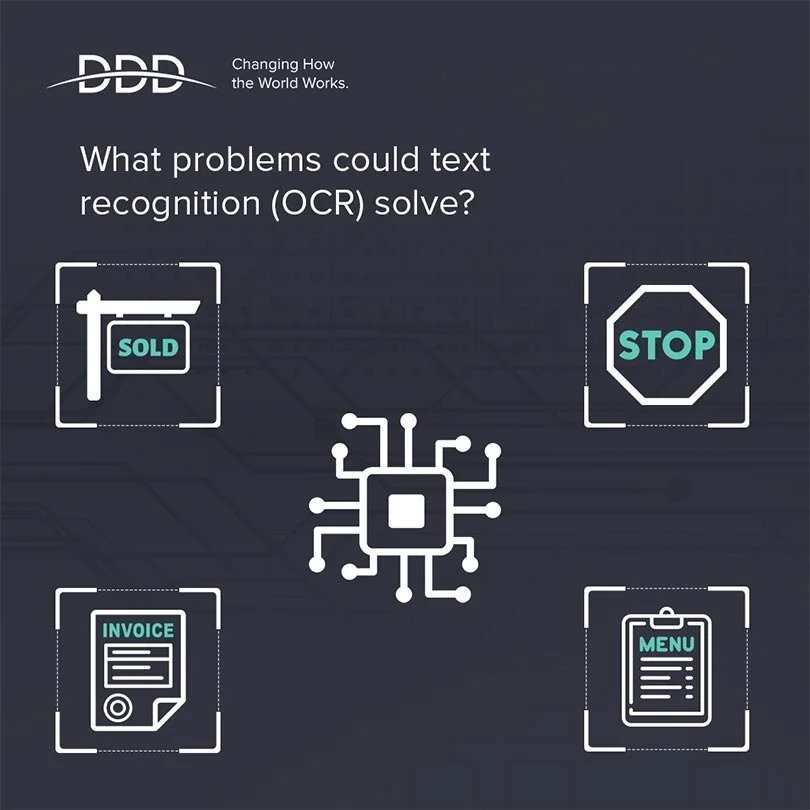
OCR uses machine learning to detect and extract text from signs, documents, menus, and other visual content.

OCR is Always Evolving, Always Hot

As a teenager in the 1970s I worked for an early Optical Character Recognition (OCR) company. They had an SUV-sized scanner in their computer room that digitized IBM Selectric double-spaced Pica text with about 80% accuracy and printed it to microfiche. I learned to program the DEC VAX that drove the scanner by typing octal instructions onto paper tape and then bootstrapping the tape reader. I also spent many hours in the proofreading pool comparing the microfiche output to the source data, the Manhattan White Pages, and logging corrections.

OCR has come a long way since then.

Today’s OCR is an application of computer vision that enables machines to find and extract text embedded in images. OCR projects are seeing explosive growth because of their potential for reductions in the cost of human labor and human mistakes and increases in productivity and security.

Real-world examples of OCR are legion:

  • Many autonomous device use cases demand an ability to read text in the form of signage, warnings, and surface-embedded instructions

  • Industries like real estate and financial services want to reduce or eliminate human involvement in digitizing business documents and other artifacts and electronically capturing the business-critical content therein

  • Likewise, many industries are seeking to eliminate the need for humans to interpret and process handwritten content like patient charts, whiteboard sessions and annotated text documents

  • Other examples include license plate recognition, menu digitization, language translation, and many more

OCR models are a subset of machine learning models, and more and more, deep learning OCR is data scientists’ preferred approach. The complexity and nuance of real-world OCR tasks gives deep learning models an appreciable performance edge.

Deep learning models don’t train themselves. They, too, require training data, and feedback and refactoring, to achieve optimal outcomes. And in fact, their performance edge comes at a cost: deep learning OCR requires significantly more, often orders of magnitude more, training data than many other ML approaches.

OCR involves two steps, and OCR models must be trained in both. A trained model has to identify the location of salient text in an image, referred to as text detection, and it must perform text recognition, the extraction of text content.

The very large quantities required aside, OCR training data is produced in standard fashion. Human data labelers annotate input images, typically with bounding boxes or polygons, to localize text areas. The particular application may require that they separately label different text areas or indicate how text blocks are related.

Importantly, labeling and annotation is just the final step in training data preparation. Many data science teams work with data collections that include input images that are distorted, skewed, or inconsistently lit or sized. Yet other teams are confronted with very large quantities of paper that have not been digitized.

Training data partners that can supplement OCR training data labeling with a full complement of data curation and data creation services offer data science teams a significant leg up with regard to their OCR projects.

OCR is Always Evolving, Always Hot Read Post »

Scroll to Top