

Celebrating 25 years of DDD's Excellence and Social Impact.

Powering Intelligent Vision with High-Quality Computer Vision Services

From images and videos to LiDAR and multisensor data, we help machines see with accuracy, scale, and confidence.

Transform Visual Data into Intelligent Systems with DDD’s Computer Vision Data Training

DDD is a global leader in AI data services, delivering high-quality computer vision data training at scale. Our mission is to help organizations build reliable, ethical, and production-ready AI systems while creating meaningful digital employment worldwide.

Our Computer Vision Solutions

Computer Vision Use Cases We Support

Group 1 7
Object Detection & Classification

Enable real-time identification and categorization of objects across images and video streams to support accurate perception and decision-making.

Group 1 1
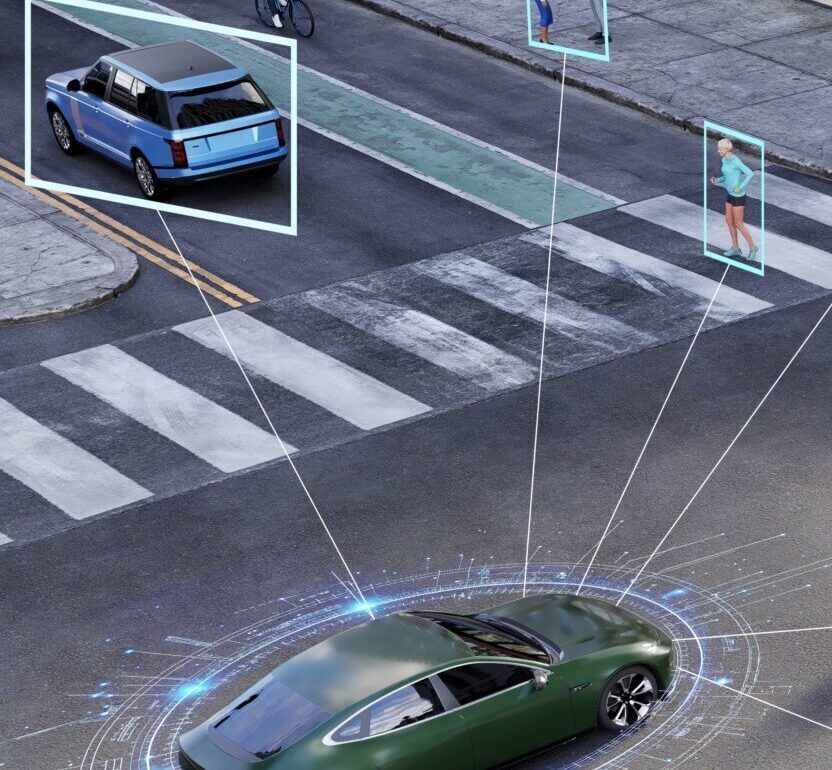
Lane, Obstacle & Pedestrian Detection

Train autonomous systems to reliably detect lanes, vehicles, obstacles, and pedestrians in dynamic and safety-critical environments.

Group 1 2
Activity Recognition & Behavioral Analysis

Power AI models that understand human actions, movement patterns, and interactions across various environments, including surveillance, sports, and smart spaces.

Group 1 3
Pose Estimation & Gesture Recognition

Support advanced human-centric vision applications by training models to recognize facial features, body poses, and natural gestures with precision.

Group 1 4
3D Environment Mapping & Spatial Awareness

Enable machines to understand depth, distance, and spatial relationships using LiDAR and 3D sensor data for accurate reconstruction of the environment.

Group 1 5
Anomaly Detection & Visual Inspection

Identify defects, irregularities, and outliers in visual data to improve quality control, safety monitoring, and risk detection.

Group 1 6
Retail Shelf Monitoring & Product Recognition

Train vision systems to recognize products, monitor shelf availability, and improve inventory visibility across physical retail environments.

Group 86 1
Satellite & Aerial Imagery Analysis

Support geospatial intelligence by training models to analyze satellite and drone imagery for mapping, monitoring, and situational awareness.

Industries We Serve

Autonomous Vehicles

Training perception systems to safely detect, predict, and navigate complex driving environments.

ADAS

Training and evaluation data that strengthens monitoring, alerting, and safety-assist features for modern vehicles.

Robotics

Powering robots with visual intelligence for navigation, manipulation, and human interaction.

Humanoids

Supporting vision systems that enable human-like perception, gestures, and interactions.

AgTech

Driving precision agriculture through crop monitoring, yield analysis, and anomaly detection.

Government

Supporting surveillance, public safety, and infrastructure monitoring applications.

Geospatial Intelligence

Enhancing satellite and aerial imagery analysis for mapping, defense, and environmental insights.

Retail & E-Commerce

Improving product recognition, inventory visibility, and visual search experiences.

Finance & Accounting

Enabling document vision, fraud detection, and visual verification workflows.

Cultural Heritage

Digitizing, restoring, and preserving historical artifacts and archives using computer vision.

Sports Analytics

Analyzing player movements, performance metrics, and in-game strategies through video data.

Why Choose DDD?

Vector

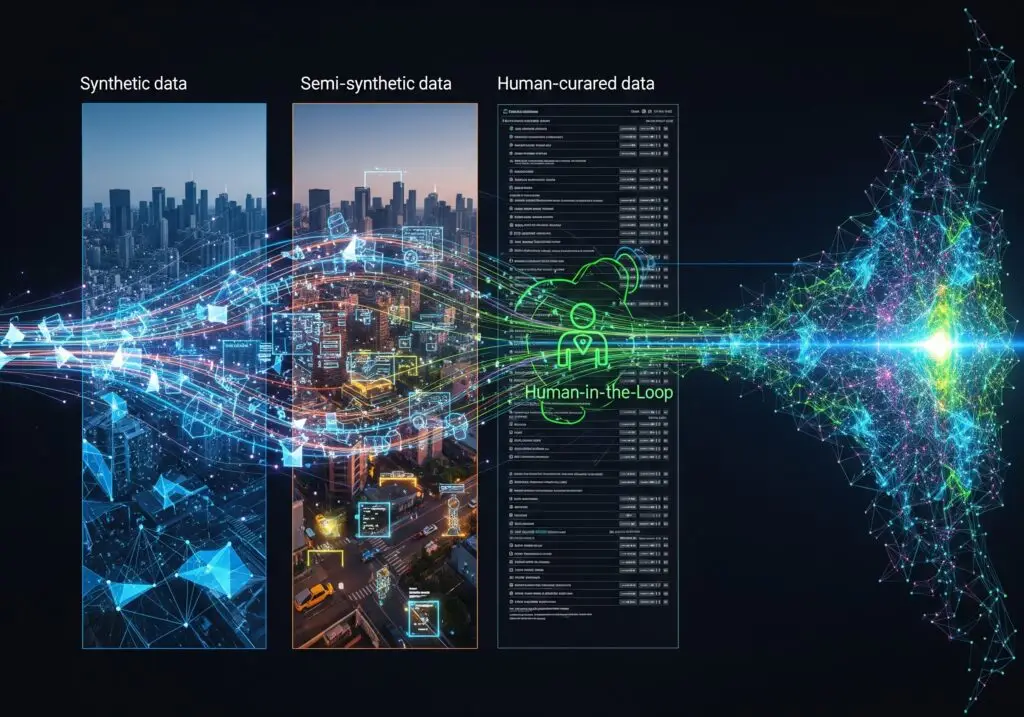
Expert Human-in-the-Loop Annotation

Our highly trained annotation teams combine human judgment with AI-assisted workflows to deliver accurate, consistent, and edge-case-ready computer vision data.

globe

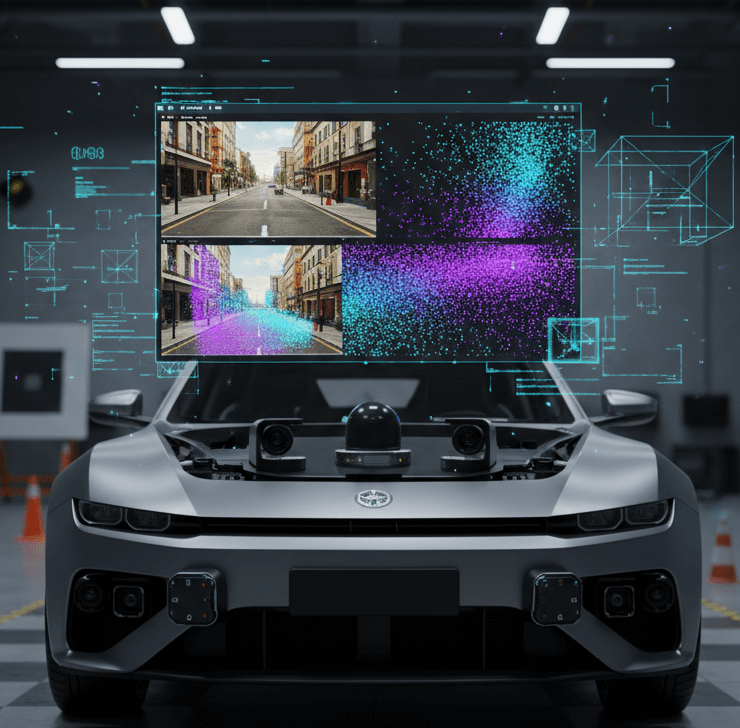
Multi-Modal Expertise

We support complex vision systems with integrated annotation across images, video, LiDAR, radar, and multisensor fusion data.

fi 18784846

Production-Ready Quality Frameworks

Multi-layer quality assurance processes ensure every dataset aligns with model performance goals and deployment standards.

Vector

Faster Time-to-Model Deployment

Optimized workflows and automation reduce annotation cycles and accelerate model iteration and deployment.

What Our Clients Say

DDD’s computer vision annotation quality significantly improved our model accuracy and reduced retraining cycles.

— Head of AI, Autonomous Mobility Company

Their ability to scale complex video and LiDAR annotation helped us move from prototype to production faster.

— Director of Engineering, Robotics Startup

DDD delivered consistent, high-precision image annotation across millions of assets, exactly what our models needed.

— VP of Data Science, Retail Technology Firm

Their multisensor fusion expertise helped us train models that perform reliably in real-world conditions.

— Chief Product Officer, Computer Vision SaaS Company

Read Our Latest Blogs

Deep dive into practical insights from our experts, research teams, and global delivery centers
Retail Computer Vision: What the Models Actually Need to See

Retail Computer Vision: What the Models Actually Need…

What is consistently underestimated in retail computer vision programs is the annotation burden those applications create. A shelf monitoring system trained on images captured under one store’s lighting conditions will…

3D LiDAR Data Annotation: What Precision Actually Demands

3D LiDAR Data Annotation: What Precision Actually Demands

The consequences of getting LiDAR annotation wrong propagate directly into perception model failures. A bounding box that is too loose teaches the model an inflated estimate of object size. A…

When to Use Human-in-the-Loop vs. Full Automation for Gen AI

When to Use Human-in-the-Loop vs. Full Automation for…

The framing of human-in-the-loop versus full automation is itself slightly misleading, because the decision is rarely binary. Most production GenAI systems operate on a spectrum, applying automated processing to high-confidence,…

DDD’s Commitment to Security & Compliance

Your computer vision datasets are protected at every stage through globally recognized security standards and secure operational infrastructure.

Container 9

SOC 2 Type 2

Verified controls across security, confidentiality, and system reliability

Container 2

ISO 27001

Comprehensive information security management with continuous audits

Container 3

GDPR & HIPAA Compliance

Ensuring responsible handling of personal and medical data

Container-4

TISAX Alignment

Automotive-grade protection for mobility and vehicle-AI workflows

High-Quality Computer Vision Annotation That Powers Real-World AI

Frequently Asked Questions

What computer vision services does Digital Divide Data provide?

DDD provides end-to-end computer vision services, including image annotation, video annotation, 3D LiDAR labeling, and multisensor fusion to support AI model training and deployment.

What types of computer vision annotation does DDD support?

We support bounding boxes, polygons, semantic and instance segmentation, keypoints, cuboids, tracking, and 3D point cloud annotation across images, video, and sensor data.

Which industries benefit most from DDD’s computer vision data training?
Our computer vision data training services support industries such as autonomous vehicles, ADAS, robotics, geospatial intelligence, retail & e-commerce, government, AgTech, and sports analytics.
How does DDD ensure annotation accuracy and data quality?

We use multi-layer quality assurance frameworks, including inter-annotator agreement, validation sampling, and performance-based quality metrics aligned with model outcomes.

Does DDD support multimodal and multisensor data?

Absolutely. We specialize in multimodal computer vision workflows, including synchronized annotation of camera, LiDAR, radar, and fused sensor datasets.

Can DDD help reduce bias in computer vision models?

We support ethical and responsible AI by curating diverse datasets, applying balanced annotation strategies, and implementing bias-aware quality checks.

How quickly can DDD deliver annotated computer vision data?

Delivery timelines depend on dataset complexity and volume, but our optimized pipelines are designed to accelerate annotation cycles and reduce time-to-model deployment.

Scroll to Top