
Celebrating 25 years of DDD's Excellence and Social Impact.
Physical AI Geospatial Services HD Map Annotation

HD Map Annotation Services for Physical AI

DDD builds custom HD maps that match your domain, geography, and operational complexity.

High-Fidelity HD Map Annotation for Intelligent AI Systems

Digital Divide Data (DDD) provides comprehensive HD map annotation services. DDD annotates detailed, machine-readable maps that help your models perceive, plan, and interact with the real world safely and efficiently.
ISO-27001 1
AICPA-SOC
GDPR
HIPAA Compliant
Tisax-Certificate

Fully Managed HD Map Annotation Workflow

A complete, transparent, and quality-driven HD mapping lifecycle managed from requirements to final delivery.

Data Modalities We Annotate for HD Maps

We work across all major geospatial data sources that power physical AI.

LiDAR Point Clouds

High-density LiDAR enables highly accurate 3D reconstruction of the environment. DDD annotates and models:

Read More
  • Road surface geometry, slopes, and elevation profiles
  • Object detection: vehicles, poles, trees, signage, barriers
  • Ground and non-ground segmentation
  • Building outlines, rooftops, and height estimation
  • Vegetation extraction and classification
  • Structural and terrain irregularities for navigation risk modeling
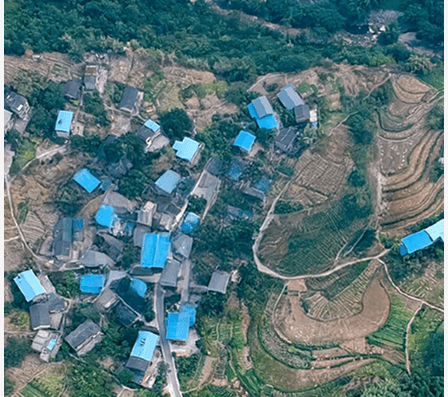
Aerial, Drone & Satellite Imagery

Our teams annotate:

Read More
  • Road networks and right-of-way boundaries
  • Land-use & land-cover categories
  • Agricultural fields, crop rows, irrigation systems
  • Powerlines, pipelines, and critical infrastructure
  • Flood mapping, burn scars, storm impact zones
Street-Level & Vehicle-Mounted Imagery

Ideal for AV systems and smart-city applications, we map:

Read More
  • 3D Lane markings, centerlines, dividers, shoulders, turn arrows
  • Traffic lights, signs, billboards, poles, and road furniture
  • Sidewalks, crosswalks, curbs, gutters, medians
  • Construction zones, temporary road changes, barriers
  • Parking zones, loading areas, and public transportation stops
Multi-Sensor Video & Panoramic Imaging

We support frame-by-frame, sequence-based, and multi-sensor alignment workflows to generate:

Read More
  • Semantic scene understanding layers
  • Temporal road condition analysis
  • Object behavior and movement mapping
  • Localization landmarks and persistent map features
Rectangle

Industries We Support

DDD’s HD Map Annotation services support a wide range of AI initiatives, including:

Autonomous Driving

High-precision HD maps that power safe, reliable localization and perception for autonomous vehicles.

Agriculture

Geospatially rich land and crop intelligence that boosts yield prediction, automation, and precision farming.

Defensetech

Mission-ready mapping and terrain intelligence that enhances situational awareness and autonomous defense systems.

Disaster Management

Accurate, rapidly produced geospatial layers that support faster response, risk assessment, and recovery planning.

Urban Planning & Smart Cities

Foundational spatial data that enables smarter mobility, infrastructure optimization, and city-scale digital twins.

What Our Clients Say

DDD’s geospatial annotation pipeline enabled our urban-mapping startup to generate clean, consistent HD map layers across multiple cities, reducing model debugging time by more than half.

— Head of Data Science, Intelligence Firm

With DDD’s autonomy-focused annotation workflows and LiDAR expertise, we cut map production times by 40%, accelerating the rollout of our next-generation ADAS features.

— Director of AI, Autonomous Vehicle Company

The agricultural mapping dataset produced by DDD improved our early-season crop stress predictions by 15% and enabled downstream robotics navigation in challenging field environments.

— Chief Product Officer, Agriculture Analytics Platform

We needed high-precision semantic layers to improve our robot navigation stack, and DDD delivered flawlessly. Their QA process caught issues we hadn’t even considered. The level of rigor and domain knowledge sets them apart from other annotation vendors.

— VP of Autonomy Systems, Industrial Robotics Firm

Quality, Security & Compliance

Container

Rigorous QA workflows

Multi-pass audits, cross-layer consistency checks, spec adherence, and reviewer calibration ensure every map meets your quality benchmarks.
Container 6

Standardized guidelines

Clear instructions, feature catalogs, training materials, and rulebooks ensure uniform annotation across contributors and regions.
Container 7

Secure environments

Controlled-access workspaces, encrypted file transfers, and client-specific compliance measures protect sensitive geospatial assets.
Read Our Latest Blogs

Read expert articles, insights, and industry benchmarks across physical AI.

Build HD Maps for Your Physical AI Systems

Frequently Asked Questions

What types of HD map features can DDD annotate?
Road geometry, lane markings, traffic assets, drivable regions, building footprints, terrain classes, vegetation types, irrigation systems, utilities, infrastructure, and disaster impact layers.
Which geospatial data sources do you support?
LiDAR point clouds, aerial imagery, drone footage, satellite images, multi-sensor video, panoramic images, and GIS datasets.
How do you ensure accuracy in HD mapping?
We use multi-step QA, inter-annotator agreement checks, geometric audits, topological validations, rule-based consistency checks, and domain-specialized review teams.
Can DDD update maps continuously?
Yes. We support ongoing HD map refresh cycles, incremental updates, and dynamic map expansion as regions change or new coverage is required.
What project volumes can you handle?
From targeted pilot projects to large-scale national mapping programs, we scale to meet your volume, geography, and timeline requirements.
Can you also annotate or label the data you collect?
Yes. In addition to collection, DDD offers comprehensive data annotation, labeling, and validation services, so you can move from raw data to model-ready datasets with a single partner.
How long does a typical data collection project take?
Timelines depend on data type, complexity, volume, and geography. After discovery, we provide a clear plan with estimated milestones and phased deliveries so you can begin training early while we continue to scale the dataset.
Scroll to Top